Posts Tagged ‘police brutality’

The dangers confronting human rights defenders in the United States

December 2, 2024

On 27 November, 2024 Amelia Shindelar (managing director of the Human Rights Initiative at the University of Minnesota) published in Open Global Rights an assessment of the situation of n HRDs in the USA: From grief to activism: The dangers confronting human rights defenders in the United States

Human rights defenders who have lost loved ones to law enforcement violence face additional traumas and risks. These activists need safety and support for their mental and physical well-being.

…HRDs are at high risk of adverse health and safety outcomes. They face significant mental health challenges, particularly when the defenders are from a marginalized community and work on issues related to their identities and their communities. Through a series of interviews with HRDs involved in the anti-law enforcement violence movement, my research team learned about the particular risks faced by HRDs in the United States who have lost a loved one to law enforcement violence. 

The most recognised risk to HRDs is the threat to their physical safety. This danger can take various forms, including direct violence and assault, ranging from beatings to torture and abduction at the hands of both state and non-state actors. Tragically, hundreds of HRDs are killed each year. Front Line Defenders reported over 300 killings in 2023 alone, and this figure likely underestimates the true toll.

While not as often discussed, other risks are just as severe. These include the criminalization of protest and activism, spurious lawsuits, or legal proceedings designed to hinder their work and drain their resources. Ostracization and or stigmatization within their communities leads to social isolation. The chronic stress and trauma associated with human rights work can have severe mental health consequences. 

The unique struggles of defenders who have lost loved ones to law enforcement violence

In the United States, HRDs who have lost family members or loved ones to law enforcement violence face an exceptional set of traumatizing experiences that go beyond the already significant challenges associated with the loss of a loved one to violence. We identified four common risk factors that contribute to this:

1. Dehumanization and criminalization by the media

Traditional media often relies on official statements from law enforcement, which emphasize perceived threats and reinforce that the officer is justified in their use of force. Victims of law enforcement violence are regularly portrayed as criminals in an effort to justify their deaths and shift the focus elsewhere.

Shortly after the death of her son in 2022, Monique Johnson shared with us her experience of how the media portrayed the situation, saying, “They always put their own narrative out there so that people think that he’s the bad guy.” Monique’s experience mirrors that of all the other activists that we interviewed. This negative portrayal can have severe consequences, including exacerbating grief, traumatization, and a loss of social support, as community members withdraw their assistance based on these representations. 

2. Recurring exposure to law enforcement violence

Each new incident of violence reopens the wounds. With over 1,000 people killed by law enforcement in the United States each year, the reminders are frequent and painful. Cindy Sundberg, whose son Tekle was killed in 2022, vividly described her experience: “Each event and each killing is like you just open up the wound, and they take a knife and stir it up. And you are just oozing pain.”

In the cases that receive substantial media attention, there’s an added layer of daily trauma. Courteney Ross, George Floyd’s fiance, described this experience: “It never stops. I know loss and grief don’t stop, but when you are faced with literally a symbol of your loved one’s murder every single day, it’s exhausting. It’s just—it’s fearful; it’s anxiety ridden.”

This recurring exposure leads to chronic stress, keeping defenders in a state of heightened alertness that can have severe physical and mental health consequences and affect their ability to process their grief and trauma.

3. Surveillance and harassment by law enforcement

Many HRDs report surveillance or harassment by law enforcement following the death of their loved ones, ranging from increased police presence in their neighborhoods to overt acts of intimidation. Such experiences contribute to a pervasive sense of fear and insecurity.

Matilda Smith shared her experience of constant fear after the officer who killed her son moved into her apartment building: “I was afraid for my life, and my daughter was, and my son as well.” This anxiety led her to move to a different part of town, but the feeling of being watched persisted. The psychological impact of surveillance can be severe, leading to a constant state of alertness and paranoid thoughts and behaviors.

4. Negative consequences of activism

All of the affected individuals with whom we spoke turned to activism to find purpose and healing after the death of their loved ones. As demonstrated by the examples above, among others, activists face multifaceted risks. “I’ve known people in this work that have died of a broken heart,” said Jeralynn Brown-Blueford, co-founder of the Alan Blueford Foundation. Other interviewees also described the emotional, physical, financial, and social toll of their work. 

Activism can involve difficult physical labor; carrying protest materials for long distances, building temporary blockades, setting up and taking down sound systems and event spaces, and distributing supplies and resources are just a few examples. Marilyn Hill, whose son was killed in 1997 and has since been active in the anti-law enforcement violence movement, talked about the physical toll the work takes: “I had to load and unload and pick up heavy things…I ended up with a hole in my stomach, and it got bigger and bigger. I ended up having the most excruciating surgery that left me in a nursing home for a month after the surgery.” 

The intense focus on activism can strain family relationships. According to Colette Flanagan, founder of Mothers Against Police Brutality, “People get confused; they don’t know what to do when you fight against the policeman. It has damaged our family. I basically lost my daughter. We’re estranged—we haven’t spoken in ten years.” Family estrangement can lead to a loss of crucial support systems, leaving defenders more vulnerable to burnout and emotional exhaustion.

Conclusion

Understanding the risks faced by HRDs in the United States is crucial not only for supporting individual defenders but also for ensuring the sustainability of human rights movements. As the rights community continues to grapple with issues of systemic injustice and human rights violations, we must recognize the human cost borne by those on the front lines of these battles and work towards creating safer, more supportive environments.

Her research focuses on the protection, security, and well-being of human rights defenders.
https://www.openglobalrights.org/from-grief-to-activism-the-dangers-confronting-human-rights-defenders-in-the-united-states/

Prominent Baluch human rights defender stopped from attending TIME event in US and then assaulted

October 22, 2024

Front Line Defenders call for the Pakistani authorities to be held accountable for their mistreatment and abuse of prominent Baloch woman human rights defender Dr. Mahrang Baloch and other human rights defenders accompanying her in Karachi, on 8 October 2024. The woman human rights defender was attacked by Sindh police while she was returning from the Karachi’s Jinnah international airport after immigration authorities denied her permission to leave the country.

Dr. Mahrang Baloch is a woman human rights defender and a staunch advocate for the rights of the ethnic Baloch community in Pakistan. She has campaigned peacefully against systemic violations including extra judicial killings, enforced disappearances, arbitrary detentions and custodial torture in Balochistan. Human rights defenders speaking out against state violence, especially seeking to hold the military and intelligence agencies accountable, undertake significant risks – against themselves and their families.

On 7 October 2024, Pakistani authorities prevented Dr. Mahrang Baloch from leaving the country. The woman human rights defender was to attend an event in New York organized by TIME which had named her in the TIME100 Next 2024 List recognizing her human rights work. Unfortunately immigration officers at the Karachi airport withheld her passport for several hours and denied her permission to board her flight without any legal basis or reasoning. Dr. Mahrang Baloch finally left the airport at around midnight after she recovered her passport. Shortly after, her vehicle was intercepted by a group of officers from the Sindh police on the old airport road in close proximity to the airport. Police brutally beat and abused Dr. Mahrang Baloch and several other human rights defenders including Sammi Deen Baloch. Police illegally seized Dr. Mahrang’s passport and mobile phone. They also took the vehicle keys, leaving the human rights defenders stranded on a deserted road at late hours in the night.

Reprisals including restrictions on travel are common in Pakistan, especially for those who speak out against state repression. In August 2024, Sammi Deen Baloch, the Front Line Defenders award winner for 2024 was prevented from traveling to Geneva for an advocacy mission to highlight human rights issues in Balochistan. The attack on Dr. Mahrang Baloch is not an isolated incident. It spotlights what many human rights defenders in Pakistan face as punishment for their work. Human rights defenders from oppressed communities such as the Baloch are especially targeted. State response to peaceful campaigns by the Baloch Yakjehti Committee (Baloch Solidarity Committee) has been to suppress protests and campaigns with brute force and repressive measures including criminalization.

https://www.frontlinedefenders.org/en/statement-report/pakistan-woman-human-rights-defender-dr-mahrang-baloch-prevented-leaving-pakistan

https://www.rferl.org/a/pakistan-baloch-baluch-rights-travel-ban/33151431.html

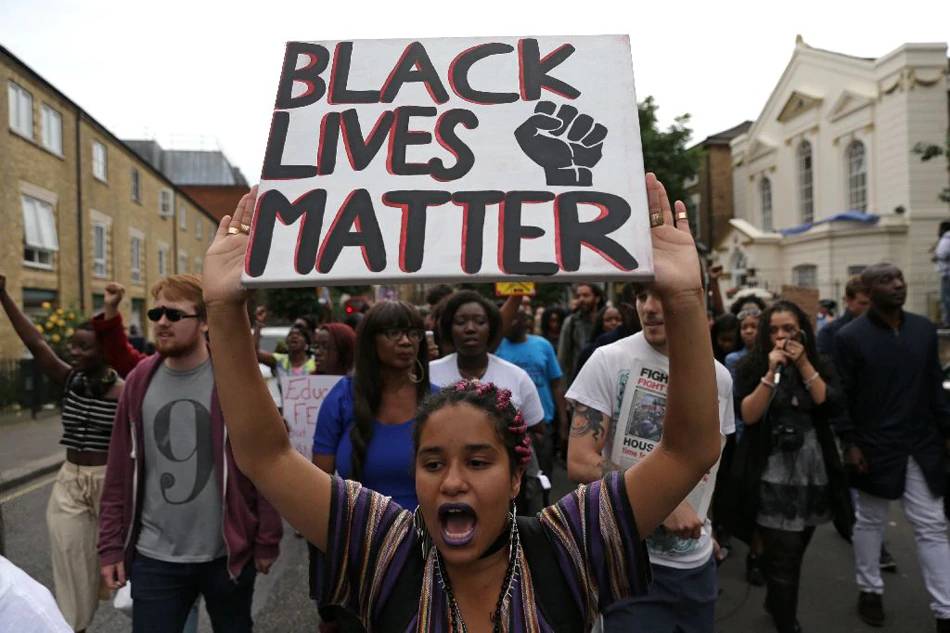
Black Lives Matter wins Olof Palme prize 2020

February 1, 2021
A woman holds up a placard with the slogan “Black Lives Matter” as people march in Brixton, south London to protest against police brutality in the US after two recent incidents where black men have been shot and killed by police officers. Daniel Leal-Olivas, AFP

AFP reported on 30 January that the international civil rights movement Black Lives Matter Global Network Foundation on Friday won Sweden’s Olof Palme human rights prize for 2020.

The foundation was honored for its work promoting “peaceful civil disobedience against police brutality and racial violence all over the world,” prize organizers said in a statement.

The Black Lives Matter movement, founded in 2013 in the United States, has “in a unique way exposed the hardship, pain, and wrath of the African-American minority at not being valued equal to people of a different color,” the statement said.

The movement had its major international breakthrough in the summer of 2020 following several cases of extreme brutality in the US, including the deaths of George Floyd and Breonna Taylor. Prize organizers noted that an estimated 20 million people have taken part in Black Lives Matter protests in the US alone, and millions more around the world. 

This illustrates that racism and racist violence is not just a problem in American society, but a global problem.”

For more on the Olof Palme Prize see: https://www.trueheroesfilms.org/thedigest/awards/60DE9060-BC07-450D-B6B8-5A64C0F6D612

https://news.abs-cbn.com/overseas/01/30/21/black-lives-matter-wins-swedish-rights-prize

Witness reminds us of the power of images through the Floyd Case

June 13, 2020

The video of the gruesome murder of George Floyd ignited protests around the world in solidarity against racism and white supremacy supported by the government and enforced by police. But we know for every video of police violence, there are many deaths that were not recorded that still deserve our attention and support.

Founded on the power of video to bring attention to the breach of human rights during the Rodney King arrest, beating, filming, and subsequent uprising 28 years ago, WITNESS continues to train and guide people to use their cell phone video camera to record incidents of human rights abuse, then share it with the media and justice system to prosecute wrongdoers. 

Today, the systems and patterns of police abuse are as rampant as ever. What has changed is our collective ability to document these moments. 

We help people document state violence, push for accountability, and implement structural change. In the past few weeks, we’ve seen a spike in demand for our guidance on how to shoot and share footage of police violence safely, ethically, and effectively. Our tips continue to inform ethical and strategic filming of police misconduct and protests.  Video is a tool to show violence. But more importantly, it’s a tool to show patterns. It forces the broader public to pay attention, and authority to change. We have seen commitments from local and state leaders and we encourage more people around the world to break down military and police power.  And to film it.  Ambika Samarthya-Howard Head of Communications WITNESS

https://mailchi.mp/witness.org/the-power-of-video-to-film-injustice?e=e2d40a1193

See also: https://humanrightsdefenders.blog/2020/04/05/policy-response-from-human-rights-ngos-to-covid-19-witness/

Acquitted journalist Santosh Yadav about his ordeal in India

January 10, 2020

In a blog post by Kunal Majumder, CPJ India Correspondent on 8 January 2020, Indian freelance journalist Santosh Yadav says “I feel like a weight has been lifted’ as Chhattisgarh court ends four-year legal nightmare.

Freelance journalist Santosh Yadav, left, with human rights defender Shalini Gera and CPJ India Correspondent Kunal Majumder, during a convention on journalist safety in Raipur, Chhattisgarh, in February 2019. A court on January 2 acquitted Yadav of several charges, ending a four-year legal battle. (CPJ)

Freelance journalist Santosh Yadav, left, with human rights defender Shalini Gera and CPJ India Correspondent Kunal Majumder, during a convention on journalist safety in Raipur, Chhattisgarh, in February 2019 (CPJ)

On January 2, 2020 freelance journalist Santosh Yadav got his life back when the National Investigation Agency court in Jagdalpur acquitted him of charges of helping Maoists militants. The ruling marked the end of a legal nightmare that lasted over four years for Yadav, who says that he was threatened and beaten in custody, before being released on bail under restrictive conditions.

Yadav’s ordeal started in September 2015, when police in India’s Chhattisgarh state arrested him on accusations of aiding and abetting Maoist militants. The journalist’s colleagues and his lawyer, who spoke with CPJ at the time, said they believed the arrest was in connection to his reporting on alleged human rights abuses by police.

The journalist, who at the time was a contributor to the Hindi-language newspaper Navbharat in Bastar district, was charged with 28 counts including associating with a terrorist organization, supporting and aiding terrorist groups, taking part in a Maoist-led ambush against security forces, rioting with a deadly weapon, unlawful assembly, wrongful restraint, attempt to murder, public mischief and criminal conspiracy. He was held in pre-trial detention for one and a half years. Yadav told CPJ that during that time, police beat him regularly and threatened to have him killed. When he was released on bail, the court imposed several restrictive measures.

The day after the January 2 ruling that exonerated Yadav, the journalist spoke with CPJ about his struggle during the four years since his arrest. Here some excerpts from this interview :

Congratulations. So does this court ruling mean you are a free man?

Yes, all charges have been dropped. The judge said that I’m innocent and have been exonerated of all charges. He added that there is no evidence to prove the police charge that I’m a Maoist.

Prior to your 2015 arrest, had police contacted you about your reporting? Were there any signs or warning that police were unhappy with your journalism?

There were numerous incidents when local police officials would express displeasure over my reporting. I never thought it was anything serious. However, before my arrest, police started picking me up from my home at random hours, once at 3 a.m. They would threaten to arrest me, kill me. They even offered money in exchange for information on Maoists. They would keep me in lock-up the whole day and release me in the evening. I had a feeling that my life was at threat. I informed several journalists and human rights defenders including Malini Subramaniam [one of CPJ’s 2016 International Press Freedom Awardees], Shalini Gera and Isha Khandelwal that the police might arrest me.

……..
Previously, you told CPJ and other outlets that you were beaten and threatened even inside jail. Could you describe your time in prison?

I was beaten repeatedly, especially when I would go for bathing. I even started a protest fast, which several prisoners supported. The prison guards retaliated by beating us with batons. At that point, I didn’t know if I would live or die. After beating me mercilessly, I was stripped and put in solitary confinement for 11 days. Then they moved to me Kanker jail. [Kanker is 122 miles from Yadav’s hometown of Darbha.] Even there I was beaten up. The prison guards singled me out for my protests in the Jagdalpur jail and targeted me…

……..


Pakistan: summary justice by the police is widespread

February 10, 2018

On 4 February 2018 the Pakistani newspaper The News on Sunday carried the story “Punjab police has a history and reputation of staging fake police encounters. Has anything changed?

A solution for speedy justice
Fake police encounters are said to be more rampant in Punjab province and some urban centres of Sindh, including Karachi. If one takes the case of Punjab, one finds such encounters to be a popular and preferred method of ‘dispensing justice’ adopted by the police. Police encounters have been staged for long but their number is said to have skyrocketed during the tenures of Shehbaz Sharif as the chief minister of Punjab. This has led to the perception that he has full trust in this method of controlling crime and patronises police officers known as encounter specialists. Prized postings and out-of-turn promotions for such officers strengthen this perception.

After tracing the history of police encounters in Punjab the article states that “Killings through police encounters got an exponential boost after Shehbaz Sharif came to power in Punjab in 1997. It was in July 1999 that BBC carried a news story that 850 suspected criminals had been killed by the police in encounters since the PML-N government had taken over in the province. The fact that 20 of them had been killed in just one week in May 1999 had disturbed human rights defenders all over the world. This killing spree was also observed during his second tenure that started in 2013. In 2015 alone, 440 suspects were killed in police encounters in Punjab.

Ejaz Butt, a crime reporter based in Lahore, recalls the time when he says police was said to have been asked by the Shehbaz Sharif government to decimate the top 10 gangsters of the city. He says police would stage encounters without any fear and hold press conference a day before with the criminals in handcuffs. “The officers would tell reporters to ask questions from criminals, saying they would be killed in shootout the next day,” he adds. The need for this clean-up operation was felt when the trader community of the city became fed up with excessive demands for extortion money and paid assassins who were operating everywhere.

Butt says the encounter experts are very much clear about who to shoot down. “The criminals who have fired at policemen, raped female inmates during robberies, killed abducted children even after getting ransom, molested minors, indulged in multiple murders, including those of witnesses are not spared,” he adds. He says they opt for this method as it is difficult to establish these crimes in courts and letting them go will make them commit the same crime again.

Every time there is an encounter there is a judicial inquiry but most of the time fake encounters are hard to establish. Why is it so? Butt explains the reason is that “encounter specialists are also expert in making the encounter plan and executing it. They prepare a sketch of the crime scene beforehand and fire bullets at police van with unlicensed weapons, claimed to be owned by the criminals. Besides, there is no eyewitness because all the roads and pathways leading to the venue of the encounter are blocked for public before it is carried out.”

Sarmad Saeed Khan says the fake encounters are not probed properly because they are done at the behest of the government. “Not even a single fake encounter can be staged by a police officer on his own”. He says not “every police officer is ready to take these orders and only those agree who get the blessings of the government”.

Though these police officers got out-of-turn promotions, he says, “the Supreme Court reversed these which is a good step. But despite this, these officers obey unlawful orders from the government to kill people in encounters. These dreaded officers are also used to pressurise political opponents whenever needed,” he adds.

If there are any demands for investigation, complainants are warned that they can be taken as those attackers if they keep on demanding an inquiry. Moreover “The problem unfortunately is that even the blood relatives disassociate themselves from such cases and disown the deceased due to the stigma attached to them.”

http://tns.thenews.com.pk/solution-speedy-justice/#.Wnni02Z7GV4


Egypt: doctors protest police brutality but no human rights defenders can come and tell about it

February 15, 2016

While human rights organizations and the media around the world were remembering Egypt‘s Tahrir Square [https://thoolen.wordpress.com/2016/01/28/five-years-after-tahrir-square-there-is-stability-in-egypt-but-do-not-ask-at-what-price/] the space for demonstrations in Egypt itself was minimal. But a huge exception was made on 13 February 2016 when some 10.000 people gathered at noon in front of the Doctors Syndicate in Cairo. Heartening to see that the doctors have the courage to take up the case against police brutality. But you are unlikely to hear about this from an Egyptian human rights defender in person as they are systematically banned from traveling. Read the rest of this entry »

Human Rights Defenders from York: Katsiaryna Borsuk

January 25, 2015
On 16 February 2015, the York Press carried a feature story by Stephen Lewis about 5 human rights defenders in the temporary shelter programme at York University. The aim of the placements is to give those fighting for human rights around the world a breather, as well as the chance to forge contacts with other human rights workers and organisations around the world.

Katsiaryna Borsuk was born in a village not far from Chernobyl, Belarus, a year after the nuclear accident which made it infamous. The village was radioactively polluted. When she was four, her family were evacuated to the city of Gomel where, as a child, she was taunted for being ‘radioactive’ herself. Many people of her generation have chronic health problems, she says – her own brother has problems with his eyes and his throat.

Interested in environmental protection, she studied natural sciences at university in Gomel. She got caught up in student environmental protests, then became involved with the youth movement. When she graduated, she began working for a banned youth organisation – one that promoted democracy and civil rights. She was several times questioned by the KGB. “They pretended to not be KGB. But they took notes,” she says. “They mostly took you somewhere. Once, they came by car, and interviewed me in the car.”

York Press:
Katsiaryna Borsuk

In 2012, although heterosexual herself, she became involved with Gay Belarus. Homophobia is widespread in Belarus, and there are very few people willing to stand up for LGBT people, she says. They are regularly subjected to homophobic attacks – attacks which are often filmed and posted on social media. Her organisation works with the victims of homophobia, trying to convince families to prosecute cases, talking to police and prosecutors’ offices, arranging free legal representation and even psychological support. But it is not easy. “The police are homophobic. They won’t protect you. Even if people are killed – there have been murders – the police don’t take the case.”

5 human rights defenders in York tell their incredible stories (From York Press).

Human rights defenders in York programme tell their story: Ruth Mumbi

January 22, 2015
On 16 February 2015 the York Press carried a feature story by Stephen Lewis about 5 human rights defenders in the temporary shelter programme at York University. The aim of the placements is to give those fighting for human rights around the world a breather, as well as the chance to forge contacts with other human rights workers and organisations around the world.As these are not the human rights defenders who figure highly in the news, I will in the coming days give you their stories. The first is Ruth Mumbi from Kenya:

York Press:
Ruth Mumbi

LIFE is tough in Nairobi’s Mathare slums in Kenya and “a lot of young people opt for crime so that they can have something to put on the table,” says Ruth Mumbi, who grew up here. There are small seeds of hope, however: among them the Bunge la Wamama Mashinani. It means the ‘grassroots women’s parliament’, says Ruth, flashing a smile. She helped found it, and now acts as coördinator.

We wanted to create a space for women to come together to discuss the challenges they are facing. Most women felt that we were not being fully heard.” The Bunge has few resources – not even a building. “We usually use small open spaces in the slums to hold our debates“.

The slum is riven by racial divides as well as crime – in 2006, fighting between rival Luo and Kikuyu groups saw at least ten people killed and hundreds of homes burned. But the young men who go out to rob, and rape, and kill, all have mothers or wives, Ruth says. “At the end of the day, they go back to their households, to their women. We should be talking with our kids to stop this.”

The Bunge also lobbies for better access to health care – and better access to justice for women who are raped or abused. The law can be an impossibly expensive business. “So we have been working with pro-bono lawyers and women’s rights organisations to provide free legal representation to women,” Ruth says.

As a human rights defender, she herself has faced harassment and intimidation. In 2011, she and a colleague were charged with incitement and remanded for two days in prison after leading a protest about the high death rates at a local maternity ward. [https://thoolen.wordpress.com/2013/10/15/kenya-rights-defenders-remain-under-attack/]. The harassment continues Ruth says: “Telling me to stop, sending threat messages, sending my mother messages telling her daughter to shut up or else.” And who is this shadowy ‘they’? “I believe they were the police.”

5 human rights defenders in York tell their incredible stories (From York Press).

Battered Lawyer Wins Zimbabwe Law Society Award

November 18, 2014

Kennedy Masiye

RadioVop in Zimbabwe reported on 14 November 2014 that Kennedy Masiye, a human rights lawyer who was brutally assaulted by the police recently, has been honoured by the Law Society of  Zimbabwe (LSZ) for his outstanding contribution to the protection and promotion of human rights in the country.

Masiye, a senior project lawyer with Zimbabwe Lawyers for Human Rights (ZLHR) was named as the human rights lawyer of the year 2014 at the LSZ’s Summer School held in Nyanga last week. Masiye could not attend the award ceremony as he was detained in hospital (see picture above) recovering from acts of police brutality meted on him while in the course of discharging his professional duties.

[The LSZ’s human rights award is sponsored by Scanlen and Holderness Legal Practitioners and targets junior to mid-career lawyers under 35 years of age]

Masiye has represented and secured acquittals for several human rights defenders in the country including some former farm workers and villagers facing eviction from their living quarters.

I am humbled by the award. At least the work that I am doing as a human rights lawyer is being recognised by the legal fraternity. ZLHR has enabled me to explore my potential in the human rights field. The award is an icing on the cake given the work that we have being doing at ZLHR,” said Masiye.

RadioVop Zimbabwe – Battered Lawyer Wins Zim Law Society Award.