International Human Rights Day commemorates the day on which, in 1948, the United Nations General Assembly adopted the Universal Declaration of Human Rights. In 1950, the Assembly passed resolution 423 (V), inviting all States and interested organisations to observe 10 December as Human Rights Day. The theme this year is: Stand up for someone’s rights today, in other words: be a human rights defender. .
There is a lot going on during this period, so I just give a small sample (10!) from different parts of the world: Read the rest of this entry »
ABS-CBN News reported on 13 November 2016 on an interesting protest in the Philippines.A group of black-clad lawyers and human rights defenders trooped to the Bar examinations Sunday to protest the Supreme Court’s ruling allowing the burial of late dictator Ferdinand Marcos at the Heroes’ Cemetery. Led by the National Union of Peoples’ Lawyers (NUPL), the group mounted their “Black to Block” protest with chants of “Marcos no hero, no honor” in front the bar exam venue. [Voting 9-5 with one abstention, the SC last week ruled that President Duterte’s move to allow the burial of Marcos at the Libingan ng mga Bayani did not break any laws nor did it show a grave abuse of discretion.]
In an open letter, the NUPL reminded the bar examinees of their duty to use their knowledge and skills to defend justice …..The country needs good lawyers, especially now that “the law is being downtrodden and diminished by skewed reinterpretation”. “Our rage is as dark as the night; our memory just as long. We will continue to rage as we mourn. But we will help change things. Who knows, we might, with the power of the people scorned, even be able to put sense in the heads of the gods and show their way clear.” Concluding their letter, the NUPL told aspiring lawyers, “Do well in the bar examinations. But be mindful what this is all for. From your ranks may also come those who will exorcise the demons in our midst, dead or living. Your people — and Lady Justice — are waiting for you.”
The protesters earlier urged bar examinees to show support for Sunday’s mass action by wearing black shirts, but most of the bar candidates were dressed in their school colors.
In the meantime, the group has filed another motion asking the court to hold in abeyance or refrain from executing any plans on the burial pending the finality of the SC ruling.
The Asian Federation Against Involuntary Disappearances (AFAD) has won the Asia Democracy and Human Rights Award 2016 for its efforts to resolve the problem of forced disappearances in Asia.
“AFAD has made indelible contributions in pushing states to address the rights of families of the disappeared and in seeking justice for the victims,” said Legislative Speaker Su Jia-chyuan, chairman of the Taiwan Foundation for Democracy. He said that AFAD was a major force behind the UN’s adoption in 2006 of the International Convention for the Protection of All Persons from Enforced Disappearances, and has in recent years been active in lobbying Asian governments to sign and ratify the convention.
[Su said that many instances of politically motivated disappearances also occurred in Taiwan when the nation was under authoritarian rule. As someone who took part in rescue missions for missing people at that time, Su said he could deeply empathize with the fear experienced by the victims’ families and the hardships faced by human rights organizations in authoritarian nations.]
Founded in 1998 in Manila, AFAD facilitates searches for people who are abducted or imprisoned by a state or political organization, and works to ensure the attainment of truth, justice, redress and the reconstruction of the collective memory of the missing. Recipients of the award include Reporters Without Borders, Rescue Foundation of India, End Child Prostitution, Child Pornography and Trafficking of Children for Sexual Purposes International, as well as Kim Seong-min, founder and director of Free North Korea Radio. The award comes with a prize of US$100,000.
The Philippines seems to get most of its attention nowadays because of the ranting of its President rather than the human rights situation on the ground. That is why John Nery wrote a reply in the Philippine Daily Inquirer of 1 November 2016 under the title “Human rights defenders are beautiful“.
The intruiging title is linked to a recent episode in which President Duterte complimented the Filipino beauty queen, Kylie Verzosa, on her international recognition by saying “You see, Filipinas are beautiful”, and then added gratuitously “Pero kayong lahat diyan sa human rights commission, mga pangit (But all of you there at the Commission on Human Rights, you are all ugly)”. It would be a mistake to think that this was just another jest. Since the CHR, under then chair Leila de Lima, investigated him in 2009 for possible human rights violations in relation to the killings attributed to the so-called Davao Death Squad, he has harbored a sense of resentment against the constitutional agency which has dared question the rising casualty toll in his so-called war on drugs..
The writer then says: But we should all ask: What have human rights advocates done to deserve such hostility, such cavalier treatment, from the President? Human rights advocates, including those identified with the National Democratic Front, including those who have served and are serving in the CHR, were among those who tried to hold the Marcos regime accountable during the dictatorship itself, and are among those leading the fight to bring the Marcos family to justice. Mr. Duterte’s own mother, who was a leader of the anti-Marcos movement in Davao City, would have recognized them as kindred spirits……….A devout and disciplined Catholic, she would have understood the sacrifice these advocates made, in choosing the less lucrative, much more dangerous career of human rights work. I daresay she would have recognized in them the dignity, the beauty, of the saints: They are doing not only the right, but the beautiful, thing.
On 1 November 2016 the Reuter Thompson Foundation published an article on a woman human rights defender, Joan Carling, under the title “Malaria, murder and occupational hazards of indigenous activists in the Philippines“.
Joan Carling, a prominent indigenous rights defender from the Kankanaey tribe of the northern Philippines’ Cordillera region. Photo Reuters
A little over a decade ago, indigenous activist Joan Carling from the Philippines Cordillera region lost three colleagues in the space of a few years – all murdered in one of the world’s deadliest countries for land rights defenders. Then came her turn: a relative in the military told Carling’s father his daughter’s name was on the “order of battle”, the Philippines military’s list of people, including activists, who are deemed enemies of the state. “When you are on the order of battle, you are an open target for extrajudicial killings,” said 53-year-old Carling…She kept her head down, hired a bodyguard, then spent several months at a U.S. university having won a fellowship for frontline human rights defenders.
For decades, Carling has been at the forefront of the fight for land and the environment, which London watchdog Global Witness calls “a new battleground for human rights”, with communities worldwide locked in deadly struggles against governments, companies and criminal gangs exploiting land for products like timber, minerals and palm oil.
In 2015, more than three people a week were killed defending land, forests and rivers against industries, said Global Witness. Of the 185 murders it documented in 16 countries, the Philippines ranked among the most dangerous, with 33 deaths last year alone.
Carling, from the Kankanaey tribe of the northern region of Cordillera, grew up on a logging concession where her parents ran a shop. She got her first taste of protest in the mid-1980s while studying at the University of Philippines in Baguio. She spent two months in the Kalinga tribal areas protesting against four World Bank-funded dams along the Chico River, which activists said threatened to inundate 16 towns and villages and displace an estimated 85,000 people. The World Bank ended up withdrawing its funding for the Chico dams, which were never built, and the episode prompted the bank to develop its policy on indigenous peoples, she said.
In the early 1990s, Carling immersed herself in mountainous tribal villages in the Cordillera and worked with the Cordillera Peoples Alliance (CPA) fighting for land rights, until the day she fell sick and had to be hauled out on a stretcher. “…..After medical treatment, she went straight back to her duties, hanging her dextrose IV bag on the walls of a building in the town center, where she met indigenous people from remote areas who shared grievances about alleged land grabs.
After working with the CPA to help indigenous peoples at home, she moved on to a regional stage, and nearly eight years ago became head of the Asia Indigenous Peoples Pact (AIPP), based in Chiang Mai, Thailand. Through her work with AIPP, she has helped build a network among indigenous peoples from countries including Indonesia, Nepal, Taiwan and Japan – helping them to feel less isolated. She has turned her attention to the impacts of climate change and solutions such as hydropower, which often have a negative impact on indigenous communities.
Carling expressed concern about the “narrow conservation approach” of taking people out of the environment to protect the environment, instead of allowing indigenous peoples to protect the resources and watersheds on their ancestral land. “Indigenous people are actually the natural conservationists because it’s part of our being – to protect and conserve our natural environment because we need to pass it on to future generations,” Carling said. “That is the wisdom of the indigenous people – we only use what we need.”
The chilling trend of attacking human rights defenders working on environment and land rights continues. The help keep an overview here a summary of a number of relevant items:
On 26 August 2016 Patricia Schaefer of the Center for International Environmental Law posted a blog in the NonProfitQuarterly website under the Title “International Collaboration Reports on Violence against Environmental Activists”, summarizing two recent reports (On Dangerous Ground by Global Witness and a more recent “Deadly Shade of Green” by Center for International Environmental Law (CIEL), British NGO Article 19, and Vermont Law School).
Global Witness stated that worldwide, in 2015, there were 185 individuals killed in 16 countries while defending their land, forests, and rivers against industrial encroachment. At the top of the list were Brazil (50 killings), the Philippines (33), and Colombia (26). Global Witness recounts, “Conflicts over mining were the number one cause of killings in 2015, with agribusiness, hydroelectric dams and logging also key drivers of violence. In 2015, almost 40 percent of victims were from indigenous groups.” [Global Witness’ earlier report: https://thoolen.wordpress.com/2014/04/16/environment-deadly-for-human-rights-defenders-says-global-witness/].
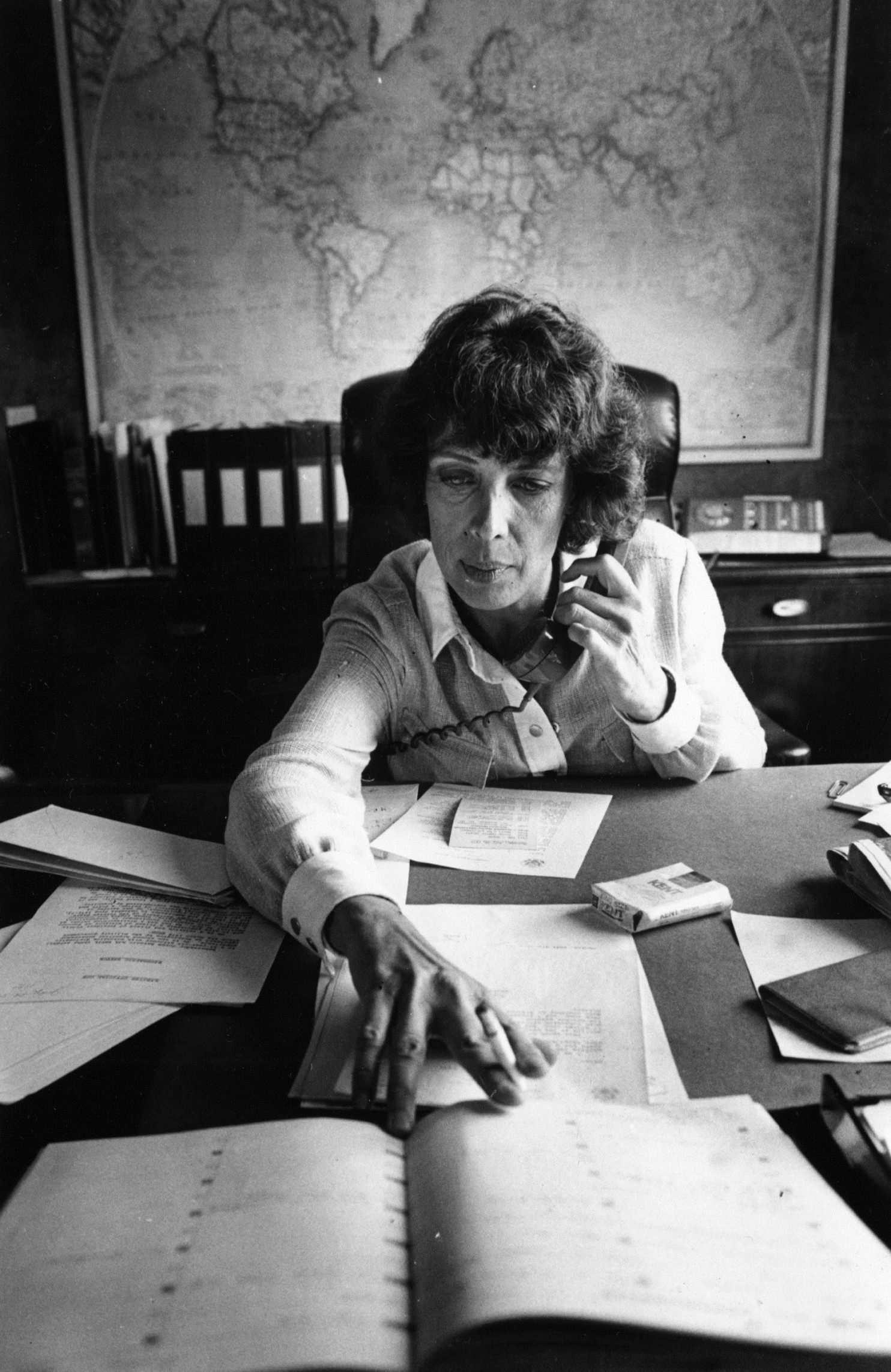
Being a leading politician and human rights defender does not always go together well. Patricia Murphy (“Patt”) Derianwas one of the exceptions. She passed away on 20 May 2016 at the age of 86. She was an American civil rights and human rights activist, who served under President Carter from 1977 to 1981.
After Jimmy Carter won the election, he nominated Derian to be Coordinator for Human Rights and Humanitarian Affairs and elevated the post to that of Assistant Secretary of State for Human Rights and Humanitarian Affairs effective August 17, 1977, and Derian served in that capacity for the remainder of the Carter administration. In this post she worked to improve policy coordination on humanitarian issues such as human rights, refugees, and prisoners of war.
Derian was a vocal critic of Jeane Kirkpatrick and of the so-called Kirkpatrick Doctrine during the 1980s, which advocated U.S. support of anticommunist governments around the world, including authoritarian dictatorships, if they went along with Washington’s aims —believing they could be led into democracy by example. Kirkpatrick wrote, “Traditional authoritarian governments are less repressive than revolutionary autocracies.” Derian objected to Kirkpatrick’s characterization of some governments as only “moderately repressive,” arguing that this line of thinking allowed the U.S. to support “a little bit of torture” or “moderate” prison sentences for political dissenters. Derian pointed out that, when it comes to human rights, in terms of morality, credibility and effectiveness, “you always have to play it straight.” Read the rest of this entry »
Honduras: Killing of LGTBI rights defender Paola Barraza. On 24 January 2016, human rights defender Ms Paola Barraza was assassinated by unknown attackers in front of her house in the neighbourhood of Lempira, in Comayaguela. Paola Barraza, a trans woman, was a member of the board of directors of Asociación LGTB Arcoíris (LGTB Rainbow Association). The human rights defender was at home when unknown persons knocked at her door and called her outside. When Paola Barraza answered the door she was fired upon five times. She died at the scene as a result of her wounds. Paola Barraza was previously attacked in connection with her LGTBI rights work on 15 August 2015 [https://www.frontlinedefenders.org/node/29495] Between 23 June 2015 and 31 August 2015, three other LGTBI rights defenders working in country were killed https://www.frontlinedefenders.org/node/29495. Read the rest of this entry »
Nathalie Margi writes in Open Democracyof 6 December 2015 that throughout Southeast Asia, hundreds of women environmental human rights defenders have been jailed, attacked and defamed as threats to “national security”. They remain without adequate resources, protection and funding for their work. In the piece entitled “Defending land and community: women on the frontlines of climate justice”, she says inter alia: Read the rest of this entry »
The latest statistical report released by Front Line Defenders revealed the appalling reality that human rights defenders all over the world are at great risk to be victims of extreme forms of violence. And based on the organization’s annual report, 157 human rights activists were killed or died in detention in 25 countries in 2015. Latin America, Philippines are named as most dangerous places for Human Rights Defenders. Read the rest of this entry »


 Hans Thoolen on Human Rights Defenders and their awards