In recent years, Guatemala has witnessed a concerning erosion of its State institutions. The co-optation of the judicial system has resulted in the persecution of human rights defenders and justice operators, many of whom have had to flee the country. Despite the election of President Bernardo Arévalo, who led a campaign promising to re-establish the rule of law and fight corruption, the international community must continue to monitor the human rights situation in the country.
A side event – Human rights situation in Guatemala: From Rescuing Democracy to Guaranteeing Justice – aims to shed light on the recent socio-political developments in Guatemala, with a particular focus on the 2023 presidential elections and the dynamics of peaceful protest. It will explore the fragile state of the rule of law in the country and the significant human rights challenges it faces. A critical discussion will centre on the co-optation of the judicial system by criminal groups, which has led to the persistent criminalisation of justice operators and human rights defenders.
Additionally, the event will address the pressing crisis of forced evictions in Indigenous communities. These evictions, often driven by the interests of non-State actors like extractive companies and large-scale development projects, represent a form of cruel, inhuman, and degrading treatment, amounting to torture.
Speakers:
Clément Nyaletsossi Voule, UN Special Rapporteur on freedom of peaceful assembly and of association (TBC)
Lourdes Gómez Willis, Q’eqchi’-afrodescendant professor working on issues of Indigenous women defenders and the impacts of palm oil production
Luis Haroldo Pacheco Gutiérrez, Ex-President of the Council of Communal Mayors of the 48 cantons of Totonicapán With the participation of
Margaret Satterthwaite, Special Rapporteur on the independence of judges and lawyers
Sponsors: Centre for Civil and Political Rights, Franciscans International, Impunity Watch, ISHR, Protection international Mesoamérica, and Peace Brigades International.
Thursday 7 March, 14:00 – 15:00 (CET), Room XXV, Palais des Nations – Geneva Language: English / Spanish
On 25 July, 2023 – International Afro-Latina, Afro-Caribbean and Diaspora Women’s Day, – Amnesty International highlighted nine defenders and collectives who have devoted their lives to ending inequality and violence, advocating a dignified life for all people because their work deserves the recognition, visibility, protection and resources necessary for it to continue to spread.
Rede Vozes Negras pelo Clima, Brazil
Rede Vozes Negras pelo Clima is an initiative of 11 Black Brazilian women who are working in their respective territories to protect human rights, confront climate racism and promote anti-racist socio-environmental justice. They belong to traditional, riverine quilombola communities. They are also activists and leaders of communities that live on the margins of large urban centres, communities that are being directly affected by the consequences of the climate crisis and development projects that fail to take into account the rights of local populations.
They are thus fighting for anti-racist adaptation policies and an energy transition that will guarantee the promotion of human rights and nature. Mitigation initiatives need to incorporate the ancestral knowledge and wisdom of traditional peoples and communities and ensure the participation of those people affected by extreme weather events when decisions are being made as to the investments that need to be made to repair losses and damage.
Dayana Blanco Acendra, Colombia
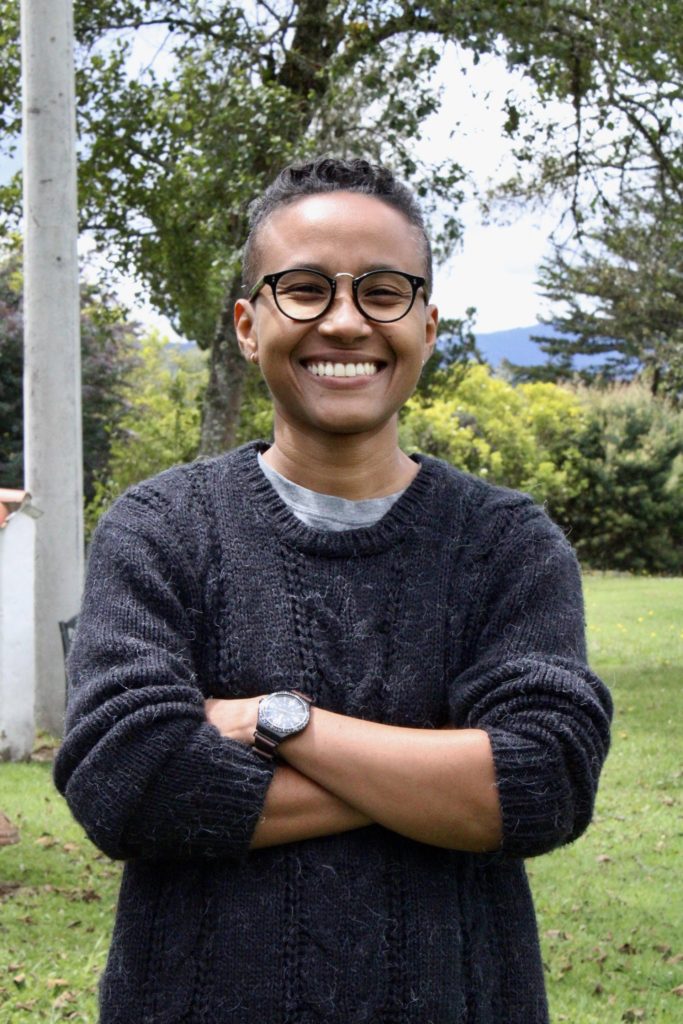
Dayana Blanco is a renowned Colombian lawyer who heads ILEX Acción Jurídica, an Afro-Colombian and Afro-LGBTQI+ organization committed to racial justice in Colombia, Latin America and the Caribbean. According to Blanco, “Racial justice in Colombia requires all of society to commit to combatting the historical inequality that has affected the Afro-descendant population. This means actions to address social and economic inequality.”
With an outstanding academic background and experience in different sectors, Dayana has promoted innovative research on racist police violence, statistical invisibility in the systematization of violence against Afro-descendant leaders and economic and social rights. In addition, together with her team and in coordination with other civil society organizations, she has obtained notable rulings in defence of Afro-Colombian midwifery, overcoming the statistical invisibility of the Afro-descendant population, among others, and demonstrating her dedication to the struggle for equality and justice.
Under her leadership, ILEX has – through legal mobilization, research and strategic communications – become a reference for promoting the rights of the Afro-descendant population. Dayana and her team highlight the importance of addressing social and economic inequality as a fundamental element of racial justice in Colombia, calling on the whole of society to unite in the struggle and build a more equitable future for all.
Donaida Pérez Paseiro, Cuba
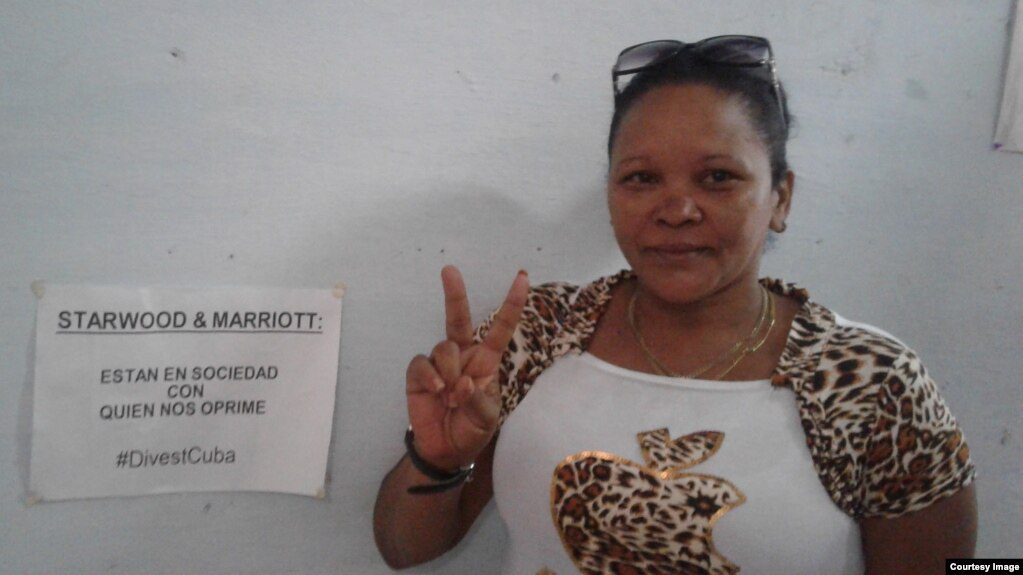
Donaida Pérez Paseiro is a Black activist, religious leader and president of the Asociación Yorubas Libres de Cuba. Yoruba is a religion of the African diaspora that is practised in many countries, including Cuba. Donaida was arrested on 16 July 2021 and sentenced in February 2022 to eight years’ imprisonment by the Santa Clara Municipal People’s Court for “public disorder”, “contempt” and “attacking” an official. According to the information available to Amnesty International, Donaida should never have been charged with these crimes.
The charges of “contempt” and “public disorder” are frequently used in Cuba to limit the right to freedom of expression and peaceful assembly. Both she and her husband, Loreto Hernández García, were tried along with 14 other protesters in what appears to have been an unfair trial.
Donaida is the wife of Yoruba leader and activist Loreto Hernandez Garcia who was unjustly sentenced to seven years in prison for demanding respect for human rights in Cuba during the 11 July 2021 demonstrations.
Donaida is an example of courage and perseverance in the resistance against repression in Cuba. Her commitment has manifested itself in numerous peaceful marches and protests. According to her family, she was a freelance journalist and founded the Laurel Express press agency, where she gave visibility to the injustices and challenges faced by her community in the city of Placetas. Her activism spans multiple spheres, having been a member of the Orlando Zapata Tamayo resistance front and the central opposition coalition. Donaida’s legacy transcends borders and leaves a profound inspiration for those who seek a Cuba without repression.
Guerline M. Jozef, Haiti
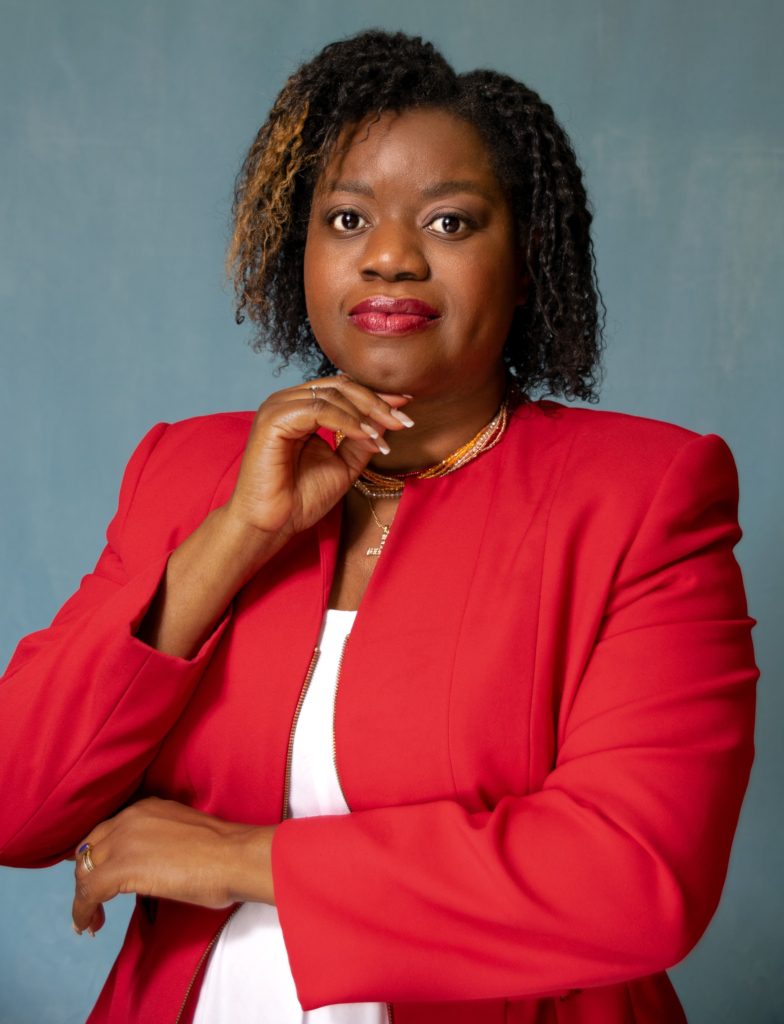
Guerline M. Jozef is the founder and executive director of the Haitian Bridge Alliance, the only Black and Haitian women-led organization serving migrants on both sides of the U.S.-Mexico border. Named one of the most influential people in 2021 on racial issues by Politico, she is also co-founder of the Black Immigrants Bail Fund and the Cameroon Advocacy Network.
The Haitian Bridge Alliance (HBA), also known as “the Bridge,” is a grassroots community-based organization that advocates for just and humane immigration policies and provides migrants and immigrants with humanitarian, legal and social services, with a special focus on Black migrants, the Haitian community, women and girls, LGBTQIA+ people, and survivors of torture and other human rights abuses. HBA also seeks to highlight issues specific to Black migrants and encourages solidarity and collective action to bring about policy changes. Through her work, Guerline reminds us that together, Anpil men, chay pa lou! Many hands lighten the load!
Miriam Miranda, Honduras
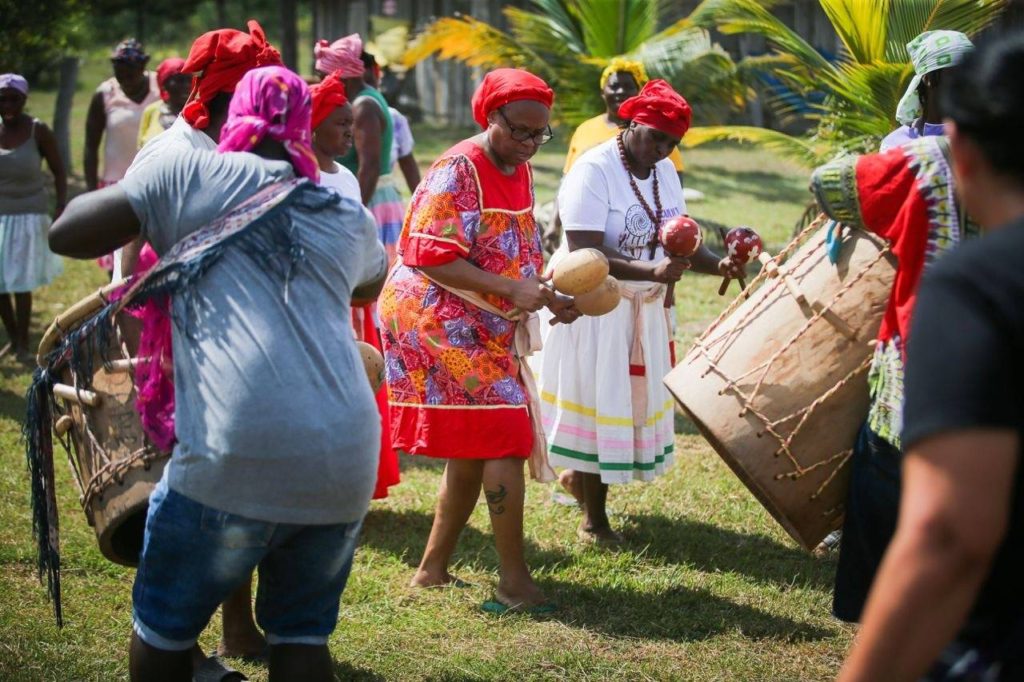
An Afro-indigenous Garífuna leader from Honduras, Miriam Miranda stands out as a courageous defender of human and environmental rights. As coordinator of the Organización Fraternal Negra Hondureña (OFRANEH), she has carried out invaluable work to protect and defend the rights of the Garífuna people in Honduras. Her tireless work, lucidity and commitment have earned her the recognition of prestigious awards, such as that of the Friedrich Ebert Foundation, as well as the Carlos Escaleras and Oscar Romero awards.
Miriam’s struggle is deeply rooted in the Garífuna territory of Honduras and is manifested through the history of OFRANEH, an organization through which these people are building their dignity and their future. The land and the sea, as an indispensable part of their identity, determine an essential struggle to preserve the natural assets of their territory.
Miriam is a highly respected thinker and leader within the social movement. She has an enormous capacity to devour books and mobilize energies from all sides to defend her people. She is one of those people who make life possible, whose words always point forward and who finds strength in the deep roots of her origin, where her future of freedom was born. As the daughter of Barauda (representing Garífuna female strength, Barauda is an historical character who pushed the Garífuna hero Sathuye to continue the struggle for the liberation of his people), Miriam has turned her critical eye to the source of it all: the predatory civilization of consumerism.
Her tireless work and courage inspire others to keep fighting. Her contribution and leadership have already left an indelible mark on the history of Honduras and global struggles for territory. [see also: https://humanrightsdefenders.blog/tag/miriam-miranda/]
Shackelia Jackson, Jamaica
The extrajudicial killing of her brother, Nakiea Jackson, in 2014 pushed Shackelia Jackson into a life of activism. Since then she has been healing, evolving, learning and gathering the tools with which to reconcile her conflicting realities. A political science scholar and communicator, Shackelia is the mother of an empathetic child, who longs with innocence to experience the world. Despite challenges and setbacks, Shackelia remains dedicated to the wider struggle, supporting causes that prevent the institutionalization and normalization of practices that violate human rights and erode the sanctity of life.
Through her grassroots organizing efforts in Jamaica, she has raised funds to support back-to-school initiatives and education programmes, recognizing the importance of empowering the younger generation. Shackelia’s work has gone far beyond her local community. She has become a global force, lending her voice and expertise to international platforms. As keynote speaker at an Amnesty International event in London, she captivated the audience with her powerful words, urging them to stand up and take action. In 2017, Shackelia also participated in roundtable discussions at Amnesty International events in Brazil and the United States, amplifying the voices of the oppressed and demanding accountability.
It was on this journey that Shackelia realized that change starts with each individual. She has encouraged others to join her in writing for rights, and to use their words as weapons against injustice. “Let us write until we are heard, let us write until justice is done,” she said.
Ivana C. Fred Millán, Puerto Rico
Ivana Fred is a prominent Black and transgender activist, writer and leader from Puerto Rico. She has dedicated her life to fighting for human rights and equality for transgender people in her country. Her passion for justice has made her an influential figure and a powerful voice in Puerto Rican society.
Since her first steps into activism in 1999, Ivana has formed part of pioneering projects aimed at trans people and has used her voice and pen to amplify the stories and needs of trans people.
As she says: “Life put me in a place where I could develop as a leader, the ‘Ponte el Sombrero’ project gave me the tools to empower and educate socially disadvantaged and discriminated populations. That was how I came to understand that to exist is to resist”.
Ivana has also made her mark in the media, writing for the Metro newspaper and participating in acclaimed documentaries and films such as “Mala Mala” and “Las Muchachas”. Her presence and perspective have helped generate greater visibility and understanding of transgender experiences in Puerto Rico.
Ivana Fred is currently one of the directors of the organization Trans Goofy Games, where she continues to lead and support initiatives that promote transgender inclusion and empowerment. With unwavering commitment, Ivana has remained a visible leader and loyal activist. From her early days of activism to the present day, her voice has been resolute in seeking dignity and respect for all transgender people.
With her courage and determination, Ivana has shown that to exist is to resist and has paved the way for a more inclusive and respectful future in Puerto Rico and beyond. Her legacy as a visible leader and her tireless activism inspire us all to continue fighting for a world where everyone can live with equality and dignity.
Elena Lorac, Dominican Republic
Elena Lorac is a prominent activist and advocate for human rights in the Dominican Republic, especially on the part of Dominicans of Haitian descent. As national coordinator of the Movimiento Reconoci.do, she has led the fight for the right to nationality and full integration of this community into Dominican society.
With more than 12 years’ experience, Elena has worked to strengthen community leadership and empower black women in the country’s bateyes [sugar mill settlements]. She also provides support to Haitian migrants and Venezuelan migrants and refugees, and is known for her community-based approach.
Elena is also a nationally and internationally renowned speaker, speaking on issues such as nationality, discrimination and racism, and raising awareness of policies that affect Dominicans of Haitian descent in the Dominican Republic. Her tireless work has been instrumental in promoting human rights and achieving the real inclusion of this community in Dominican society.
Aracelis Sánchez, Venezuela
Aracelis Sánchez, a human rights defender and the founder of Organización de Familiares de Víctimas de Violación de Derechos Humanos (Orfavideh), is promoting solidarity and demanding justice together with more than 200 mothers of victims of extrajudicial executions in Venezuela.
Aracelis, who lost her son Darwilson Sequera, has been fighting for more than 10 years to get cases of human rights violations committed by Venezuelan state security forces investigated. Orfavideh provides human rights training workshops for mothers, equipping them with tools with which to demand guarantees and use the mechanisms of justice in Venezuela.
Aracelis stresses that when victims are empowered and able to put pressure on prosecutors, their cases are investigated. She believes that support and empowerment are essential to transform grief into positive action and thus achieve justice for victims and their families.
Kenyan social justice activist Naomi Barasa and Colombian human rights lawyer Daniel Prado have won the first annual Henry Brooke Awards for Human Rights Defenders, created in 2018 by PBI UK and pro bono legal network the Alliance for Lawyers at Risk.
These awards are in honour of the life and legacy of Sir Henry Brooke – barrister at Fountain Court Chambers, founder of the Alliance for Lawyers at Risk and patron of PBI UK – who passed away in January 2018. They are presented annually to defenders who encapsulate the qualities Sir Henry most admired and reflected in his own life: selflessness, courage, and commitment to seeking justice for the oppressed and the marginalised. The award winners were selected by a panel of leading figures from the UK legal and human rights communities. For more on this award, see: http://www.trueheroesfilms.org/thedigest/awards/henry-brooke-awards-for-human-rights-defenders
Naomi Barasa was selected for the award in recognition of her remarkable determination and commitment to grassroots human rights work in the most disadvantaged social circumstances. Born in an informal settlement on the outskirts of Nairobi, Naomi was a close witness to street violence, police brutality, impunity and the overwhelming inequality of the slums. Her journey as a human rights defender has embedded her in the struggle to improve living conditions for Nairobi’s 2.5 million slum dwellers. Naomi was instrumental in the campaign that led to the passage of the Sexual Offences Act in 2006, and has acted as Campaigns Manager for the Right to Adequate Housing with Amnesty International since 2009. She has contributed to the adoption of legislation such as the Housing Bill 2011, the Evictions and Resettlement Bill and the Slum Upgrading & Prevention Policy. What motivates her work, she says, is “the resilience of the suffering people and the desire to see a different world. A world that has a mathematics of justice, not of inequality.”
Daniel Prado was selected as an example of a lawyer who has defied huge personal risk in order to pursue justice for the victims of human rights violations, oppose impunity and defend the rights of marginalised communities against powerful interests. He began his career by providing legal support to the family members of victims of enforced disappearance in the early 1990s and currently works with the Colombian NGO the Inter-Church Justice and Peace Commission (CIJP). Among other emblematic cases, Daniel represents victims of paramilitarism in the case of Los Doce Apóstoles (The Twelve Apostles), in which Santiago Uribe, brother of former President and Senator Alvaro Uribe Velez, stands accused of creating paramilitary groups responsible for more than 500 murders. Daniel’s involvement in this and other high-profile cases has seen him exposed to death threats, harassment and a public campaign of defamation and slander. Speaking of his work, he has said: “The risks in Colombia are unstoppable. I have taken many cases that have had consequences for a lot of people… we live in a constant state of anxiety about what can happen to us.”
PBI provides security and advocacy support to both Naomi Barasa and Daniel Prado, to help mitigate the risks they face as a result of their human rights work.
Interesting illustration in Guatemala of how macho notions can get a woman human rights defender off the hook: On 27 May 2014, charges of “false imprisonment”, “coercion” and “threats” (including brandishing a machete) against human rights defender Ms Telma Yolanda Oquelí Veliz del Cid were dismissed by a Court of First Instance. However, the trial against four other community members, who face the same accusations, is set to continue. The decision of the judge to dismiss the proceedings against Telma Yolanda Oquelí Veliz del Cid was partly on the basis that, as a woman, she would not be able to carry a machete. The decision regarding Telma Yolanda Oquelí Veliz del Cid can be appealed by the complainants within three days. Judge Adrian Rolando Rodríguez Arana stated that additional evidence to support the charges against the four other community leaders must be presented by the Prosecutor’s Office on 30 June 2014. The four men are under house arrest and must present themselves to the Justice of the Peace of San José Del Golfo every month. Read the rest of this entry »
How do I become an international human rights lawyer? is the topic of an article by Hannah Gannagé-Stewart in the Guardian of Friday 26 April 2013. She rightly starts by stating that “the life of an international human rights lawyer is not all jet setting glamour”. Still, it is one of the most frequent questions put to me at the end of a lecture, often during the reception afterwards under 4 eyes: “I would like to work for human rights – what do you advise me?” is the usual opening line. My half-serious standard reply: “if your really want to work FOR human rights, I advise you to get very rich and donate half your wealth to the human rights movement“, is not always appreciated, but correct at the macro level as the shortage of funds is much more problematic than that of talent and devotion in the human rights movement. The question asked was of course situated at the micro level as in: “I want to work IN human rights (even if the pay is not very good)“.
The Guardian piece (although focusing on the UK) contains good, practical advice and most of it would be valid in other countries:
“Jet-setting round the globe, setting the worlds highest courts alight with spectacular oratory performances, radically changing the lives of the most vulnerable. Hell, theres probably a Nobel peace prize in there somewhere too right? Think again. There are actually very few lawyers who would describe themselves as international human rights lawyers, Read the rest of this entry »


 Hans Thoolen on Human Rights Defenders and their awards