..We, the undersigned Sudanese, African and international organisations and individuals, write to you ahead of the 40th session of the UN Human Rights Council … to express our concerns and urge you to address the Sudanese government’s crackdown on peaceful demonstrators and ongoing violations of human rights. Since 13 December 2018, tens of thousands of people have protested throughout Sudan and the authorities have responded by indiscriminately firing live ammunition and tear gas into crowds of peaceful protesters killing more than 50 civilians.
These attacks are not taking place in a vacuum: they follow decades of violations committed during systematic and widespread attacks on civilians — amounting to crimes against humanity — both in the context of popular protest and multiple conflicts waged against populations in Sudan’s designated peripheries. Sudan is one of the few countries subject to HRC special procedures regime since 1993, an International Criminal Court (ICC) situation investigation, a UN sanctions regime all-encompassing human rights and humanitarian law mandates. In light of this, preventing a further escalation of the situation is essential. As provided by Resolution 38/18 and highlighted by UN High Commissioner for Human Rights Michelle Bachelet, the Human Rights Council has an important role to play in contributing to the prevention of human rights violations. An early intervention on the part of the Council and of all UN human rights bodies and experts is crucial.
We urge the Human Rights Council to reiterate to the Government of Sudan that all Sudanese have the inherent right to life, freedom from torture and inhumane and degrading treatment, freedom of expression, association, and peaceful assembly including freedom of the media. We further urge you to call on the Government of Sudan to:
- Stop the use of lethal and excessive force against peaceful protesters/demonstrators
- Release all those arbitrarily detained by NISS and other government forces, and for those charged, ensure due process of law and a fair trial including the right to promptly access courts, to review the legality of their detention and access a lawyer of their own choosing
- End its policies of post and pre-print censorship of newspapers
- End all acts of harassment and intimidation of citizens including human rights defenders, peaceful demonstrators, journalists (international and national), doctors, engineers, lawyers and others who seek to exercise their rights to freedom of expression, association, and peaceful assembly
We call on the Human Rights Council to:
- Dispatch urgently an independent international fact-finding mission, to be appointed by the President of the Human Rights Council, to establish the facts and circumstances of the alleged recent human rights violations committed in the Sudan, including excessive use of force and killings of peaceful demonstrators, as well as torture and ill-treatment of detainees by the Government of Sudan, with a view to ensuring full accountability for perpetrators and justice for victims; and
- Request that the fact-finding mission present an oral update to the Council at its fourty-second session and a full report at its fourty-third session.
Background
Since 13 December 2018, tens of thousands of people have protested throughout Sudan. Protests were triggered by the rising prices of basic commodities and are now calling for regime change and a transitional government that will fulfill aspirations for justice, peace, freedom and democratic transformation.
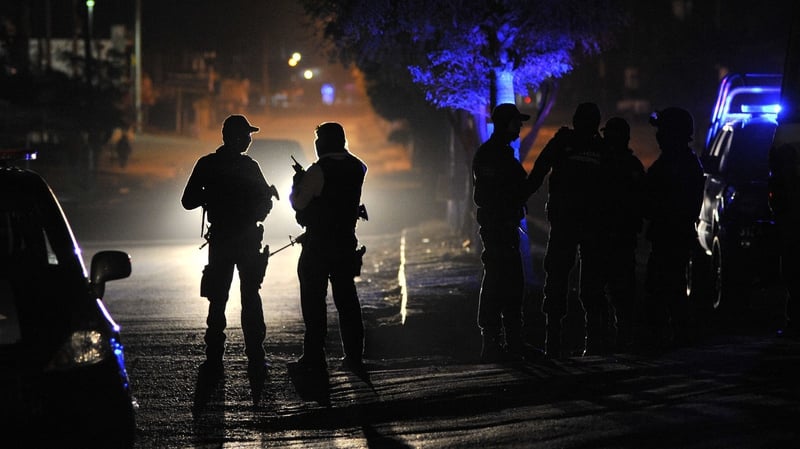
The Sudanese authorities, including the National Intelligence and Security Service (NISS) and the Anti-Riot Police as well as private militias in civilian clothes, have responded by indiscriminately firing live ammunition and tear gas into crowds of peaceful protesters, killing civilians. At the start of January, the number of civilians killed was reported to be 40 but civil society place the number now above 50. Witnesses have reported that snipers have targeted demonstrators in the head and chest. Security forces have also attacked wounded people undergoing medical treatment in hospitalsand private homes.
On 9 January 2019, Sudanese authorities fired live ammunition and tear gas inside Omdurman Hospital, arrested doctors and interrupted their care of patients. Tear gas was also reportedly fired in several other hospitals on 13 January. In a joint statement, the Troika – comprising of the US, Britain and Norway – and Canada, stated they were “appalled by reports of deaths and serious injury” of protesters, calling on the Government of Sudan to ensure a “fully transparent and independent investigation.” Sudanese officials and leaders of the ruling NCP have issued numerous statements threatening peaceful protesters. Sudan’s President Omar al Bashir has stated “the objective is not to kill protesters, but to safeguard the security and stability of citizens.” However on 8 January 2019 former Vice President Ali Osman Taha, and current member of the leading bureau of the ruling NCP, warned opponents of the government that militia “brigades” would defend the regime.” On 10 January the former Speaker of the Parliament Al-Fatih Izzeldeen threatened those who protest saying “we will cut their heads off.” As of 25 January, the Government of Sudan had officially acknowledged29 deaths.
Since the start of the protests, human rights organisations have documented the detention of hundreds of people including opposition politicians, students, doctors, advocates, activists and journalists, university professors. The number of detained is difficult to corroborate due to access constraints. We are concerned for the physical and psycho-social well-being of those detained by NISS. Many are detained through the use of emergency laws, which permit prolonged, if not indefinite, detention through arbitrary preventative arrest. Those detainees face inhumane and degrading treatment and torture, both of which have been widely reported by our organisations, including in the context of the current protests.
Of particular concern is the detention, torture and ill-treatment of Darfuri students. On 23 December 2018, the NISS raided a home in Sennar and detained 33 students, subsequently transferring them to incommunicado detention in Khartoum. In two other raids in Khartoum North, about 15 students were also detained. Over 50 Darfuri students have since been unconstitutionally detained. The chief of NISS later held a press conference stating that the detained students were members of an armed Darfuri movement (SLA/ Abdelwahid) that had received training from Mossaad, the Israeli intelligence agency, and that they had been sent to infiltrate the protests. Videos broadcast on Sudan TV and other government affiliated television channels showed the detained students confessing to instigating the demonstrations with clear signs of beatings and fatigue.
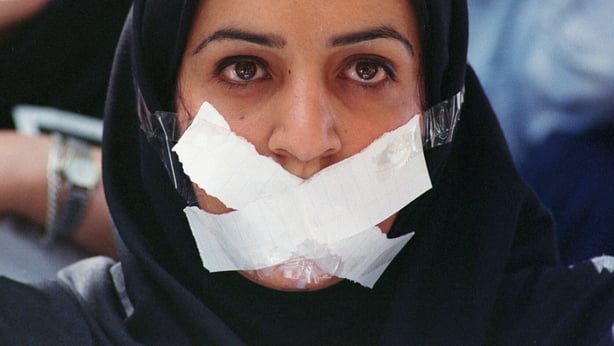
We are also concerned about the restrictions placed on media freedom. The Government has restricted access to social media whilst continuing to target traditional media through newspaper confiscations and intimidating and harassing journalists covering the protests. The restriction of the internet is a violation of the public’s right to receive and seek information and is in violation of Article 19 of the International Covenant on Civil and Political Rights (ICCPR). Nine journalists were briefly arrested on 27 December 2018 by the NISS outside the headquarters of the Al Tayar following their protests concerning the harassment of the media by the security services. Similarly, 10 journalists were arrested and 3 journalists physically attacked by security forces on 25 December 2018.
These incidents are regrettably typical of the kinds of attacks on civilians by the state security forces over the last decade. In September 2013, government forces used live ammunition in a systematic manner to target peaceful protesters, killing more than 170 protesters and arbitrarily detaining at least 800. Many of whom were subjected to torture and ill-treatment whilst in detention. To date there has been no accountability for these deaths, injuries and other serious violations carried out by Sudanese authorities against protesters. Various UN human rights mechanisms including the UN Independent Expert’s reports (2017) have called for the establishment of an independent judicial inquiry into the killings and various other human rights violations committed but the Government of Sudan has not adequately responded to these calls.
A patchwork of legal immunities shields Sudanese government forces from criminal prosecution. Complaints against a member of the security services are curtailed by immunity legislations governing the Sudanese Armed Forces (SAF), NISS, Rapid Support Forces (RSF) and police for acts committed “in good faith” and “in the course of duty.” Immunities can only be waived by the relevant governing bodies of the Ministry of Interior, Defence or the Director of NISS. The UN Human Rights Council, the UN Security Council, the African Commission on Human and Peoples Rights (ACHPR) and the African Union have all identified serious systematic impediments to accountability—both de jure and de facto–within the current Sudanese legal and political system. The African Commission for Human and People’s Rights (ACHPR) for example has repeatedly considered this issue in a number of cases against Sudan concluding that Sudan’s legal system does not provide effective remedies for victims of human rights violations. The existence of an ongoing admissible situation investigation with respect to Sudan before the ICC — including outstanding charges against government officials from the President downwards —is additionally indicative.
 describes the situation in Sudan as follows: The ongoing violence by government forces, pro-government militia groups and anti-government armed group forms the backdrop to continued harassment, arbitrary arrests, incommunicado detentions and alleged torture of human rights defenders (HRDs) by Sudanese military and security forces. Freedom of expression and freedom of association and assembly have been increasingly curtailed. In particular, NGO members, journalists and student activists have been targeted.
Human rights defenders are vulnerable to arbitrary arrest and detention by the National Intelligence and Security Services (NISS). The 2010 National Security Act grants the NISS extensive powers to arrest and detain people up to four and a half months without judicial review, and with complete impunity when the detention is arbitrary. Human rights defenders have been held incommunicado, without access to legal representation, and family visits have been refused without reasons. Detained HRDs have been often held in NISS cells that fall outside the jurisdiction of prisons laws and regulations, where they have also suffered ill-treatment and torture.
Under emergency law, human rights defenders in Blue Nile, a war zone, suffer heavy harassment. They are targeted by government and militant groups for their active work on human rights, in particular their work on IDPs. Human rights defenders and community leaders from this area have faced military trials and many have been forced to flee the country and continue their work from outside Sudan.
The crackdown on civil society that started after the decision of the International Criminal Court on 4 March 2009 to issue an arrest warrant against President Omar Al Bashir continues to this day. In addition to the initial closure of thirteen international organisations and many local NGOs, in late 2012, the Humanitarian Affairs Commission (HAC), a regulatory body governing the work of NGOs, and the Ministry of Culture ordered the closure of five local human rights and cultural organizations, including ARRY Organisation for Human Rights and Development (ARRY), the Al Khatim Adlan Centre for Enlightenment and Human Development (KACE), the Sudanese Studies Center (SSC), the Narrative and Criticism Forum (NCF) and Beit Al Finoon. HRDs who protested the closure of the organisations were arrested.
Women human rights defenders face sexual violence, prosecution and harsh punishments imposed by the government security forces. Women organisations are under intense scrutiny and struggle with laws that generally discriminate against women.