36-year-old Luis Manuel Otero Alcántara is a Afro-Cuban self-taught artist. He comes from a poor and marginalized neighbourhood in Havana and uses sculptural and performance art to protest violations against freedom of expression. He has been arrested multiple times for his art and activism and is currently in prison.
Otero Alcántara is the general coordinator of the San Isidro Movement – a constellation of artists, journalists and academics promoting freedom of expression. It was established in 2018 as a reaction to Decree 349. The decree requires artists to obtain advance permission for public and private exhibitions and performances. Decree 349 is one of the legal instruments used to silence artists, musicians and performers who are critical to the Cuban government.
Otero Alcántara’s artivism has come at a high personal cost. Since 2016 he has been the subject of interrogations, political persecution and arrests, and his art has been confiscated and destroyed by state security officers.
Luis Manuel Otero Alcántara creates sculptures, drawings, and performative art. He is currently serving a five-year sentence in the high-security prison Guanajay outside of Havana.
Expressing oneself through art: A basic human right
Despite this, he continued his artivism through performance pieces to raise awareness of Cuba’s ongoing repression of independent artists and activists. Otero Alcántara was detained on July 11, 2021, after posting a video online of his planned participation in the protests. In 2022, he was convicted for “contempt, public disorder and insults to national symbols”. He is currently serving a five-year sentence in Guanajay maximum security prison outside Havana.
The Rafto prize 2024 aims to highlight the importance of the work of Luis Manuel Otero Alcántara and the basic human right to expressing oneself through art. We call upon the Cuban government to stop the persecution of artists and human rights defenders. We also urge them to free Otero Alcántara and all political prisoners in Cuba.
The 2023 Beethoven Prize for human rights has been awarded to the Latvian violinist and ensemble leader Gidon Kremer. Kremer, 76, has been outspoken in his opposition to Russia’s wars of aggression in Chechnya and Ukraine. He has also played in jails and other places of despair.
The award will be presented to Kremer in an award ceremony and concert held in Bonn, Germany, on November 19, 2023.
For decades, Kremer, 76, has long held concerts and made statements against political grievances and injustice. He has organized concerts for Ukraine, a concert in Moscow for the victims of the Chechen war, and collaborated with theater director Kirill Serebrennikov, who was persecuted in Russia.
Further, his Gidon Kremer Foundation promotes emerging artists through instrument loans, scholarships, and performance opportunities, as well as supports the chamber orchestra Kremerata Baltica, which he founded in 1997, in bringing performances to socially disadvantaged people and hosting concerts in developing countries.
“I try to set my independent judgments to music every now and then, whether with the violin or with words, whether with a letter or a gesture — it’s important to me, to ensure justice,” he said in an interview with Deutschlandfunk Kultur in 2021.
As a universal language that transcends cultural barriers, music is a medium where people and artists alike can have their voices heard in a manner that words alone cannot. Music has often been used to showcase pressing political and societal issues, including the promotion and protection of human rights. These 15 artists are listed in a post by Human Rights Carreers as examples of those who have used their musical talent and platform to share awareness of human rights issues across the world and bring a voice to marginalized members of society. Many readers will have their own preferences.
Pete Townshend is an English musician, songwriter and vocalist of “the Who” rock band, one of the most influential rock ensembles during the 1960s and 1970s. Alongside his career in the rock music industry, Townshend has a long history of charity and philanthropic work for human rights issues, advocating for greater drug rehabilitation and activism for children’s rights. In 1979, Townshend was the first musician to perform for Amnesty International’s Human Rights Concerts and inspired other renowned rock musicians to support the human rights cause. Townshend is quoted saying, “Amnesty does things that I can’t do in my work. It deals with the specifics of injustice… It makes them public. It was 1979 that I appeared at ‘The Secret Policeman’s Ball’… It was amazing subsequently to see what ‘The Secret Policeman’s Ball’ triggered. Quite big names got involved in supporting Amnesty. And it became apparent that big names in music and Amnesty melded very well. It’s good to see that what I did kicked that off…”
Sting
Performing under the stage name, “Sting”, Gordon Sumner is a Grammy-Award winning guitarist, vocalist and songwriter who is renowned for his work as both a solo musician and an ensemble musician with the rock band “the Police” between 1977 – 1984. Sting is heavily involved in human rights activism, having written songs inspired by his concern for world hunger and oppressive political regimes, and has also extended his activism beyond music by writing an open letter for the decriminalization of drug possession in the United Kingdom in 2011. He has also signed several petitions against the death penalty in Belarus and has cancelled concerts in response to human rights issues in several countries. Sting’s humanitarian activism has been recognized by Amnesty International and he has performed for the NGO’s Human Rights Concerts on several occasions.
Bono
Described as the world’s best known philanthropic performers and most politically effective celebrity of all time by the National Journal, Bono (Paul Hewson) has worked extensively as a rock musician in the band U2, a philanthropist and human rights activist. Focusing much of his efforts into advocating the fight against AIDS and extreme poverty in Africa, Bono has lobbied governmental entities to adopt human rights-based policies under his positions as the co-founder of ONE, a global movement campaigning to end extreme poverty. More recently, Bono raised awareness of vaccination against COVID-19 and vaccine inequality around the world and in April 2022, Bono recorded an acoustic rendition of “Walk On” by his band, U2, for the Global Citizen’s Stand Up for Ukraine livestream, urging global leaders to support Ukrainian refugees. Bono was also invited by Ukrainian president Volodymyr Zelenskyy to perform in a metro station in Kyiv, showing his solidarity to Ukraine under invasion from Russia. See also: https://www.trueheroesfilms.org/thedigest/laureates/292E53F2-AE54-E5BA-BE5B-17ACD95D9B40
Awarded “The Ambassador of Conscience Award” by Amnesty International in 2016, Angélique Kidjo is a Beninese singer-songwriter renowned for her creative music videos and unique musical style that integrates Afropop, Congolese rumba, jazz and Latin music genres. Within her 30-year musical career, Kidjo has been a prominent advocate for the expression of freedom, the education of girls in Africa and has expressed concerns regarding female genital mutilation and has worked as a UNICEF Goodwill Ambassador since 2002. Alongside her major ambassador roles, Kidjo is the founder of The Batonga Foundation, a non-profit organization that empowers women in Benin and upskills these women for socio-economic mobility. See also: https://www.trueheroesfilms.org/thedigest/laureates/B3AF6E27-B7AD-8D1D-C09E-B7EAA953F3C3
Lang Lang
Described as one of the most exciting and accomplished classical musicians in the world, classical pianist Lang Lang has not only revolutionized the classical music industry but has also used his music as a way to advocate for human rights globally. Appointed as a UNICEF Goodwill Ambassador and a Messenger of Peace, Lang Lang primarily advocates for children’s rights and access to education through concerts that raise funds for UNICEF and other humanitarian crises.
Buffy Sainte-Marie
As an Indigenous Canadian singer-song writer and composer, Buffy Sainte-Marie’s music primarily revolves around the issues faced by the Indigenous peoples of Canada and the United States. Buffy began her advocacy efforts for the protection of Indigenous artists, performers and their intellectual property by establishing the Nihewan Foundation for Native American Education in 1966 and has moved on to founding The Creative Native Project, an initiative which seeks to empower Indigenous youth in the performing arts. More recently, Buffy was awarded the Allan Slaight Humanitarian Spirit Award and was invited to the Canadian Music Week in 2020.
Maxim Vengerov
Hailed as one of the most talented violinists in the 21st century, Maxim Vengerov was the first classical musician to be appointed as a UNICEF Goodwill Ambassador in 1997. Alongside his musical accomplishments, Vengerov has focused much of his advocacy on the promotion of children’s education and rights and has visited countries such as Turkey, Uganda and Bosnia and Herzegovina representing UNICEF. Vengerov has also performed at #EndViolence events in Bucharest, Romania for UNICEF Romania.
Bruce Springsteen
Bruce Springsteen is an American singer-song writer, known as one of the original founders of the heartland rock genre, which combines elements of mainstream rock music with narratives of the American working class. Throughout his musical career, Springsteen has been a long advocate for LGBT rights, the empowerment of women and democracy, using his international platform to raise awareness of social issues. Springsteen was first invited to perform for Amnesty International in 1988 and has since continued his advocacy of human rights through his music.
Nadya Tolokonnikova
As the leader of the Russian feminist punk band Pussy Riot, Nadya Tolokonnikova uses her musical platform to spread awareness of human rights issues through her music. As a passionate feminist, Tolokonnikova delved into themes of sexism and rape culture in her newest EP, Panic Attack, and has agreed to donate a portion of the proceeds from her EP to a shelter for domestic violence in Russia. Tolokonnikova herself was recognized by a political prisoner by the Union of Solidarity with Political Prisoners and Amnesty International described her as a “prisoner of conscience” due to the “severity of the response of Russian authorities.”
Piera Van de Wiel
Piera Van de Wiel is a British singer and composer who uses her music as a platform for her human rights advocacy. During the COVID-19 pandemic, Van de Wiel released a single, “Used”, to raise awareness of the increase in domestic violence and abuse against women during the pandemic with the support of the United Nations Spotlight Initiative. Alongside her musical pursuits, Van de Wiel is the founder of the non-profit organization, Stronger With Music, a movement that works towards achieving the UN Sustainable Development Goals.
Evan Greer
Evan Greer is a trans/genderqueer artist based in Boston who composes acoustic songs that advocate technological security, LGBTQ rights and movements for justice and liberation. Alongside their musical accomplishments, Greer is the founder of a non-profit organization called Fight for the Future, which aims to secure digital rights and banning unethical technological practices.
Max Richter
German-British composer and pianist Max Richter is one of the most prominent composers of the 21st century, boasting over a billion streams of his music and a million album sales throughout his 25-year musical career. Richter has previously responded to the Iraq War, the 2005 London terrorist attacks and the Kosovo War through his music and his most recent album, “Voices” takes inspiration from the United Nations Declaration of Human Rights. All ten of the tracks (except for the final song) incorporate text from the 1948 UNDHR document and Richter himself has stated that the album is a response to the human rights abuses around the world and the need for social justice and equality of humans around the world. See: https://humanrightsdefenders.blog/2020/12/09/max-richters-voices-to-be-broadcast-for-human-rights-day-by-34-countries/
Hans Zimmer
Composer of award-winning films such as The Dark Night, The Lion King and The Rock, Hollywood composer Hans Zimmer has established himself as one of the most eminent film composers in history. Zimmer was invited to compose an anthem to celebrate Amnesty International’s 50th anniversary, titled “One More Voice for Freedom” in commemoration for International Human Rights Day. Zimmer himself is quoted saying “it was a privilege to create this piece of music for a cause which is so close to our hearts” and that it is my “hope that the anthem will inspire people to support Amnesty’s vision of a world where fundamental rights are protected for everyone. We should all join Amnesty in standing up for justice, freedom and human rights”.
Alicia Keys
Dubbed as the “Queen of R&B”, American singer-song writer Alicia Keys has intertwined her passion for music with human rights activism through her extensive philanthropic work in her musical career. Keys is the co-founder of the non-profit organization, Keep a Child Alive, that provides treatment and social support to children and families affected by HIV in Africa and India. As part of her work in Keep a Child Alive, Keys host an annual fundraising gala called the Black Ball, where she invites major musical artists to perform at the event to raise funds for HIV and AIDS activism. See: https://www.trueheroesfilms.org/thedigest/laureates/e062efc4-e1ca-47c7-b53d-ec1a018d3bb9
International Women’s Day is today 8 March and celebratory events are being held around the world. This year’s theme is #BreakTheBias, aimed at imagining “a world free of bias, stereotypes, and discrimination.” While this special day offers hope for gender equity, it is also a reminder of the omnipresent phenomenon of violence against women, which exists regardless of the day, and needs to be addressed in a fundamental way.
Amnesty International issued a statement “International Women’s Day: Dramatic deterioration in respect for women’s rights and gender equality must be decisively reversed“
Alarming assaults on women’s rights around the world in 2021/22.
Legal protections dismantled, and women human rights defenders now at unprecedented risk.
Protection and promotion of women’s and girls’ rights and support for women human rights defenders crucial, including for Covid-19 recovery.
Governments must act decisively to reverse regressions and uphold human rights for women and girls.
Catastrophic attacks on human rights and gender equality over the past twelve months have lowered protection for and upped threats against women and girls across the globe. On International Women’s Day, the organization called for bold action to reverse erosions of human rights for women and girls.
“Events in 2021 and in the early months of 2022 have conspired to crush the rights and dignity of millions of women and girls. The world’s crises do not impact equally, let alone fairly. The disproportionate impacts on women’s and girls’ rights are well-documented yet still neglected, when not ignored outright. But the facts are clear. The Covid-19 pandemic, the overwhelming rollback on women’s rights in Afghanistan, the widespread sexual violence characterizing the conflict in Ethiopia, attacks on abortion access in the US and Turkey’s withdrawal from the landmark Istanbul Convention on Gender Based Violence: each is a grave erosion of rights in its own terms but taken together? We must stand up to and stare down this global assault on women’s and girls’ dignity,” said Amnesty’s Secretary General, Agnès Callamard. [see https://www.amnesty.org/en/latest/news/2022/03/international-womens-day-dramatic-deterioration-in-respect-for-womens-rights-and-gender-equality-must-be-decisively-reversed/]
Human Rights Watch focuses on Afghanistan: On International Women’s Day, we should remember Afghanistan, and consider what the state of women’s rights there means for the struggle for gender equality worldwide. The Taliban were notorious for violating women’s rights when they ruled Afghanistan from 1996 to 2001. So, when the Taliban took control of Afghanistan again on August 15 last year, Afghan women’s rights defenders were deeply skeptical that the new rulers would be any different from the Taliban that controlled the country before, despite their pledges to respect women’s rights. They were right.
In less than seven months since taking over, the Taliban have:
Afghanistan is not the only country where women’s rights are under attack this International Women’s Day. But the speed and extent of the obliteration of women’s rights in Afghanistan is a warning to women around the world about the fragility of progress toward equality, how quickly it can vanish, and how few will defend it. We should all be in solidarity with Afghan women; their fight is a fight for women’s rights everywhere. [See: https://www.hrw.org/news/2022/03/08/standing-afghan-women-and-girls-international-womens-day]
On International Women’s Day, UN Human Rights stands with women and girls human rights defenders of all ages, backgrounds & identities leading our collective struggle to protect our climate and environment. See.g.:
Meet Brianna Frueran, a Pacific climate change activist fighting for her native Samoan islands’ survival.
Meet Mya Pol, a content creator from the United States who advocates for disability rights and educates people about environmentalism on her social media platform.
On 17 February 2021, 10 human rights NGOs addressed an Open letter to all Commonwealth Heads of Government
Excellencies,
Re: Call for independent investigation into Rwandan singer Kizito Mihigo’s death
On the one-year anniversary of the death of popular gospel singer and peace activist, Kizito Mihigo, civil society organizations around the world are calling on the Rwandan authorities to allow an independent, impartial, and effective investigation into his death in custody. As your governments prepare to attend the Commonwealth Heads of Government Meeting in Kigali in June, we are writing to ask you to engage with your counterparts in the Rwandan government in support of this call.
On February 14, 2020, the Rwanda Investigation Bureau (RIB) confirmed that Mihigo had been arrested close to the border, accused of attempting to illegally cross into Burundi, joining “terrorist” groups and of corruption, as well breaching the terms of his release from prison in 2018. Just days later, on February 17, 2020, Rwanda National Police announced that Mihigo had been found dead in his police cell in Kigali at 5 am that morning, in an alleged suicide. See: https://thedigestapp.trueheroesfilms.org/laureates/f8f64eb0-a9b5-40b2-a5f5-ccfb52168854/edit
However, there are reasons to doubt this version of events. In Rwanda, dissidents and critical voices are often the target of threats, judicial harassment, and arbitrary arrest. In recent years, several opposition members and journalists have gone missing or been found dead in suspicious circumstances. After he released a song in 2014 expressing compassion for victims of the genocide and of other violence, understood as a reference to the crimes committed by the ruling Rwandan Patriotic Front as it took control of the country in 1994, Mihigo was threatened, detained incommunicado, and imprisoned for several years. After his release in 2018, and up to the days before his death, Mihigo informed contacts that he was being threatened to give false testimony against political opponents of the government and wanted to flee the country because he feared for his safety. The news of Mihigo’s death caused shockwaves in Rwanda and beyond. Before falling out of favour with the government in 2014, Mihigo had played a prominent role in Rwandan public life including helping to compose the new national anthem in 2001 and regularly performing at official functions. A genocide survivor himself, Mihigo’s work to promote reconciliation received equally widespread recognition; in 2011, for example, First Lady Jeannette Kagame presented him with a Celebrating Young Rwandan Achievers award in honour of his work.
On the day that Mihigo’s death was announced, and before an independent investigation could have been conducted, RIB spokesperson Marie-Michelle Umuhoza told local media that Mihigo had “strangled himself” with his bedsheets, had displayed “unusual behavior” while in custody, and had refused to speak with investigators, his lawyer and his family. On February 26, citing an autopsy report, the National Public Prosecution Authority concluded that Mihigo’s death “resulted from suicide by hanging” and said that it would not pursue criminal charges…
Mihigo is one of several detainees to have died in suspicious circumstances while in detention in Rwanda over the last several years. Independent, impartial and effective investigations capable of leading to credible prosecutions are essential to deter future violations and to promote accountability, justice, and the rule of law, and failure to conduct such investigations is a violation of the state’s obligations under the right to life.
In the Commonwealth Charter of 2013, member states reaffirmed their core values and principles, including upholding human rights, freedom of expression, the rule of law and the role of civil society. Holding the CHOGM summit in Rwanda without addressing the absence of progress by Rwandan authorities towards accountability for human rights concerns more generally, and Mihigo’s death in particular, casts serious doubts on the Commonwealth’s human rights commitments.
For the sake of human rights in Rwanda and the integrity of the Commonwealth, we urge you to support the call on the Rwandan authorities to allow an independent, impartial, and effective investigation into Mihigo’s death in custody.
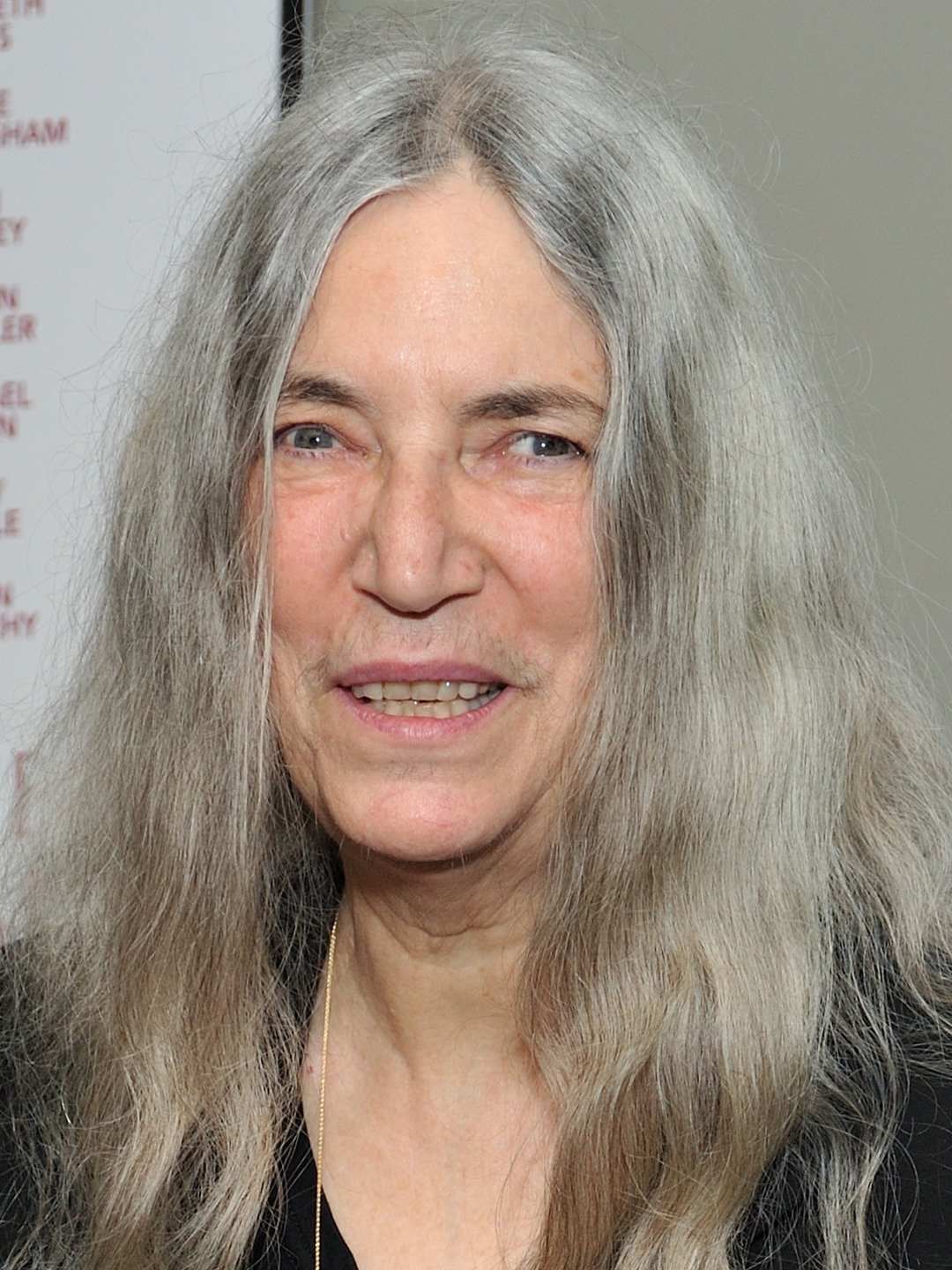
Musician Patti Smith attends a special screening of The Seagull at the Elinor Bunin Munroe Film Center in New York, NY on May 10, 2018. (Photo by Stephen Smith/SIPA USA) (Newscom TagID: sipaphotoseight127601.jpg) [Photo via Newscom]
Patti Smith is honored for her social commitment “She is an activist – with her books, her songs and her life. She stands up for human rights, peace, freedom, poverty reduction, inclusion and climate protection all her life,” the message said. In addition, Smith is a declared Beethoven fan. The Beethoven Academy has taken human rights, peace, freedom, poverty reduction and inclusion as its guiding principles. The International Beethoven Prize was awarded for the sixth time. [see: https://www.trueheroesfilms.org/thedigest/award/c05408e0-e598-11e7-a009-858a33846a9e].
“I believe in the power of music to inspire us, to connect our hearts, to give voice to feelings for which words alone won’t suffice, to wake us up out of complacency, to galvanize and fuel social movements,” the singer said upon accepting his award. “Artists have a rich tradition of activism. We have a unique opportunity to reach people where they are, beyond political divisions, borders, and silos. And it’s been my privilege to use my voice and my platform to advance the cause of equity and justice.” See: <a href="http://<iframe src="//content.jwplatform.com/players/Ge9Alkkq-zFOPDjEV.html" width="640" height="360" frameborder="0" scrolling="auto">//content.jwplatform.com/players/Ge9Alkkq-zFOPDjEV.html
Over his 20-year career, Legend has been closely involved with a variety of causes. In 2007, he started the Show Me Campaign to improve access to education, while the Bail Project has advocated for ending mass incarceration and making it easier for released prisoners to find work by removing criminal background checks from job applications. In his High Note Global Prize speech, he touched on his most recent campaign, #FreeAmerica, which is aimed at broad criminal justice reform.
He went on to highlight his most recent campaign, #FreeAmerica, which works toward criminal justice reform. “As a citizen of the United States, and of the world, I know that for far too long our most essential systems have served to perpetuate inequity and injustice,” he shared. “In order for us to create a just world those systems need to change.”
“With this award we celebrate a multitude of advocates, generations of movement leaders who have put their shoulder to the wheel of progress,” he concluded. “I don’t stand here absorbing these accolades for myself. I stand here grateful for their ideas and their energy and honored that I can amplify their voices by using my platform.”
With a special release on Youtube on the Playing for Change channel on Thursday, December 10th at 12 pm PST / 3 pm EST, Peace Through Music: A Global Event for Social Justice will feature artists and public figures like Aloe Blacc, Angélique Kidjo, Becky G, Brandi Carlile with Mike McCready of Pearl Jam, Carlos Santana and Cindy Blackman Santana, Gabi Melim, Gary Clark Jr., Jack Johnson, Mavis Staples, Peter Gabriel, Rhiannon Giddens, Ringo Starr, Robbie Robertson, Run The Jewels with Josh Homme, Sheila E., Skip and Cedella Marley, The War and Treaty, Yo-Yo Ma and more. Billie Eilish, Killer Mike, Megan Rapinoe and Sue Bird, Norman Lear and Sara Bareilles among others are scheduled to make special appearances.
The event, a collaboration between Playing For Change, an organization that aims to connect the world through music, and the United Nations Population Fund (UNFPA), presented by Corning® Gorilla® Glass and co-produced by Blackbird Presents, calls for equality, the recognition of human rights and an end to racism and discrimination.
“The things in life that divide us disappear when the music plays,” says Mark Johnson, PFC Co-Founder, “and that’s something we hope you see and feel during this event.”
Tonight, 21 May 21, at 6:00 p.m. ET, the NGO WITNESS has its virtual Un-Gala, a celebration in defense of truth and human rights, live on Facebook and YouTube.
You’ll be able to hear the activist, author and educator Angela Davis, in conversation with media activist and WITNESS’ Senior Program Coordinator Palika Makam. You’ll be hearing a new piece on COVID-19 created by WITNESS’ Founder Peter Gabriel and you can listen to the incredible voice of artist Kimberly Nichole.
The Un-Gala is free of charge but donations to WITNESS are most welcome.
Shady Habash, 24, was a film director and cinematographer (Instagram/@ShadyHabash)
On 2 May 2020 the Middle East Eye reported that Egyptian film director and photographer Shady Habashreportedly passed away in Tora prison in the capital Cairo on Friday, according to human rights organisations.
Habash, 24, had been in prison since March 2018 over directing a song mocking Egypt’s President Abdel Fattah el-Sisi. “Shadi got very sick in his prison cell, his [fellow] inmates cried for help for some time, but guards and officers had not intervened until his last breath,” said human rights advocate Abdelrahman Ayyash. Ramy Essam, who performed the song, said “Shady Habash has died. Shady was the kindest and bravest of people. He never hurt anyone. May God have mercy on him,” in a Facebook post. (re Essam see: https://humanrightsdefenders.blog/2019/05/15/2019-laureates-of-the-vaclac-havel-prize-for-creative-dissent-announced/]
Continuing Egypt’s revolution from exile: Ramy Essam and Ganzeer
[Habash and his colleague Mustafa Gamal were arrested following the release of Balaha, a song that indirectly poked fun at Sisi, the former defence minister who came to power after a military coup ousted president Mohamed Morsi in 2013. Essam, the singer who performed Balaha, is currently in exile in Sweden. The author of the song, Galal el-Beheiry, is also in jail. “Balaha” is a derogatory nickname for Sisi, in reference to a character from a classic Egyptian movie known for being a compulsive liar. A statement by Essam after Habash’s arrest said that the director “doesn’t have anything to do with the content and message of the song”. Charges brought against Habash and Gamal include membership of a “terrorist group,” spreading false news, abuse of social media networks, blasphemy, contempt of religion and insulting the military. They have both been in pre-trial detention pending investigations since their arrests.]
Human Rights Watch has estimated that more than 60,000 political prisoners have been languishing in Egyptian jails since Sisi became president in 2014. The former army general has routinely jailed critics, including secular and Muslim Brotherhood politicians, journalists, and human rights defenders. Hundreds have died in custody through medical negligence or other poor detention conditions.




 Hans Thoolen on Human Rights Defenders and their awards