Posts Tagged ‘Mexico’

No more double speak for Peña Nieto’s Mexico

November 21, 2014

On 21 November 2014 Ben Leather (Advocacy and Communications Manager at the International Service for Human Rights, who was previously Advocacy Coordinator for Peace Brigades International’s Mexico Project) published an extensive and fascinating piece on Mexico’s double talk when it comes to human rights defenders: “No more doble-cara: it’s time for Peña Nieto to practise what he preaches”.

(In Mexico, 43 students remain missing. How is this possible in a country known for its UN human rights advocacy? Demotix/Hugo Ortuño – Some rights reserved)

The key notion of the article in Open Democracy is summarized in the phrase: “How can Mexico lead the way internationally, when it cannot protect the basic rights of its own people?“. A contradiction laid bare also by Alejandra Ancheita’s Martin Ennals Award for Human Rights Defenders in October this year [https://thoolen.wordpress.com/2014/10/07/breaking-news-alejandra-ancheita-is-the-2014-mea-laureate/].

On September 26, I delivered the final NGO statement to the United Nations Human Rights Council’s 27th session, celebrating some of the key resolutions passed after weeks of diplomatic arm-wrestling. As in previous experiences advocating at the UN since swapping Mexico City for Geneva, I observed Mexico’s firm commitment to strengthening international human rights norms through its diplomats’ constructive initiatives.

Yet that very same night, I also learned that Mexican police forces were suspected of disappearing 43 student protesters from Ayotzinapa college, after murdering six others at the scene. A month later, those students remain missing, while the role of Mexican officials in human rights violations is becoming increasingly apparent.

These contrasts are a microcosm of Mexico’s perverse doble-cara, or two-facedness, which has exasperated its civil society for decades. They demonstrate the schizophrenia of a reputed international human rights promoter that is also proven to repress, torture, disappear and kill at home. How can Mexico lead the way internationally, when it cannot protect the basic rights of its own people?

This contradiction was underscored when Alejandra Ancheita, Director of the Mexican human rights group ProDESC, won the acclaimed Martin Ennals Award and denounced the risks facing Mexican human rights defenders. Mexican journalist Lydia Cacho then visited the UN to put her own case of arbitrary detention and torture to its Human Rights Committee. She highlighted Mexico’s exemplary efforts to strengthen its own legal framework, but lamented appalling implementation. She also emphasised the role of corruption, drugs and people traffickers—in exacerbating the context of abuses.

The schizophrenia’s causes therefore, are complex. However, the cases of Ayotzinapa, Alejandra and Lydia are not only emblematic of the Mexican human rights paradox, but also of two crucial factors which prevent its cure: blanket impunity and unbridled risks for human rights defenders.

Mexico: la doble-cara of human rights

None of this, of course, is new. In the 1960s and 70s, successive Mexican presidents opened the doors to political refugees fleeing persecution in Europe and Latin America, while simultaneously disappearing, torturing andmassacring student activists, political opponents and guerrilla groups in theDirty War.

Under former president Felipe Calderón, Mexico became a member of the UN’s Human Rights Council, where it led and lobbied for resolutions on women’s, migrant and indigenous rights. It consistently promoted the protection of human rights defenders, and voted for UN action worldwide. Yet this was all happening while the Mexican State was failing to prevent systemic femicide, migrants were denouncing abuses by public security forces colluding with organised crime, and indigenous activists were condemning attacks by the army.

Calderón promulgated some excellent human rights policies, including a Constitutional Reform guaranteeing the domestic legal transcendence of international treaties. On the ground, however, the abuses multiplied: 80,000 people were killed and over 27,000 disappeared in six years of the “War on Drugs”. In many cases, there is considerable evidence that Mexican State actors were involved, but the lack of sufficient investigation leaves most perpetrators free and unidentifiable.

Under current President Peña Nieto, with his emphasis on structural economic reforms and on international investment, Mexico’s progressive reputation at the UN and the Organization of American States has consolidated. Time magazine’s controversial front page this February was emblematic of the international community’s willingness to overlook Mexico’s human rights abuses in return for business opportunities. However, the disappearance of 43 students in Ayotzinapa, along with the attempted cover-up of 22 civilians killed by Mexican soldiers in the town of Tlatlaya this June, mean that—like the mass graves in Guerrero State—Mexico’s human rights reality is being exposed.

Impunity: green light for human rights abusers

In December 2011, I participated in Peace Brigades International’s meetings with Guerrero Governor Angel Aguirre and federal authorities to demand accountability for the killing of two students from Ayotzinapa shot by police at a protest, with others arbitrarily detained and tortured. Aguirre promised justice, while Mexico’s Human Rights Commission deemed authorities at all levels guilty of abuses. Nevertheless, the local Attorney only imprisoned a handful of local policemen, who were soon released.

Exacerbating the large number of crimes in Mexico is the fact that 98% of them remain unsolved. The impunity of 2011 joined a longer list of unsolved violations and, echoing in a weak international response, sent a message that resonated with grave implications this September: in Mexico, you can murder and abuse activists without consequence.

The relevance of widespread impunity becomes even clearer when one realises that Aguirre last governed Guerrero when the 1998 El Charco Massacre saw the army open fire on indigenous community activists, killing 11. His predecessor had stood down following another massacre of activists, just as Aguirre did this October. Nobody was punished for either crime. Meanwhile Peña Nieto himself has been criticised for the excessive use of force, torture and sexual abuse by police officers against protesters in San Salvador Atenco, when he was governor of the state of Mexico. Impunity prevails.

Silencing those who dare to speak out

Alejandra Ancheita has faced defamation, threats and attacks for her work. Yet this is par for the course in Mexico, with at least 25 human rights defenders killed and 29 disappeared in the first 18 months of Peña Nieto’s government, which began—in December 2012—with the arbitrary detentions and excessive use of force by Mexico City police against those protesting alleged electoral fraud. The UN Office of the High Commissioner for Human Rights has documented that activists face threats, attacks, criminalisation, harassment and killings for their work, with aggressions carried out by a range of state, non-state and unidentified actors. Members of the ruling party have proposed a lawto jail protesting teachers.

In 2012, Mexican activists successfully lobbied for the passage of the Law for the Protection of Human Rights Defenders and Journalists, which reflects civil society input and international best practise. Yet the law’s implementation has been consistently undermined by administrative flaws, a lack of resources and—crucially, as identified by NGOs on the ground—an absence of political will at all levels. Government officials have not implemented the preventative organ promised by law, staff constantly rotate, and some activists complain that the same police forces attacking them are sent to protect them.  

A shared schizophrenia

It is not only Mexico’s doublespeak that compromises global human rights protection. If the international public is appalled by abuses in Mexico, then it is time their political and diplomatic representatives began to condition aid, trade and political support on the evidence of real change on the ground. While the EU and the US have established human rights dialogues with their Mexican counterparts, activists complain that these serve only to legitimise, rather than impact, the free trade agreements with what the EU calls its “strategic partner”.

Meanwhile in Mexico, Peña Nieto must use Ayotzinapa as a catalyst to ensure his federal officials are clean, competent and accountable, and that they use their power to investigate and punish local level officials suspected of human rights violations. Ongoing abuses undermine not only the valuable efforts of Mexico’s diplomats, but the international system itself.

Resolutions and laws are not enough: those with leverage must demand implementation and otherwise attach a real political cost. By protecting human rights defenders and ensuring justice, Mexico can take steps towards safeguarding not only human rights on the ground, but the integrity of the entire human rights system.”

No more doble-cara: it’s time for Peña Nieto to practise what he preaches | openDemocracy.

Letelier-Moffitt Human Rights Awards 2014 to Juan Mendez, Mesoamerican Women Human Rights Defenders and Colibri

October 17, 2014

Pamela Constable describes with passion in the Washington Post of 14 October 14 the work of the Colibri Center for Human Rights in Tucson as recipient of one of the three Letelier-Moffitt Human Rights Awards of 2014. The other awards go to veteran international human rights lawyer Juan Mendez and Mesoamerican Women Human Rights Defenders, a nonprofit based in Mexico City that assists women in Mexico and Central America who are involved in defending social and human rights. Juan E. Mendez, 69, is a well-known human rights defender and now U.N. special rapporteur on torture human rights official. He was born in Argentina, jailed for defending political prisoners and then exiled after an international campaign. He worked for many years for human rights NGOs, especially Human Rights Watch.

The regional awards, given by the Institute for Policy Studies, are named for the two victims of a 1976 car bombing in which former Chilean diplomat Orlando Letelier and his American assistant Ronni Moffitt were assassinated by agents of Chile’s military regime.

via Letelier-Moffitt Human Rights Awards go to border activists, lawyer, Latina organizers – The Washington Post.

Mexican laureate MEA, Alejandra Ancheita, pictured with UN High Commissioner

October 15, 2014

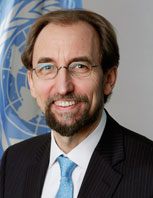
I have written about this wonderful woman, the Laureate 2014 of the MEA, before but did not yet have this nice picture with the UN High Commissioner for Human Rights Zeid [https://thoolen.wordpress.com/2014/10/10/dont-miss-the-high-commissioners-words-at-mea-2014-ceremony/]


See more at: http://www.ohchr.org/EN/NewsEvents/Pages/MartinEnnals2014.aspx#sthash.Y5CTi7Ug.dpuf

Mexican attorney receives top human rights defender award.

Don’t miss the High Commissioner’s words at MEA 2014 ceremony

October 10, 2014

The ceremony of the Martin Ennals Award 2014 is over (7 October 2014). It was again very impressive to hear and see 3 courageous Human Rights Defenders being honored. Some 450 people (my estimate) gave standing ovations to the 3 nominees whose work was shown in impressive films produced for the occasion. The film portraits are already available on the website: http://www.martinennalsaward.org where there is also a short summary of the whole evening.

Martin Ennals Award for Human Rights Defenders

Martin Ennals Award for Human Rights Defenders

Especially the film on Chinese HRD Cao Shunli is a masterpiece given that the film makers had almost no images to work with due to the modesty of the human rights defender as well as her untimely death in detention only 2 days after her nomination in March 2014.

The internet has buzzed with congratulations and encouragements to the other two nominees, Adilur from Bangladesh and Alejandra Ancheita from Mexico. The latter became ultimately the Laureate [see https://thoolen.wordpress.com/2014/10/07/breaking-news-alejandra-ancheita-is-the-2014-mea-laureate/#more-5648 ].

One of the nicest surprises was the address by Zeid Ra’ad Al Hussein, the United Nations High Commissioner for Human Rights at one of his first public appearances outside the UN. UN HCHR Al Hussein The High Commissioner gave a moving and almost poetic description of the sorry state of affairs left to human rights defenders to correct: He said inter alia: Read the rest of this entry »

Breaking News: Alejandra Ancheita is the 2014 MEA Laureate

October 7, 2014

AlejandraTM4M1713The Martin Ennals Foundation just announced in Geneva – during a ceremony broadcast live on the internet – that the MEA Laureate of 2014 is  Alejandra Ancheita from Mexico. She was selected by a Jury representing the broad international Human Rights movement (see below).

Alejandra Ancheita is the founding Director of ProDESC. For over 15 years she has worked with migrants, workers, and indigenous communities to protect their land and labour rights vis-a-vis transnational mining and energy companies. These disputes have included violent attacks on those she is trying to protect. She is also one of the pioneers in seeking accountability for transnational companies in Mexican courts when local communities’ rights are not taken into account. In Mexico, there is a clear pattern of attacks, threats, criminalization, and murders of human rights defenders. Ms Ancheita and ProDESC have been subjected to surveillance, a defamation campaign in the national media, and a break in at their offices. Read the rest of this entry »

Announcement: Ceremony of the Martin Ennals Award 2014 on 7 October

June 22, 2014

2014 poster MEA Geneva
The City of Geneva and the Martin Ennals Foundation have set the day of the 2014 ceremony for 7 October 2014, 6 pm, at Uni-Dufour, Geneva, during the opening day of the Human Rights Week hosted by the University of Geneva. Save this date in your agenda and register as from now online athttp://www.martinennalsaward.org/.

The laureate will be selected among the three Final Nominees of the 2014 edition:

  • Ms Cao Shunli (China), who lost her life on March 14th, 2014, had vigorously advocated since 2008 for access to information, freedom of speech and freedom of assembly, encouraging strengthened domestic implementation of international mechanisms.
  • Mr Adilur Rahman Khan (Bangladesh) has worked since the 1990’s on a wide range of humain rights issues, such as illegal detention, enforced disapearances, extra-judicial killing, and elections monitoring with his non-governmental organization, Odhikar.
  • Ms Alejandra Ancheita (Mexico) founder and Executive Director of ProDESC, has worked for more than 15 years with migrants, workers, and indigenous communities to protect their land and labour rights vis a vis transnational mining and energy companies.

The Jury of the Martin Ennals Award is made up of ten of the world’s leading human rights organizations: Amnesty International, Human Rights Watch, Human Rights First, International Federation for Human Rights, World Organisation Against Torture, Frontline Defenders, the International Commission of Jurists, EWDE-Germany, the International Service for Human Rights, and HURIDOCS.

Sandra Luz Hernandez: another Human Rights Defender killed in Mexico

May 19, 2014

Mexico is one of the worst places in the world for human rights defenders. This is brought home again with this news item via Front Line Defenders that on 12 May 2014, human rights defender Ms Sandra Luz Hernandez was killed in Culiacán, Sinaloa. The human rights defender was shot 15 times in the head in broad daylight. Sandra Luz Hernandez was a member of Madres con Hijos Desaparecidos (Mothers of Disappeared Children), an organisation made up of mothers seeking to combat impunity for the enforced disappearances of their children in Mexico. The human rights defender has been searching for justice for her son, Edgar Guadalupe García Hernández, who worked in the State Prosecutor’s Office of Sinaloa, since he was abducted from their home on 12 February 2012 by unknown armed persons.

According to the record of the Red Nacional de Defensoras de Derechos Humanos en México (The National Network of Human Rights Defenders in Mexico), since 2010 to date, there have been a total of 31 killings of human rights defenders, including the shooting of Sandra Luz Hernandez.

[At approximately 4pm, Sandra Luz Hernandez was shot by a man as she walked along Calle Constitución with a friend. The human rights defender was reportedly on her way to meet a person who she had been told had information regarding her son’s case. Sandra Luz Hernandez had stated that, the day before, she was approached by a stranger in a shopping centre who said that he knew someone who could tell her where her son was. On 12 May 2014, the human rights defender reportedly received a call arranging a meeting with the person at the Benito Juarez Colony. The human rights defender had met with the State Prosecutor of Mexico to discuss her son’s case at 11:30am the same day.]
for earlier posts on Mexico, see: https://thoolen.wordpress.com/tag/mexico/

Mexican human rights defenders successful: civilian courts for soldiers in the future

May 1, 2014

Human Rights Defenders do not only suffer repression but campaign to get things improved. Success is not always as widely reported as drama, so I draw your attention to the AP story (as it appeared in the Washington Post of 1 May 2014) that Mexico’s parliamentarians have unanimously agreed to change Mexico’s military justice code that will allow members of the armed forces who commit crimes against civilians to be tried in civilian courts. This is a historic change that human rights defenders have been demanding for years.

[The changes come after the Inter-American Court of Human Rights ruled in five cases filed by Mexicans who suffered abuse at the hands of soldiers. It ordered that those cases be tried in civilian courts and told Mexico to change its military code of justice.]

Mario Patron, deputy director of Mexico’s Human Rights Centre Miguel Agustin Pro Juarez, said the military code “was subjecting civilian victims to a jurisdiction that is neither independent nor impartial.” He said the reform is a clear step forward, but suggested that cases of soldiers whose human rights have been violated by other soldiers should also go to civilian court

Mexico lawmakers OK civilian courts for soldiers – The Washington Post.

Breaking news: the 2014 MEA Final Nominees are…

April 23, 2014

It was just announced that the following three Human Right Defenders have been selected as the Final Nominees for the Martin Ennals Award 2014: Read the rest of this entry »

IM-Defensoras: women human rights defenders in Central America support each other

February 25, 2014

MDG : Women activists in Latin America  : protest against violence in Mexico

(A woman protesting against violence (c) Yuri Cortez/AFP/Getty Images)

An excellent piece in the Guardian of 25 February by Jo Tuckman describes the impact of the Mesoamerican Human Rights Defenders’ Initiative [IM-Defensoras] which through solidarity tries to protect woman human rights defenders. The Honduran Berta Cáceres – who has been under threat for years because of her campaign against extractive industries – says that without solidarity from her peers, it could all be over. “The solidarity is why I am alive and why I am here,” she told a recent meeting of the IM-Defensoras in the Mexican capital. “And, of course, we are committed to continue.” (https://thoolen.wordpress.com/tag/berta-caceres/)

IM-Defensoras is a three-year-old effort to provide women rights defenders in the Central American region with protection mechanisms that are gender-sensitive and adapted to different contexts, and that go beyond traditional options. The organisers of IM-Defensoras say activists in Central America are increasingly being targeted and governmental protection is rarely effective and difficult to trust. The initiative documented 414 attacks on women activists between 2010 and 2012, a period in which it says 38 women were killed, with the vast majority of their deaths blamed on the state.

The initiative is built around the creation of national networks of activists. So far, these have been set up in Mexico, Guatemala, Honduras, El Salvador and Nicaragua, with about 360 members. The plan is to expand these networks and set up new ones in Costa Rica and Panama. The importance of the networks stems partly from the recognition that women activists are usually less able to rely on family and organisational support than men. For example, a female leader in danger is much likelier to face pressure from her family, or even from male colleagues, to withdraw from activism. “The gender perspective means recognising that women defenders have already broken the rules“.

The networks are the basis of most of the work of IM-Defensoras. In times of emergency, the networks may draw attention to a credible death threat or organise temporary exile, for example. They devise strategies that take into account complications such as whether an activist also has children.

The Guardian article also draws attention to an often overlooked aspect of support networks: fighting stress. The initiative also encourages activists to pay attention to the stress they accumulate from sustained threats, attacks, sexual harassment and smear campaigns. The risk of burnout is increased further by the fact that most women activists receive no salary and so also undertake paid work, at the same time as spending several hours a day on domestic chores. After getting supportive messages, Lolita Chávez, a Guatemalan K´iche’ (Mayan language) human rights defender is quoted as saying:  “I said to myself: ‘Maybe others think I am a terrorist but there are sisters telling me I am a defender of human rights’,”… “It was a counterbalance.” Chávez also spent three weeks in Mexico at a workshop to help her look after her own mental and physical health, which, like most women activists, she had neglected for years. “The initiative has filled me with life, but there are many sisters out there who are still waiting for this kind of support,” Chávez told the Mexico City meeting. “It is possible to do what we do and not be a martyr.” (see also: http://thoolen.wordpress.com/2014/01/29/lolita-chavez-about-land-and-life-in-peril-in-guatemala/)


Central American women put their lives on the line for human rights | Global development | theguardian.com.