On 15 January 2026 – the third anniversary of the enforced disappearance of Ricardo Lagunes and Antonio Díaz – UN experts demanded immediate answers about the fate and whereabouts of the two Mexican human rights defenders. “Mexican authorities must comply with the State’s international obligations, including by investigating the enforced disappearance, proactively searching for them, determining their fate and whereabouts, and holding perpetrators criminally responsible,” the experts said.
On 15 January 2023, Ricardo Lagunes, a human rights lawyer, and Antonio Díaz, an Indigenous leader, were forcibly disappeared in the state of Colima, Mexico. Their enforced disappearance occurred amid an ongoing dispute over natural resources between the Indigenous community of San Miguel de Aquila, Michoacán, and the Luxembourg-based mining company Ternium (part of the Argentine-Italian Techint Group). They were last seen after attending a community meeting to discuss collective action in response to the human rights impacts of the mining company’s operations.
“Refusing to succumb to despair after their enforced disappearance, the families of Mr Lagunes and Mr Díaz have undertaken a tireless quest for truth and justice over the past three years,” the experts said, noting that the authorities have so far not provided an effective response and that the company concerned has reportedly failed to fully cooperate with ongoing investigations and search activities.
The cases have been registered under the Committee on Enforced Disappearances’ Urgent Actions procedure and benefit from precautionary measures granted by the Inter-American Commission on Human Rights, acknowledging the serious, urgent and irreparable risk faced by the two human rights defenders.
“Enforced disappearances have a chilling effect on human rights defenders, including those advocating for land, natural resources and environment issues, as well as Indigenous leaders, and serve to silence critical voices,” the experts said, urging the Government to ensure that human rights defenders can carry out their work in a safe environment, including by strengthening the protection mechanism for human rights defenders.
In the context of resource-extraction projects, business enterprises have often reportedly sown and exacerbated community divisions, inciting violence among locals with opposing views on the projects and the use of land and natural resources. “The Government must ensure that businesses respect human rights across all their activities pursuant to the UN Guiding Principles on Business and Human Rights, including when engaging with human rights defenders and affected communities,” they said.
The experts are in touch with the Government of Mexico and the business concerned in this regard.
Every journalist who dares to speak the truth faces danger, yet their courage lights the path for all of us. Remembering those killed is not enough; we must demand justice, protection, and a world where truth can be spoken without fear”. Burhan Sonmez, PEN International President
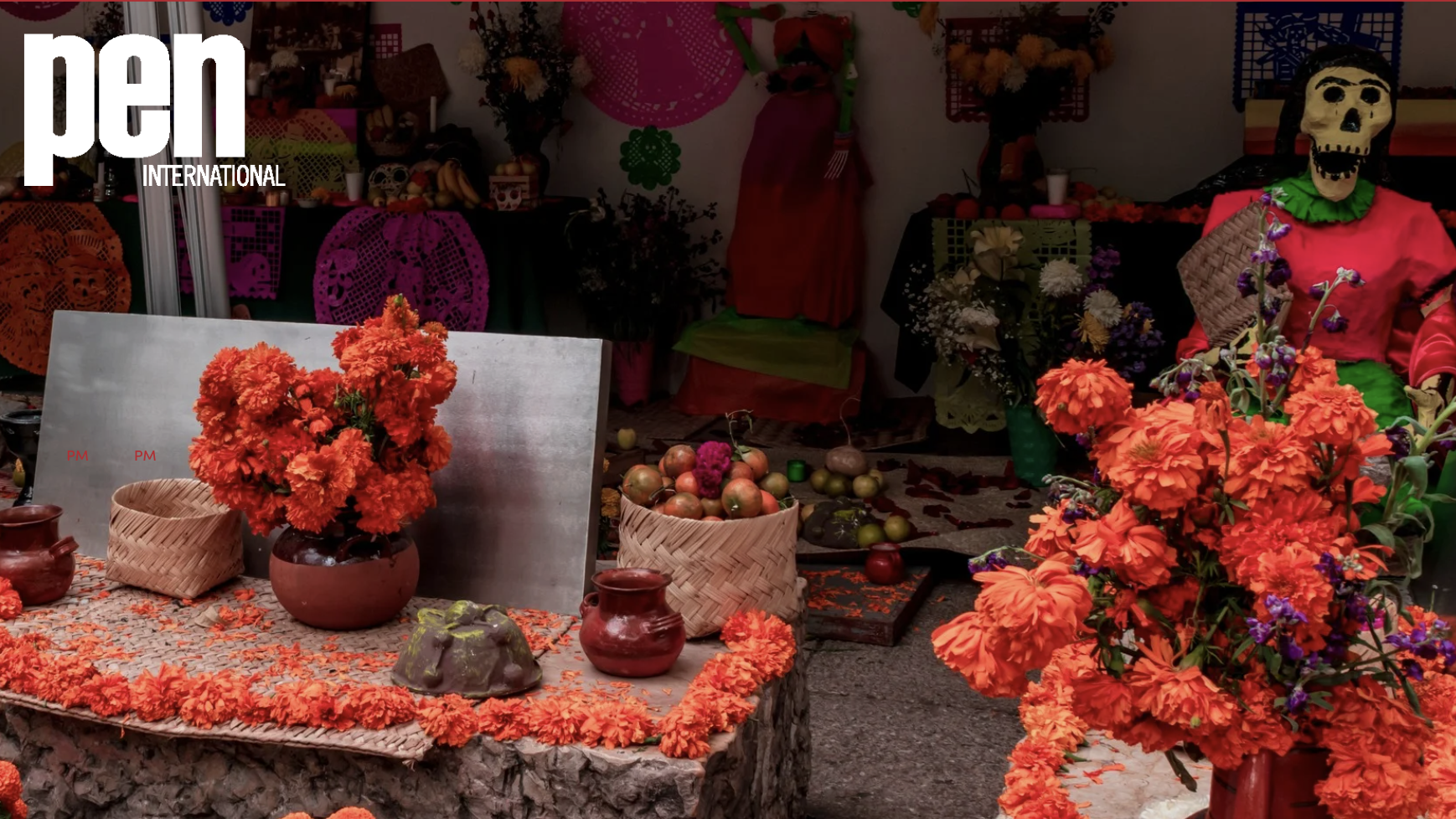
31 October 2025: On the Day of the Dead, we the undersigned, honour the journalists in Mexico who have been killed for their work. This act of remembrance is also an urgent appeal: violence against the press has reached alarming levels in the region. In Mexico, practicing journalism carries deadly risks. The Mexican State must acknowledge this reality and take immediate action.
PEN International and Article 19’s Mexico and Central America office have documented the killing of at least ten journalists over the past twelve months in Mexico. Seven of these cases are believed to be directly linked to their work, while the motives behind the remaining three killings are still under investigation. The past year, UNESCO, PEN, CPJ, RSF also recorded the murder of journalists in Brazil (1), Colombia (3), Ecuador (2), Honduras (1), Guatemala (1), Haiti (2), and Peru (2), positioning Mexico once again as the country with the highest number of journalists murdered in the continent. The murders of journalists are closely linked to their reporting on matters of high public interest, including corruption, organised crime, drug trafficking, human rights violations, environmental concerns, and abuses of power.
The brutality of the attacks, combined with entrenched impunity, has created a perpetual cycle of violence that undermines not only the right to freedom of expression but also the public’s right to be informed.
Despite its international obligations, the Mexican State continues to fail to ensure the protection of journalists and a safe environment for journalism, and to deliver effective justice for victims and their families.
This reflects a reality that cannot be ignored: Mexico faces not only a crisis of violence, but also a crisis of structural impunity that enables attacks to continue without consequence. Such impunity creates a chilling effect of self-censorship, restraint, and fear among journalists.
Emblematic cases
We remember the journalists Kristian Uriel Martínez Zavala andCalletano de Jesús Guerrero, killed in Mexico in 2025. …
Mexico’s ongoing crisis is no accident. It is the result of entrenched impunity and a state either unable or unwilling to protect those who bring truth to light.
We urge the Mexican State to:
Take concrete steps to guarantee that journalists in Mexico can exercise their right to freedom of expression without fear of reprisals.
Review and strengthen the Protection Mechanism for Human Rights Defenders and Journalists, ensuring that effective measures are deployed swiftly.
Undertake thorough, impartial, and independent investigations into the killings of and attacks on journalists, and deliver effective justice for victims and their families.
Cândida Schaedler on 12 February 2025 asks whether anything can be done to protect them.
In 2023, 196 land and environmental defenders were murdered around the world – the vast majority of them in Latin America. In fact, just four countries – Brazil, Colombia, Honduras and Mexico – accounted for over 70 percent of those killings. Colombia was by far the deadliest country, with 79 murders, followed by Brazil, with 25.
We spoke with some of these brave activists to learn more about the threats they face, how they stay safe and how Colombia and Brazil are working to keep them alive.
Quilombolas in the Jequitinhonha Valley in Minas Gerais, Brazil. Photo: Mídia NINJA, Flickr
“When we recognized ourselves and declared ourselves a quilombo, our peace was over”, recalls Elza,* a Brazilian Quilombola leader in her late 50s.
In December 2008, she was shot and injured in an attack that killed her brother and sister. Since then, she hasn’t left her home alone – not even for a walk in her own territory, one of the 11 urban quilombos in Porto Alegre, the capital of Rio Grande do Sul in southern Brazil.
Quilombos are Afro-Brazilian communities that were originally founded by escaped slaves in colonial times.
Today, they are officially defined as “ethno-racial groups that, by self-definition, have their own historical trajectory, maintain specific territorial relations and are presumed to have Black ancestry related to resistance against historical oppression.” Brazil has recognized quilombos in its constitution since 1988, but the process of gaining legal recognition is time-consuming and often fraught with obstacles. Elza’s community was officially designated a quilombo in 2005, but only after its residents agreed to give up half their territory. Ever since, they’ve been battling gangs and real estate speculators who want control of the same 58 hectares of land they call home.
In 2022, they once again came under attack. Armed men showed up at their door in an attempt to take over a housing project under construction in the quilombo, which had been put on hold due to a dispute with the bank financing it….
Elza and her daughter, Carolina,* live under the protection of the Brazilian government, which has a program to safeguard human rights defenders, environmentalists and communicators.
Jesus Pinilla leads a workshop for the Network of Young Guardians of the Atrato. Photo courtesy of Jesus Pinilla
Jesus Pinilla is a 26-year-old Afro-Colombian activist from a small community in the Chocó Department in western Colombia. He is a member of the Network of Young Guardians of the Atrato, a group composed of 36 young people defending the Atrato River – considered the mightiest river in Colombia.
Back in 2016, the Atrato was the first Colombian river to be given legal rights. Enforcing those rights are a group of 10 guardians, along with the Young Guardians, who are embroiled in a constant battle against mining companies exploiting the river’s waters.
Pinilla works as an environmental educator. He first became an environmental activist at the age of 14, but he fears that the risks often drive young people away from climate and environmental movements in Colombia.
“My community is located by the river, so we are constantly dealing with it on a daily basis,” he says. “We depend on it for our basic needs.”
Policing is not enough to tackle the threats facing land and environmental defenders in Latin America. Photo: Agência Brasília, Flickr
“When combined with the interests of communities, the internal armed conflict becomes even more dangerous,” says Leonardo González Perafán, director of the Institute for Development and Peace Studies (Indepaz) in the capital, Bogotá.
“That’s when actions against environmental defenders and communities come into play,” he explains, adding that environmental conflicts often occur in countries with abundant mineral resources.
In most cases, communities are forced to self-organize to ensure their own safety due to the absence of the state.
“They provide self-protection through Indigenous or campesino [farmer] guards,” he explains.
The communities have also developed communication strategies to share information with each other, as well as with the authorities and other organizations.
But as long as the armed conflict persists, it will be very difficult for the government to tackle systemic threats against environmental defenders, especially in areas where it has little authority, says Franklin Castañeda, director of human rights at Colombia’s Ministry of the Interior.
Castañeda explains that more than 15,000 people are currently protected under the National Protection Unit (UNP), which aims to ensure the safety of members of Congress, mayors, journalists, human rights defenders, community leaders and other individuals facing threats due to their work.
The majority – around 9,000 – of these people are social leaders, including environmental defenders. The UNP provides them with security measures such as bulletproof vests, private escorts, armored vehicles or other measures as deemed necessary on a case-by-case basis.
Still, Castañeda emphasizes that individual measures are a last resort. The government has also invested in prevention, such as ensuring that the military and police are not involved in illegal activities.
Despite these efforts, Castañeda concedes that there is still plenty of work to be done to address the structural drivers of conflict, such as high levels of socioeconomic inequality.
“Most of the territories where social conflicts arise are the least developed ones that the government still cannot reach.”
He says these areas will need internet access, highways and other infrastructure to improve the government’s ability to ensure safety and the rule of law.
A quilombo in southern Brazil. Photo: Cândida Schaedler
In Brazil, the main drivers of conflict are deforestation, illegal mining, real estate speculation and the expansion of agriculture.
The program’s coordinator, Igo Martini, emphasizes the importance of listening to the communities to respond quickly to their protection needs. Last year, it carried out 54 public consultations to devise a National Plan to address threats to these communities. But Martini also points out the need to address the root causes rather than merely deploying the police.
“If we don’t solve the underlying causes, the program will continue for another 20 or 40 years just responding to emergencies,” he warns. “A movement from the states is also necessary, not just from the federal government.”
“We need to strengthen agencies, monitoring systems and prevention systems, like the Brazilian Institute of the Environment and Renewable Natural Resources (Ibama), for example.”
The PPDDH operates in three areas: state protection, justice protection and collective protection.
While state and justice protection are offered by the police and courts respectively, collective protection involves strengthening communities and providing them with the tools to communicate with each other and report threats to the authorities to safeguard their territory.
In June 2017, Indigenous Ñomndaa’ journalist Marcela de Jesus Natalia found herself fighting for her life. A gunman waited for her outside the radio station where she worked and shot her three times.
“I didn’t think he wanted to kill me,” she said. “I turned around. The first bullet went to my forehead. I put my hand up, [and] the bullet went in and came out. The second one shattered my jaw. Then this guy held me, dragged me, gave me a final shot in my head and laid me on the pavement.”
Though at first presumed dead, Marcela de Jesús survived the attack and, with the support of lawyers and advocates, as well as of UN Human Rights, continues to fight for justice for the crime perpetrated against her. Marcela de Jesús was attacked because she angered powerful people by informing Indigenous Peoples about their rights, such as the importance of education, justice, and in particular, violence against women, thus empowering them to fight against historical discrimination against them.
“Journalists who expose wrongdoing and show us the horrific reality of conflict are human rights defenders,” said Volker Türk, UN Human Rights Chief, in a statement commemorating the International Day to End Impunity for Crimes against Journalists, observed every year on November 2. “Attacks against them affect everyone’s right to freedom of expression and access to information, leaving us all less well informed.”
In 2023, 71 journalists and media workers were killed and over 300 imprisoned around the globe, Türk said.
Marcela de Jesús is an Indigenous Ñomndaa’ woman born in Xochistlahuaca, in the state of Guerrero, on Mexico’s Pacific coast. From a young age, Marcela de Jesús witnessed violence and attacks by men in positions of power and even the military. It was there that her desire to defend her people was born and she realised that to confront abusers she needed to learn Spanish.
Marcela de Jesús migrated to the state of Oaxaca, and by her own efforts, she managed to continue studying and encountered a radio station that was looking for an Indigenous person from Guerrero who spoke Ñomndaa’ and Spanish and had completed middle school.
“I went behind my husband’s back, took the exam and passed,” she said. “I remember that the director [of the radio station] said to me, ‘Why do you want to be an announcer?’ ‘I always wanted to be the voice of my people,’ I answered.” Later, she returned to the state of Guerrero and got a precarious job as a radio announcer, but with patience and hard work she managed to become the radio manager.
It was after her return to her home state that she began to encounter opposition to her “voice.” Marcela de Jesús was told by powerful people in her town that she was not supposed to inform Indigenous Peoples; that the only thing they were interested in was whether a goat or a cow was lost, and not to get into trouble. She fought against and won lawsuits filed against her for giving Indigenous Peoples news.
It is my conviction that my people should be guaranteed the right that is enshrined in the Constitution and in international treaties, that we have the right to information.
“They couldn’t [silence me] because what is legal is legal. What is morally good is morally good. And that is the reason for the attack against me,” said Marcela de Jesús.
According to UN Human Rights in Mexico, at least five journalists and one media worker have been killed and one more media worker was disappeared this year because of their work. This continuous danger in which journalists have had to operate for years, led universal and regional human rights mechanisms to recommend to the Mexican State the creation of a Mechanism for the Protection of Human Rights Defenders and Journalists.
…The gunman who shot Marcela de Jesus has been arrested and sentenced for his crime, but the ones who called for her shooting are still out there. She is hopeful for them to be brought to justice.
“I have a lot of faith that the alleged intellectual author will forget about me. I have faith that nothing is forever,” said Marcela de Jesús. She added: “Nothing and no one, not jail, not this attack with three bullets, takes away my desire to continue being the voice of my people, to continue with my activism, my defence of human rights. I am fulfilling my dream of being the voice of my people at the national and international level.”
AI asked three older activists to reflect on their experiences, the changes they are campaigning for, and how being an older person gives them unique perspective and motivation.
Cecile de Ryckel, 78, Belgium
Cecile is a lifelong activist working on anti-racism and climate change.
Why did you become an activist?
After a homelessness crisis amongst migrants in Belgium in 2015, my husband and I hosted two people from Ethiopia who the authorities had left to sleep in a city park. They told us that in Ethiopia they were small-scale farmers and grew food for their families. However, it was raining less frequently, and growing food was becoming more difficult. That was when I realized that climate change was one of the most important issues in the world today, and that it would have far-reaching consequences. Soon after that I participated in a citizens assembly discussing how best to address climate change and reduce carbon emissions. We learned how to mobilize people and change behaviours. I joined an advocacy collective, Grandparents for the Climate, and started working actively on the issue.
We have a responsibility to future generations to address this challenge today. It already has wide-ranging impacts on people of all ages. I remember when I was a child that we would joke that an older person was someone who “wouldn’t make it through the winter”, but today due to rising temperatures we sadly have to ask whether some older people can “make it through the summer”.
I recently saw how a group of older women won a landmark court case that the Swiss government’s weak climate change policy had violated their rights. This will help advance the cause greatly, for people of all ages.
Amina Musa, 72, Nigeria
Amina is an activist on behalf of victims of the armed conflict in north-east Nigeria and their families, including those who have been unlawfully killed or detained.
Why did you become an activist?
I became an activist nine years ago when Boko Haram forced us to leave our homes, and we found ourselves living in camps controlled by the Nigerian government. The military made baseless accusations that our sons were associated with Boko Haram. Our sons were blindfolded and arrested and held in dehumanizing conditions. I had no choice but to start campaigning for their release. As mothers, we came together and started a movement to seek justice. We are demanding that all those detained unlawfully be released immediately and that the government investigate the gross violations we have experienced. Some of our sons have been in detention for more than 10 years. We have had enough, we want justice.
I tell other older people that they should continue with their activism and bear with the challenges, and that our activism can also inspire younger people. I know it is not easy, but these causes are important. Age should not and will not deter us from making our society free from injustice.
Juan Jacobo Hernández, 82, Mexico
Juan is an activist on social issues and LGBTQ+ liberation.
Why did you become an activist?
In the 1960s, I was part of Mexican student movements. Then Stonewall happened: I had a boyfriend at the time who lived in New York, and he told me that I had to come and see it for myself. I witnessed the first LGBTQ+ rebellion: the first time gay men, trans people, lesbians were standing up and confronting the police. Coming back to Mexico, we started the Frente de Liberación Homosexual (Gay Liberation Front). I had learned a lot about how to make protests visible and how to make our voices heard. Finally, there was a space where we could be active, where we could do something. When I started my activism, we didn’t use the term “human rights” – but that’s what it has always been about. We held large demonstrations against political repression, for the abolition of the death penalty, and to fight restrictions on social protest. Persecution by the government was very real and close to us at the time – gay men and trans women were persecuted, raided by the police, extorted and beaten up.
Whenever we were out in the street, we felt that something bad could happen. We were struggling for our lives, for our security, for our right to be in the street without being beaten up, robbed or killed.
My whole life, I have never stopped being an activist. The AIDS epidemic collapsed the first phase of gay liberation. So many activists died and [as I grew older], I recognised the need to transmit my experience, knowledge and values [to the younger generation]. Since 1981 I’ve been part of Collective Sol, where we work to build and strengthen the capacity of small, grassroots organizations that are working on the most pressing LGBTQ+ issues they see today.
My life as an activist means I can look back and say I have witnessed three great moments in LGBTQ+ liberation. The first was when we formed political organizations, coming out of the shadows and breaking the silence. The second was the HIV/AIDS epidemic, the way it created a connection between LGBTQ+ liberation and people living with HIV, irrespective of whether they were LGBTQ+. This connection was powerful and drove the movement forward.
On January 12, 2024, Thomas Antkowiak in Just Security reflects on dangers of HRDs in Mexico and Latin america generally, motivated by the fate of his friends Ricardo and Antonio Díaz Valencia.
…Strategic use of the legal mechanisms—bolstered by the research and financial resources, political leverage, reputations, and media connections of Northern institutions—can be very effective to obtain remedies for victims of rights violations, and even to bring about legal reform and structural change. But the methods are toothless, and even misguided, without partners like Ricardo, the expert local attorneys. Truly, without such counterparts, this kind of human rights project lacks legitimacy. Without sustained connections to the affected communities, it would become just another decree handed down from the ivory tower.
In our isolated and polarized world, virtual meetings may have increased productivity in international lawyering, but they can further insulate us—cutting off deeper engagements to our clients abroad and the communities we hope to work with. In contrast, frontline defenders are fully connected and, of course, face all the risks. Authoritarian governments, criminal organizations, and complicit transnational corporations are all closing in. Can we still sense their peril?
If these human rights advocates are in more jeopardy than ever, so are the human rights themselves. Frontline defenders are the torchbearers of the international human rights movement. As such, they deserve the honors, the funding, and the protection. For the work to continue, we urgently need to do our part: the Global North’s human rights organizations, governments, universities, foundations, and businesses must coordinate to shield and support them.
Certainly, someinstitutions are already doing good work. Where to redouble our efforts? First, let’s ask the defenders themselves what they most need, recalling that their role is primary and their safety paramount. In the case of Mexico, there is almost total impunity for these types of cases. If the cartels, corrupt officials, and their accomplices cannot be held accountable, the killings will continue unabated (and thousands will keep fleeing from the violence to the southern U.S. border). When the defenders’ work becomes too hazardous, asylum must be streamlined—and the opportunity forever preserved. U.S. legislation and political pressure on Mexico play key roles here. So does divestment from colluding transnational corporations.
Every day, I wish that we could have somehow prevented the disappearance of my cherished friend and long-time collaborator. Through various channels, Global Rights Advocacy, other colleagues, and my clinic continue to push the Mexican government to find Ricardo and Antonio, and to prosecute the case. The world cannot afford the loss of another Ricardo, Berta Cáceres, Thulani Maseko. Without such guiding lights, we won’t be marking another 75 years of the international human rights movement.
More than 10 years ago, in May 2013, Damian Gallardo from Oaxaca, Mexico, was arbitrarily detained, disappeared, and tortured. He was eventually released but lodged a complaint with the UN Committee against Torture, who reviewed Gallardo’s case and adopted an unprecedented decision stating that, in fact, Gallardo had been tortured.
In a decision published on 14 December 2021 the UN anti-torture body found that Damián Gallardo Martínez, a teacher and campaigner for education and indigenous people’s rights, was a victim of torture in Mexico, in violation of Convention against Torture and Other Cruel, Inhuman or Degrading Treatment or Punishment.
The Committee also requested that Mexico provide Gallardo Martínez with full compensation, make a public apology to the complainants, and widely disseminate the Committee’s decision through a daily newspaper with a large circulation in the state of Oaxaca.
On 18 January 2024, UN Human Rights published the above video clip.
A new political space wanting to shape the future of Latin America was born in Mexico City on 1 November 2023. In an unprecedented meeting, more than 30 organisations, leaders and young people from Latin America gave life to the Free America Forum. A space to defend an agenda of Freedom and Democracy, as an alternative to the populism of the Puebla Group and the Sao Paulo Forum.
“Those of us who believe in the ideas of freedom and democracy are more and we are also better,” said Mexican Congresswoman Mariana Gómez del Campo, president of ODCA, when she opened the Free America Forum.
This group, together with political leaders from 18 Latin American countries, parliamentarians from Ukraine, Germany, the European Parliament, political representatives from the United States, civil society activists and human rights defenders, ratified their commitment to freedom and democracy.
The result of this first meeting was the signing of the Mexican declaration “For a Free America”, which alerts the world to authoritarianism and its consequences in the region, the need for respect for democratic principles such as free elections, the separation of powers, the need for independent justice, limits to the actions of those in power and respect for human rights.
As part of this declaration, the Free America Forum warns how the conditions of poverty and inequality have been “breeding grounds” for populist alternatives and how we must focus on “the integral development of the people”, guaranteeing a free and competitive economy. In the fight against organised crime, he called for the use of “the full force of the law and the rule of law”, rejecting “radically any negotiation and complicity with those who extort, steal, kidnap, murder and sow terror on the continent”.
In the face of human rights violations, they expressed their support and solidarity with the peoples of Cuba, Venezuela and Nicaragua as “sister nations that Bolivarian socialism has subjected to atrocious dictatorships and suffering”. The declaration also condemns the “unjustified aggression” of Vladimir Putin’s Russia against Ukraine.
This new space linking defenders of democracy around the world was created to counterbalance those who venerate and validate dictators and promote authoritarian narratives.
Being an environmental human rights defender is one of the most dangerous jobs in the world. Every day, government authorities, companies and other non-state actors seek to silence environmental defenders on the frontlines of the global climate and environmental movement through unwarranted persecution, harassment, detention and even murder. As we commemorate International Earth Day on 22 April, an annual celebration honouring those who fight for a clean environment, RFK Human Rights is calling for the international community and national authorities to redouble efforts to strengthen and fortify protection mechanisms for environmental defenders.
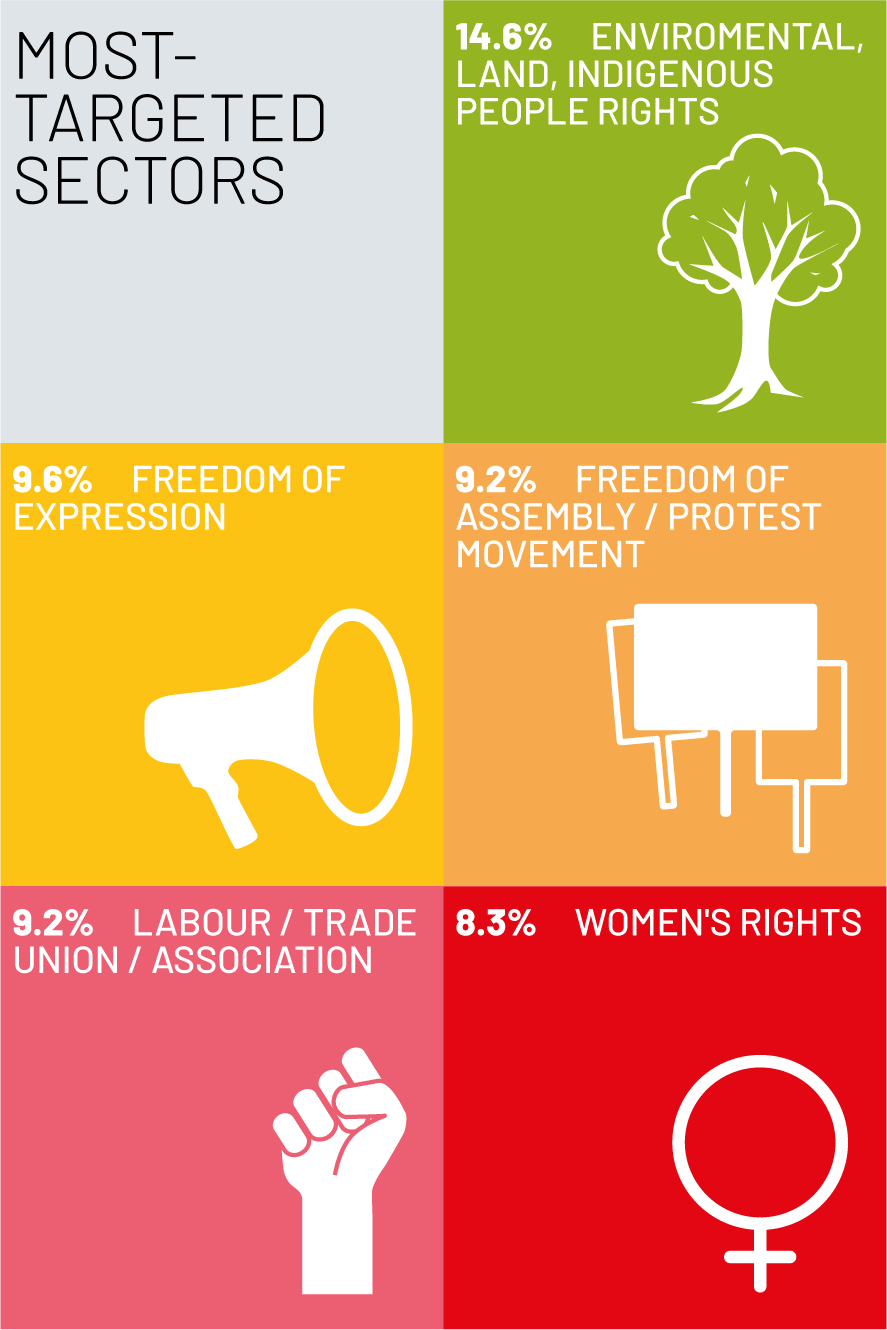
According to Front Line Defenders, land, indigenous peoples’ and environmental rights defenders were the most targeted human rights defender (HRD) sector in 2022. Representatives of national governments, private companies, militias and other non-state actors killed 194 land, environmental and indigenous defenders in 2022 accounting for 48 percent of all murdered defenders. Environmental defenders also face routine arbitrary arrest and detention, criminalization, physical abuse, death threats and other forms of repression. Across the world, sparse and tepid investigations into killings of environmental defenders have led to endemic levels of impunity and limited prosecutions. See: https://humanrightsdefenders.blog/2023/04/04/front-line-defenders-just-published-its-global-analysis-2022-new-record-of-over-400-killings-in-one-year/
As part of our work to protect civic space by defending fundamental freedoms, Robert F. Kennedy Human Rights regularly works to ensure that environmental defenders have ready access to protection and accountability mechanisms. Through our strategic litigation programs, we collaborate with local partners to confront these systematic abuses through active litigation at the Inter-American Commission on Human Rights and at the United Nations. Under the auspices of our Speak Truth to Power campaign, we continue to provide human rights education programs that combine storytelling and interactive learning to provide the next generation of environmental defenders with the tools they will need to create change.
Together with various coalitions we constantly bring attention to the critical and invaluable work for environmental defenders. Just last week, RFK Human Rights joined dozens of civil society groups from across the globe to raise awareness about the forced disappearance of Mexican environmental defenders Ricardo Arturo Lagunes Gasca and Antonio Díaz Valencia. Both defenders disappeared on Jan. 15 only hours after participating in an anti-mining community meeting. The disappearances take place amid ongoing violence and persecution of land, indigenous and environmental defenders seeking to protect the environment in Mexico. Impunity for the killing of environmental defenders remains disturbingly high in Mexico– in 2021, according to Global Witness, nearly 95 percent of murders did not result in prosecution.
On 20 March 2023, following the release of the Intergovernmental Panel on Climate Change (IPCC) findings, United Secretary-General Antonio Guterres issued a clarion call “to massively fast-track climate efforts by every country and every sector and on every timeframe.” From the UN Sustainable Development Summit to the UN Climate Conference (COP 28), 2023 is replete with opportunities to institutionalize and codify the cherished ideals of environmentalism which we celebrate on International Earth Day. The international community, together with national governments and the private sector, must seize these crucial moments to publicly recognize the essential work of environmental defenders and recommit to ensure that they can conduct their crucial activities free from repression, reprisal and persecution.
Front Line Defenders launched its Global Analysis 2022 on the situation of human rights defenders (HRDs) at risk around the world, an in-depth annual publication detailing the variety of risks, threats and attacks faced by HRDs around the world. Front Line Defenders’ Global Analysis 2022 gives a panorama of the threats faced by HRDs in all regions of the world. Despite an assault on human rights and the rule of law in many countries, human rights defenders (HRDs) showed remarkable courage and persistence in advocating for more democratic, just and inclusive societies in 2022. [see also https://humanrightsdefenders.blog/2022/01/17/at-least-78-human-rights-defenders-killed-in-colombia-in-2021/]
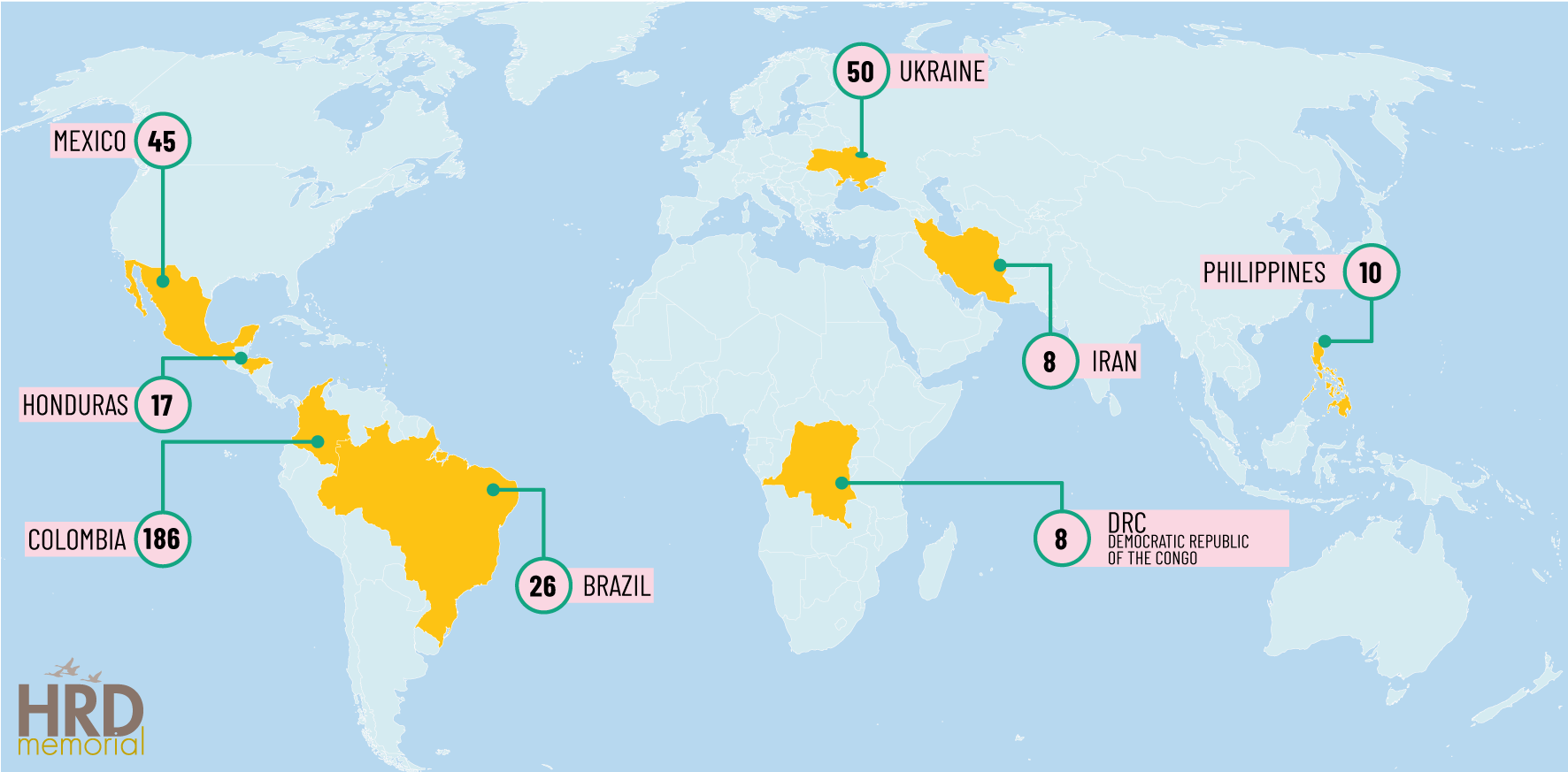
The report also names 401 HRDs killed in 26 countries in 2022 compared to 358 HRDs killed in 35 countries in 2021 – based on statistics by the HRD Memorial, a collective initiative of human rights organisations working to collect and verify data on the killings of HRDs each year.
“In a grim milestone, for the first time we saw more than 400 targeted killings of human rights defenders in 2022. While Latin America remained the deadliest region in the world for human rights defenders, we also saw a more dangerous landscape for defenders in the context of Russia’s full-scale invasion of Ukraine,” said Olive Moore, Interim Director of Front Line Defenders. ”These human rights defenders were deliberately targeted and killed because of their human rights work. Because they choose to speak out and challenge injustice, they paid for it with their lives.”
Five countries – Colombia, Ukraine, Mexico, Brazil and Honduras – accounted for over 80% of killings, according to HRD Memorial data. Colombia alone accounted for 46% of the total, with at least 186 killings documented and verified by HRD Memorial partner Somos Defensores to date. Defenders working on land, indigenous peoples’ and environmental rights were the most frequently targeted sector, accounting for almost half (48%) of the total killings.
In the context of Russia’s full-scale invasion of Ukraine, defenders engaged on humanitarian response and human rights journalists were also specifically targeted, with at least 50 documented killings by Russian military forces.
Wide array of threats
Global Analysis 2022 data is based on more than 1,500 threats and violations reported to Front Line Defenders, and is disaggregated by region, type of threat, sector of human rights work and gender.
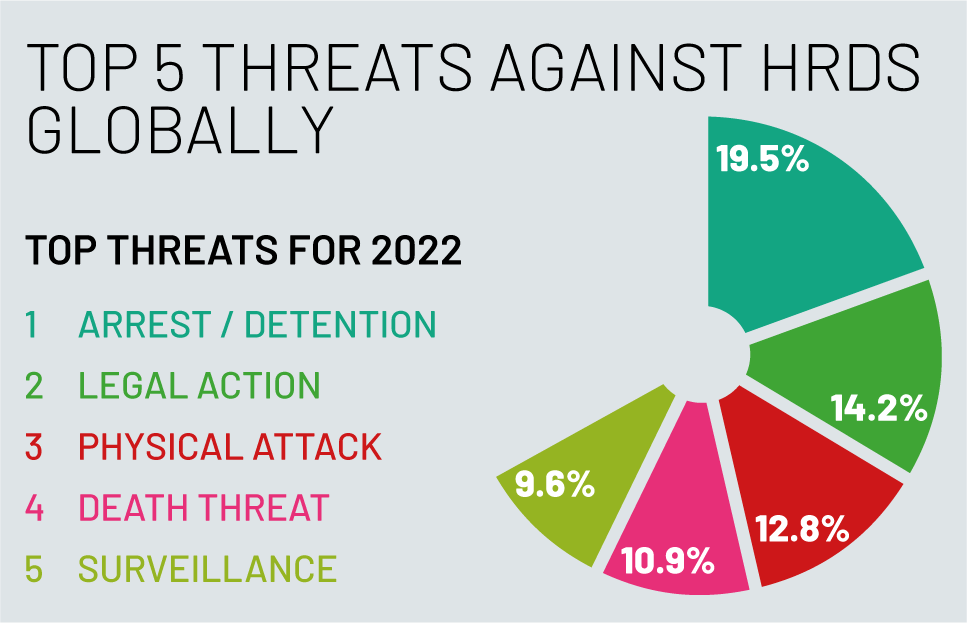
The main threats HRDs reported to Front Line Defenders in 2022 included: arrest or detention (19.5%); legal action (14.2%); physical attack (12.8%); death threats (10.9%); and surveillance (9.6%). In Asia and the Americas, death threats were the most frequent violation against defenders; in Africa it was arrest and detention; while in ECA and MENA it was legal action against HRDs.
Women HRDs (WHRDs) were frequently targeted with death threats, which accounted for the third most common violation against them. Physical violence was the most prevalent violation reported by trans and gender variant/gender nonconforming HRDs.
The five most targeted sectors of human rights defence were: environmental, land and indigenous peoples’ rights (11%); freedom of expression (10%); protest movement/ freedom of assembly (9%); women’s rights (7%); and impunity and access to justice (6%).
About the data on killings: Front Line Defenders manages the collection of partner-verified data-sets under the HRD Memorial umbrella. The partners in the HRD Memorial are: ACI-Participa (Honduras); Amnesty International; Comité Cerezo (Mexico); FIDH; Front Line Defenders; Global Witness; Human Rights Defenders’ Alert – India; Karapatan (the Philippines); OMCT; El Programa Somos Defensores (Colombia); Red TDT (Mexico); and UDEFEGUA (Guatemala).
About the data on other violations against HRDs: This is derived from 1,583 reported threats and violations, based on Front Line Defenders’ urgent actions and approved grants between 1 January and 31 December 2022. For more details, see the Methodology section of the report.





 Hans Thoolen on Human Rights Defenders and their awards