On 1 August 2017, two unidentified gunmen shot and killed minority rights defender Lafiqul Islam Ahmed in Kokrajhar district, Assam state. Lafiqul Islam Ahmed <https://www.frontlinedefenders.org/en/profile/lafiqul-islam-ahmed> was a human rights defender and a student leader. He was the president of All Bodoland Minority Students’ Union (ABMSU), a student group working to defend the rights of migrant Muslim communities in Bodoland Territorial Area Districts (BTAD), an autonomous administrative division in northern Assam. ABMSU have protested against the forceful eviction of Muslims from government land across the state, and demanded compensation and rehabilitation for internally displaced persons (IDPs) in Assam. Under Lafiqul Islam Ahmed’s leadership, the union has also campaigned to end child marriage, child labour and dowry and have worked on women’s empowerment. Lafiqul Islam Ahmed was also vocal against corruption, smuggling and arbitrary anti-Muslim policies and harassment.
The human rights defender had previously been subjected to threats. The Superintendent of Police in Kokrajhar has opened an investigation into the murder and two persons were arrested in connection to the case on 2 August 2017. Lafiqul Islam Ahmed, along with the ABMSU, was to lead a march on 2 August 2017 to protest against the discrimination of Muslims through the “D voters” system. This is a category of voters in Assam whose citizenship rights, entitlements and privileges are withheld until they can prove their citizenship. Many members of the Muslim community in the state have allegedly been arbitrarily categorized as such, making them second-class citizens and severely restricting their civil and political rights.
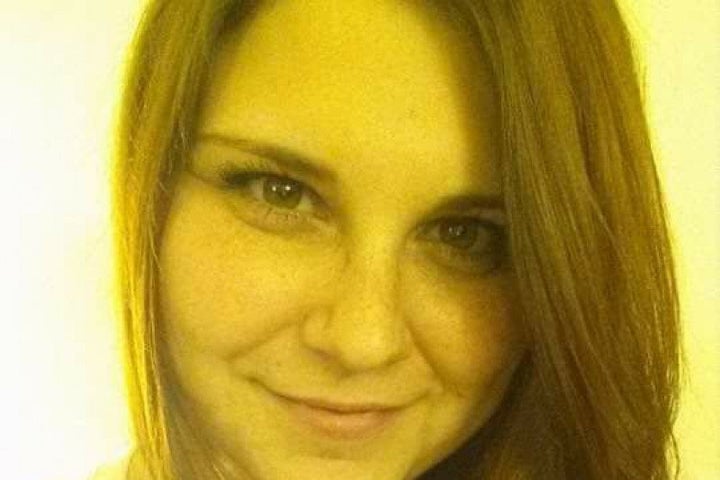
Many news outlets (here the Huffington Post) have reported on the deliberate killing and wounding of anti-hate protesters in Charlottesville, Virginia, USA, on Saturday 12 August 2017 when a car plowed into a group of anti-racist demonstrators. The woman killed was a 32-year-old paralegal Heather Heyer. Heather Heyer’s mother, Susan Bro, told HuffPost that her daughter attended Saturday’s rally because she “was about bringing an end to injustice…..I don’t want her death to be a focus for more hatred, I want her death to be a rallying cry for justice and equality and fairness and compassion.” Heyer was a graduate of Willam Monroe High School in Stanardsville, “If you’re not outraged, you’re not paying attention,” read Heyer’s last public post on Facebook.
20-year-old James Fields Jr. was arrested over the incident and charged with murder. Fields was one of thousands of members of the so-called “alt right” who were in Charlottesville attending Saturday’s “Unite The Right” march. The rally became violent after the white supremacists were confronted by anti-fascist groups.
reports that on 23 June 2017, Erasmus Irumba was shot and wounded during an alleged altercation with a commanding officer of the local Uganda People’s Defence Forces and other security officials in Ntoroko District, western Uganda. He was then driven to a more rural area where he was shot again at close range and killed. Erasmus Irumba <https://www.frontlinedefenders.org/en/profile/erasmus-irumba> was the coordinator of Twerwaneho Listeners Club(TLC) in Ntoroko District. TLC is a non-governmental organisation based in Fort Portal, in western Uganda. TLC carries out human rights advocacy through weekly radio programmes centred on human rights education, capacity building of human rights defenders, civic education, the monitoring and documentation of human rights violations and the challenging of unlawful government actions in court. TLC radio programmes generally aim at holding public leaders and corporations more accountable. Erasmus Irumba was particularly active in TLC’s Village Budget Clubs, a project that sought to scrutinise the allocation and implementation of district budgets and ensure proper management of public funds at the local level.
[On 23 June 2017, at approximately 7.30pm, Erasmus Irumba was reportedly summoned to go to Butungama trading centre for a meeting with senior security officials in his region, including the Commanding Officer Lt. Col. Richard Muhangi of Uganda People’s Defence Forces 3rd Mountain Battalion, with two of his escorts, the Ntoroko District Police Commander and the District Internal Security Organ Officer. During this meeting, Erasmus Irumba and another civilian who was with him were shot in the leg in an altercation that has been this far presented as arising from his attempt to resist arrest. Whilst still alive, but severely bleeding, Erasmus Irumba and his colleague were put in the boot of a private car and driven to a more rural area where they were shot dead. Erasmus Irumba’s body, which presented a gun wound in the forehead, was later taken to Buhinga Regional Referral Hospital in Fort Portal. In response to the killings, it is reported that some senior security officials including Lt. Col. Richard Muhangi and the Ntoroko District Police Commander have been arrested.]
Front Line Defenders is concerned that the killing of Erasmus Irumba is linked to the corruption of the security officials involved and believes he was targeted due to his peaceful and legitimate work at TLC.
Since December 2012, on average two human rights defenders have been killed every month in Mexico. During his recent visit to Mexico (25 January 2017), United Nations Special Rapporteur on the situation of human rights defenders, Michel Forst, highlighted the particular dangers faced by indigenous rights defenders and those campaigning to protect the environment from the impact of mega development projects. “The situation of human rights defenders in Mexico is conditioned by the criminalisation of their activities through the deliberate misuse of criminal law and the manipulation of the state’s punitive power by both state and non-state actors, to hinder and even prevent the legitimate activities of defenders to promote and protect human rights,” said Forst. “The failure to investigate and sanction aggressors has signaled a dangerous message that there are no consequences for committing such crimes. This creates an environment conducive to the repetition of violations”. Two major contributory factors are the impunity enjoyed by organised criminal gangs and the failure by state authorities to provide protection to HRDs or to bring the perpetrators of attacks to justice. Nothing demonstrates the problem better than the work and life of Miriam Rodriguez Martinez, who was gunned down on 10 May 2017.
On 30 January 2017 the United Nations Special Rapporteur on the situation of human rights in Myanmar,Yanghee Lee, joined her voice to the many that have strongly condemned the brutal murder of Ko Ni, a prominent Muslim lawyer and constitutional law expert, who was also the legal adviser to the National League for Democracy (NLD). Mr. Ko Ni was shot and killed outside Yangon Airport on Sunday 29 January after returning from Indonesia where he had been part of a Government-led delegation attending an interfaith study tour. A suspect has been arrested.
“This appears to be another shocking example of a reprisal against those speaking out on behalf of the rights of others,” the expert said, recalling her recent end of visit statement, where she highlighted her concern at the increasing risks faced by human rights defenders, lawyers, journalists and others working on sensitive issues. [see below] “I am shocked to the core by the senseless killing of a highly respected and knowledgeable individual, whom I have met during all of my visits to the country, including most recently just over a week ago,” Ms. Lee said. She expressed her sincerest condolences to his family, and the family of taxi driver Nay Win killed in the same incident after he bravely attempted to apprehend the gunman. The Special Rapporteur underlined that, “U Ko Ni’s passing is a tremendous loss to human rights defenders and for Myanmar.”
Also Front Line Defenders deplores in strong term the killing of human rights defender U Ko Ni. His profile [https://www.frontlinedefenders.org/en/profile/u-ko-ni] describes him as human rights defender and human rights lawyer. He was the legal advisor for the National League for Democracy. He participated in the pro-democracy protests known as the 88 Uprising and was a former political prisoner. Upon release, he became actively involved in the interfaith peace movement and advocated for the rights of Muslim citizens in Myanmar. He strongly opposed the country’s race and religion protection bill which was introduced in August 2015 and which restricted interfaith marriage and caused a rise in anti-Muslim sentiment. In 2016, he helped found the Myanmar Muslim Lawyers Association. He also wrote six books on good governance and various human rights issues. U Ko Ni’s daughter reported that the human rights defender often received threats for speaking out against the continuing influence of the military on politics.
As recently as 25 January 2017 the Special Rapporteur had expressed her fears of government retaliation following her visit to Myanmar. She expressed concern that people may face reprisals for meeting with her. Lee recently concluded an official visit in the area during which individuals shared accounts of human rights abuses by the government. Some of the statements came from those in a hard labor camp as well as survivors of a village burning. Lee fears these individuals who met with her will face reprisals from those who believe the accounts given are contrary to the government. “I am deeply concerned about those with whom I met and spoke, those critical of the Government, those defending and advocating for the rights of others, and those who expressed their thoughts and opinions which did not conform to the narrative of those in the position of power.” (Lee will submit her report on Myanmar in March to the UN Human Rights Council).
Tom Sandborn wrote in the Vancouver Sun of 7 January 2017 review of the book “Assassination of a Saint: The Plot to Murder Oscar Romero and the Quest to Bring His Killers to Justice“, by Matt Eisenbrandt, published by University of California Press.
Book cover: Assassination of a Saint: The Plot to Murder Oscar Romero and the Quest to Bring His Killers to Justice
It took a single bullet to kill Oscar Romero, but his legacy has outlived many who plotted his murder and he may soon be officially named a saint by the Catholic Church. Assassination of a Saint is an exciting, dramatically paced account of his murder by a right wing death squad and the painstaking and eventually successful efforts to expose some of the men behind the Archbishop’s death.
In El Salvador in 1980, Romero, the Archbishop of San Salvador, had been elevated to his position in part because the cabal of land owners and politicians that controlled the tortured Central American state saw him as unlikely to pose uncomfortable moral challenges to their power. But Romero was fast becoming a problem for the elites…. he was condemning the war of right wing terror being waged against the Salvadoran people by the army, police and paramilitary death squads, all of whom took orders and funding from the country’s ruling class and inspiration from a particularly bloody minded brand of Cold War anti-Communism….
During the three years he spent as Archbishop, Romero was gradually radicalized by the suffering inflicted on the poor of his country by the official and unofficial death squads. In the end, he condemned the state and ruling class sponsored murders and called on soldiers and policemen to refuse the orders to turn their guns on Salvadorans standing up for their freedom. “No soldier,” he thundered from the altar, “is obliged to obey an order contrary to the law of God.” That call for conscientious disobedience was the last straw. The decision was made that the “turbulent priest” must die.
On March 24, 1980, a sniper in a van parked outside the church fired a rifle once, striking Romero in the chest as he said mass and killing him. The assassination made the Archbishop a beloved martyr among the poor, and kicked off a new round of civil war and bloodshed. For decades, no one was held to account for the public murder.
The Assassination of a Saint is the compelling story of how a rag-tag band of idealistic lawyers collaborated with Salvadoran exiles to identify one of the killers, Alvaro Saravia. Because the assassin was found to be living in the United States, the legal team, working out of the San Francisco offices of the Center for Justice and Accountability, was able to file a civil suit against him under an obscure American law, the Alien Torts Act, for damages incurred by Romero’s killing. In the course of that effort, they brought to light much of the hidden history of the Romero murder, meeting with witnesses and accomplices in the crime and uncovering much more about the archbishop’s death than had been known before.
Matt Eisenbrandt was a member of the legal team, and he has written a fast paced, informative and dramatic account. …Before they were successful in that effort in 2004, the crusading lawyers experienced a series of dramatic meetings with perpetrators and potential witnesses, tense moments, mysterious phone calls, frightening visits to El Salvador and years of exhaustive research. Their win was a triumph for human rights defenders, and this book is a powerful account of how that victory was won.
Tom Sandborn lives and writes in Vancouver. He has been involved in human rights activism for over five decades. He welcomes feedback and story tips at tos65@telus.net.
Protection International opened the photo exhibition, ‘For those who died trying’ on the Place des Nations in Geneva on Monday, 9 May 2016. The exhibition run from 9-11 May and presented the photographs of 37 murdered or abducted human rights defenders in Thailand. It has toured or will be touring various countries (e.g. Thailand, Brussels, Pamplona) and as from 22 January 2017 a small town in the Netherlands, Dordrecht (www.defendersindordrecht.org), houses the images.
The project looks to remember those who died defending human rights and protecting the environment by placing a portrait of the human rights defender, where possible, at the exact place he or she was murdered or abducted. It is vital, for the victims and their families, that their fight and their death is not forgotten and left un-recognised. Ultimately, those responsible must be brought to justice. Recognising those who died trying as HRDs and a better administration of justice are critical steps to end these killings.
A lawyer, Willie Kimani, his client, Josphat Mwenda and their taxi driver, Joseph Muiruri, were last seen returning from a traffic court hearing at Mavoko Law Courts on 23 June 2016. Many feared that they were abducted. Now, on 1 July 2016 their bodies have been found. Kimani was a lawyer with NGO International Justice Mission in Kenya. Kimani had been representing Mwenda in a case he had brought against the police after he was shot by them during a traffic stop.
“We are deeply saddened by reports of the murders of Kimani, his client, and his taxi driver, and offer our condolences to their families and colleagues who continue to incur great risk fighting for justice and accountability,” said Human Rights First’s President and CEO Elisa Massimino. “It’s vital for the future of Kenya that its human rights lawyers are able to operate without fear of violence, and that the killers be swiftly brought to justice.”
“Police should not hesitate to interrogate and arrest their own officers when there is cause,” said Namwaya of HRW. “This case stands as a clear threat to the legal profession and all those who push for police accountability in Kenya.” http://www.hrw.org/africa/kenya
Two years later, her killers remain at large and the article by BANISH AHMED in Thinkprogress of 28 June 2015 “Activists Inspired By Libyan Human Rights Lawyer Want To Know Why No One Is Investigating Her Murder” remains as valid as it was last year.
Salsa Bugaighis CREDIT: KARAMA
The fear of violence made voters in Libya cautious about heading to the polls during elections last June, but Salwa Bugaighis, a human rights lawyer who returned to the country to fight for its democratic future after the fall of Muammar Qaddafi, insisted that the risk was worth it.
“My people, I beg of you, there are only three hours left,” she wrote to her Facebook followers at about 5:45 in the evening to urge Libyans to head to the polls before they closed.
Members of the armed militants groups vying for power stormed through her neighborhood. Gunshots from a skirmish between militants and the army troops sent to protect a polling station were audible in a telephone interview she gave to a Libyan TV network from her home.
Still, Bugaighis was not shaken.
“These are people who want to foil elections,” she told the al-Nabaa network of the militants. “Benghazi has been always defiant, and always will be despite the pain and fear. It will succeed.”
Despite these risks, Bugaighis ventured out to the polls, and, while there, posted an image of herself casting her ballot on Facebook.
It was back at her home after voting that the dangers she well knew caught up with her. Men in hoods and military uniforms stormed into Bugaighis’ home and opened fire on her. Shot several times, she was taken to a hospital in critical condition where she died.
There was an immediate outcry against her death, and scores of women inspired by Bugaighis’ fight for justice, stability, and gender equality in her homeland took to the streets.
While Hibaaq Osman was not among those who braved the violent streets of Benghazi to honor Bugaighis, she has continued to carried the torch for her friend and fellow activist.
“When the protests against Qaddafi started in Benghazi, it was Salwa who was with the first women to join the demonstrations in front of the courthouse,” Osman, who heads Karama, a Cairo-based rights organization, said in an email to ThinkProgress. “That was everything about Salwa — fearless, ready to go against the grain and do what she believed was right.”
Only two weeks after the ouster of Qaddafi in April 2011, Libya held its first conference on women’s rights, organized by Bugaighi. She landed a seat on the governing body established to steer the country towards democracy, and used it push for an electoral quota that would guarantee women’s inclusion in the legislative bodies that followed. She helped found organizations dedicated to human and women’s rights. Her mission was clear: Bugaighis wanted Libya to emerge as a true democracy, one in which women would have a voice, until then, been allowed only a marginalized role in their society.
All that she had worked for seemed to be falling apart in June 2014, however. Rival militant and political groups, plus a renegade general, were the cause of violent, and many Libyans were skeptical of that their country’s fledgling government could provide security – or that it would effectively manage the country’s wealth.
The growing disillusionment was evident at the polls: more than a million fewer had registered to vote than in country’s first election in 2012, and only half of them actually cast ballots. Five people were killed and 30 injured when Islamist militant attacked a security agency in Benghazi.
In the attack on Bughaighis’ home, her husband, an elected member of a local municipal council, was abducted during the attack on their home and is still missing.
No investigation has yet been conducted into the attack on Bughaighis, although rights groups including Amnesty International called one for one soon after her death.
“We believe that Salwa Bugaighis may have been targeted for both her political activism and her role in promoting women’s rights,” Hassiba Hadj Sahraoui, the organization’s Middle East and North Africa Director said in a statement at the time. “Attacks on security personnel and state institutions pose severe obstacles to the functioning of the justice system, but that is no excuse for Libya’s failure to protect activists. The authorities must put in place protective measures to prevent other critical voices being brutally silenced.”
The Libyan Women’s Platform for Peace made similar appeals. In an interview with the BBC, Zahra Langhi, with whom Bugaighis founded the organization, said that that her colleague had received pointed threats that forced her to leave the country for three months before the election.
“She had to evacuate all of her sons and take them to a safe place in Amman,” Langhi said, “because she was too much involved in the political process she had to pay a very high price, which she was aware of.”
Still, Langhi said she urged Bugaighis to try to protect herself.
“When I said, ‘Be careful, Salwa,’ she said, ‘We have to struggle inside Libya until the last moment. They will not threaten us and shut us all up. We will have to struggle for it.’” Langhi recalled. “And she was calling on everybody, until the last moment, [saying] ‘Please participate and protect the ballots.’”
When asked who she thought killed Bugaighis, Langhi said, “I think everybody is involved. Those who don’t want a peaceful Libya, who want Libya to continue as a militarized society. Those who do not want to see a democratic Libya are a part of it. Even if they’re against each other.”
One year later, various rights’ organizations have renewed their calls for an independent investigation into who killed Bugaighis.
The United Nations High Commissioner for Human Rights has taken note of the case, and will send a fact-finding mission to investigate human rights violations in Libya.
“That’s a good sign, but it needs to happen,” Shelby Quast of Equality Now said in a phone interview, adding that the delay in justice “is promoting impunity.”
According to Libya Body Count, which tracks the numbers of those killed by armed groups in Libya, nearly 900 people have been violently killed so far in June. More than 2,800 were killed in 2014.
While Bughaighis’ case is one of thousands, it stands out as a particularly egregious one.
“It [shows] the impunity with which people are acting,” Quast said, “because they can come in and so brutally assassinate someone who was a public figure, who did have a following. While we’re pushing for justice for Salwa, she represents a growing number of women and human rights defenders who are being targeted, threatened, and murdered.”
In May, Mark SImonoff, the Minister Counselor for Legal Affairs for the U.S. Mission to the U.N. said at a meeting of the U.N. Security Council, pointed to Bughaigis’ death as evidence of a broader phenomenon.
“Many of the individuals and institutions with the most critical roles to play in exposing and preventing violence against civilians –- including journalists, human rights defenders, judges and prosecutors, female activists, and the country’s human rights commission –- have been singled out for intimidation and brutal violence for simply attempting to provide key services to the Libyan people,” he said. “Other murders, such as the killing of prominent human rights leader Salwa Bugaighis last June on the day of national elections, have a clear political purpose, even as it has been impossible to identify those responsible.”
In investigating Bughaigis’ murder, many hope that similar cases can also see justice.
Hibaaq Osman poses with Salma Bugaighis at UN Commission on the Status of Women conference held in March 2014 in New York, NY. CREDIT: KARAMA
“The pressure that the Justice For Salwa campaigns has exerted is now building the political will to find not just Salwa’s killers, but to investigate and prosecute the many more politically motivated murders that Libya has suffered,” Hibaaq Osman said. “That is why we say that justice for Salwa is justice for all.”
Osman and many others continue the fight Bugaighis died fighting, though Libya has only become more unstable since its last elections. Militant groups have only promulgated in the last year and become more brazen in their attacks. ISIS, the Islamist group that calls itself the Islamic State, has gained a foothold in the country. Rule of law is in no better a state, with two parliaments vying for power against one another. A dramatic loss in oil revenue has put Libya “on the verge of economic and financial collapse,” according to one U.N. official.
And yet, those who worked alongside or were inspired by Salwa Bugaighis’ bravery and mission continue her fight.
The attack on her life made “Salwa a martyr to the cause of a free and just Libya,” according to Osman. “It showed the world the depths to which her killers would stoop – to murder in cold blood a women who had urged her supporters to ‘fight peacefully by using their votes.’ It has left me and Salwa’s colleagues more determined to work for her ideals in Libya and across the region, to honor her memory.”


 Hans Thoolen on Human Rights Defenders and their awards