Posts Tagged ‘journalists’

NGO Statement on outcomes of the UNGA 78 Third Committee

November 23, 2023

14 NGOs that closely follow and engage with the General Assembly Third Committee have published a joint statement on outcomes of this 78th sessionp

The undersigned civil society organisations mark the conclusion of the UN General Assembly’s (GA) 78th Third Committee session with the following observations on both thematic and country-specific outcomes. We urge all States to implement the commitments they have made during this session to their full extent.

We welcome the joint statement on reprisals, led by Ireland and Uruguay and joined by a cross-regional group of countries. The statement called on all States and the UN to prevent, respond to, and ensure accountability for cases of intimidation and reprisals against those who engage or seek to engage with the UN. Once again, 80 States signed on to the statement, and affirmed their commitment to freedom of expression and association; solidarity with defenders, civil society and victims of violations; and contributed to ensuring that UN bodies and processes are informed by, and respond effectively to, the needs of communities on the ground. We urge more States to sign on to future such statements. 

We welcome the adoption of the biennial resolution on human rights defenders focusing on the 75th anniversary of the Universal Declaration on Human Rights and the 25th anniversary of the UN Declaration on Human Rights Defenders. The resolution included strengthened language on women human rights defenders, defenders in conflict and post conflict situations and children defending human rights; as well as multiple and intersecting forms of discrimination and defenders’ work to develop new human rights ideas. We welcome calls on States to refrain from internet shutdowns and restrictions including digital technologies, as well as on OHCHR to collect information on threats, attacks and cases of arbitrary detention. We now look to all States to implement these commitments and meaningfully progress the protection of human rights defenders.        

We welcome the adoption of a strong resolution on the safety of journalists. This resolution adds new commitments for States on a wide range of issues, including on strategic lawsuits against public participation (SLAPPs), journalists covering protests, and gender-based harassment and abuse. The resolution also recognised the growing threat of generative artificial intelligence to the safety of journalists. We urge all States to translate these renewed international commitments into allocation of resources and political will at the national level to prevent, protect and remedy all human rights violations against journalists.

A new resolution on the promotion and protection of human rights in the context of digital technologies was adopted, advancing discussion on artificial intelligence at a critical time as the Global Digital Compact attempts a similarly comprehensive exercise. The text brings the omnibus coverage of the various Human Rights Council resolutions to the Third Committee, highlighting intersections of digital technologies, human rights, security and sustainable development, and crucially recognising that certain applications of digital technologies are incompatible with international human rights law. The text included language on racial and gender-based discrimination, business and human rights, privacy, targeted surveillance, data protection, freedom of expression, censorship and internet shutdowns. We hope to build on this broad foundation and strengthen elements on targeted surveillance, commercial spyware, biometric data in digital public infrastructure, and applications of artificial intelligence in future resolutions.

The resolution on terrorism and human rights adopted by consensus underscores the importance of the promotion of human rights and meaningful participation of all of society in counter-terrorism efforts nationally and globally. This resolution offered an opportunity to reflect on changes in State violations in the name of counter-terrorism or national security, and to build on language on gender inclusivity, civil society engagement and the importance of international humanitarian law and humanitarian access included in the recent UN Global Counter-Terrorism Strategy and report by the Special Rapporteur on human rights and counter terrorism. However, as the resolution was a technical rollover from GA76, we regret that this opportunity was not seized this session and hope that future resolutions will build upon these advancements.

We welcome the adoption of the resolution on strengthening the role of the UN in the promotion of democratization and enhancing periodic and genuine elections, focusing on media freedom and freedom of expression, presented by the US. The role of human rights defenders, as well as States’ obligation to ensure the right of all to participate in elections and to take steps to eliminate policies and practices discriminating on various grounds was maintained in the text. Critically, for the second time, the text recognised women and girls in all their diversity, and listed sexual orientation and gender identity as prohibited grounds of discrimination; despite votes being called to amend those references. Consensus was broken on the resolution for the first time, but was ultimately adopted by an overwhelming majority. 

We welcome the adoption by consensus of the resolution on the rights of Indigenous Peoples. We specifically welcome calls on States to ensure the protection and safety of indigenous human rights defenders, and to prevent and investigate human rights violations, killings, reprisals and abuses against them.

The rights of the Child resolution, focusing on the digital environment, was adopted by consensus. Despite the timeline precluding a full consideration of the lengthy text and risking an imbalanced update, we welcome the co-facilitators’ decision to open the full text for negotiation, to include updates related to the theme and references to General Comments 25 and 26 of the Committee on the Rights of the Child. We welcome retention of agreed language, and updates, including: bridging digital divides; protection from violence, harassment and abuse in the digital environment; access to information and impacts of digital acceleration on education access; sexual and reproductive health; multiple and intersecting forms of discrimination; and private sector responsibilities. We are disappointed however by decisions to delete agreed language on the full, equal and meaningful participation of girls, delete paragraphs on COVID-19 that resulted in lost language on children’s rights, to remove language on specific challenges facing girls, and to include new non-agreed language on the common responsibilities of parents.

Gender related resolutions

The resolution on policies and Programmes Involving Youth presented by Cabo Verde, Kazakhstan and Portugal, was adopted by consensus. The zero-draft was slimmed down in a streamlining exercise, leading to the exclusion of human rights frameworks and a focus on reinserting previously agreed language. We are pleased that references to multiple and intersecting forms of discrimination, sexual and gender based violence, sexual and reproductive health services, menstrual health, comprehensive education and human rights frameworks were retained.  However we regret that despite significant support from Member States, agreed language from the previous resolution on sexual and reproductive health and rights, menstrual hygiene management, marginalised persons and situations, comprehensive sexuality education, as well as references to adolescents were not included in the final text.

We welcome the adoption by consensus of the resolution on the human rights to safe drinking water and sanitation (WASH), presented by Germany and Spain, that included new references to menstrual health and hygiene management, sexual and reproductive health-care services, and sexual and gender-based violence. Language was maintained on the stigmatising effect of lack of menstrual health and hygiene management on young women and girls; as well as inequalities caused by COVID-19 in accessing adequate WASH services especially for women, girls and persons in vulnerable situations, adversely impacting gender equality and women’s empowerment. We regret that, despite significant support, references to multiple and intersecting forms of discrimination and sexual and gender-based violence were either omitted or diluted in the final text, neglecting the need to comprehensively address various forms of violence and discrimination women and girls face when accessing water and sanitation. 

We welcome the adoption by consensus of the violence against women migrant workers resolution presented by Indonesia and the Philippines. The resolution includes new references to gender-based violence through digital technologies, particularly impacting women migrant workers in transit and in destination countries; as well as root causes of migration, including climate change, the availability of equitable work and inequitable ownership of local resources, which undermine women’s empowerment. Strengthened recognition of domestic and care migrant workers as a particularly vulnerable group who can face exploitation, violence, and abuse due to the informal nature of their employment was included. We regret that despite significant support, additional references to sexual and reproductive health, intimate partner violence, and multiple and intersection forms of discrimination were omitted in the final text. We echo the resolution’s call to all Member States to protect all migrant women from harassment and violence, regardless of migration status.

The resolution on the Girl Child, presented by the Southern African Development Community (SADC), was adopted by consensus. We welcome the retention of agreed language, as well as the theme proposed for the Secretary General’s Report to the eightieth GA session on the impact of digital technologies on girls, and related language updates. However, we deeply regret   that the circulation of the text did not allow sufficient time for a comprehensive and substantive update. We are disappointed that the only other update to the text was the unprecedented inclusion of language on family-oriented and family-policies. In the absence of references to other policies that aim to realise the rights of girls in all their diversity, this new inclusion results in an imbalanced text that fails to fully recognize and address the challenges they face. Given the rapidly changing global landscape for girls and that last substantive revision of this text was in 2017, a comprehensive update to this resolution remains crucial.

The resolution on rural women was adopted by consensus and co-sponsored by more than 60 Member States. We welcome the retention of agreed language that recognizes the impact of historical and structural power relations, gender stereotypes and negative social norms on the achievement of gender equality and the empowerment of women and girls, particularly those living in rural areas. We also welcome that the resolution urges Member States to implement policies and programs that promote and protect the human rights of women and girls, address sexual and gender-based violence and multiple intersecting forms of discrimination, and strengthen measures to ensure universal access to sexual and reproductive health and reproductive rights. We, however, deeply regret that several proposals to further strengthen the resolution that were supported by many Member States were not retained in the final draft including on the particular challenges women and girls living in rural areas face in accessing sexual and reproductive health services, and references to women and girls in all their diversity. 

The resolution on follow up to the Beijing Declaration and Platform for Action presented by Bangladesh was adopted by consensus. We welcome the text, which includes new references to the high-level meeting on universal health coverage, the universality of the 2030 agenda and their role in achieving gender equality, and to the UN system-wide Knowledge Hub on addressing sexual harassment. It also calls for a high-level meeting at the 80th General Assembly to celebrate the 30th anniversary of the Fourth World Conference on Women, and to accelerate the realisation of gender equality and the empowerment of all women and girls. We regret that proposed text on multiple and intersecting forms of discrimination and on the importance of the realisation of sexual and reproductive health and reproductive rights was not included in the final document. 

COUNTRY SITUATIONS

The joint statement on the human rights situation in Xinjiang, China delivered by the UK on behalf of a cross-regional group of 51 countries is a strong message to Chinese authorities regarding growing concerns about abuses against Turkic Muslim communities. This year, there are new signatories from several regional groups. The statement emphasises the serious human rights violations Uyghurs and other Turkic Muslim communities continue to suffer in Xinjiang, and echoes the UN Office of the High Commissioner for Human Rights’ August 2022 report, which concluded that the abuses ‘may constitute international crimes, in particular crimes against humanity.’ The statement notes that a year has passed since the release of the OHCHR report, and China has yet to engage constructively with its findings. It urges China to end its human rights violations, engage constructively with the OHCHR, and fully implement the reports’ recommendations. With only one more State signature than the 2022 joint statement, work remains to be done to ensure broader support from Member States to hold China accountable for its human rights violations including from Muslim-majority countries.

Resolutions 

While we support the below resolutions that highlight violations of human rights in specific countries, we acknowledge the existence of human rights violations in many other countries that also merit the attention of the UN General Assembly and look forward to a time when they are also considered in the Third Committee.

The resolution on the human rights situation in the Islamic Republic of Iran was adopted following a vote (80 in favour; 65 against; 29 abstentions). Initiated by Canada and a core group and cosponsored by 50 countries, this comprehensive resolution calls on Iran to uphold the rights of all citizens. It specifically calls on Iran to prohibit child, early and forced marriage, female genital mutilation, children being subject to the death penalty, torture and other inhuman treatment. It condemns fundamental rights violations, the frequent imposition of the death penalty, intensified and targeted repression of women and girls, the use of surveillance and force against non violent protesters, and poor prison conditions. It also calls for an end to all discrimination and violations against ethnic, linguistic and other minorities as well as recognized and unrecognised religious minorities, including Baha’is who continue to suffer various violations including persecution, mass arrests, lengthy prison sentences. 

We welcome the adoption of the resolution on the situation of human rights in the Syrian Arab Republic. We particularly welcome new references to the victim- and survivor-centric Independent Institution on Missing Persons, a mechanism established by the UN General Assembly this June, to help clarify the fate and whereabouts of all missing persons in Syria. However, we are disappointed that the resolutions’ co-sponsors orally amended the text to remove a critical paragraph that would have mandated a regular report on humanitarian access in the country. Not only would this report have specifically highlighted instances where humanitarian access was not full, timely, unrestricted or sustained; it would have filled a gap left by the failure to renew the Security Council-mandated cross-border humanitarian mechanism earlier this year. 

The consensus adoption of the resolution on the human rights situation in the Democratic People’s Republic of Korea (DPRK) demonstrates that Member States remain deeply concerned about the appalling abuses committed by the DPRK authorities. We welcome in particular the inclusion of language on accountability. We also welcome language stressing the linkages between the human rights situation in the country, including with respect to the rights of women and girls, and the continuing diversion of DPRK’s resources to pursuing nuclear weapons and ballistic missile programmes over the welfare of its people. 

The resolution on the situation of human rights of Rohingya Muslims and other minorities in Myanmar, which was adopted by consensus, once again does not reiterate key elements of the 2021 UNGA resolution which followed the military coup in February 2021. The resolution fails to comprehensively address ongoing and escalating human rights violations by the military, despite the Special Rapporteur on Myanmar’s warning that a ‘raging fire of brutality’ is engulfing the country. The resolution however recognizes the impacts of militarization aggravated by the continued access to arms from abroad, reiterates protection needs of the Rohingya and calls for all necessary measures to be taken to provide justice to victims and ensure accountability.

The resolution on the situation of human rights in the temporarily occupied territories of Ukraine, including the Autonomous Republic of Crimea and the city of Sevastopol was adopted by vote. The resolution strongly condemns intensifying crackdowns against journalists and other media workers, human rights defenders and civil rights activists, as well as forcible transfers of Ukrainian children and other civilians to the temporarily controlled or occupied territories of Ukraine and their deportation to the Russian Federation. The resolution further calls on Russia to cease all violations and abuses, including discriminatory measures and practices, arbitrary detentions and arrests within the framework of the so-called filtration procedures, enforced disappearances, torture, sexual and gender-based violence, including compeling apprehended persons to self-incriminate or ‘cooperate” with law enforcement, ensure fair trial, and revoke all discriminatory legislation.

CIVIL SOCIETY ACCESS While we welcome the action by some States to invite civil society organisations to join informals as observers this session, it was disappointing that only a few States extended this invitation. This year, once again, civil society encountered challenges in staying informed about informal negotiations. The schedule of these informal sessions, previously available in the UN journal until 2019, was once again absent from the said journal. Instead, it was exclusively published on the e-deleGATE platform, to which civil society does not have access.These critical barriers to civil society access to Third Committee negotiations deprive the Committee of civil society’s technical expertise and mean that its outcomes fail to leverage the contributions of a crucial stakeholder in promoting the implementation of human rights.

SIGNATORIES

Access Now 

Amnesty International

ARTICLE 19

Association for Progressive Communications – APC

Center for Reproductive Rights 

CIVICUS

Fòs Feminista

Global Centre for the Responsibility to Protect

Human Rights in China

Human Rights Watch

International Center for Not-for-Profit Law

International Service for Human Rights

Outright International

Women Deliver

https://ishr.ch/latest-updates/joint-civil-society-statement-on-outcomes-of-the-unga-78-third-committee/
Burkina Faso: Emergency Law Targets Dissidents

November 10, 2023

On 8 November, 2023 Human Rights Watch reported that Burkina Faso’s military junta is using a sweeping emergency law against perceived dissidents to expand its crackdown on dissent. Between November 4 and 5, 2023, the Burkinabe security forces notified in writing or by telephone at least a dozen journalists, civil society activists, and opposition party members that they will be conscripted to participate in government security operations across the country.

The transitional military authorities assert that the conscription orders are authorized under the April 13 “general mobilization,” part of a plan to recapture territory lost to Islamist armed groups, which control roughly half of the country. The plan seeks to create a “legal framework for all actions” to be taken against insurgents and gives the president extensive powers to combat the insurgency, including requisitioning people and goods and restraining civil liberties.

The Burkina Faso junta is using its emergency legislation to silence peaceful dissent and punish its critics,” said Ilaria Allegrozzi, senior Sahel researcher at Human Rights Watch. “The government should not respond to the abusive Islamist armed groups with further human rights abuses but should instead strengthen efforts to protect civilians and uphold basic rights to freedom of expression and speech.

By targeting individuals who have openly criticized the junta, the conscription undertaken in Burkina Faso violates fundamental human rights, Human Rights Watch said. The recent notifications for conscriptions targeted, among others, Bassirou Badjo and Rasmane Zinaba, members of the civil society group Balai Citoyen; Daouda Diallo, prominent rights defender, secretary-general of the Collective Against Impunity and Stigmatization of Communities (Collectif contre l’Impunité et la Stigmatisation des Communautés, CISC), and laureate of the 2022 Martin Ennals Award for Human Rights Defenders [see: https://www.trueheroesfilms.org/thedigest/laureates/ca7f1556-8f73-4b48-b868-b93a3df9b4e1]; Gabin Korbéogo, president of the Burkina Faso Democratic Youth Organization (Organisation Démocratique de la Jeunesse du Burkina Faso, ODJ); and the journalists Issaka Lingani and Yacouba Ladji Bama.

Domestic civil society groups, media organizations, and trade unions have strongly condemned what one called the “selective and punitive” application of the “general mobilization” decree. In a November 6 statement, the Burkinabe Movement of Human and Peoples’ Rights (Mouvement Burkinabè des Droits de l’Homme et des Peuples, MBDHP) said the general mobilization “has been specifically designed and adopted not to contribute to the fight against terrorism,” but to repress critical opinions.

Human rights activists and journalists told Human Rights Watch they feared being conscripted. “This wave of notifications is affecting people’s mental wellbeing,” said an independent journalist living in Ouagadougou, Burkina Faso’s capital. “I am asking myself if I will be next.”

Some said they decided not to publicly criticize the conscriptions to be able to continue their work. “A human rights defender is useful to others only if he is alive and free,” an activist from the North region said. “I need to keep working and serve my community, and I cannot do so if I am sent to the front.”

..

While governments are empowered to conscript members of the civilian population over age 18 for the national defense, there are limits that the junta has far overstepped. Human Rights Watch takes the position that conscription should not take place unless it has been authorized and is in accordance with domestic law. The conscription law needs to meet reasonable standards of fairness in apportioning the burden of military service. It needs to be carried out in a manner that gives the potential conscript notice of the duration of the military service and an adequate opportunity to contest being required to serve at that time. Conscription also needs to be carried out according to standards consistent with non-discrimination and equal protection under law.

Since it took power in an October 2022 coup, the military junta has increasingly cracked down on the media and peaceful dissent, shrinking the civic space in Burkina Faso.

National and international journalists face increasing harassment, threats, and arbitrary arrests. In April, the military authorities expelled two journalists working for the French newspapers Libération and Le Monde following their reports on human rights abuses by the army. In August, Burkinabe military authorities suspended the independent radio station Radio Omega for one month after it broadcasted an interview with supporters of Niger’s ousted president, Mohamed Bazoum. In September, the junta suspended the Paris-based news outlet Jeune Afrique, accusing it of publishing “misleading” articles seeking “to discredit” the national armed forces.

In late October, at least 15 civil society organizations and trade unions called for a mass meeting in Ouagadougou to commemorate the popular uprising of October 30 and 31, 2014, that ended the power of then-President Blaise Compaoré. The groups also challenged the transitional government about the deterioration of the security situation, high cost of living, poor governance, and corruption. On October 28, the Ouagadougou mayor called on the organizers to cancel their meeting due to potential “disturbances to public order.” The meeting did not take place.

“Providing security for the people of Burkina Faso demands a long-term commitment to promote respect for human rights,” Allegrozzi said. “Using conscription to silence dissent will neither advance the junta’s efforts against the Islamist insurgency nor improve the deteriorating rights situation in the country. The government should immediately end this misuse and abuse of conscription.”

https://www.hrw.org/news/2023/11/08/burkina-faso-emergency-law-targets-dissidents

https://reliefweb.int/report/burkina-faso/burkina-faso-emergency-law-targets-dissidents

EU observes International Day to End Impunity for Crimes against Journalists:

November 2, 2023

Ahead of the International Day to End Impunity for Crimes against Journalists on 2 November, and in the year that marks the 75th anniversary of the Universal Declaration of Human Rights, High Representative Josep Borrell and Vice-President Věra Jourová issued the following statement:

“In these difficult times, marred by wars*, conflict and terrorist acts, we recall and praise the essential role played by journalists and media workers in fighting for the truth and for human rights. Journalists contribute to counter disinformation and hate speech and to keep checks and balances on governments and public institutions. They shed light on war crimes and human rights violations, sometimes at the risk of their own lives.

We firmly condemn the killings, physical attacks, arbitrary detentions, online and offline intimidation, harassment, and surveillance, that journalists at times face while exercising their profession. Media worldwide continue to be raided or closed, and journalists are increasingly targeted by legislation that curtails freedom of expression, and by abusive litigation, thus limiting pluralism, editorial independence, and infringing freedom of expression.

The EU remains committed to support independent journalists and media workers everywhere. We will continue to mobilise all the diplomatic tools at our disposal to raise attention to individual cases of journalists in detention or at risk. We have also established ProtectDefenders.eu to provide journalists at high risk with physical and digital protection, legal support, and relocation.

Under the Global Europe Human Rights and Democracy programme, the EU provides €185 million for support to independent media, harnessing digitalisation worldwide.

Protecting journalists means protecting our own rights. Democracy cannot work without free and independent media. This is why the EU is also taking unprecedented steps at home to protect journalists.

We call on Member States to implement the Commission Recommendation on the safety of journalists. The proposal for a Media Freedom Act aims to safeguard their independence and media pluralism. The Commission also took action to fight strategic lawsuits against public participation, which put pressure on journalists and want to silence them. These legislative proposals should be adopted swiftly to improve the environment in which journalists and media operate and to set global standards. See also: https://humanrightsdefenders.blog/2023/07/02/eu-directives-for-slapps-and-media-freedom-being-weakened-european-parliament-should-come-to-the-rescue/

The European Union stands with journalists around the world who, each and every day, exercise their freedom of expression for the benefit of us all.”

https://ec.europa.eu/commission/presscorner/detail/de/statement_23_5447

EU’s Lorenzo Natali Media Prize 2023 to 3 Venezuelan journalists

October 21, 2023

The winners of this year’s edition of the Lorenzo Natali Media Prize, awarded by the European Commission, were announced on 11 October at a ceremony hosted at the Solvay Library in Brussels.

The winners of the International Prize are:

Three Venezuelan journalists Carmen Victoria Inojosa, Claudia Smolansky and a third whose name cannot be disclosed for security reasons, were awarded the International Prize for their compelling article ‘Así funcionan las casas clandestinas de la Dgcim en Caracas‘ published in Armando.info. Their work exposed the harrowing reality of systematic persecution in Venezuela, targeting political opponents and their families with alarming impunity.

For more on this award see: https://www.trueheroesfilms.org/thedigest/awards/D49ECF35-4B42-444D-B4FA-F7ACE2BF65BC

Lorenzo Natali Media Prize website

https://ec.europa.eu/commission/presscorner/detail/en/ip_23_4881

Call to release human rights defender Manuchehr Kholiqnazarov and others in Tajikistan

September 14, 2023

With Tajikistan marking its Independence Day on 9 September 2023, CIVICUS and the Brussels-based International Partnership for Human Rights (IPHR) called on 7 September 2023 on Tajikistan’s authorities to immediately release imprisoned human rights defender Manuchehr Kholiqnazarov, and other activists and journalists detained for their human rights activities.

Manuchehr Kholiqnazarov is a peaceful human rights lawyer and activist who has sat in jail for far too long on trumped-up charges,” said Mandeep Tiwana, CIVICUS Chief Programmes Officer. “As Tajikistan celebrates its national day, the authorities must free him and others unjustly imprisoned without hesitation.”

Authorities arrested Manuchehr on 28 May 2022 while he was a member of “Commission 44,” an official body investigating a November 2021 extrajudicial killing which sparked mass protests in Tajikistan’s Gorno-Badakhshan Autonomous Oblast (GBAO). Prosecutors falsely charged Manuchehr with participating in a criminal association and publicly calling for violent change of the constitutional order. After a closed trial which failed to meet international fairness standards, Tajikistan’s Supreme Court sentenced him to 16 years’ imprisonment in December 2022.

It is completely absurd that the government appointed someone to a commission to investigate and report on human rights violations and then charged that same person for doing the work they were commissioned to do,” said IPHR director Brigitte Dufour. “Manuchehr should be released immediately.

Manuchehr’s continued detention is symptomatic of the ongoing civic space restrictions in Tajikistan, which is one of the world’s most repressed countries. Tajikistan authorities have repeatedly levelled trumped-up charges of “extremism” and “terrorism” against journalists, bloggers and activists who criticise the government. CIVICUS Monitor, which assesses civic space worldwide, rates Tajikistan as “closed,” its worst possible ranking.

CIVICUS and IPHR recognise Manuchehr as part of the Stand As My Witness campaign, which advocates for the release of jailed activists and human rights defenders worldwide.

On 11 September 2023 the Norwegian Helsinki Committee, Human Rights Watch, Freedom for Eurasia, and Freedom Now demanded that he Tajik authorities drop trumped up charges against Nizomiddin Nasriddinov and immediately release him. Nasriddinov, a political activist, was recently extradited from Belarus at the request of the Tajik government.

https://www.civicus.org/index.php/media-resources/news/6551-civil-society-demands-tajikistan-release-jailed-human-rights-defender

https://www.hrw.org/news/2023/09/11/tajikistan-free-political-activist-and-drop-charges

Shelter City Netherlands: latest call for applications for March 2024

August 19, 2023

Justice & Peace Netherlands is launching a new call for applications for human rights defenders at risk to participate in Shelter City. The deadline for applications is 14 September 2023 at 23:59 CEST. Shelter City is a global movement of cities, organizations and people who stand side by side with human rights defenders at risk. Shelter City provides temporary safe and inspiring spaces for human rights defenders at risk where they re-energise, receive tailormade support and engage with allies.

From March 2024 onwards, several cities in the Netherlands will receive human rights defenders for a period of three months. At the end of their stay in the Netherlands, participants are expected to return with new tools and energy to carry out their work at home. [see for previous call: https://humanrightsdefenders.blog/2023/03/22/call-for-applications-for-september-2023-by-shelter-city-netherlands/]

Journalists’ Safe Haven Initiative

Justice & Peace aims to promote the safety of journalists, and in particular women journalists, worldwide so that they can build new strategies and continue their important work for freedom of expression in their country of origin. With support from the Dutch Ministry of Foreign Affairs, Justice & Peace will be able to provide two additional temporary safe spaces per year in The Hague for journalists at risk and provide them with tailor-made support.

To apply for Shelter City, use the online application form below. Application forms must be submitted by 14 September 2023. An independent commission will select the participants.

Apply now to Shelter City for March 2024

Note that selected human rights defenders will not automatically participate in Shelter City as Justice & Peace is not in control of issuing the required visas to enter the Netherlands.

For more information, please contact us at sheltercity@justiceandpeace.nl.

Article 19 calculated that 80% of the world lost freedom of expression during the last decade

July 12, 2023

80% of citizens in the world have less freedom of expression today than a decade ago. That’s more than 6 billion people in more than 80 countries. Far more people are experiencing increases in repression than decreases regardless of whether you measure it over 1, 5 or 10 years, freedom of expression organisation Article 19’s annual Global Expression Report shows. The report comprises 161 countries. 

There are more countries in which freedoms are in decline than countries seeing rises in expression”, the report says. 

What’s more, the countries in decline contain many more people than countries in advance, which tend to have much smaller populations. 95% of countries that advanced in the last decade had populations of under 50 million people, while only 74% of countries that declined over the same period had populations of that size.”

Key findings:

  • In the last year, 363 million people across 12 countries experienced declines in their freedom of expression, while 165 million people across 7 countries saw advances.
  • In the last 5 years, 4.7 billion across 51 countries experienced declines in their freedom of expression, while only 673 million people in 25 countries saw advances.
  • In the last 10 years, 6.3 billion people across 81 countries experienced declines in their freedom of expression, while 452 million people in 21 countries saw advances.

The report shows that threats are posed not just by autocratic governments, but also by legislation and law enforcement within democratic structures that erode  human rights, as well as by corporate interests and organised crime. 

“Where those groups and their interests overlap, freedoms are in acute danger”, Article 18 says.

“Conflict is the greatest and most immediate threat to free speech, particularly for those on the frontlines of expression: In 2022, journalists and human rights defenders were predominantly killed in countries suffering from conflicts, either internal or international.” 

“However, political violence targeting civilians also became more common – and more deadly – during 2022, with more than 125,700 events globally leading to over 145,500 reported fatalities.”

From the report:

= 401 human rights defenders were murdered in 2022, including 186 in Colombia, 50 in Ukraine, and 45 in Mexico. 48% of those murdered were defending land, environmental, and Indigenous peoples’ rights.

– 87 journalists were murdered in 2022 – 33 more than in 2021 – including 19 in Mexico and 10 in Ukraine. 64 more were missing in 2022. 

– At the end of 2022, 363 journalists were behind bars. The top jailers were Iran, China, Myanmar, Turkey, and Belarus.

“While the full-scale Russian invasion of Ukraine dominated the global conflict landscape as well as the headlines in 2022, violence also intensified in places like Myanmar and the Sahel, as did criminal violence and conflict in Latin America and the Caribbean, while domestic unrest and state violence against protest escalated in places like Iran.” 

EU directives for SLAPPs and Media Freedom: a long journey

July 2, 2023
Protesters hold photos of slain journalist Daphne Caruana Galizia outside the office of the Prime Minister of Malta on Nov. 29, 2019

Maria Psara – writing for Euronews of 27June 2023 – says that European Union member States are trying to water down the directives for SLAPPs and Media Freedom…European lawmakers are accusing member states of trying to water down EU legislation aimed at strengthening protections for journalists and media freedom. 

The European Parliament’s Legal Affairs Committee (JURI) will on Tuesday vote on an anti-SLAPP directive first proposed by the Commission in April 2022 and that would enable judges to swiftly dismiss manifestly unfounded lawsuits against journalists and human rights defenders.  [see: https://humanrightsdefenders.blog/2022/04/28/eu-finally-moves-on-law-to-protect-media-from-legal-abuse-slapps/]

It would also establish several procedural safeguards and remedies, such as compensation for damages, and dissuasive penalties for launching abusive lawsuits. The JURI vote will form the basis of the Parliament’s position in negotiations with member states if it is also endorsed by the plenary in mid-July.

SLAPPs or Strategic lawsuits against public participation are a particular form of harassment used primarily against journalists and human rights defenders to prevent or penalise speaking up on issues of public interest. The Commission’s proposal has been dubbed as the ‘Daphne Law’ in honour of murdered Maltese journalist Daphne Caruana Galizia.

Member states, which together form the Council of the EU, have however sought to water down the text, drawing criticism for the Commission.

“I would like to express my regret concerning the weakening of the remedies against abusive court proceedings, in particular the deletion of the provision on compensation of damage and the weakening of the provision on award of costs,” Didier Reynders, Commissioner for Justice, said earlier this month after member states agreed on their negotiating position. 

Parliament is seeking to redress that with German MEP Tiemo Wölken (S&D), the rapporteur on the draft directive, telling Euronews: “We made it stronger and we also added other provisions such as a creation of an ‘one stop shop’ which the SLAPPs targets can contact to receive help by dedicated national networks of specialized lawyers, legal practitioners and psychologists.”

It is not the first time member states are accused of trying to water down a proposal on media freedom.  Earlier this month, a deal among the 27 member states on the European Media Freedom Act (EMFA) made a lot of eyebrows rise, because of a planned exemption to allow for the wiretapping of journalists. The regulation, first proposed by the Commission in September 2022, included safeguards against political interference in editorial decisions and against surveillance. The EU’s executive wanted to put focus on the independence and stable funding of public service media as well as on the transparency of media ownership and the allocation of state advertising.

“We have welcomed in particular as a political symbol the draft regulation for EMFA, as the Commission for the first time has adopted a legislative act dealing with all media, a traditionally sensitive subject dealt with at national level only,”  Renate Schroeder, director of the European Federation of Journalists (EFJ), told Euronews. Yet, the EPJ and other NGOs, still criticised the proposal as “not ambitious enough”.

“In particular we believed that Article 4 on the protection of journalists’ sources and protection from surveillance has not met Council of Europe standards. We also advocated for stronger binding rules on media transparency,” Schroeder added.

But member states are seeking to add an exemption to Article 4, introduced by France and opposed by Germany only, that would allow them to spy on journalists in the name of national security.

The original proposal sought to ensure that governments could not “detain, sanction, intercept, subject to surveillance or search and seizure” journalists in order to uncover their sources, unless “justified by an overriding requirement in the public interest” while the deployment of spyware was to be restricted only to “serious crimes”. 

The Council’s is hoping to broaden the number of offenses allowing such surveillance from 10 to 32.

“The text doesn’t protect journalists anymore and thereby makes the Act almost useless for journalists’ protection at least,” Schroeder said. 

“It still proposes useful tools when it comes to independence of public service media, transparency on state advertisement, some minimum rules on media ownership and on editorial independence. But yes, some member-states are afraid of journalism and thereby give hands to illiberal countries such as Hungary who oppose the Act. We hope the European Parliament will be firm, but we are not too optimistic,” underlined the director of EFJ.

However, on 12 July, with 498 votes to 33 and 105 abstentions, MEPs adopted their negotiating position on new rules to protect those working on matters of public interest like fundamental rights, the activities of public officials or corruption allegations.

On 27 February 2024, the European Parliament formally adopted that text, which has now been published. https://www.lexology.com/library/detail.aspx?g=105f78e8-27de-4fa3-99b1-6ed97c4d659f

See also: https://www.independent.com.mt/articles/2023-07-11/local-news/Protection-of-journalists-in-the-EU-MEPs-back-rules-to-stop-abusive-legal-cases-6736253272

for Latin America, see: https://www.article19.org/resources/inter-american-commission-on-human-rights-ensure-protection-against-slapps/

https://www.euronews.com/my-europe/2023/06/26/meps-accuse-eu-countries-of-undermining-attemps-to-protect-journalists

https://www.europarl.europa.eu/doceo/document/A-9-2023-0223_EN.html

https://www.euronews.com/my-europe/2023/08/23/record-number-of-abusive-slapp-lawsuits-filed-in-europe-in-2022-report

and then on 30 November 2023: https://www.consilium.europa.eu/en/press/press-releases/2023/11/30/council-and-eu-parliament-reach-provisional-agreement-on-eu-law-protecting-journalists-and-human-rights-defenders/

and on 29 April 2024 the UN came with: https://www.ohchr.org/en/documents/brochures-and-leaflets/impact-slapps-human-rights-and-how-respond

Finally:

https://commission.europa.eu/news/new-eu-rules-protect-against-strategic-lawsuits-against-public-participation-enter-force-2024-05-03_en

https://www.hrw.org/news/2024/05/07/joint-statement-civil-society-reaction-adoption-eu-directive-combating-violence

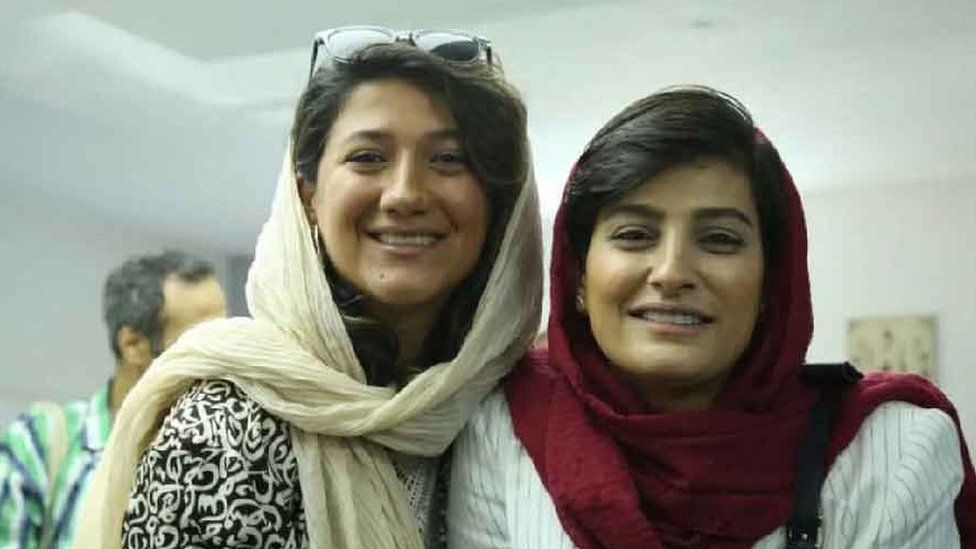
Now it is the turn of the Iranian journalists who reported on Mahsa Amini

May 11, 2023
Niloufar Hamedi and Elaheh Mohammadi
Image caption, Niloufar Hamedi and Elaheh Mohammadi have been detained in Iran for more than 200 days

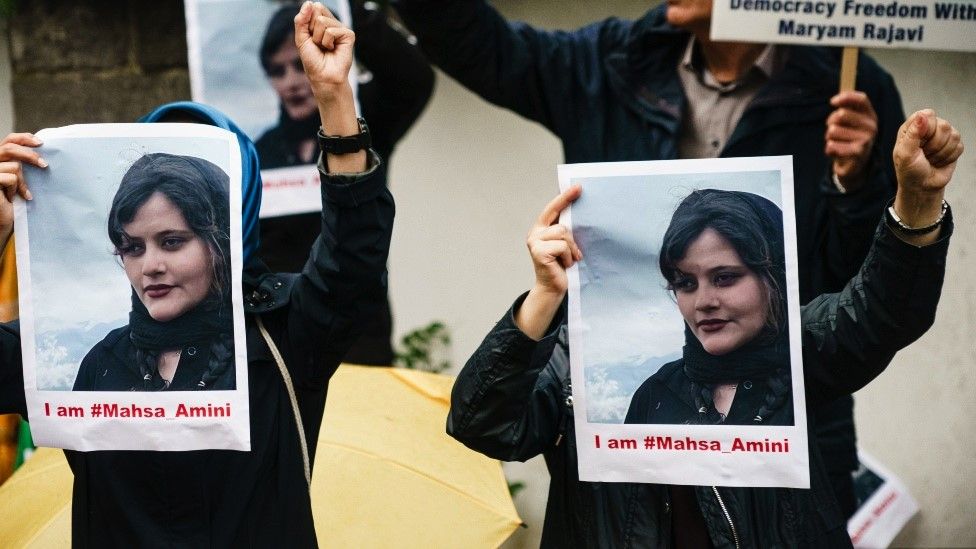
BBC Persian Service on 5 May 2023 drew attention to the fate of the two journalists who reported first on Mahsa Amini, whose name made headlines around the world when she died in custody last September, sparking waves of protests in Iran. But not many people have heard of Niloufar Hamedi and Elaheh Mohammadi.

The two female journalists helped break the story of Ms Amini’s death and have been detained in two of Iran’s most notorious prisons ever since. On Tuesday, they and the imprisoned Iranian human rights activist Narges Mohammadi were awarded the 2023 Guillermo Cano World Press Freedom Prize by the United Nations’ cultural agency, UNESCO.”They paid a hefty price for their commitment to report on and convey the truth. And for that, we are committed to honouring them and ensuring their voices will continue to echo worldwide until they are safe and free,” said Zainab Salbi, the jury chair. For more on Narges, see; https://www.trueheroesfilms.org/thedigest/laureates/07C20809-99E2-BDC0-FDC3-E217FF91C126

On 22 September, just six days after she tweeted a photograph of Mahsa’s grieving family, Niloufar Hamedi was arrested. Security forces also raided Elaheh Mohammadi’s home at the same time, seizing her electronic devices. On 29 September, she too was arrested.

Both Ms Hamedi and Ms Mohammadi were already known for hard-hitting news reports and coverage of human rights issues.

As well as winning UNESCO’s press freedom prize, Ms Hamedi and Ms Mohammadi have been named as two of Time Magazine’s 100 Most Influential People of 2023 and given the 2023 Louis M Lyons Award for Conscience and Integrity in Journalism, presented by Harvard University in the United States. See: https://www.trueheroesfilms.org/thedigest/awards/8809EB31-7E9C-4624-88E3-FC592D496807 and https://www.trueheroesfilms.org/thedigest/awards/1748C306-757A-49EB-8436-A9C607356112

“Journalists in Iran are risking their lives on a daily basis to report on the conditions and oppressions there,” the Harvard fellows noted.

Protesters hold up pictures of Mahsa Amini in Berlin, Germany
Image caption, Mahsa Amini’s death led to a wave of protests in Iran and rallies in solidarity around the world

Ms Hamedi and Ms Mohammadi have meanwhile been kept in harsh conditions at Evin prison in Tehran and Qarchak Women’s Prison, south of the city. Reports from inside Qarchak suggest that the facilities are inhumane, with a lack of medicine, food and even safe drinking water or clean air. Ms Mohammadi lost 10kg (22lbs) in the first three months of her detention, her husband wrote on his Instagram page.

Both women have also struggled to access legal support. The first lawyer appointed to represent the pair said in October that he was unable to communicate with them or access the legal documents surrounding their arrests. Less than a month later, he was himself arrested. The journalists’ families have struggled with the pain of not knowing what is going to happen to them.

“I’m asked, ‘What do the authorities tell you?’ I’m not even sure which institution or person to contact,” Ms Hamedi’s husband, Mohammad Hossein Ajorlou, said in an interview with Sharq.

He too has found it difficult to get information about what his wife is accused of and what is likely to happen to her.

At the end of October, Iran’s ministry of intelligence and the intelligence agency of the Revolutionary Guards issued a statement accusing Ms Hamedi and Ms Mohammadi of being trained by the US Central Intelligence Agency to foment unrest in Iran.

Their newspapers denied the allegations and insisted they had just been doing their jobs.

Last week, after they had both spent more than 200 days in custody, the Iranian judiciary announced that Ms Hamedi and Ms Mohammadi had been indicted and their cases referred to a court.

On Monday, Ms Hamedi’s husband wrote on Twitter that she and Ms Mohammadi had been transferred back to Evin prison from Qarchak, apparently in preparation for their trial.

https://www.bbc.com/news/world-middle-east-65466887

see also: https://iranhumanrights.org/2023/06/iran-proposed-bill-pushes-denial-of-basic-rights-to-unveiled-women/

in August 2023, things got further out of hand: with mass arrests:

https://www.nbcnews.com/news/world/iran-arrests-women-activists-mahsa-amini-protests-anniversary-rcna100566

https://www.frontlinedefenders.org/en/statement-report/iran-alarm-over-mass-arrests-human-rights-defenders-advance-anniversary-september

https://www.hrw.org/news/2023/08/19/iran-mass-arrests-womens-rights-defenders

Ales Bialiatski sentenced to 10 years in jail

March 9, 2023

Belarus court sentences Ales Bialiatski to 10-year jail term, The sentencing of the Nobel Peace Prize winner and human rights defender has triggered protests. Media and human rights defenders across the world said that his arrest is ‘politically motivated’. See also: https://humanrightsdefenders.blog/2022/10/08/meet-ales-bialiatski-nobel-peace-prize-2022/

Ales Bialiatski pictured in November 2021
Image caption, Ales Bialiatski pictured in November 2021

Oliver Slow of BBC News reported as follows¨

…Supporters of Mr Bialiatski, 60, say the authoritarian regime of Belarusian leader Alexander Lukashenko is trying to silence him. He was arrested in 2021 following massive street protests over widely disputed elections the previous year, and accused of smuggling cash into Belarus to fund opposition activity. Demonstrators were met with police brutality and Lukashenko critics were regularly arrested and jailed during the demonstrations, which started in 2020.

Mr Bialiatski was in court alongside two fellow campaigners, Valentin Stefanovich and Vladimir Labkovich.

Mr Stefanovich was sentenced to nine years in prison, while Mr Labkovich received seven years, according to Viasna, the group Mr Bialiatski founded in 1996. All three had pleaded not guilty.

Mr Bialiatski’s wife, Natalya Pinchuk, said the trial was “obviously against human rights defenders for their human rights work”, describing it as a “cruel” verdict.

Referring to her husband’s letters from prison, where he has been held since arrest, she said: “He always writes that everything is fine. He doesn’t complain about his health – he tries not to upset me.”

Kostya Staradubets, a spokesperson for Viasna, said the sentences imposed on the three activists were “breaking our hearts”.

Speaking to the BBC World Service’s Newshour programme, he said: “We knew that our three colleagues would get long prison terms but anyway it’s still a shock, it’s breaking our hearts, not only the [prison] terms are long but the conditions also very horrific.

Belarus’s exiled opposition leader Svetlana Tikhanovskaya said the sentencing was “simply appalling”. “We must do everything to fight against this shameful injustice and free them,” she said.

Berit Reiss-Andersen, chair of the Norwegian Nobel Committee that awards the Nobel Peace Prize, said the verdict was a “tragedy” for Mr Bialiatski and described the charges as “politically motivated”.

In awarding the 2022 Nobel Peace Prize to Mr Bialiatski, Ms Reiss-Anderson said the Belarusian government had “for years tried to silence him”. “He has been harassed, he has been arrested and jailed, and he has been deprived of employment,” she said.

European Union foreign policy chief Josep Borrell condemned what he described as “sham trials”, adding they were “yet another appalling example of the Lukashenko regime trying to silence those who stand up in defence of human rights and fundamental freedoms of the people in Belarus”.

There are currently 1,458 political prisoners in Belarus, according to Viasna. Authorities claim there are none.

Mr Bialiatski is a veteran of the human rights movement in Belarus, establishing Viasna in 1996 in response to the brutal crackdown of street protests that year by Mr Lukashenko, who has been president of Belarus since the office was established in 1994. See: ¨https://humanrightsdefenders.blog/2022/10/07/nobel-peace-prize-2022-goes-to-well-recognised-human-rights-defenders/

This was followed by the sentencing of women journalists: https://www.theguardian.com/world/2023/mar/18/belarus-jails-senior-staff-at-independent-news-site-in-crackdown-on-lukashenko-critics

https://www.bbc.com/news/world-europe-64833756

https://www.livemint.com/