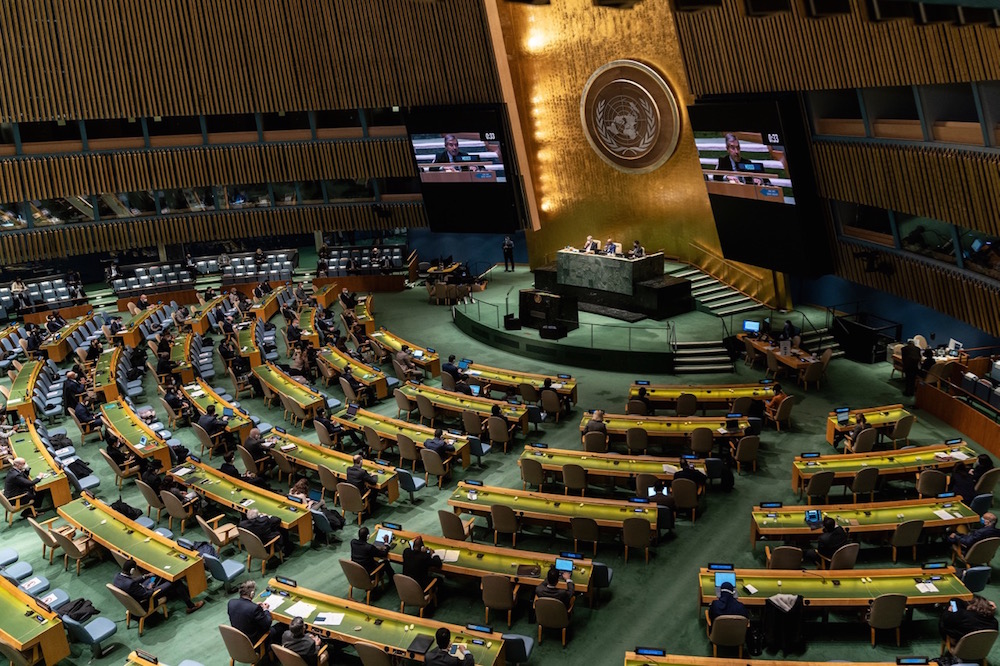
A plenary meeting at the 76th Session of the General Assembly, at the UN Headquarters, in New York, USA, 21 January 2022, Lev Radin/Pacific Press/LightRocket via Getty Images
NGOs that seek to participate fully at the UN – making statements and organising events to highlight injustice and provide recommendations – have to get accredited. The “Committee on NGOs” manages the process – as the gateway for NGOs into the United Nations. If you’re a State with a mind to block NGOs, membership of the Committee is perfect. This is where you can sit and control who comes in. By asking questions of NGO applicants, members of the Committee can push their accreditation for many years. For more on this see: https://humanrightsdefenders.blog/2018/02/09/the-saga-of-the-anti-ngo-committee-in-the-un-continues/
Currently there are 70 organisations that have faced over four years of deferrals. Two human rights organisations have been deferred for over ten years. Some NGOs have also been accused by Committee members of having terrorist sympathies: baseless accusations against which the NGOs have been denied appeal.
In four short months there’s a chance to change things. Elections to the Committee on NGOs will be held in April 2022. The 54 members of the UN’s Economic and Social Council (ECOSOC) vote to fill the 19 seats on the Committee across all regional groups.
A joint letter by a massive number of NGOs of 10 February 2022 makes the point:
To: Member States of the UN General Assembly
Excellencies:
We are five months out from elections to the ECOSOC Committee on Non-Governmental Organisations for the 2023-2026 term. These are key elections for all those who value the expertise of civil society and seek to ensure the UN can benefit from it.
The Secretary General has called civil society the UN’s ‘indispensable partners”. Member States recently committed to boosting partnerships ‘to ensure an effective response to our common challenges’. In recommending approval of the participation of non-governmental organisations in a range of UN bodies and processes, the Committee on NGOs plays a key role in facilitating such partnerships. It is essential that the members of the Committee are committed to fulfilling such a task fairly and judiciously.
With this in mind, we would like to request the following, that:
1/ States with an interest in facilitating and safeguarding civil society access to and participation in UN processes stand for election to the Committee.
2/ Candidates make public the reasons for their candidacy and their commitment to fulfil their responsibilities as members of the Committee, as per ECOSOC Resolution 1996/31.
3/ All regions put up competitive slates, as the Asia-Pacific and GRULAC regions did in the last elections for the Committee in 2018. Competitive elections are important to create buy-in to the process and encourage states to be accountable for their commitments.
4/ All regions make public candidacies at least two months before the elections to allow for proper consideration of candidates.
5/ All ECOSOC members vote (and be encouraged to vote) only for candidates with positive track records in regard to civil society access and participation. Candidates could be assessed in regard to indicators such as support for relevant UN resolutions, such as those on civil society space and human rights defenders; on responses to cases of intimidation and reprisals; and on national level initiatives to safeguard civic space, press freedom – online as offline – and the right to defend human rights.
6/ ECOSOC members should consider introducing term limits for membership of the Committee on NGOs, among other reforms encouraging openness and accountability. As with other UN bodies, states should be required to leave the Committee for a specific interval of time after serving for a maximum agreed period. Term limits would encourage greater diversity in membership over time and encourage states to step up as candidates.
The Committee on NGOs is entrusted with the task of facilitating civil society access so that the expertise and experience of civil society partners can enrich and inform UN debates. It needs members that are committed to fulfilling the Committee’s mandate in a fair, transparent, non-discriminatory, expeditious and apolitical manner. It falls on all member states – as potential candidates and / or electors – to ensure that the Committee membership is fit for purpose.
Please elect to stand up for civil society!
Yours sincerely,
In addition to the letter, individuals can undertake additional steps. You can engage with States on all the campaign objectives!
On competitive elections and voting with integrity: See here for a model email for sending to those who get to vote, ECOSOC members. Check here whether your State is going to vote.
On candidates: Does your state have a positive record on promoting civil society but isn’t running? See here for a model email to encourage them.
On 21 July 2021 FIDH and many other NGOs addressed an open letter to the Government of Eswatini and the international community:
We, the undersigned 69 civil society organisations, are deeply concerned about the eruption of state violence in Eswatini. We stand in solidarity with the people of Eswatini in condemning the government’s violent repression of mass protests demanding democracy and economic justice.
We support the UN Human Rights Commissioner’s call urging the authorities to fully adhere to human rights principles and reminding them that peaceful protests are protected under international human rights law. We call on the Government of Eswatini to immediately cease its brutal crackdown against civilians, restore and maintain internet access, and engage in inclusive dialogue with pro-democracy groups and politicians.
We call on the international community, including the United Nations, African Union, Southern African Development Community, and individual governments, to demand that the Government of Eswatini respect human rights, allow a thorough, independent investigation of who authorised violence against protesters, including shoot to kill orders, and support a peaceful transition to a democratic form of government.
Reports out of Eswatini indicate that, since late June, the army and police forces have killed dozens of unarmed civilians and injured around 1,000 people, including by shooting indiscriminately at and wounding protesters. The government has reportedly imprisoned hundreds of people, many of them young people, and shut down internet access across the country for several weeks, which Amnesty International calls “a brazen violation of the rights to freedom of expression and information.” Reports further indicate that security forces have sought to intimidate human rights defenders and activists with unlawful surveillance, imposed a curfew, and restricted public gatherings and petition deliveries to the government. This political crisis caused by state-sponsored violence risks creating a humanitarian crisis, as hospitals struggle to treat the influx of people injured by security forces, food and fuel supplies become limited, and people’s movement and ability to conduct basic commerce is restricted.
Specifically, we lend our support to the demands of civil society organisations, political organisations, and people’s movements within Eswatini calling for a long-term resolution to the current political crisis through an inclusive political dialogue, the total unbanning of political parties, a transitional authority, new democratic Constitution, and a multiparty democratic dispensation.In the immediate term, we join democracy defenders in Eswatini in the following demands, calling for action from the Government of Eswatini to cease violence, restore and maintain communications services, and provide urgently needed humanitarian support:
● The immediate cessation of the killing of civilians and the return of the army to the barracks;
● The immediate restoration of civic services such as the rapid issuing of death certificates for those killed in the past days;
● Mandatory independent pathologists to conduct post-mortems on the deceased;
● Urgent humanitarian support to the affected families, workers and citizens who need basic necessities such as food, sanitary towels, baby food, etc.
● The provision of direct financial support to resuscitate affected small and medium enterprises;
● The full and permanent restoration of internet and communication services and peoples’ right to freedom of expression; and
● The urgent availability of vaccines to all emaSwati and the end of unnecessary lockdowns.
As the Government of Eswatini, Africa’s only remaining absolute monarchy, violates the human rights of residents, suppresses freedom of speech and assembly, and jails young people for demanding a brighter future, the international community cannot remain silent.
We call on partners in international civil society, regional governmental bodies, and diplomats to join us in amplifying the demands of the Eswatini people and seeking the protection of people’s human rights.
The Hill of 26 May 2021 reports that a coalition of more than 30 human rights and digital privacy rights groups called on Google to abandon its plans to establish a Google Cloud region in Saudi Arabia over concerns about human rights violations.
The groups, which include Amnesty International, Human Rights Watch and PEN America, wrote in their letter that Saudi Arabia’s record of tamping down on public dissent and its justice system that “flagrantly violates due process” made it unsafe for Google to set up a “cloud region” in the kingdom.
“While Google publishes how it handles government requests for customer information and reports when requests are made through formal channels, there are numerous potential human rights risks of establishing a Google Cloud region in Saudi Arabia that include violations of the rights to privacy, freedom of expression and association, non-discrimination, and due process,” the groups said. See also: https://humanrightsdefenders.blog/2019/03/08/saudi-arabia-for-first-time-openly-criticized-in-un-human-rights-council/
The letter also pointed to Saudi authorities who have routinely sought to identify anonymous online dissenters and spy on Saudi citizens through digital surveillance. The groups also pointed to how they themselves are believed to have been put under surveillance by the Saudi government.
“Google has a responsibility to respect human rights, regardless of any state’s willingness to fulfill its own human rights obligations,” the letter continued, pointing to Google’s statement in which it expressed its commitment to human rights and to “improve the lives of as many people as possible.”
In order to address these concerns, the groups called on Google to conduct a “robust, thorough human rights due diligence process” and to “draw red lines around what types of government requests concerning Cloud regions it will not comply with” due to human rights concerns.
“The Saudi government has demonstrated time and again a flagrant disregard for human rights, both through its own direct actions against human rights defenders and its spying on corporate digital platforms to do the same,” the letter read. “We fear that in partnering with the Saudi government, Google will become complicit in future human rights violations affecting people in Saudi Arabia and the Middle East region.”
On 17 February 2021, more than 70 Non-Governmental Organizations, Faith-Based Groups and Academic Institutions called for the Biden Administration to Repeal ICC Sanctions:
The undersigned organizations urge the Biden Administration to engage constructively with the International Criminal Court (ICC). The U.S. government’s support for the ICC could help secure justice for victims in situations from Myanmar to Darfur, just as it helped facilitate the February 4 historic conviction of a former leader of an armed rebel group for war crimes and crimes against humanity in northern Uganda.There is an immediate need to act to reset U.S. policy regarding the ICC. Most urgently, we are alarmed by recent calls for the U.S. government to maintain or even expand the sanctions put into place by the Trump administration in June 2020 currently targeting the court’s work.These actions were an unprecedented attack on the court’s mandate to deliver justice and the rule of law globally, an abuse of the U.S. government’s financial powers, and a betrayal of the U.S. legacy in establishing institutions of international justice. They were also an attack on those who engage with the court, including human rights defenders and victims. These extraordinary measures have put the U.S. at odds with many of its closest allies. They also have been challenged on constitutional grounds domestically. Keeping in place the executive order authorizing sanctions would be inconsistent with the new administration’s laudable commitments to respecting the rule of law and pursuing multilateral cooperation in support of U.S. interests. It would also transform a shameful but temporary action into a standing license for other governments to attack multilateral institutions when they disagreewith those bodies’ actions. We call upon the U.S. government to rescind Executive Order 13928 and all sanctions measures against ICC officials at the earliest possible opportunity. We appeal for constructive engagement with the ICC and we urge the Biden administration and members of Congress to support that approach.
This statement was coordinated by the Washington Working Group for the International Criminal Court (WICC), an informal and nonpartisan coalition of diverse NGOs, including human rights organizations, faith based groups, professional associations, and others.
The Advocates for Human Rights, Allard K. Lowenstein International Human Rights Clinic, Yale Law School, American Civil Liberties Union (ACLU), American Jewish World Service (AJWS), Amnesty International USA, Anti-Torture Initiative, American University Washington College of Law, Associazione Luca Coscioni, Center for Civilians in Conflict (CIVIC), Center for Constitutional Rights (CCR)Center for Justice and Accountability Center for the Study of Law & Genocide, Loyola Law School, Center for Victims of Torture (CVT) Congregation of Our Lady of Charity of the Good Shepherd, US, Provinces Darfur Women, Action Group Democracy for the Arab World Now (DAWN), Eumans European Center for Constitutional and Human Rights, Fortify Rights, Global Centre for the Responsibility to Protect, Global Justice Center, Global Justice Clinic, New York University School of Law, Guernica 37, Chambers and Centre for International Justice, Human Rights and Gender Justice Clinic, City University of New York School of Law, Human Rights FirstHuman Rights Institute, Georgetown University Law Center, Human Rights Watch, Institute for Policy Studies, Drug Policy Project, Institute for Policy Studies, New Internationalism Project, International Association of Democratic Lawyers, International Center for Transitional Justice (ICTJ). International Commission of Jurists (ICJ), International Criminal Court Alliance (ICCA), International Federation for Human Rights (FIDH), International Human Rights Clinic, Boston University School of Law, International Human Rights Clinic, Harvard Law School, InterReligious Task Force on Central AmericaJ . StreetJustice for Muslims Collective. Leitner Center for International Law and Justice, National Advocacy Center of the Sisters of the Good Shepherd. Never Again Coalition, No Peace Without Justice, Open Society Foundations, Operation Broken Silence, Parliamentarians for Global Action (PGA), Partners in Justice International, Pax Christi USA, Physicians for Human Rights, Presbyterian Church (USA), Office of Public Witness, Project Blueprint,The Promise Institute for Human Rights, UCLA School of Law REDRESS, The Rendition Project
On 7 the ADHRB published a joint letter by 20 major NGOs to the EU about the EU-Bahrain Cooperation Agreement, which they say must Depend on Human Rights Improvements.
TO: Joseph Borrell, High Representative of the European Union for Foreign Affairs and Security Policy / Vice-President of the European Commission and Eamon Gilmore, EU Special Representative for Human Rights
Your Excellencies,
In light of the meeting between Bahrain’s Minister of Foreign Affairs and the European External Action Service currently scheduled to take place in Brussels on 10 february 2021, we are writing to raise concerns about the deterioration of the human rights situation in Bahrain, following a year in which Human Rights Watch reports that the Bahraini government has “escalated repression” against critics. As the informal EU-Bahrain Human Rights Dialogue originally scheduled for November 2020 has been indefinitely postponed, it is vital that human rights concerns are placed at the center of your conversations with Bahraini officials during this upcoming meeting.
Bahrain’s Crackdown on Political Opposition and Civil Society
Bahrain’s February 2011 Arab Spring uprising was an event which many hoped would herald a new era of democracy in the country. However, since the government’s violent suppression of the protests, promised reforms have failed to materialise. The leaders of the protest movement, some of them now elderly, continue to languish in prison.
Since 2017, authorities have outlawed all independent media and dissolved all political opposition parties. Among the most prominent prisoners currently incarcerated are high-profile political opposition leaders, activists, bloggers and human rights defenders sentenced to life imprisonment for their roles in the 2011 pro-democracy protests. These include Hassan Mushaima, Abduljalil AlSingace, Abdulhadi AlKhawaja,[see: https://www.trueheroesfilms.org/thedigest/laureates/4d45e316-c636-4d02-852d-7bfc2b08b78d] Sheikh Mohammed Habib AlMuqdad and Abdulwahab Husain. In 2018, the leader of Bahrain’s largest opposition bloc, Sheikh Ali Salman, was sentenced to life in prison following trials on speech charges and spurious accusations of espionage.
Over the last four years, political activists have borne the full brunt of political repression in Bahrain, facing arbitrary arrest and lengthy prison terms, and in some cases torture, for opposing the government. Hundreds have been arbitrarily stripped of citizenship, while activists and journalists who continue their work from exile risk reprisals against family members who remain in the country.
According to the Committee to Protect Journalists, at least six journalists are currently imprisoned for their work in Bahrain, while the country has fallen to a lamentable 169/180 on the Reporters Without Borders 2020 World Press Freedom Index. Bahrain scored a paltry 1/40 for political rights in Freedom House’s Freedom in the World 2020 report.
In addition, Bahrain’s government has increasingly turned to repressive cyber crime legislation to further restrict civic space, with prominent defence lawyers, opposition leaders and human rights defenders prosecuted over their social media activity since 2018. As Amnesty International has reported, Bahrain’s authorities have used the COVID-19 pandemic as a pretext “to further crush freedom of expression.”
Medical Negligence and Mistreatment in Jau Prison
Bahrain’s prisons remain overcrowded and unsanitary, and human rights groups have called on the government to release those imprisoned solely for exercising their right to freedom of expression in light of the threat posed by COVID-19. Prisoners are frequently subjected to humiliating treatment and denied adequate medical care, in violation of Bahrain’s international human rights obligations. These include Hassan Mushaima and Dr Abduljalil AlSingace, who suffer from a range of chronic medical conditions, as well as human rights activists Ali AlHajee and Naji Fateel.
Other prominent prisoners include two European-Bahraini dual citizens, the Danish-BahrainiAbdulhadi AlKhawaja and the Swedish-BahrainiSheikh Mohammed Habib AlMuqdad, both of whom are considered prisoners of conscience by Amnesty International, having been prosecuted and sentenced to life imprisonment for peacefully exercising their right to freedom of expression and peaceful assembly, and subjected to torture and other ill-treatment including denial of medical care.
In April 2011, security forces violently arrested Al-Khawaja and broke his jaw, leading to surgery for four broken bones in his face. Security officers tortured Al-Khawaja directly after his major jaw surgery, while blindfolded and restrained to a military hospital bed, which forced the doctor to ask the security officers to stop as it would undo the surgical work. Almost ten years later he still suffers from chronic pain and requires additional surgery to remove the metal plates and screws that were used to reattach his jaw. [see also: https://humanrightsdefenders.blog/2021/01/27/over-100-ngos-write-to-prime-minister-of-denmark-to-pressure-bahrain-to-release-abdul-hadi-al-khawaja/]
AlMuqdad, who was tortured by methods including severe beating and electrocution, suffers from multiple health problems, including a hernia likely caused by his torture, but is being denied proper health care. As of January 2021, in addition to the need for urgent surgery to repair the hernia, AlMuqdad is in need of heart surgery to unblock his coronary arteries and examination by a urologist to diagnose a prostate problem. The prison administration continues to delay the surgeries and specialist appointments, blaming the ongoing COVID-19 pandemic.
Death Penalty and Arbitrary Killings
In 2017, Bahrain abandoned a de facto moratorium on the death penalty and has since conducted six executions, five of which were condemned as arbitrary by UN Special Rapporteur on extrajudicial executions Agnes Callamard, in 2017 and 2019 respectively. According to recent research by the Bahrain Institute for Rights and Democracy (BIRD) and Reprieve, 26 death row inmates currently face imminent execution in the country, nearly half of whom were convicted on the basis of confessions allegedly extracted under torture in cases related to political unrest.
These include Mohammed Ramadhan and Husain Moosa, whose death sentences were upheld in July 2020 despite credible evidence that both men were convicted on the basis of confessions obtained under torture. Independent experts at the International Committee for the Rehabilitation of Torture Victims concluded that investigations by Bahrain’s human rights oversight bodies into the torture of the two men “fail[ed] to meet the minimum professional standards and the minimum international legal standards”, while the Bar Human Rights Council of England and Wales warned that “upholding the convictions would be wholly inconsistent with Bahrain’s international obligations”. Both men are at risk of imminent execution. Three UN human rights experts warned on 12 February 2020 that carrying out these death sentences would constitute an arbitrary killing.
Our Requests
Bahraini authorities have engaged in widespread violations of human rights enshrined in both Bahrain’s national legal system as well as in multiple international human rights treaties to which Bahrain is a state party.
Furthermore, a prevailing culture of impunity has allowed suspected perpetrators of serious human rights violations to avoid accountability. In light of the continued deterioration of the human rights situation in Bahrain, we therefore ask that during the meeting the EEAS:
Urges the unconditional and immediate release of all those imprisoned solely for peacefully exercising their right to freedom of expression, peaceful assembly and association, including Hassan Mushaima, Abduljalil AlSingace, Abdulwahab Husain and Sheikh Ali Salman;
Urges for the unconditional and immediate release of Danish-Bahraini Abdulhadi AlKhawaja and Swedish-Bahraini Sheikh AlMuqdad;
Calls for an independent review of the cases involving those facing the death penalty, including the cases of Mohammed Ramadhan and Husain Moosa; as well as for the ultimate revocation of their death sentences;
Urges Bahraini authorities to reinstate a moratorium on the death penalty;
Pressures Bahrain to end the use of torture and other -ill-treatment and to tackle the culture of impunity by holding suspected perpetrators accountable and ensuring effective mechanisms for victims to receive justice and restitution;
Urges Bahrain to rescind its arbitrary bans on opposition parties, civil society groups and independent media and encourage the development of civic space in Bahrain;
Urges the Bahraini Government to ensure its respect to, and protection of, the right to freedom of expression, and to take necessary steps to ensure freedom of the press; and
Persuades Bahrain’s government to take concrete and measurable steps towards justice reform and respect for human rights.
“Their appointment would undermine the rule of law and U.S. credibility around the world. It would be a callous rebuke to… all those who care about human rights and the protection of basic dignity.” writes Brett Wilkins in Common Dreams of 21 December 2020.
Anti-torture activists and advocates are urging President-elect Joe Biden to avoid nominating torture apologist Michael Morell for CIA director. (Photo: Justin Norman/Flickr/cc)
Survivors of torture by U.S. or proxy forces and their advocates on Monday issued an open letter urging President-elect Joe Biden not to nominate torture apologist Michael Morell for CIA director, and calling on the Senate to reject the nomination of Avril Haines for director of national intelligence.
The letter—which was also sent to members of the Senate Intelligence Committee as well as to Biden and Vice President-elect Kamala Harris—was organized by Marcy Winograd of Progressive Democrats of America, Medea Benjamin of CodePink, and Jeremy Varon of Witness Against Torture.
In addition to those three activists, signatories to the letter include:
Mansoor Adayafi, a Yemeni author imprisoned without charge or trial for 14 years in the U.S. military prison at Guantánamo Bay, Cuba.
Djamel Ameziane, an Algerian refugee and artist who was jailed without charge in Guantánamo for 11 years.
Moazzam Begg, a British Pakistani imprisoned at the U.S. airbase at Bagram, Afghanistan—where he says he witnessed Americans murder two detainees—and then, for three years at Guantánamo Bay before being released without charge.
Sister Dianna Ortiz, a missionary from New Mexico serving during the Guatemalan Civil War who in 1989 was kidnapped, raped, and tortured—she says under the supervision of an American operative—by agents of the genocidal U.S.-backed regime.
Col. Lawrence Wilkerson, a U.S. Army whistleblower who a decade ago revealed that former President George W. Bush and senior members of his Cabinet knew that most of the men and boys imprisoned at Guantánamo were innocent but kept them locked up anyway.
John Kiriakou, a CIA whistleblower who was prosecuted and jailed for nearly two years by the Obama administration for exposing U.S. torture.
“We believe that the record of Morell and Haines disqualifies them from directing intelligence agencies,” assert the letter’s signers, who in addition to those mentioned above include some two dozen other activists and advocates. “Their appointment would undermine the rule of law and U.S. credibility around the world. It would be a callous rebuke to people like ourselves and all those who care about human rights and the protection of basic dignity.”
“Morell, a CIA analyst under Bush and both deputy and acting CIA director under Obama, has defended the agency’s ‘enhanced interrogation’ practices,” the letter notes. “These included waterboarding, physical beatings, sleep deprivation, stress positions, and sexual humiliation.”
The letter also opposes the confirmation of Biden DNI nominee Haines, who “overruled the CIA inspector general by choosing not to punish agency personnel accused of hacking into the Senate Intelligence Committee’s computers during their investigation into the CIA’s use of torture.”
“In addition, Haines was part of the team that redacted the Senate Intelligence Committee’s landmark 6,000-page report on torture, reducing the public portion to a 500-page summary,” the authors write. They add:
Haines also supported Trump’s nomination of Gina Haspel for CIA director. Supervising a CIA black site in Thailand in 2002, Haspel was directly implicated in CIA torture. She later drafted the memo authorizing the destruction of the CIA videotapes. Like Morell, Haines has worked both to defend torture and surpress evidence of it. She too, is incompatible with the stated aim of the Biden-Harris administration to restore integrity and respect for the rule of law to government.
“The new administration must show the American people and the world that it acknowledges past disturbing U.S. conduct and will ensure that such abuses never recur,” the letter states. “To do that, it needs intelligence leaders who have neither condoned torture nor whitewashed the CIA’s ugly record of using torture.”
“That is why we urge President-elect Biden not to nominate Mike Morell for director of the CIA and the Senate to reject the nomination of Avril Haines for director of national intelligence,” it concludes. “The people of the United States and the world deserve better.”
Over 100 civil society organizations (for the names, click the link at the end of the post) published a joint letter on 21 October 2020 to express their strong support for the report on “The Privatisation of Water and Sanitation Services” of the United Nations (U.N.) Special Rapporteur on the human rights to safe drinking water and sanitation, Mr. Léo Heller. He will present the report to the U.N. General Assembly today. They also express deep concern about the attempts by a group of private water operators to undermine the independence of the Special Rapporteur and his work. Programmes.
This new report is an important contribution to a debate that is crucial in current times. The role of private actors in the delivery of public services, including water and sanitation services, has been increasing in the last decades. In recent years, at least four other U.N. Special Procedures ( extreme poverty and human rights, education, housing, and debt) have written on this topic in their respective reports. Just this week, eight current and former U.N. Special Rapporteurs and independent experts met at a major event on privatisation gathering hundreds of people online, and five of them released an op-ed published worldwide on the importance of the issue of privatisation and human rights.
Mr. Heller’s report is balanced and acknowledges the diversity of context. His report is the result of his work over the last six years and, remarkably, it was prepared through several consultations that go far beyond what is expected or what is the usual practice under U.N. Special Procedures. The consultations included a wide range of stakeholders, including States and the private sector, and were transparently shared on the mandate’s website.
Yet, despite the importance of this issue and the measured and constructive solutions offered, the Special Rapporteur has faced considerable pushback from Aquafed, a lobby group for private water companies such as Veolia and Suez. We are aware that Aquafed wrote to the President of the Human Rights Council, the United Nations High Commissioner for Human Rights, and to States. These letters personalised the issue, questioning Mr. Heller’s impartiality and respect of the applicable rules. The concerns they raise are however unfounded; they aim at silencing and discrediting him, rather than debating substance.
This interference is a transparent and unacceptable attempt to protect the industry’s profits from exposure to the reality of the lived experience of far too many who have had their human rights violated under privatisation.
We would like to express our thorough support to Mr. Heller’s rigour and professionalism. Despite limited resources, he has consulted widely for this report, and for his previous reports. Throughout his six-year mandate, he paid attention to affected communities and families who do not enjoy the rights to water and sanitation. In strict adherence to the rules of conduct and the mandate of the Human Rights Council, he has conducted quality, evidence-based, thoughtful research. He has taken into consideration the views he received through consultations, but acted independently from States, the private sector, and other stakeholders, which is the pillar of the United Nations special procedures mechanism. There is no doubting his integrity, professionalism, or commitment to human rights.
The signatories would like to express our recognition for the work that the Special Rapporteur has undertaken in the last six years and in particular, we underline the importance of his work on privatisation. Mr. Heller makes recommendations for States, private actors and international financial institutions, which we believe merit due attention and action.
We urge States, as duty-bearers, to continue placing their obligation to fulfill the human rights of all people above the financial interests of any private actor.
Sincerely,
Convening partners: Corporate Accountability Global Initiative for Economic, Social and Cultural Rights Public Services International The Transnational Institute
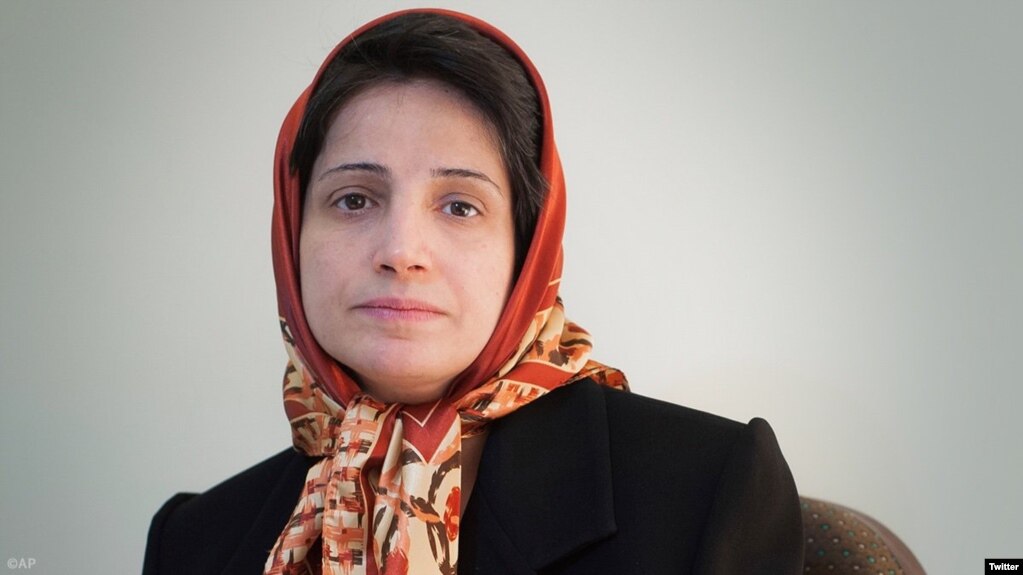
On September 19, she was taken to hospital for a serious heart condition. But four days later, she was taken back to Evin prison, triggering disbelief from UN independent experts among others.
“It is unfathomable that the Iranian authorities would return Ms. Sotoudeh to prison where she is at heightened risk to COVID-19, as well as with her serious heart condition,” the experts said.
“We urge the authorities to immediately reverse this decision, accept her requests to recuperate at home before undergoing a heart procedure, and allow her to freely choose her own medical treatment,” they added in a statement.
The experts echoed Sotoudeh’s call for the Iranian authorities to grant temporary release to human rights defenders, lawyers, dual and foreign nationals, prisoners of conscience, political prisoners, and all other individuals detained without sufficient legal basis during the COVID-19 pandemic.
47 countries called on Iran to “protect the human rights of all its citizens and release all political prisoners and arbitrarily detained” in a Friday session of the UN Human Rights Council, according to a German diplomat, Susanne Baumann:
Susanne Baumann
@GERMANYonUN
·
Joint Statement on the dire human rights situation in Iran today in the Human Rights Council #HRC45, presented by Germany on behalf of 47 countries. We call on Iran to protect the human rights of all its citizens and release all political prisoners & arbitrarily detained.
An open letter has been signed by: Article 19, Assembly of Pro-Democratic NGOs of Belarus, Barys Zvozskau Belarusian Human Rights House, Belarusian Association of Journalists, Belarusian Helsinki Committee, Civil Rights Defenders, Human Constanta, Human Rights House Foundation, Human Rights Watch, International Federation for Human Rights (FIDH), La Strada International, Legal Initiative, Legal Transformation center (Lawtrend), Viasna Human Rights Center and World Organisation Against Torture (OMCT).
The UN Human Rights Council must urgently convene a special session to address the human rights crisis in Belarus. The joint letter expresses the organisations’ “utmost concern” over “widespread violations of human rights, including arbitrary arrests, prosecutions under trumped-up charges, and torture and other ill-treatment”.
The letter calls on the council to adopt a resolution requesting the UN High Commissioner for Human Rights to monitor and report on human rights abuses in Belarus with “a view to ensuring full accountability”.
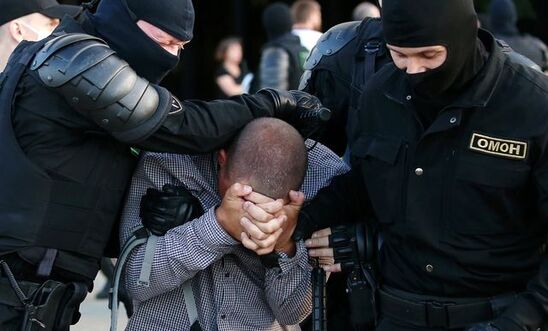
[In the three days after the 9 August presidential election, the authorities in Belarus confirmed the arrest of at least 6,700 protesters. According to Viasna Human Rights Center, at least 450 of the detainees reported being tortured or otherwise ill-treated – including through severe beatings, being forced to perform humiliating acts, being threatened with rape and other forms of violence – while held in incommunicado detention for up to ten days.
Since 12 August, the authorities have taken steps to de-escalate the situation, refraining from mass arrests and releasing those detained. However, the threats against peaceful protesters recently made by President Alyaksandr Lukashenka and his subordinates together with the recent deployment of the armed forces in the country’s capital Minsk and elsewhere, signal a possible new spiral of violence and accompanying human rights violations.]
Turkish nationals who were abducted in Kosovo were kept for a time at the Turkish embassy premises.
On 9 July 9, 2020 the Nordic Monitor higlighted the shocking news that the Turkish government has signed bilateral security cooperation agreements with multiple states that were phrased ambiguously to allow for the expulsion or abduction of Turkish nationals living abroad, This is based on a joint UN letter on 5 May 2020.
Four UN rapporteurs/experts sent a joint letter to the Turkish government to express their concern about the “systematic practice of state-sponsored extraterritorial abductions and forcible return of Turkish nationals from multiple States to Turkey.”
“The Government of Turkey, in coordination with other States, is reported to have forcibly transferred over 100 Turkish nationals to Turkey, of which 40 individuals have been subjected to enforced disappearance, mostly abducted off the streets or from their homes all over the world, and in multiple instances along with their children,” the letter said.
Nordic Monitor previously reported how the content of Turkey’s security agreements has changed in parallel to the transformation of national legislation and that the new documents contained ambiguous copy-paste phrases designed to suppress government opponents outside the country.
“[The Turkish] Government has signed bilateral security co-operation agreements with multiple States allegedly containing broad and vague references to combatting terrorism and transnational crime. Sources claim that the agreements have been phrased ambiguously to allow for expulsion or abduction of anyone deemed to be a ‘security risk’ from third countries party to the agreements. There appears to be a clear link in the timing of the alleged operations – most, if not all, have been carried out within two years since the agreements entered into force. For instance, allegations are made that Turkey has signed secret agreements with several States, including Azerbaijan, Albania, Cambodia and Gabon, where several operations are reported to have taken place,” the letter stated….
Furthermore, rapporteurs, with reference to statements by Turkish officials, exposed the fact that over 100 alleged members of the Gülen movement have been abducted abroad by Turkish intelligence and brought back to Turkey as part of the Turkish government’s systematic global manhunt.
“Turkish authorities have not only acknowledged direct responsibility in perpetrating or abetting abductions and illegal transfers, but have also vowed to run more covert operations in the future. On September 21, 2018, it is alleged that Turkey’s Presidential Spokesperson stated during a press conference that the Government would continue its operations against the Hizmet Movement, similar to the one in Kosovo (March 29, 2018).”….
“We note in this respect that deprivation of nationality for the sole purpose of facilitating expulsion or removal goes against international law norms and standards. Finally, we wish to highlight that violations of international human rights obligations resulting from these agreements engage Turkey’s responsibility under international law as well as the third countries parties to the agreements” the letter said….
That Turkey takes an aggressive stand on anything that smacks like terrorism was made clear again on 7 July 2020 when Turkey’s Foreign Ministry slammed recent remarks by Sweden’s foreign minister against Turkey’s military operation in northeastern Syria while meeting via videolink with members of the PYD/YPG/PKK terrorist organization.
“Essentially this meeting was not the first in which Ann Linde came into contact with members of the terrorist organization. She previously held talks with members of the terrorist organization and participated in activities organized by people associated with the terrorist organization,” the ministry said late Thursday in a statement.
“It is a shame that so-called human rights defenders, who are becoming an instrument to the terrorist organization’s smear campaign, ignore the massacres, crimes and oppression…committed by these terrorists in Syria,” it stressed. [what the term “human rights defenders” here means is not clear] – https://www.aa.com.tr/en/turkey/turkey-slams-swedish-fm-for-meeting-with-terror-group/1905510