Posts Tagged ‘in memoriam’
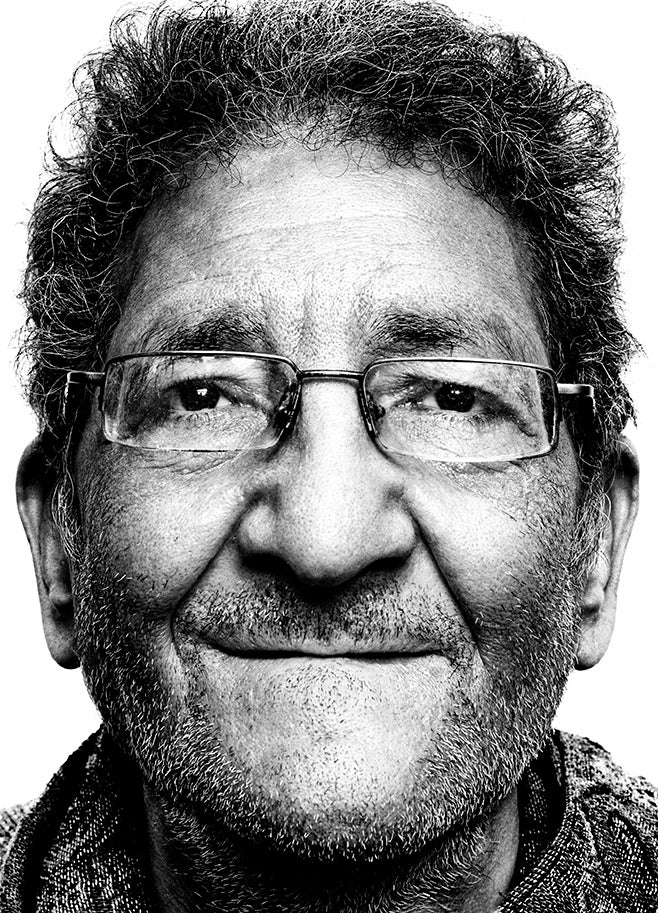
Ben Whitaker died: one of the early human rights defenders at the international scene
July 16, 2014Ben (Benjamin) Whitaker died on 8 June 2014. The memory of the human rights world being notoriously short, there will be many who do not recognize the name of one of the early human rights defenders in the international arena. A UK citizen, in 1965 he spoke out forcefully against detention camps in Rhodesia (now Zimbabwe), became one of the most activist members of the UN SubCommission in the mid seventies and lead the struggle to have the Armenian Genocide recognised. His 1985 final report on the question of genocide – which only had a brief but controversial mention of the Armenia – was for that reason blocked at the Commission level by Turkey and could not be distributed as such. I was at that time Director of the Netherlands Institute for Human Rights (SIM) and we agreed to publish a few thousand copies of the complete text under his own name.
As his link with the Armenian community was and remained strong, it should not surprise that one of the obituaries was published in DIARIO ARMENIA in Argentina. It was written by Leandro Despouy, President of the Argentine Audit Office and Former president of the SubCommission as well as the Human Rights Commission of the United Nations. Below is the English translation of this piece:
http://www.diarioarmenia.gov.ar:
Benjamin Whitaker, the Argentine dictatorship and the acknowledgement of the Armenian Genocide by the United Nations
Ben Whitaker died on June 8th. Predictably, an Armenian friend gave me the news. Whitaker’s name will forever be consistently associated to the recognition of the Armenian Genocide by the United Nations. It happened after extensive and difficult sessions, sabotaged by Turkey during fifteen years, which finally materialized in 1985 with the approval of the document that carries his name, the Whitaker Report.
He was a man of remarkable virtues, but two of these: coherence and sense of humour, were present in each and every one of the multiple activities he undertook during his life. Born into an aristocratic family, he made his first political incursions in the north London borough of Hampstead: he won the Hampstead seat for the Labour Party, a seat that had traditionally gone to the Tories for the previous 81 years. He had already graduated from Oxford to the bar, and spoken out vehemently against the local police regime in his book The Police.
Ben remained faithful to his neighbourhood football club throughout his life. An “argumentative idealist” –as he liked to describe himself-, who intensified the campaign for the enforcement of Human Rights worldwide, he battled against discrimination, the death penalty, the criminalization of homosexuality, against the outlawing of adultery and abortion, in favour of environmental care and all the issues that were surfacing with enormous force during the sixties and the seventies of the past century, an era which produced an unprecedented cultural change.
His condemnation, in 1965, of the clandestine detention camps of Rhodesia (Zimbabwe) is well-known. He served as consultant for Labour governments and became executive director of the Calouste Gulbenkian Foundation, created by an Armenian in Portugal, which is dedicated to the advancement of the arts, sciences and education. There is no doubt, however, that his better known activity took place in the United Nations, where he was appointed Special Rapporteur of the United Nations SubCommission on Prevention of Discrimination and Protection of Minorities -a competent area of independent expertise-, by David Owen, the British Minister of Foreign Affairs of the seventies.
During his time at the SubCommission, after multiple attempts at public accusation, Whitaker, the French ambassador Nicole Questiaux and Theo van Boven managed to unfetter the restraints that the diplomacy of the Argentine dictatorship (Gabriel Martínez, Mario Amadeo) had used to muzzle the accusations – presented before the United Nations since 1976 -, of murders and disappearances in our country. In 1979, Whitaker delivered a clear message to the effect that countries who exercised terrorism within their territories should not try to use the same methods in the United Nations.
In 1983, the SubCommission and the Human Rights Commission (nowadays Council) entrusted Benjamin Whitaker with a study and revision of the Convention on the Prevention and Punishment of the Crime of Genocide, and its relation to the Convention of the Non-Applicability of Statutory Limitations to War Crimes and Crimes against Humanity, in order to insure that Governments would comply with these directives. Whitaker was chosen for this research because of his intellectual stature and his proven integrity; nevertheless, one of the female experts advised him to add a bullet-proof vest to his wardrobe.
In point of fact, two preliminary studies (1973 and 1975) developed by the Rwandan expert Ruhashiankiko, included a paragraph , number 30, which would become renowned because it labeled the Armenian Massacres of 1915 and 1923 as “the first genocide of the twentieth century”. This paragraph raised a storm of great proportions, conducted by the Turkish diplomacy, and had to be suppressed from the final report in 1979. The Rwandan expert vanished from the international arena.
We met at the SubCommission. We were 26 experts. Alfonsin’s administration was just getting started, as was the revolution of the cause of Human Rights. When I was appointed General Rapporteur of the SubCommission in 1984, the project of Whitaker’s excellent Report was being debated. It contained the definition of the Armenian Genocide. I agreed entirely with its contents, but found it difficult, from a political standpoint, to show signs of support and proximity to an Englishman, when the wounds of the Malvinas War were still so fresh. Concurrently, the investigation of the Argentine dictatorship’s crimes and the legal summons issued to the Juntas drew us closer, so we established an undercurrent of mutual sympathy in an almost clandestine fashion, sometimes mediated by the French judge Louis Joinet who was also an expert in the SubCommission. I told him I supported him. By 1985 we already enjoyed a fluid relationship and though the context was not simple, we were able to overcome that contingency; we shared a profound dialogue, and we both had knowledge of the world of the United Nations and Human Rights.
The situation was also very complicated for Whitaker; Margaret Thatcher ruled in Great Britain, her government did not endorse his condition of Rapporteur, and he had to receive the backing of a British NGO in order to finish his mandate at the United Nations. A committed socialist, Whitaker did not support the policies of Thatcher’s administration, and although these circumstances weakened him personally, the forcefulness of his Report made him stronger. That situation was taken advantage of by the Turkish diplomacy, who tried to erase from his Report the paragraph about the Armenian Genocide. During the debate of this issue, I brought up the changes which had taken place in Argentina, our solidarity with the victims of genocides and openly declared that the controversial paragraph must be kept.
In 1985, Whitaker reported to the SubCommission the theft of documents which he was never to recover. In that same session, as General Rapporteur, I pointed out that the expression “genocide” had been replaced by “Armenian question”. In those days, Whitaker received the visit of two Turkish diplomats who tried to dissuade him from continuing with his investigation. But Whitaker was a man of principles, not easily swayed by political pressure. The final approval in 1985 of the historical Report, which has become part of the patrimony of the United Nations, is the culmination of an unprecedented diplomatic battle that produced an important judicial and political impact throughout the world.
Whitaker ended his Report stating that it was necessary to close that chapter of History in an honourable way, and that if the experts did not have the courage to tell the truth, then participating in the SubCommission’s work would be useless, since it was the duty of the SubCommission to protect the victims from the governments and not the other way round. For ethical reasons and in an act of chivalry, Whitaker abstained from voting for his own Report. When we met again in 1986, during his visit to Buenos Aires, he declared that the approval of the Report had been a good example of Anglo Argentine cooperation. Unknown to the media, he met with Dante Caputo and president Raúl Alfonsín.
He dedicated his last years to painting, and he campaigned to have a statue of George Orwell installed in front of the BBC, where it stands today.
Human Rights lawyer Salwa Bugaighis killed in Libya
June 29, 2014
Russian human rights defender Andrei Mironov meets his death in Ukraine
May 27, 2014
(Picture taken May 25 shows the domestic and foreign passports of Russian rights defender Andrei Mironov, reportedly killed near Ukrainian town of Slavyansk. AFP POOL-/AFP/GETTY IMAGES)
Olivia Ward describes Andrei as a “slight, self-effacing man of 60, with a puckish sense of humour, he belied his frail appearance with an iron will to do good in the world. In 1986, that got him a year in a Soviet labour camp as an “anti Soviet dissident” – a time he used to channel his talent for languages, including French and Italian. Nor did he let up on government abuses after the fall of the Soviet Union. As a human rights campaigner linked with the venerable rights organization Memorial , he snapped at the heels of Boris Yeltsin’s and Vladimir Putin’s governments, especially during the two bloody wars when Russian troops battled Chechen separatist fighters…..“You don’t understand,” he rasped. “I have to go and witness what is happening. If I don’t, who will?”
“Andrei dodged so many bullets in his decades of battling impunity that it is hard to believe he is gone. It would be harder still if the truth were buried along with him” concludes Olivia Ward, who covered the former Soviet Union as bureau chief and correspondent from 1992 to 2002. For the full story see: Death in Ukraine: bitter end for Russian human rights hero | Toronto Star.
Russian human rights defenders update: Tatiana Kotlyar and Elena Ryabinina
May 12, 2014On 30 April 2014, an investigative officer in Russia ordered the psychiatric assessment of human rights defender Ms Tatiana Kotlyar in relation to an ongoing criminal investigation into the allegations that she falsely allowed dozens of migrants to illegally register her own apartment as their place of residence. [Tatiana Kotlyar is the deputy of Obninsk city council and is the chair of the Kaluga movement “For Human Rights”, which specialises in the protection of minority rights, including the rights of Roma and migrants. Since 2011, Tatiana Kotlyar has been allowing dozens of migrants to register her apartment as their place of residence for free. The Investigative Officer Zimin ordered the psychiatric examination, even though Tatiana Kotlyar has no history of psychiatric difficulties and has never received psychiatric treatment. Front Line believes that the decision may be linked to the fact that the human rights defender did not require payment for providing residence registration for more than a hundred people.] For actions see: http://www.frontlinedefenders.org/node/25865/action
In the meantime Front Line Defenders informs us of the death of Elena Ryabinina, a much admired Russian human rights defender, on 4 May 2014 in Moscow, aged 59. Since 2002, Ryabinina had been fighting for the rights of refugees seeking asylum from Central Asian countries. She was renowned for the compassion, enthusiasm, and optimism with which she worked to achieve better rights for refugees and asylum seekers. She must have saved dozens of Uzbeks and Tajiks who sought asylum. Although she did not have formal legal training, Ryabinina developed an impressive knowledge of asylum laws, and consulted and defended people seeking political and religious asylum. She worked with the Civic Assistance Committee and the Memorial Human Rights Center and headed the Right to Asylum program at the Institute for Human Rights.
Human rights defender Rashid Rehman killed in Pakistan
May 8, 2014
reports that yesterday, 7 May 2014, human rights defender Mr Rashid Rehman was shot and killed in an attack on his office in Kutchery Square, Multan, Pakistan. Two other people were injured in the shooting, which was carried out by two unknown men. Rashid Rehman was a human rights lawyer and a coordinator of the Punjab office of the Human Rights Commission of Pakistan (HRCP) in Multan. The human rights defender advocated against the misuse of blasphemy laws in Pakistan and, since February 2014, had been working on the case of Junaid Hafeez, a lecturer at Bahauddin Zakariya University who is accused of blasphemy. It is reported that no lawyer was willing to take the case for a year because of fear of reprisals from extremist religious groups. The human rights defender was shot several times and pronounced dead on arrival at Nishtar Hospital. Read the rest of this entry »
Sudan Human Rights Defender Osman Hummaida passes away
April 23, 2014On 21 April 2014, the East and Horn of Africa Human Rights Defenders Network announced the loss of its founding member, Osman Hummaida. Mr Hummaida, who died of natural causes on Thursday 17th April 2014, was a leading Sudanese human rights defender and an inspiration to countless activists in the international and African human rights community. He advocated for human rights in Sudan, challenging the impunity of those responsible for atrocities carried out against civilians. Forced to leave Sudan, having been detained and tortured on account of his work, Mr Hummaida founded the African Centre for Justice and Peace Studies in exile. The Centre’s success and strength in documenting and reporting ongoing human rights violations in the country and advocating for justice is a living testament to Mr Hummaida’s vision and determination.
Remembering Malaysian human rights defender Irene Fernandez
April 4, 2014
The NGO Persatuan Kesedaran Komuniti Selangor (Empower) is deeply saddened by the passing of Irene Fernandez. This is how her colleagues reacted:
“Many of us knew her as a comrade and friend, stretching back years to the beginnings of our lives as activists and human rights defenders Irene Fernandez has had a long and vibrant engagement with human rights since the 1970s. She worked tirelessly for the rights of people whose causes were unpopular even among more sympathetic Malaysians: migrant workers, domestic workers, sex workers, and people living with HIV. She was there at the birth of the women’s movement in Malaysia in the 1980s and became a founder member of All Women’s Action Society (Awam) as well as Women’s Development Collective. Empower and Tenaganita, under her direction, collaborated on a one-year project in 2010. We were looking forward to many more such collaborations with Irene before her unexpected passing.
Irene was a hero to many for her deep commitment to her principles. She could be stern and unyielding, but these were qualities that served her well in fighting against relentless State persecution. Neither the 13-year criminal trial nor the 2012 sedition case succeeded in breaking her will. Empower regrets that should her harassers be one day brought to account for their actions, she did not live to witness it. We must believe, as she did, that the struggle to reaffirm our democratic rights is universal. It is our right and our responsibility to stand up for justice and equality. No human being is unimportant, no matter the gender, ethnicity, wealth, or social status. In carrying her legacy to the future, we must find in ourselves the courage she showed in standing up to those who deny the common humanity of our brothers and sisters.”
via: Malaysiakini.
Zbigniew Romaszewski, Polish Human Rights Defender remembered by Aryeh Neier
March 31, 2014On the Human Rights Watch website, 29 March 2014, Aryeh Neier, remembers fondly Zbigniew Zbyszek Romaszewski, a physicist, who in 1979 volunteered to lead an underground Helsinki Committee in Poland under the just concluded Helsinki Accords. Romaszewski died in Warsaw on 13 February 2014 at the age of 74.
“When martial law was imposed in December 1981, some 30,000 people were arrested and imprisoned. Romaszewski and his wife Zosia were among them. Some time after the imposition of martial law, we learned that the Polish Helsinki Committee had found a way to continue to operate secretly. They managed to smuggle highly detailed reports to Helsinki Watch. Their first report, produced under the difficult conditions of search, seizure and secrecy, was 182 pages long. Helsinki Watch published it in English translation under the title “Prologue to Gdansk.” They were a leading source of information on human rights practices in Poland in that period. In March 1984 – after we had no person-to-person contact with anyone in Poland for more than two years – I traveled to Warsaw. Before I left, I learned that Amnesty International had designated Zbigniew Romaszewski a prisoner of conscience. Arriving in Poland, I hoped to see Zosia Romaszewska, who had recently been released from prison. Her husband was still in prison. I could not say for sure that I would see her because it was not possible to make advance appointments. All I could do was to turn up at people’s apartments and hope that I would find them there. During my visit to Warsaw I met many persons who had been imprisoned, and also family members of those still imprisoned, who had been entirely cut off from such contacts. This included Zosia who I was able to spend several hours with. I was able to publish a number of articles in the US on the vitality of the Solidarity movement. During a visit to Warsaw in 1985, my colleague Ken Roth spent time with both Zbigniew, who by then had been released from prison, and Zosia. They graciously spent many hours with him. In this difficult period, when the country was still recovering after the imposition of martial law, Zbigniew and Zosia were the key source of information on the struggling dissident movement which remained very much alive despite the Soviet-backed General Wojciech Jaruzelski’s efforts to crush it. Later on, I got to know Zbigniew Romaszewski and, a couple of times, brought him to conferences in other parts of the world to speak about how a human rights movement could cope with a repressive regime. He became a Senator in Poland and Chairman of the Polish Senate Human Rights and Rule of Law Committee. The organization he founded, now the Helsinki Foundation for Human Rights in Poland, is going very strong. The last time I visited Warsaw – about a year-and-a-half ago – its legal staff included 23 lawyers. It is in the forefront of human rights advocacy in Europe.”
via Remembering Zbigniew Romaszewski, Polish Human Rights Pioneer | Human Rights Watch.