A coalition of seven female Nobel Prize winners, including Dr. Rigoberta Menchú Tum of Guatemala, called April 25 for the trial of former dictator Efraín Rios Montt to proceed. Montt was indicted in January for genocide and crimes against humanity, including widespread rape. The trial in Guatemala City was suspended last week mere days before observers expected it to conclude when a lower court judge on April 18 unexpectedly issued a ruling on a legal technicality. Guatemala’s attorney general has called the ruling illegal. The trial marks the first time a head of state has been tried for genocide by his own country’s justice system. Rios Montt is accused of ordering the killings of over 1,700 Ixil Maya people in 1982 and 1983, when he was army general and de-facto president of Guatemala. Read the rest of this entry »
Posts Tagged ‘impunity’
Breaking News: Final Nominees Martin Ennals Award 2013 made public
April 24, 2013The Martin Ennals Jury just announced today (at 11h00 local time) the three Final Nominees for the Martin Ennals Award 2013. The MEA is the main award of the whole human rights movement thanks to its international Jury composed of 10 well-known human rights organisations (see below). The aim of the award is to provide protective publicity. The Final Nominees are:
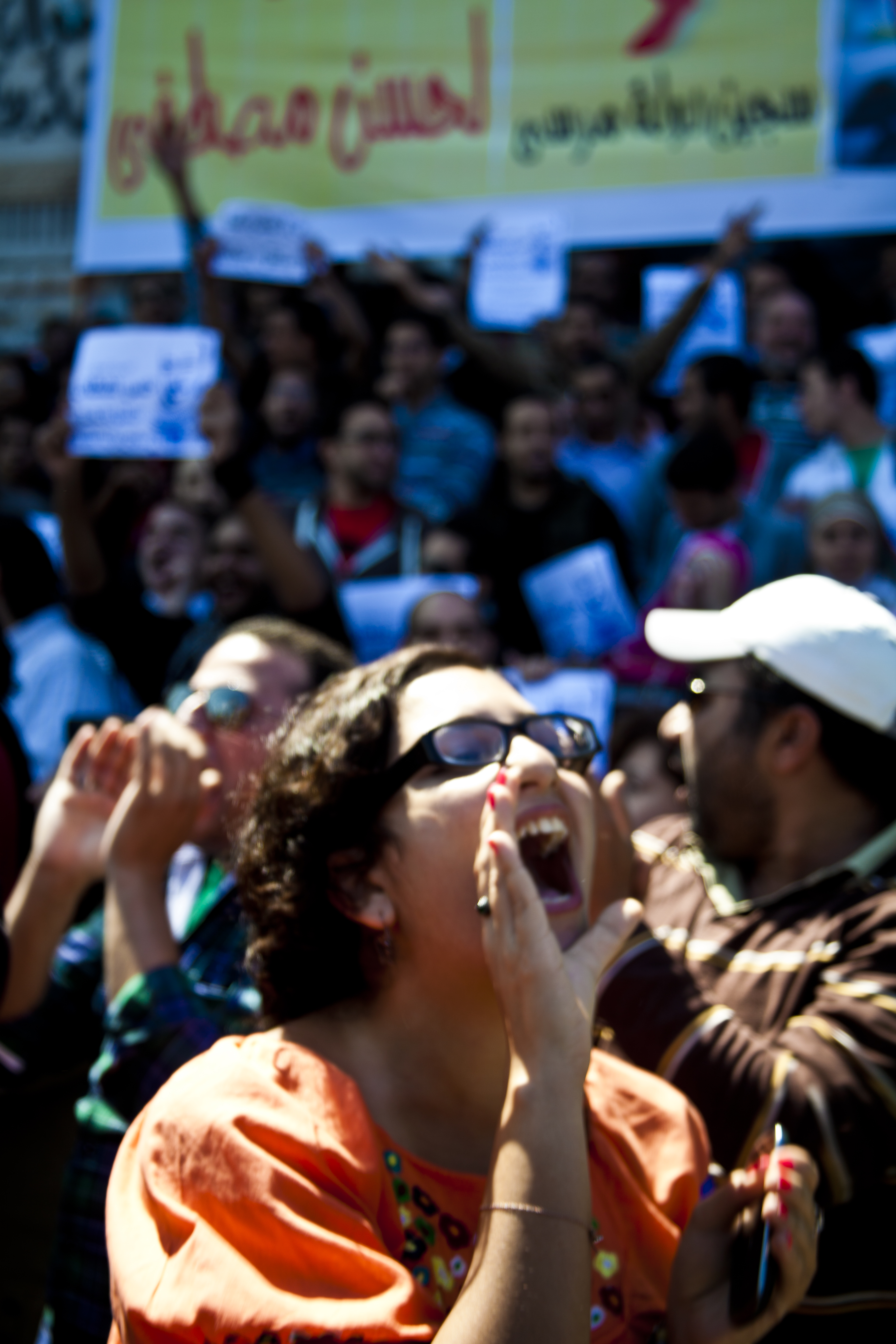
Mona Seif, Egypt – Final Nominee MEA 2013
Mona Seif, Egypt: Core founder of the ”No To Military Trials for Civilians”, a grassroots initiative which is trying to stop military trials for civilians. Since February 2011, Mona has brought together activists, lawyers, victims’ families,local stakeholders and started a nationwide movement against military trials. As part of the recent crackdown on the freedom of speech in Egypt she has been charged along with other Human Rights activists. She noted that “International solidarity, and I mean people’s support not governments’, empowers us to continue our battle and stop military trials for civilians“.
Philippine Military admits that Human Rights Defender Bayles was killed by them
April 23, 2013Karl Ombion, writing for Bulatlat.com, reports that in a court hearing on 18 April 2013 at RTC Branch 55, in Himamaylan City, Adjutant General Alexis Gopico and Lt. Col Ricardo B Bayhon positively identified the two suspects in the brutal murder of Philippine human rights defender Benjamin Bayles as military enlisted men. Edre Olalia, legal counsel of the victim’s family, and Secretary General of National Union of People’s Lawyers (NUPL), confirmed this report. Bayles was murdered 14 June 2010 by two suspects who claimed to be Roger Bajon and Ronnie Caurino when they were captured by Himamaylan police operatives hours after the incident. Olalia said “the confirmation, positive identification and specific personal pinpointing of the killers of activist Benjamen Bayles by top army officials as enlisted personnel under their command is a welcome development and a high point in making perpetrators of extra judicial killings accountable.” This is ultimately a product of public vigilance and pressure by human rights defenders aided also by conscientious legal work, Olalia stressed, but it remains to be seen if this leads to a deeper investigation, determination of other guilty parties, including possibly, superior officers. The accused who are lowly private first class personnel maybe sacrificial dispensable small fry to stop the investigation and let masterminds escape identification and prosecution.”“As in other cases, like that of Jonas Burgos, extra judicial killings and enforced disappearances and other rights violations, there is no closure until there is full justice for the victims,” Olalia concluded.
Recent situation of human rights defenders in Africa; overview by the Observatory for the Protection of Human Rights Defenders
April 19, 2013Intervening at the 53rd ordinary session of African Commission on Human and Peoples Rights, on 18 April 2013, the FIDH and the OMCT, in the framework of their Observatory for the Protection of Human Rights Defenders, expressed their grave concern about the situation of human rights defenders in Africa, which they stated had not observed an improvement. Violations of human rights targeting defenders have continued, notably in Algeria, Cameroon, Chad, Democratic Republic of Congo DRC, Djibouti, Egypt, Gambia, Sudan and Zimbabwe. Judicial harassment based on false accusations, accompanied by arbitrary arrests and detentions, remains the most common harassment technique, especially in Algeria and Zimbabwe, but also in Cameroon, Djibouti, Egypt, The Gambia and Sudan. In several countries, including The Gambia and DRC, defenders have also been subjected to threats and smear campaigns. In late December 2012 / early January 2013, the presence in Goma in the Kivu region of non-State armed groups notably led to increased threats against local defenders, forcing many of them to hide or flee into exile. The targeted defenders are, inter alia, members of NGOs and lawyers in Chad, DRC, Zimbabwe, journalists in Djibouti, trade unionists fighting against impunity in Algeria, Djibouti, DRC, Zimbabwe or defending land rights and the right to a healthy environment in Cameroon; defenders of the right to work in Algeria and the right to health care in Sudan; advocates for the abolition of the death penalty in The Gambia, women’s rights in DRC, The Gambia, and free and fair elections in Zimbabwe; and activists campaigning against arbitrary detention in Egypt. Some excerpts follow but the reference to the full report is below:

Pan-African Human Rights Defenders Adopt Plan of Action
April 2, 2013On 21 March 2013 human rights defenders gathered in Yaounde, Cameroon for the first counterparts meeting of the Pan-African Human Rights Defenders Network PAHRD-Net adopted a plan of action to promote stronger collaboration and protection of human rights defenders across Africa. During the week-long meeting, representatives from the five sub-regions, the Central Africa Human Rights Defenders Network REDHAC, West African Human Rights Defenders Network, Southern African Human Rights Defenders Network, the Cairo Institute for Human Rights Studies and the East and Horn of Africa Human Rights Defenders Project, as well as thematic focal points for women human rights defenders, defenders working on issues of sexual orientation and gender identity and HRDs working in conflict zone and journalist working to end impunity and corruption, shared experiences and best practices for protection, security management, advocacy, research, information technology, program management and fundraising.
In the plan of action, the PAHRD-Net steering committee agreed to carry out a number of joint activities to strengthen the capacities of the sub-regional networks and to work together to increase the protection and security support available to human rights defenders at risk across the continent.At the end of the meeting, Hassan Shire, PAHRD-Net chairperson said: “African human rights defenders encounter myriad risks and obstacles in carrying out their work. With the steps agreed today, PAHRD-Net looks forward to seeing empowered, safer and more effective HRDs working throughout the continent.” The meeting was made possible by the EU, the Swedish International Development Agency, and the National Endowment for Democracy.
Related articles
- Pan-African protection of Human Rights Defenders boosted with EU grant (thoolen.wordpress.com)
Tanzanian Human Rights Defenders organisation explains the work of local HRDs
March 5, 2013In IPP Media of 5 March 2013 appears a lengthy piece by correspondent GERALD KITABU who interviewed the head of the NGO ‘Tanzania Human Rights Defenders Coalition’ (THRD-Coalition) Mr ONESMO OLENGURUMWA on the protection of human rights defenders in Tanzania. It interesting to see such an article which demonstrates the depth of the Human Rights Defenders issue at the local level. Here follow a few quotes:
Sri Lanka and the war-time massacres: how ideally the Government should react
March 4, 2013In one of my posts of last week I referred to the panicked, knee-jerk reaction of the Sri Lankan Government to the showing of the film No Fire Zone: The Killing Fields of Sri Lanka at the UN in Geneva. Now I have come across a much more reasonable and constructive reaction published in the Sri Lankan The Island of 1 march 2013. The whole piece is worth reading; here follow just some excerpts for those pressed for time:
Every time, the United Nations Human Rights Council meets in session or one of the international Human Rights Organizations issues a statement on violations of human rights in Sri Lanka, the government of Sri Lanka gets into a combat mode. Their response follows the rule that attack is the best form of defence. The attack takes the form of personal abuse directed at the human rights defenders; there is no attempt to meet the issues of violations that have been raised. Its apologists and other hangers-on merely follow suit with hysterical outbursts against the United Nations, the international community and the local human rights defenders. None of them seem to care to read the reports released by the Office of the United Nations High Commission for Human Rights or by the different human rights organizations. Their criticism of the reports is therefore not informed and raises more issues than clarifying any. Mahinda Samarasinghe [the SL Ambassador] is normally not prone to such hysterical responses; his speech at the current sessions of the UNHRC therefore seems untypical of him. Read the rest of this entry »
Two panels in New York on woman human rights defenders on 5 and 12 March 2013
March 2, 2013The first side event “Killings and Violence against Women based on Sexual Orientation and Gender Identity” will take place on 5 March 2013 (16h30) at the Armenian Convention Center
630 2nd Avenue (at 35th street)
Panelists
TAMARA ADRIAN (Venezuela)
General Director of Diverlex Diversidad e Igualdad a Través de la Ley,
World Trans Secretary of ILGA
MONICA TABENGWA (Botswana)
Africa Researcher, LGBT Program, Human Rights Watch
KIM VANCE (Canada)
Co-Director, ARC International
Moderator
CYNTHIA ROTHSCHILD (USA)
Consultant, COC Netherlands Read the rest of this entry »
Indonesian NGOs doubt Government’s sincerity in creation of human rights tribunal
February 27, 2013The Jakarta Post of February 26 2013, reports that Human Rights Defenders suspect the government’s recent initiative to hold discussions on the possibility to open human rights tribunals relating to the 1997/98 abuses were politically motivated. They argued that the discussion, which was raised in the run up to the 2014 General Elections, could implicate some of the strong presidential candidates. “We are actually surprised to learn that the Coordinating Political, Legal, and Security Affairs Minister, Djoko Suyanto, had just begun talks with the House of Representatives leadership on the plan to establish an ad hoc human rights tribunal on the 1997-1998 forced disappearance case” the Commission for Missing Persons and Victims of Violence (Kontras) and the Families of Missing Persons Association (IKOHI) said in a joint statement issued on Tuesday. “On the one hand, it is good that the tribunal might be finally established. On the other hand, however, we are concerned that the tribunal is merely [a] political tool to crush political opponents,” they added. The activists were referring to two former military leaders who are active in politics: General Wiranto and Lt. General Prabowo Subianto, who were both implicated in the violations during the 1998 riots. Kontras and Ikohi are among the organizations who have repeatedly accused the government of ignoring the victims of past human rights abuses because it failed to establish an ad hoc human rights tribunal even though a mandate had been given by the House already in 2009.
via NGOs accuse Govt of delaying human rights tribunal | The Jakarta Post.
11th Human Rights Film Festival starts 1st March in Geneva with a bang that upsets Sri Lanka
February 26, 2013Since 2003, the Geneva Human Rights Film Festival (with the more complicated French name and abbreviation: le Festival du film et forum international sur les droits humains – FIFDH) takes place in parallel to the UN Human Rights Council. Based on the concept “A film, a subject, a debate”, the FIFDH features documentary as well fiction, on themes linked to human rights such as: violence against women, poverty, torture, international justice and even climate change. During 10 days the public is invited to watch the films, meet film makers, actors, experts and victims of human rights violations. There are special screenings for students, and teachers are issued with thematic material. This year a total of 40 films will be screened. New this year is the competition for international fiction. The Jury includes filmmakers and human rights defenders such as: Ai Weiwei, Patrick Chapatte, Romain Goupil and Fadwa Suleiman, Syrian actress in exile. The longstanding festival director is Leo Kaneman: for the programme see: http://www.fifdh.org/
In the meantime, a big controversy has erupted about the showing of the documentary “No Fire Zone: The Killing Fields of Sri Lanka” in what is called in UN terminology a ‘side event’, organised by Human Rights Watch, Amnesty International and the above-mentioned FIFDH, on the premises of the UN. As reported by AP on 25 February, the Sri Lankan Ambassador has sent a letter to the whole Human Rights Council denouncing the film as “discredited, uncorroborated and unsubstantiated” and warning that the Council would be violating its own rules if the film is screened March 1 in Geneva as planned.
The 90-minute documentary alleges government troops and Tamil Tiger rebels engaged in war crimes during the final stages of the conflict in 2009. The film shows interviews with eyewitnesses and original footage of alleged atrocities against civilians including summary execution, sexual violence and torture. The film director Callum Macrae denied that it distorted the facts: “We believe that our film contains very important evidence about the terrible events in the last few months of this war and we believe we have a duty to make that evidence available to the diplomats and country missions at the U.N. Human Rights Council who must make important decisions about how to ensure accountability and justice in Sri Lanka“. See: http://abcnews.go.com/International/wireStory/sri-lanka-opposes-screening-critical-film-18590958. The Sri Lankan Ambassador’s letter which certainly will help to attract a larger audience is to be found on: http://dl.dropbox.com/u/465065/Letter-to-the-President-Human-Rights-Council-2.pdf.
Related articles
- Ai Weiwei heads jury of Geneva’s human rights film festival (worldradio.ch)
 Hans Thoolen on Human Rights Defenders and their awards