Posts Tagged ‘human rights lawyers’

HRW reports on crackdown on Human Rights Lawyers in Belarus

May 27, 2024

https://www.hrw.org/report/2024/05/27/i-swear-fulfill-duties-defense-lawyer-honestly-and-faithfully/politically#691383337

On 27 May 2024 Human Rights Watch published a major report on the politically motivated crackdown on Human Rights Lawyers in Belarus.

Summary: In August 2020, peaceful protests in Belarus began with hundreds of thousands of people gathering in the streets of Minsk and across Belarus following the contested electoral victory of Aliaksandr Lukashenka, who had already served as president for more than 26 years. Belarusian authorities responded with unprecedented brutality, using excessive force, arbitrarily detaining thousands of peaceful protesters, and subjecting them to ill-treatment and torture in detention before conveyor-belt administrative and criminal trials.

Since then, Belarusian authorities have unrolled widespread and systematic repression of any form of dissent. Government critics have been forced into exile or thrown behind bars on politically motivated charges. The number of political prisoners swelled and at time of publication exceeded 1300, according to Human Rights Center “Viasna,” the prominent Belarusian human rights organization. The term “political prisoner,” for the purpose of this report, includes anyone detained, imprisoned or otherwise deprived of their liberty by Belarusian authorities for peacefully exercising their rights and freedoms or defending human rights and fundamental freedoms.

February 2023 and March 2024 reports of the Office of the UN High Commissioner for Human Rights found that some violations committed by Belarusian authorities in the run-up to the 2020 presidential election and in its aftermath “may amount to crimes against humanity” including the “crime of persecution.” [https://humanrightsdefenders.blog/2023/07/12/state-of-human-rights-in-belarus-called-catastrophic-at-the-un/]

In the face of these grave and widespread rights violations, some lawyers stepped up to represent clients in politically motivated cases. ..This report examines the Lukashenka government’s retribution against lawyers who represent government critics and its nearly complete takeover of the legal profession in Belarus. The authorities have subjected lawyers in politically motivated cases, as well as lawyers who criticize state abuses, to harassment, arbitrary revocation of their licenses, detention and administrative charges, and politically motivated criminal prosecution. Behind bars, lawyers along with other politically-targeted detainees and convicts, experience retaliatory ill-treatment. The authorities have left no space for earnest and efficient discharge of lawyers’ duties in politically motivated cases. At the time of writing, very few lawyers, if any, were willing to take on such cases, which has severely undermined the right to a fair trial, due process, and access to remedy in Belarus.
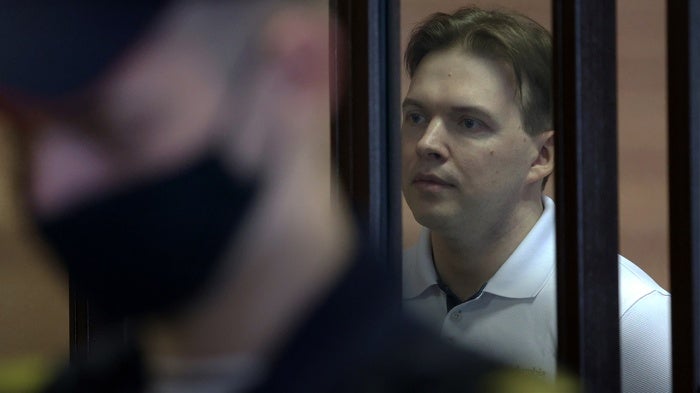
Belarus: Crackdown on Human Rights Lawyers

The report shows that while governmental crackdown on lawyers in times of political unrest in Belarus is not new, the scale and severity of this wave of repression is unprecedented. For the first time in the history of modern Belarus, lawyers have become political prisoners themselves for their work on behalf of clients.

At the time of writing, six lawyers—Maksim Znak, Aliaksandr Danilevich, Vital Brahinets, Anastasiya Lazarenka, Yuliya Yurhilevich, and Aliaksei Barodka—were serving sentences on politically motivated charges ranging from six to ten years. Such charges included providing legal aid to political opposition figures and activists or giving interviews to and sharing information with independent media labelled “extremist” by the authorities. [see https://humanrightsdefenders.blog/2021/09/10/two-lawyers-from-belarus-share-lawyers-for-lawyers-award-2021/]

In addition to politically motivated prosecution, lawyers also have faced politically motivated disbarment. Since 2020, more than 140 lawyers have been disbarred by the regional bar associations or faced arbitrary license revocation by the Justice Ministry following decisions of its Qualification Commission because they supposedly breeched some regulations or were not sufficiently qualified to work as lawyers. These grounds are often easily exposed as flimsy pretexts: on average, those “unqualified” lawyers had more than 13.5 years of experience; many had successfully worked in the legal field for two to three decades, or more, and some of them were previously recognized by bar associations for their excellence…

The report also examines how the Belarusian government has established all-encompassing control over the legal profession in the country by controlling the admission of lawyers into the profession, regulating the way they discharge their duties, and exercising other broad controlling functions including but not limited to revoking lawyers’ licenses and essentially stripping lawyers’ self-governing bodies of independence.

Crackdown on Human Rights Lawyers in Belarus: Maryia Kolesava Hudzilina

In November 2021, a set of amendments into the Law on the Bar and Practice of Law in the Republic of Belarus (Law on the Bar) entered into force, which banned lawyers from working individually or opening law firms, requiring them to join legal consultation offices created and supervised by regional bar associations in coordination with the Justice Ministry. The amendments also significantly expanded the Justice Ministry’s control over the self-governing bodies of the bar and eased the conditions for obtaining a lawyer’s status for ex workers of law enforcement and judiciary….  

The Belarusian Republican Bar Association (BRBA) and regional bar associations generally have failed to represent and protect the rights of their members and withheld support from lawyers facing obstacles in discharging their duties, which in recent years have come to include harassment, arbitrary detention, and criminal prosecution. Moreover, bar association executive bodies have become vehicles for the agenda of state officials, triggering sanctions against and disbarring lawyers deemed undesirable by the authorities. In light of the control exercised by the state over the formation of the Belarusian bar’s executive bodies and their work, these associations cannot be considered genuinely independent self-governing bodies representing the interests of all lawyers in Belarus.

Some lawyers described the current state of the Belarusian justice system and bar as a “total collapse of the legal system” and many felt “disarmed” in the face of systematic and widespread violations of due process, fair trial, and rule of law. Yet, lawyers noted, that it is their duty to discharge their functions to the highest professional standard, notwithstanding the political motivation of their clients’ cases and the unprecedented pressure from the state:
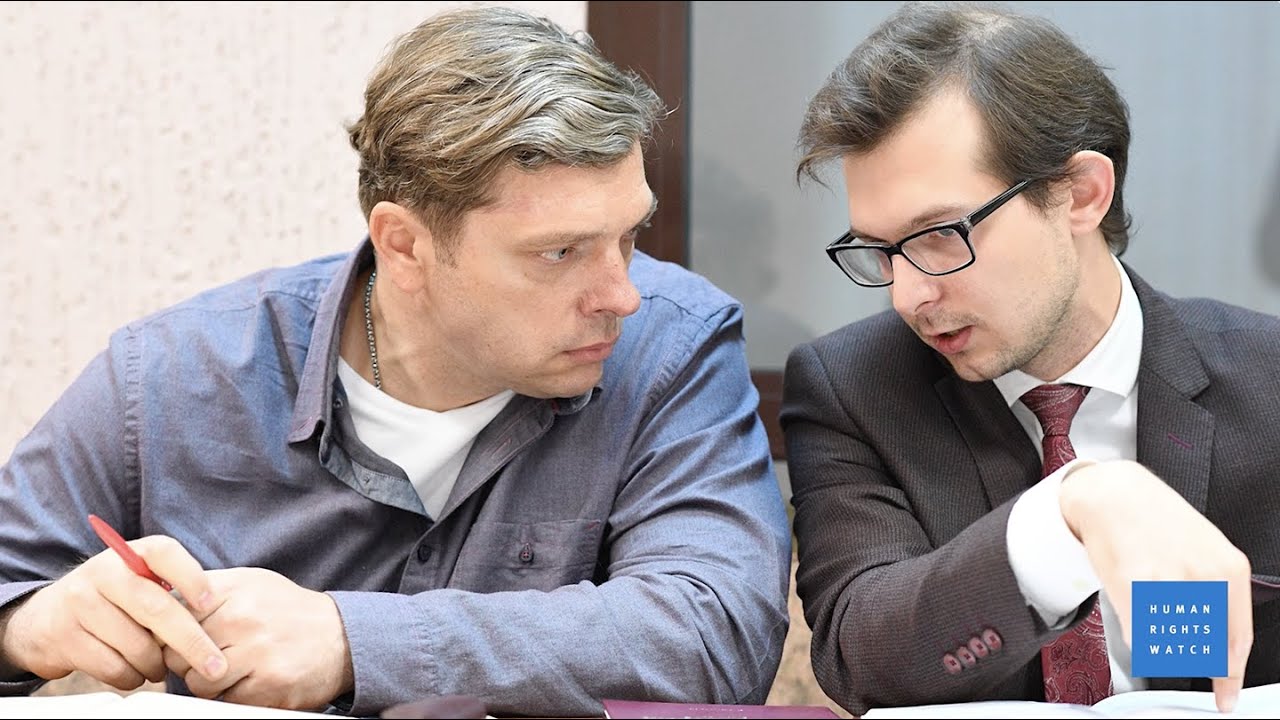
Crackdown on Human Rights Lawyers in Belarus: Uladzimir Pylchanka

Recommendations

To the Belarusian Government

  • Immediately end the systematic detention and prosecution of anyone who peacefully exercises their rights and freedoms, release all political prisoners, provide effective remedies for victims and survivors of human rights abuses, and carry out prompt and impartial investigations into all alleged human rights violations;
  • Immediately end the ill-treatment of prisoners and ensure the protection of their rights and freedoms in confinement, including by ending the pervasive practice of incommunicado detention; grant lawyers and families unhindered access to detainees, and ensure all prisoners receive adequate medical assistance;
  • End all harassment of, attacks on, and interference with lawyers, particularly those representing clients in politically motivated cases and exercising their freedom of expression in line with international standards;
  • Ensure all courts adhere to fair trial standards. Allow lawyers to effectively perform their professional functions in accordance with the guarantees provided for in article 14 of the International Covenant on Civil and Political Rights (ICCPR) and the UN Basic Principles on the Role of Lawyers, including by instructing law enforcement and state agencies on the protected role and function of lawyers;
  • Repeal and amend national legislation to bring domestic law in compliance with international standards to ensure the independence and self-governance of the legal profession in Belarus; 
  • Restore the licenses of all lawyers who have been disbarred or lost their licenses as a result of discharging their professional duties in accordance with international standards or for exercising their freedom of expression (including those lawyers who lost their license over arbitrary and state-controlled procedures at the Justice Ministry’s Qualification Commission);
  • Guarantee the independence of disciplinary proceedings against lawyers, which should be carried out by lawyers’ self-governing bodies in a fair and objective manner;
  • Curtail the Justice Ministry’s authority to interfere with independence of the legal profession, including the ministry’s authority to issue regulations on the work of lawyers, admit them into the profession, revoke licenses, carry out certification procedures, initiate disciplinary proceedings, and shape the selection of executive bodies of bar associations; 
  • Void existing policies undermining the independence of legal profession and ensure separation of the bar from the state, including by abolishing the pervasive practice of forcing lawyers to express support for the government’s agenda and interests;
  • Respect the right to legal assistance, including by removing arbitrary obstacles to lawyers’ access to clients, safeguarding lawyer-client privilege, stopping the practice of making lawyers sign arbitrary and overly broad non-disclosure obligations, and ensuring fair and public trials and full equality of arms in courts of law;
  • Promptly comply with repeated requests by the UN special rapporteur on the human rights situation in Belarus to conduct a country visit.

To the Belarusian Republican Bar Association and Regional Bar Associations

  • Immediately end retaliation against members for carrying out professional duties or legitimately exercising their freedom of expression, and ensure lawyers targeted on such grounds have access to an effective remedy;
  • Repeal internal regulations that undermine the unhindered provision of legal assistance;
  • Advocate resolutely with the Belarusian government in support of the above recommendations and for Belarus’s adherence to international standards on the role of lawyers and the right to a fair trial;
  • Take measures to actively protect the interests of lawyers, defend the right of all accused to an effective defense regardless of the charges, and emphasize that lawyers cannot be identified with or punished for the alleged crimes of their clients;
  • Push back consistently and in principled fashion against the ongoing severe erosion of the bar’s professional autonomy and integrity, and the state’s overarching control of the bar;
  • Encourage regional bar associations to draw up rosters of lawyers to visit prisons to provide free legal advice and assistance to prisoners.
     

To United Nations Member States, Council of Europe, Organization for Security and Co-operation in Europe, and the European Union

  • Refrain from any cooperation with the Belarusian Republican Bar Association and regional bar associations until they become independent self-governing bodies representing the interests of Belarusian lawyers;
  • Call on the government of Belarus and the Belarusian bar to respect the rights of lawyers and to end arbitrary arrests, harassment, retaliation, and attacks against them;
  • Develop and fund programs to support lawyers who have faced retaliation for their professional activities or exercise of freedom of expression and examine ways of integrating Belarusian lawyers in exile into the legal profession in host countries;
  • Recognize Belarusian lawyers who have faced retaliation for their professional activities in defending clients in politically motivated cases as human rights defenders and afford them the requisite protection, including assistance with access to visas, funding and protection in exile and protection from transnational repression;
  • Consider imposing coordinated, targeted sanctions against the Justice Ministry officials and leaders of the Belarusian bar responsible for the systematic and widespread abuses against lawyers working on politically motivated cases and exercising their freedom of expression;
  • Recognize the Belarusian Association of Human Rights Lawyers as a key independent organization of Belarusian lawyers, and support its efforts to promote and protect the human rights of lawyers deprived of their right to exercise their profession in retaliation for discharging their duties and exercising their freedom of expression, and to improve the provision of legal aid in Belarus;
  • Express solidarity with and provide support to Belarusian human rights defenders working to deter politically motivated repression and document cases of grave rights violations for future accountability;
  • Support independent information sources providing independent coverage of events in Belarus and promoting universal human rights principles. 
     

To Bar Associations and Lawyers’ Associations in Europe, Canada, and the US

  • Advocate for the above recommendations, in particular , for Belarusian authorities, and bar, to uphold international human rights standards, ending politically motivated persecution, ensuring independence and guarantees for legal profession.
  • Privately and publicly express concern at the interference of the government in the work of lawyers in Belarus;
  • Support Belarusian lawyers who have experienced or face retaliation for their legitimate professional activities, including by monitoring politically motivated cases against lawyers and, when relevant, providing third party interventions to courts and international agencies;
  • Refrain from any cooperation with the Belarusian Republican Bar Association and regional bar associations until they become independent self-governing bodies representing the interests of Belarusian lawyers.

Human Right Watch wrote to the Belarusian Justice Ministry and the Belarusian Republican Bar Association in April 2024 seeking their response to a summary of the report findings. At the time of writing no response had been received.


https://www.hrw.org/report/2024/05/27/i-swear-fulfill-duties-defense-lawyer-honestly-and-faithfully/politically

Inter-American Court of Human Rights: Historic Victory for CAJAR in Colombia

April 10, 2024

In a landmark ruling for fundamental freedoms in Colombia, the Inter-American Court of Human Rights found that for over two decades the state government harassed, surveilled, and persecuted members of a lawyer’s group that defends human rights defenders, activists, and indigenous people, putting the attorneys’ lives at risk. 

The ruling is a major victory for civil rights in Colombia, which has a long history of abuse and violence against human rights defenders, including murders and death threats. The case involved the unlawful and arbitrary surveillance of members of the Jose Alvear Restrepo Lawyers Collective (CAJAR), a Colombian human rights organization defending victims of political persecution and community activists for over 40 years.

The court found that since at least 1999, Colombian authorities carried out a constant campaign of pervasive secret surveillance of CAJAR members and their families. That state violated their rights to life, personal integrity, private life, freedom of expression and association, and more, the Court said. It noted the particular impact experienced by women defenders and those who had to leave the country amid threat, attacks, and harassment for representing victims.  

The decision is the first by the Inter-American Court to find a State responsible for violating the right to defend human rights. The court is a human rights tribunal that interprets and applies the American Convention on Human Rights, an international treaty ratified by over 20 states in Latin America and the Caribbean. 

In 2022, EFF, Article 19, Fundación Karisma, and Privacy International, represented by Berkeley Law’s International Human Rights Law Clinic, filed an amicus brief in the case. EFF and partners urged the court to rule that Colombia’s legal framework regulating intelligence activity and the surveillance of CAJAR and their families violated a constellation of human rights and forced them to limit their activities, change homes, and go into exile to avoid violence, threats, and harassment. 

Colombia’s intelligence network was behind abusive surveillance practices in violation of the American Convention and did not prevent authorities from unlawfully surveilling, harassing, and attacking CAJAR members, EFF told the court. Even after Colombia enacted a new intelligence law, authorities continued to carry out unlawful communications surveillance against CAJAR members, using an expansive and invasive spying system to target and disrupt the work of not just CAJAR but other human rights defenders and journalists

In examining Colombia’s intelligence law and surveillance actions, the court elaborated on key Inter-American and other international human rights standards, and advanced significant conclusions for the protection of privacy, freedom of expression, and the right to defend human rights. 

The court delved into criteria for intelligence gathering powers, limitations, and controls. It highlighted the need for independent oversight of intelligence activities and effective remedies against arbitrary actions. It also elaborated on standards for the collection, management, and access to personal data held by intelligence agencies, and recognized the protection of informational self-determination by the American Convention.

For more details see: https://www.eff.org/deeplinks/2024/04/historic-victory-human-rights-colombia-inter-american-court-finds-state-agencies

Day of the Endangered Lawyer (24 January 2024)

January 30, 2024

To mark the Day of the Endangered Lawyer, the Law Society of England and Wales issued a press release on 24 January honouring legal professionals who are targeted for upholding the rule of law and defending a strong justice system.

The Law Society has published its annual intervention tracker which shows that the Society took 40 actions relating to 17 countries in 2023. Most of these actions were initiated by concerns relating to arbitrary arrest or detention (58%) followed by harassment, threats and violence (27%).

Law Society president Nick Emmerson said: “Across the world, lawyers continue to face harassment, surveillance, detention, torture, enforced disappearance and arbitrary arrest and conviction...

We use this day to draw attention to the plight faced by countless lawyers across the globe, as they fight for their right to freely exercise their profession and uphold the rule of law.

Our intervention tracker reflects where the Law Society has acted on behalf of lawyers and human rights defenders in 2023. The intervention tracker is part of our Lawyers at Risk programme to support those who are prevented from carrying out their professional duties. See: https://www.lawsociety.org.uk/campaigns/international-rule-of-law/whats-changing/lawyers-at-risk.

A recent example comes from Amnesty International on 25 January 2024: On 31 October 2023, human rights lawyer, Hoda Abdelmoniem, was due to be released after serving her unjust five-year prison sentence stemming solely from the exercise of her human rights. Instead, the Supreme State Security Prosecution (SSSP) ordered her pretrial detention pending investigations into similar bogus terrorism-related charges in a separate case No. 730 of 2020. During a rare visit to 10th of Ramadan prison on 4 January, her family learned that her health continues to deteriorate and that she developed an ear infection, affecting her balance and sight. She must be immediately and unconditionally released. [see also: https://humanrightsdefenders.blog/2020/11/29/2020-award-of-european-bars-associations-ccbe-goes-to-seven-egyptian-lawyers-who-are-in-prison/]

The Geneva newspaper le Temps [https://www.letemps.ch/monde/moyenorient/chaque-minuscule-resultat-est-une-victoire-immense-en-iran-les-avocats-face-au-simulacre-de-justice] carries the story of Leila Alikarami, “avocate iranienne et défenseuse des droits humains, a représenté plus de 50 femmes devant les juges religieux des tribunaux révolutionnaires”.

See also: https://humanrightsdefenders.blog/2020/01/28/law-society-of-ontario-reflects-on-how-to-support-human-rights-lawyers-abroad/

https://www.lawsociety.org.uk/contact-or-visit-us/press-office/press-releases/honour-those-who-defend-our-human-rights

European Bar Association gives 2023 award to three Chinese lawyers

December 5, 2023

Jailed Hong Kong, Chinese attorneys honored with human rights award

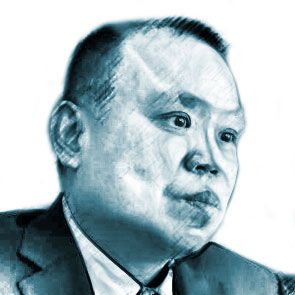
From right, jailed Hong Kong barrister Chow Hang-tung and Chinese rights attorneys Xu Zhiyong and Ding Jiaxi were honored with human rights awards by the Council of Bars and Law Societies of Europe. Credit: Reuters, AP, Reuters

Three jailed attorneys from Hong Kong and China have been honoured with Council of Bars and Law Societies of Europe human rights awards, as a Chinese court rejected appeals from two of them, upholding their original sentences for “subversion.”

For more on these CCBE human rights awards, see: https://www.trueheroesfilms.org/thedigest/awards/A3C73F81-6FCB-4DDD-9356-61C422713949

Jailed Hong Kong barrister Chow Hang-tung, who has been behind bars since September 2021, and Chinese rights attorneys Xu Zhiyong and Ding Jiaxi, who were jailed in April for attending a 2019 gathering of dissidents in the southeastern city of Xiamen, were given the awards in absentia in recognition of their work upholding human rights, the association said on its website. See: https://humanrightsdefenders.blog/2023/04/11/xu-zhiyong-and-ding-jiaxi-two-human-rights-defenders-in-china-sentenced/

The ceremony in Athens took place on Friday 24 November, the same day that a court in the eastern province of Shandong rejected appeals from Ding and Xu, who are currently serving 12- and 14-year jail terms handed down by the Linshu County People’s Court for “subversion of state power,” respectively.

Chow said in an acceptance speech sent from prison that the fight for democracy in China is part of ensuring that the law serves democratic and humanitarian values, rather than just the wishes of those willing to use force to bring others in law. See: https://www.ccbe.eu/fileadmin/speciality_distribution/public/documents/HUMAN_RIGHTS_AWARD/2023/EN_2023_HR_Speech_Chinese-Human-rights-lawyer-Hang-Tung-Chow.pdf

“The dignity of our profession … it is bound up with the dignity of the law, with whether the law reflects our autonomy or denies it,” wrote Chow, who organized now-banned annual vigils commemorating the 1989 Tiananmen massacre.

“In that sense the building of democratic institutions that alone can safeguard the law’s dignity is also a lawyer’s duty, which is why all three of us receiving this prize today are jailed for working for democracy in China, a fight that may seem unrelated to our profession but is in fact, central to it,” said Chow.

She is currently awaiting trial under a security law on charges of “subversion” amid an ongoing crackdown on dissent in Hong Kong.

“It is a fight we cannot waver from, even when knowing that the laws we served would likely condemn us,” she said, describing the fight as “the highest service a lawyer can offer her fellow men.”

Rights activist Patrick Poon said the fact that Chow was honored alongside Xu and Ding shows how little difference there is now between the judicial systems in Hong Kong and mainland China, following a years-long crackdown on political opposition and public dissent in the wake of the 2019 protest movement.

https://www.rfa.org/english/news/china/china-lawyers-awards-11272023160715.html

Notre Dame law professor Diane Desierto about Human Rights Defenders

November 20, 2023

Law professor Diane Desierto advocates for dignity and justice, and for her students to do the same

When Nobel laureate Maria Ressa was arrested for cyberlibel, she wasn’t shaken. In a two-year period, the Filipino American journalist, Time magazine Person of the Year, Fulbright scholar, and author of How to Stand Up to a Dictator had racked up 10 arrest warrants, plus a barrage of online hate, for her role as founder of Rappler, an independent news site known for its criticisms of authoritarian president Rodrigo Duterte. The claims ranged from fraud to tax evasion to ties with the Central Intelligence Agency, all of which were eventually dismissed.

Nobel laureate Maria Ressa.
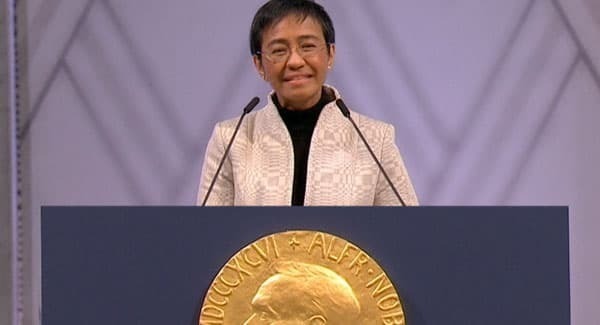
Ressa offers the 2021 Nobel Peace Prize lecture in Oslo, Norway.

But when her cyber libel conviction, the first of its kind in the Philippines and which carries a seven-year jail sentence, reached the country’s Supreme Court, she needed help. That help came in the form of Notre Dame law professor Diane Desierto.

Desierto is the faculty director of the LL.M. in International Human Rights Law and founding director of the Law School’s new Global Human Rights Clinic. While teaching and publishing, she also serves as a member of a United Nations working group, faculty at the Hague Academy of International Law, and international counsel at the Permanent Court of Arbitration, the UN Human Rights Committee, the International Criminal Court, the International Court of Justice, and the Philippine Supreme Court. She’s tangled with threats, attacks, and authoritarian governments, primarily in the Philippines and other Southeast Asian countries, as well as China, where she was detained twice.

Though Ressa already had a powerhouse legal team, she asked Desierto to represent her at the Philippine Supreme Court.

I chose Diane to represent me because she had the courage to stand up. She understood the risks,” Ressa says, noting that these days lawyers are even more likely to be harassed or killed than journalists. “Yet she also understood both, from a Filipino perspective, the ties that bind and the way the law can be used to protect us.

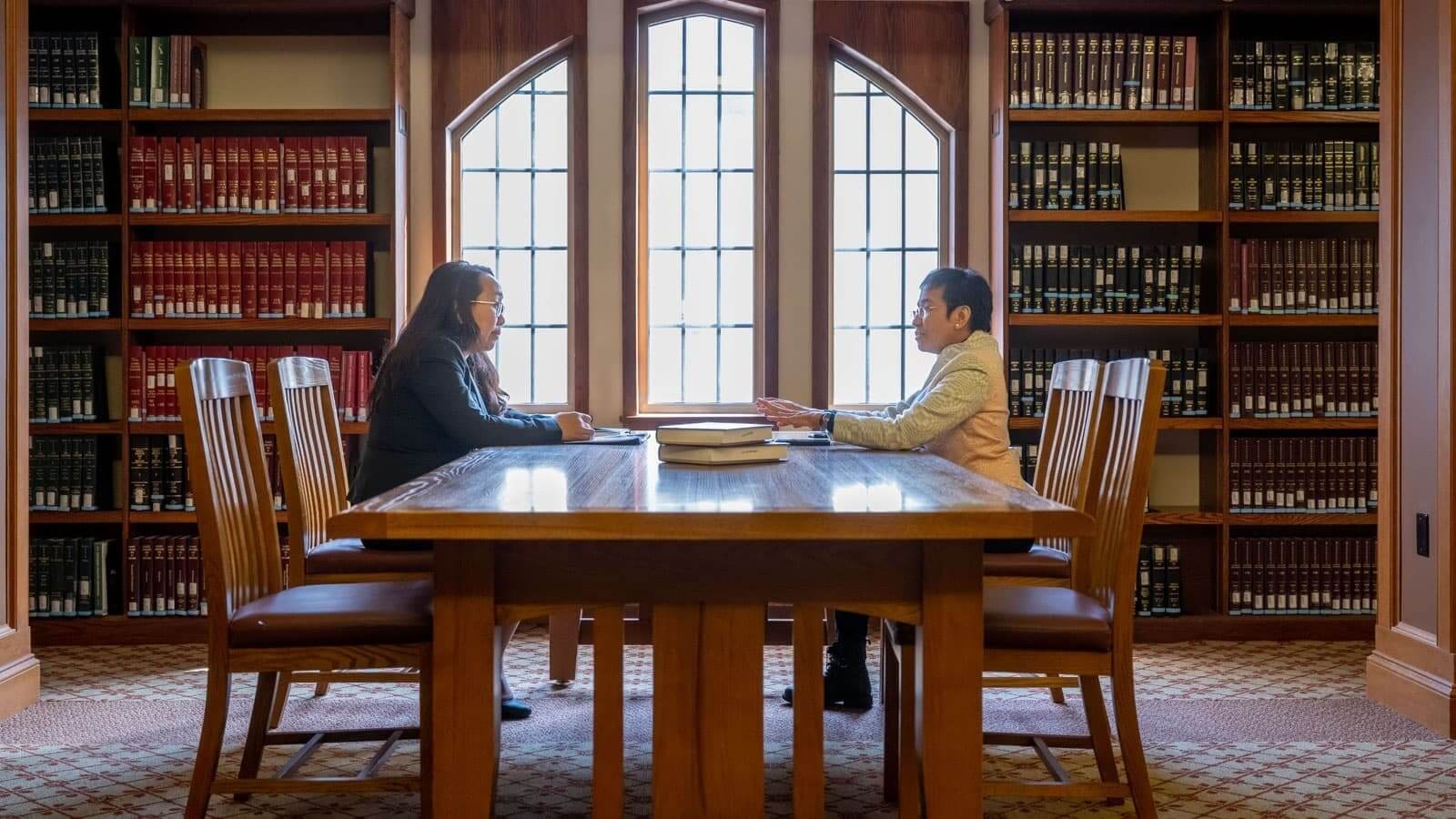
Desierto 1600
Professor Diane Desierto says human rights lawyers from around the world are welcome at Notre Dame.

She smiles and says, “And she’s never lost a case.”

In a matter of days, Desierto had filed an appeal, on top of her international commitments and teaching load. But her motivation was simple: “This is the right thing to do.” She adds, “We’re the place that wants to do the right thing.”

Human rights lawyers generally experience a range of threats. It’s not just physical threats and death threats and actual killings, but also the delegitimization of the work that they do. And that includes being discredited publicly. That includes having all forms of coercion being placed on your family. So some of the threats that I’ve dealt with have not just been physical threats to my person or detention, but have also included threats to my family’s law firm, have also included arrests and detentions and all manner of harassment and intimidation. But that’s just the tip of the iceberg that most human rights lawyers face today.” Desierto says

Desierto notes that according to recent studies, 72 percent of the world’s population live under authoritarian rule. Additionally, during the COVID pandemic, emergency regimes were set up, during which time 3,000 human rights lawyers were killed globally. That’s already a high number, but Desierto underscores the ripples of what 3,000 people could have done.

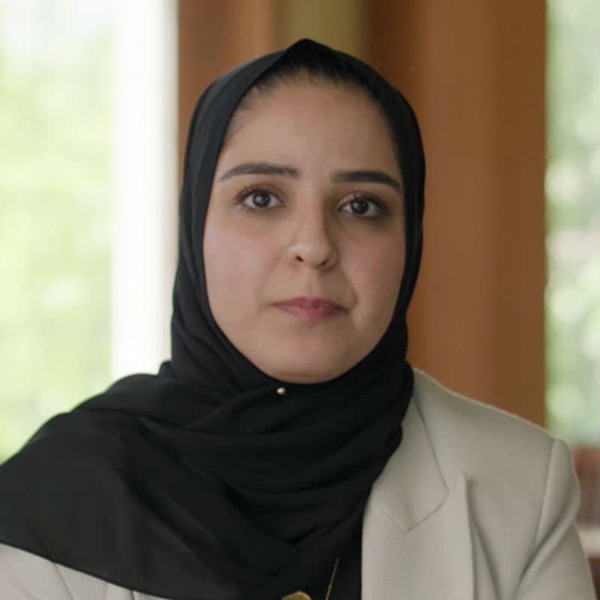
“We are trusted by a lot of places around the world where human rights defenders are under siege,” Desierto says. “They have sanctuary here, and they can grow with a community here, and they can be supported with this community.” Roqia Samim has experienced that support firsthand. Samim is a human rights lawyer from Afghanistan and a 2022 graduate from the LL.M. program.

A photo of Roquia Samim

“Notre Dame Law School and the LL.M. Program for International Human Rights Law became my home and became my shelter.”—Roqia Samim ’22 LL.M.

“Unfortunately, when I came to Notre Dame, at the same time that I arrived here, I lost my home and my country,” Samim says, citing the 2021 Taliban takeover. She adds that given her background in human rights and her advocacy for women’s rights, she fears detention, disappearance, or murder if she were to return home. “It was really hard for me to accept that there is no home for me to go back to from Notre Dame; there is no place for me to go back and work for human rights. But Notre Dame Law School and the LL.M. Program for International Human Rights Law became my home and became my shelter. They supported me here to continue my work for human rights in my country from here.”

Samim remains committed to research human rights issues and violations in Afghanistan as a senior research associate in the Law School. In that role she co-authored a piece titled “Afghan Women’s Rights as the Taliban’s Bargaining Tool for International Recognition,” which was featured by the United Nations Special Rapporteur on Human Rights Defenders. In the piece, she and co-author Tahmina Sobat ’20 LL.M. detail violations and oppression such as banning women from working or attending secondary school or university, and imposing dress codes and gender segregation rules.

“With this opportunity I can document all those human rights abuses and violations by the Taliban in Afghanistan, and provide evidence and reports to the international organizations, including United Nations, to have serious attention for these ongoing violations in my country.”

Research aside, being part of a robust, diverse, and historic community has given her confidence and a sense of belonging, she says.

“Since I came to Notre Dame, and since I attended this program, I don’t feel that I’m alone anymore. I see my work as a strong commitment to serve humanity and human beings to access their basic rights and dignity,” she says. “There are many people like me, fighting for human rights around the world. I saw that, and I learned that, here in this program. Working with a diverse group of people, a diverse group of human rights lawyers from different countries, I realized that gave me more motivation to work harder for human rights and realized that I’m not alone in this fight.”

Desierto wants that message sent to lawyers around the globe. You are not alone. You are welcome here. We at Notre Dame can and will support you.

“We have something really great here,” Desierto says. “I want to let human rights defenders know anywhere in the world that this is legitimately the one place where no topic is censored. Where no issue is ever immune from discussion. This is one place that has genuine freedom to do all of it and be all of it. Where we strive to realize the human rights outcome.”

Desierto is living that mission. While teaching and zig-zagging across the globe, she is handling Maria Ressa’s final petition and preparing for oral arguments at the Supreme Court of the Philippines.

She and Ressa await a decision, as do thousands of journalists, and hundreds of Notre Dame LL.M. alumni who also fight for human rights, all across the globe.

Desierto Ressa 1600
Desierto and Ressa await a decision for their appeal to the Philippines’ Supreme Court. 

https://fightingfor.nd.edu/2023/fighting-to-defend-human-rights/

Human rights lawyer Gao Zhisheng and the practice of enforced disappearances: joint letter

September 5, 2023

We, the undersigned organizations, call on the Chinese authorities to immediately and unconditionally release prominent human rights lawyer Gao Zhisheng ahead of the sixth anniversary of his disappearance on August 13. 

And as we near “The International Day of the Disappeared” on August 30, we also condemn the Chinese government’s use of enforced disappearances as a tactic to silence and control activists, religious practitioners, Uyghurs and Tibetans, and even high-profile celebrities, entrepreneurs, and government officials. [see also: https://humanrightsdefenders.blog/2022/08/31/enforced-disappearances-in-china/]

Gao Zhisheng was one of the first human rights lawyers to emerge in the early 2000s and he became an important leader of China’s rights defense movement. He took on cases to help migrant workers and defend spiritual practitioners, including Falun Gong adherents and Christians. Gao wrote open letters to China’s top political leadership to call attention to the plight of Falun Gong practitioners and the abuse he had suffered while defending them. 

In 2006, Gao was sentenced to three years in prison on the charge of “inciting subversion of state power,” and after being released on parole, he was repeatedly disappeared for extended periods and tortured by police between 2007 and 2011. In December 2011, state media reported that Gao had been imprisoned in the Uyghur region to serve out his sentence after violating terms of his parole. He was then released in 2014 but remained under house arrest.

Gao’s relatives in China, as well as fellow rights lawyers and activists, who previously remained in contact with him, have not heard from him since August 13, 2017. Ever since then, Chinese authorities have, implausibly, claimed that Gao is not under any “criminal coercive measures.”   

Over the past six years, Gao has effectively remained in a state of enforced disappearance. 

Gao Zhisheng’s wife, Geng He, although living in the United States, has continued to advocate for him, pleading with the Chinese government to allow the world to “see him if he’s alive, or see his corpse if he’s dead”. Most recently, she has demanded that he be put on trial if he is guilty, and at the very least, that his lawyers should be allowed to meet with him and family members should have videoconferences. 

However, the Chinese government has not provided Geng He with even this minimum amount of information. 

On several occasions United Nations bodies and human rights experts have sought information about Gao Zhisheng’s status, but the Chinese government has refused to clarify his situation. Most recently, in 2020, the Chinese government responded to a letter from six UN Special Rapporteurs by claiming that, “In August 2014 Mr. Gao was released, having served his sentence. Since his release, the public security authorities have not taken any coercive measures against him.”

Gao Zhisheng’s case has been treated under the humanitarian mandate of the UN Working Group on Enforced or Involuntary Disappearances (case no. 10002630). The UN Working Group on Arbitrary Detention had also previously issued an opinion in 2010 stating that Gao’s detention was arbitrary under international law and calling for his immediate release, but Gao has remained under control of the authorities ever since.

Enforced disappearances of other human rights defenders

While Gao Zhisheng’s case is arguably the most famous and well-documented case of prolonged enforced disappearance in blatant violation of international law, there are several other noteworthy cases: 

Former human rights lawyer Yu Wensheng and his wife Xu Yan were detained in April 2023 as they were taking the subway to attend an event at the European Delegation in Beijing. They have been arrested and charged with “inciting subversion of state power,” but authorities have prevented lawyers from visiting them, and their 18-year-old son is under “house arrest.”  See also: https://humanrightsdefenders.blog/tag/yu-wensheng/

Human rights activist Jia Pin has been missing since September 24, 2022. He was last known to have been traveling to Beihai City in Guangxi. His friends do not know where he is, although some speculate that he may have been taken away by Henan provincial police.

Protester Peng Lifa, was taken away by authorities on October 13, 2022 after engaging in a one-man protest on the Sitong Bridge in Haidian District in Beijing against China’s stringent COVID measures and against the rule of Xi Jinping. There have been no reports about where Peng Lifa is being held.

Jiangsu-based human rights defender Tao Hong has been a victim of enforced disappearance since September 9, 2022, after she signed a open petition showing concern for the death of Mao Lihui, a petitioner who police claimed died via self-immolation while detained in a hotel. Before being detained, Tao Hong told friends on WeChat that she “absolutely wouldn’t commit suicide” – as a pre-emptive warning not to believe authorities should she mysteriously turn up dead.

Journalist Yang Zewei, who goes by the pen name Qiao Xinxin, was presumably taken away in Laos on May 31 by what is believed to have been a joint Chinese and Laotian policing effort. Earlier in the year he had launched a campaign to urge for the dismantling of the Great Firewall, an action he labeled as the #BanGFW movement. Before being detained Yang had tweeted that authorities were harassing his relatives in his hometown, and he also declared that he would not commit suicide in detention. On August 8 it was confirmed that he had been returned to China and was being held at the Hengyang Detention Center in Hunan.

Falun Gong practitioners Chen Yang (陈阳) and Cao Zhimin from Hunan province have been held incommunicado since October 2020, after being detained when studying spiritual scriptures with fellow believers. Yang had previously been jailed for four years for his activism and Cao had been held with her five-year-old daughter at an extralegal detention facility in 2010. According to the couple’s daughter, now a teenager studying in the United States, relatives in China have been unable to meet with them since their detention and lawyers hired were stopped from representing the couple. They are believed to have been sentenced to prison in November 2022, but the length of sentence remains unknown, no formal notification was sent to the family, and no news is available on their condition in custody. 

Enforced disappearances of Uyghurs and Tibetans

The Chinese Communist Party, composed solely of Han Chinese officials at the highest levels of decision making, continues to use systemic enforced disappearances of non-Han groups to control, intimidate, and silence them. See: https://humanrightsdefenders.blog/2023/08/18/un-experts-demand-detailed-information-on-nine-tibetan-environment-defenders/

In the Xinjiang Uyghur Autonomous Region (XUAR), also known as the Uyghur region or East Turkistan by Uyghurs, there likely remain hundreds of thousands of Uyghurs who are subjected to arbitrary detention and enforced disappearance through the legal system. In 2022, the Xinjiang High People’s Procuratorate, stated that 540,826 people had been prosecuted in the region since 2017. In November 2022, the UN Committee on the Elimination of Racial Discrimination (CERD) urged China to “immediately release all individuals arbitrarily detained in the XUAR, and to provide relatives of those detained or disappeared with detailed information about their status and well-being.”

As the UN Office of the High Commissioner for Human Rights (OHCHR) has noted, there is almost no public data about the criminal justice system in the region since 2020 and the government has not made public criminal verdicts or provided relevant information to the OHCHR. Furthermore, as a UN Working Group on Arbitrary Detention (WGAD) opinion noted in a 2022 decision finding that three Uyghurs – Qurban Mamut, Ekpar Asat and Gulshan Abbas – had been arbitrarily detained and were victims of enforced disappearance, no verdicts were ever made public and the Chinese government did not respond to the UN with any information regarding the proceedings, “it is unclear if they have indeed stood trial at all.”  In another case from 2022, the WGAD issued an opinion that found that Abdurashid Tohti, Tajigul Qadir, Ametjan Abdurashid and Mohamed Ali Abdurashid had been arbitrarily detained. The Chinese government refused to provide any information about the detention and or of any legal proceedings against them, and the WGAD was “disturbed at the total secrecy which appears to surround the fate and whereabouts” of the four people.

In Tibet, the Panchen Lama, Gedhun Choekyi Nyima, has been missing since May 17, 1995.  In 2022, UN human rights experts have raised their concerns regarding the arrest, detention and subsequent enforced disappearance of Tibetan writer Mr. Lobsang Lhundup (pen name of Dhi Lhaden), musician Mr. Lhundrup Drakpa, and teacher Ms. Rinchen Kyi, in connection with their cultural activities advocating for Tibetan language and culture. Dhi Lhaden and Rinchen Kyi were subsequently released.

On August 10, UN experts urged Chinese authorities to provide clarification on the situation regarding nine imprisoned Tibetan environmental human rights defenders, including information about why they were imprisoned, where they were detained, and their current health conditions. The nine defenders are Anya Sengdra, Dorjee Daktal, Kelsang Choklang, Dhongye, Rinchen Namdol, Tsultrim Gonpo, Jangchup Ngodup, Sogru Abhu and Namesy. 

Disappearances as a form of governance [see also: https://humanrightsdefenders.blog/2022/08/31/enforced-disappearances-in-china/]

Even powerful and famous people in China are not immune to becoming victims of disappearances: 

..

More broadly, the Chinese authorities appeared to have increasingly adopted disappearances as a form of governance. In 2012, the government amended the Criminal Procedure Law to allow for the police to hold suspects in non-detention facilities for up to six months, depriving those investigated for national security crimes of access to lawyers, family members, or other detainees – a practice known as “residential surveillance in a designated location” (RSDL). The government continues to use RSDL, despite numerous UN independent experts urging its abolition because it is a form of secret detention and enforced disappearance, and therefore incompatible with China’s human rights obligations and despite countless cases of torture and other ill-treatment occurring in RSDL having been exposed. 

In 2018, the National Supervision Law created a “retention in custody” (or liuzhi) system to subject Chinese Communist Party members and public employees to incommunicado detention for up to six months for disciplinary infractions and alleged dereliction of duty, including, but not limited to, corruption. The system is run by a non-judicial, non-law enforcement body, the National Supervision Commission (NSC) and precedes formal detention and arrest. 

As humanity approaches the 75th anniversary of the Universal Declaration of Human Rights (UDHR), we urge the Chinese government to take seriously the fundamental principles of human rights enshrined in the UDHR.

Unconditionally and immediately free Gao Zhisheng, and all others who are victims of enforced disappearance, and pending that release, allow for Geng He and other family members as well as Gao Zhisheng’s lawyers to communicate with him through in-person visits and/or videoconferencing.

Provide other relatives of those detained or disappeared with detailed information about their status and well-being.

End the practice of enforced disappearance, which gravely impacts some of the core rights articulated in the UDHR, such as the right not to be subjected to torture, the right not to be subjected to arbitrary arrest or detention, and even the right to life. 

Abolish RSDL (Articles 72-75 of the Criminal Procedure Law) and liuzhi (Article 22 of the National Supervision Law), and any other laws and regulations providing for practices tantamount to enforced disappearance.

Cosigned by, in alphabetical order:

ARTICLE 19

Campaign For Uyghurs

China Aid

China Against the Death Penalty (CADP)

Chinese Human Rights Defenders (CHRD)

Christian Solidarity Worldwide (CSW)

Committee for Freedom in Hong Kong Foundation

Dialogue China

European Criminal Bar Association 

FIDH – International Federation for Human Rights

Freedom House

Friends of Falun Gong (FoFG)

Front Line Defenders

Hans Gaasbeek, Coordinator of the Foundation Day of the Endangered Lawyer

Human Rights in China (HRIC)

Human Rights Now

Humanitarian China

International Association of People’s Lawyers (IAPL) Monitoring Committee on Attacks on Lawyers

International Observatory for Lawyers in Danger (OIAD) 

International Service for Human Rights (ISHR)

Judicial Reform Foundation

Lawyers’ Rights Watch Canada 

New School for Democracy Association

PEN America

PEN International

Safeguard Defenders

Symone Gaasbeek-Wielinga, President of the Dutch League for Human Rights

Taipei Bar Association Human Rights Committee 

Taiwan Bar Association Human Rights Protection Committee

Taiwan Support China Human Rights Lawyers Network

Tencho Gyatso, President of The International Campaign for Tibet 

Tibetan Centre for Human Rights and Democracy 

The Rights Practice

The World Uyghur Congress (WUC)

Uyghur Human Rights Project (UHRP)

https://www.frontlinedefenders.org/en/statement-report/release-human-rights-lawyer-gao-zhisheng-and-end-practice-enforced-disappearances

New wave of repression against human rights lawyers unleashed in China

July 12, 2023

In a joint statement published today, over 60 human rights organisations {such as the ISHR}, bar associations, scholars and Chinese human rights activists in exile urge global attention to the Chinese government’s new wave of repression against human rights lawyers unfolding over the past three months.

Human rights lawyers are a cornerstone of China’s human rights movement. From Uyghurs, Tibetans and Hong Kongers, to religious minorities, LGBTQI and feminist advocates, journalists, and political dissidents: human rights lawyers defend the full spectrum of civil society. They accompany and empower the most vulnerable against land evictions, discrimination, health scandals, or extra-legal detention. They embody the promise of rule of law and hold the government accountable to its commitments under China’s constitution, laws, and the international human rights treaties it has ratified. They ensure that no one is left behind.

As a result of this work, for many years and particularly since the round-up of over 300 human rights lawyers and legal assistants in the days following July 9, 2015 – an episode known as the 709 crackdown -, this profession has been ‘effectively criminalised in China,’ according to UN experts.

This year alone, Chinese authorities have passed harsh sentences on national security grounds of ‘subversion of State power’ against three lawyers who had attended a private gathering: Xu Zhiyong (14 years), Ding Jiaxi (12 years) and Chang Weiping (3.5 years). [see: https://humanrightsdefenders.blog/2023/04/11/xu-zhiyong-and-ding-jiaxi-two-human-rights-defenders-in-china-sentenced/]Xu’s partner, feminist activist Li Qiaochu was also recently put on trial behind closed doors, being denied both a lawyer and access to healthcare.[see also: https://www.netherlandsandyou.nl/latest-news/news/2022/12/09/index]

Previously, lawyer Yu Wensheng – recipient of the 2021 Martin Ennals Award for Human Rights Defenders – and his wife Xu Yan had also been arrested on their way to the Delegation of the European Union in Beijing, over a year after Yu’s release. See: https://www.trueheroesfilms.org/thedigest/laureates/69fc7057-b583-40c3-b6fa-b8603531248e

China’s abuse of national security to target lawyers has been growingly mimicked in Hong Kong, where Chow Hang-tung and Albert Ho are awaiting trial under the territory’s overbroad National Security Law.

Beyond arrests, authorities are also increasingly using travel bans and enforced disappearances – including through a criminal procedure known as ‘Residential Surveillance at a Designated Location’ (RSDL) – to intimidate and silence human rights lawyers. Lawyer Li Heping and his family were intercepted at Chengdu airport in June this year, while lawyer Tang Jitian was detained for 398 days for attempting to attend a Human Rights Day celebration in December 2021. For RSDL, see: https://humanrightsdefenders.blog/tag/residential-surveillance-at-a-designated-location-rsdl/

Released lawyers increasingly face disbarment, while their relatives, including underage children, are subjected to unrelenting harassment from the authorities. In recent months, Beijing-based lawyer Wang Quanzhang and his family have been forced to move 13 times, reporting constant threats and repeated cuts to their gas and electricity supply.

Human rights lawyers are one of the last avenues left to Chinese citizens seeking justice for the trampling of their most basic rights. Without sustained global pressure, the government will ramp up its campaign to imprison, disbar or silence these critical advocates for a more equal, just and rights-respecting China.

Raphael Viana David, ISHR’s China Programme Manager

Detained human rights lawyers are constantly subject to physical and psychological torture and ill-treatment in pre-trial detention and prison. They are routinely denied contact with their relatives and access to medical care, despite critical health issues. The government impedes family-appointed lawyers from accessing court documents and representing victims, instead imposing government-appointed lawyers whose identities are not disclosed or refuse to communicate with relatives. Detained lawyers are often convicted during sham closed-door trials, without notification to families nor disclosure of court verdicts for prolonged periods.

My husband Ding Jiaxi and his colleagues always fought for what’s right, despite knowing they risked being disappeared, tortured, disbarred. Their bravery is only equalled by their moral commitment to defending the rights of the most vulnerable, enshrined in China’s constitution and international treaties. Their sacrifice cannot be in vain: governments should stand with China’s human rights lawyers.

Sophie Luo Shengchun, human rights activist and wife of Ding Jiaxi

The UN Working Group on Arbitrary Detention has determined that China has a ‘systemic problem with arbitrary detention which amounts to a serious violation of international law.’

Against this new wave of repression, which has been known as the ‘709 crackdown 2.0’, the 63 signatories call on the international community to urge the Chinese government to:

  • Put an end to its crackdown on human rights lawyers and defenders;
  • Immediately and unconditionally release all those arbitrarily detained;
  • Amend laws and regulations, including national security legislation, its Criminal Law and Criminal Procedure Law, to bring them into full compliance with international human rights standards; and meaningfully cooperate with the United Nations human rights bodies to that end.

Full statement here in English and Chinese

https://ishr.ch/latest-updates/china-unleashing-new-wave-of-repression-against-human-rights-lawyers-global-response-needed/

https://thediplomat.com/2023/07/8-years-after-709-persecution-of-chinese-human-rights-lawyers-continues/

Yu Wensheng and Xu Yan detained again in China

April 24, 2023

On 18 April 2023 CHRD called on the Chinese government to immediately release human rights lawyer Yu Wensheng and his wife Xu Yan, who have been criminally detained and denied access to lawyers of their choice. CHRD also calls on the Chinese government to end its de facto house arrest of Yu Wensheng and Xu Yan’s 18-year-old son. CHRD urges the EU, EU member states, the US, UN bodies, and other member of the international community to forcefully condemn the Chinese government’s detention of Yu Wensheng and Xu Yan. See also: https://humanrightsdefenders.blog/2022/03/03/breaking-news-mea-laureate-yu-wensheng-released/

On April 13 at approximately 4:00 pm, human rights lawyer Yu Wensheng and his wife Xu Yan left their home in Beijing to travel by subway to attend an event at the European Delegation. They were invited to an event with the EU’s Ambassador to China Jorge Toledo Albiñana according to Politico.  

However, Yu and Xu were prevented from accessing the subway by four plainclothes police officers. One of the officers, a state security police officer, told them that they were being summoned to a police station, which Yu Wensheng announced on Twitter. The four police officers took them to the Shijingshan Bajiao police station. Human rights lawyers Wang QuanzhangLi Heping, and Bao Longjun were also harassed by authorities during this period.

The EU Delegation to China tweeted on April 13, “We demand their immediate, unconditional release. We have lodged a protest with MFA [China’s Ministry of Foreign Affairs] against this unacceptable treatment.

According to Rights and Livelihood Watch, on April 15 in the evening, approximately seven police officers came to Yu Wensheng and Xu Yan’s home, and they orally read a criminal detention notice to the couple’s son, who had just turned 18 years old. The pair were criminally detained on the charge of “picking quarrels and provoking trouble.” Police would not allow the son to take photos, nor would they give him the criminal detention notice. Also, even though no warrant was presented, police proceeded to search the home and carried off many items.

On April 16, two lawyers, Song Yusheng and Peng Jian, paid a visit to Yu and Xu’s son to bring him fruit, and fill out paperwork to obtain legal status to represent Yu and Xu.  There were two people guarding the door of Yu and Xu’s home. Lawyer Song knocked on the door, and it was answered by the son, but the lawyer saw that in the home there were also two officers inside, one plainclothes and one wearing a uniform. The plainclothes officer, who said his name was Lu Kai, asked what they wanted. The lawyers said that they were there to visit the son and have him sign an agreement (委托书) to entrust them as lawyers. However, the plainclothes police officers said that Yu Wensheng told them that he “doesn’t want to have lawyers at this stage” and that Xu Yan had already found two lawyers.

Yu Wensheng’s detention may also be related to his condemnation of the sentencing of Xu Zhiyong and Ding Jiaxi, two prominent pro-democracy figures. On April 12, Yu Wensheng wrote on Twitter that he had been visited at his home by Shijingshan police for a tweet he had sent out on April 9 that said, “[I] strongly condemn the Chinese authorities heavy sentence of scholar Xu Zhiyong to 14 years and of Lawyer Ding Jiaxi to 12 years! I pay my respects to Xu Zhiyong and Ding Jiaxi, who have worked hard in the struggle for freedom, democracy, human rights, and the rule of law. I believe that one day the Dream of a Beautiful China will be realized.

In March 2022, Yu Wensheng was released from prison after serving four years and three months on the charge of “inciting subversion of state power.” Yu was taken away by police in 2018 the day after he released an open letter recommending changes to China’s Constitution, including a call for elections and the creation of an oversight system for the Chinese Communist Party.

The Chinese government has put heightened pressure on human rights award winners. Yu Wensheng was the recipient of the prestigious Martin Ennals Award in 2021 [see: https://www.trueheroesfilms.org/thedigest/laureates/69fc7057-b583-40c3-b6fa-b8603531248e] and the winner of the Franco-German Prize for Human Rights and the Rule of Law in 2018. Previous winners of awards have been subjected to extra-legal abuse. While Nobel Peace Prize Laureate Liu Xiaobo was at one point granted “medical parole,” he was not allowed the freedom of movement to seek medical treatment outside of China and died in de facto state custody. Likewise, Hu Jia, a prominent human rights defender and winner of the Sakharov Prize for Freedom of Thought in 2008, was prevented from seeing his dying father in his final days. Hu Jia was deprived of his liberty and “forcibly traveled” starting from March 4 of this year. Being “traveled” is a common tactic used by state security officers to ensure journalists at the annual March Two Sessions meetings or other “sensitive” political events do not talk to dissidents. Hu Jia’s father passed away from pancreatic cancer on March 9, 2023. 

The Chinese government is preventing defendants in sensitive cases from having lawyers of their own choice and instead mandating government-approved lawyers in order to prevent real legal defense. On February 10, 2023, digital rights activist Ruan Xiaohuan was sentenced to seven years in prison on the charge of “inciting subversion of state power.” His wife, Ms. Bei, wanted to hire an experienced lawyer for the appeals stage, and so she went to Beijing to talk with Shang Baojun. However, upon landing in Beijing, she was taken away by eight Shanghai police. Meanwhile lawyer Shang Baojun tried to visit Ruan at the Yangpu Detention Center in Shanghai, but staff there would not allow for the visit since they claimed that Ruan already had two legal aid lawyers. 

https://www.feedspot.com/fo/2238712/fe/4614987?hash=feed/fof_fo_2238712__f_4614987?dd=7644857710522777

US Law firms receive Frankel Award for Pro Bono Service

September 1, 2022

On 31 August 2022 Human Rights First announced that three law firms will be honored with the Marvin E. Frankel Award for Pro Bono Service: Greenberg Traurig LLP, Latham & Watkins LLP, and Morrison Foerster. The Frankel Award is presented annually to law firms that demonstrate outstanding commitment to pro bono service, helping Human Rights First achieve justice for refugees in the United States.

Over the past year, pro bono attorneys around the country have stepped up in historic numbers to represent refugees fleeing Afghanistan, the Russian invasion of Ukraine, and the many other conflicts and human rights abuses that occur around the world,” said Jenna Gilbert, Director of Refugee Representation, at Human Rights First. “The law firms we honor with this year’s Marvin E. Frankel Award have demonstrated their commitment as extraordinary leaders in pro bono during this challenging period. Thanks to their tireless work, they have changed lives and provided asylum seekers with the legal protections they deserve to feel empowered in their new communities.”

The award is named for Judge Marvin E. Frankel, co-founder and former chairman of Human Rights First. During his lifetime, Judge Frankel was a champion for the human rights movement and understood the critical impact pro bono representation can have on the lives of clients and lawyers. Under his guidance, Human Rights First developed a nationally recognized pro bono representation program that is now one of the largest of its kind in the country.

In 2021, HRF’s refugee representation team partnered with 2,139 pro bono attorneys across 175 law firms, corporations, and law school clinics to provide standard-setting, life-saving legal representation to asylum seekers from around the world.

https://www.humanrightsfirst.org/press-release/human-rights-first-honors-three-law-firms-2022-marvin-e-frankel-award-pro-bono-service

The Arabic Network for Human Rights Information has shut down

January 11, 2022

On 10 Jan 2022 one of Egypt’s last independent human rights organisations has closed down, according to a statement by the group, citing government persecution. See: https://www.trueheroesfilms.org/thedigest/laureates/C6490073-ED93-793A-C5DB-3C931BB470D3

Egypt’s government has engaged in a widespread crackdown on dissent for years that has stifled many of the country’s civil society groups and jailed thousands

The Arabic Network for Human Rights Information [ANRI], an Egyptian organisation, was founded in 2003 by a team of lawyers and activists. It documented violations against citizens, journalists and political prisoners in Egypt and the region. It also followed the increasing government intimidation and targeting of human rights workers and others. But laws that made many of ANHRI’s operations illegal have forced the organisation to shut down, Executive Director Gamal Eid said in the statement on Monday. See e.g. https://humanrightsdefenders.blog/2019/12/31/egyptian-human-rights-defender-gamal-eid-assaulted/. As a lawyer, Eid represented some of the most prominent secular detainees. A court ordered his assets frozen and has banned him from travelling since 2016.

He said the group’s workers had been arrested, intimidated and physically assaulted by security forces.

We continue to be lawyers who have a conscience, and as individual, independent human rights defenders will work side by side with the few remaining independent human rights organisations, independent human rights defenders and the entire movement calling for democracy,” he wrote.

https://www.aljazeera.com/news/2022/1/10/egypt-leading-rights-group-closes-citing-government-persecution

https://www.washingtonpost.com/world/egyptian-rights-group-closes-cites-government-persecution/2022/01/10/7348be54-7226-11ec-a26d-1c21c16b1c93_story.html