Posts Tagged ‘human rights lawyer’

Steven Donziger: human rights defender now victim of judicial harassment

August 10, 2020

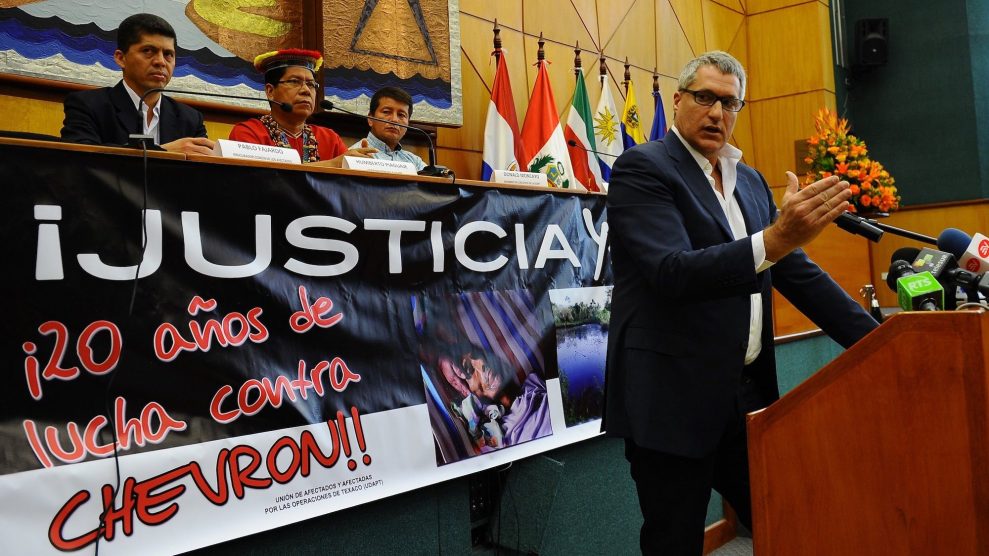
Steven Donziger, gestures during a press conference on March 19, 2014 in Quito, Ecuador.Rodrigo Buendia/Getty

Last September, I travelled from Western Canada to New York City to see the human rights lawyer Steven Donziger. Donziger cannot travel. He cannot even stroll the hallway of his Upper West Side apartment building on 104th Street without special court permission. He remains under house arrest, wearing an ankle bracelet. Eight years ago, Donziger and a team of Ecuadorian lawyers, on behalf of Indigenous and farmer plaintiffs, won the largest human rights and environmental court judgment in history, a $9.5-billion US verdict against the Chevron Corporation for massive oil pollution in Ecuador’s Amazon basin.

Following the trial, Chevron removed its assets from Ecuador, left the country, and has refused to pay. The company now claims the Ecuador verdict was achieved fraudulently, and produced a witness, who told a US court that he possessed knowledge of a bribe. Judge Lewis Kaplan ruled in Chevron’s favour, halting collection of the pollution fine in the US and placing Donziger in electronic chains in his home.

The details in this case really matter, so here the story in full:

Crime and punishment

Donziger, born in Jacksonville, Florida, in 1961, graduated from Harvard Law in 1991, and founded Project Due Process, offering legal services to Cuban refugees. In 1993, Ecuador’s Frente de Defensa de la Amazonía (FDA), representing 30,000 victims of Chevron’s pollution, heard about Donziger and asked him to help win compensation for their lost land, polluted water, and epidemics of cancer and birth defects in a region now known as the “Amazon Chernobyl.”

Donziger originally filed the claim in New York, but Chevron insisted the case be heard in Ecuador, where the trial began in 1993.

Evidence showed that between 1964 and 1992, Texaco (now Chevron) dumped 16 billion gallons of toxic wastewater into rivers and pits. Fifty-four judicial site inspections confirmed that the average Chevron waste pit in Ecuador contained 200 times the contamination allowed by US and world standards, including illegal levels of barium, cadmium, copper, mercury, lead, and other metals that can damage the immune and reproductive systems and cause cancer. According to Amazon Watch, by ignoring regulations, the company saved about $3 per barrel of oil, earning an extra $5 billion over 20 years.

In 2007, during the trial, Chevron stated that if the victims pursued the case, they faced a “lifetime of … litigation.” The plaintiffs persevered. Since the victims were dirt poor, Donziger and his team, with FDA support, devised an innovative solution to fund the case, offering investors a tiny portion of any eventual settlement.

In 2011, after an eight-year trial, the court ruled in favor of the plaintiffs. Two appeals courts and the nation’s Supreme Court, the Court of Cassation, confirmed the decision. Seventeen appellate judges ruled unanimously that Chevron was responsible for the contamination and owed Donziger’s clients $9.5 billion.

The lone witness

According to court documents, Chevron “refus(ed) to comply” with the judgment and began to make good on its threat for a “lifetime of litigation.” According to internal company memos, Chevron launched a retaliatory campaign to attack the victims, discredit Ecuador’s courts, and “demonize” Donziger.

Chevron hired one of the world’s most notorious law firms, Gibson, Dunn & Crutcher—previously censured by England’s High Court of Justice for fabricating evidence. Judges in California, Montana, and New York have censured and fined Gibson Dunn for such misbehavior as witness tampering, obstruction, intimidation, and what one judge called “legal thuggery.”

Using US RICO statutes designed to prosecute organized crime syndicates, the firm filed a “racketeering” case against Donziger. Judge Kaplan at the US Court of Appeals for the Second Circuit in New York—a former tobacco company lawyer widely viewed as being friendly to large corporations—agreed to hear the peculiar case. Kaplan claimed the Ecuador trial “was not a bona fide litigation” and insulted the victims, calling them “so-called plaintiffs.” Gibson Dunn lawyer Randy Mastro called the Ecuador courts “a sham.”

Prominent trial lawyer John Keker, representing Donziger, claimed the Kaplan trial was pure intimidation and called the proceedings a “Dickensian farce” driven by Kaplan’s “implacable hostility” toward Donziger.

On the eve of the trial, Chevron dropped its financial claims, allowing Kaplan to dismiss the jury and decide the outcome himself. Then Chevron unveiled their star witness—Alberto Guerra, a disgraced former Ecuadorian judge removed from the bench for accepting bribes. In a Chicago hotel room, Chevron and Gibson Dunn lawyers rehearsed Guerra for 53 days.

In Kaplan’s court, Guerra claimed that Donziger had approved a “bribe” to an Ecuadorian judge and had written the final court ruling for the judge, allegedly transferred on a computer thumb drive. No corroborating evidence was ever offered. Guerra later admitted lying about these facts, and a forensic investigation of the Ecuadorian judge’s computer proved that Guerra had lied.

The entire story now appears fabricated. Donziger’s lawyers have attempted to locate Guerra and depose him, but the star witness has not yet been found.

“Chevron’s case,” said Donziger’s lawyer Andrew Frisch, “rested on the testimony of a witness who was paid over $1 million.” Frisch stated that Kaplan’s rulings “have been contradicted in whole or in part by 17 appellate judges in Ecuador and 10 in Canada, including unanimous decisions of the highest courts in both countries.”

Nevertheless, without a jury, Kaplan accepted Guerra’s testimony and found that Donziger had committed fraud. Finally, Kaplan ordered Donziger to turn over his computer and cellphone to Chevron. Since this order violated attorney-client confidentiality, Donziger refused until the court of appeals could decide the issue.

Kaplan charged Donziger with “criminal contempt” for refusing his order. However, the order and the contempt charge were so outrageous that the N.Y. prosecutor’s office refused to accept the case. Kaplan defied the state authorities and appointed a private law firm, Seward & Kissel—with commercial ties to Chevron—to act as prosecutor, which, in turn, ordered Donziger be placed under “pretrial home detention.”

Legal thuggery

An unnamed New York Second Circuit judge—presumed by Donziger and his lawyers to be Kaplan—filed a complaint against Donziger with the bar grievance committee in New York, which then suspended Donziger’s law license without a hearing. However, bar referee and former federal prosecutor John Horan called for a hearing and recommended the return of Donziger’s law license. “The extent of his pursuit by Chevron is so extravagant, and at this point so unnecessary and punitive,” Horan wrote, “he should be allowed to resume the practice of law.” Donziger responded that, “Any neutral judicial officer who looks objectively at the record almost always finds against Chevron and Kaplan. The tide is turning and the hard evidence about the extreme injustice in Kaplan’s court will be exposed.”

This case appears to be about bullying. Chevron is one of the wealthiest corporations in the world. The plaintiffs are poor, Indigenous, and campesino people with scarce access to money or lawyers. “Donziger came to our rescue,” says FDA president Luis Yanza. How big can high-stakes corporate bullying get? Donziger’s lawyers estimate the oil giant has spent over $2 billion on 2,000 lawyers, public relations teams, and private investigators.

At the dinner party at Donziger’s, I met supporters from around the world, from Amazon Watch and Global Witness, journalists, lawyers, and human rights advocates. “This case is not just about Steven’s fate,” said Simon Taylor, director of Global Witness in London. “I believe the injustice to him is intended to intimidate the rest of us, to chill the work of other environmental and corporate accountability advocates.”

American human rights attorneys Martin Garbus and Charles Nesson formed a support committee for Donziger with dozens of civil society leaders, including: Clive Stafford-Smith, founder of the prisoner-rights group Reprieve in London; Atossa Soltani and Leila Salazar, the founder and executive director of Amazon Watch; Lynne Twist, co-founder of the Pachamama Alliance working in the Amazon; renowned author John Perkins; and famed musician Roger Waters.

The tide may be turning for Donziger and the victims in Ecuador. In June 2019, Amnesty International asked the US Department of Justice to conduct a criminal investigation into Chevron’s and Gibson Dunn’s conduct, witness bribery, and fraud in the Ecuador pollution litigation

This past February, Prof. Ellen Yaroshefsky, director of the Monroe H. Freedman Institute for the Study of Legal Ethics at Hofstra University in New York, wrote that the Kaplan and Seward & Kissel prosecution of Donziger is flawed with conflicts of interest, financial ties to Chevron Corporation, and judicial bias.

In April, 29 Nobel laureates signed a letter stating, “(We) support Steven Donziger and the Indigenous peoples and local communities in Ecuador in their decades-long work to achieve environmental justice over pollution caused by Chevron…. Chevron and a pro-corporate judicial ally, US District Judge Lewis A. Kaplan, manufactured ‘contempt’ charges against Donziger. (Chevron’s) goal is to intimidate and disempower the victims of its pollution and a lawyer who has worked for decades on their behalf.”

A month later, more than 475 international lawyers, bar associations, and human rights advocates criticized Kaplan’s ruling for persecuting Donziger “based on false witness testimony provided by Chevron, personal animus, and… to protect Chevron from a valid foreign court judgment.” The letter, from the US National Lawyers Guild and the International Association of Democratic Lawyers, urges an end to the pretrial house arrest of Donziger, noting “such arbitrary detention sets a dangerous precedent for human rights attorneys in the United States and around the world.”

On May 27, 2020, the Newground investment firm in Seattle, Wash., placed two proposals on Chevron’s 2020 proxy call, asking for governance reforms to bring its Ecuador issues to resolution, and prevent future human rights and pollution liabilities. The proposals were supported by actor Alec Baldwin, musician Roger Waters, and Nobel laureate Jody Williams.

On July 16, the European Parliament wrote to the US Congress asking the Congressional Subcommittee on the Constitution, Civil Rights, and Civil Liberties to investigate Chevron’s treatment of Donziger, which the EU Parliament found “not consistent with what has traditionally been the strong support in the United States for the rule of law generally and for protection for human rights defenders in particular.”

Late at night, in the Donziger home, after the supporters had left, Donziger and his wife Laura sipped wine. “We’re not giving up,” Donziger said. “The only fraud in this case has been conducted by Chevron. Modern nations have comity relationships, formally respecting each other’s court decisions. We’re reviewing enforcement actions in Canada, Australia, and other jurisdictions. Chevron owes the money, and they can’t just run, hide, and fabricate stories to avoid paying. They’re persecuting me to try to change the public narrative, but they’re guilty. They committed the crime, they hurt people, they were proven responsible in a court of law that they chose, and they owe the money.”

…..As I write this, in mid-July, Donziger has been in home detention for 345 days, almost a year, longer than any lawyer in US history has ever served for a contempt charge.

How Did a Lawyer Who Took on Big Oil and Won End up Under House Arrest?

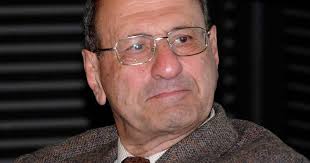
Chilean human rights defender, José (Pepe) Zalaquett, no more

February 22, 2020

Forgotten Kashmir: something has to be done

February 9, 2020

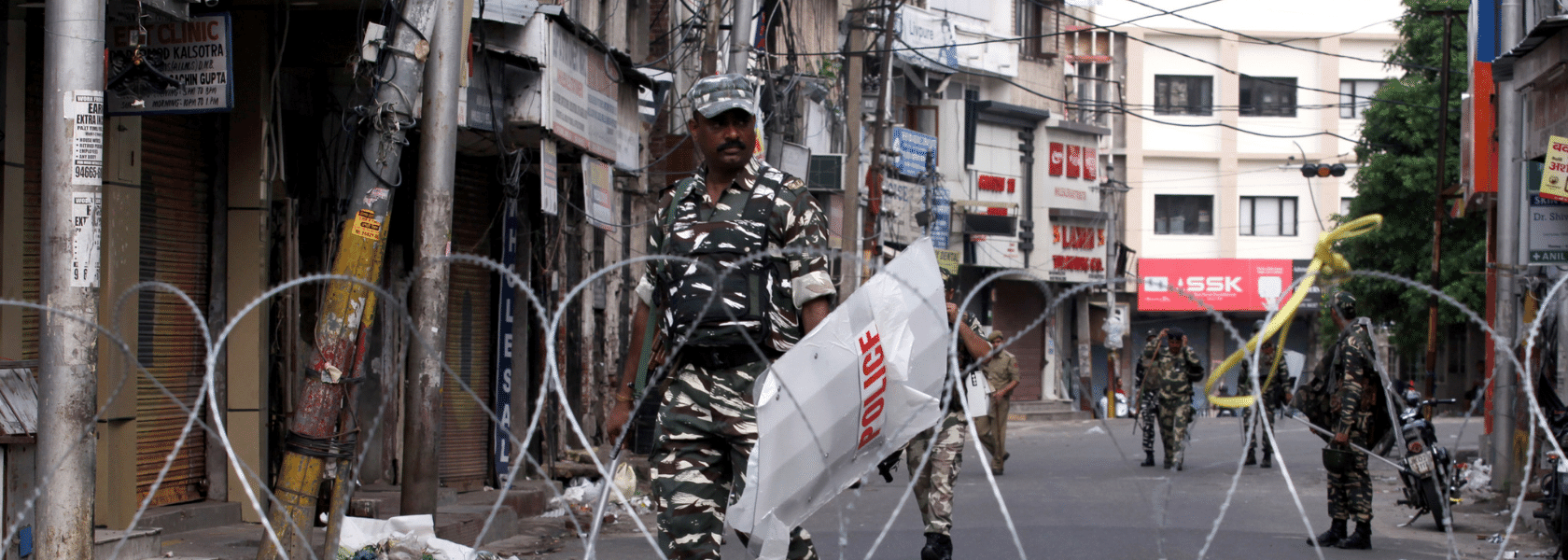
...After more than 70 years of terror, killings, torture, and disappearances, the international community must renew its efforts to end the conflict in Kashmir. In 2018 and 2019, the Office of the United Nations High Commissioner for Human Rights released reports that documented a wide range of abuses – including kidnappings, the killing of civilians, and sexual violence – perpetrated by both sides in the conflict. The UN needs to take the lead in stopping Kashmir’s torment. ……The conflict has consumed resources that should have been used for development; instead, they were channeled to arms purchases or a regional race to develop weapons of mass destruction. Everyone, regardless of age, religion, or ethnicity, has suffered, whether as a result of displacement, family separation, loss of property, the death or disappearance of friends and close relatives, grinding poverty, or simply the prospect of a future as bleak and constricted as the present.The international community has, at times, attempted to mediate between India and Pakistan. The UN has adopted resolutions demanding a referendum on Kashmir’s future status. But, even though it has long been evident that there is no military solution to the conflict – temporary ceasefire initiatives have never resulted in a lasting agreement – India to this day has resisted a plebiscite. In 2003, Pakistan’s then-president, Pervez Musharraf, formulated a four-step approach to a political solution. Without insisting on a referendum, India and Pakistan would begin a dialogue; recognize Kashmir as the main source of bilateral hostility; identify and eliminate what was unacceptable to each side; and strive for a solution acceptable to both countries – and especially to the people of Kashmir. Subsequently, a ceasefire was declared, and high-level meetings took place, but, following a terrorist attack, India terminated the talks. In 2012, Pakistani President Asif Ali Zardari and Indian Prime Minister Manmohan Singh tried unsuccessfully to revive the process.

I have been personally engaged with the Kashmir issue for some time. Last year, I held meetings with senior politicians in Pakistan and India. I am well aware that India wants to treat the Kashmir conflict solely as a bilateral issue. But in that case, it should take the initiative in starting talks with Pakistan. If that does not happen, the international community must demand that the parties come together to negotiate a peaceful solution.

Again, it is not up to the UN or anyone else to impose a solution on the parties. The current situation is rooted in a highly complex mix of history and politics, and any viable settlement must reflect Kashmir’s unique circumstances. A major issue to be addressed is the “line of control” separating Indian- and Pakistani-administered Kashmir, which hinders the free movement of people, divides families, and impedes business and trade. And, of course, Kashmir’s future status is the main question that must be resolved. During my last visit to Kashmir, I saw firsthand the level of violence and the severity of human-rights violations. Conditions have deteriorated further since India repealed Jammu and Kashmir’s special status in October 2019, dissolved it as a state, and reorganized it as two “union territories” – all enforced by the security forces with a wave of arrests, a ban on assembly, and an Internet and media blackout.At a time of war in Syria and Yemen, and heightened tensions between the United States and Iran, it is difficult to get the international community to focus on Kashmir. But it is crucial that the conflict not be allowed to spiral out of control, especially given that both countries are nuclear powers. Above all, the people of Kashmir deserve a ceasefire, reconciliation, and stability, and it is the duty of the UN to advance this goal. I urge the UN to appoint a special envoy to Kashmir. And I appeal to UN Secretary-General António Guterres to seize the initiative and help deliver a long-overdue and lasting peace to this region…

“The Indian government must immediately end all draconian restrictions on fundamental freedoms in Jammu & Kashmir, and fully reinstate communications”, FIDH and its member organization People’s Watch urged on 5 February 2020. In conjunction with its call, FIDH released a briefing note that highlights some of the human rights concerns that have remained unaddressed since 5 August 2019. For the past six months, the people of Jammu & Kashmir have been living under siege and denied their fundamental rights under the most draconian of measures. These grave violations of human rights must come to an end, and accountability must be established for the serious violations that have occurred since 5 August.Adilur Rahman Khan, FIDH Secretary-General
Since the evening of 4 August 2019, internet communications, and initially telephone lines, have been cut in Jammu & Kashmir, effectively isolating residents from the rest of the world. Although phone lines were gradually reinstated and internet access restored in certain places, personal internet connections are limited to 301 government-approved websites through a very slow 2G connection. Although accurate figures are unavailable, thousands of arbitrary detentions have been reported since 5 August 2019, including hundreds of detentions under the abusive 1978 Public Safety Act (PSA). Many detainees, particularly youth and low-ranking political activists, have been transferred to jails outside of Jammu & Kashmir, the location of which is unknown in many cases. There have also been numerous reports of excessive use of force by army and police forces, including reports of deaths and injuries as a result of the improper use of pellet guns and teargas. The reorganization of Jammu & Kashmir has also resulted in a number of measures that will have long-term implications for the human rights situation in the region, including the disbanding of the State Human Rights Commission (SHRC) of Jammu & Kashmir – one of the few avenues for justice available to local people – at the end of October 2019. More than 500 cases of alleged enforced disappearances were pending before the SHRC at the time of its disbandment. [see also: https://humanrightsdefenders.blog/2019/03/17/fidh-dares-to-publish-a-report-on-key-human-rights-issues-of-concern-in-kashmir/]

Human rights violations of the gravest nature are nothing new in Jammu & Kashmir, and have gone unpunished for decades. But taking away the little autonomy the state had will only make the situation worse, especially when the people most affected by these changes have been denied their right to express their opinions. added Henri Tiphagne, People’s Watch Executive Director

On 5 February the Observatory for the Protection of Human Rights Defenders, a partnership of FIDH and the World Organisation Against Torture (OMCT), requested an urgent intervention in the case of Mr. Miyan Abdul Qayoom, a human rights lawyer and President of Jammu & Kashmir High Court Bar Association. Mr. Qayoom, 70,  suffers from multiple health conditions, including diabetes, double vessel heart disease, and kidney problems.
According to the information received, during the evening of January 29, 2020, Mr. Qayoom’s family received a phone call from Agra Central Jail’s authorities, in Uttar Pradesh State, informing them that Mr. Qayoom had been transferred to Sarojini Naidu Medical College after complaining of chest pain, breathlessness and his pulse rate had significantly gone down to 44pm, and asking them to visit him. On January 30, 2020, upon reaching Agra Central Jail, Mr. Qayoom’s relatives discovered that Mr. Qayoom had been taken back to the jail’s dispensary, even though his health condition had not improved.  On February 3, 2020, Jammu & Kashmir High Court Srinagar bench, after hearing the final arguments, reserved its judgement regarding Mr. Qayoom’s habeas corpus request. The scheduled date of the judgement was not known as of the publication of this Urgent Appeal…..
————-
https://www.project-syndicate.org/commentary/united-nations-must-mediate-political-solution-in-kashmir-by-kjell-magne-bondevik-2020-02

Tajikistan’s jailed human rights lawyer Buzurgmehr Yorov awarded Homo Homini award 2020

February 7, 2020
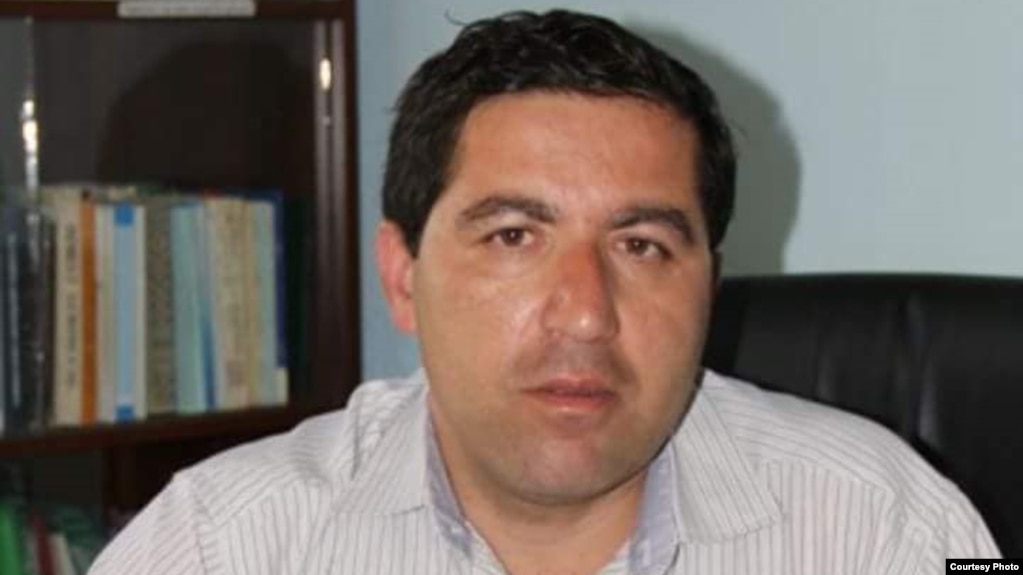
Tajik lawyer Buzurgmehr Yorov (file photo)

The Prague-based NGO People in Need has awarded its annual Homo Homini prize to Tajikistan’s jailed human rights defender Buzurgmehr Yorov for his “commitment to defending basic human rights and to assure a fair trial to all citizens” of his country.  For more on this and similar awards, see: http://www.trueheroesfilms.org/thedigest/awards/homo-homini-award.

Yorov has been promoting human rights in Tajikistan for many years despite facing severe persecution as a result of his work. He did not hesitate to defend clients who were targeted by politically motivated charges, whose cases other lawyers were not willing to take,” the NGO said on 5 February 2020. “As a result of doing his job, this prominent lawyer lost both his property and his freedom,”.

Yorov was sentenced in October 2016 on charges of issuing public calls for the overthrow of the government and inciting social unrest. His 23-year prison term was later extended by five years after he was found guilty of contempt of court and insulting a government official. Last year, his prison term was cut by six years as part of a mass amnesty. [see https://humanrightsdefenders.blog/2019/09/29/in-tajikistan-lawyers-have-to-be-human-rights-defenders/]

The Homo Homini Award will be presented on March 5 to his brother, Jamshed Yorov, at the opening of the One World Film Festival, a human rights film festival held annually in the Czech Republic.

https://www.rferl.org/a/jailed-tajik-lawyer-yorov-awarded-homo-homini-human-rights-prize/30418801.html

Remembering Russian activists Stanislav Markelov and Baburova

January 20, 2020
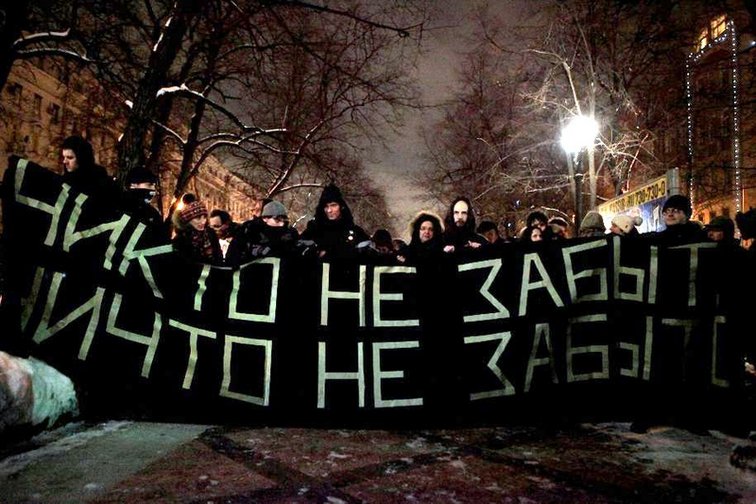
19 January rally, Moscow, 2012 CC BY NC 2.0 Vladimir Varfolomeev / Flickr. Some rights reserved.
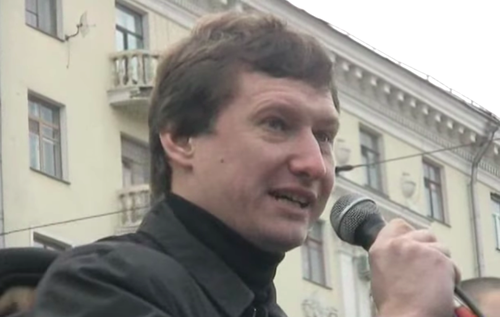
Thomas Rowley Giuliano Vivaldi wrote in Open Democracy of 18 January 2020: “To remember is to fight: the legacy of Russian human rights lawyer Stanislav Markelov“. The authors argue that his legacy remains important to this day. They do this with a selection of his articles and interviews in English.

The news broke: Russian human rights advocate and journalist killed in central Moscow. On 19 January 2009, Stanislav Markelov and Anastasia Baburova were shot by a Russian ultranationalist, Nikita Tikhonov. Markelov, a lawyer from Moscow, died at the scene. Baburova, an activist and journalist from Sevastopol who reported on Markelov’s work, died several hours later. As evidenced in the investigations and trials that followed, there was more to this tragic double murder than many western observers recognised at the time.

Eleven years on, 19 January is an important date for left-wing groups in Russia and Ukraine. Activists hold marches in memory of Markelov, Baburova and dozens of other people who have fallen victim to Neo-Nazi terror. But they also refer to issues that are often off-limits at other demonstrations. 19 January is one of the rare occasions where, particularly in Moscow, a whole range of groups — leftists, LGBT+, anti-racism campaigners, liberals, human rights activists, independent trade unionists, anarchists — come together to fill the streets with anti-militarist, anti-racist and anti-capitalist slogans for one day a year.

Screen Shot 2020-01-17 at 15.14.39.pngStanislav Markelov | Source: YouTube / Grani
In the years before Markelov’s murder, the streets of Russia’s big cities became a battleground as ultra-nationalists took aim at two targets: Russia’s migrant workers and anti-fascist activists. Protests, fights, murders and fabricated criminal cases flicked through headlines and news segments. “The moderate section of the nationalist movement has broken down,” Markelov said at a press conference after the murder of Alexey Krylov, a 21-year-old man who was killed on his way to an anti-fascist concert in 2008. “They have consciously gone underground… and are trying to provoke war itself.”

The investigation into the murder of Markelov and Baburova revealed that the end beneficiaries of Kremlin political technologists’ plans could be unpredictable. In the mid-2000s, Nikita Tikhonov and his accomplices in the revolutionary terror group BORN (Combat Organisation of Russian Nationalists) carried out 11 politically-motivated murders — migrant workers, anti-fascists, a federal judge being their targets. They also had deep connections to Russian Image, a magazine-turned-movement that aimed to rebrand far-right nationalism as intellectual and glamourous. In turn, Russian Image not only collaborated with pro-government youth organisations as it sought to out-position others in the competitive world of far-right activists. It also had connections in high-ranking Russian politics. With help from contacts in the police, they collected extensive personal information on Russian anti-fascists.

But while BORN and its competitors may have had their roots in the nexus of street-level and intellectual nationalism that began to emerge in Russia in the 1980s and 1990s, there was also a constellation of counter-movements developing, comprising environmental, social and political initiatives, that continued into the new decade and animated fresh protests under new conditions. It was in this milieu that Markelov, a Moscow law student, came of age politically in the long perestroika of the early 1990s — and perhaps where the pluralism of his political concerns was born. In the “October days” of 1993, Markelov served in a volunteer medical unit comprised of socialists and anarchists that patrolled the conflict zone which erupted in central Moscow as pro-government forces attacked the Supreme Soviet and the anti-Yeltsin movements. “He helped the wounded. Then he helped carry and load the dead,” Pyotr Ryabov, a Russian anarchist historian, recalled. “A real test for a 19-year-old boy.”

In 1994-1995, Markelov was involved in the radical left wing of the Student Defence trade union. This saw Russia’s student movement break, if briefly, into carnavalesque but deeply serious politics with major demonstrations on Moscow streets. The agenda ranged from higher student grants to ending the war in Chechnya and fighting big business. Indeed, in today’s light the work of Stanislav Markelov — both his legal defence and writings — appears as a vital missing link between human rights defence and critiques of Russian capitalism.

As a self-described left social-democrat, Markelov also stands out for his engagement — albeit far from uncritical — with anarchists. In the mid-1990s, he began visiting the Pryamukhino anarchist workshop in Tver, as well as participating in the Protectors of the Rainbow anarcho-ecological movement (which spanned Russia, Belarus and Ukraine), organising protest camps against new nuclear power stations in Rostov and Mogilev, Belarus. The horizontal elements of these anarchist-influenced milieu were attractive to Markelov. Looking back on the Pryamukhino workshop in 2007, he recalled: “This was a utopia made reality. […] It was here that a system of the free organisation of labour began to work.”

In distinction to many of the Russian liberal crowd, Markelov wanted to knit social and economic rights into human rights work, in order to give voice to a society being left behind in the transition. “In the 1990s, a paradoxical situation emerged,” he wrote in 2007, “you could organise hunger strikes, public demonstrations with thousands of people, even block roads, but that didn’t interest anybody.” For Markelov, a series of left-wing bomb attacks on public monuments carried out at the end of the 1990s (and whose participants he defended) suggested that Russian citizens’ desire for social justice had reached a breaking point — and had been frustrated by a dogmatic focus on liberal human rights.

Events at the Vyborg Paper Factory near the Finnish border are instructive. In the late 1990s, workers at this newly-privatised factory gave up waiting for their new owner, seized the plant, issued a single share and began working under the direction of a worker-led trade union. In an attempt to restore owner-control, riot police brutally stormed the plant on three occasions, eventually pressing riot charges against active workers. According to Markelov, who defended the employees, the reaction of the Russian liberal press was telling: demands by journalists to bring the workers to account was driven by a “fear of reevaluating the results of privatisation”. He didn’t have much time for certain sections of the human rights community, either. “You can sum up the attitude of rights defenders to [the workers at Vyborg] who came under threat of serious prison time, and who came to them for help, like this: we don’t defend these rights, they’re outside the sphere of human rights,” he wrote in 2007.

In this sense, Markelov is important as a consistent, if not widely known, critic of Russia’s new capitalism. “We were told that we can’t speak about society’s interests, collective interests, that we have individual interests which are above them,” he said at a conference in 2008. “Well sure, society’s interests were spat on in the Soviet times, but we at least had the system of Soviet paternalism. […] If something new is to emerge, then it will be in the spirit of socialist paternalism — when Soviet [social] guarantees are mixed with, well, less than democratic tendencies.”

Indeed, the left-wing human rights lawyer was invested in the idea of creating a new left tradition in Russia — one informed by the mistakes of the 1990s and the country’s earlier revolutionary history. “The main myth, which the Narodniki and Social Democrat-Mensheviks took from western social democrats,” he said at the same conference in 2008, “and which we felt on our own skin in the 1990s, is that after the fall of the cruel totalitarian Soviet system, the ordinary people, accustomed to social guarantees, a stabile social-welfare society, will be open to the ideas of democratic socialism. This was a very serious mistake.”

But while the late 1990s and early 2000s encompassed Markelov’s socio-economic interests, he shifted increasingly to defending the rights of people affected by the actions of Russian law enforcement, and Neo-Nazis. Residents of Blagoveshchensk brutalised at the hands of riot police. Relatives of anti-fascist activists killed by Neo-Nazis on Russian streets. The families of people tortured and murdered by a policeman in Khanty-Mansiisk. A journalist brutally beaten for his role in protesting the construction of a highway through a forest outside Moscow.

His bravery, courage and sheer drive were impressive. He worked extensively in Russia’s North Caucasus. In particular, Markelov represented the family of Elza Kungayeva, who was murdered by Russian soldiers during the second Chechen campaign. It was here that he gained the respect and trust of local rights defenders in an unimaginably hostile environment.

In what turned out to be the final years of his life, Markelov spent a significant amount of time defending the interests of Russian anti-fascists and their families. As political repression picks up in Russia, this year’s 19 January events will pay particular attention to repression faced by left-wing activists.

To show western readers how active and in flux Russian society was during the 1990s and 2000s – and to showcase the strategic thought of an under-appreciated and historic figure – the authors, Giuliano Vivaldi and Thomas Rowley, collect and present a selection of Markelov’s texts and interviews in English translation for the first time here. These texts span Markelov’s reflection on trade union and student activism, Soviet nostalgia, Russia’s place in the global economy, corrosive patriotism and the state and revolutionary maximalism.

Undoubtedly, Markelov would have been at the forefront of the solidarity and defence campaigns for all whose lives are touched by political repression in Russia today.

https://www.opendemocracy.net/en/odr/remember-fight-legacy-russian-activist-lawyer-stanislav-markelov/

Sri Lankan human rights defender barred from legal practice appeals to Supreme Court

January 2, 2020

Dr Kumaravadivel Guruparan filed a Fundamental Rights Petition in the Supreme Court of Sri Lanka last week, challenging the decision of the University Grants Commission and University of Jaffna to bar him from legal practice.

The senior lecturer of law at Jaffna University and prominent civil society representative was barred from engaging in private practice following pressure from the Sri Lankan military, after he took up a public interest habeas corpus case into the 1996 disappearance of more than two dozen Tamil youth.

The incident drew outrage from around the world, with hundreds signing a statement condemning the ‘threats, harassment and reprisals’ against the prominent human rights lawyer and the international human rights organisation Front Line Defenders has issued an urgent appeal. See: https://www.frontlinedefenders.org/en/profile/kumaravadivel-guruparan

https://www.tamilguardian.com/content/jaffna-university-senior-lecturer-appeals-legal-practice-ban-supreme-court

Wang Meiyu, democracy activist, dies in prison in China

October 2, 2019
The Guardian, Hong Kong, reported on 28 September 2019 that human rights defenders are calling for an investigation into the death of the Chinese democracy activist who was arrested for holding up a placard calling for Chinese President Xi Jinping to step down. Wang Meiyu, 38, was detained in July after he stood outside the Hunan provincial police department holding a sign that called on Xi and Chinese Premier Li Keqiang to resign and implement universal suffrage in China. He was later charged with “picking quarrels and provoking trouble,” a vague offense often given to dissidents.

According to Wang’s mother and lawyer, he died on Monday. Wang’s wife, Cao Shuxia, received a call from police notifying her that her husband had died at a military hospital in the city of Hengyang, where he had been held. The police officer on the telephone did not offer any explanation of the cause of death. According to Minsheng Guancha, a Chinese human rights group, Cao was later able to see Wang’s body and saw that he was bleeding from his eyes, mouth, ears and nose, and that there were bruises on his face. According to Radio Free Asia, Cao said police pressured her to accept their statement that Wang’s death had been an accident, but she refused. “The Chinese government must investigate allegations of torture and the death in detention of human rights activist Wang Meiyu and hold the perpetrators of torture and extrajudicial killing criminally accountable,” Chinese Human Rights Defenders (CHRD) said in a statement.

Since Monday, Wang’s family has been placed under house arrest, CHRD said. He has two young children. Others connected to his case have also come under pressure. Late on Wednesday, six armed police detained Xie Yang, a rights lawyer, and Chen Yanhui, an activist, who had met at a hotel to discuss Wang’s case. They were released on Thursday. See also: https://humanrightsdefenders.blog/2017/12/30/rsdl-chinas-legalization-of-disappearances/

Wang, who began his work as an activist when his home was forcibly demolished, had been detained and claimed to have suffered torture before. After he held up the placard calling for Xi’s resignation, he wrote online of how police stormed into his home, ordering him to write a confession letter and a statement promising he would stop. “These idiots. They can’t understand that even after these years of persecution, including being deprived of water for three days or suffering two hours of electrical needles that caused me to vomit blood, I won’t surrender,” he wrote.

Danny Ocean sings for Nansen award winner Azizbek Ashurov and refugees on 7 October in Geneva

October 2, 2019

Venezuelan singer Danny Ocean is one of the performers who will be honouring the winner of the 2019 UNHCR Nansen Refugee Award at a ceremony in Geneva on 7 October. “I know how hard it is to leave behind family, friends and everything you know to build a life again somewhere new,” said Ocean, who rose to global fame with his hit Me Rehuso, in which he sings about the love he left behind when he moved from his native Venezuela to the United States of America. “Millions of people each year are forced into making this decision to protect themselves and their families. For those refugees who have lost everything, the humanity and support of others is their only lifeline. For many years the winners of the Nansen Refugee Award have been that lifeline. It is an honour for me to play a part in celebrating their extraordinary achievement.”

The ceremony will also feature a keynote address by Nadine Labaki, the Lebanese director of the Cannes Jury Prize winner, and Oscar-nominated film, Capernaum, and will be hosted by award-winning South African TV presenter Leanne Manas. Other performers joining them on the night will be Swiss musician Flèche Love and German poets and stage performers Babak Ghassim and Usama Elyas.

Last year’s winner: https://humanrightsdefenders.blog/2018/10/02/south-sudanese-doctor-wins-2018-nansen-medal/.

https://www.unhcr.org/news/press/2019/9/5d91b9434/danny-ocean-perform-global-humanitarian-award-ceremony.html

UN experts urge Indonesia to protect human rights defender Veronica Koman

September 17, 2019

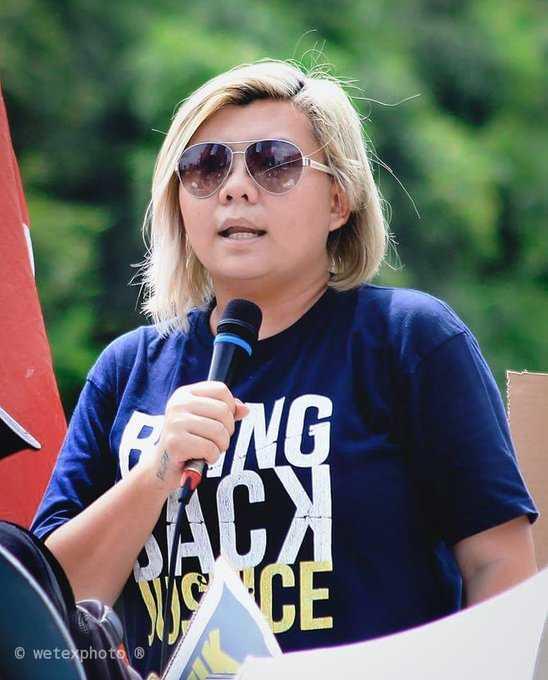
Human rights lawyer Veronica Koman

Human rights lawyer Veronica Koman Photo: Whens Tebay

Five UN experts(Mr. Clement Nyaletsossi Voule, Special Rapporteur on the right to peaceful assembly and association; Mr. David Kaye, Special Rapporteur on the promotion and protection of the right to freedom of opinion and expression; Ms Dubravka Šimonović, Special Rapporteur on violence against women; Ms Meskerem Geset Techane, Chair of the Working Group on discrimination against women and girls; Mr. Michel Forst, Special Rapporteur on human rights defenders) have urged Indonesia to protect the rights of lawyer Veronica Koman who advocates for West Papuan rights. They also urged Indonesia to protect people’s rights to peaceful protest and those reporting on protests in West Papua, and to ensure access to the internet

Earlier this month a police warrant was issued for Ms Koman, who is believed to be in Australia, after police claimed she spread fake news online. Indonesian authorities have blamed disinformation and Papuan independence activists for a recent wave of protests in the region

The UN rights experts said Indonesian authorities should address acts of harassment, intimidation and threats against people reporting on the protests. Ms Koman was named as a “suspect” by authorities who accused her of provoking unrest after she published reports on the protests and on a racist attack against Papuan students in Java that triggered the demonstrations. “We welcome actions taken by the Government against the racist incident, but we urge it to take immediate steps to protect Veronica Koman from any forms of retaliation and intimidation and drop all charges against her so that she can continue to report independently on the human rights situation in the country,” the experts said.

They also expressed concerns over reports indicating that the authorities were considering revoking Ms Koman’s passport, blocking her bank accounts and requesting Interpol to issue a Red Notice to locate her. The experts stressed that restrictions on freedom of expression not only undermined discussion of government policies, but also jeopardised the safety of human rights defenders reporting on alleged violations.

Protests have been increasingly taking place in the provinces of Papua and West Papua since mid-August over alleged racism and discrimination and amid calls for independence. “These protests will not be stopped by an excessive use of force or by cracking down on freedom of expression and access to information,” the experts said… The experts welcomed the engagement of the authorities on these matters and said they looked forward to continued dialogue.

https://www.rnz.co.nz/international/pacific-news/398922/un-urges-indonesia-to-protect-koman

https://www.thejakartapost.com/news/2019/09/16/un-human-rights-experts-express-support-for-veronica-koman-in-papua-case.html

https://en.tempo.co/read/1245609/veronica-koman-meets-her-duties-not-spreading-hoax-activists?TerkiniUtama&campaign=TerkiniUtama_Click_1

Human Rights Defender Linda Kasonde creates new NGO in Zambia

September 9, 2019

lets Linda Kasondeexplain her Chapter One Foundation. She says the formation has been born from the growing threat on human rights, constitutionalism and the rule of law in Zambia. Chapter One Foundation is named after Chapter One of the Laws of Zambia which contains the Constitution.

Kasonde who is executive director of the foundation noted that Increased inequality, growing populism and weakening of public institutions and public accountability were affecting the country’s ability to deliver on the sustainable development goals. “Human rights, the people that defend human rights, constitutionalism and the rule of law are facing a growing threat the world over and Zambia is no exception. Increased inequality, growing populism and weakening of public institutions and public accountability is affecting our ability to deliver on the sustainable development goals that Zambia has signed up to. The mere existence of public institutions is not enough to ensure the promotion and protection of human rights; these public institutions must also be guided by certain principles that ensure the institutions truly function for the benefit of society,” she stated.

Chapter One Foundation is financially supported by the Swedish Embassy, the National Endowment for Democracy, ActionAid Zambia and Caritas Zambia who all recognise the growing need to defend the civic space in Zambia. It is these principles that guide the work of Chapter One Foundation, our goal is to see a Zambia where citizens are freely and actively participating in the governance of Zambia, and where “we the people” take our rightful place as the authors of our own destiny. To achieve this, we recognize that we have to put the individual at the heart of our work, that is why human rights are at the core of what we do.”

See also: https://humanrightsdefenders.blog/2018/10/09/profile-of-human-rights-defenders-godfrey-malembeka-zambia/