On 16 December Amnesty International came out with a special report on the death threats and intimidation by armed groups and state security forces in the eastern part of the Democratic Republic of Congo [North Kivu] over the past year have, with the aim of silencing human rights defenders, even after the defeat of M23. The report “Better to die while speaking the truth” details the heightened clampdown on human rights defenders by armed groups and the national security forces since the crisis escalated last  year. “The whole population is vulnerable to human rights abuses in North Kivu and those speaking out to protect these people are deliberately targeted from all sides,” says Sarah Jackson, Amnesty International’s Deputy Regional Director. Read the rest of this entry »
Posts Tagged ‘Human Rights Defenders’
“Better to die while speaking the truth” – human rights defenders in the DRC continue to be threatened
December 16, 2013Who should be the new UN Rapporteur for Human Rights Defenders? Ravindran is my choice.
December 14, 2013A number of protection mechanisms exist at the international, regional and national levels for the protection of Human Rights Defenders at risk. The Special Rapporteur at UN level is the prime example. We have been very fortunate with the first two mandate holders (Hina Jilani and Margaret Sekaggya) and it is crucial to ensure that the next Rapporteur in April 2014 will be of the same caliber. While in Geneva last week I came across Ravindran Daniel a human rights lawyer from India with whom I worked together in the International Commission of Jurists a long time ago. He told me – with his usual modesty – that he is a candidate for the post of HRD rapporteur. He may not have a big lobby machinery to support him but I think he should be seriously considered. Here a bit more about his impressive background. Please spread the word. Read the rest of this entry »
Huge number of NGOs call on Laos to investigate Sombath’s disappearance one year on
December 13, 2013
Sombath’s enforced disappearance is not an isolated incident. To this day, the whereabouts of nine people, two women, Kingkeo and Somchit, as well as seven men, Soubinh, Souane, Sinpasong, Khamsone, Nou,Somkhit, and Sourigna, arbitrarily detained by Lao security forces in November 2009 in various locations across the country remain unknown. The nine had planned peaceful demonstrations calling for democracy and respect of human rights. Also unknown are the whereabouts of Somphone Khantisouk, the owner of an ecotourism guesthouse and an outspoken critic of Chinese-sponsored agricultural projects that were damaging the environment in the northern province of Luang Namtha. He disappeared after uniformed men abducted him in January 2007. Signed by: Read the rest of this entry »
4 Human Rights Defenders kidnapped in Douma, Syria
December 13, 2013On 9 December 2013, 4 human rights defenders [Ms Razan Zaitouna, Mr Wael Hamada, Mr Nazem Hamaadi and Ms Samira Khalil] were abducted by masked armed men and taken to unknown whereabouts in Syria. They were kidnapped from the offices of the Center for Documenting Human Rights Violations in Syria, located in Douma. Razan Zaitouna is an award-winning human rights defender who worked on the rights of political prisoners in Syria before the revolution, and continued her activities throughout the peaceful uprising in 2011, founding the ‘local coordination committees’. In 2011, she received the Anna Politkovskaya award “RAW (Reach All Women) in WAR” and in 2013 the International Women of Courage Award. Wael Hamada is an active human rights defender who had been kidnapped by the authorities in 2011 for his legitimate work in the defence of human rights in Syria, and Nazem Hamaadi is a well-known lawyer and poet, respected for his defence of detainees who were arrested in Damascus during the revolution. Samira Khalil is a human rights activist and a member of a peaceful political opposition party in Syria.
Five Women Human Rights Defenders from the Middle East
December 13, 2013On 12 December 2013 Tasnim Nazeer published a list of 5 women human rights defenders who in spite of setbacks in the “Arab Spring” have no plans to stop fighting:
- Tawakkol Karman. The first Yemeni and the first Arab woman to be awarded the Nobel Prize. A Yemeni journalist, human rights activist and politician member of the Al-Islah political party, Karman is the leader of the renowned group “Women Journalists Without Chains,” which she co-founded in 2005. She became the international public face of the Yemeni “Arab Spring” uprising in 2011. The people of Yemen know her as the “Iron Woman” and “Mother of the Revolution” due to her courage in sticking up for human rights injustices in Yemen.
- Razan Ghazzawi Razan, an award-winning Syrian blogger, campaigner and human rights activist. She has been actively involved in the events during the Syrian Civil War, and has been particularly outspoken on activists’ arrests and the violations of human rights committed by the Bashar al Assad regime.Razan, who has been arrested by the Syrian regime several times and is forbidden to leave Syria, was named as an “iconic blogger and leading activist” by The Telegraph as well as awarded the 2012’s Human Rights Defenders at Risk award by the Dublin-based Front Line Defenders foundation.
- Moushira Mahmoud Khattab, an Egyptian human rights activist, former politician and diplomat. She has previously held the positions as Minister of Family & Population as well as ambassador to South Africa, the Czech Republic and Slovakia. Khattab is a renowned human rights activist who speaks up for the rights of children and women in Egypt and the MENA region. Her efforts to advocate human rights have been recognized internationally through numerous awards, including the two highest honors that can be bestowed on any foreign national in South Africa and Italy.
- Nawal El Saadawi, an Egyptian feminist writer, human rights activist, physician and psychiatrist. Saadawi has authored many books on the subject of women and Islam and advocates human rights issues involving women. The founder and president of the Arab Women’s Solidarity Association and co-founder of the Arab Association for Human Rights, she has been awarded numerous honorary degrees on three continents.
- Manal al-Sharif. Women’s rights activist from Saudi Arabia who helped start a groundbreaking women’s right to drive campaign in 2011. An outspoken voice on the rights of women in the Kingdom, she was detained and released on 21 May and rearrested the following day on the conditions of returning for questioning if she were to continue talking to the media about rights for women to drive in Saudi Arabia.
via Five Women Human Rights Activists who are Changing the Middle East | Informed Comment.
Related articles
72 UN Rapporteurs issue exceptional joint statement calling for more cooperation and less reprisals
December 13, 2013On the occasion of Human Rights Day, 10 December 2013, the largest ever body of independent experts in the United Nations Human Rights system urged Governments to coöperate with them, and allow human rights organisations and individuals to engage with the UN “without fear of intimidation or reprisals.” The appeal by the 72 special procedures experts stated that: “Over the years more than 160 UN member States have been visited by at least one of our human rights experts, and a total of 106 States have extended an open invitation to special procedures,” Around 30 States have not yet accepted a visit by any of our experts while others have given only selective access. “Unfortunately, it has become a reality that a standing invitation cannot necessarily guarantee that a visit will actually take place.” Mr. Chaloka Beyani said on behalf the group. “The work we do relies heavily on our interaction with civil society, national human rights institutions, human rights defenders, other individuals working on the ground and victims of human rights violations,” the expert explained. “It is of utmost concern that some of these become victims of intimidation and reprisals. The protection of these vital partners is of utmost importance,” he said, calling on world Governments “to respond firmly against any act which threatens them and seeks to obstruct human rights work.” Reprisals are a critical challenge facing the UN system and its human rights mechanisms. “We call for the designation of a focal point on the issue of intimidation and reprisals as soon as possible,”
[The United Nations human rights experts are part of what it is known as the Special Procedures of the Human Rights Council. Special Procedures is the general name of the independent fact-finding and monitoring mechanisms of the Human Rights Council that address either specific country situations or thematic issues in all parts of the world. They are charged by the Human Rights Council to monitor, report and advise on human rights issues. Currently, there are 37 thematic mandates and 14 mandates related to countries and territories, with 72 mandate holders. In March 2014, three new mandates will be added.]
via DisplayNews.
Related articles
- Reprisals against human rights defenders: request for UN focal point before General Assembly (thoolen.wordpress.com)
- Retaliation against HRDs: GA Third Committee takes a step back – will General Assembly rectify? (thoolen.wordpress.com)
The use of SMS against torture in Egypt highlighted
December 10, 2013In the context of 10 December, Human Rights Day, Curt Goering of the Centre for Victims of Torture posts in the Huffington Post a piece on the value of information technology to prevent torture. .. Read the rest of this entry »
Alba Viotto – a lifelong human rights defender from Switzerland
December 6, 2013On 7 December 2013, Satur C. Ocampo wrote in the Philippine Star a remarkable tribute to a Swiss woman, Alba Viotto, who died recently. After a short context of the human rights scene in his country, he then describes the work of a Swiss human rights defender that most of us will never have heard of. Read the rest of this entry »
Mona Seif reports on crackdown in Egypt including her brother’s case
December 6, 2013By Mona Seif, founder of ‘No to Military Trials for Civilians’ and Final Nominee 2013 of the MEA reports in some detail the following:
“Egyptian Activists Arrested in Growing Crackdown – Activist Alaa Abd El Fattah one of at least 27 people currently charged under Egypt’s new anti-protest law
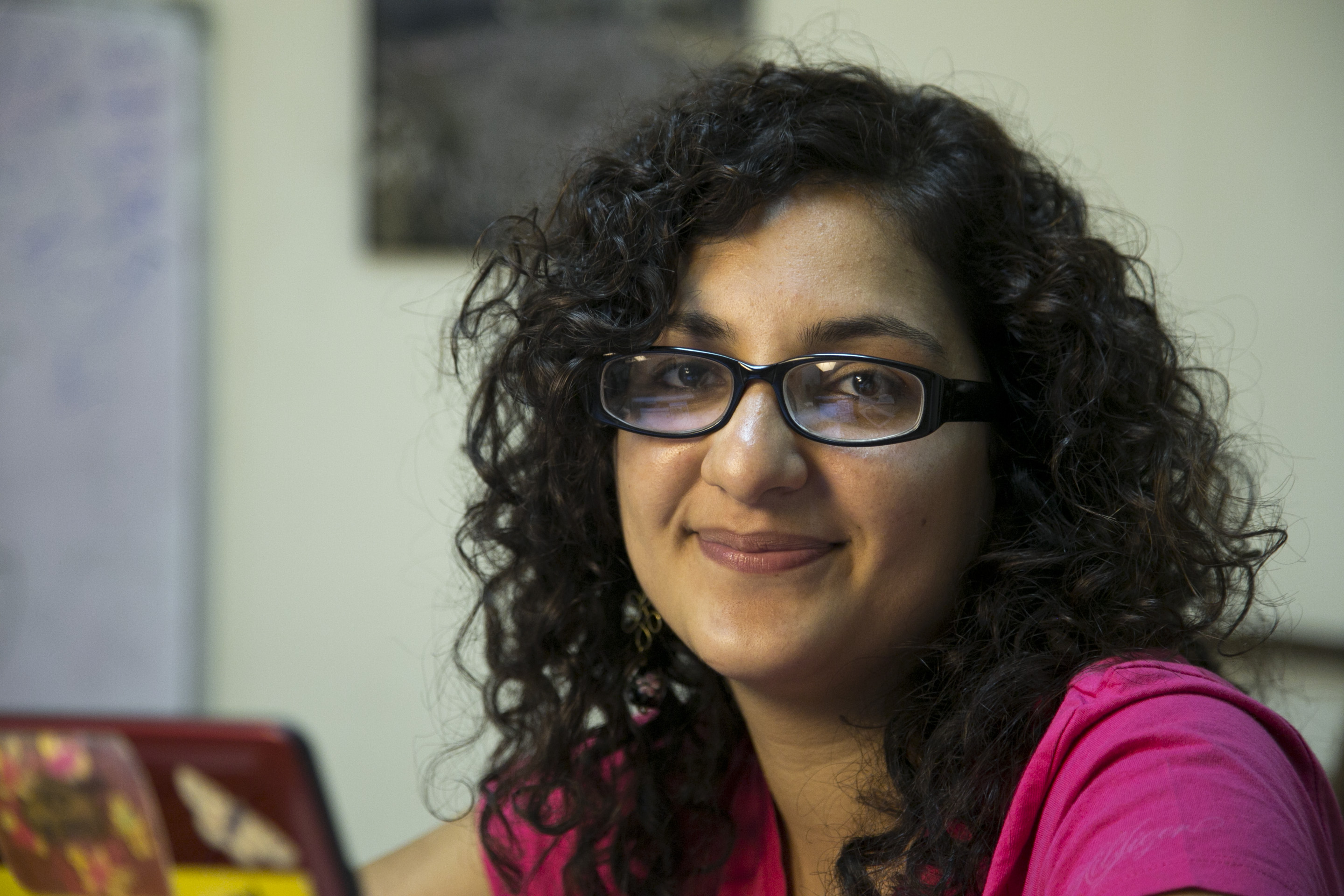
Mona Seif, Egypt – Final Nominee MEA 2013
Egypt is facing a growing crackdown on political protest and dissent. This week has seen the arrest of 27 political activists under the cover of a new law designed to effectively ban protest in Egypt. On November 26th the well-known and internationally respected activist group, No to Military Trials for Civilians, called for a demonstration in front of the Shoura Council (the Upper House of the Egyptian parliament) to protest the failure of the current draft constitution to legislate against the military court martials of civilians. The entirely peaceful protest was met with serious force by the police, who attacked demonstrators with a water cannon and tear gas while arresting as many people as they could. At least 51 people were arrested that day. Read the rest of this entry »
Winners of 2013 United Nations human rights prizes announced today
December 5, 2013On 5 December 2013 the six winners announced of the UN Human Rights Prize were announced: Biram Dah Abeid of Mauritania, a son of freed slaves who works to eradicate the heinous practice; Hiljmnijeta Apuk of Kosovo, a campaigner for the rights of people with disproportional restricted growth short stature; Liisa Kauppinen of Finland, President emeritus of the World Federation of the Deaf; Khadija Ryadi, Former President of the Morocco Association for Human Rights; Mexico’s Supreme Court of Justice the Constitutional Court; and Malala Yousafzai, the Pakistani schoolgirl who was shot by the Taliban for attending classes and is now a renowned education activist. The award ceremony will take place at UN Headquarters in New York on 10 December 2013, as part of the annual commemoration of Human Rights Day [The Prize, which is bestowed every five years, is an honorary award given to individuals and organizations in recognition of outstanding achievement in human rights.]

