Posts Tagged ‘Huffington Post’

Arab human rights court in Bahrain? – a take by the Voice of Russia.

September 6, 2013
бахрейн протест бахрейн столкновения

( Photo: EPA)

The piece below, taken from the Voice of Russia of 6 September 2013, is interesting for a number of reasons:

1. it addresses the almost comical issue of basing the Arab Court of Human Rights in Bahrain

2. it quotes at length the (understandably) sarcastic comments by Brian Dooley of Human Rights First in the Huffington Post

3. it is lovely example of a different but biased geopolitical perspective: Read the rest of this entry »

World Environment Day cannot do without Human Rights Defenders

June 6, 2013

In the Huffington Post of 6 June 2013 there is an excellent post by Jane Cohen, researcher at Human Rights Watch about the link between the protection of the environment and that of human rights defenders. The whole piece is worth reading but here is the essential message: Read the rest of this entry »

Yoga and Human Rights: stretching for human rights defenders

May 2, 2013

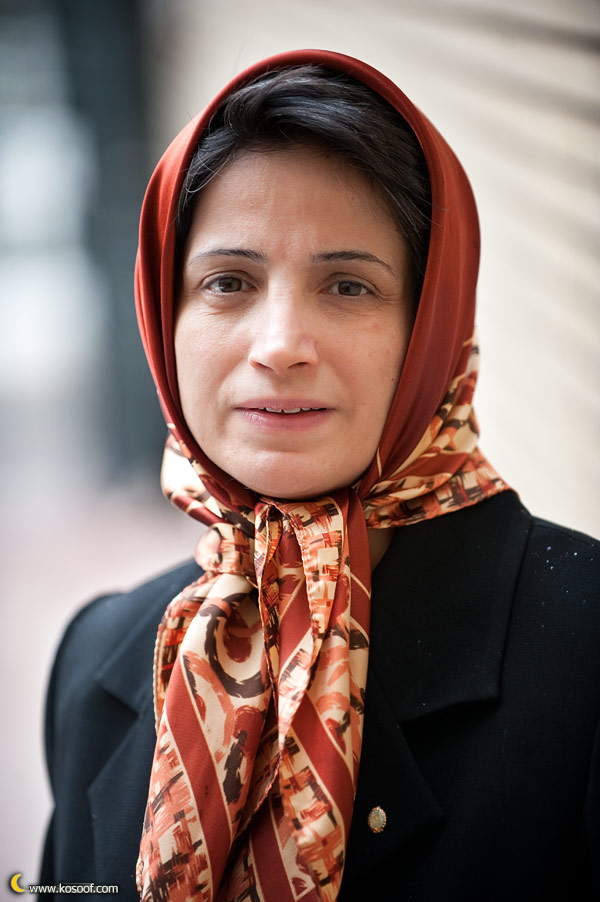
Sometimes my eyes fall on more esoteric contributions to the protection of human rights defenders. Let me share with you Mark Laham’s blog post for the Huffington Times of the 1st of May 2013 which calls for a “borderless” one-hour live online yoga class in honour of Nasrin Sotoudeh, the Iranian lawyer in jail, recipient of the Sakharov Award and Nominee  of the MEA 2012.  Mark got inspired – through AI – by what he read about Nasrin’s struggle and other brave human rights defenders around the world. “How does Nasrin’s story make you feel?” he asks, ” Me, I…I feel the need to do something that will create positive change for this woman and countless others like her.NASRIN_SOTOUDEH_PORTRAIT Read the rest of this entry »

Women Human Rights Defenders in 2012: Rosalyn Warren in the Huffington Post

January 7, 2013

On 7 January 2013, Rosalyn Warren posted the following worthwhile round up of woman HRDs in 2012:

On Human Rights Day on the 10th December 2012, the UN called on the rights of all people — women, youth, minorities, persons with disabilities, indigenous people, the poor and marginalized — to make their “voice heard.” What Human Rights day also marked was the murder of Nadia Sadiqi, a women’s activist and an Afghan official in charge of women’s affairs, who was murdered by two unidentified gunmen while on her way to work.

This marked the end of a year in which attempts to brutally suppress human rights defenders continued: Nadia Sadiqi had only just taken over the job role after her predecessor, Hanifa Safi, was assassinated in a bomb attack in July. Women have long held a crucial and leading role in human rights advocacy, but living in a time where in some parts of the world human rights defenders are facing escalating levels of intimidation, harassment and attacks, and violence against women is endemic everywhere both at home and abroad, we heard the voices of women fighting for human rights loud and clear, and more so than ever before. As a young, female, human rights activist myself, this only reinforces my view that the fight for human rights led by girls and women is of even more importance moving into 2013.

United Nations officials marked Human Rights Day by declaring that everyone has the right to be heard: nevertheless, the next generation of women human rights defenders still face much of the same danger before them when they speak out. When journalist and human rights activist Natalya Estemirova was abducted and murdered by armed men in Grozny, Chechen Republic in 2009, it was a stark reminder of the dangerous consequences of being a vocal voice for human rights in Russia. Fast-forward three years, and human rights activism in Russia has a new face: Pussy Riot. Pussy Riot were not callously murdered for their activism, like the ever-growing list of journalists murdered for their human rights and political reporting, and justice for Natalia Estermedia is still being called for — but what Pussy Riot did do was wave a flag to the world that said that the women fighting for rights in their country will not be ignored, forgotten or silenced.

The next generation of females fighting for human rights is also getting younger. When 15 year-old schoolgirl Malala Yousafzai was shot by the Taliban for her efforts to defend the education of girls in October, a denunciation of targeting girls and women through violence in an attempt to silence them was echoed around the world. Michelle Bachelet the executive director of UN Women, marked Human Rights Day by commenting that this stifling of girls and women’s voices is hiding back progress for women and all members of society, stating: “Women’s participation is fundamental for sustainable development, peace and democracy.” They may have tried to silence Malala, but she continues to inspire her generation to participate in the struggle for basic rights such as education. This was shown with 21 year-old Afghan activist Noorjahan Akbar who says in a recent Daily Beast interview that Malala’s shooting only strengthens the fight for girls’ rights: “Maybe 10 to 12 years ago, people wouldn’t have held a protest because a young girl was attacked. But now it is happening and people are speaking up against it, fighting, and protesting. That gives me a lot of hope for the future. Not just for me and my work, but for other women.”

But 2012 was not a year in which women stood alone: many men joined them in standing for their human rights. In October, Dr. Denis Mukwege a leading women’s rights activist from the Democratic Republic of Congo escaped an assassination attempt, just one month after condemning impunity for mass rape in the DRC at a UN speech. But whether it be with Dr. Denis Mukwege, the Kachin women in Burma demanding an investigation into Kachin abuses, or the women and men that are taking to the streets in India today against rape and sexual violence, the message is the same: human rights advocacy is still just as important today as it has ever been.

I felt proud to see so many women as the driving force for human rights in 2012, particularly with the media showing them in their true state: as strong, powerful advocates of basic human rights, not as repressed women unable to speak out. Nadia Sadiqi did not die in vain. On Human Rights Day, the day that marked her murder, a special tribute was made to Malala Yousafzai by UNESCO and Pakistan, with the launch of Malala’s Fund for Girls Education. Let’s hope that 2013 continues to inspire girls and women to get involved with human rights advocacy wherever they are.

Follow Rossalyn Warren on Twitter: www.twitter.com/RossalynWarren

Technology firms and Human Rights Defenders, not the same thing

December 14, 2011

In a recent blog (10 December 2011) published by the Huffington Post, the executive director of Witness, Yvette Alberdingk-Thijm, labels technology companies as the “New Human Rights Players” (http://www.huffingtonpost.com/yvette-alberdingk-thijm/human-rights-social-media_b_1140717.html). That seems a bit too much honor for companies that produce devices and services that are at best ‘neutral’ in the same way that telephones – or for that matter knives –  could be used for any purpose, good or bad. It would be more appropriate to say that human rights activists and their organisations happen to be mostly working in the area of communication and information and therefore they profit disproportionately from a wider  and cheaper access to information technologies. The film industry has been around for more than a century but served mostly governments and big business as the technology was expensive and difficult to transport; it is only recently that film images can be recorded and distributed easily and cheaply. And indeed organisations such as the 20-year Witness have played a remarkable role in strengthening the capacity of HRDs to make use of these new possibilities.

In fairness, in her article the Witness director does also refer to the darker side of the technology industry but limits herself to say that “there are many examples of governments misusing technology and social media to track down activists and repress freedom of expression“. When she states that “technology providers can also play a critical role in creating products and services that can better serve citizen activists and human rights defenders” and that “whether they realize it or not, technology companies are important new players in protecting human rights — they hold the key to determining the fate of the tens of millions of people turning to video, technology and social media for change“, this has to taken with a strong dose of salt. Not only are there hundreds of technology firms in the world (not just the western world, but  including countries such as China, Russia, Iran, India, Singapore) that dot not care about human rights and that are developing information technology  for war, repression, or simply commercial purposes.  If there are some technology firms that have a warm heart for human rights, wouldn’t it be better to simply mention them by name? Clearer for the reader and a deserved reward for the companies concerned.

Another aspect of the revolutionary development in information technology  that deserves attention is that of worldwide overload. In the same way that there is nowadays so much written information on human rights available that most people can hardly find their way and that much (good) material remains unused, there is a big risk that the hundreds of thousands of videos on You Tube will remain unseen or at least undervalued. Increasing the audience is perhaps more important than  increasing the data on offer.

Still, the article offers lots of interesting insights and says what Witness is planning to do about some of the drawbacks and you should certainly read it in full.

All said, it remains true that with access to modern information technology, Human Rights Defenders – not the necessarily the companies –  have the advantage of playing a home match.