The Observatory for the Protection of Human Rights Defenders, an FIDH-OMCT joint programme, expressed its concern that the Hungarian government is alarmingly shrinking the space of civil society by hindering their access to funding, conducting unexpected inspections and blacklisting prominent human rights organizations. The Observatory – not by accident – did so on 12 June 2014, the day the Hungarian Government was meeting representatives from a group of donor Governments including Norway.

Posts Tagged ‘Gerald Staberock’
Human Rights Defenders in Hungary: not yet ‘foreign agents’ but getting close
June 13, 2014Ukraine follows Russia’s example again: human rights defenders labeled as “foreign agents”
January 21, 2014The ‘eastern’ pull of Ukraine is now also reflected in its repressive legislation on human rights defenders. On January 16, 2014, Ukrainian Parliament unexpectedly and hurriedly adopted a comprehensive restrictive bill, which punishes protests, criminalises libel, restricts civic organisations receiving foreign funding and labels them as “foreign agents”. The bill, entitled “On Amendments to the Law on Judicial System and Status of Judges and Procedural Laws on Additional Measures for Protecting Citizens’ safety”, was introduced on January 14, 2014 and voted only two days after, with no legal assessment, no parliamentary hearings, and no consultation. The text was swiftly adopted by show of hands, backed by 235 out of 450 parliamentarians, before it was immediately signed it into law by the President. According to the bill, all civic organisations receiving funds from foreign sources must include in their title the term “foreign agents”, register as such, submit monthly reports regarding the organisations, publish quarterly reports on their activities in the official media and may not benefit from a tax-exempt status. The bill specifies that all organisations taking part in political actions, defined as actions aimed at influencing decision-making by state bodies, a change in the state policy which those bodies have defined as well as forming public opinion for those purposes, are deemed civic organisations. Organisations failing to register may be closed by court decision.
There were quite a few other restrictions passed in the same bill as can be seen from the Open Letter of 20 January 2014 sent to Ukrainian President Viktor Yanukovich and Parliamentary Speaker Volodym, signed by Karim Lahidji, FIDH President, and Gerald Staberock, OMCT Secretary General:
Russia: Unprecedented level of harassment against Memorial as “foreign agent”
October 3, 2013The Observatory for the Protection of Human Rights Defenders, a joint programme of the International Federation for Human Rights (FIDH) and the World Organisation Against Torture (OMCT), reports on 2 October 2013 on the ongoing judicial proceedings against the Anti-Discrimination Centre “Memorial” (ADC Memorial), which has now become the first NGO in Russia facing both administrative and civil proceedings for the same “offence” on the basis of the law on so-called “foreign agents”. Read the rest of this entry »
Full report of observer mission to trial of Nabeel Rajab in Bahrain now available
February 17, 2013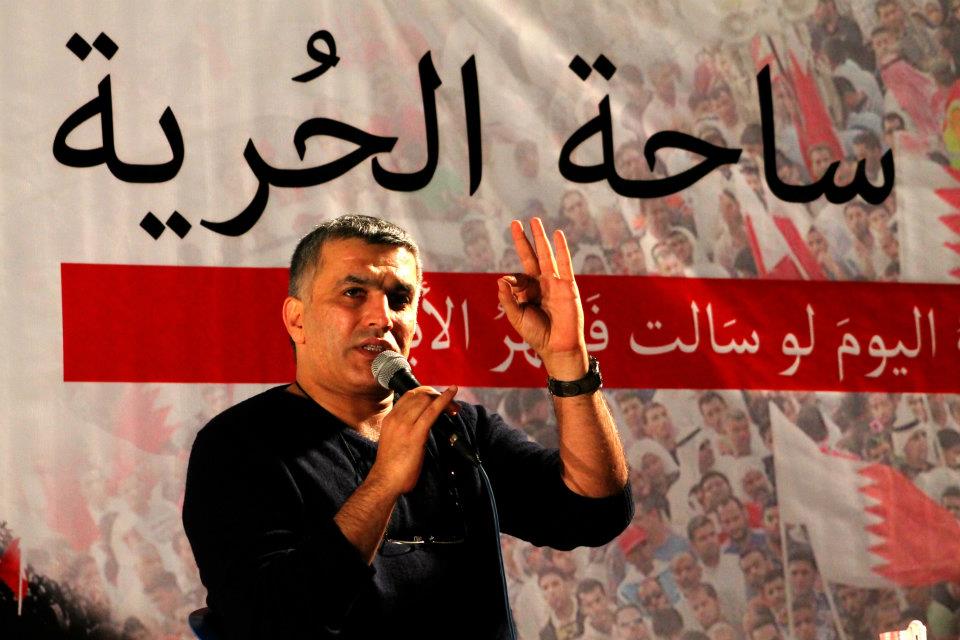 The Observatory for the Protection of Human Rights Defenders, a joint programme of the International Federation for Human Rights (FIDH) and the World Organisation Against Torture (OMCT), published on 14 February 2013 a report, which presents the findings of a judicial observation mission conducted on the trial in appeal of prominent human rights defender Nabeel Rajab. The report concludes that a series of violations of the right to fair trial marred the judicial process and that Nabeel Rajab is suffering judicial harassment (and was sentenced to 2 years imprisonment) for merely advocating for and exercising the right to peaceful assembly in Bahrain. The report is available in English and Arabic.
Nabeel Rajab is President of the Bahrain Centre for Human Rights (BCHR) and Director of the Gulf Centre for Human Rights (GCHR), Deputy Secretary General of FIDH, and the BCHR was 2012 nominee for the MEA. Read the rest of this entry »
Observatory for HRDs comes out with annual report
October 27, 2011IPS reported that on Monday 24 October a symbolic empty chair was at the launch of a report on the repression of human rights defenders, a physical reminder that its would-be occupant – Ales Bialiatski, president of Human Rights Centre Viasna in Belarus – has been languishing in prison since August. Bialiatski is charged with tax evasion, but supporters say it is clear that the charges are in retaliation for his long and distinguished career of human rights activism in the country. The chair was also empty for the hundreds of other human rights defenders across the world who have been deprived of their freedom and fundamental rights, leaving a void in the communities they worked to protect.
The Observatory for the Protection of Human Rights Defenders, a joint programme of the International Federation for Human Rights (FIDH) and the World Organisation against Torture (OMCT), published its 600-page report on individual human rights defenders and organisations that faced repression between January 2010 and April 2011. It covers 70 countries in Sub-Saharan Africa, North Africa, the Middle East, Asia, The Americas and Europe. The abuses cited include the ‘usual’ harassment, threats and arrests, arbitrary detention, defamation campaigns, and restrictions in terms of freedoms of association and expression, but also notes Antoine Bernard, of FIDH, a trend to the criminalise social protests. “That is a very universal trend, to use the law not as a protecting tool, that is supposed to be its role, but law as a repressive tool to arbitrarily provide the legal basis for silencing human rights defenders”, he said to InterPress Service (IPS). “A threat to a human rights defender very often transcends beyond the individual case, it carries a shadow to society at large,” concluded Gerald Staberock, secreterary-general of OMCT.
The United Nations special rapporteur on the situation for human rights defenders, Margaret Sekaggaya, underscored the importance of implementing the Declaration for Human Rights Defenders that the General Assembly adopted back in 1998, and the importance of disseminating information about it. “It is still an instrument that is not sufficiently known, either to those who should shoulder the main responsibility for its implementation, namely states, or to those whose rights it sets out to protect, human rights defenders,” Sekaggaya said.
 Hans Thoolen on Human Rights Defenders and their awards