Posts Tagged ‘foreign funding’

NGOs alarmed by draft law “TRANSPARENCY OF PUBLIC LIFE” in Hungary

May 27, 2025

Human Rights Watch, Civil Rights Defenders and many, many other NGOs are deeply alarmed by a new legislative proposal in Hungary that, if passed, would institutionalise sweeping, opaque, and politically motivated repression of independent civil society, the press, and private organisations that receive foreign support or have any kind of income that the Hungarian government feels would threaten the country’s sovereignty. 

The draft law, which is deceptively titled ‘On the Transparency of Public Life’, would give the authorities unchecked powers, allowing it to recommend the registration of organisations deemed to be ‘influencing public life’ with foreign funding in ways that ‘threaten Hungary’s sovereignty’. Because this phrasing is vague and ideologically loaded, it risks including any kind of criticism of government policy, including the promotion of human rights, press freedom, gender equality, and the rule of law. 

Potential disastrous consequences

  • No legal remedy: If the government demands an organisation register itself, the organisation in question would not be able to appeal this decision. Once listed, organisations would have no access to effective legal redress; 
  • Broad definitions: ‘Foreign support’ is defined as any financial input, no matter how small, from practically any international source (including EU institutions and dual citizens) as well as commercial revenue; 
  • Sweeping prohibitions and sanctions: Listed organisations would have to seek permission from the tax authorities to receive foreign support. Financial institutions would be required to report and block transfers, meaning NGOs would effectively be permanently monitored; 
  • Loss of domestic support: Listed organisations would lose access to Hungary’s 1% income tax donation scheme, which would prevent them from receiving support from regular Hungarian citizens; 
  • Political targeting: Leaders of registered organisations would be labelled ‘politically exposed persons’, which would expose their private financial transactions to invasive scrutiny; 
  • Severe penalties: Any violations could lead to fines of up to 25 times the amount received, suspension of the organisation’s advocacy activities, and even forced closure.

EU must speak out against proposed law

Hungary’s draft law is not about transparency: it is a calculated attempt to criminalise dissent, silence watchdogs, and entrench one-party control over the democratic public sphere and civic space. If passed, the law would violate multiple provisions of the EU Charter of Fundamental Rights and the European Convention on Human Rights, including freedom of expression and association and the right to an effective remedy. 

In an open letter to President Ursula von der Leyen and Commissioner Michael McGrath of 22 May 2025, the NGOs urge to take the following immediate steps:

  • Immediately request the Court of Justice of the European Union (CJEU) to grant interim measures in the ongoing infringement procedure on the Law on the Defence of National Sovereignty (Case C-829/24). The Sovereignty Protection Office is crucial to the new bill and therefore this is an imminent and effective way to halt the progress and impact of the bill. Cognizant of the impending danger, the European Parliament and civil society have been calling for this step since 2024. Interim measures are designed to prevent irreparable harm — in this case, the effective paralysis of civil society organisations, independent media and dissenting voices – and with this new development comprehensive interim measures should be requested immediately.
  • At the same time, call on the Hungarian government to withdraw the bill and if unsuccessful, open a new infringement procedure on new violations that are not linked to the ongoing case on the Defence of National Sovereignty.
  • With the forthcoming Article 7 hearing on Hungary on 27 May 2025 and recognising the escalation of a systematic breakdown of the rule of law, support the Council of the EU to move to a vote on Article 7(1).

This new bill represents a severe and existential threat to democratic principles, human rights and the rule of law in Hungary and in the EU as a whole. If the existing tools are not effectively deployed, we risk an unravelling of the rules on which the EU was founded and a clear step towards authoritarian practices. We call on you to stand in solidarity with Hungarian civil society and their counterparts across the region and remain available to provide additional information and support.

https://www.hrw.org/news/2025/05/23/open-letter-hungarian-bill-entitled-transparency-public-life

https://www.coe.int/nb/web/commissioner/-/commissioner-asks-hungary-s-parliament-not-to-adopt-law-that-stifles-civil-society

Kyrgyzstan (and Slovakia) on their way to emulate Russia with draft law on ‘foreign representatives (agents)’

March 24, 2024

On 21 March 2024, Nikkei Asia carried the story on Kyrgyzstan taking a page from Russia in pushing for a ‘foreign agents’ law

Kyrgyzstan: Veto the draft law on ‘foreign representatives’ - Civic Space

Kyrgyz President Sadyr Japarov faces a high-stakes decision on whether to sign new legislation that critics warn will significantly impair how human rights defenders and independent media, among others, can work in his mountainous Central Asian state. On March 14, Kyrgyzstan’s parliament voted overwhelmingly in favor of a “foreign agents” bill that mirrors legislation adopted in Russia over a decade ago. The law is designed to control the activities of nonprofit and nongovernmental organizations that receive funding from abroad by compelling them to register as “foreign representatives,” leading to closer scrutiny of their activities by the authorities.

Japarov has a month from that date to sign it into law. Many observers have been vocal in their opposition and are urging the president to veto the bill. Syinat Sultanalieva, Central Asia researcher at Human Rights Watch, told Nikkei Asia that this law “would see the further and sharper shrinking of civil society,” a sector that has been under attack in Kyrgyzstan for more than a decade. BUT see: https://www.aol.com/kyrgyzstan-adopts-law-targeting-foreign-100124498.html

In the meantime the Prague based NGO, People in Need, speaks out against the Slovakian government’s proposed measures to curb critical media and NGOs, which would mirror tactics employed by autocrats and dictators in places ranging from Russia to Latin America, It has raised concerns about the erosion of civil liberties and the stifling of dissent. In a move reminiscent of authoritarian regimes, officials seek to designate these entities as “foreign agents,” a term often utilised to suppress opposition voices. The Fico government has already taken steps to cut NGO funding, raising further alarms about the independence of civil society activities. Additionally, Culture Minister Martina Šimkovičová and Justice Minister Boris Susko have initiated cuts to subsidy programmes, redirecting funds away from NGOs to other areas, citing concerns about transparency and favouritism in grant allocation. The government’s actions have prompted backlash from NGOs, with 90 organisations signing a petition against the minister’s decisions. 

As an organisation with roots steeped in the freedom and civic movements of post-Cold-War Czechoslovakia, we are appalled to see the illiberal turn taken by the Slovak government. The Fico government’s proposal to impose a Russian-style foreign agents’ law is anathema to the shared goals of the Czech and Slovak people who fought to end the Russian subjugation of our homelands. This is of great concern and sadness to us at People in Need.  

https://www.peopleinneed.net/slovak-government-targets-ngos-with-proposed-foreign-agents-act-11299gp

On 21 March 2024, a large group of civil society organisations jointly called on the president of Kyrgyzstan, Sadyr Japarov, to veto the amendments to the Law on Non-commercial Organisations, known as the law on ‘foreign representatives’ which clearly violates the country’s international human rights obligations and would be a devastating blow the civil society. [see also: https://humanrightsdefenders.blog/tag/foreign-agent-law/]

We are writing to you on behalf of the undersigned civil society organisations from different countries to express support for Kyrgyzstan’s civil society and urge you to veto the amendments to the Law on Non-commercial Organisations, known as the law on ‘foreign representatives’, which parliament adopted on third reading on 14 March 2024. The proposed amendments fall seriously short of Kyrgyzstan’s international human rights obligations and risk delivering a devastating blow to its vibrant civil society. The amendments will impair civil society’s ability to carry out its important and legitimate work to the benefit of the people of Kyrgyzstan, and to promote public participation, transparency, accountability and good governance, thereby eroding democratic and human rights progress made by Kyrgyzstan with negative implications for its international reputation. Further, the proposed amendments will endanger international development and economic assistance programmes in the country, which will also undermine prospects for the achievement of sustainable development goals contrary to your government’s ambitious agenda in this area. Thus, we urge you to veto the amendments for the benefit of Kyrgyzstan and its people.

Both national and international human rights experts have concluded that the draft law on ‘foreign representatives’ clearly violates Kyrgyzstan’s international human rights obligations. For example, such conclusions were presented in a joint communication addressed to your government by three UN Special Rapporteurs, appointed by the UN Human Rights Council, of which Kyrgyzstan currently is a member. The three rapporteurs stated: ‘many provisions in the proposed law would be contrary to the international human rights obligations of the Kyrgyz Republic, including the right to the freedom of association, the right to freedom of opinion and expression, the right to non-discrimination and the right to privacy. If passed, this draft law could have a chilling effect on the operation of all associations in the Kyrgyz Republic, limiting their ability to advocate for human rights, provide social services, and contribute to the development of a robust and inclusive society.’

In an earlier legal assessment prepared at the request of Kyrgyzstan’s Ombudsperson, the OSCE Office for Democratic Institutions and Human Rights (ODIHR) found that the proposed provisions lack legitimate justification and do not meet the requirements of international human rights law for acceptable restrictions on the right to freedom of association. ODIHR also stressed that the key concepts of ‘foreign representatives’ and ‘political activities’ used in the draft law are inconsistent with the principle of legal certainty and predictability and ‘would allow unfettered discretion on the part of the implementing authorities’. ODIHR further found that the proposed provisions are contrary to the principle of non-discrimination and risk stigmatising organisations carrying out legitimate work and triggering mistrust, fear and hostility against them.

The draft law on ‘foreign representatives’ does not only violate your country’s international obligations but also contradicts provisions of the Constitution of the Kyrgyz Republic (including articles 36, 32, 24 and 29), which protect the right to freedom of association and other fundamental rights. In this way, the draft law challenges the legitimacy of the current Constitution, which was initiated by you and endorsed by citizens in a national referendum in 2021.

The proponents of the draft law on ‘foreign representatives’ have argued that it is aimed at ensuring the transparency of civil society organisations (CSOs). However, while transparency is an important issue, it is not a legitimate reason under international human rights law for imposing invasive, discriminatory, and stigmatising restrictions on CSOs. On the contrary, transparency can be ensured in ways that do not contradict international law nor hamper the work of CSOs. Moreover, all non-commercial organisations in Kyrgyzstan, including those that receive foreign funding, are already subjected to extensive state control and regularly report about their activities and finances to various state bodies, which ensures transparency of their work. In particular, amendments to the Law on Non-commercial Organisations, adopted in 2021, oblige non-commercial organisations to annually provide detailed information on their sources of funding, use of funds and assets for publication on the Tax Service’s website. This information is thus already publicly accessible.

Rather than increasing the transparency of non-commercial organisations, the draft law risks undermining civil society’s crucial role in assisting public bodies with the provision of support to vulnerable groups of the population, and also in promoting public sector transparency and accountability. Watchdog organisations have already warned of a significant decline in government transparency in Kyrgyzstan, preventing the exposure of wrongdoing and increasing the risk of corruption. This impairs foreign investments as well as economic growth and well-being in the country.

Kyrgyzstan’s international partners have warned that the adoption of the law on ‘foreign representatives’ would negatively affect development assistance programmes in the country. For example, in a joint statement issued on 14 March 2024, the Delegation of the EU to the Kyrgyz Republic and the Embassies of Canada, France, Germany, the United Kingdom, and the United States stated that the proposed provisions would ‘jeopardise our ability to provide assistance that improves the lives of the citizens and residents of the Kyrgyz Republic’. They stated that, if signed in its current form, the law ‘has the potential to hurt the most vulnerable who rely on the essential services – such as food, healthcare, and education – that non-profits and NGOs [non-governmental organisations] provide’. The UN Resident Coordinator in the Kyrgyz Republic pointed out that enacting the law would threaten civil society engagement in development initiatives and the achievement of UN Sustainable Development Goals (SDGs). Thus, the law contradicts the government’s aim of being among the top 30 countries in the realisation of SDGs by 2030.

The World Bank and the European Bank for Reconstruction and Development have also stressed the importance that they attach to CSO engagement for the success of their in-country operations, when commenting on NGO concerns about the draft law’s potential impact on the activities of international financial institutions in Kyrgyzstan.

As you know, as a beneficiary of the General Scheme of Preferences Plus (GSP+), the Kyrgyz Republic is required to effectively implement international human rights conventions, including the International Covenant on Civil and Political Rights (ICCPR) in return for trade benefits afforded by the EU. Thus, the adoption and enforcement of the law on ‘foreign representatives’ is likely to negatively affect these benefits. The European Commission’s recent GSP+ monitoring report on the Kyrgyz Republic highlighted shrinking space for civil society as a key area of concern and called for swift measures to reverse this negative trend in the light of the country’s ICCPR obligations. Moreover, in its resolution adopted in July 2023, the European Parliament called for a reassessment of Kyrgyzstan’s GSP+ benefits in view of recent developments, in particular draft legislation that runs counter to the country’s international human rights obligations.

We are aware that proponents of the draft law on ‘foreign representatives’ have argued that it is similar to the US Foreign Agent Registration Act (FARA). However, FARA differs from the proposed legislation in Kyrgyzstan in crucial respects. In particular, FARA is not targeted at non-commercial organisations that receive foreign funding. Instead, FARA requires persons who conduct certain activities ‘at the order’ or ‘under the direction or control’ of a foreign government or other foreign entity to register as an ‘agent of a foreign principal’ and periodically file supplementary information about their activities in this capacity. The purpose of FARA is to ensure the public disclosure of such information rather than to subject those registered under it to ongoing, invasive state control.

President Japarov, when you consider whether or not to sign the draft law on ‘foreign representatives’, you are deciding the fate of civil society in Kyrgyzstan. Will you opt for the path taken by authoritarian countries, where similar legislation has been used in campaigns to systematically dismantle independent civil society, with negative implications for the reputation, prosperity and well-being of these countries? Or for a more forward-looking, inclusive, and democratically-oriented approach under which CSOs are treated as important, respected partners who can work together with state bodies in addressing societal problems, and international partners retain their confidence in Kyrgyzstan’s commitment to sustainable development?

For the reasons outlined above, we urge you to refrain from signing the draft law on ‘foreign representatives’ and ensure that any new legislation impacting non-commercial organisations reflects Kyrgyzstan’s international human rights obligations and undergoes thorough and inclusive consultations with civil society, as well as national and international experts. When elaborating this type of legislation, it is crucial to take the opinions of CSOs directly affected by it into account.

Signed by the following organisations (listed in the order of signature):

International Partnership for Human Rights (IPHR), Belgium

IDP Women Association Consent, Georgia

Norwegian Helsinki Committee

Hungarian Helsinki Committee, Hungary

Legal Policy Research Centre, Kazakhstan

Public Association “Dignity”, Kazakhstan

Netherlands Helsinki Committee

Civil Rights Defenders, Sweden

Protection of Rights without Borders NGO, Armenia

Swedish OSCE-network

Helsinki Citizens’ Assembly – Vanadzor, Armenia

Center for Civil Liberties, Ukraine

Public Verdict, Russia

Turkmen Helsinki Foundation, Bulgaria

Crude Accountability, USA

Freedom Files, Poland

Human Rights Center “Viasna”, Belarus

Center for Participation and Development, Georgia

Human Rights Defence Center Memorial, Russia

Civic Assistance Committee, Russia

Austrian Helsinki Association

Bulgarian Helsinki Committee

Human Rights Center (HRC), Georgia

Macedonian Helsinki Committee

Sova Research Center, Russia

Promo LEX Association, Moldova

Helsinki Foundation for Human Rights, Poland

ARTICLE 19 Europe

FIDH (International Federation for Human Rights), within the framework of the Observatory for the Protection of Human Rights Defenders

World Organisation Against Torture (OMCT), within the framework of the Observatory for the Protection of Human Rights Defenders

Amnesty International

https://asia.nikkei.com/Politics/Kyrgyzstan-takes-page-from-Russia-in-pushing-foreign-agents-law
Five Rights Defenders in Burundi should be released immediately

March 14, 2023
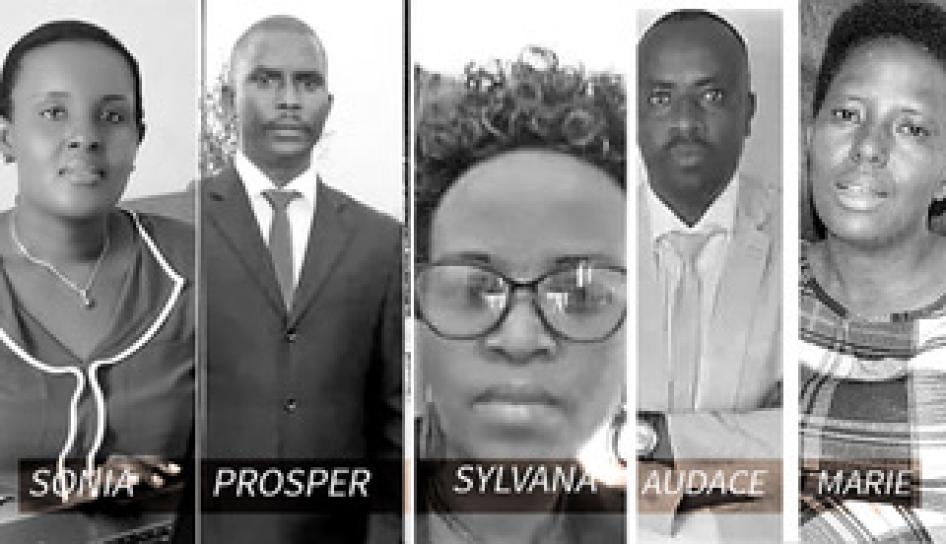
From the left to the right, Sonia Ndikumasabo, Prosper Runyange, Sylvana Inamahoro, Audace Havyarimana and Marie Emerusabe.
From the left to the right, Sonia Ndikumasabo, Prosper Runyange, Sylvana Inamahoro, Audace Havyarimana and Marie Emerusabe. © 2023 Private

Burundian authorities should immediately and unconditionally release five human rights defenders arbitrarily arrested on February 14, 2023, and drop the baseless charges against them, Amnesty International, the Burundi Human Rights Initiative, and Human Rights Watch said on 14 March 2023.

The five human rights defenders are accused of rebellion and of undermining internal state security and the functioning of public finances. The charges appear to relate only to their relationship with an international organization abroad and the funding they have received from this organization. Two of the defenders work for the Association of Women Lawyers in Burundi (Association des femmes juristes du Burundi, AFJB) and three for the Association for Peace and the Promotion of Human Rights in Burundi (Association pour la paix et la promotion des droits de l’Homme, APDH).

“The arrests of the five human rights defenders and the serious charges brought against them signal a worsening climate for independent civil society in Burundi,” said Clémentine de Montjoye, Africa researcher at Human Rights Watch. “If working in partnership with or receiving funding from international groups is treated as a criminal offense and a threat to state security, what little space was left for civil society to operate in Burundi will be closed.

On February 16, Martin Niteretse, Minister of Interior, Community Development and Public Security, accused the organizations of working with an international nongovernmental organization. Intelligence agents arrested four of the defenders – Sonia Ndikumasabo, president, and Marie Emerusabe, general coordinator, of AFJB; Audace Havyarimana, legal representative, and Sylvana Inamahoro, executive director, of APDH – on February 14 at Bujumbura’s Melchior Ndadaye Airport as they were preparing to fly to Uganda for a meeting with partners.

Prosper Runyange, the APDH land project coordinator, was arrested in Ngozi on February 14 and transferred to Bujumbura the next day. The five defenders were held at the National Intelligence Service (Service national de renseignement, SNR) headquarters in Bujumbura, then transferred to Mpimba central prison in Bujumbura, on February 17. On March 2, the high court of Ntahangwa in Bujumbura confirmed their pretrial detention.

The two organizations work on gender-based violence and land rights and are officially registered in Burundi. They help some of the most marginalized groups in Burundian society. The judicial authorities’ decision to pursue prosecution of the defenders, apparently solely on the grounds of their organizations’ partnership with and funding from an international organization, has triggered fears of another civil society crackdown in Burundi and undermines the president’s stated reform agenda, the organizations said. In October 2018, the authorities suspended the activities of most foreign organizations in Burundi and forced them to re-register, which included submitting documentation that stated the ethnicity of their Burundian employees.

The government policy, based on a law on foreign nongovernmental organizations, adopted in January 2017, caused some international organizations to close their offices in Burundi because they disagreed with government-imposed ethnic quotas and objected to the requirement to provide information on the ethnicity of their staff. Some said they feared that submitting this information could put their employees at risk of ethnic profiling and targeting.

The charges of endangering state security and rebellion against these five human rights defenders are absurd,” said Carina Tertsakian from the Burundi Human Rights Initiative. “If the authorities have questions about their sources of funding, these can be solved through normal administrative channels, as provided for by the law.”

During late President Pierre Nkurunziza’s third and final term, from 2015 to 2020, independent civil society and media were often targeted, and their members attacked, forcibly disappeared, detained, and threatened. Scores of human rights defenders and journalists fled the country and many remain in exile. There has been almost total impunity for these crimes.

Since President Évariste Ndayishimiye came to power in June 2020 and despite his promises to restore freedom of expression and association, the government’s hostility toward Burundi’s once thriving civil society and media remains. The arrests of the five rights defenders followed the conviction, on January 2, 2023, of an online journalist, Floriane Irangabiye, to 10 years in prison, on charges of “undermining the integrity of the national territory” in violation of her rights to free speech and to a fair trial.

These latest arrests and Irangabiye’s conviction reverse a brief moment of optimism after the acquittal and release, in December, of Tony Germain Nkina, a lawyer and former human rights defender who spent more than two years unjustly imprisoned on unsubstantiated charges of collaboration with a rebel group. Twelve human rights defenders and journalists in exile were convicted in June 2020 of participating in a May 2015 coup attempt. The verdict, which was only made public in February 2021, came after a deeply flawed trial during which the defendants were absent and did not have legal representation, flouting the most basic due process principles. The 12 were found guilty of “attacks on the authority of the State,” “assassinations,” and “destruction.”

The arrest of Ndikumasabo, Emerusabe, Havyarimana, Inamahoro, and Runyange appears to be designed to punish the human rights defenders and their organizations for collaborating with an international organization, obstruct their organizations’ activities, and intimidate other activists. Such behavior belies Burundian authorities’ claims that they respect human rights and further stains the image of openness and reform that they try to project internationally, the organizations said.

“Actions speak louder than words,” said Flavia Mwangovya, Deputy Regional Director at Amnesty International. “If the Burundian authorities want their human rights promises to be taken seriously, they should allow civil society to do its valuable work – including defending and assisting victims of human rights violations – without harassment.”

https://www.hrw.org/news/2023/03/14/burundi-free-five-rights-defenders

Foreign Agent law in Russia from bad to worse

December 12, 2022

A new law entered into force in Russia that drastically expands the country’s oppressive and vast “foreign agents” legislation, Human Rights Watch said on 1 December 2022. The law is yet another attack on free expression and legitimate civic activism in Russia, and should be repealed:

Adopted in July 2022, the law’s entry into force was delayed until December 1. The law expands the definition of foreign agent to a point at which almost any person or entity, regardless of nationality or location, who engages in civic activism or even expresses opinions about Russian policies or officials’ conduct could be designated a foreign agent, so long as the authorities claim they are under “foreign influence.” It also excludes “foreign agents” from key aspects of civic life. 

“For more than a decade, Russian authorities have used ‘foreign agents’ laws to smear and punish independent voices,” said Rachel Denber, deputy Europe and Central Asia director at Human Rights Watch. “This new tool in the government’s already crowded toolbox makes it even easier to threaten critics, impose harsh restrictions on their legitimate activities and even ban them. It makes thoughtful public discussion about Russia’s past, present, and future simply impossible.” See also: https://humanrightsdefenders.blog/2022/05/21/kasparov-and-khodorkovsky-are-now-also-foreign-agents/

In Russia, the term “foreign agent” is tantamount “spy” or “traitor.” The foreign agent designation remains extra-judicial, with no possibility to contest it in court before the designation is made. Those designated must comply with all requirements the day after the authorities add them to the registry, even if they challenge the designation in court.

When the first foreign agent law was adopted in 2012, only registered organizations could be designated “foreign agents.” Successive amendments gradually expanded the application from registered organizations, to media, to other categories of individuals, and to associations without legal entities.

The July law, On Control Over Activities of Entities/Persons Under Foreign Influence, replaces these with a consolidated, simplified, but endlessly broad definition to cover any person – Russian, foreign or stateless; any legal entity, domestic or international; or any group without official registration, if they are considered to have received foreign support and/or are considered to be “under foreign influence” and engaged in activities that Russian authorities would deem to be “political.” It also covers anyone who gathers information about Russia’s military activities or military capabilities, or creates or publicly disseminates information or funds such activities.

The law defines “foreign influence” as “support” from foreign sources that includes funding, technical assistance, or other undefined kinds of assistance and/or open-ended “impact” that constitutes coercion, persuasion, and/or “other means.”

Under this definition, any interaction with a foreign element can potentially be construed as “foreign influence,” Human Rights Watch said. There is also no requirement for any causal link between “foreign influence” and the “political” or other activities for the designation to be applicable.

Foreign sources include not only foreign states or foreign entities, but also international organizations, presumably including such multilateral organizations as the United Nations. The law considers Russian nationals or organizations “foreign sources” if they are respectively considered by the Russian authorities to be under “foreign influence” or to be beneficiaries of “foreign funding.”

To avoid the “foreign agent” label, an organization needs to ensure that no source of any donation was at any stage “tainted” by “foreign influence,” including indirectly.

In defining what constitutes “political” activities of a foreign agent, the law consolidates provisions of earlier iterations of “foreign agent” amendments to include “opinions about public authorities’ decisions or policies.” For example, a journalist who publishes a commentary about urban development plans could fall under the definition of foreign agent activity.

The new law also excludes “foreign agents” from key aspects of public life. These include bans on joining the civil service, participating in electoral commissions, acting in an advisory or expert capacity in official or public environmental impact assessments, in independent anti-corruption expertise of draft laws and by-laws, or electoral campaigns or even donating to such campaigns or to political parties.

Foreign agents are also banned from teaching or engaging in other education activities for minors or producing informational materials for them. They cannot participate in organizing public assemblies or support them through donations and are barred from a number of other activities.

The law expands the notion of a person or entity affiliated with a “foreign agent,” which was first introduced in 2021 in relation to electoral candidates. A person remains “affiliated” up to two years after they sever ties with the foreign agent, even if the “affiliation” started before the law entered into force, and even if the “affiliation” started before the entity was designated a foreign agent.

Since the adoption of the first “foreign agents” law, hundreds of civic groups and activists, including those that work on human rights, the environment, election monitoring, and anti-corruption, have been designated “foreign agents.” A large number of organizations had to close down because they either sought to avoid the toxic label or were unable to bear the hefty fines imposed for not complying with the law’s burdensome, arbitrary labelling and reporting requirements. The authorities used the “foreign agents” law as a legal pretext to close down other groups, such as the human rights group Memorial, one of the 2022 Nobel Peace Prize laureates. See also: https://humanrightsdefenders.blog/2021/12/29/russias-supreme-court-orders-closure-emblematic-memorial/

This new ‘foreign agents’ law is an unrestrained attack on Russian civil society aimed at gagging any public criticism of state policies,” Denber said. “It should be scrapped.”

https://www.hrw.org/news/2022/12/01/russia-new-restrictions-foreign-agents

Also UN calls on India to protect human rights defenders

October 29, 2020

UN High Commissioner for Human Rights, Michelle Bachelet, has called for the Indian government to protect the rights of human rights defenders and NGOs in India. She praised India for being at the forefront of the fight for human rights but cautioned that vaguely worded laws may put that in jeopardy.

Her Tuesday 20 October 2020 statement comes as a response to worrying uses of the Indian Foreign Contribution Regulation Act (FRCA) which various UN bodies have been worried is overbroad and vague in its objectives. Additionally, it prohibits them from receiving foreign money for “for any activities prejudicial to the public interest.” This can and has had an impact on the right to freedom of association and expression and has prevented foreign NGOs from giving money to Indian causes.

“The FCRA has been invoked over the years to justify an array of highly intrusive measures, ranging from official raids on NGO offices and freezing of bank accounts, to suspension or cancellation of registration, including of civil society organizations that have engaged with UN human rights bodies,” Bachelet said. Most recently it led Amnesty international to close their Indian offices after they were raided and their bank account was frozen.  [see: https://humanrightsdefenders.blog/2020/09/29/amnesty-feels-forced-to-shut-sown-its-india-office-amidst-govenment-pressure/]

Bachelet, also called for the Indian government to allow peaceful protest against the Citizenship Amendment Act. More than 1,500 people have been arrested because of their protests to this act and many have been charged with violations of the FCRA.

Finally, Bachelet,called for India to review the arrests of human rights defenders who have been arrested under the Unlawful Activities Prevention Act for exercising their basic human rights.

[see e.g.https://humanrightsdefenders.blog/2020/10/11/the-indomitable-father-stan-swamy-defending-the-adivasis-and-the-dalits-a-cause-of-arrest/]

https://www.jurist.org/news/2020/10/un-calls-on-india-to-safeguard-rights-of-rights-groups-and-ngos-in-face-of-legislation/

On 9 November came: https://theowp.org/reports/new-frontiers-in-the-suppression-of-human-rights-in-india/

Nicaragua: things getting worse and worse for human rights defenders: COVID-19 and foreign agents

October 17, 2020
The New Humanitarian of 2 September 2020 carried a special feature on Nicaragua. President Daniel Ortega is making life increasingly hard for aid and human rights groups in Nicaragua even as poverty, malnutrition, and emigration due to political strife are on the rise, and as he is criticised for a dismissive and reckless response to the coronavirus outbreak. Moreover, a new law for the regulation of “foreign agents” was passed on 15 October.

“In Nicaragua, simply existing as a person carries a risk,” Ana Quirós, director of the Center for Information and Advisory Services in Health, or CISAS, told The New Humanitarian. “You do not need a particular reason to become a victim of violence, of repression, kidnapping or assassination. It is a general risk.

Quirós was deported and stripped of citizenship in November 2018 after the government accused CISAS, which had been working on health education and HIV prevention in Nicaragua with the support of several international aid groups and actors – including Medico International, Medicus Mundi, and the EU – of “participating in destabilising activities”.

Quirós said individuals still working with aid and civic groups in the country are under great threat, and that several people who had been working with CISAS in Nicaragua since it was banned had been forced to flee the Central American country.

It has been during this pandemic that the absence of the NGOs has been most strongly felt, especially for us working in health,” the CISAS director said. “The government hasn’t made any efforts regarding communication, training, education in health, and with regard to the other basic human rights of the population,” Quirós said. “The population is very unprotected, and is hungry for information and real knowledge about the risks and measures that one needs to take to prevent illnesses.

Forty years after Ortega led a socialist revolution to uproot the dictatorship of Anastasio Somoza, Nicaragua continues to be burdened by a host of humanitarian concerns, albeit as it isolates itself from international aid institutions.

Under the government leadership of Ortega and his influential wife, Vice-President Rosario Murillo, the country remains one of the poorest in Latin America, while the violent repression of political opponents since April 2018 has generated a migration crisis proportionately comparable to that of Venezuela. After Ortega’s re-election in 2006, Nicaragua’s poverty rate fell, following a similar trend throughout Latin America, but an independent report published at the end of 2019 estimates that it has since soared, and that roughly a third of the population, or more than two million people, now live on less than $1.76 per day.

According to the World Food Programme, 17 percent of children under five suffer from chronic malnutrition, with the rate at nearly 30 percent – similar to humanitarian crisis settings such as Somalia – in Nicaragua’s northern provinces, which form part of Central America’s dry corridor. In 2019, WFP provided assistance to 45,000 people in Nicaragua affected by the seasonal climate change-linked emergency.

Due to severe restrictions on free assembly and expression, it is probable that protection and humanitarian needs are under-reported in Nicaragua,” ACLED wrote in an email to TNH. “It is clear from current political violence and demonstration trends in Nicaragua – particularly amid the pandemic – that the situation requires urgent attention from international humanitarian actors.

Demonstrations initially flared in April 2018 against a social security reform, which has since been scrapped. They later morphed into broader political unrest as the government responded with heavy-handed measures against student protesters, and as dissatisfaction grew at government corruption and the Ortegas’ increasingly autocratic rule.

The ensuing government crackdown led to the deaths of hundreds of people – the government set the number at 197, while human rights groups say it was at least 325 – and drove more than 103,000 people to seek asylum abroad. Most fled to neighbouring Costa Rica, where at least 400,000 Nicaraguans had already been living.

In July, Michelle Bachelet, the UN High Commissioner for Human Rights, condemned the ongoing repression in the country two years after the initial protests, listing a litany of government offences between March and June, including arbitrary arrests, house searches without warrants, and detentions, threats, and intimidation.

Line graph of demonstrations in Nicaragua, 2019-2020

Human rights violations continue to be documented against those who the government perceives as opponents, including human rights defenders, journalists, social leaders, and former political detainees,” Bachelet reported.

The crushing of the opposition included, in 2019, the revocation of the legal status of a number of civil society groups and local NGOs – the Nicaragua Centre for Human Rights (CENIDH) and CISAS among them.

Here, one cannot organise trade unions or teachers. One cannot organise any group that is not under the auspice of the regime,” Monica Baltodano, director of the Popol Na Foundation, another of the banned groups, told the independent news site Confidencial last December.

….Vice-President Murillo told Nicaraguans that the country was under divine protection, while officials ordered medical staff not to wear personal protective equipment (PPE) in order not to scare patients. In July, 25 doctors were fired for signing a letter critical of the government’s handling of the pandemic. It asked simply that health workers should not be persecuted and that they be allowed to use PPE.

After the United States and the EU imposed financial sanctions on Nicaraguan officials last year, 65 of the 148 officially recognised political prisoners were released from prison in December. Further sanctions have been imposed since, including on a second son of the presidential couple. But international political pressure has routinely been countered by the message that Nicaragua will manage on its own.

International aid groups and agencies have also experienced government pressure as it attempts to influence and define their roles. Ever since Ortega resumed the presidency in 2007, the organisations have had to operate with increasing care, former aid workers familiar with the country told TNH.

In 2015, the United Nations Development Programme was told by the government that it was no longer needed as an intermediary between donors and those executing development projects. Without providing further details, the authorities said the agency and its country chief were accused of “political meddling”, and of maintaining a “hidden agenda”.

UNDP told TNH at the end of July that its operations in Nicaragua were now “limited” and that it did not have a resident representative or a deputy representative. The UN agency did not respond to requests for further comment on the situation in the country.

In 2018, the government expelled a UN human rights team after the Office of the UN High Commissioner for Human Rights requested an immediate end to the persecution of political opponents and called for the disarming of masked civilians responsible for a string of killings and detentions. Soon after, two missions of the Inter-American Commission on Human Rights (IACHR) investigating violence during the anti-government protests were also thrown out.

As COVID-19 cases appear to mount, the Pan American Health Organization (PAHO) – the regional wing of the World Health Organization – has urged the government to take stronger measures to curb the spread of the virus.

PAHO continues to await authorisation to send a team of experts to evaluate the situation. Since the beginning of the outbreak, it has donated PPE to the health ministry, while repeatedly stating that the official COVID-19 data provided is incomplete.

In spite of donations from various international sources, doctors have argued that distribution of masks and other PPE items remains inadequate. As of 26 August, Citizen’s COVID-19 Observatory estimated that 107 health workers in Nicaragua had died from the coronavirus…

Meanwhile, the International Committee of the Red Cross, one of the few international aid groups with a presence in Nicaragua, has offered its support to help with the release of what human rights groups estimate – following the protest crackdown – to be more than 6,000 political prisoners.

In a written statement to TNH, the organisation said: “The ICRC returned permanently to Nicaragua in 2018. We have been visiting detention sites since 2019, and in November 2019 renewed our host country agreement. We can develop our humanitarian action with openness, in dialogue with the authorities and civil society, according to our humanitarian principles and working methods.”

Last Thursday 15 October Nicaragua’s National Assembly approved the law for the regulation of ‘foreign agents “. The law requires any Nicaraguan citizen working for “governments, companies, foundations or foreign organizations” to register with the Interior Ministry, report monthly their income and spending and provide prior notice of what the foreign funds will be spent on. The law establishes sanctions for those who do not register. Once registered as “foreign agents,” those Nicaraguans may not “finance or promote the financing of any type of organization, movement, political party, coalition or political alliance or association” that gets involved in Nicaragua’s internal politics.

https://www.thenewhumanitarian.org/news-feature/2020/09/02/Nicaragua-conflict-political-unrest-poverty-coronavirus

https://federalnewsnetwork.com/government-news/2020/10/nicaragua-passes-controversial-foreign-agent-law/

Sri Lanka: Lawyers, Human Rights Defenders, and Journalists Arrested, Threatened, Intimidated

July 30, 2020

In a joint statement published on 29 July 2020 entitled “Sri Lanka: Human Rights Under Attack” by Human Rights Watch and 9 other major NGOs confirms what many have been fearing since the presidential election of November 2019, [See: defenders-in-sri-lanka-fear-return-to-a-state-of-fear/]:

The United Nations, as well Sri Lanka’s partners and foreign donors, should immediately call for full respect, protection and fulfillment of the human rights of all Sri Lankans, and particularly to halt the reversal of fragile gains in the protection of human rights in recent years.

Numerous civilian institutions, including the NGO Secretariat, have been placed under the control of the Defence Ministry. Serving and retired military officers have been appointed to a slew of senior government roles previously held by civilians. The authorities have recently  established military-led bodies such as the Presidential Task Force to build “a secure country, disciplined, virtuous and lawful society,” which has the power to issue directives to any government official. This represents an alarming trend towards the militarization of the state. Many of those in government, including the president, defense secretary, and army chief, are accused of war crimes during the internal armed conflict that ended in 2009.

Dissident voices and critics of the current government, including lawyers, journalists, human rights defenders and victims of past abuses, are being targeted by the police, intelligence agencies and pro-government media.

Since the presidential election in November 2019, anti-human rights rhetoric intended to restrict the space for civil society has been amplified by senior members of government. On 6 July 2020, at an election rally, Prime Minister Mahinda Rajapaksa stated that “NGOs will be taken into a special attention under the new government formed after the General Election, specifically, how foreign monies and grants are received to the NGOs from foreign countries and further, activities of the international organisations will be observed.” The government has also announced a probe into NGOs registered under the previous government.

In the months following the November 2019 presidential election, a number of organizations reported visits from intelligence officers who sought details of staff, programs and funding, in particular, organizations in the war-affected Northern and Eastern provinces of the country. Such visits are blatant attempts to harass and intimidate Sri Lankan civil society.

In February, the acting District Secretary in the Mullaitivu District (Northern Province) issued a directive that only non-governmental organizations with at least 70 percent of their activities focused on development would be allowed to work, effectively enabling arbitrary interference with and prevention of a broad range of human rights work. A Jaffna-based think-tank was visited several times, including soon after the Covid-19 lockdown, and questioned about its work, funding and staff details.

Lawyers taking on human rights cases have been targeted through legal and administrative processes and have faced smear campaigns in the media. Kumaravadivel Guruparan, a human rights lawyer, was a senior lecturer at the Faculty of Law at the University of Jaffna. He appeared as counsel on behalf of victims in the case of 24 Tamil youth who were subjected to enforced disappearance while in military custody at Navatkuli in 1996. In November 2019, Guruparan was banned by the University Grants Commission (UGC) from teaching law while also practicing in court. The ban was following a letter sent by the Sri Lankan army to the UGC questioning why Guruparan was permitted to engage in legal practice while being a member of the faculty. Guruparan resigned from the University on 16 July 2020.[ see also: https://humanrightsdefenders.blog/2020/01/02/sri-lankan-human-rights-defender-barred-from-legal-practice-appeals-to-supreme-court/

On 14 April, Hejaaz Hizbullah, a lawyer who has represented victims of human rights violations, was arrested under the draconian Prevention of Terrorism Act (PTA). He is being held illegally without charge and without being produced before a magistrate for over 90 days. He has had limited access to his lawyers and family members. The day before his arrest, Hizbullah joined others in submitting a letter addressed to President Gotabhaya Rajapaksa criticising the denial of burial rights to the Muslim community under Sri Lanka’s Covid-19 regulations.

Achala Senevirathne, a lawyer who represents families in a case involving the enforced disappearance of 11 youth in 2008, in which senior military commanders are implicated, has been attacked on social media, including with threats of physical violence and sexualized abuse. The police have failed to act on her complaints of threats to her safety.

On 10 June, Swastika Arulingam, a lawyer, was arrested when she inquired about the arrests of people conducting a peaceful Black Lives Matter solidarity protest. Other lawyers, not named here for reasons of security, have also been visited at their homes by security officials, or called in for lengthy interrogations linked to their human rights work.

Journalists and those voicing critical opinions on social media, have been arbitrarily arrested. The UN High Commissioner for Human Rights expressed alarm at the clampdown on freedom of expression, including the 1 April announcement by the police that any person criticizing officials engaged in the response to Covid-19 would be arrested. It is unclear whether there is any legal basis for such arrests. The Human Rights Commission of Sri Lanka has cautioned against “an increasing number of such arrests since the issuing of a letter dated 1 April 2020”.

Media rights groups have condemned the targeting of journalists since the presidential election, with threats of arrest, surveillance, and lengthy police interrogations linked to their reporting. Dharisha Bastians, former editor of the Sunday Observer newspaper and a contributor to the New York Times, her family, and associates, have been persecuted by Sri Lankan police in retaliation for her work. Since December 2019, authorities have attempted to link Bastians to the disputed abduction of a Swiss Embassy employee in Colombo. The government claims the alleged abduction was fabricated to discredit the government. Since Bastians had reported on the incident as a journalist, the police have obtained and published her phone records, searched her house, and seized her laptop computer.

On 9 April, a social media commentator Ramzy Razeek was arrested under Sri Lanka’s International Covenant on Civil and Political Rights (ICCPR) Act and the Computer Crimes Act. He approached the Sri Lankan police for protection following online death threats linked to his social media posts condemning all forms of extremism. Instead of receiving protection, he was jailed and denied bail. His hearing has been postponed, despite his failing health and the heightened risk posed by the pandemic in prisons.

The targeting and repression of journalists and human rights defenders is not only an assault on the rights of these individuals, but an attack on the principles of human rights and the rule of law which should protect all Sri Lankans. These policies have a chilling effect on the rights to freedom of expression and association, which are crucial for the operation of civil society and fundamental to the advancement of human rights. Those working on ending impunity and ensuring accountability for past crimes, and especially victims, victim’s families, members of minority communities, and networks in the Northern and Eastern provinces, are particularly at risk of intimidation and harassment.

The Sri Lankan authorities must end all forms of harassment, threats, and abuse of legal processes and police powers against lawyers, human rights defenders and journalists. Ramzy Razeek and Hejaaz Hizbullah must be released immediately. Human rights defenders living and working in Sri Lanka should be able to carry out their peaceful human rights work without fear of reprisals, which requires a safe and enabling environment in which they can organize, assemble, receive and share information.

While the government of Sri Lanka continues to deny Sri Lankans the ability to promote and defend human rights, particularly targeting members of civil society, we call upon the international community, including states and the United Nations, to demand that Sri Lanka live up to its international human rights obligations.

Sri Lankan human rights defenders, lawyers and journalists need to be protected now.

https://www.hrw.org/sites/default/files/media_2020/07/Final%20-%20Joint%20Statement%20on%20Sri%20Lanka%2029%20July.pdf

https://www.hrw.org/news/2020/07/29/sri-lanka-human-rights-under-attack

Breaking: EU Court rules against Hungary’s foreign funding law

June 19, 2020

The EU Reporterof 19 June 2020 comes with the good news that on 18 June, the Court of Justice of the European Union (CJEU) recognized that Hungary’s 2017 law “on the Transparency of Organisations Supported from Abroad” (i.e. receiving foreign funds) unduly restricts the freedom of movement of capitals within the European Union (EU) and amounts to unjustified interference with fundamental rights, including respect for private and family life, protection of personal data and freedom of association, as well citizens’ right to participate in public life. [see https://humanrightsdefenders.blog/2018/02/20/250-ngos-address-letter-to-hungarian-parliament-regarding-restriction-on-the-work-of-human-rights-defenders/]

The Observatory for the Protection of Human Rights Defenders (FIDH-OMCT) welcomes this decision and hopes it will put an end to the Hungarian government’s constant attempts to delegitimise civil society organisations and impede their work.

It concerns decision (Case C-78/18, European Commission v. Hungary, Transparency of Associations).

This decision is more than welcome! It strongly asserts that stigmatizing and intimidating NGOs receiving funding from abroad and obstructing their work is not accepted in the European Union,” said Marta Pardavi, Co-Chair of the Hungarian Helsinki Committee (HHC), member organisation of FIDH and of OMCT’s SOS-Torture Network. “Today’s ruling is a victory not only for Hungarian civil society organisations, who have campaigned fiercely against this law since its adoption, but for European civil society as a whole. It is a clear reaffirmation of the fundamental role played by civil society in a democratic State founded on the rule of law.”

Hungary should now withdraw this anti-NGO law and conform with the CJEU’s decision,” added OMCT Secretary General Gerald Staberock.

https://www.eureporter.co/eu-2/2020/06/19/eus-top-court-rules-that-hungarys-anti-ngo-law-unduly-restricts-fundamental-rights

Russia’s “foreign agents” bill goes in overdrive

November 19, 2019

New Zealand funds much-needed human rights monitoring in the Pacific

August 22, 2019

Susan Randolph – Photo: RNZ Pacific / Mackenzie Smith

New Zealand is supporting a new rollout of human rights monitoring in the Pacific. Funding of $US400,000 will allow the Human Rights Measurement Initiative (HRMI) to expand its programmes in the region. The non-profit organisation which is holding workshops in Auckland this week said it would use the money to build data sets on economic and social rights in the Pacific. Its development lead Anne-Marie Brook said it was the first time they had accepted money from a government and a clause had to be inserted into its contract with New Zealand’s Foreign Ministry to safeguard HRMI’s independence.

[see also:https://humanrightsdefenders.blog/2019/03/07/pacific-human-rights-defenders-can-do-more-to-deal-with-extractive-industries/]

Because human rights are so politically sensitive, it’s really clear that human rights needs to be measured independently of government because governments often face conflicts of interest,” she said. HRMI’s data on the Pacific is porous and often anecdotal, according to its economic and social rights lead Susan Randolph. The funding would allow more comprehensive data to be collected to help Pacific governments and civil society groups tackle human rights abuses, she said.

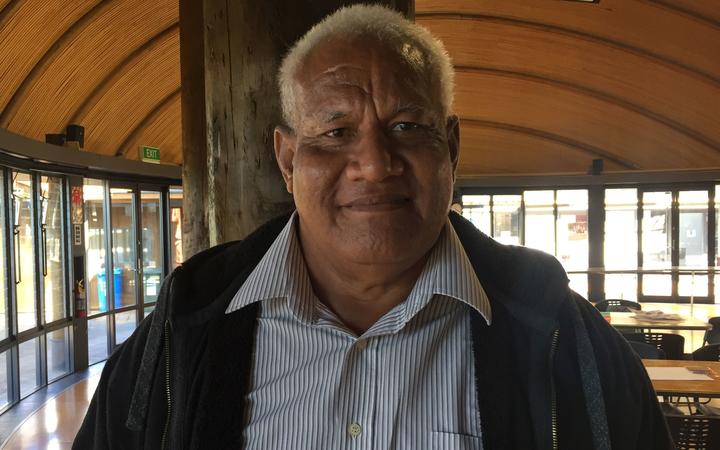
In Tuvalu, where the country’s first human rights institution was set up only late last year, the Chief Ombudsman Sa’aga Talu Teafa said they were still figuring out the best approach. “It’s very young, we call it very young. That’s why we are here to learn and to know what other institutions or what other human rights defenders are doing regarding human rights implementation,” he said.

It’s the same in Samoa, where recently the Ombudsman’s office, finding no data on violence, had to come up with its own to produce a report.

Tuvalu Chief Ombudsman, Sa'aga Talu Teafahome.

Tuvalu Chief Ombudsman, Sa’aga Talu Teafahome. Photo: RNZ Pacific / Mackenzie Smith

New Zealand Human Rights Commission’s Pasifika advisor Tuiloma Lina-Jodi Vaine Samu said the Pacific had a history of resistance to human rights monitoring because of faith-based systems. “Our religions, our faiths, our churches, are very, very important to us. But so are our traditional, cultural, ancestral beliefs as well,” she said. “At hui like this we are able to come together, fono, and talk about these issues, these mindsets, so that we can advance human rights forward.”

https://www.newsie.co.nz/news/160079-nz-funds-human-rights-monitoring-pacific.html