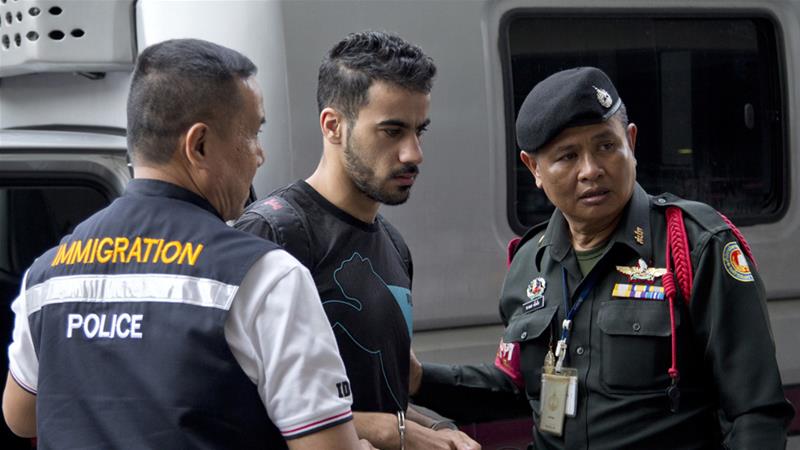
That international’s pressure can have a good result – sometimes – is shown in today’s court order in Thailand to release Bahraini refugee footballer Hakeem al-Araibi. Bahrain dropped the extradition request, said the prosecutor working on the case.
Araibi fled Bahrain in 2014 and subsequently received refugee status in Australia [Gemunu Amarasinghe/AP]
Monday’s decision comes after the 25-year-old footballer Hakeem al-Araibi was jailed for weeks in Bangkok’s Klong Prem Remand Prison. Bahrain wanted him returned to serve a 10-year prison sentence he received in absentia in 2014 for an arson attack that damaged a police station. Al-Araibi denied those charges. See also Craig Foster, Australian footballer and …human rights defender!
Al-Araibi, who fled Bahrain in 2014 and received refugee status in Australia, was arrested in November at a Bangkok airport while on his honeymoon following an Interpol notice issued at Bahrain’s request.
Australian Prime Minister Scott Morisson, meanwhile, praised the decision and said al-Araibi was on his way to the airport, where he should arrive in 12 hours from now.
“This is a huge victory for the human rights movement in Bahrain, Thailand and Australia, and even the whole world,” said Sayed Ahmed Alwadaei, director of advocacy of the Bahrain Institute for Rights and Democracy. “Let’s continue the fight to release all political prisoners who languish in Bahrain’s prisons.”
Now the regime of SaudiArabia hopes that it can buy its way to a better image with hosting sport events and Amnesty International has warned sports stars not to become a propaganda tool. Saudi Arabia said it has hired the former England captain, David Beckham, to lead an exhibition team against his former Real Madrid teammate Zinedine Zidane. The game, to be held later this year, is part of a £60-billion re-launch of the entertainment industry in Saudi Arabia, called the National Transformation Programme. According to an article in the Sun, it would earn Beckham an estimated £1million. [Beckham also has a lifetime endorsement deal worth £120million with Adidas which I think doesn’t sit well with Adidas’ claimed stance in favor of human rights – see e.g. https://humanrightsdefenders.blog/2018/12/13/first-time-major-companies-say-that-human-rights-defenders-are-essential-for-profitable-business/].
Announcing the match in front of big screen images of the football legends, Saudi sports minister Turki Al-Sheikh said: “This is an exhibition match including two big worldwide stars – Zinedine Zidane and David Beckham playing against each other…If God wills, you will see it this year in the Kingdom of Saudi Arabia.”
The UN children’s aid group UNICEF, for whom Beckham is a goodwill ambassador, has criticised the Saudi-led coalition saying its bombing attacks there have had catastrophic consequences for the local population. Saudi Arabia has detained more than a dozen women’s rights activists such as Loujain al-Hathloul who once appeared in a Vanity Fair. Loujain’s sister, Alia, has criticised US singer Mariah Carey for playing a concert on Thursday at the King Abdullah Economic City. She said: “My own baby sister said she is being whipped, beaten, electrocuted and harassed on a frequent basis.” She stated: “Remember, thanks to my sister @LoujainHathloul, you r able to perform in Saudi Arabia. I wish she can attend your concert. But she’s locked behind bars because she tried to improve women’s condition. Don’t forget to thank her on stage,” she wrote to Carey on Twitter. [but Mariah Carey is an old hand when it comes to selling her soul: see e.g. https://humanrightsdefenders.blog/2013/12/19/mariah-carey-needs-better-informed-staff-and-donate-her-1-million-fee-to-human-rights-defenders-in-angola/].
How difficult if not impossible it is to try and separate sports and politics can be illustrated by the recent case of soccer player, Hakeem al-Araibi, a Bahrain-born soccer player for a team in Australia has been held in detention in Thailand [see https://humanrightsdefenders.blog/2019/01/02/craig-foster-australian-footballer-and-human-rights-defender/]. Hannah Beech in the NYT on 31 January 2019 puts the question “Can Big Global Sports Come Around to Human Rights Advocacy?“
Hakeem al-Araibi, center, a former member of Bahrain’s national soccer team who has refugee status in Australia, at court in Bangkok in December.CreditCreditAthit Perawongmetha/Reuters
The global sports market is worth hundreds of billions of dollars a year. Now, this powerful industry is coming together to promote an unlikely cause: human rights. Since late November, a Bahrain-born soccer player for a minor team in Australia has been held in detention in Thailand. The player, Hakeem al-Araibi, 24, is not a famous athlete. He has no lucrative sponsors. But he has spoken out against one of the most powerful men in international soccer, who is also a member of the ruling family of Bahrain. His testimony of torture at the hands of Bahrain’s repressive government earned him refugee status in Australia, which determined that he faced credible threats of persecution should he return to the Gulf state. Still, over the past week, Mr. Araibi has collected an impressive list of supporters in the world of international sports.
Fatma Samoura, the secretary general of FIFA, has called for Thailand to return him to Australia “as a matter of urgency.”
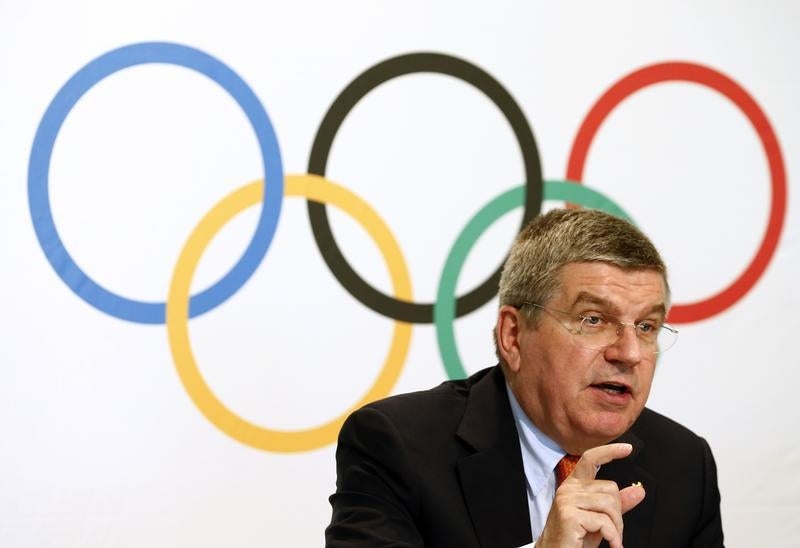
Thomas Bach, the head of the International Olympic Committee, raised the issue with the United Nations High Commissioner for Refugees.
Praful Patel, of the Asian Football Confederation, issued a statement asking the Prime Minister of Thailand to ensure Mr. Araibi’s return to his adopted home.
[By the way, the head of the Asian Football Confederation is Sheikh Salman bin Ebrahim al-Khalifa, the Bahraini official whom Mr. Araibi accused of not stopping the persecution of athletes in his charge. Sheikh Salman also serves as a FIFA vice president.!]
Mary Harvey, the chief executive of the Center for Sports and Human Rights, said: “Hakeem is a historic test case, because it’s the first time that we’ve seen these big, powerful sports bodies all come together publicly to address the fate of a single person”. [see also: https://humanrightsdefenders.blog/2018/12/12/mary-harvey-her-goal-is-now-human-rights/]. The court ordered al-Araibi, who is in the Bangkok Remand Prison, to appear before it at 8.30am on Monday to answer whether or not he is willing to be extradited, lawyer Bergman said.
The third annual Sporting Chance Forum brought together some 300 delegates from a broad range of stakeholders to drive progress toward a world of sport that fully respects human rights. Representatives of affected groups, sports bodies, governments, trade unions, sponsors, NGOs, broadcasters, NHRIs, and intergovernmental organisations gathered in Paris at UNESCO under the backdrop of the 70th anniversary of the Universal Declaration of Human Rights. Reports follow in early 2019.Hosted this year by the new Centre for Sport and Human Rights, UNESCO and Institute for Human Rights and Business, the Forum covered a diversity of geographies and issues including a special spotlight on survivors of sexual abuse, athletes’ rights, worker safety, fan monitoring, media freedom, child rights, and community wellbeing.
There was also a special session dedicated to Human Rights of Defenders, Activists, and Journalists with the following speakers:
Lene Wendland (Chief, Human Rights and Economic and Social Issues Section, Office of the UN High Commissioner for Human Rights)
Maryam Shojaei (Founder, My Fundamental Right)
Andreas Graf (Human Rights Manager, FIFA)
Courtney Radsch (Advocacy Director, Committee to Protect Journalists)
Moderated by: Piara Powar (Executive Director, FARE Network)
FIFA was one of the participants and reported as follows on its upcoming participation: FIFA is actively supporting the development of the Centre for Sport and Human Rights and we are glad to participate at the Sporting Chance Forum to share our experiences and best practices, and learn from stakeholders and other experts that are also dedicated to promoting human rights in sport. Since 2016, FIFA has strengthened and systematised its human rights work following guidance from the UN Guiding Principles on Business and Human Rights. Examples include:
Inclusion of an article on human rights in the FIFA Statutes in 2016 (see article 3)
Development of a Human Rights Policy in 2017 in accordance with principle 16 of the UN Guiding Principles on Business and Human Rights and international best practice
Systematic human rights due diligence checks and integration of human rights in the bidding and hosting requirements for its tournaments
Set up of an independent Human Rights Advisory Board which provides FIFA with independent expert advice on its efforts to implement article 3 of its statutes, with members from the UN system, NGOs, trade unions, FIFA sponsors and other relevant organisations, as well as regular consultation and cooperation with a large number of additional stakeholders.
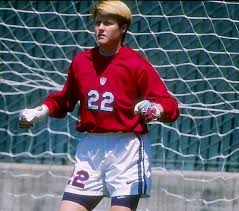
Sports writer Rob Harris wrote on 11 December 2018 in the News Tribune “Mary Harvey goes from soccer champ to human rights leader“. It concerns the parcours of Mary Harveya football player now becoming head of the Centre for Sport and Human Rights.
As goalkeeper she helped the U.S. team win the Women’s World Cup in 1991 and the Olympic soccer title five years later. “As a women’s national team, we didn’t set out to have wide scale impact, but we did,” Harvey recalled in an interview with The Associated Press and.. “that’s what I wanted my life to be about: the ability to impact others in a positive way.” Moving back to the USA she will head the Centre for Sport and Human Rights, hoping to make compliance on labor and discrimination issues central to whether a country can host a major event. After starting her career as a consultant in the private sector, Harvey led development work at FIFA from 2003-08, helping formulate a human rights strategy [see: https://humanrightsdefenders.blog/tag/fifa-human-rights-advisory-board/].
“The language of human rights it not certainly the language of sport,” Harvey said. “So I went through that personally and learned it… and so I think the center has an opportunity to provide that.” FIFA serves on the Centre for Sport and Human Rights’ advisory board among 41 organizations across sports, along with sponsors such as Coca-Cola and Visa. “In the future if people are bidding and they’re less than aggressive with what they want to do on the human right side, with maybe a smart box-ticking exercise,” Harvey said. “There should be accountability for that.”
Afghan authorities suspended the head of the soccer federation and other officials this month after media revelations of allegations of sexual and physical abuse of female players. Harvey hopes the Centre for Sport and Human Rights can be an outlet for athletes, officials or workers around sport to report wrongdoing and have their safety protected. “Human rights defenders are targets,” Harvey said.
“We can’t operate with any sort of fear of what we say or do and how that affects funding,” Harvey said by telephone. “We have to be able to operate independently and provide a free service.” The center was launched in June [see: [see: https://humanrightsdefenders.blog/2018/06/27/new-global-center-for-sport-and-human-rights-created-to-address-abuses/] and is chaired by former Irish President Mary Robinson, who has also served as UN High Commissioner for Human Rights.
“We need to bring human rights more centrally into sport and make people involved in sport realize that they have to take responsibility and they have to work on many issues at so many different levels from the big stadiums to discrimination or racism or trafficking,” Robinson told the AP.
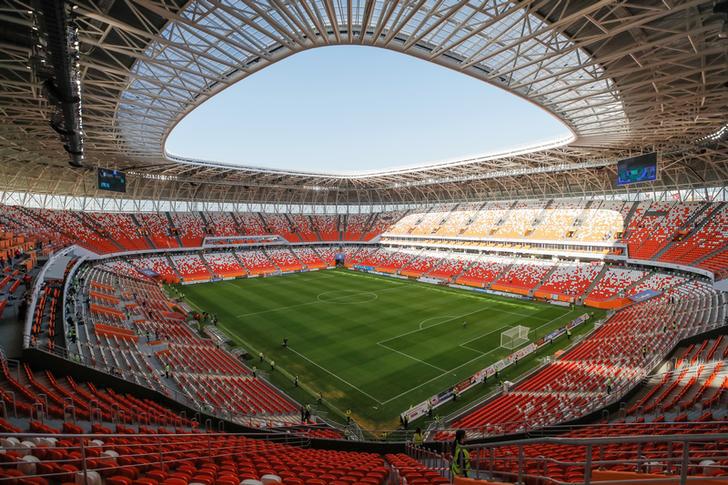
The report covered the period from October 2017 to September 2018, and while it highlights progress it also shows soccer’s governing body still has a lot of work to do. The advisory board only began its work in March 2017, and described human rights as “still in the relatively early stages of being embedded in FIFA’s culture,” acknowledging that past decisions and contracts make it hard to deal with human rights issues. That can be seen by the large number of recommendations involving the Russia 2018 World Cup and the Qatar 2022 World Cup.
Of the advisory board’s six recommendations for Qatar 2022, FIFA still has work to do in two areas: using its leverage to try and improve the ‘kafala’ labor system so that it is more in line with workers’ rights, and encouraging companies linked to World Cup-related employment to do more to meet international human rights standards. The focus on World cups misses out on the same issues at the Club World Cup which takes place in the UAE in December 2018.
The human rights advisory board’s existence appears in some respects to be a reaction to the criticism FIFA received over the decision to award Qatar the right to host the 2022 World Cup, but the World Cup is far bigger than just the stadiums, and ..FIFA’s narrow focus on stadium workers means it misses the chance to create a long-term positive World Cup legacy in regards to human rights.
The report highlighted that FIFA “needs to invest in a sustainable approach” to human rights rather than just provide superficial fixes. Improvements that are made when issues are in the spotlight are often fluid and can be rolled back once the world’s attention swings to another issue.
One issue that the advisory board brought up, and which will be addressed in more detail in the next report, is how women in Iran have been banned from attending men’s soccer matches.
Steve Price on whose article in Forbes this piece is largely based concludes: “The use of soccer as soft power means that FIFA has human rights responsibilities, whether the organisation likes it or not. That FIFA is beginning to acknowledge these responsibilities is a good thing, but FIFA needs to be in it for the long haul, not just as a reaction to the backlash over Qatar 2022. Towards the end of the report, there is a sentence that reads “FIFA has decided to renew the mandate of the Human Rights Advisory Board for another two years until the end of 2020.” For FIFA to really tackle human rights issues, it will need to commit to them for longer than that.”
On 25 June 2018 a new Center for Sport and Human Rights was established to curb human rights abuses tied to sports and assist victims. The Geneva-based center will also address abuses linked to mega-sporting events such as the Olympics and the World Cup, under way now in Russia [see also: https://humanrightsdefenders.blog/2018/06/07/the-bravest-world-cup-team-in-russia-fifa-human-rights-defenders/]. The center was established under the auspices of the Institute for Human Rights and Business (IHRB), and is chaired by Mary Robinson, the former president of Ireland and former United Nations high commissioner for human rights.
“Major sporting events have been marred by jailing and harassment of journalists, abuses of workers’ rights, environmental destruction, and abusive sweeps of poor neighborhoods,” said Minky Worden, director of global initiatives at Human Rights Watch. “Sports fans don’t want to sit in a stadium built by exploited, cheated, and abused workers – or worse, a facility that cost lives to construct.”
The Centre for Sport and Human Rights will seek to provide resources for learning and remediation, working to limit and ultimately eradicate the serious human rights violations that often accompany world sporting events. It will seek to increase the accountability of those involved, provide a space for victims to share their stories and seek justice, and help prevent future human rights abuses tied to sports.
The platform is an unprecedented coalition of intergovernmental organizations, governments, sports bodies, athletes, local organizing committees, sponsors, broadcasters, nongovernmental organizations, trade unions, employers, and national human rights institutions that have come together to show that sport has the power to create positive change.
The next World Cup will be hosted by Qatar in 2022. Since December 2010, when Qatar won its bid from FIFA to host the 2022 World Cup, the country has embarked on a massive building spree – restoring or building eight stadiums, hotels, transportation, and other infrastructure. Qatari authorities have said they are spending US$500 million per week on World Cup-related infrastructure projects. It is important for Qatar to respect workers’ rights and to provide remedies for any abuses, Human Rights Watch said. The situation is particularly urgent for workers building the stadiums and other facilities, given the country’s intense heat and humidity. [see also:https://www.ohchr.org/EN/NewsEvents/Pages/DisplayNews.aspx?NewsID=23147&LangID=E]
The Center includes sports organizations like FIFA (The International Federation of Football Association), the International Olympic Committee, UEFA (The Union of European Football Associations), the Commonwealth Games Federation, and other sport institutions seeking to better manage the human rights risks associated with their competitions. It will also include non-governmental watchdogs like Human Rights Watch, Amnesty International, Transparency International, global trade unions, and the UN Office of the High Commissioner for Human Rights.
“Sport has the potential to inspire and celebrate human achievement. So there is no reason one worker should die or one journalist should be jailed to deliver a major sporting event,” Worden of HRW said. “We expect the center to move the ball forward to protect the rights of workers, journalists, athletes, environmentalists, and fans.”
For the first time, the IOC has included explicit reference to the United Nations Guiding Principles on Business and Human Rights (UNGP), which outline the human rights responsibilities of businesses, as well as references to anti-corruption standards. The Guiding Principles explain how commercial enterprises should assess human rights risks, take effective steps to avoid human rights problems, and ensure a remedy for abuses that occur in spite of those efforts.
“This is an important step by the IOC for the future,” said Sharan Burrow, International Trade Union Confederation general secretary. “Implementing the UN Guiding Principles across all major global sporting events could help break the cycle of human rights abuses, and this example from the IOC should be applied to all such events, starting now.”
The SRA’s mission is to ensure that sports bodies and mega-sporting events respect human rights, the environment, and anti-corruption requirements at all stages of the process. “Time after time, Olympic hosts have gotten away with abusing workers building stadiums, and with crushing critics and media who try to report about abuses,” said Minky Worden, director of global initiatives at Human Rights Watch. “The right to host the Olympics needs to come with the responsibility not to abuse basic human rights.”
The revised contract requires host cities to “protect and respect human rights and ensure any violation of human rights is remedied in a manner consistent with international agreements, laws and regulations applicable in the Host Country and in a manner consistent with all internationally-recognized human rights standards and principles, including the United Nations Guiding Principles on Business and Human Rights, applicable in the Host Country.”
“If implemented, the revised Host City Contract will help ensure that Olympic hosts respect ‘human dignity’ as required by the Olympic Charter,” said Brendan Schwab, head of UNI World Athletes. “This should have a ripple effect across all mega-sporting events such as the World Cup, and wherever abuses tied to sport still occur.”
[Key provisions of the revised Olympic Host City Contract include:
13. Respect of the Olympic Charter and promotion of Olympism
13.1. The Host City, the Host NOC and the OCOG undertake to abide by the provisions of the Olympic Charter and the IOC Code of Ethics and agree to conduct their activities related to the organisation of the Games in a manner which promotes and enhances the fundamental principles and values of Olympism, as well as the development of the Olympic Movement.
13.2. Pursuant to their obligations under §13.1, the Host City, the Host NOC and the OCOG shall, in their activities related to the organisation of the Games:
a. prohibit any form of discrimination with regard to a country or a person on grounds of race, colour, sex, sexual orientation, language, religion, political or other opinion, national or social origin, property, birth or other status;
b. protect and respect human rights and ensure any violation of human rights is remedied in a manner consistent with international agreements, laws and regulations applicable in the Host Country and in a manner consistent with all internationally-recognised human rights standards and principles, including the United Nations Guiding Principles on Business and Human Rights, applicable in the Host Country; and
c. refrain from any act involving fraud or corruption, in a manner consistent with any international agreements, laws and regulations applicable in the Host Country and all internationally-recognised anti-corruption standards applicable in the Host Country, including by establishing and maintaining effective reporting and compliance.
13.3. The IOC, through its Coordination Commission referred to in §27, shall establish a reporting mechanism to address the obligations referred to in §13.1 and §13.2 in connection with the activities of the Host City, the Host NOC and the OCOG related to the organisation of the Games.
15. Sustainability and Olympic legacy
15.1. The Host City, the Host NOC and the OCOG undertake to carry out all activities foreseen under the HCC in a manner which embraces sustainable development and contributes to the United Nations’ Sustainable Development Goals.]
Sustainability and diversity: The committee members received an update about FIFA’s concrete measures in the areas of anti-discrimination, environmental protection, social development and sustainability, in particular in the context of the upcoming FIFA World Cups™.
Human rights: In line with FIFA’s commitment towards human rights enshrined in the FIFA Statutes and FIFA’s 2.0 vision, the committee discussed FIFA’s responsibilities in this area, as well as the key aspects of a FIFA human rights policy, which will eventually be submitted to the FIFA Council for approval.
……
Integrity in football: While the Governance Committee does not intervene in sports regulatory matters, it was agreed that it would conduct an analysis of the economic and social dimensions of football regulation that intersect with questions of human rights, transparency and conflicts of interest and that may impact on the integrity of the game and public trust.
……Following the meeting, the chairman set up two working groups to work on the human rights policy and the electoral guidelines, to be coordinated by committee members Justice Navi Pillay (former UN High Commissioner for Human Rights) and Joseph Weiler (Professor at New York University Law School and former President of the European University Institute) respectively.
{The FIFA Governance Committee was set up following the reforms approved by the Extraordinary FIFA Congress in February 2016 and its main role is to deal with, and advise and assist the Council on, all FIFA governance matters.}
Today, Brazilian President Dilma Rousseff and FIFA President Sepp Blatter will officially mark the one-year countdown to the opening of the 2014 World Cup. Read the rest of this entry »