Posts Tagged ‘Egypt’
May 4, 2013
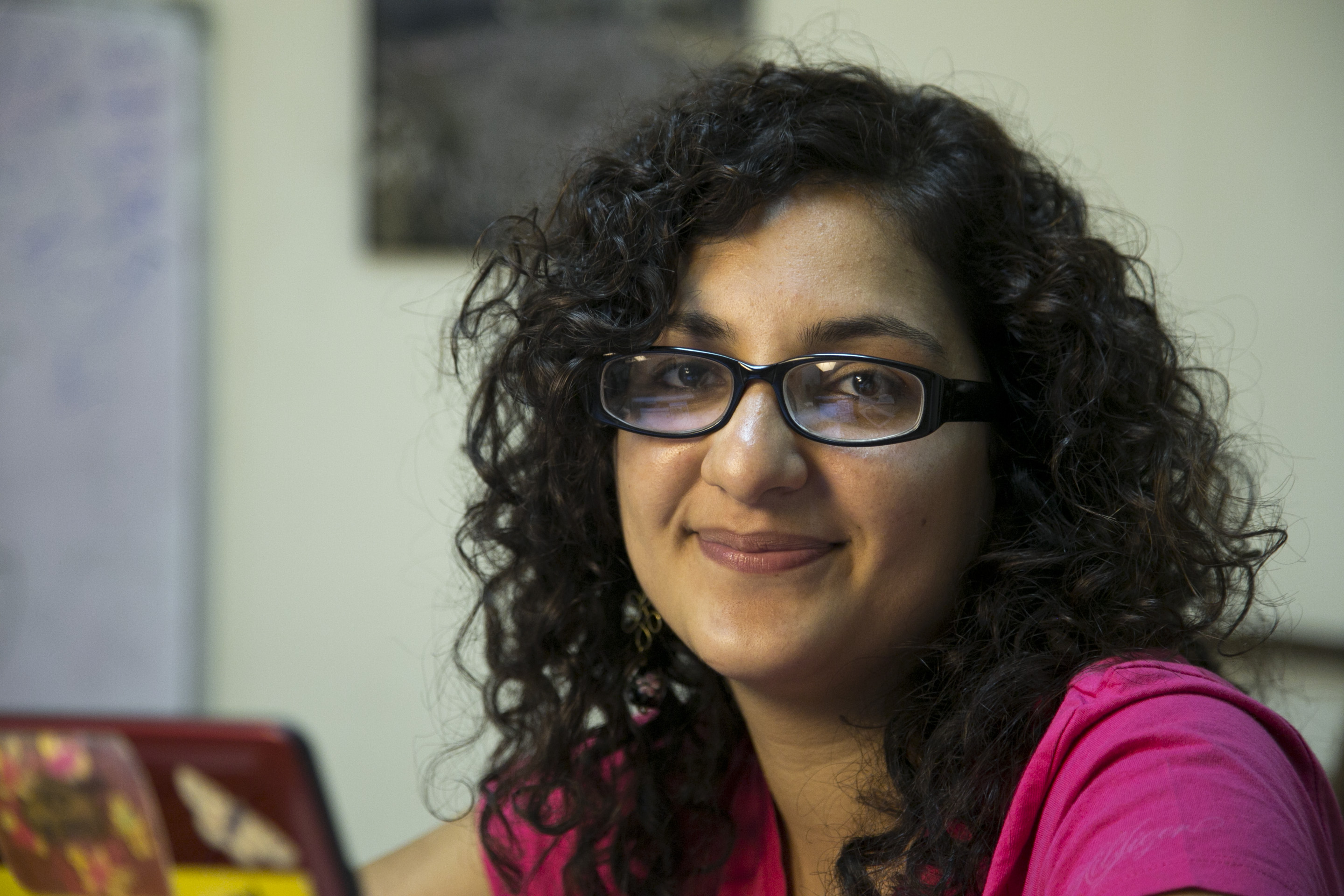
Mona Seif – on of the 2013 MEA nominees – calls on people to campaign for the liberation of Hassan Mustafa, a leading human rights defender in Alexandria, Egypt, who was sentenced 2 years in prison.
Hassan was arrested on 21 January 2013 as he was filing a complaint inside Mansheyya Courts Complex, at the prosecutor general’s office, against the random detention of protesters & children from a protest outside the same Court on the previous day. The protest was taking place during the trial of police officers accused of killing protesters in the 25 January Revolution. He was then falsely accused of attacking a prosecutor causing prosecutors cheeks to turn red (“the prosecutor actually supplied a medical report claiming so !”). Read the rest of this entry »
Posted in human rights, Human Rights Defenders | Leave a Comment »
Tags: Alexandria, Arab spring, Egypt, Front to Defend Egypt Protesters, Hassan Mustafa, human rights, illegal detention, judicial harassment, Martin Ennals Award for Human Rights Defenders, MEA nominees 2013, Mohamed Morsi, Mona Seif, MonaSeif
May 3, 2013
As readers of this blog know I would have readily reported on any developments surrounding the MEA especially since the Final Nominees 2013 were announced recently. A few days ago a controversy arose around the nomination of Mona Seif, the courageous Egyptian human rights defender who was selected because of her campaign against military trials for civilians. UN Watch, an NGO affiliated to the American Jewish Committee, and famous for its strident monitoring of anything that smacks of criticism of Israel, accused Mona Seif of being a terrorist sympathizer on the basis of 3 older tweets in which she strongly defended the right of Palestinians to resist Israeli occupation. The organisation started a twitter campaign to have Mona recalled as nominee.

Mona Seif, Egypt – Final Nominee MEA 2013
The problem is that I am – in a personal capacity – the Chair of the Jury which is composed of ten of the world’s leading human rights NGOs (see list http://www.martinennalsaward.org). I am a non-voting chair whose only role is to facilitate the process and I do not participate in the selection. The board of the Martin Ennals Foundation also has no role in the selection as the Statutes provide for a fully independent Jury. Only the NGOs on the Jury can vote on the recipient of the MEA. Still, I feel that my capacity of Chair of the Jury obliges me to show restraint in speaking out.
Read the rest of this entry »
Posted in HRW, human rights | 1 Comment »
Tags: American Jewish Committee, Egypt, freedom of expression, HRW, Human Rights Defenders, HumanRights, Israel, Israeli–Palestinian conflict, Jury, Martin Ennals, Martin Ennals Award for Human Rights Defenders, MEA nominees 2013, MonaSeif, No To Military Trials for Civilians, Non-governmental organization, Robert Mackay, terrorism, twitter, UN High Commissioner for Human Rights, UN Watch
April 24, 2013
The Martin Ennals Jury just announced today (at 11h00 local time) the three Final Nominees for the Martin Ennals Award 2013. The MEA is the main award of the whole human rights movement thanks to its international Jury composed of 10 well-known human rights organisations (see below). The aim of the award is to provide protective publicity. The Final Nominees are:
Mona Seif, Egypt – Final Nominee MEA 2013
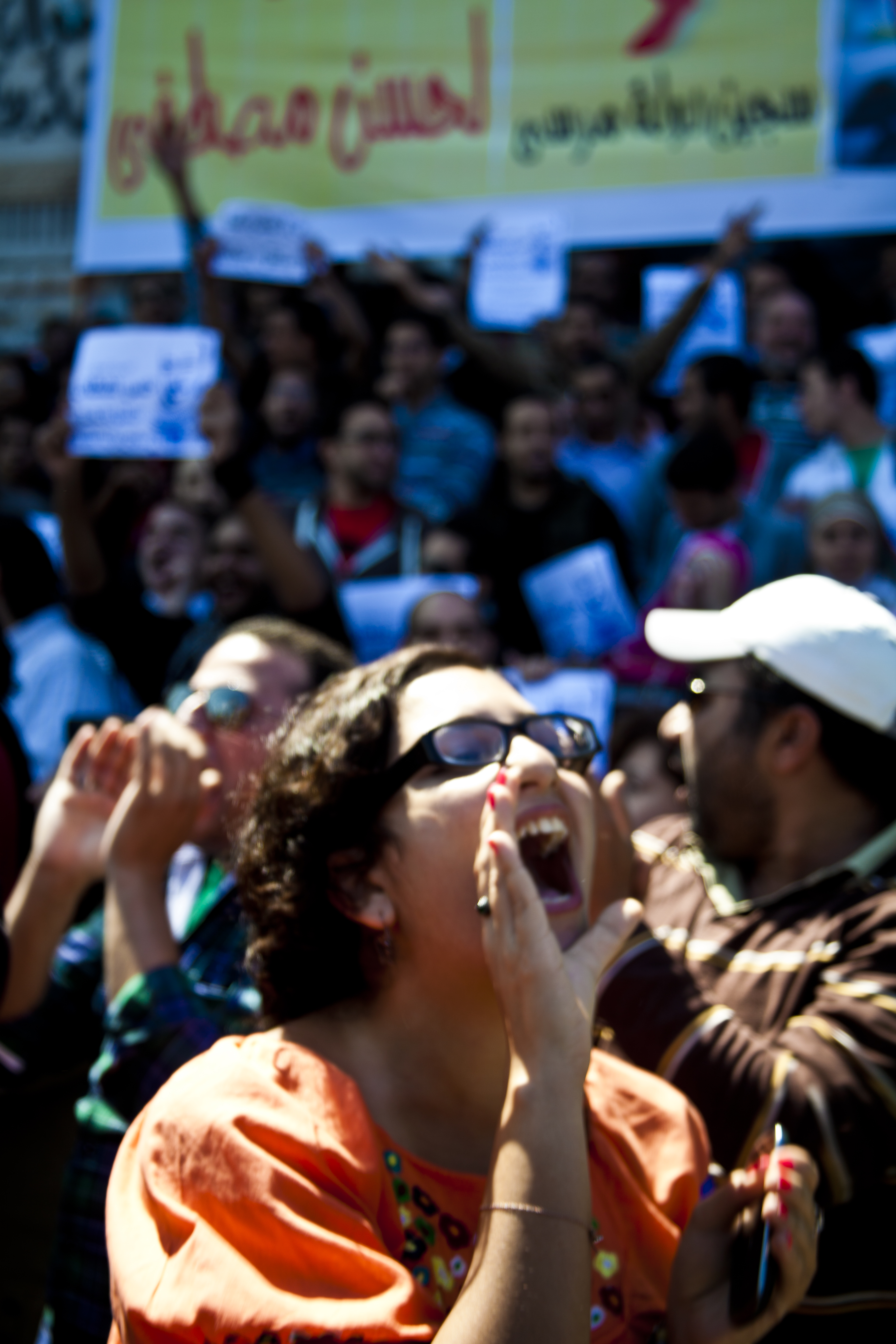
Mona Seif, Egypt: Core founder of the ”No To Military Trials for Civilians”, a grassroots initiative which is trying to stop military trials for civilians. Since February 2011, Mona has brought together activists, lawyers, victims’ families,local stakeholders and started a nationwide movement against military trials. As part of the recent crackdown on the freedom of speech in Egypt she has been charged along with other Human Rights activists. She noted that “International solidarity, and I mean people’s support not governments’, empowers us to continue our battle and stop military trials for civilians“.
Posted in Human Rights Defenders, MEA | 2 Comments »
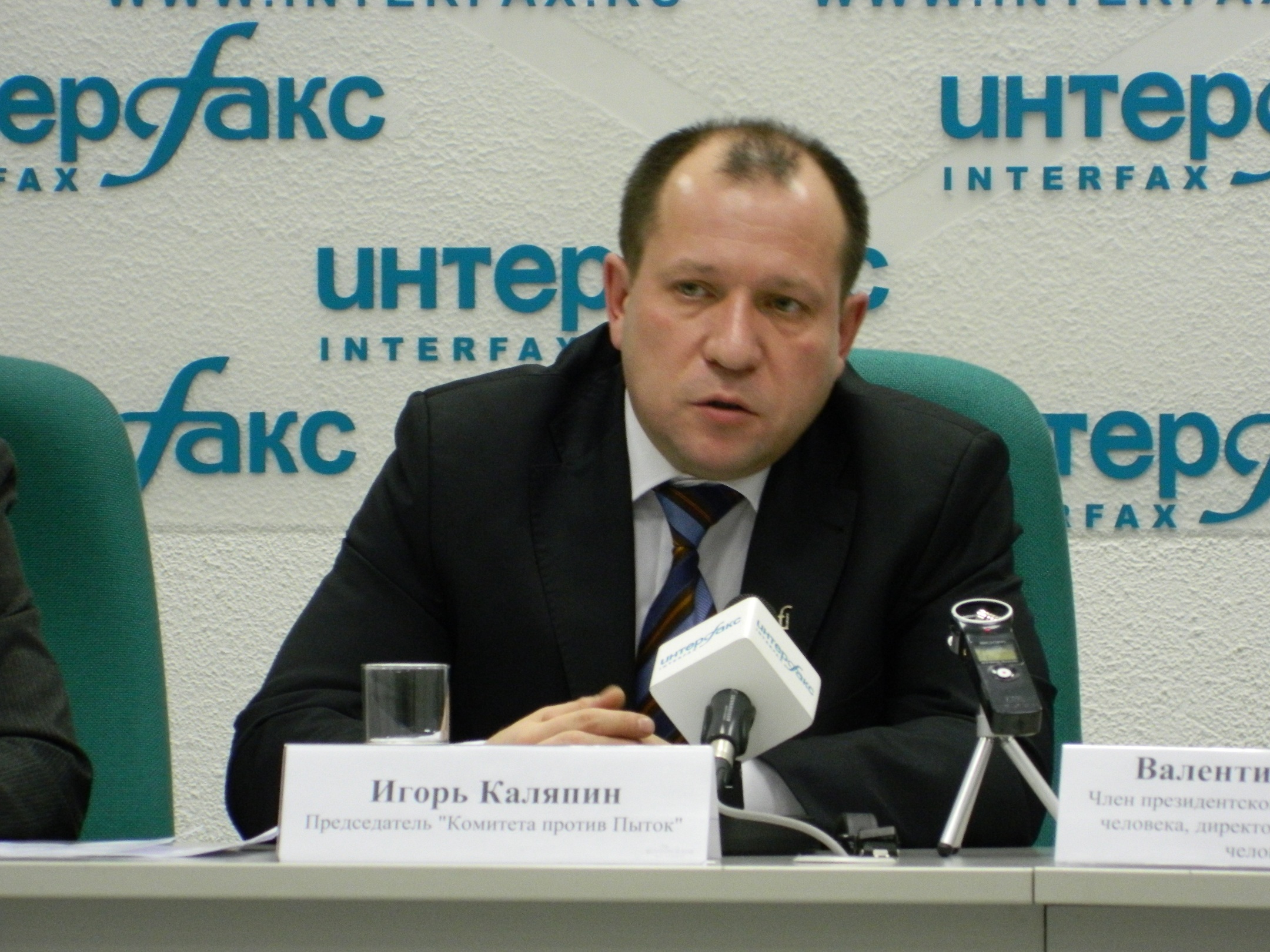
Tags: Arab spring, Chechnya, Egypt, final nominees 2013, Final Nominees for the Martin Ennals Award 2013, Haiti, Human right, human rights awards, Human Rights Defenders, human rights lawyer, Igor Kalyapin, impunity, Jean-Claude Duvalier, Joint Mobile Group, Mario Joseph, Martin Ennals, Martin Ennals Award for Human Rights Defenders, MEA, military trials, Mona Seif, news, No To Military Trials for Civilians, Russia, torture, woman human rights defender
April 15, 2013
The Egyptian Center for Women’s Rights (ECWR) condemns the serious violations that occurred during the demonstrations on the evening of Friday, 29 March 2013. These Friday demonstrations were dubbed “Nobody Threaten Us” by the protesters. Officials cracked down on these protests and both male and female lawyers were assaulted inside the detention rooms, where thirteen lawyers and activists were detained in the El-Raml police station in Alexandria. Some of the female lawyers were sexually abused. It is worth mentioning that – according to statements by the detainees lawyers – the security forces and some Muslim Brotherhood personnel attacked them and beat them severely. They were tortured and dragged to the detention rooms. Two of the female lawyers were sexually abused
[As the 2010 Egyptian Legal practitioners’ law states as follows: Article 51: You cannot interrogate a lawyer or search his office without a permit from the public prosecutor. The public prosecutor should inform the lawyers syndicate and should give them enough notice before starting the interrogation. If a lawyer is accused of something related to his work, the head of the syndicate should attend the interrogation himself, or send a lawyer. The syndicate has the right to request a copy of the interrogation without paying any fees. Article 54: Anyone who has assaulted a lawyer verbally or non-verbally, or threatens him during his work, will receive the same punishment given to anyone who commits the same offense against a judge. ]
ECWR condemns these unprecedented violations, which it considers a continuation of the systematic crimes supported or tolerated by the current regime. Therefore, ECWR demands an immediate investigation and calls for accountability from the officials responsible
via ECWR Condemns the attack on Lawyers, Human Rights’ Defenders and Activists and Demands Accountability / Library / Home – AWID.
Posted in human rights, Human Rights Defenders | Leave a Comment »
Tags: Alexandria, ECWR, Egypt, female lawyers, freedom to demonstrate, Friday, human rights, Independence of Lawyers, lawyer, Middle East, Muslim Brotherhood, sexual abuse, Violence against women, Women's rights
March 16, 2013
I reported earlier that on 28 February the International Federation for Human Rights (FIDH) and the World Organisation Against Torture (OMCT), in the framework of their joint programme the Observatory for the Protection of Human Rights Defenders, organised a meeting on (legal) restrictions increasingly imposed on human rights defenders. This was followed up on 11 March with an oral intervention at the UN Human Rights Council. 

The statement referred to the recently published Annual Report 2013 of the Observatory, which states that NGOs’ access to funding, in particular foreign funding, is increasingly being hindered by governments around the world. Restrictive laws combined with unfounded criticism, smear campaigns and judicial harassment directed against human rights defenders because of the source of their funding create a hostile environment towards their activities as a way to silence them. Belarusian law now prohibits any possibility for an NGO to hold a bank account in an institution based abroad, and criminalises the use of so-called unauthorised funds. These new provisions were adopted as FIDH Vice-President and “Viasna” President Ales Bialiatski was sentenced to 4.5 years’ imprisonment after he made use of foreign funds to finance human rights activities in his country. Read the rest of this entry »
Posted in FIDH, human rights, OMCT | 3 Comments »
Tags: Bahrain, Bangladesh, Belarus, Egypt, Ethiopia, FIDH, funding, Geneva, Human right, human rights, Human rights defender, Human Rights Defenders, India, International Federation for Human Rights, judicial harassment, legal restrictions, Non-governmental organization, Observatory for the Protection of HRDs, OMCT, Russia, United Nations, United Nations Human Rights Council, World Organisation Against Torture
March 15, 2013

(@SAIDYOUSIF)
The Cairo Institute for Human Rights Studies (CIHRS) presented an oral intervention before the Human Rights Council on 12 March, 2013, in which it expressed its concerns over the continued deterioration in the situation of human rights in Egypt since President Mohamed Morsi took power. The oral intervention was based on the assessment of members of the Egyptian NGO Forum, a collective of 23 independent human rights organizations in Egypt, on the situation of human rights in Egypt during the first 8 months of Morsi’s presidency. It asserted that three major rights-related crises have been seen over this period: undermining of the independence of the judiciary, violations to the right to free expression and media freedoms, and violations to the right to assembly and peaceful protest. http://www.cihrs.org/?p=6159&lang=en
In addition, CIHRS organized a side event at the HRC, on 11 March, featuring representatives of the Egyptian NGO Forum, including Mohammed Zaree, director of the Egypt Roadmap Program at CIHRS, Masa Amir, researcher at Nazra for Feminist Studies, and Nihad Abboud, from the Association for Freedom of Thought and Expression. The event was chaired by Ziad Abdel Tawab, deputy director of the Cairo Institute for Human Rights Studies. He expressed concern for an independent civil society in Egypt, referring to recent attempts by the current government to put in place unprecedented restrictions on the funding and activities of non-governmental organizations.
Next, Nihad Abboud drew attention to the violations which have been committed against journalists and photographers as examples of the threats to freedom of expression and of opinion in Egypt. Ms. Abboud further pointed out that the right to freedom of expression is particularly targeted in the context of the right to protest. She spoke about draft legislation to regulate demonstrations, stating that the draft law contains many restrictions on the right to free assembly by allowing the authorities broad powers to ban or restrict demonstrations. ..Perhaps most worrying is that the new constitution includes provisions which restrict on the right to free assembly for the first time in Egypt. Masa Amir turned to the precarious situation of women human rights defenders in Egypt, reminding the audience of the specific targeting of women through virginity tests and other violations by the Supreme Council of the Armed Forces. The side event was concluded with the call that the international community should reassess its engagement with Egypt, in order to avoid replicating the mistakes of the past, including support for dictatorships which blatantly violate human rights.

As if to demonstrate the precarious situation of HRDs in Egypt Front Line Defenders reports that the Egyptian Human rights defender Hassan Mustafa sentenced to two years imprisonment on 12 March by the Mansheya Misdemeanour Court in Alexandria on charges of allegedly assaulting a member of Alexandria Prosecution Office. Numerous supporters of the human rights defender gathered in front of the Courthouse at the time of the hearing to protest against his trial and demand his release. Hassan Mustafa is a well-known human rights defender in Alexandria who has defended the rights of detainees and campaigned on issues such as police brutality and economic rights. According to Hassan Mustafa’s lawyer, the Court heard only two out of fifteen testimonies, of witnesses who denied that he assaulted the Prosecution Office member.
http://www.frontlinedefenders.org/node/22008
Posted in human rights | 1 Comment »
Tags: Alexandria, Cairo Institute for Human Rights Studies, CIHRS, Democracy, Egypt, freedom of expression, Front Line Defenders, Hassan Mustafa, Human right, human rights, Human rights defender, Human Rights Defenders, human rights organizations, Middle East, Mohamed Morsi, side event, Supreme Council of the Armed Forces, UN Human Rights Council
March 5, 2013

Margaret Sekaggya (UN Photo/Jean-Marc Ferré)
Margaret Sekaggya, UN Special Rapporteur on the situation of human rights defenders, presented her report to the Human Rights Council in Geneva. She said inter alia that the response of law enforcement authorities in Tunisia to violations against human rights defenders appears ‘unsatisfactory’ and that the lack of independence of the judiciary is also a cause for concern. “I am concerned about the considerable polarization I observed in Tunisian society between secularists and Islamists, including so-called Salafists, a divide which also transpires to civil society. All stakeholders, including the international community, should work together to ensure dialogue, understanding and respect between different parts of society.”
Ms Sekaggya also told the Human Rights Council that she’s particularly concerned about the way human rights defenders are treated in countries in the Gulf region, especially in Bahrain, Saudi Arabia and the United Arab Emirates. And on recent developments in Egypt she said that the considerable violence suffered by peaceful protesters, including gender-based violence against women human rights defenders, points to a situation that is getting out of hand.
To hear the radio interview of 1’32″ by Nicki Chadwick of UN Radio in Geneva go to http://www.unmultimedia.org/radio/english/2013/03/human-rights-defenders-more-at-risk-in-tunisia-since-the-revolution/ and press LISTEN.
For the full report of the Special Rapporteur in PDF: http://www.ohchr.org/Documents/HRBodies/HRCouncil/RegularSession/Session22/A.HRC.22.47_en.pdf
Posted in human rights, Human Rights Defenders, UN | Leave a Comment »
Tags: Bahrain, Egypt, Geneva, Human right, human rights, Human Rights Council, Human rights defender, Human Rights Defenders, Margaret Sekaggya, Middle East, protection, radio, Saudi Arabia, Tunisia, UN Radio, UN Rapporteur on the situation of human rights defenders, United Arab Emirate
February 24, 2013
 A move by Egyptian authorities to prohibit national NGOs’ contact with foreign organizations without prior permission from security bodies represents a new low for freedom of association, said Amnesty International. In a letter to an NGO (Egyptian Organization for Human Rights) Egypt’s Ministry of Social Affairs stated that no “local entity” is permitted to engage with “international entities” in any way without the permission of the “security bodies”, referring to instructions issued by the Prime Minister.
Read the rest of this entry »
Posted in AI, human rights, Human Rights Defenders | 1 Comment »
Tags: AI, Amnesty International, Arab spring, Egypt, Egyptian Organization for Human Rights, freedom of association, Human right, human rights, Middle East, Non-governmental organization, Politics of Egypt, restrictions
January 7, 2013
Ragab Saad, a researcher at the Rowaq Arabi Journal of the Cairo Institute for Human Rights Studies (CIHRS) just published an sharp piece criticizing the latest developments at Egypt’s National Council for Human Rights, which make the Council a lot less independent and cast doubt on whether it should be recognized as such by the UN. Good read!
The National Council for Human Rights, Lacking Human Rights Defenders | Cairo Institute for Human Rights Studies.
Posted in human rights | Leave a Comment »
Tags: Arab spring, Cairo Institute for Human Rights, Egypt, Human Rights Defenders, National Council for Human Rights, Paris Principles, Ragab Saad
July 2, 2012
The Women Human Rights Defenders (WHRD) program is issuing a series of concept papers that aim to introduce the notion of WHRDs: who they are, what they do, and why they should be considered as a distinct group of human rights defenders. The categories of WHRDs analyzed in the concept papers include: vocational women (doctors, nurses, and teachers); students; political candidates; civil society activists; protesters; and workers (industrial and agrarian sectors). The focus on WHRDs dos not aim at setting WHRDs as a separate category, but to highlight the risks and challenges they face because of their gender so as to develop responsive strategies.
The concept papers emphasized the fact that although the activities that the latter categories of women engage in in the defense of human rights vary, they are all targeted for who they are and what they do. In the case of workers such as Amal al-Saed, for example, she was beaten and sexually harassed, stripped of her headscarf and jacket, as a punishment for protesting against the administration of the Gazl and Nasseg factory at al-Mahalla factory. In cases in which violations are not gendered, they have gendered consequences. In the example of female workers, Wedad al-Demerdash testifies to an incident in which a female worker involved in the negotiations with Hussein Megawer, president of the Egyptian Federation of Trade Unions, was forced to quit her job by her husband.
The concept papers do not only shed light on the nature of violations faced by WHRDs, but also the ways in which they challenge norms that forbid their human rights defense. In the case of university students, for example, Kholoud Sabir, Professor at Cairo University College of Arts, testifies to a sit-in in which female students resorted to excluding themselves from the rest of the sit-inners and read Quran. Reading the Quran publicly was an attempt at showcasing their belief that, although they are spending the night outside their homes, they are still “respectable”, religious women who deserve respect, not admonition.
The Papers thus offer a bird eye view of the situation of WHRDs in Egypt as a whole, what kinds of violations they face, the ideas upon which such violations are based on, and the ways that WHRDs attempt to fight back, not just the violations, but also cultural norms that dictate what is acceptable of WHRDs as women.
source: Women Human Rights Defenders Concept Papers | Nazra for Feminist Studies.
Posted in human rights | Leave a Comment »
Tags: Egypt, Nazra, WHRD, Women Human Rights, women human rights defenders



 Hans Thoolen on Human Rights Defenders and their awards