Posts Tagged ‘Egypt’

2017 was a grim year for imprisoned technologists

December 29, 2017
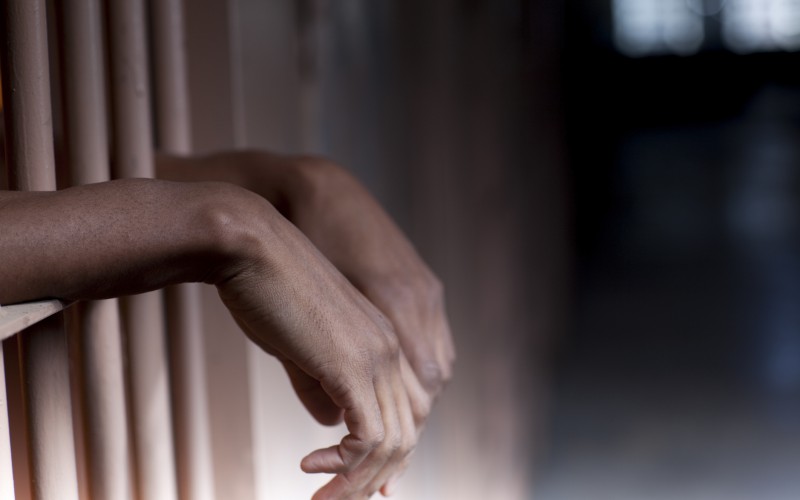
Prison Hands

Since its founding, EFF has highlighted and defended cases of injustice and fearmongering perpetrated against innocent technologists. We advocate for unjustly imprisoned technologists and bloggers with our Offline project. In 2017, we continue to see fear being whipped up against those who oppose oppression with modern tools—as well as those who have done nothing more than teach and share technology so that we can all use and understand it better:

Dmitry Bogatov, software developer and math lecturer at Moscow’s Finance and Law University. Bogatov ran a volunteer Tor relay, allowing people around the world to protect their identities as they used the Internet. It was one part of his numerous acts of high-tech public service, which include co-maintaining Xmonad and other Haskell software for the Debian project. For his generosity, Bogatov has now spent over a hundred days in pretrial detention, wrongfully accused of posting extremist materials that were allegedly sent via through Tor server. Law enforcement officials around the world understand that data that appears to originate from a particular Tor machine is, in fact, traffic from its anonymised users. But that didn’t stop Bogatov’s prosecutors in Russia from accusing him of sending the data himself, under a pseudonym, to foment riots—and added new charges of “inciting terrorism” when a judge suggested the earlier charge was too weak to hold Bogatov in pre-trial detention.

Ahmed Mansoor, of the United Arab Emirates. Mansoor has been a tireless voice for victims of human rights abuses in the United Arab Emirates. In 2011, amidst the Arab uprisings, he was one of five Emirati citizens to be sentenced to prison for his social media postings. That case provoked international condemnation, and the group was soon pardoned. Mansoor was subsequently targeted with sophisticated government spyware on his iPhone; he recognised and passed on the malware link to experts, which led to the discovery of three previously unknown vulnerabilities in Apple’s iOS. In April, Mansoor was seized by the UAE authorities again. On the day of his arrest, the UAE’s official news agency saying that he had been arrested on the orders of the Public Prosecution for Cybercrimes and accused of using social media to promote sectarianism and hate, among other charges. Mansoor’s family did not hear from him for two weeks, and he has been denied access to a lawyer. Just a year ago, Apple was able to roll out a security fix to their users because of Mansoor’s swift, transparent, and selfless actions. Millions of people are safer because of Ahmed’s actions, even as his family fears for his own physical and mental safety. [https://humanrightsdefenders.blog/2017/03/28/ahmed-mansoor-under-arrest-emirates-under-pressure/]

Alaa abd el-Fattah ran Linux installfests across the Middle-East and was a key online voice in the Egyptian uprising. Since then he has been jailed, in turn, by the democratically elected Islamist President Mohammed Morsi, and then when Morsi was overthrown in a coup, by incoming President Abdel Fattah El-Sisi. Alaa’s appeal against a five year prison sentence for protesting—widely seen as a means to silence him on social media—was refused in November of this year. Amnesty and the UN Working Group on Arbitrary Detention have both condemned Alaa’s continuing imprisonment.

Another long-term case is that of Saeed Malekpour, who has been in jail in Iran since 2008. Malekpour returned from Canada to visit his sick Iranian father in October of that year, at a time when the Iranian Revolutionary Guard was starting to target technologists and Internet experts. As an open source coder, Malekpour had written a free front-end image management utility for websites. The Guard found this software on a Farsi pornography site, and used it to as a pretext to seize Malekpour from the streets of Tehran, charge him with running the web site, and sentencing him to death. Malekpour’s death sentence has been anulled twice following international pressure, but a change of government in his home country of Canada risked reducing the level of support for Malekpour. A campaign to encourage the new Trudeau administration to continue to advocate for Malekpour, even as Canada seeks to normalize relations with Iran, seems to be working. One of Malekpour’s advocates, former Liberal MP Irwin Cotler, has said that the Canadian government is now working on the case. The continuing monitoring of Malekpour’s life sentence is a small consolation, but better than the alternative.

Peter Steudtner and Ali Gharavi travel the world, teaching and advising Internet users on how to improve their privacy and digital security online (Ali was an advisor for EFF’s Surveillance Self-Defence project). The two were arrested in a raid by Turkish police on a digital security workshop in July in Istanbul, along with Amnesty Turkeys’ director, Idil Eser, and eight other human rights defenders. The two technology consultants have been accused of aiding terrorists, despite the long history of both as peaceful advocates for secure online practices. After months of detention, concentrated diplomatic and public pressure led to both being released to join their families in Germany and Sweden. We’re delighted that they are free, but their unjust prosecution—and that of their Turkish colleagues—continues in the Turkish courts. 

Bassel Khartabil, the Syrian free culture advocate. Before his arrest and torture in 2012, Bassel was the driving force behind countless projects to turn technology for the public good in his country. He founded a hackerspace in Damascus, translated Creative Commons into a Middle Eastern context, and built out Wikipedia and Mozilla for his fellow Syrians. Bassel’s generosity brought him notability and respect. His prominence and visibility as a voice outside the divided political power-bases of Syria made him an early target when the Syrian civil war became violent. Bassel was killed by the Syrian government in 2015, shortly after he was removed from a civilian prison and sent into the invisibility of Syria’s hidden security complexes.


https://personalliberty.com/grim-year-imprisoned-technologists-2017-review/
Franco-German Prize for Human Rights and the Rule of Law awarded for second time

December 7, 2017
On 4 December 2017 the winners of the 2017 Franco-German Prize for Human Rights and the Rule of Law were announced. At the Franco-German Council of Ministers in April 2016, Germany and France announced the launch of an annual international Franco-German Prize for Human Rights and the Rule of Law. [see: https://humanrightsdefenders.blog/2016/12/05/surprise-announcement-of-a-franco-german-human-rights-prize/].

All prize winners will receive a diploma and a medal designed by artist Anna Martha Napp that was chosen by a Franco-German jury. The medal symbolises their active commitment to the defence of human rights.

For more on this and other awards, see: http://trueheroesfilms.org/thedigest/awards/franco-german-prize-for-human-rights-and-the-rule-of-law

Here is a list of the 15 prize winners:


Know more:

Write for Rights again in December 2017

December 4, 2017

Every December, Amnesty International supporters across the globe write millions of letters and take actions for people whose human rights are under attack, in what has become the world’s biggest human rights campaign. Last year at least 4.6 million actions were taken. “For 15 years Write for Rights has given people hope in their darkest moments. Imagine being ill in jail and receiving thousands of letters of support and solidarity; or finding out that people all over the world are behind you in your quest for justice for a murdered relative. Writing letters really can change lives,” said Salil Shetty, Amnesty International’s Secretary General. For last year’s see: https://humanrightsdefenders.blog/2016/11/04/time-for-the-annual-write-for-rights-campaign/

This year Amnesty International is writing to, among others:

  • The Bangladeshi Home Minister, calling on him to bring the killers of Xulhaz Mannan to justice, without recourse to the death penalty. Xulhaz, a founder of Bangladesh’s only LGBTI magazine, was in his apartment with a colleague when men wielding machetes burst in and hacked them to death in April 2016. Despite ample evidence, the killers have yet to be charged.
  • The Prime Minister of Jamaica, telling him to protect Shackelia Jackson, who has been fighting for justice for her brother Nakiea since he was killed by police in 2014, and has refused to be silenced by police intimidation.  In the past decade around 2,000 men, usually young and poor, have been killed by police in Jamaica.
  • The Prime Minister of Israel, telling him to drop all charges against Farid al Atrash and Issa Amro, Palestinian human rights defenders, who want an end to illegal Israeli settlements on Palestinian land. They brave constant attacks by soldiers and settlers, and are facing ludicrous charges after they joined a peaceful protest march.


This year, these 10 people and groups urgently need your support:

Xulhaz Mannan

Xulhaz was a founder of Bangladesh’s only LGBTI magazine, a daring venture in a country where same-sex relations are illegal. He was in his apartment with a colleague when men wielding machetes burst in and hacked them to death. Despite ample evidence, including CCTV footage and eyewitness testimony, one year on the killers have yet to be charged for this brutal murder.

Mahadine

Tadjadine Mahamat Babouri, commonly known as Mahadine, is an online activist from Chad. In September 2016 he posted videos on Facebook criticizing the Chadian government. Within days, he was snatched off the streets, and beaten and chained up for several weeks. He faces a life sentence and is also gravely ill, having caught tuberculosis in prison.

Ni Yulan

A former lawyer, Ni Yulan has supported scores of people forced from their homes by lucrative construction projects. She has braved almost 20 years of violent harassment for defending housing rights, and has been monitored, arrested and repeatedly evicted by the authorities. She was once beaten so badly in detention that she now uses a wheelchair. Ni Yulan continues to help people stand up for their rights

Hanan Badr el-Din

Hanan Badr el Din’s life changed forever when her husband disappeared in July 2013. She last saw him on television, wounded and at a hospital after attending a protest. Hanan’s relentless search for him led her to others whose loved ones were taken by the Egyptian security forces. Now a leading voice exposing Egypt’s hundreds of disappeared, her latest search for information about her husband has seen her arrested on false charges which could result in five years in prison.

Sakris Kupila

Sakris Kupila, a 21-year-old medical student from Finland, has never identified as a woman. Yet he has to endure daily discrimination because his identity documents say he is female – the gender he was assigned at birth. To legally reassign your gender in Finland, you must be diagnosed with a “mental disorder” and sterilised. Sakris opposes this humiliating treatment. And despite threats and open hostility, he continues to demand a change to the law.

MILPAH Indigenous Movement

For the Indigenous Lenca people in Honduras, the land is their life. But huge hydroelectric, mining and other interests are out to exploit that land. MILPAH, the Independent Lenca Indigenous Movement of La Paz, is at the forefront of the struggle against them. They brave smear campaigns, death threats and physical assault to protect their environment, yet their attackers are rarely brought to justice.

Farid and Issa

Farid al-Atrash and Issa Amro are two Palestinian activists who demand an end to Israeli settlements – a war crime stemming from Israel’s 50-year occupation of Palestinian land. Dedicated to non-violence, the two activists brave constant threats and attacks by soldiers and settlers. In February 2016, Issa and Farid marched peacefully against settlements and the Israeli occupation. As a result, they face ludicrous charges apparently designed to obstruct their human rights work.

Shackelia Jackson

Shackelia Jackson will not give up. When her brother, Nakiea, was gunned down by police, she took on Jamaica’s sluggish court system to lead a bold fight for justice for his murder. In doing so, she rallied dozens of families whose loved ones were similarly killed. In response, the police have repeatedly raided and harassed her community. But Shackelia will not be silenced.

Clovis Razafimalala

Clovis is doing everything he can to protect Madagascar’s vanishing rainforest. Its rosewood trees are a precious resource under threat from a network of smugglers, bent on selling them off in what has become a billion dollar illegal trade. Clovis’ efforts to save this rare ruby-coloured tree have brought him unwanted attention. He has been convicted on false charges and could be jailed at any moment

Turkey

Right now, 11 people who have dedicated their lives to defending the human rights of journalists, activists and other dissenting voices in Turkey are themselves in danger. Among them are Amnesty International’s Director, İdil Eser, and its chair, Taner Kılıç, who remains in prison after five months. All are on trial for ‘terrorism’-related crimes, an absurd charge and face a jail sentence of up to 15 years.

Amnesty International’s Brave campaign calls on governments around the world to protect human rights defenders.

https://www.amnesty.org/en/latest/news/2017/11/amnesty-launches-worlds-biggest-human-rights-campaign/

Helen Hunt joins list of celebrities that show insensitivity on human rights

November 10, 2017

Celebrity support for human rights can do much good but there are still too many who simply do not study the issue before accepting. [see: https://humanrightsdefenders.blog/2014/02/28/and-the-nominees-are-oscars-for-human-rights/]. Two days ago Brian Rohan of Associated Press, reported that actress Helen Hunt just added her name to the list of ignoramuses (“Egyptian activists pan US actress Helen Hunt in open letter”  – 7 November, 2017).

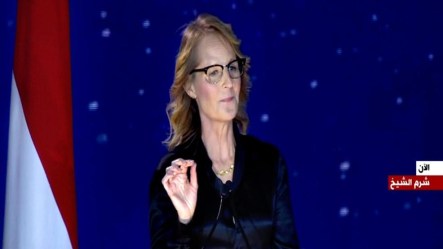
5  November 2017: image taken from video, showing actress Helen Hunt speaking during a government-organized youth conference in the Red Sea resort of Sharm el-Sheikh, Egypt. (AP Photo /CAPITAL BROADCAST CENTER)
Egyptian activists condemned American actress Helen Hunt on Tuesday for her participation in a government-organized youth conference they say is whitewashing authorities’ appalling human rights record and suppression of free speech. The open letter by Mona Seif and other well-known human rights advocates gained nearly 300 signatures by Tuesday afternoon. They included Mohamed Zaree, who last month won the Martin Ennals Award, and Aida Seif el-Dawla, whose Nadeem Center treats victims of torture and trauma and was shuttered by the government earlier this year.

The letter follows a flurry of online criticism against this week’s “World Youth Forum,” hosted under the patronage of President Abdel-Fattah el-Sissi, 62, in the Red Sea resort of Sharm el-Sheikh. Hunt, 54, was a keynote speaker at the opening ceremony. The event’s official Twitter hashtag #WeNeedToTalk has become a battleground for opposing viewpoints, with critics overwhelming the thread with images of Egyptian police beating and chasing down youths during el-Sissi’s rule alongside portraits of young jailed activists.

“This isn’t just any forum that you chose to endorse,” the letter to Hunt read. “This is a youth forum with the slogan ‘We Need To Talk’ called for by a dictator who cannot stand any form of opposition or real criticism. He jails journalists for doing their jobs, youth for expressing their opinions, writers for writing fiction that violates ‘public morality,’ gays for coming out, supporters of LGBTQ for daring to support diversity, and he has blocked more than 400 different websites and media platforms.

Human rights defenders and their organizations such as Human Rights Watch and Amnesty International have documented enforced disappearances, widespread torture and a recent arrest campaign targeting people authorities believe are gay. The authorities have blocked hundreds of independent news and critical websites.[see also: https://humanrightsdefenders.blog/tag/egypt/]

The forum, which lasts until Nov. 10, has been broadcast nearly all day long on state and private television since its opening ceremony Sunday night. It has been widely promoted with slick television ads in Egypt, where several major Western PR firms advise and work for the government. A giant billboard hovers over Cairo’s Tahrir Square, epicenter of the youth-led 2011 uprising.

Hunt, an Academy Award-winning actress who now directs films, delivered a speech Sunday in which she criticized the U.S. justice system for its high incarceration rates and voiced support for the online anti-sexual harassment movement #MeToo. That, however, did not deflect criticism from Seif and other Egyptian feminists. “Unbelievable Hypocrisy! @Helenhunt speaks of “Women Rights” in a PR circus for a general who justified forced virginity tests,” Seif tweeted, referring to the military’s “virginity tests” conducted on a group of women protesters detained in 2011. El-Sissi, who was the chief of military intelligence at the time, was quoted then as saying the tests were necessary to head off possible allegations that the women were sexually assaulted by soldiers.

Others accused Hunt, the most famous Western celebrity at the event, of selling out to el-Sissi, pointing out a string of websites that advertise her as a for-hire speaker with fees between $50,000 to $1 million. Hunt did not respond to a social media request to discuss her efforts in Egypt.

http://ktul.com/news/entertainment/egyptian-activists-pan-us-actress-helen-hunt-in-open-letter

https://egyptianstreets.com/2017/11/08/egyptian-rights-activists-slam-us-actress-helen-hunt-in-open-letter/

Egyptian human rights defender, Doaa Hassan, speaks about disappearances

October 31, 2017

On 30 October 2017 the International Service for Human Rights (ISHR) published this testimony by Doaa Hassan, the criminal justice programme director at the Egyptian Commission for Rights and Justice. Doaa is particularly focusing on enforced disappearances which several members of the organisation have been victims of.

For other post on Egypt see: https://humanrightsdefenders.blog/tag/egypt/

breaking news: Egyptian defender Mohammed Zaree laureate of the Martin Ennals Award 2017

October 10, 2017

Martin Ennals Award for Human Rights Defenders

The Jury of the Martin Ennals Award for Human Rights Defenders, the highest accolade in the international human rights moment, has just announced that Mohamed Zaree, a human rights lawyer from Egypt, has been selected as the 2017 Laureate. The announcement was made on 10 October at 18h30, during the annual ceremony in Geneva. You can still follow it through live streaming at this very moment: via: https://www.facebook.com/villegeneve.ch/.

Mohamed Zaree is a human rights activist and legal scholar whose work focuses on human rights advocacy around freedom of expression and association. He is also known for his role as the Egypt Country Director of the Cairo Institute for Human Rights Studies (CIHRS), which works throughout the Arabic speaking world. He assumed this role after government pressure on CIHRS prompted them to relocate their headquarters to Tunis in 2014.

The Egyptian government has been escalating its pressure on the human rights movement. Human rights NGOs and defenders are confronted with a growing wave of threats, harassment, and intimidation, legal and otherwise. Despite this, Zaree continues to lead CIHRS’ research, human rights education, and national advocacy initiatives in Egypt and is shaping the media debate on human rights issues. During this critical period for civil society, he is also leading the Forum of Independent Egyptian Human Rights NGOs, a network aiming to unify human rights groups in advocacy. Zaree’s initiatives have helped NGOs to develop common approaches to human rights issues in Egypt. Within the context of the renewed crackdown on Egyptian human rights organizations, he has become a leading figure in Egypt’s human rights movement. Zaree is currently facing investigation under the “Foreign Funding Case” and is at high risk of prosecution and life imprisonment. The “Foreign Funding Case” highly restricts NGO activities. Despite this, Zaree continues to engage the authorities in dialogue wherever possible, arguing that respect for human rights will increase stability in Egypt. Zaree has been under a travel ban since May 2016.

Martin Ennals Foundation Chair Dick Oosting stated: “Severe restriction of civil society’s space to express itself is what led Mohamed Zaree to advocate for human rights and fight for the freedom of association. He is still paying the price for his courageous acts, and we urge his government to lift the travel ban.”

The unique composition of the Jury of the MEA [a coöperation by 10 global human rights organizations, see www.martinennalsaward.org for more detail] makes this award the most important prize in the human rights world. It is supported by the City of Geneva.

The two other finalists also received Martin Ennals prizes:

Karla Avelar (El Salvador)

FreeThe5KH (Cambodia)                                                            

For more on the award see also: https://humanrightsdefenders.blog/2017/09/18/ceremony-of-the-24th-martin-ennals-award-coming-up-on-10-october.  and

http://www.trueheroesfilms.org/thedigest/awards/martin-ennals-award-for-human-rights-defenders

Reprisals at the UN: more calls for action – no action

June 23, 2017
“The UN and States must take visible and sustained action against acts of intimidation and reprisal against those engaging or seeking to engage with the UN“, says the International Service for Human Rights (ISHR) in two reports issued on 22 June 2017.  Unfortunately, the NGO community (the main victims of the practice of reprisals) finds it difficult to come up with new ideas on how counter the trend while States continue to block the participation and input by human rights defenders. [ see: https://humanrightsdefenders.blog/2014/03/13/zero-tolerance-for-states-that-take-reprisals-against-hrds-lets-up-the-ante/and https://humanrightsdefenders.blog/tag/reprisals/]

ISHR’s latest report to the UN Secretary-General demonstrates again the need for the UN and States to act to prevent and ensure accountability for intimidation and reprisals against those cooperating or seeking to cooperate with the UN, and lays out a series of recommendations in that regard. The report documents a disturbing pattern of reprisals against human rights defenders seeking to cooperate with the UN. It includes alleged cases of travel bans in Bahrain in the context of the Universal Period Review this May; disappearances and detention of defenders and lawyers, as well as intimidation of their families in China; and restrictions imposed on NGOs in Egypt.The report welcomes recent positive steps such as the appointment of Assistant Secretary General Andrew Gilmour as the first high-level official on reprisals against those cooperating with the UN on human rights, but highlights that more needs to be done. ‘In the overwhelming majority of cases, steps taken by the State to prevent, investigate or ensure accountability for reprisals have been inadequate or non-existent, and in many States there has been a high-level of impunity’ said ISHR’s Programme Coordinator and Legal Counsel, Tess McEvoy. [see also: https://humanrightsdefenders.blog/2016/10/05/assistant-secretary-general-andrew-gilmour-appointed-as-the-uns-focal-point-to-combat-reprisals-against-human-rights-defenders/]

The primary duty to prevent and remedy reprisals lies with States. However the UN itself also has a duty to step up. ‘Where States fail to adequately investigate and ensure accountability in relation to credible allegations of intimidation and reprisals, the UN should ensure an international, independent investigation into the case‘, said McEvoy. In the report ISHR called on UN bodies to take a more proactive role in combating reprisals and intimidation, and among other things, urged:

  • The Human Rights Council President and Bureau to clearly outlines steps the Council will take on receipt of information about credible risks of reprisals.
  • Treaty bodies to fully adopt and implement the San Jose guidelines.
  • The Assistant Secretary-General to ensure that rights holders and victims are kept regularly appraised of the status of their case.


    On the same day ISHR published a statement to the 35th session of the Human Rights Council, ISHR calling for a stronger focus on the implementation of Universal Periodic Review recommendations and the development of processes to ensure civil society can freely engage without fear of intimidation and reprisal. ‘Civil society is not only necessary for developing recommendations, but is essential for the working towards the implementation of these recommendations. The role of civil society must therefore be protected and enhanced’, said ISHR.

    While recommendations received are often accepted at ‘Geneva level’, implementation of these recommendations on the ground remains patchy. Item 6 on the agenda of the UN Human Rights Council provides a opportunity for dialogue on implementation.

    Alleged cases of intimidation and reprisals of human rights defenders engaging or seeking to engage in the UPR have escalated. ISHR received reports of cases in Egypt, India and Venezuela in the past year. Ongoing reprisals in Bahrain  are particularly concerning, including the imposition of travel bans on 27 defenders during the 27th UPR pre-session – including Sayed Hadi Al Musawi – as well as the interrogation of Abtisam Alsayegh in relation to her UN engagement. ISHR’s statement reiterated calls for States to ask advance questions, and make recommendations about the prevention, investigation, prosecution and remediation of reprisals.

    ‘Reprisals against human rights defenders for their engagement with the UPR remain worryingly prevalent,’ said McEvoy. Given civil socity’s fundamental role in the UPR, we call on the President, Bureau and Secretariat to establish an institutionalised reprisals mechanism to prevent, investigate, remedy and promote accountability for reprisals associated with the UPR’, McEvoy continued. These calls form part of ISHR’s broader strategy to strengthen the UPR  which can be accessed here. Contact: Tess McEvoy, Programme Coordinator and Legal Counsel, and focal point for ISHR’s UPR advocacy, on: t.mcevoy@ishr.ch.

    http://www.ishr.ch/news/report-sg-un-and-states-must-do-more-prevent-and-ensure-accountability-reprisals-0

Breaking news: three Human Rights Defenders selected as Finalists for the 2017 Martin Ennals Award.

April 26, 2017

Today, 26 April 2017, the Martin Ennals Foundation announced that the following 3 human rights defenders have been selected as the Finalists for the  2017 Martin Ennals Award. This award is considered to be the main of award of the whole international human rights movement as the Jury (see below) is composed of leading human rights NGOs.

FreeThe5KH (Cambodia)

FreeThe5KH are five Human Rights Defenders who have been in pre-trial detention for almost one year. This is linked to their work with the Cambodian Human Rights and Development Association (ADHOC). International bodies like the UN Working Group on Arbitrary Detention and UN Special Rapporteurs have repeatedly called for their immediate and unconditional release, and a stop to judicial harassment of human rights defenders in Cambodia based on their legitimate human rights work. This comes in the context of an increasingly severe crackdown on civil society and the political opposition in Cambodia.

On behalf of the Khmer Five, Thun Saray, President of (ADHOC) comments: “It is an immense honour for the five HRDs to be selected as finalists. 28 April will mark their one year in arbitrary detention on the basis of their legitimate human rights work. The increased attacks against HRDs and activists has had a tremendous impact on those working to promote and protect human rights in Cambodia. This Award is symbol of encouragement for every courageous Cambodian, who continues to speak out against injustices and human rights violations. I would like to express my deepest gratitude to everyone that has supported the nomination.”

Karla Avelar (El Salvador)

Karla Avelar, a transgender woman in El Salvador, grew up on the streets of San Salvador, suffering discrimination, violence, exploitation, and rape. She was imprisoned when she defended herself, and then regularly abused by fellow prisoners with the knowledge and even participation of the prison authorities. These terrible experiences have forged her into a powerful advocate. With three others, she founded COMCAVIS TRANS, which was created to represent, defend, and promote the human rights of LGBTI persons, with a focus on those living with HIV, as she does. She works to change legislation and the authorities’ practices, by holding them publicly to account. Notably her advocacy helped prompt the authorities to segregate LGBTI prisoners for their own safety, and allow for the standard HIV treatments provided by the Ministry of Health.

She said,” I want to thank Martin Ennals, the jury, and those who nominated me for this important award. Although today I am in danger, and sure that my struggle is risky, my eagerness for justice and equity motivates me. I will continue to push the State to accept reforms and legislation proposed by civil society to allow the LGBTI community to fully enjoy their human rights.”

Mohamed Zaree (Egypt)

Mohamed Zaree is the Egypt Country Director for the Cairo Institute for Human Rights Studies (CIHRS), responsible for CIHRS’s legal research, media outreach and national advocacy. CIHRS’s work was influential in the Arab world particularly Egypt, which resulted in death threats to its director. This forced the CIHRS executive director and regional staff to move abroad to continue their work. Mohamed chose to stay and is now banned from travel. He is a legal scholar coordinating research to challenge laws designed to limit NGOs activities working on human rights, such as freedom of expression and assembly. He is widely seen a unifying figure bringing together the human rights community in Egypt to advocate with a common approach.

He stated “Our hopes were high following the Egyptian revolution in 2011; we don’t know how the situation has instead deteriorated to such an extent. Today, we are battling human rights violations that are worse than before 2011, and challenging the normalization and acceptance of these atrocities. Killing almost 1000 citizens in few hours, arresting almost 40,000 others, innocents dying in Egyptian prisons; is not the norm and we will not allow it to become so. We human rights defenders are fighting these abuses at risk of indefinite imprisonment.” 

The Martin Ennals Award for Human Rights Defenders (MEA) is a unique collaboration among ten of the world’s leading human rights organizations to give protection to human rights defenders worldwide. The Jury is composed of the following NGOs:

  • Amnesty International,
  • Human Rights Watch,
  • Human Rights First,
  • FIDH – Int’l Federation for Human Rights,
  • World Organisation Against Torture,
  • Front Line Defenders,
  • International Commission of Jurists,
  • EWDE Germany,
  • International Service for Human Rights,
  • HURIDOCS

The Award will be presented on October 10th 2017 at a ceremony hosted by the City of Geneva.

For further information, please contact: Michael Khambatta +41 79 474 8208 khambatta[at]martinennalsaward.org or visit www.martinennalsaward.org

Right Livelihood has to go to Egypt to hand Mozn Hassan her 2016 award

February 2, 2017

Right Livelihood Award Logo


Egyptian human rights defender Mozn Hassan, who shared the 2016 Right Livelihood Award with her organisation Nazra for Feminist Studies, will receive her award in Cairo on 25-26 March 2017. Hassan was unable to attend the award ceremony in Stockholm on 25 November 2016 due to a travel ban imposed on her by the Egyptian authorities. Since then, the judiciary has initiated a move to freeze Hassan’s and Nazra’s assets, which five UN experts have condemned.

Monika Griefahn, the Foundation’s Board Chair, said: “In a show of solidarity with Hassan and other Egyptian civil society activists who have been prevented from travelling freely abroad, the Foundation will send a high-level delegation to Cairo to present her with the Right Livelihood Award instead.” The delegation will include European Parliamentarians, fellow Laureates and the Foundation’s Board members.

https://humanrightsdefenders.blog/2016/11/10/travel-bans-against-human-rights-defenders-remain-popular-in-the-middle-east/

https://humanrightsdefenders.blog/2016/09/22/right-livelihood-awards-2016-to-syrian-egyptian-russian-and-turkish-human-rights-defenders/

This is also a reminder of the nominations deadline for the 2017 Right Livelihood Award which is 1 March 2017! The Right Livelihood Award accepts proposals from everyone through an open nomination process.

Source: February 2017The Right Livelihood Award

International Day of Women Human Rights Defenders: Agents of change under pressure

December 1, 2016

On 29 November 2006, Women Human Rights Defenders (WHRDs) from around the globe gathered in Colombo, Sri Lanka and declared this day as theirs. November 29th therefore became the International Women Human Rights Defenders Day, and is now celebrated all over the world in recognition of the courageous work that they do to defend their own and other women’s rights.

There are too many activities that could be reported in the context of this anniversary [see earlier posts on WHRDs https://thoolen.wordpress.com/tag/women-human-rights-defenders/] but here a few (seven) links that could have escaped your attention: Read the rest of this entry »