Posts Tagged ‘disbarment’

New study: Lawyers protecting journalists increasingly threatened

November 6, 2024

Emily O’Sullivan, on 28 October 2024, published an elaborate piece for the Global Investigative Journalism Network

Threats against investigative journalists are widely documented. According to UNESCO’s Observatory of Killed Journalists, 1,718 journalists have been killed since 1993. The Committee to Protect Journalists’ latest prison census found the number of jailed journalists hit a near-record high, with 320 reporters behind bars at the time of the count last December. Yet a lesser-known story is the increasing targeting of the lawyers representing them.

“Behind all those cases against journalists who have become household names — like Evan Gershkovich, Maria Ressa, and José Rubén Zamora — there are the often unseen lawyers representing them and taking remarkable risks to defend them,” Carolina Henriquez-Schmitz, director of TrustLaw, said at Trust Conference 2024. “[Lawyers] themselves are becoming the targets of a whole range of attacks.”

In recent years, threats have escalated. Azerbaijani lawyer Elchin Sadigov, and his client, journalist Avaz Zeynalli, were detained in 2022 while officers searched their homes and offices and seized confidential case files. Vo An Don, a Vietnamese human rights lawyer who represented a dissident blogger was disbarred in 2018 and subsequently sought political asylum in the US. Dmitry Talantov, a lawyer who represented Russian investigative journalist Ivan Safronov in 2021, now himself faces up to 15 years in prison on a number of charges.

“It sends an unequivocal message, not just to the individual lawyer, but to the entire legal profession,” Henriquez-Schmitz said. “If you pursue these cases, we will go after you. The potential chilling effect cannot be understated.”

Vo An Don, Vietnamese human rights lawyer,

Human rights lawyer Vo An Don was disbarred and forced to seek political asylum in the US after the Vietnamese government targeted him for representing a dissident blogger. Image: Screenshot, Facebook

The Thomson Reuters Foundation, in partnership with the American Bar Association Center for Human Rights and Media Defence, conducted a first-of-its-kind review of individual cases of harassment or persecution of lawyers defending journalists. The recently published preliminary findings identified over 40 cases of lawyers being targeted in four ways: criminal and other suits; interference with their ability to represent their clients; targeting their ability to practice the profession; and threatened killing, physical harm, forced flight, or exile, and other similar persecution.

“The research has identified cases in Vietnam, Ethiopia, Zimbabwe, Azerbaijan, Iran, Yemen, Tajikistan, Russia, China, and Hong Kong, to name a few. Unsurprisingly, many of these countries also happen to be among the world’s worst jailers of journalists,” Henriquez-Schmitz noted. “The damage greatly reverberates. Without lawyers, journalists are unable to adequately defend themselves against retaliatory charges, and citizens are likely left less informed on matters of public interest.”

José Carlos Zamora, chief communications and impact officer at Exile Content Studio and the son of Guatemalan investigative journalist José Rubén Zamora, joined the Trust Conference panel only a few days after his father’s release to house arrest. Previously, his father had spent more than 800 days in prison on charges of alleged money laundering. The elder Zamora founded elPeriódico, a now-defunct newspaper which specialized in government corruption investigations.

“It’s a great step forward, but it’s not the end of the process,” Zamora said of his father’s transition to house arrest. “These repressive regimes, everywhere from Russia, to the Philippines, to Hong Kong, to Venezuela and Nicaragua, use the same tactics. And you see them copy from each other’s punishments, and one of these tactics is attacking the legal defense. So they go after the lawyers, and the main goal is to leave the journalists defenseless.”

Guatemalan journalist José Rubén Zamora spent more than 800 days in prison on alleged money laundering charges.

Guatemalan journalist José Rubén Zamora, who founded the elPeriódico site that dug into the country’s political corruption, recently spent more than 800 days in prison on alleged money laundering charges. Image: Shutterstock

In all, 10 lawyers represented Zamora, and all of them were persecuted and eventually forced to abandon the case. Many of them did not appear to have access to the case file, and one lawyer, Christian Ulate, had to leave Guatemala after ongoing harassment and intimidation. The lawyers that took over the case after Ulate, Romeo Montoya García and Mario Castañeda, were detained, and Castañeda was sent to a maximum security prison. Lawyers Juan Francisco Solórzano Foppa and Justino Brito Torres were also arrested.

“At that point, the only defense was the public legal defense. There were some great lawyers in the public legal defense, but unfortunately, they are also part of the system,” Zamora explained. “At one point, none of the lawyers could visit him in prison. So everything was done through us. They could rarely talk. The ones that could go did not want to visit him because it was dangerous for them.”In some countries, human rights attorney Caoilfhionn Gallagher said, even the act of talking to an international lawyer can put local lawyers at risk.

María Consuelo Porras has acted as Guatemala’s attorney general since 2018. In 2022, she was barred from entering the US due to involvement in significant corruption, and in 2023 she was named OCCRP’s Person of the Year in Organized Crime and Corruption, for “brutally persecuting honest prosecutors, journalists, and activists,” the group wrote. “Porras and her kind are the new banal faces of evil.”

“[Porras] became the best tool to persecute opposition, critical voices,” Zamora said. “Because they use this special prosecutor’s office that is focused on organized crime […] it allows them to have you in pre-trial detention. That prosecutor’s office was intended to investigate and prosecute the heads of drug cartels and mob bosses. And now they use it to go after journalists.”

Irish-born attorney Caoilfhionn Gallagher specializes in international human rights and civil liberties at Doughty Street Chambers in London. Her cases often involve working closely with domestic lawyers around the world, in order to hold the state to account on the global stage. In some countries, Gallagher said, even the act of talking to an international lawyer can put local lawyers at risk.

“When I deal with cases involving Iran, for example, or Egypt, even engaging with an international lawyer, being privy to a complaint going to the United Nations, could result in [local lawyers] themselves being charged with a whole range of things, including national security-type offenses,” she noted. One particular example she gives of lawyer oppression is the Philippines, where, in total, 63 lawyers were killed during President Rodrigo Duterte’s six-year term, and 22 journalists. “So this is completely a tactic,” Gallagher warned. “You try to leave nobody able to speak truth to power.”

One of Gallagher’s clients is 76-year-old publisher, writer, and prominent pro-democracy campaigner Jimmy Lai. A British national, Lai has been in solitary confinement in a maximum security Hong Kong prison for almost four years, on charges of breaching national security and colluding with foreign forces. His newspaper, Apple Daily — the most popular Chinese language paper in Hong Kong — supported pro-democracy protests in the region. He now faces life imprisonment.

“Being called an enemy of the people, hit pieces in Chinese state media, formal statements from the Chinese and Hong Kong authorities threatening to prosecute us,” Gallagher said, reflecting on the implications of representing Lai. “But as well as that, we get physical threats, rape threats, and dismemberment threats, and it’s targeted in a way which is designed to try to undermine you doing your job.”“We coordinate pro bono for human rights defenders, and what we realized was that standing next to every defender facing criminalization was a lawyer also at risk.” — Ginna Anderson, associate director of the American Bar Association’s Center for Human Rights

On a key day in Lai’s case, Gallagher will wake up to notifications that there has been an attempt to hack her bank account, as well as her personal and professional email addresses. “I will also wake up to a whole series of […] threats, including things relating to my kids,” she continued. “I had a really vile message last week about my teenage daughter, by name, and it’s unpleasant.”

Gallagher says that, despite attacks, she will continue to represent reporters. “You’re rattling the right cages,” she said. “It’s designed to try to stop you doing your job, and for me, it makes me think if they care this much about the lawyers for Jimmy Lai based in London, doing work in Geneva, New York, and Dublin, just think about how much they hate my clients. And to be honest, it makes me more determined to stick with it.”

Associate director of the American Bar Association’s Center for Human Rights, Ginna Anderson, emphasized the lack of current research into the growing threats against lawyers defending journalists, citing it as a driving force behind their work. “We realized no one was really talking about it, and the data wasn’t being collected,” she explained. “We coordinate pro bono for human rights defenders, and what we realized was that standing next to every defender facing criminalization was a lawyer also at risk and asking for none of those resources for themselves.”

While networks often operate to support journalists who are being subjected to physical threats, cyberattacks, and forced exile, Anderson emphasized the ad hoc nature of the support available to lawyers — in part due to the recent escalation in cases. “There’s not one place we go and coordinate,” she said. “It’s a lot of personal relationships and knowing who has capacity, and quite frankly there’s very little capacity in any of these places to really deal with the scale of the problem.”

“Just like journalists don’t want to be part of the story, lawyers don’t, and many other trends are mirrored,” she continued. “One thing that struck me […] was this perception that safety of journalist networks are so much better connected and resourced than anything to support lawyers. That terrified me because I think we all think that there’s not enough being done for the safety of journalists.”

Attacks aren’t restricted to individual lawyers. In Belarus, for example, more than 140 lawyers have lost their licenses since 2020, according to research by Human Rights Watch, the Belarusian Association of Human Rights Lawyers, and the Right to Defence Project. They found a pattern of arbitrary and politically motivated license revocation, occurring for the first time in contemporary Belarusian history.

“Lawyers are often trusted voices, just like some legacy media establishments,” Anderson said. “They’re trusted voices on the rule of law. They’re trusted voices on the Constitution. And when you disparage them and smear them, and in some cases make it criminal for them to talk about these issues, you have silenced one of the most important voices.”

Defending Lawyers Protecting Journalists

As attacks on lawyers rise, the panel reflected on the ways in which those representing journalists can defend themselves. Increasing knowledge of cybersecurity — which may not have previously been a priority for lawyers — is essential, Gallagher said. “In the last number of years working on cases against Saudi Arabia, Iran, and Russia, I’ve been very surprised by [top-ranked multinational law firms] trying to send you something on Google Docs,” she continued. “The media organization and the journalists will have really good protocols, but then when they get into some kind of difficulty, they may instruct an external lawyer who simply doesn’t.”

Law societies and governments also have a responsibility to take such threats more seriously, Gallagher says, reflecting on the case of Pat Finucane, a Northern Irish human rights lawyer who was murdered in his home in 1989. The UK government only announced a public inquiry into his death in 2024, 35 years later. “That is a home example of these issues simply not being taken seriously enough,” she said. “I can tell you basic preventative strategies were simply not implemented here in Britain.”

Another issue is a lack of psychological support for lawyers, Anderson says. “I’ve been surprised how often a conversation about digital security becomes the place where a lawyer may talk about what’s weighing on their mind,” she continued. “[They’re] not saying, ‘I would like to talk about my psychosocial needs’, but they start with a practical need around digital security, and it finds its way into the things that are weighing on them.”

As Zamora reflected on the future for his father, he seemed hopeful. “He’s excited. He’s very happy. He feels like he’s at a spa after spending those 813 days in an isolation cell,” he said. “We are going to continue fighting these processes. They are really spurious charges, and we are going to fight until the end to demonstrate that everything is false.”

While he says that his father’s trial has exposed the worst in humanity, through Guatemala’s political persecution of those standing up for democracy and freedom, Zamora also believes that it has brought out the best in humanity, too. “I feel that’s everybody in this room,” he concluded. “You care about these issues, you are doing the work, and you can continue to do the work to keep these cases alive.”

Explore the Resource Center


Emily O'Sullivan

Emily O’Sullivan is an editorial assistant at GIJN. She has worked as an investigative researcher for BBC Panorama, and an assistant producer for BBC Newsnight. She has an MA in Investigative Journalism from City, University of London.
HRW reports on crackdown on Human Rights Lawyers in Belarus

May 27, 2024

https://www.hrw.org/report/2024/05/27/i-swear-fulfill-duties-defense-lawyer-honestly-and-faithfully/politically#691383337

On 27 May 2024 Human Rights Watch published a major report on the politically motivated crackdown on Human Rights Lawyers in Belarus.

Summary: In August 2020, peaceful protests in Belarus began with hundreds of thousands of people gathering in the streets of Minsk and across Belarus following the contested electoral victory of Aliaksandr Lukashenka, who had already served as president for more than 26 years. Belarusian authorities responded with unprecedented brutality, using excessive force, arbitrarily detaining thousands of peaceful protesters, and subjecting them to ill-treatment and torture in detention before conveyor-belt administrative and criminal trials.

Since then, Belarusian authorities have unrolled widespread and systematic repression of any form of dissent. Government critics have been forced into exile or thrown behind bars on politically motivated charges. The number of political prisoners swelled and at time of publication exceeded 1300, according to Human Rights Center “Viasna,” the prominent Belarusian human rights organization. The term “political prisoner,” for the purpose of this report, includes anyone detained, imprisoned or otherwise deprived of their liberty by Belarusian authorities for peacefully exercising their rights and freedoms or defending human rights and fundamental freedoms.

February 2023 and March 2024 reports of the Office of the UN High Commissioner for Human Rights found that some violations committed by Belarusian authorities in the run-up to the 2020 presidential election and in its aftermath “may amount to crimes against humanity” including the “crime of persecution.” [https://humanrightsdefenders.blog/2023/07/12/state-of-human-rights-in-belarus-called-catastrophic-at-the-un/]

In the face of these grave and widespread rights violations, some lawyers stepped up to represent clients in politically motivated cases. ..This report examines the Lukashenka government’s retribution against lawyers who represent government critics and its nearly complete takeover of the legal profession in Belarus. The authorities have subjected lawyers in politically motivated cases, as well as lawyers who criticize state abuses, to harassment, arbitrary revocation of their licenses, detention and administrative charges, and politically motivated criminal prosecution. Behind bars, lawyers along with other politically-targeted detainees and convicts, experience retaliatory ill-treatment. The authorities have left no space for earnest and efficient discharge of lawyers’ duties in politically motivated cases. At the time of writing, very few lawyers, if any, were willing to take on such cases, which has severely undermined the right to a fair trial, due process, and access to remedy in Belarus.

Belarus: Crackdown on Human Rights Lawyers

The report shows that while governmental crackdown on lawyers in times of political unrest in Belarus is not new, the scale and severity of this wave of repression is unprecedented. For the first time in the history of modern Belarus, lawyers have become political prisoners themselves for their work on behalf of clients.

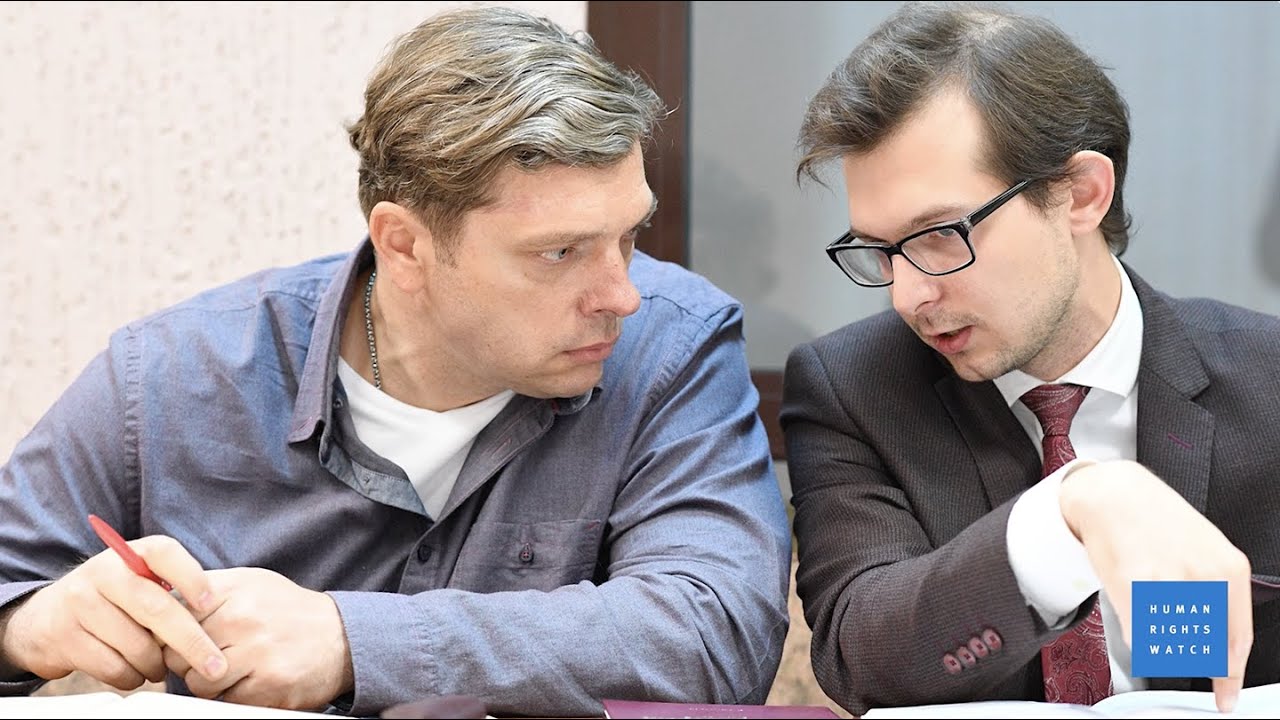
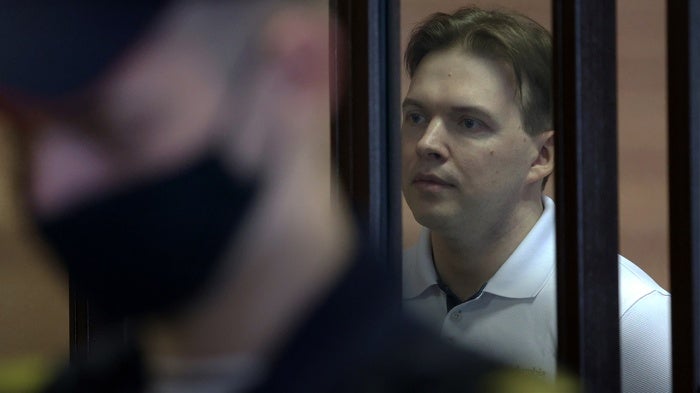
At the time of writing, six lawyers—Maksim Znak, Aliaksandr Danilevich, Vital Brahinets, Anastasiya Lazarenka, Yuliya Yurhilevich, and Aliaksei Barodka—were serving sentences on politically motivated charges ranging from six to ten years. Such charges included providing legal aid to political opposition figures and activists or giving interviews to and sharing information with independent media labelled “extremist” by the authorities. [see https://humanrightsdefenders.blog/2021/09/10/two-lawyers-from-belarus-share-lawyers-for-lawyers-award-2021/]

In addition to politically motivated prosecution, lawyers also have faced politically motivated disbarment. Since 2020, more than 140 lawyers have been disbarred by the regional bar associations or faced arbitrary license revocation by the Justice Ministry following decisions of its Qualification Commission because they supposedly breeched some regulations or were not sufficiently qualified to work as lawyers. These grounds are often easily exposed as flimsy pretexts: on average, those “unqualified” lawyers had more than 13.5 years of experience; many had successfully worked in the legal field for two to three decades, or more, and some of them were previously recognized by bar associations for their excellence…

The report also examines how the Belarusian government has established all-encompassing control over the legal profession in the country by controlling the admission of lawyers into the profession, regulating the way they discharge their duties, and exercising other broad controlling functions including but not limited to revoking lawyers’ licenses and essentially stripping lawyers’ self-governing bodies of independence.

Crackdown on Human Rights Lawyers in Belarus: Maryia Kolesava Hudzilina

In November 2021, a set of amendments into the Law on the Bar and Practice of Law in the Republic of Belarus (Law on the Bar) entered into force, which banned lawyers from working individually or opening law firms, requiring them to join legal consultation offices created and supervised by regional bar associations in coordination with the Justice Ministry. The amendments also significantly expanded the Justice Ministry’s control over the self-governing bodies of the bar and eased the conditions for obtaining a lawyer’s status for ex workers of law enforcement and judiciary….  

The Belarusian Republican Bar Association (BRBA) and regional bar associations generally have failed to represent and protect the rights of their members and withheld support from lawyers facing obstacles in discharging their duties, which in recent years have come to include harassment, arbitrary detention, and criminal prosecution. Moreover, bar association executive bodies have become vehicles for the agenda of state officials, triggering sanctions against and disbarring lawyers deemed undesirable by the authorities. In light of the control exercised by the state over the formation of the Belarusian bar’s executive bodies and their work, these associations cannot be considered genuinely independent self-governing bodies representing the interests of all lawyers in Belarus.

Some lawyers described the current state of the Belarusian justice system and bar as a “total collapse of the legal system” and many felt “disarmed” in the face of systematic and widespread violations of due process, fair trial, and rule of law. Yet, lawyers noted, that it is their duty to discharge their functions to the highest professional standard, notwithstanding the political motivation of their clients’ cases and the unprecedented pressure from the state:

Crackdown on Human Rights Lawyers in Belarus: Uladzimir Pylchanka

Recommendations

To the Belarusian Government

  • Immediately end the systematic detention and prosecution of anyone who peacefully exercises their rights and freedoms, release all political prisoners, provide effective remedies for victims and survivors of human rights abuses, and carry out prompt and impartial investigations into all alleged human rights violations;
  • Immediately end the ill-treatment of prisoners and ensure the protection of their rights and freedoms in confinement, including by ending the pervasive practice of incommunicado detention; grant lawyers and families unhindered access to detainees, and ensure all prisoners receive adequate medical assistance;
  • End all harassment of, attacks on, and interference with lawyers, particularly those representing clients in politically motivated cases and exercising their freedom of expression in line with international standards;
  • Ensure all courts adhere to fair trial standards. Allow lawyers to effectively perform their professional functions in accordance with the guarantees provided for in article 14 of the International Covenant on Civil and Political Rights (ICCPR) and the UN Basic Principles on the Role of Lawyers, including by instructing law enforcement and state agencies on the protected role and function of lawyers;
  • Repeal and amend national legislation to bring domestic law in compliance with international standards to ensure the independence and self-governance of the legal profession in Belarus; 
  • Restore the licenses of all lawyers who have been disbarred or lost their licenses as a result of discharging their professional duties in accordance with international standards or for exercising their freedom of expression (including those lawyers who lost their license over arbitrary and state-controlled procedures at the Justice Ministry’s Qualification Commission);
  • Guarantee the independence of disciplinary proceedings against lawyers, which should be carried out by lawyers’ self-governing bodies in a fair and objective manner;
  • Curtail the Justice Ministry’s authority to interfere with independence of the legal profession, including the ministry’s authority to issue regulations on the work of lawyers, admit them into the profession, revoke licenses, carry out certification procedures, initiate disciplinary proceedings, and shape the selection of executive bodies of bar associations; 
  • Void existing policies undermining the independence of legal profession and ensure separation of the bar from the state, including by abolishing the pervasive practice of forcing lawyers to express support for the government’s agenda and interests;
  • Respect the right to legal assistance, including by removing arbitrary obstacles to lawyers’ access to clients, safeguarding lawyer-client privilege, stopping the practice of making lawyers sign arbitrary and overly broad non-disclosure obligations, and ensuring fair and public trials and full equality of arms in courts of law;
  • Promptly comply with repeated requests by the UN special rapporteur on the human rights situation in Belarus to conduct a country visit.

To the Belarusian Republican Bar Association and Regional Bar Associations

  • Immediately end retaliation against members for carrying out professional duties or legitimately exercising their freedom of expression, and ensure lawyers targeted on such grounds have access to an effective remedy;
  • Repeal internal regulations that undermine the unhindered provision of legal assistance;
  • Advocate resolutely with the Belarusian government in support of the above recommendations and for Belarus’s adherence to international standards on the role of lawyers and the right to a fair trial;
  • Take measures to actively protect the interests of lawyers, defend the right of all accused to an effective defense regardless of the charges, and emphasize that lawyers cannot be identified with or punished for the alleged crimes of their clients;
  • Push back consistently and in principled fashion against the ongoing severe erosion of the bar’s professional autonomy and integrity, and the state’s overarching control of the bar;
  • Encourage regional bar associations to draw up rosters of lawyers to visit prisons to provide free legal advice and assistance to prisoners.
     

To United Nations Member States, Council of Europe, Organization for Security and Co-operation in Europe, and the European Union

  • Refrain from any cooperation with the Belarusian Republican Bar Association and regional bar associations until they become independent self-governing bodies representing the interests of Belarusian lawyers;
  • Call on the government of Belarus and the Belarusian bar to respect the rights of lawyers and to end arbitrary arrests, harassment, retaliation, and attacks against them;
  • Develop and fund programs to support lawyers who have faced retaliation for their professional activities or exercise of freedom of expression and examine ways of integrating Belarusian lawyers in exile into the legal profession in host countries;
  • Recognize Belarusian lawyers who have faced retaliation for their professional activities in defending clients in politically motivated cases as human rights defenders and afford them the requisite protection, including assistance with access to visas, funding and protection in exile and protection from transnational repression;
  • Consider imposing coordinated, targeted sanctions against the Justice Ministry officials and leaders of the Belarusian bar responsible for the systematic and widespread abuses against lawyers working on politically motivated cases and exercising their freedom of expression;
  • Recognize the Belarusian Association of Human Rights Lawyers as a key independent organization of Belarusian lawyers, and support its efforts to promote and protect the human rights of lawyers deprived of their right to exercise their profession in retaliation for discharging their duties and exercising their freedom of expression, and to improve the provision of legal aid in Belarus;
  • Express solidarity with and provide support to Belarusian human rights defenders working to deter politically motivated repression and document cases of grave rights violations for future accountability;
  • Support independent information sources providing independent coverage of events in Belarus and promoting universal human rights principles. 
     

To Bar Associations and Lawyers’ Associations in Europe, Canada, and the US

  • Advocate for the above recommendations, in particular , for Belarusian authorities, and bar, to uphold international human rights standards, ending politically motivated persecution, ensuring independence and guarantees for legal profession.
  • Privately and publicly express concern at the interference of the government in the work of lawyers in Belarus;
  • Support Belarusian lawyers who have experienced or face retaliation for their legitimate professional activities, including by monitoring politically motivated cases against lawyers and, when relevant, providing third party interventions to courts and international agencies;
  • Refrain from any cooperation with the Belarusian Republican Bar Association and regional bar associations until they become independent self-governing bodies representing the interests of Belarusian lawyers.

Human Right Watch wrote to the Belarusian Justice Ministry and the Belarusian Republican Bar Association in April 2024 seeking their response to a summary of the report findings. At the time of writing no response had been received.


https://www.hrw.org/report/2024/05/27/i-swear-fulfill-duties-defense-lawyer-honestly-and-faithfully/politically

Crackdown on Human Rights Lawyers in Belarus continues

October 27, 2021
Gennady Fedunych (left) and Natalia Matskevich (right) at the trial in Minsk, Belarus.
Gennady Fedunych (left) and Natalia Matskevich (right) at the trial in Minsk, Belarus. © Human Rights Center Viasna 2018

Anastasiia Zlobina, Assistant Researcher for Europe and Central Asia at Human Rights Watch reports that on 25 October 2021, the Minsk Bar Association disbarred prominent Belarusian defense lawyer Natalia Matskevich, the latest in a wide-raging and politically motivated crackdown on lawyers.

Matskevich is one of four lawyers who represented Viktar Babaryka, former presidential contender arrested on politically motivated charges in June 2020 in the run-up to the August 9 election. In July 2021, Supreme Court sentenced Babaryka to 14 years in prison for “grand bribery” and “laundering of illicit funds.”

On October 20, the Justice Ministry suspended the license of Evgeni Pylchenka, a lawyer who also represented Babaryka, pending the outcome of a disciplinary case against him. Matskevich’s disbarment and Pylchenka’s suspension came soon after they had filed an appeal in Babaryka’s case. Their colleagues said these sanctions were “absurd” and based on “ridiculous” allegations, including “some [supposedly] incorrectly worded questions to witnesses during trial.” 

In July, days after Babaryka’s verdict, authorities stripped his then-lawyer Dmitry Layevsky of his attorney’s license, citing “inappropriate comments about the work of his colleagues.” Prior to his disbarment, Layevsky had faced pressure from the authorities and the Minsk Bar Association.

In October 2020, the Justice Ministry terminated the license of Aliaksandr Pylchenka, another prominent member of Babaryka’s defense team, over supposed “incompetent comments to mass media”

According to Layevsky, Matskevich and Evgeny Pylchenka became “irreplaceable” in Babaryka’s case due to their detailed knowledge of the voluminous case as well as Babaryka’s trust in them.

Since August 2020, Belarusian authorities have been turning up the pressure on lawyers for publicly speaking out about human rights violations and in defense of clients in politically motivated cases. In addition to the obstruction of their work, lawyers have faced personal harassment such as threats, arbitrary detention, raids, revoked licenses, and administrative and criminal charges.

The Belarusian National Bar Association and its regional bars have continuously failed to protect their members.

At least 27 lawyers have already been banned or suspended in reprisal for speaking out against the recent wave of repressions in Belarus. See also: https://humanrightsdefenders.blog/2021/09/10/two-lawyers-from-belarus-share-lawyers-for-lawyers-award-2021/

In November, new restrictive amendments will enter into force, further increasing the Ministry of Justice’s authority over, and eviscerating the independence of, Belarusian lawyers. The arbitrary suspension and disbarment of Belarusian lawyers doesn’t just rob them of their ability to practice their profession, but undermines their clients’ right to legal counsel, and sends a chilling message of intimidation to their colleagues.

On October 26, the Belarusian human rights community issued a joint statement on their recognising another 12 persons as political prisoners, HRC Viasna reported. As of October 26, there are 833 political prisoners in Belarus on this list.

The updated list includes:

  • Syarhei Prus and Dzmitry Bondarau, who were sentenced under Part 3 of Article 130 of the Criminal Code to 5 years in a penal colony for creating and posting online a video calling for illegal actions against riot police officers of the Mahilioŭ regional department of internal affairs;
  • Dzmitry Sonchyk, who was sentenced under Art. 364 and Art. 369 of the Criminal Code to 5 years of imprisonment in a penal colony for insults and threats to police officers in comments in a Telegram channel in 2020 and 2021;
  • Andrey Razuvayeu , who was sentenced under Article 369 and 295 of the Criminal Code to 4 years in a penal colony for insulting a government official and keeping a small amount of hunting gunpowder;
  • Iryna Melkher, Anton Melkher, Halina Dzerbysh, Syarhei Razanovich, Lyubou Razanovich, Pavel Razanovich, who have been in custody on terrorism charges since early December 2020. According to the human rights defenders, they have not participated in any investigative actions, while the investigation is not formally completed, and the state propaganda resources back in 2020 claimed that the guilt and role of all those involved in the case was ‘established and proven’;
  • former investigator Yauhen Yushkevich. The circumstances of the new accusation of terrorism give grounds to believe that his detention may be arbitrary and related to his public activities, human rights activists stress;
  • Yauhen Buynitski, who was detained on charges under Part 3 of Art. 371 of the Criminal Code for organizing illegal border crossing by citizens fleeing arbitrary politically motivated persecution by the Belarusian authorities, which could have serious consequences for them – torture, cruel, inhuman, degrading treatment and illegal imprisonment.

https://www.hrw.org/news/2021/10/26/belarusian-authorities-retaliate-against-lawyers-defending-human-rights

Azerbaijani human rights lawyer Shahla Humbatova being disbarred

February 10, 2021
Shahla Humbatova. Photo: US State Department.

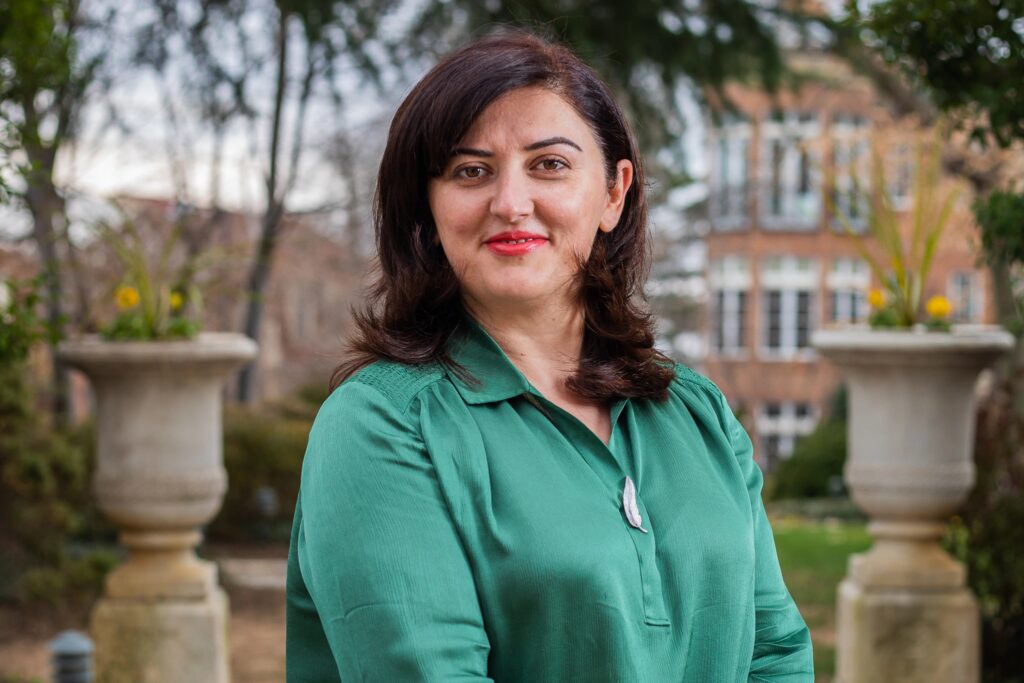
On 9 February 2021 Hamida Giyasbayli of OC Media reports that Azerbaijani human rights lawyer Shahla Humbatova has vowed to fight disbarment procedures against her despite what she says is a campaign of ‘harassment and threats’ from the Bar Association.

The Azerbaijani Bar Association has accused Humbatova of submitting a fake document as evidence during a civil case she was litigating, a criminal offence. They have also accused her of owing ₼460 ($270) in membership fees.  The association has taken her to court in an attempt to disbar her, which would strip her of the right to practice law.

Humbatova is well known in Azerbaijan for taking on high-profile human rights cases, including those of queer Azerbaijanis as well as blogger Mehman Huseynov. The move to disbar her follows the disbarment of dozens of other human rights lawyers in recent years, leaving few remaining lawyers taking on such cases. [see: https://www.trueheroesfilms.org/thedigest/laureates/e761cd05-65b0-4a02-8abe-e8ce9c58faed]

Speaking with OC Media, Humbatova said the allegation she submitted fake documents was baseless, and that her defence had submitted evidence proving this.

She confirmed that she had owed eight months of membership fees, but insisted the association did not make any effort to notify her of this. ‘I learned about this from the media the day after the Board’s decision [to take me to court]’, she said.  She immediately made the payment, so when the Bar went to court with her disbarment request, there was no longer any debt. Emin Abbasov, a legal practitioner who also works on human rights cases, criticised the proceedings against Humbatova for being conducted behind closed doors and without any records.  Abbasov, along with four others, is himself appealing to the European Court of Human Rights after being denied certification by the Bar Association.                                                                                                                     

Humbatova told OC Media that the move to disbar her was a continuation of the policy of dismantling human rights defenders in the country.  ‘It is lawyers and human rights activists who are fighting against politically motivated arrests, torture, repression of dissidents and those who simply demand their rights, and informing the public and international organisations. Therefore, they are being neutralised’, she stated.

In December 2019, 42 member organisations of the Human Rights House, a global rights group, called on the Azerbaijani Bar Association to ‘halt reprisals against a number of human rights lawyers, including Shahla Humbatova and Elchin Sadigov’. Sadigov is Humbatova’s current lawyer. 

See also: https://humanrightsdefenders.blog/2020/01/20/annual-reports-2019-azerbaijan-in-review-muted-hope-for-2020/

Azerbaijan: example of ‘sophisticated’ harassment of human rights lawyers

June 29, 2018

Om 29 June 2018 Front Line Defenders reported on the case of disbarment of human rights lawyer Irada Javadova in Azerbaijan. It shows how seemingly ‘neutral’ procedures within the Bar Association are used to silence human rights defenders.

Irada Javadova <https://www.frontlinedefenders.org/en/profile/irada-javadova> is a human rights lawyer who was involved in many resonant cases, including working on numerous violations of citizens’ property rights and violations against political activists and human rights defenders. She is the former head of NGO “Human Rights Education”. The procedure was initiated upon the complaint of an anonymous citizen, who stated that Irada Javadova wrote a letter to the Interior Ministry about her illegal detention in the Directorate for Combating Organized Crime and reported the incident to the press, without the citizen’s consent. According to reports, the citizen stated that Irada Javadova spread false information, defamed her, and requested that the Bar Association take action against the human rights defender. On 11 June 2018, the Presidium of the Bar Association announced the termination of her authority.

Irada Javadova denied the allegations, stating that she had an agreement with her client and that she had legitimately defended her and acted within the law. She had submitted the agreement with the complainant to the Bar Association, but her colleagues expressed doubts about the authenticity of the client’s signature. She was disbarred on 11 June 2018. On 12 June, she met with the chairman of the Presidium of the Bar Association and presented additional evidence, but she was told that there will be an appeal to Baku Administrative Economic Court No. 1, where she will have the opportunity to defend her rights. Irada Javadova believes that the disciplinary commission was biased and erroneous.  On 14 June 2018, human rights lawyer Irada Javadova appealed the Presidium of the Bar Association’s decision to disbar her.

[In recent years, Azeri authorities have been pursuing those lawyers who defend political activists and who speak before the European Court of Human Rights. Officials have dismissed such well-known and active lawyers as Namizad Safarov, Khalid Baghirov <https://www.frontlinedefenders.org/en/profile/khalid-bagirov> , Aslan Ismayilov, Alaif Hasanov, Elchin Namazov, Yalchin Imanov <https://www.frontlinedefenders.org/en/profile/yalchin-imanov> , Farhad Mehdiyev, Muzaffar Bakhshaliyev, Annaghi Hajibeyli, and Intigam Aliyev <https://www.frontlinedefenders.org/en/profile/intigam-aliyev>.  For some earlier posts on Azerbaijan: https://humanrightsdefenders.blog/tag/azerbaijan/page/4/

PS In 2018, Irada Javadova was the only member of Presidium of the Bar Association to vote against the disbarment of human rights lawyer Yalchin Imanov. It is believed that she lost her place in the Presidium following her defence of Yalchin Imanov.


Portrait of Nasrin Sotoudeh in Iran: Activism With A Defiant Smile

July 8, 2015
Nasrin makes a brief appearance in Jafar Panahi’s recent film “Taxi,  which was awarded the Golden Bear for best film at the Berlin international film festival 2015.

On 8 July FIDH published an update on the situation of Iranian human rights defender Nasrin Sotoudeh:With A Defiant Smile – A Portrait of Nasrin Sotoudeh“. For more posts on her see: https://thoolen.wordpress.com/tag/nasrin-sotoudeh/

Nasrin Sotoudeh is among the most prominent human rights lawyers in Iran (recipient of the 2012 Sakharov Prize, which she shared with the Iranian filmmaker Jafar Panahi, and the PEN/Barbara Goldsmith Freedom to Write Award). Known for her work in defending women’s rights activists, minors on death row, journalists, Kurdish rights activists and other human rights lawyers, including the Nobel prize winner Shirin Ebadi, she is a national hero to many Iranians.

In January 2011, she was sentenced to 11 years in prison on charges of “propaganda against the system,” and “acting against national security“. Following persistent calls for her release from the UN, governments, and NGOs her sentence was reduced to six years, to be spent in the notorious Evin prison.

In 2013, after three years in prison, Sotoudeh was unexpectedly released, without explanation from the authorities. During her incarceration, she spent time in solitary confinement and went on several hunger strikes in protest of the inhumane prison conditions and the 2012 travel ban imposed on her husband and young daughter. One of the hunger strikes lasted 49 days and resulted in her losing 95 pounds. Upon her release, despite her weakened physical state, Sotoudeh got right back to work fighting for the respect for human rights in Iran.

Since then she has reactivated the Professional Women Lawyers Association and the Children’s Rights Committee, both of which she had helped found before her imprisonment. However, she has been spending much of her energy on a new campaign to abolish the death penalty in Iran, called Step by Step to Stop the Death Penalty (LEGAM). The initiative focuses on amending Iranian legislation to gradually reduce and eventually abolish the use of the death penalty.

Until recently, her ability to push for legislative reforms remained greatly limited due to the Iran Bar Association’s October 2014 decision (under pressure from the Judiciary) to suspend her license to practice law for a period of three years. In protest, Sotoudeh staged daily sit-ins in front of the Bar Association’s offices in Tehran. Her perseverance and that of her supporters finally paid off when, on 23 June 2015, Sotoudeh was informed that the Bar Association had revised the ban and reduced it to a period of nine months [Sotoudeh declared that she would be applying to renew her license].

When asked how she became a human rights defender, Sotoudeh says that as a lawyer, she was forced to make a choice: “When a lawyer witnesses unfair trials, when a lawyer witnesses the execution of minors, either they must turn their back or they must face up to the problem they are witnessing. I think I entered the field of human rights on the day I decided not to avoid such issues.

Sotoudeh seeks to change Iran from the inside, by arguing cases and convincing others that protecting human rights is necessary. As she said recently regarding the conflict with the Iran Bar Association: “The channel for negotiations should never be closed. However, there are prerequisites for negotiations. If they are fulfilled, we should welcome such negotiations. If not, we should not insist only on negotiations. We should use civil action to persuade the other party to engage in negotiations.

In the brief appearance in Jafar Panahi’s recent film “Taxi,” (see above) Sotoudeh explains the trials and tribulations human rights defenders face in Iran all the time with a smile on her face, but a defiant smile!

With A Defiant Smile – A Portrait of Nasrin Sotoudeh.

Azerbaijan harasses human rights defenders, even the recipient of the Homo Homini Award

March 7, 2013

( Ane Tusvik Bonde of HRHF  and Intigam Aliyev with the Homo Homini Award received on 4 March 2013)

In its intervention on 5 March 2013 at the Human Rights Council, the Human Rights House Foundation (HRHF) welcomed the reports of the Special Rapporteur on the situation of human rights defenders, including the one to the General Assembly on legislation affecting human rights defenders. HRHF stated that they are concerned, as is the Special Rapporteur, by the fact that more and more countries misuse or design legislation in order to impede or even criminalise the work of human rights defenders, or to label them as “foreign agents” such as in the Russian Federation.

HRHF especially welcomed the communications re Azerbaijan, as published in the addendum to the Rapporteur’s report, including the communication about the closure of the Azerbaijan Human Rights House on 16 March 2011 and  the warnings against two NGOs threatened to be closed for their online publications on 5 March 2012. This communication has still not been answered. HRHF also regretted that Azerbaijan has not to date replied to the communication of the Special Rapporteur in relation to the arrest of photographer and blogger Mehman Huseynov, a case it already brought to the attention of the Council in July 2012.

Azerbaijan continues to use detention of human rights defenders as a tool to silence them. Most recently, on Saturday 26 January 2013, Intigam Aliyev was amongst 47 other demonstrators arrested for peacefully protesting in Baku. He was awarded the Homo Homini Award in Prague on 4 March, for his exceptional and courageous work in favour of human rights. Intigam Aliyev’s remains disbarred and his NGO blocked. In relation to this protest of 26 January,  Emin Milli was sentenced to administrative detention for 15 days for promoting the protest on Facebook in violation of article 298.1 and 298.2 of the code of the Republic of Azerbaijan. Emin Milli was previously detained for 16 months along with Adnan Hajizade for publishing a critical video on Youtube. http://humanrightshouse.org/Articles/19109.html