Posts Tagged ‘digest of human rights awards and laureates’

European Court of Human Rights calls probe into murder of Natalia Estemirova ineffective

September 1, 2021

Tanya Lokshina of Human Rights Watch wrote on 31 August 2021 “Justice for Murder of Chechen Rights Defender Remains Elusive”
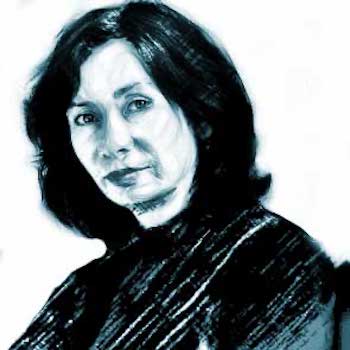
Today, the European Court of Human Rights ruled on the case of Natalia Estemirova, Chechen human rights defender murdered in July 2009. It found that Russia had violated their obligations to protect her right to life by “fail[ing] to investigate effectively [her] abduction and killing.” [see: https://www.trueheroesfilms.org/thedigest/laureates/BA7B3FCE-AFE7-4B72-9156-EA257B3BC205]

Natalia – Natasha to me and many others – was a colleague and very close friend. I last saw her 36 hours before the murder, while staying at her place in Grozny, as I always did when in Chechnya. We’d spent a week interviewing people whose homes police had torched because of their alleged involvement with militants, and whose relatives had been rounded up, disappeared, or killed by security officials.

We said goodbye just past midnight on July 14. When I woke up later that morning, Natasha had already left for an early meeting, so I went to the airport without getting to see her again. The next day, armed men pushed her into a car as she was running to catch a bus to the city center. They drove her into neighboring Ingushetia and shot her near the forest.

In 2011, having lost hope for an effective investigation by Russian authorities, Natasha’s family filed a complaint with the European Court, alleging a violation of her right to life because Russian authorities failed to protect human rights defenders in Chechnya, Chechnya’s leadership repeatedly threatened Natasha, and her abduction was apparently carried out by security officials.

Ten years later, the court ruled today that Russia had failed to investigate but also held that there wasn’t sufficient evidence to conclude that state agents had murdered Natasha.

[see also: https://humanrightsdefenders.blog/2019/07/15/ngos-remember-10th-anniversary-of-natalia-estemirovas-murder/]

The ECHR noted that Russian authorities promptly opened a probe into Estemirova’s killing and identified a suspect, but emphasized that Moscow’s failure to provide full materials of the case made the court “unable to conclude that the investigation had been carried out thoroughly.” It noted some contradictions in the expert evidence led it to doubt that the investigation had been effective.

The victim’s sister, Svetlana Estemirova, alleged in her appeal that state agents were behind the killing but the Strasbourg-based court ruled that the evidence didn’t support the claim.

The court required Russia to pay 20,000 euros ($23,600) to Estemirova’s sister and urged Russian authorities to track down and punish the perpetrators of her murder.

I had very high hopes and it would be an understatement to say that I’m disappointed,” Natasha’s daughter Lana, who was 15 when she lost her mother, told me today.

The lack of sufficient evidence the court cited is a direct result of Russia’s brazen determination to protect the perpetrators of this outrageous murder. Natasha was killed for fearlessly exposing abuses by Chechen authorities. An effective investigation would leave no doubt about official involvement in her murder.

https://spectrumlocalnews.com/nc/charlotte/ap-top-news/2021/08/31/europe-court-russian-probe-into-activist-murder-ineffective

https://www.eng.kavkaz-uzel.eu/articles/56609/

https://www.hrw.org/news/2021/08/31/justice-murder-chechen-rights-defender-remains-elusive
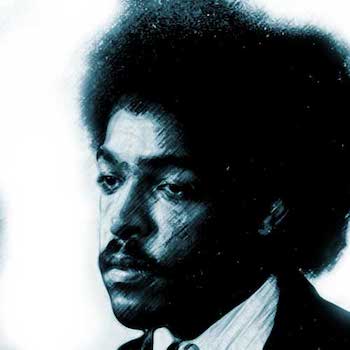
Reed Brody about the death of Hissene Habre

September 1, 2021

A bit of a special post: On 28 August 2021, Reed Brody, [see also https://humanrightsdefenders.blog/2017/02/21/the-dictator-hunter-works-from-home/] wrote on Facebook a post about the death of the former dictator of Chad Hissene Habre. Reed’s deep involvement in his case makes his observations worth a read:

A lot of people have asked me how I felt about the death in Senegal of the former dictator of Chad Hissene Habre, on whose prosecution I spent 17 years. https://www.nytimes.com/…/africa/hissene-habre-dead.html For me, especially in later years, the effort was much more about using the case to promote transformation and giving the victims a means to claim their dignity than about the person of Hissène Habré.At Habré’s trial, Kaltouma Deffalah, one of the survivors of sexual slavery, testified defiantly that she felt “strong, very courageous because I am before the man who was strong before in Chad, who …doesn’t even speak now, I am really happy to be here today, facing him, to express my pain, I am truly proud.” It was a sentiment expressed, in one way or another, by many of the survivors who testified.Since Habré was sentenced to life in prison in 2016, his victims have been campaigning to get reparations, as awarded by courts in Chad and Senegal. In fact, on the morning of his death, I was having a phone conference with the victims’ Chadian lawyer Jacqueline Moudeina [ see: https://www.trueheroesfilms.org/thedigest/laureates/179E3C5C-9175-1B42-99C9-1004DDBC850E]and other lawyers on how to kick-start the stalled procedures, particularly at the African Union ( background here – https://www.hrw.org/…/hissene-habres-victims-continue…) That said, it is a strange feeling that he’s dead. I used to imagine that Habré and I were sitting across a chessboard in a strategic battle, trying to anticipate the other’s moves. Back in 2004, I asked the French journalist Christian Millet, who maintained friendly contact with Habré, what he thought the former dictator’s strategy was against us. And Millet responded: “Il vous attend dans sa grotte.” He is waiting for you in his cave, a reference to his days as a rebel fighter in the rocky desert of northern Chad. Habré was playing this chess game with the black pieces, waiting for us to over-extend. That is how as president of Chad, with French and American help, he defeated Libya’s Moemmar Qaddafi whose troops had occupied part of his country.In Senegal, we were in Habré’s cave, where he had used the millions he looted from the Chadian treasury to build himself a network of protection that included politicians, religious figures and journalists . But in the end, the tenacity and perseverance of his victims, the evidence of his massive crimes ( thousands of killings, systematic torture, sexual slavery ) , and the courage of some Senegalese leaders such as then-justice minister Aminata Toure, overcame Habré’s home-field advantage, and he was powerless to prevent his conviction in an exemplary and transparent trial.In his one written declaration to the investigating judges, Habré said that I was “an enemy… who has never hidden his aggressive and outrageous hostility, a specialist in forgery and lies.” How do I feel now? I’m grateful that Habré lived long enough to face justice and the accusatory gaze of his victims.”

UN experts demand release of human rights defender Dawit Isaak, imprisoned without trial in Eritrea since 2001

August 19, 2021

On 18 August 2021 UN experts demanded the release of journalist and human rights defender Dawit Isaak, imprisoned without trial in Eritrea since 2001, amid uncertainty about whether he is even still alive.

To this day, Dawit Isaak has never been charged with a crime, spent a day in court or spoken to his lawyer,” said Mary Lawlor, UN Special Rapporteur on the situation of human rights defenders. “The level to which the Eritrean Government is ignoring Mr. Isaak’s basic, fundamental human rights is appalling. He must be released at once.”

In the first years of his detention, “we received information that Mr. Isaak was often taken to hospital, which was concerning in itself,” Lawlor said, “Now we receive no news, and that’s worse. We fear for his life. At an absolute minimum, Eritrea must immediately present evidence that he is alive and well.”

Dawit Isaak, 56, a dual Swedish-Eritrean national, established one of Eritrea’s first independent media outlets in the 1990s, the Setit newspaper. In May 2001, it published open letters written by a group of politicians known as the G15 urging the Government to hold open elections and implement a newly drafted Constitution. With the world’s attention diverted by the September 11 terrorist attacks, Mr. Isaak was arrested on 23 September 2001.

According to a credible source, Mr. Isaak was alive in September 2020, the first sign of life in seven years. He is reportedly being held in Eiraeiro prison, a detention centre infamous for its conditions, where torture is allegedly common practice and where many inmates have reportedly died in custody.

The enforced disappearance of Mr. Isaak for almost two decades is extremely concerning,” said Mohamed Abdelsalam Babiker, Special Rapporteur on Eritrea. “The Government of Eritrea has not confirmed his whereabouts or provided any solid evidence about his state of health in all these years. It has denied torture allegations but has not allowed anyone to visit Mr. Isaak.

Lawlor said she had rarely witnessed such disregard for human life as she documents cases of human rights defenders in long-term detention around the world.

“Locking up human rights defenders for long periods of time may feel like a guarantee against internal scrutiny,” Lawlor said. “But we have not forgotten.”

Mr. Isaak’s work has been recognised by a number of prestigious awards, including UNESCO’s Freedom of Press Award {see: https://www.trueheroesfilms.org/thedigest/laureates/9329f937-0d8b-4543-8664-2263e968adbf] and he was a finalist for the Sakharov Award in 2017

The Special Procedures mandate holders are in contact with the Eritrean authorities on this matter.

The experts’ call is endorsed by: Ms. Tlaleng Mofokeng, Special Rapporteur on the right to physical and mental health; the Working Group on Enforced or Involuntary Disappearances: Mr. Tae-Ung Baik (Chair), Mr. Henrikas Mickevičius (Vice Chair), Ms. Aua Balde, Ms. Gabriella Citroni and Mr. Luciano Hazan; and Mr. Morris Tidball-Binz, Special Rapporteur on extrajudicial, summary or arbitrary executions.

https://www.miragenews.com/un-experts-demand-release-of-human-rights-615941/

Australia’s migration “detention” industry again denounced

July 21, 2021

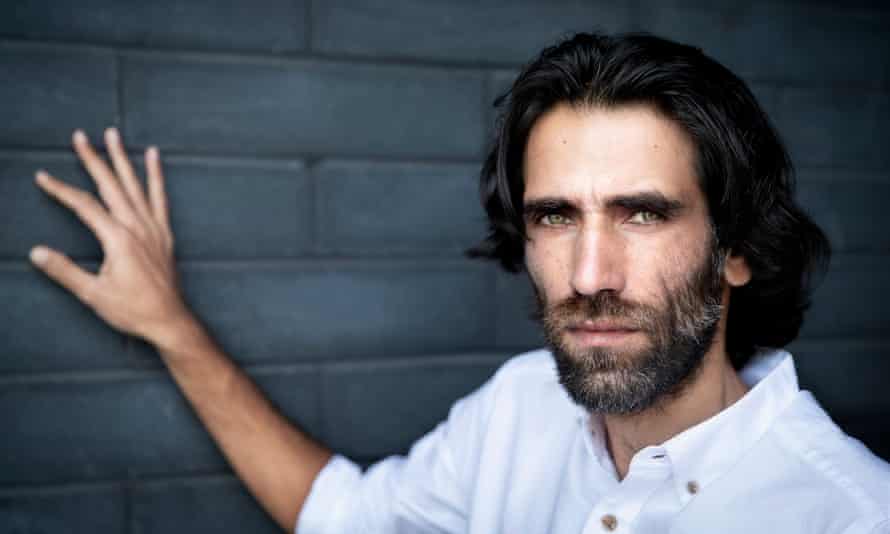
Behrouz Boochani wrote in the Guardian of 21 July 2021 a trenchant opinion piece: “For eight years, Australia has been taking refugees as hostages. It’s time to ask: who has benefited?” About Boochani, see also: https://www.trueheroesfilms.org/thedigest/laureates/2080f978-3f72-4e02-9ed1-dcea4299ccd0

The government needs our bodies for political power, while the detention industry needs us to fuel its money-making torture machine. But what has Australia truly gained?

Behrouz Boochani

Kurdish-Iranian born journalist and refugee Behrouz Boochani spent six years in Australian-run detention on Manus Island in Papua New Guinea. He now lives in Christchurch, New Zealand. Photograph: Martin Hunter/AAPWed 21 Jul 2021 03.14 BST

Eight years have passed since the Australian government mandated offshore detention for all asylum seekers who arrive by boat, which led to the banishing of more than 3,000 refugees to Nauru as well as Manus Island in Papua New Guinea.

Since then, we have heard many tragic stories about the stranded refugees – stories of death, violence, child detention, family separation and countless violations of human rights. See also; https://humanrightsdefenders.blog/2021/04/15/rescuing-refugees-a-moral-imperative-not-a-crime/

We have heard the stories of the hundreds who have been traumatised and the 14 who were killed. We got to know about Reza Barati who was surrounded by a group of guards and beaten to death. We were told about Hamid Khazaei who developed a leg infection, ended up in a wheelchair and died while in custody. Faysal Ishak Ahmed also died in a Brisbane hospital. For the refugees Australia imprisons, music is liberation, life and defiance.

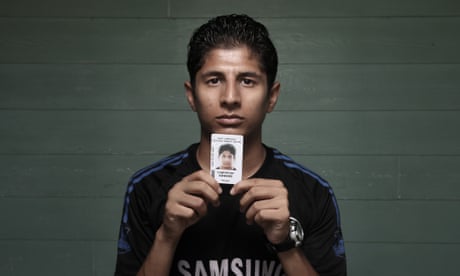
When I think about the stories of these refugees, including myself, the first thought that springs to mind is the abduction of human beings on the sea. We were kidnapped and forcibly transferred to an island we had never heard of. We were robbed of our identity. We turned into a string of numbers through a carefully planned process of dehumanisation. We were led into an evil system which was designed to diminish our identity.

The offshore detention policy was a form of official hostage-taking. For years, the Australian government refused to accept us, while preventing us from being transferred elsewhere. Even when it succumbed to public pressure by signing a resettlement deal with the United States, the government prolongated the transfer process. After all these years, many refugees are still held in indefinite detention.

The offshore detention policy is a combination of hostage-taking, deception, secrecy, corruption, populist propaganda and systematic torture

In addition to being a form of official hostage-taking, the policy provided a platform for the spread of populist ideas and false claims. Kevin Rudd, for example, announced this policy just before the 2013 federal election, while Scott Morrison went to the Christmas Island detention centre alongside a dozen reporters in 2019 and posed heroically against the backdrop of the sea.

They deceivedthe public into believing that the offshore detention policy was like a building that would collapse if one brick were to be removed from it. They warned against the invasion of boats on Australian shores, but no boats arrived. What boats anyway? They returned every single one to Indonesia.

This is a key point, because whenever the public has put pressure on the government since 2013, officials have highlighted the risks of opening up the borders. This turned out to be an outright lie. What the government has done is create unjustified fear while hiding behind the notion of national security.Advertisement

The reality is they needed our bodies for retaining their political power. Along the way, they created a $12bn detention industry which has greatly benefited politicians as well as certain security and medical companies. The contracts signed with Paladin is the only instance leaked to the media, but I believe that is just the tip of the iceberg.

Loghaman Sawari

The Australian government has made every effort to preserve its detention industry. When thousands of refugees were transferred to the US, the government brought in a group of New Zealanders previously held in Australia. At the end of the day, human bodies are fuel to this money-making torture machine.

The offshore detention policy is a combination of hostage-taking, deception, secrecy, corruption, populist propaganda, and of course, systematic torture. It is sadistic, costly, and unnecessary. After all these years, Australians need to find the courage to look in the mirror and ask themselves, “What have we gained? What have we lost?” These are crucial questions.

It is time to challenge the foundations of this deceitful policy. In the last eight years, human values have been undermined, more than $12bn has been spent and the international reputation of Australia has suffered immensely. The key question to ask right now is: “Who has benefited from this policy?”

Written by Behrouz Boochani, a former detainee and nor adjunct senior fellow at University of Canterbury [see also: https://humanrightsdefenders.blog/2019/12/01/behrouz-boochani-gives-interview-in-new-zealand-finally-out-of-manus-island/]

https://www.theguardian.com/commentisfree/2021/jul/21/for-eight-years-australia-has-been-taking-refugees-as-hostages-its-time-to-ask-who-has-benefited

Call for nominations 2021 Tulip award

July 19, 2021

The nomination period for the Human Rights Tulip 2021 is open and will end on 27 July at 11:59 PM.

For more on this award and its laureates, see: https://www.trueheroesfilms.org/thedigest/awards/D749DB0F-1B84-4BE1-938B-0230D4E22144

Nominations can be made by filling out Nomination form for the Human Rights Tulip 2021. Please note that human rights defenders and organisations cannot nominate themselves. The nomination form is available in English, French, Spanish, Russian and Arabic.

For any questions, please send an email to dmm-tulip@minbuza.nl.

Selection procedure: To decide who should win, all the submitted nominations are reviewed using agreed selection criteria. A certain weight is given to each criterion. 

The selection criteria are as follows:

  1. Working to peacefully promote and/or protect human rights, especially in one of the following fields:
    • freedom of expression (including online);
    • freedom of religion or belief;
    • equal rights for LGBTI persons;
    • equal rights for women and girls;
    • fight against impunity and accountability for international crimes.
  2. Level of repression and risks faced as a result of the human rights work.
  3. Level of innovation and creativity in the approach to promote and protect human rights.
  4. Ability to achieve impact and to reach and improve the life of (marginalised) beneficiaries through the human rights work.
  5. Working with and involving relevant partner organizations and/or communities.
  6. Sustainability of the project and the possibility to scale up the approach or project.

A panel of 5 human rights experts pre-selects the top ten candidates with the highest scores as well as three ‘wild cards’, so that strong candidates who don’t score well on every single point still have a chance of winning. This list of 13 candidates is then submitted to an independent jury with 6 members. The jury discusses the profiles of these candidates and selects three candidates most eligible for the Human Rights Tulip award. The names of these three candidates are given to the Minister of Foreign Affairs, who picks the winner of Human Rights Tulip.

https://www.government.nl/topics/human-rights/human-rights-tulip/nomination-and-selection-procedure

The 3 human rights lawyers shortlisted for the L4L award

July 12, 2021

Lawyers from Myanmar and Belarus, and a lawyers’ collective from Algeria are shortlisted as finalists for the 2021 Lawyers for Lawyers Award. The 2021 Award will be presented to the laureate during a seminar hosted by Lawyers for Lawyers and the Amsterdam Bar Association in Amsterdam on 18 November 2021. The ceremony will also be live-streamed.

For more on the Lawyers for Lawyers Award and other awards for lawyers see: https://www.trueheroesfilms.org/thedigest/awards/B40861B3-0BE3-4CAF-A417-BC4F976E9CB0 .

The expert jury selected U Khing Maung Zaw from Myanmar, the Collective for the Defence of Hirak Detainees from Algeria and Maksim Znak and Liudmila Kazak from Belarus as finalists for the Award. The laureate of the Award will be announced later this year.

About the finalists

  • In Myanmar, U Khing Maung Zaw has courageously upheld the rule of law for more than five decades. He is currently representing leaders of the recently deposed Myanmar government and a number of other persons who have been arbitrarily detained on politically motivated criminal charges associated with the military coup in Myanmar beginning 1 February 2021. In this context of repression and danger, U Khin Maung Zaw remains committed to representing his clients.
  • Since February 2019, grassroots peaceful protests (the “Hirak”) have called for genuine democratic reform and rule of law in Algeria. In response, the government launched a campaign of arrests and judicial harassment against all those associated with this movement. The Collective for the Defence of Hirak Detainees, formed in July 2019 after the first wave of arrests, voluntarily and tirelessly defends those arbitrarily prosecuted, especially from marginalised backgrounds who cannot afford legal support.
  • In the aftermath of the 2020 presidential elections in Belarus, lawyers working on politically sensitive cases or cases of human rights violations were subjected to pressure, harassment and intimidation in connection to their professional activities. Maksim Znak and Liudmila Kazak represented human rights defenders and opposition leaders, and are paying a high price for their work. On 9 September 2020, Maksim Znak was taken into custody and is still being detained. On 19 February 2021, Liudmila Kazak was disbarred.

One of the Killers of Berta Caceras was just brought to justice

July 7, 2021

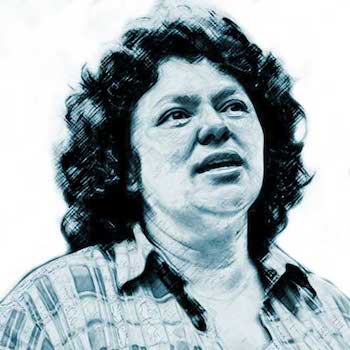
According to Common Dreams, human rights defenders on Monday 5 July 2021 welcomed the conviction of Roberto David Castillo Mejía, a Honduran businessman and former military intelligence officer, for the March 2016 assassination of Indigenous environmental activist Berta Cáceres, while calling on authorities in the Central American nation to bring everyone involved in planning the murder.

Memorial day: Environmental activist Berta Caceres was killed in her home in March 2016 Photo CC by Trocaire on Flickr.
(Photo CC by Trocaire on Flickr.)

The Guardian reports that the Tegucigalpa high court found Castillo—formerly head of the dam company Desarrollos Energéticos, or DESA—guilty of collaborating in Cáceres’ murder. The court ruled that Cáceres was killed for leading the campaign to stop construction of the $50 million Agua Zarca dam, a local grassroots effort which caused delays and monetary losses for DESA.

The environmentally destructive hydroelectric project is located on the Gualcarque River, which is sacred to the Indigenous Lenca people, and was approved despite its failure to comply with Honduran and international environmental requirements.

Cáceres, who was 44 years old when she was murdered, was co-founder and coordinator of the Council of Popular and Indigenous Organizations of Honduras (COPINH), a group dedicated to the defense of the environment in Intibucá and the protection of the Lenca. In 2015 she received the prestigious Goldman Environmental Prize for leading “a grassroots campaign that successfully pressured the world’s largest dam builder to pull out of the Agua Zarca Dam” project at Río Gualcarque. See also: https://humanrightsdefenders.blog/2020/06/10/nina-lakhanis-who-killed-berta-caceres-reviewed/

COPINH hailed Monday’s verdict as “a popular victory for the Honduran people” that “means the criminal power structures failed to corrupt the justice system.”

Erika Guevara-Rosas, Americas director at Amnesty International, said in a statement that “the long-awaited prosecution of David Castillo, convicted as co-author of the murder of Berta Cáceres, is an important step towards justice and the result of her family and COPINH’s tireless efforts to secure truth, justice, and reparation. However, justice for Berta will never be truly complete until everyone who took part in the crime, including those who planned it, is brought to justice.

We urge the prosecutors to keep uncovering the truth,” Guevara-Rosas continued. “Until all those responsible are held accountable, other human rights defenders in Honduras will continue to lose their lives, for raising their voices and defending the most vulnerable. The Honduran authorities must put an end to impunity.”

Noting that Honduras is “the most dangerous country for defenders of land, territory, and the environment,” Guevara-Rosas admonished the Honduran government, which she said “seems to look the other way when human rights defenders are attacked instead of fulfilling its obligation to protect them.”

“Authorities must take this seriously and do whatever is necessary to keep human rights defenders safe from harm, so that a crime like the murder of Berta Cáceres is never repeated,” she added.

A 2017 report (pdf) by international legal experts concluded Cáceres’ murder was not an “isolated incident” and alleged “willful negligence by financial institutions.” The report found that the targeting of Cáceres was part of a “strategy” by DESA employees, private security firms, and public officials “to violate the right to prior, free, and informed consultations of the Lenca.”

“The strategy was to control, neutralize, and eliminate any opposition,” the report said.

Berta received several awards: https://www.trueheroesfilms.org/thedigest/laureates/2AD0CEE4-80CB-3234-04B4-F2ED7ACBE6C5


http://redgreenandblue.org/2021/07/06/environmental-activist-berta-caceras-murdered-killer-just-brought-just

https://www.law.berkeley.edu/article/roxanna-altholz-human-rights-clinic-berta-caceres-investigation/

China in the 47th session of the UN Human Rights Council: Uyghurs and jailed human rights defenders

July 6, 2021

In a statement 22 June 2021, the ISHR on behalf of over 20 civil society organisations called for unequivocal action by the High Commissioner to monitor and report on the human rights situation in China. The violations targeting Uyghurs and other Turkic Muslims, the groups underlined, have been determined by Amnesty International and Human Rights Watch to constitute crimes against humanity.

‘The Special Procedures and treaty bodies have repeatedly, for the last five years, raised serious concerns about the human rights situation in China,’ said Sarah M Brooks, ISHR programme director. ‘But despite these efforts, little has changed. More is needed.’

The gravity of the situation was underlined also by a joint statement delivered by Canada, on behalf of more than 40 states, earlier today. Listing a range of concerns about treatment of Uyghurs, those governments pressed China to allow ‘immediate, meaningful and unfettered’ access to the region for the High Commissioner.

The weight of evidence and the gravity of allegations of crimes against humanity against Uyghurs demands that the High Commissioner commence remote monitoring and public reporting immediately. The full statement can be accessed here

Anadolu on 29 June 2021 reported that Mary Lawlor, the UN special rapporteur on human rights defenders, says she has countless reports about mistreatment of activists in China.

The UN’s independent expert on human rights defenders said that she feared activists in China were arbitrarily sentenced to long prison terms, house arrest and tortured and also denied access to medical treatment, their lawyers and families.

Condemning human rights defenders…to long terms in prison for their peaceful human rights work, abusing them in custody and failing to provide them with adequate medical care…cannot continue,” Mary Lawlor, the UN special rapporteur on human rights defenders, said in a statement.

She said she had “countless reports” pointing to the mistreatment of human rights defenders in Chinese custody, which is “endemic.”

Geneva’s Chinese mission spokesman Liu Yuyin later refuted Lawlor’s criticism, accusing the UN expert of having “deliberately smeared China, spread disinformation and interfered in China’s judicial sovereignty under the pretext of human rights.”

“The individuals that Ms. Lawlor and other special procedure mandate holders mentioned have committed a series of crimes such as inciting subversion of state power and splitting the state. The facts are clear and the evidence is solid,” he added.

Lawlor said the treatment meted out to those jailed may amount to torture and other cruel and inhuman treatment, despite a plethora of recommendations from the UN mechanisms over the years, including from the Committee Against Torture.

Some defenders, such as Gao Zhisheng, have been “forcibly disappeared,” while others such as Guo Hongwei have died in prison, she said. Lawlor said she knew of at least 13 human rights defenders sentenced on “spurious charges” such as “picking quarrels” or “provoking trouble” to 10 years or more in prison for peacefully defending the rights of others. Among them is Qin Yongmin, sentenced to 35 years in prison for work that included promoting engagement with the UN, and Ilham Tohti, a “moderate scholar” serving a life sentence.

“Tohti was arbitrarily arrested, allegedly tortured and sentenced to life after a closed-door trial. He was not allowed any family visits and no information has been provided by Chinese authorities since,” said Lawlor. He is a much-recognised defender: https://www.trueheroesfilms.org/thedigest/laureates/37AE7DC4-16DB-51E9-4CF8-AB0828AEF491

Human rights defender Chen Xi, serving 10 years in prison, has chronic enteritis, which causes dehydration and fever. In winter, he contracts severe frostbite on his hands, ears and abdomen, and in his lifetime, he has been sentenced to 23 years in prison, said the expert.

https://www.ishr.ch/news/hrc47-governments-ngos-call-high-commissioner-step-work-protect-uyghurs

https://www.globalvillagespace.com/un-expert-raises-concern-on-jailed-activist-in-china/

Goldman Prize laureates express concern about colleague Alberto Curamil in Chile

July 3, 2021
Alberto Curamil. (Vicente Franco/Water For Life)

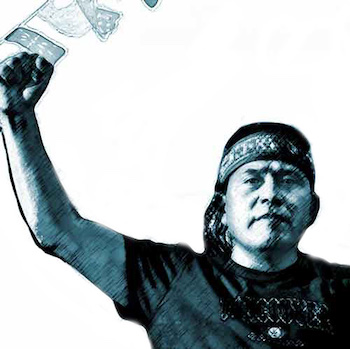
In the Washington Post of 1 July 2021, Craig Williams and Alfred Brownell (winners of the Goldman Prize in 2006 and 2019 respectively) wrote: He has worked to protect the Earth. Now we must protect him.”

As environmental activists and human rights defenders, we are alarmed by a spike in violent attacks on and killings of land rights activists across the globe and, most recently, in Latin America. The latest in this disturbing trend is a violent assault on Alberto Curamil, a leader of the Indigenous Mapuche people in southern Chile and an activist working to protect his people’s land, water and other resources. As we write, we fear Alberto could become the latest casualty in a global war against Earth’s front-line protectors. [see: https://www.trueheroesfilms.org/thedigest/laureates/4f845ff0-86d2-4b12-97af-1590f6ba8602]

On April 29, Alberto was attending a protest along with his son andnephew, both teenagers. They were there to show support for Elena Paine, another Mapuche leader, and her community a day after her house and crops in Koyam Montre were burned to the ground. Alberto, Paine and members of the Machupe community believe that the threat may have come from far-right-wing groups in the area.

As Alberto and his teenage relatives were driving away from the protest, the back window of their truck was shattered by a tear-gas canister. When they got out of the vehicle, police shot Alberto at point-blank range three times with buckshot, which lodged in his back, side, arm and the back of his leg. Then, police beat the teens with batons while yelling “Pinche Mapuche” (“Lousy Mapuche”). The three were arrested and charged with disorderly conduct at a public event and breach of sanitary provisions. Alberto was taken to a hospital three hours after being brought into custody, bleeding and in excruciating pain. The teens were bruised, battered and traumatized.

This was not the first time Alberto had been a target of the Chilean government. In 2018, he was arrested and jailed for 15 months on false charges of armed robbery based entirely on hearsay evidence. He was acquitted of all charges and released in December 2019. Due to his imprisonment, he had been unable to receive the Goldman Prize — known as the “green Nobel” — at ceremonies in April and May 2019 in D.C. and San Francisco. He was previously arrested after being violently beaten by police in 2014.

Our alarm has led us, along with several dozen of our fellow Goldman Prize winners from across the globe, to demand assurances from Chilean President Sebastián Piñera that Alberto’s safety will be given the highest priority. We are also seeking support through appeals to the U.S. Congress, the European Union and the United Nations.

We believe time is of the essence, especially given the broader context of violence against those who stand up to protect the Earth. In 2016, the internationally celebrated Honduran Indigenous activist and Goldman Prize winner Berta Cáceres was murdered by operatives for the power company Desarrollos Energéticos (Desa) for her opposition to a hydroelectric project on the Rio Gualcarque. Seven men accused of plotting Cáceres’s murder were convicted and sentenced to between 30 and 50 years in prison. An eighth suspect, Roberto David Castillo Mejía, president and chief executive of Desa, is currently on trial, accused of masterminding the murder-conspiracy plot.

In its latest report, Global Witness recorded the highest number of environmental defenders killed in a single year — more than 212 people killed in 2019, a rate of four a week. More than two-thirds of the killings took place in Latin America. [see also: Global]

The killings of and assaults on Earth’s defenders worldwide have accelerated in some of the most fragile pristine landscapes and biodiverse countries, jeopardizing the fight against climate change and species extinction. In Mexico, police are investigating the suspicious killings of two employees at a butterfly reserve in 2020. That same month, six members of an Indigenous community were killed at a nature reserve in Nicaragua. And in South Africa, environmental activist Fikile Ntshangase was killed last year in an attack local activists fear was related to her opposition to disruptive local mining operations.

In Chile, Indigenous communities’ push for human rights go hand in hand with their struggle for land and water rights, as government-backed companies try to run them off their land with threats, harassment and violence.

Attacks on environmental defenders in Latin America and worldwide are not only an affront to human rights, but also a cause for deep alarm at a time when the world must fight climate change and bring about a sustainable future. We are demanding that the Chilean government take immediate steps to stop these aggressive and often deadly attacks on the Mapuche community. There should also be a thorough, independent investigation into the destruction of Paine’s home.

We must act against this brutality, or we threaten the fight for a planet in crisis.

https://www.washingtonpost.com/opinions/2021/07/01/alberto-curamil-chile-environmental-defender-safety/

The winners of the 2021 “Green Nobel” Goldman Environmental Prize

June 25, 2021

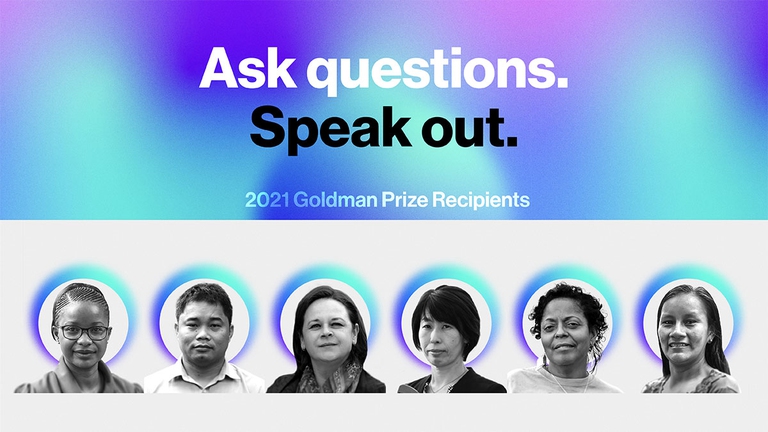
The Goldman Environmental Prize, the “green Nobel Prize”, is awarded annually to activists fighting for the well-being of the planet. They’re often called “heroes”. But, foremost, they’re people. Common folk just like us. They don’t have superpowers or wear capes. And that’s what makes them so special. They’re the activists that are celebrated yearly by the Goldman Environmental Prize, also known as the “green Nobel Prize” [for more on this award and its laureates, see: https://www.trueheroesfilms.org/thedigest/awards/928A7FD2-4E3D-400E-BCE9-488658DA3BAF]

Goldman environmental prize

The winners of the 2021 Goldman Environmental Prize

Gloria Majiga-Kamoto, Malawi, Africa

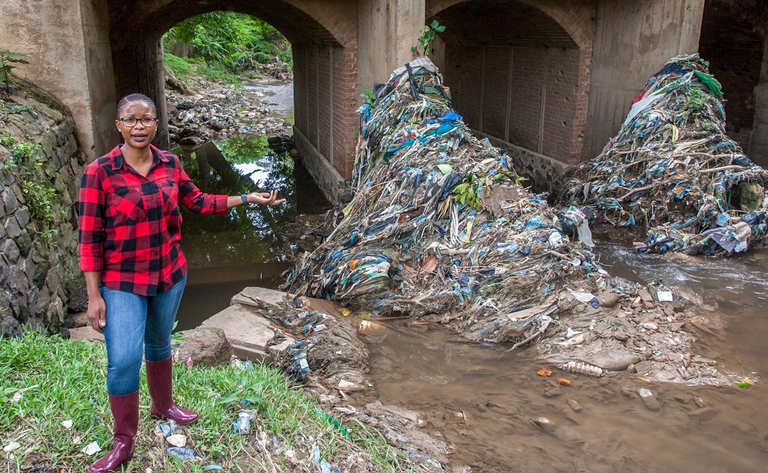
Concerned about the environmental damage caused by plastic pollution in the southeast African state of Malawi, Gloria Majiga-Kamoto decided to fight against this industry by campaigning to stop the production of thin plastics, a type of single-use polymer. Thanks to her campaign a national ban was adopted in 2019. This is the first time a person from Malawi wins the Goldman Prize.

Goldman environmental prize
Gloria Majiga-Kamoto showing plastic under a bridge over the Mudi River © Goldman Environmental Prize

Thai Van Nguyen, Vietnam, Asia

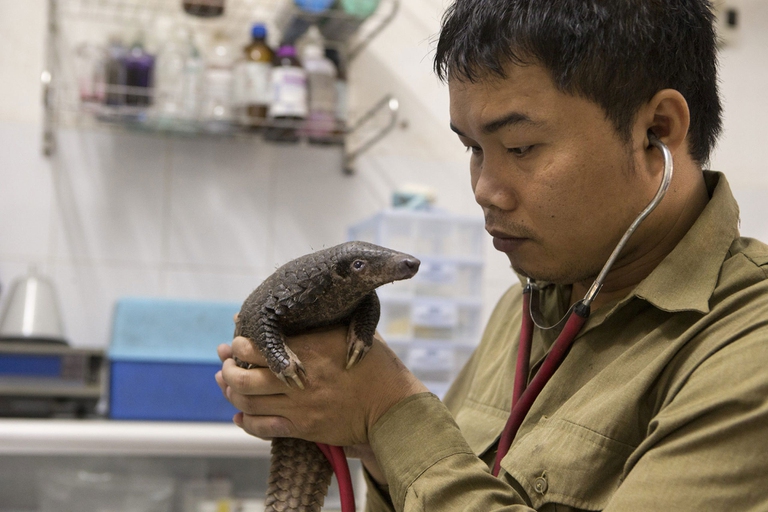
Thai Van Nguyen is the founder of the NGO Save Vietnam’s Wildlife, responsible for saving 1,540 pangolins from the illegal wildlife trade between 2014 and 2020. Nguyen also instituted the first Vietnamese anti-poaching unit. Since 2018, it has destroyed 9,701 animal traps, torn down 775 illegal camps, confiscated 78 guns and brought to the arrest of 558 poachers, leading to a significant reduction in illegal activities in Pu Mat National Park.

Goldman environmental prize Thai Van Nguyen
Thai Van Nguyen with a three-month-old pangolin in a rehabilitation centre © Goldman Environmental Prize

Maida Bilal, Bosnia and Herzegovina, Europe

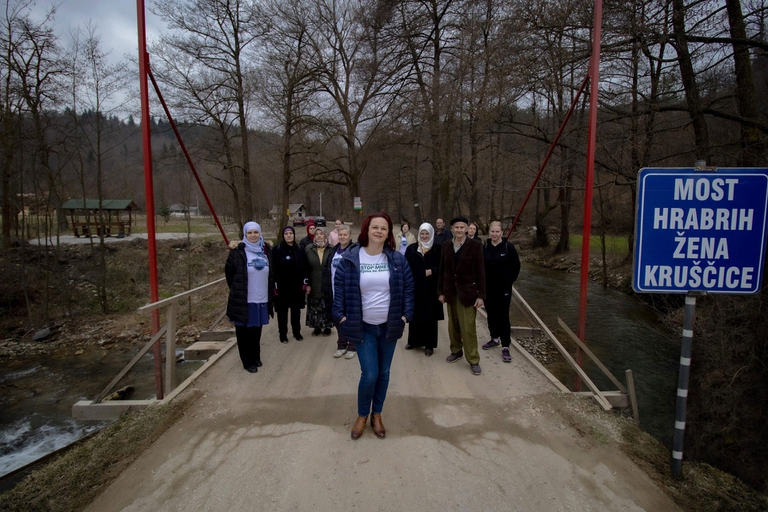
Together with the women in her village, Maida Bilal mounted a 503-days-long protest to stop the construction of two new dams on the Kruščica River in December 2018. The Balkans are home to Europe’s last wild rivers, but demand for hydroelectric power is threatening these precious ecosystems. This marks the first time that a person from Bosnia and Herzegovina receives the Goldman Environmental Prize.

Goldman environmental prize Maida Bilal
Maida Bilal and her supporters on the bridge where they stopped construction of the dams from going ahead © Goldman Environmental Prize

Kimiko Hirata, Japan, islands and island nations

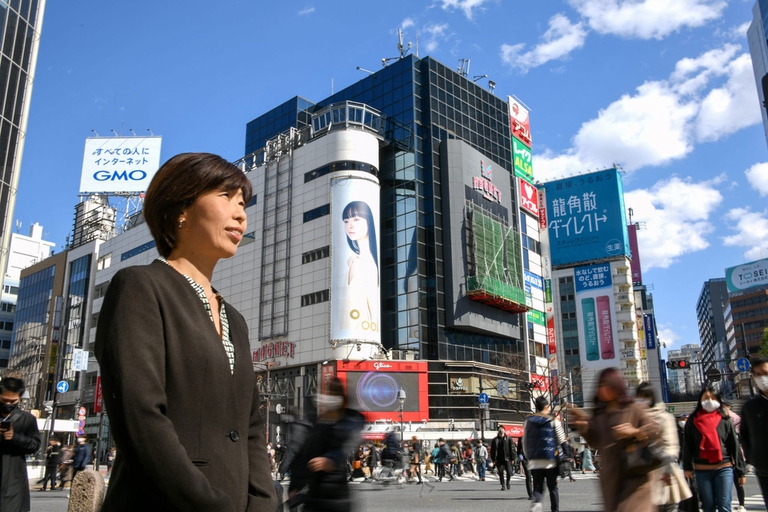
After the Fukushima nuclear disaster in 2011, Japan began relying on coal-based rather than nuclear energy. Kimiko Hirata’s decade-long campaign has stopped 13 new coal power plants from being built throughout the country. These would have released over 1.6 million tonnes of CO2 over their lifetimes. Therefore, Hirata’s efforts have avoided emissions equivalent to those of 7.5 million cars a year, for forty years.

Goldman environmental prize Kimiko Hirata
Kimiko Hirata in Tokyo, the capital of Japan © Goldman Environmental Prize

Sharon Lavigne, Unites States, North America

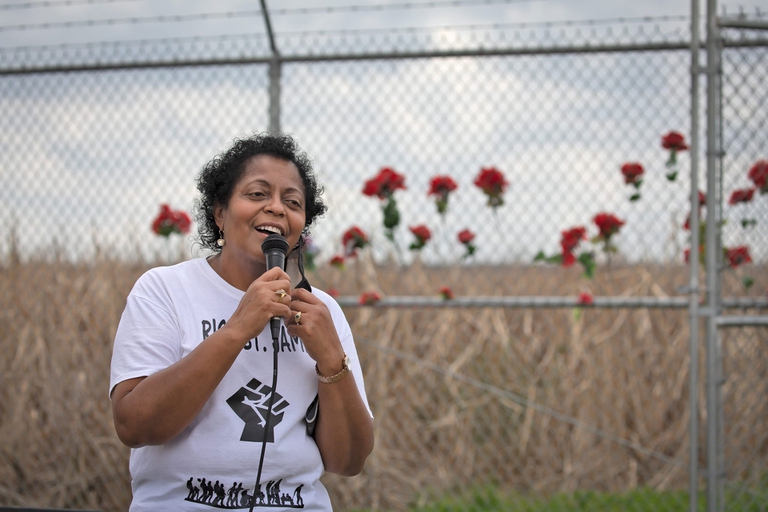
In September 2019, Sharon Lavigne, a special education teacher and climate justice advocate, succeeded in stopping the construction of an enormous plastic production plant in Mississippi, in the state of Louisiana. Lavigne mounted an opposition campaign, raised awareness in her community and organised peaceful protests to protect the right of her fellow citizens, especially African-Americans. The plant would have led to the release of huge amounts of toxic waste in an area where pollution is already destroying many lives.

Sharon Lavigne, Goldman Environmental Prize
Sharon Lavigne in the Buena Vista cemetery, where graves of African-American slaves are found © Goldman Environmental Prize

Liz Chicaje Churay, Peru, South and Central America

Thanks to Liz Chicaje Churay and her supporters, in January 2018 the Peruvian government created Yaguas National Park, which protects 800,000 hectares of the Amazon rainforest. The park is key to conserving local biodiversity as well as safeguarding thousands of unique species, carbon-rich peatlands and protecting indigenous peoples.

Liz Chicaje Churay
Liz Chicaje Churay on the Ampiyacu River © Goldman Environmental Prize

See also: https://humanrightsdefenders.blog/2019/05/13/winners-of-the-2019-goldman-environmental-prize/

https://www.lifegate.com/goldman-environmental-prize-2021-winners