Posts Tagged ‘death threats’

Steven Kabuye, Ugandan LGBTQ activist, stabbed after death threats

January 5, 2024

On 3 January 2023 it was reported that a prominent Ugandan LGBTQ+ activist Steven Kabuye was stabbed by unknown assailants on a motorbike after receiving death threats. Steven Kabuye, 25, suffered knife wounds and was left for dead on the outskirts of the capital Kampala.

Human rights defenders have been warning about the risk of attacks on members of the LGBTQ+ community after Uganda last year adopted what is considered one of the harshest anti-gay laws in the world.

Kabuye told detectives investigating the incident that he had been receiving death threats, according to a statement issued by police spokesperson Patrick Onyango.

Richard Lusimbo, head of the community action group Uganda Key Populations Consortium, said: “All our efforts at the moment [are to ensure] that he gets the medical attention he deserves and also the perpetrators of this heinous act are held responsible.”

Ugandan gay rights activist Hans Senfuma said in post on X that the attackers wanted to kill Kabuye. “Steven claims that these two guys’ intentions were to kill him, not robbing, and also claims that it seems they have been following him for several days,” Senfuma wrote.

Kabuye, who works with the Coloured Voices Media Foundation, which campaigns on behalf of LGBTQ+ youth, told investigators who visited his bedside that he had been receiving death threats since March 2023. He had returned to Uganda in December for Christmas after travelling abroad in June.

In May last year, Uganda adopted anti-gay legislation containing provisions making “aggravated homosexuality” a potentially capital offence and setting out penalties for consensual same-sex relations of up to life in prison.

https://www.theguardian.com/world/2024/jan/03/ugandan-lgbtq-activist-in-critical-condition-after-brutal-knife-attack

https://www.barrons.com/news/prominent-uganda-lgbtq-activist-injured-in-knife-attack-0796fbdf

Magomed Alamov’s life in Chechnya threatened

October 31, 2023

On 24 October 2023, human rights group Crew Against Torture reported that the Chechen Authorities had held Crew Against Torture member and Chechen human rights defender Magomed Alamov, and issued death threats. The authorities also threatened Magomed Alamov by threatening his family’s safety.

Magomed Alamov returned to the Chechen Republic after accompanying a young woman, who was a survivor of domestic, violence from Russia’s North Caucasus on 5 October 2023. Since his return, his colleagues have not been able to reach him.

Magomed Alamov is a human rights defender and lawyer of Chechen origin. Up until very recently, he has collaborated with the human rights group Crew Against Torture; an informal union of Russian lawyers who, individually, continue the work they used to do as a Russian-based human rights organisation “Committee Against Torture” (CAT). Following the listing of CAT as a foreign agent by Russian authorities on 10 June 2022, the organisation was forced to close its doors. Established in 2000, CAT was a prominent human rights organisation in Russia, investigating allegations of torture by state agents and representing victims of torture in the court system, including at the European Court of Human Rights. Human rights defenders who used to work with CAT were regularly subjected to defamation campaigns, physical attacks, detentions, and judicial persecution because of their peaceful human rights work.

On 5 October 2023, at the request of the human rights organisation ‘North Caucasus: SOS’, Magomed Alamov accompanied a survivor of domestic violence from Ingushetia to a safehouse. On 11 October 2023, the human rights defender started to receive phone calls from the General Administration for Combating Extremism (Centre E). The caller demanded that Magomed Alamov present himself for questioning in relation to his involvement in the alleged disappearance of the aforementioned survivor. In the absence of a subpoena, the human rights defender refused to present himself.

On 13 October, Chechen law enforcement officers unlawfully detained the human rights defender’s brother, at the Special Police Regiment #2, where the authorities threatened him, and demanded him to get in touch with Magomed Alamov and to convince the human rights defender to return to the Chechen Republic. Fearing for his brother’s life, Magomed Alamov travelled to the Chechen Republic; his colleagues from Crew against Torture are unsure about his current whereabouts.

On 23 October2023, the survivor of domestic violence got in touch with her relatives in the Chechen Republic, and reported that Magomed Alamov was present at their house during the call. She reported that the human rights defender addressed her and said “I am at your house, surrounded by your relatives. My life and the life of my family is in danger. They gave me a week for you to return home. If you are not home in a week – they will kill me.” On 23 October 2023 the Crew against Torture filed complaints to the Ministry of Interior and to the Office of the Prosecutor General of the Russian Federation demanding protection for the human rights defender.

Front Line Defenders condemns the harassment and death threats against the human rigths defender and lawyer Magomed Alamov. The organisation believes he is being targeted for his peaceful and legitimate human rights work. Front Line Defenders reminds the Russian authorities that the Chechen Republic is a part of the Russian Federation, and calls upon them to end systemic harassment against human rights defenders in the North Caucasus. Front Line Defenders urges the Russian authorities to confirm the whereabouts of Magomed Alamov, and ensure his safety in the Chechen Republic, as well as elsewhere in the country.

https://www.frontlinedefenders.org/en/case/chechen-authorities-hold-human-rights-defender-magomed-alamov-promising-kill-him-5-days

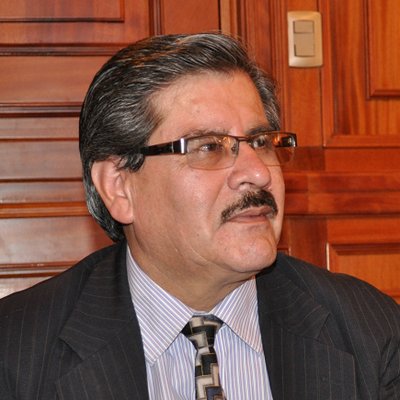
Death threats against Ecuadorian human rights defender Javier Medardo Feijoo Villa

October 22, 2023

On 20 October 2023 Front Line Defenders wrote that between 2 October 2023 and 16 October 2023, human rights defender Javier Medardo Feijoo Villa received several death threats via phone calls and voice messages towards both him and his family. The unidentified perpetrators claimed that they were keeping the human rights defender under surveillance, and maintained that they had access to his data and aware of all his moves within the community.l

Javier Medardo Feijoo Villa is the president of the Estero Piedras community, located in the coastal area of the Molleturo on Azuay province. This community is also part of the San Felipe de Molleturo Commune, an ancestral territory that has been of great importance to the region, given that it has fought to defend against attempts by transnational mining companies to dispossess the people in the region of their land and water sources. He is also president of the North Zone Road Committee, which represents 15 communities in the region. As a community leader, the human rights defender has sought support from the competent authorities to stop criminal acts and illicit activities, mainly assaults and robberies caused by criminal groups that threaten the area. Javier has played an important role in the defence of water, nature and the territories belonging to the communities who he represents.

Since 2 October 2023, human rights defender Javier Medardo Feijoo Villa has been the target of several death threats. Over the course of two weeks, he has received calls and voice messages threatening to kill him and his family. The callers claimed to be keeping the human rights defender under surveillance, and maintained that they had access to his data, as well as all his moves. The level of violence articulated in these threats increased over the weeks, causing the human rights defender to stop responding to messages or calls altogether, and provoking him to block the numbers of those who called him. The threats continued up until 16 October 2023. The human rights defender has been filing relevant complaints with the Prosecutor’s Office about the recent threats and has requested that the Police Commander of Zone 6 take the necessary measures protect him and his family.

Violence against human rights defenders working on indigenous, land and environmental rights has been on the rise in Ecuador; human rights defenders Andrés Durazno and Alba Bermeo were murdered in 2021 and 2022 respectively. Still to this day no one has been charged with their murder.

https://www.frontlinedefenders.org/en/case/ecuador-death-threats-against-human-rights-defender-and-community-leader-javier-medardo-feijoo

Sad story continues: Saba Sahar, Afghanistan’s First Female Film Director, shot

August 26, 2020
saba sahar
Saba Sahar facebook

Afghan actress Saba Sahar was reportedly shot in Kabul on Tuesday 25 August. Her husband Emal Zaki told the BBC that three gunmen opened fire on the car she was traveling in on her way to work just five minutes from their house, the outlet reported. Zaki said that Sahar was one of five people in the vehicle, including the driver, two bodyguards and a child, according to the BBC. It was not clear if the child was one of Sahar’s children. Both bodyguards reportedly also sustained injuries from the shooting, according to BBC. In addition to her work as an actress and director, Sahar is a trained police officer and women’s rights advocate.

Afghanistan: The rise in attacks and assassination attempts on human rights defenders, political activists, journalists and film actors is extremely worrying,” Amnesty International South Asia said in a tweet on Tuesday, responding to the news of the attack on Sahar.  See also: https://humanrightsdefenders.blog/2020/06/30/car-bomb-kills-two-human-rights-workers-in-afghanistan/

In an interview with The Guardian in 2012 she said:  “I want to show the conservatives who lock their daughters and wives at home that they should let them out to get an education, earn some money and help rebuild Afghanistan,” she said, adding that she has received death threats from anonymous phone callers. “They told me to say goodbye to my loved ones because I’d soon be dead.” After reporting the threats to authorities, Sahar said the calls only continued. “They called me again and asked why I’d gone to the authorities,” she said. “They said that even if the whole government is behind you, we will still kill you. We will murder you on the street, in public.” “Every morning when I leave the house, I know I might get killed, might never see my family again,” she told The Guardian at the time.

Appeal to support human rights defender Waldo Albarracín in Bolivia

July 8, 2020

Human rights defender Waldo Albarracín continues to be the subject of death threats and may be the target of surveillance, as a result of his work in Bolivia. Since October 2019, the defender has been targeted on a regular basis with threatening messages via his Facebook account by known and unknown individuals. The messages include threats to incriminate him and to set his house on fire.

Waldo Albarracin

About Waldo Albarracín: Waldo Albarracín is a well established and widely recognised human rights defender in Bolivia. He was the President of the Permanent Assembly of Human Rights of Bolivia (APDHB) from 1992 to 2003 and the Bolivian Ombudsman from 2004 to 2010. He is the current Rector of Universidad Mayor de San Andrés in La Paz and President of the National Committee for the Defence of Democracy (CONADE), a civil platform defending political rights.

1 July 2020 Front Line Defenders called for urgent action. Those of you who want to take action in this and other cases of threatened HRDs, should subsctibe to Front Line’s almost daily information.

Download the Urgent Appeal

In May 2020, Waldo Albarracín was mentioned as a target in a threatening video posted and circulated on social media by the illegal armed group Resistencia Juvenil Cochala. At 1:10 in the video, one man of a group of six men, hooded and armed, stated: “Resistencia Juvenil Cochala will fight on behalf of the Bolivia against Waldo Albarracín and Bolivian political leaders.” The armed group currently exceeds 5,000 members online and describes itself as a citizen’s platform, formed to fight against tyranny and in promotion of democracy in Bolivia. According to the group, it has no one leader.

In June 2020, the Fake Antenna Detection Project, an initiative established by the South Lighthouse organisation, released its findings that Waldo Albarracín, along with a number of human rights organizations and academic entities, may have had their mobile phones intercepted. The study identified 24 suspicious antennas, capable of interfering with mobile phones, some of which were located by the Office of the Permanent Assembly of Human Rights in Bolivia and also by the University Mayor de San Andres, both places where Waldo Albarracín works from. It has been suggested by local media that the interceptions were orchestrated by the military and government authorities, however the authorities are yet to comment publicly on the existence of the antennas and how permanent they are. South Lighthouse researches and monitors surveillance activities and abusive technological practices threatening human rights, security, and privacy in Latin America and other parts of the world.

Front Line Defenders has previously expressed concern regarding the risks faced by Waldo Albarracín. Although the human rights defender has faced risks since 2004 as a result of his human rights work, there has been a worrying escalation since the protests in 2019 regarding the results of the presidential election. On 10 November 2019, the defender’s house was set on fire by a crowd of around 500 people, whilst his family were still inside.

..Front Line Defenders believes he is being targeted solely as a result of his peaceful and legitimate human rights activities.

https://www.frontlinedefenders.org/en/case/ongoing-death-threats-against-and-potential-surveillance-waldo-albarracin

Indonesian human rights defender Veronica Koman receives Sir Ronald Wilson Human Rights Award

October 24, 2019

The Australian Council for International Development (ACFID) has awarded the Sir Ronald Wilson Human Rights Award to Indonesian lawyer and human rights defender Veronica Koman for her courageous work in exposing human rights violations in the Indonesian Provinces of Papua and West Papua. [https://humanrightsdefenders.blog/2019/09/17/un-experts-urge-indonesia-to-protect-human-rights-defender-veronica-koman/]

Amid the recent internet blackout and mass demonstrations in West Papua Ms Koman disseminated information about the escalating situation on social media and functioned as a key source of information to the outside world. It honours the courage she has shown to continue to stand up for the human rights of West Papuans, and their right to self-determination, despite intensifying harassment and intimidation. Ms Koman has received death threats and accusations of being a traitor and has had charges brought against her for spreading false information and provoking unrest, with penalties of up to 6 years in prison. There are reports that Indonesian authorities have requested Interpol to put Ms Koman on a ‘red notice’ to locate her and enable her extradition. ACFID presented the award to Ms Koman at its annual conference on Wednesday 23 October 2019, in Sydney.Ms Koman said: “I dedicate this award to the victims of the crackdown which began in late August in West Papua, especially the dozens who have died at the hands of security forces, and the 22 political prisoners charged with treason. I hope this year’s award will raise awareness in Australia about human rights abuses suffered by West Papuans and the decades-long denial of their fundamental right to self-determination.

ACFID CEO, Marc Purcell, said: “We call on the Government of Australia to provide Ms Koman the protection to which she is entitled as a human rights defender. In line with recommendations from the UN Office of the High Commission of Human Rights, the Australian Government should also encourage Indonesia to drop all charges against Ms Koman and to protect the freedom of expression of all people reporting on the protests in West Papua.

For the Sir Ronald Wilson Human Rights Award see: http://www.trueheroesfilms.org/thedigest/awards/sir-ronald-wilson-human-rights-award

https://acfid.asn.au/media-releases/veronica-koman-receives-sir-ronald-wilson-human-rights-award?utm_source=miragenews&utm_medium=miragenews&utm_campaign=news

Philippines: UN rapporteurs ask for exceptional investigation, while labour rights defender shot dead

June 7, 2019

The ink on the bill for the protection of human rights defenders [see: https://humanrightsdefenders.blog/2019/06/04/philippines-human-rights-defenders-protection-bill-adopted-in-parliament/] has hardly dried and the following is reported: on 2 June 2019 union organiser Dennis Sequeña was shot dead while meeting with workers. Sequeña was vice-chairperson of labour group Partido Manggagawa; group believes he was murdered for his trade union work. Civil society organisations condemn the killing & demand immediate investigation, as well as action to stop spate of attacks against labour activists.

Also on 7 June a group of UN human rights experts collectively called on the United Nations to establish an independent investigation into human rights violations in the Philippines, citing a sharp deterioration in the situation of human rights across the country, including sustained attacks on people and institutions defending human rights. “Given the scale and seriousness of the reported human rights violations we call on the Human Rights Council to establish an independent investigation into the human rights violations in the Philippines.

We have recorded a staggering number of unlawful deaths and police killings in the context of the so-called war on drugs, as well as killings of human rights defenders. Very few independent and effective investigations have taken place, independent media and journalists are threatened, the law has been weaponised to undermine press freedom, and the independence of the judiciary is undermined,” the experts said. [ndependent human rights experts appointed by the Human Rights Council have raised their concerns with the Government of the Philippines on 33 occasions over the last three years!]

In a statement of 8 May 2019 the ISHR and other NGOs had recalled that: the Philippines is one of the most dangerous countries for human rights defenders. They persevere under harsh conditions, fighting against repression and corruption to make a better society for all. They continue their work so the most vulnerable are protected and their voices are heard.  ISHR – along with CIVICUS, Frontline Defenders, FORUM Asia, FIDH, and the World Organisation Against Torture– released a joint statement denouncing recent death threats addressed to Karapatan Secretary General, Cristina Palabay, and urging the Philippine Government to respond to the threats against human rights defenders by taking genuine and effective measures for their protection.

See also the reactions in the media by the Government: https://www.philstar.com/headlines/2019/06/08/1924735/intellectually-challenged-palace-slams-un-experts-call-probe-staggering-philippines-killings

and https://www.bulatlat.com/2019/06/08/karapatan-to-duterte-allow-un-independent-probe-on-rights-violations-in-ph/

——-

http://www.scoop.co.nz/stories/WO1906/S00047/call-for-independent-probe-into-philippines-violations.htm

https://www.rappler.com/nation/232094-partido-manggagawa-dennis-sequena-killed-cavite-june-2-2019

Philippines: Union organiser Dennis Sequeña shot dead while meeting with workers

http://www.ishr.ch/news/philippines-calling-accountability-violations-against-human-rights-defenders

The story of Pierre-Claver Mbonimpa: a survivor from Burundi

May 27, 2019

On 24 May 2019 Open Democracy published another long piece on an inspiring human rights defender – in cooperation with the Fund for Global Human Rights.  In “How international solidarity saved an activist’s life in BurundiAntoine Kaburahe describes the story of Pierre-Claver Mbonimpa, the laureate of the Martin Ennals Award 2007. [http://www.martinennalsaward.org/hrd/pierre-claver-mbonimpa-2/]. The author was personally involved in the case and the piece is a good example of how international solidairy can save lives.

A man standing beside children in green clothing
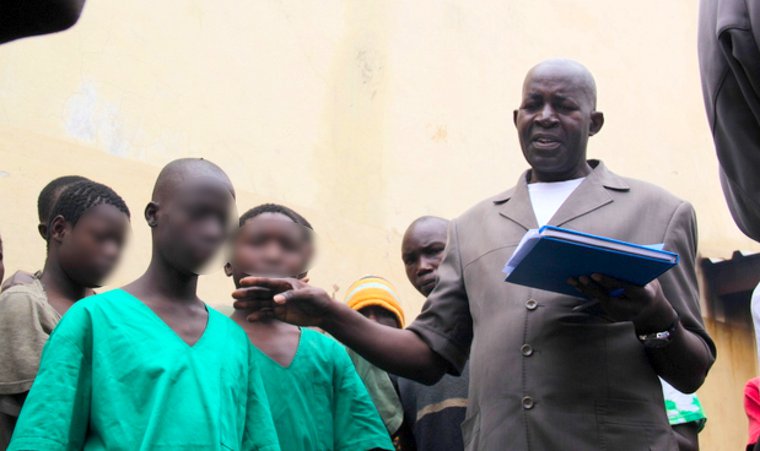
Pierre-Claver Mbonimpa visiting minors detained in prison
..Pierre-Claver Mbonimpa was the founder of a human rights organisation, APRODH, in his home country of Burundi, and it had worrying information: the ruling party was secretly distributing weapons to its youth wing. APRODH had also investigated the military training of young Burundians across the border in the Democratic Republic of the Congo, where Burundians had been involved in a long-running conflict – without unofficial support from their government. In 2014 Mbonimpa had been imprisoned by the Burundian authorities, which accused him of “smearing the government and lying”. Thanks to an international mobilisation, including a call from Barack Obama, then US president, he had been released on parole, but the regime kept an eye on him…..Pierre-Claver Mbonimpa was used to threats. But that day, the killers meant them. It was in the evening that the news dropped. Pierre-Claver had been shot. Word spread rapidly: ‘Mutama’, the ‘old man’, as he is affectionately called, is well-known and respected for his commitment to human rights in Burundi…

Pierre-Claver Mbonimpa remembers well what had happened. He had been in his car with his driver. “I saw behind us a motorcycle that was riding at a breakneck speed. The bike got to us at a fast pace. The man shot four bullets. The shooting was almost close-range. A bullet hit me on the neck and blood spurted.” Bleeding heavily, he was rushed to hospital in a critical condition. I went there to see what was happening: at the time I was still a journalist in Burundi before being myself forced into exile. The crowd was already at Bujumbura Central Polyclinic.

Security guards sent by various embassies came to ensure my safety at the Polyclinic, because there was a rumour that I was going to be killed in my hospital bed,” says Pierre-Claver. “All the embassies worked in synergy for my evacuation. “Despite my weakness, my pain, I would like to say that I saw a great surge of solidarity at that moment,” says Pierre-Claver. “In my room I saw distinguished individuals such as diplomats of the African Union, those of the European Union and ambassadors.

It was clear to his supporters that Pierre-Claver needed to leave the country immediately. Currently in Belgium as a refugee, [his daughter] Zygène Mbonimpa remembers with overwhelming emotion the support of The Fund for Global Human Rights: “Doctors quickly noticed that Mutama had been seriously affected. He needed care he could not find in Burundi. And then, we were afraid he would be finished off on his hospital bed. I wrote to Tony Tate [programme officer at the Fund] and his reaction was quick. He agreed to pay for flight tickets, and the organisation also contributed to the payment of hospitalisation costs in Burundi.”

Tate confirms Zygène’s account... I immediately sought approval from my directors and board members to make an emergency grant,” he says. “We were able to wire the money to APRODH’s account within 24 hours. After the money arrived, it became clear that Pierre-Claver would receive other money and assistance from other funders as well. The money The Fund provided was combined with others to pay for the travel costs of one of his family members to accompany him to Brussels.

That financial support was critical. The Belgian embassy had agreed to give Pierre-Claver a visa, but the family had to find air fares in a very short time. “Without this support, we would have had a big problem to raise this money while Dad’s life was in a very critical condition,” says Zygène. Tate says he was pleased that the Fund was able to respond to the incident and ensure the safety of one of its long-time partners: “My hope was that the family would see that as an organisation, we stand by our grantees in good times and in bad,” he says. “As a human rights funder, we have an ethical responsibility to provide emergency funding when activists we support are in danger. Human rights work is inherently risky and those who support it must stand ready to respond quickly when defenders are in need.”

In Brussels, Pierre-Claver was quickly operated on. Doctors first fastened a metal frame on his head to hold his skull together. He spent 121 days in hospital, fed by serum and then a kind of porridge, as he could not open his mouth or chew food. He sat in an armchair, unable to lie down, and his weight went down from 82 kg to 54 kg. But his ordeal did not stop there. As they had missed him, those who wanted to kill him went after his family. First, his son-in-law, Pascal Nshirimana, was killed, and while he was still in the hospital, his son Weli, 24, was also killed. [see e.g.: https://humanrightsdefenders.blog/2015/11/12/mea-laureate-mbonimpa-has-message-of-hope-at-his-sons-funeral/]

Through all this, the now seventy-year-old activist has remained a man guided by peace and justice. We have never heard him speak of revenge…

Always on the phone, Pierre-Claver continues to encourage teams on the ground. He also travels very often in the sub-region. “It is important that the international community continues to support independent human rights organisations in Burundi,” he says, “because with the closure of UN organisations and the ban on international media including the BBC, there is a risk that human rights violations will be committed behind closed doors. Organisations such as APRODH still have focal points. But they need means to work.”

Pierre-Claver remains modest and accessible despite two honorary doctorates by major Belgian universities and several international awards. [see: https://humanrightsdefenders.blog/2017/10/17/mbonimpa-wins-also-the-2017-civil-courage-prize/]. Asked what he thinks of those who tried to kill him, he simply answers: “I forgave those who shot me and those who killed my son and my son-in-law. But I want justice. If the assassins were arrested, I would be happy to see justice doing its job. For my part, I will not ask for any compensation. What would they give me for the death of my child and my son-in-law?

https://www.opendemocracy.net/en/frontline-insights/how-international-solidarity-saved-an-activists-life-in-burundi/

Trans defender’s Karla Avelar’s life is under constant threat

May 16, 2017

Brian Dooley of Human Rights First, wrote the following piece “Karla Avelar’s Life Of Constant Threats” in the Huffington Post of 13 May 2017 (in full below). Karla (El Salvador) is one of the three finalists of the Martin Ennals Award for Human Rights Defenders [https://humanrightsdefenders.blog/2017/04/26/breaking-news-three-human-rights-defenders-selected-as-finalists-for-the-2017-martin-ennals-award/].  An rise in deadly violence against transgender women in El Salvador prompted the United Nations on Friday to call for an investigation into crimes against sexual minorities in the conservative Central American country. So far this year, seven transgender women have been killed in El Salvador, according to the Office of the U.N. High Commissioner for Human Rights [http://www.reuters.com/article/us-elsalvador-violence-lgbt-idUSKBN189018]

CARLOS CRUZ, COMCAVIS TRANS
Karla Avelar, advocating despite the danger.

Six times in two years. Human rights activist Karla Avelar has been forced to move home six times in the last two years after being physically threatened by individuals she believes are gang members and for her work as a human rights defender in El Salvador.

She’s a leading advocate for the human rights of LGBT people, founder and head of COMCAVIS TRANS, an organization known for its work for transgender people for nearly a decade. It’s dangerous, unpopular work, and Avelar is regularly targeted and threatened.

A couple of weeks ago she was forced to move home when people tried to extort from her possible prize money for the Martin Ennals Human Rights Defender Award, for which she is a finalist. The award’s winner will be decided and announced in October, but news of her nomination has prompted these latest threats.

It hasn’t been an easy life. She was shot in two separate incidents, spent five traumatic years in jail and has been a constant target of abuse for being a transgender woman. Avelar told my colleague Mariel Perez-Santiago at her office in San Salvador last year how she had been raped by more than a hundred men on her first day in prison, and that the attacks continued with the complicity of prison staff.

She became a formidable advocate for the rights of trans people in and out of prison, helping to win important reforms in the prison where she used to be an inmate. Thanks to her campaigning, transgender women are now separated from men in different wards, and human rights organizations are allowed access to the prisoners to educate them about their rights. She also represented El Salvador’s LGBT civil society at the country’s 2014 Universal Periodic Review at the United Nations in Geneva.

Her advocacy has led to international recognition including becoming a finalist for this year’s Martin Ennals Award. “Transgender persons, and the wider LGBT community, face widespread hostility and social rejection in El Salvador,” said the Martin Ennals organization in a statement. “Crimes against them are almost never brought to justice, which results in a climate of impunity. Sadly, this treatment of transgender people can be seen well beyond El Salvador. We aim to highlight Ms. Avelar’s bravery in continuing her work. We are encouraged that the authorities contacted her after the media coverage of the latest threats. This needs to be followed up with judicial proceedings against those responsible and, most importantly, effective protection for Karla Avelar.”

Her profile has meant that the threats against her are receiving attention, and the Attorney General’s office has been in touch with her to discuss issues of her safety. But for Avelar and others in El Salvador’s LGBT community the risks are daily and grave. She estimates around 600 cases of unsolved murders of LGBT people in the country over the last 25 years.

“Sadly, these most recent threats against me are not surprising and are part of a broader and systematic pattern of persecution of members of the LGBT community in El Salvador,” said Avelar. “I will not be silenced by these threats, but the Salvadoran government must guarantee my safety and that of all human rights defenders and activists, who work tirelessly to monitor and urge respect for the human rights of the most vulnerable.”

Forced to leave her home again and again, she’s asking for protection as well as international visibility. Making her more famous won’t guarantee her safety but we can try to help by sharing her story with whoever we know, by showing that we’re watching, and by saying that she should be protected and never be forced to move again.

Source: Karla Avelar’s Life Of Constant Threats | HuffPost

Imran Anjum in Pakistan called a ‘blasphemer’ for caring about brick makers

June 2, 2016

imran_anjum

Imran Anjum is a human rights defender from the city of Sahiwal, Punjab province in Pakistan. He is the Founder and the Executive Director of Peaceful & Active Center for Humanity (PEACH), a non-governmental organisation working on the social and economic development of some of the most disadvantaged communities in Pakistan. Imran Anjum is directly involved in the provision of legal aid to people from these communities and carries out advocacy work on the rights of bonded labourers, including child labourers and brick kiln workers. Currently, PEACH is running a campaign across the Punjab province aimed at raising awareness among brick kiln workers about their rights.

On 20 May 2016, a group of brick kiln owners displayed banners around the city of Gojra, Punjab province, calling human rights defender Mr Imran Anjum ‘a blasphemer‘ and insisting on his execution. These threats follow an attack on 9 May 2016, when Imran Anjum, along with two of his colleagues, was travelling home to Sahiwal from a conference in Gojra devoted to the protection of the rights of brick kiln workers. Two people on motorbikes chased his car, forcibly stopped him, dragged him and his colleagues out of the vehicle and threatened them at gunpoint. They said that they would kill the human rights defender and his colleagues if they did not stop their labour rights work or if they went back to Gojra.Frontline NEWlogo-2 full version - cropped

https://www.frontlinedefenders.org/en/case/case-history-imran-anjum