The candidates (activists, personalities or organisations) must have distinguished themselves in the following areas: protection of human rights, defence of pluralist democracy, public awareness raising on issues of global interdependence and solidarity.
Nominations can be submitted through the online form available on the North-South Prize webpage. The deadline for presenting nominations is 15 September. The Jury of the North-South Prize, composed by the members of the Bureau of the Executive Committee of the North-South Centre, will meet in the last quarter of 2022 to select this year’s Laureates.
In a short statement that was issued on 10 March 2022, the Russian Ministry of Foreign Affairs indicated that they will no longer participate in the Council of Europe in response to ‘the EU’s and NATO’s continued efforts to destroy the Council of Europe and the common humanitarian and legal space in Europe’. It could mean that Russia may leave Europe’s main organisation on human rights, rin response to its recent suspension related to the war in Ukraine.
“Russia will not participate in the transformation by NATO and the EU obediently following them of the oldest European organization into another platform for incantations about Western superiority and narcissism,” the ministry said, according to Russian media outlet RIA News. “Let them enjoy communicating with each other without Russia.”
Russia joined the Council of Europe in the winter of 1996, and since then the country has had a moratorium on the death penalty. Two years later, Moscow ratified the European Convention for the Protection of Human Rights and Freedoms (ECHR).
Several times Russia was deprived of the right to vote in the Parliamentary Assembly of the Council of Europe, despite the fact that it is one of the five largest sponsors of the organization. After the start of the special operation in Ukraine, the Council of Europe suspended Moscow’s membership.
On 17 March 2022 the Committee of Ministers of the Council of Europe has formally decided that the Russian Federation ceases to be a member of the organisation. This happens after just over a quarter century of membership, since Russia joined on 28 February 1996.
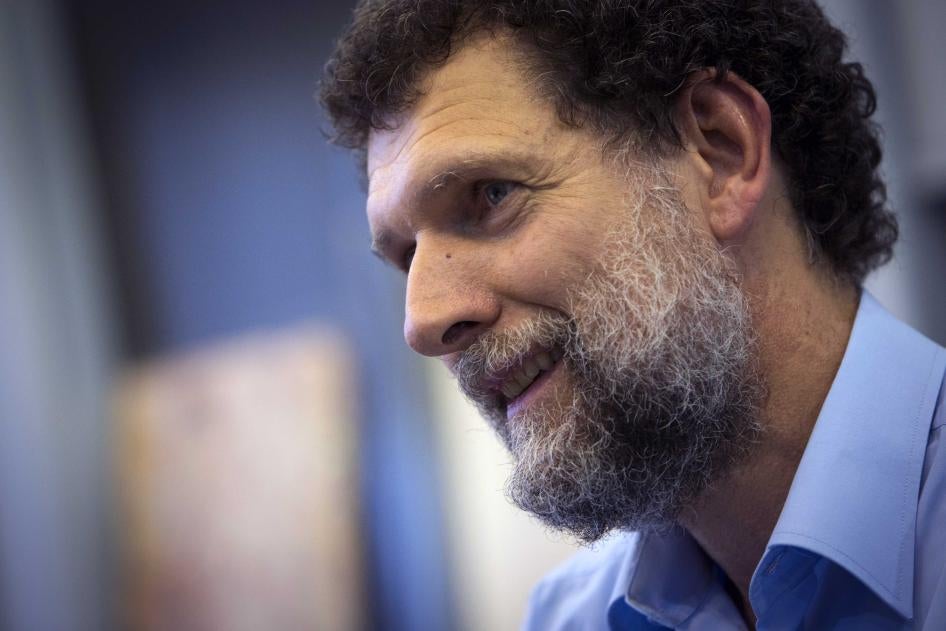
The Council of Europe Committee of Ministers voted on 2 February, 2022 to begin infringement proceedings against Turkey. Human Rights Watch called it an important step to support human rights protection in Turkey and uphold the international human rights framework. The resolution concerns Turkey’s failure over the past two years to comply with the European Court of Human Rights’ judgment in which the Court ruled that Turkey should free human rights defender Osman Kavala and fully restore his rights. See also: https://humanrightsdefenders.blog/2022/01/18/kavala-saga-continues-turkish-court-keeps-philanthropist-in-prison/
“The Committee of Ministers’ vote to pursue infringement proceedings against Turkey for its politically motivated, arbitrary detention of human rights defender Osman Kavala shows a resolve to uphold the international human rights law framework on which the Council of Europe is based,” said Aisling Reidy, senior legal adviser at Human Rights Watch. “The resolution sends a reminder to all Council of Europe member states that European Court of Human Rights judgments are binding, and it is an important acknowledgement of Turkey’s rule of law crisis.”
The Committee voted to send the case of Kavala v Turkey back to the European Court of Human Rights for a legal opinion on whether Turkey has met its obligations to comply with the judgment. If the European Court confirms – as it is expected to do – that Turkey has failed to implement its judgment, the Committee of Ministers may then take additional measures against Turkey.
These could include ultimately suspending Turkey’s voting rights in the Council of Europe and could even jeopardize Turkey’s membership. Turkey is the second country in Council of Europe history to be subjected to the sanction process for breaching member states’ obligations to implement European Court of Human Rights judgments. (first time was in 2017 against Azerbaijan in the case of Ilgar Mammadov).
The Kavala judgment is legally binding, yet the Turkish authorities have snubbed the Strasbourg court and ignored the decisions of the Committee of Ministers, which represents the Council’s 47 member states, calling for his release and the full restoration of his rights. Ankara has already reacted as expexted: it has accused the Council of Europe of “interfering in an ongoing judicial process“
The Turkish courts and prosecutors have engaged in a series of tactics to circumvent the authority of the European Court and the Council of Europe, using domestic court decisions to prolong Kavala’s detention and extend the life of baseless prosecutions. The courts have issued sham release orders, initiated multiple criminal proceedings against Kavala on the same facts, and separated and re-joined case files accusing him of bogus offenses.
In 2021, Turkey merged the proceedings against Kavala with an entirely separate and much older case against football fans and others charged with a demonstration during 2013 protests a few kilometers away from Istanbul’s Gezi Park.
Turkey’s international partners, in particular countries that supported the infringement vote, should make it clear that Turkey’s continued failure to implement the Court’s judgment and to release Osman Kavala would have consequences on their relations with Turkey. In particular, the European Union should tie its proposed “positive agenda” with Turkey to Kavala’s release and make respect for rights a prerequisite for opening talks on the Customs Union modernization that Turkey is seeking.
“Turkey knows that the European Court’s judgments are binding but has chosen to defy its obligations and the rule of law,” Reidy said. “Through the infringement proceedings and engagement from other countries, that needs to change, and Turkey should free Osman Kavala immediately and restore all of his rights.”
A Turkish court ruled Monday that prominent Turkish civil rights activist and philanthropist Osman Kavala should stay in prison, despite his more than four years in pre-trial detention. The hearing took place as a Council of Europe deadline that could trigger infringement procedures looms. The European Court of Human Rights ruled in 2019 that Kavala’s rights had been violated and ordered his release. But Turkey has repeatedly refused to do so. Kavala, who is in Silivri prison on the outskirts of Istanbul, did not participate in the hearing in line with an October statement that he would no longer attend trials via video conference because he didn’t have faith the court would deliver a fair trial.
Kavala, 64, is accused of financing nationwide anti-government protests in 2013, attempting to overthrow the government by helping orchestrate a coup attempt three years later and espionage. He denies the charges, which carry a life sentence without parole. He was acquitted in February 2020 of charges in connection with the 2013 Gezi Park protests. As supporters awaited his release, Kavala was rearrested on new charges. The acquittal was later overturned and linked to charges relating to the 2016 coup attempt, which the Turkish government blames on the network of US-based Muslim cleric Fethullah Gulen, who denies any ties to the coup. That trial is now part of a merged case involving 51 other defendants, including fans of the Besiktas soccer club who were acquitted six years ago of charges related to the Gezi protests before that decision also was overturned. Kavala is the only jailed defendant.
“His continued imprisonment for 1,539 days is the continuation of lawlessness identified by the European Court of Human Rights,” Bayraktar his lawyer said. “End this lawlessness today so our client gets his freedom.” In October, Kavala’s case also caused a diplomatic crisis between Turkey and 10 Western countries, including the United States, France and Germany, after they called for his release on the fourth anniversary of his imprisonment. Turkish President Recep Tayyip Erdogan openly disdains Kavala, accusing him of being the “Turkish leg” of billionaire US philanthropist George Soros, whom Erdogan alleges has been behind insurrections in many countries. He threatened to expel Western envoys for meddling in Turkey’s internal affairs. The European Court of Human Rights’ 2019 decision said Kavala’s imprisonment aimed to silence him and other human rights defenders and wasn’t supported by evidence of an offense. The Council of Europe, a 47-member bloc that upholds human rights, notified Turkey in December that it intended to refer the case to the court to determine whether Turkey refused to abide by final judgments, which are binding. It called on Turkey to release Kavala immediately and conclude the criminal procedures without delay. It asked Turkey to submit its views by Jan. 19 before a Feb. 2 session of the council. Kavala is the founder of a non-profit organization, Anadolu Kultur, which focuses on cultural and artistic projects promoting peace and dialogue. https://humanrightsdefenders.blog/2020/09/16/osman-kavala-and-mozn-hassan-receive-2020-international-hrant-dink-award/
The prize is worth €10 000 and the award ceremony will be held at the Council of Europe’s headquarters in Strasbourg on or around 17 January 2022 – the date of Raoul Wallenberg’s arrest in Budapest in 1945.
The Prize Jury consists of six independent persons with acknowledged moral standing in the field of human rights and humanitarian work, appointed by the Secretary General of the Council of Europe, the Swedish Ministry of Foreign Affairs, the municipality of Budapest, the Raoul Wallenberg Institute in Lund, the United Nations High Commissioner for Refugees (UNHCR) and the Raoul Wallenberg family.
The deadline for submitting candidatures for the 5th edition of the Prize is 31 October 2021.
Vaclav Havel banner above National Museum Prague, VitVit via Wikimedia Commons, CC BY-SA 4.0
This year’s Václav Havel Human Rights Award has shortlisted three female finalists, The panel nominated Saudi women’s rights defender Loujain al-Hathloul, a group of young Buddhist nuns from a monastery in Nepal and Julienne Lusenge, who documents cases of wartime sexual violence in the Congo.
The nuns from the monastery called Amitabha Drukpa constitute a group who promotes gender equality, environmental sustainability, and intercultural tolerance in the Himalayan villages. They gained fame by transporting material help to outlying villages after an earthquake near Kathmandu in 2015. They also teach women’s self-defense and they have biked over 20,000 kilometers in protest against trading in women and girls.
Lusenge is a human rights activist who documents cases of sexual abuse and violence against women in Congo. She has contributed to the conviction of hundreds of perpetrators of acts of sexual violence against women nationwide. She was often threatened for her work.
Michael Žantovský, director of the Václav Havel Library, said: “Last year, we dedicated the autumn Prague conference, which usually takes place on the occasion of the Václav Havel Prize, to women’s rights. We are glad that the jury followed a similar point.”.
Ebru Timtik, 42, died in an Istanbul hospital late Thursday 27 August 2020, the Progressive Lawyers’ Association said. She had been fasting for 238 days. The lawyer and 17 of her colleagues were accused of links to the outlawed Revolutionary People’s Liberation Party-Front, or DHKP/C, a militant group designated a terrorist organization by Turkey, the United States and the European Union. She was convicted in March 2019 and sentenced to 13 years and six months in prison. Her case was under review by an appeals court.
On Friday, police tried to prevent a crowd of her supporters from gathering outside the Istanbul Bar Association for a memorial, the Evrensel newspaper reported. Later, riot police used tear gas and rubber bullets to block a protest march. At least one lawyer was detained, the paper said. “Ebru Timtik is immortal” and “Aytac Unsal is our honor,” some of the mourners chanted, according to Evrensel.
European Commission spokesman Peter Stano said: “Ebru Timtik’s hunger strike for a fair trial and its tragic outcome painfully illustrate the urgent need for the Turkish authorities to credibly address the human rights situation in the country and the serious shortcomings observed in the Turkish judiciary,” Stano said.
“Ms. Timtik’s death is a tragic illustration of the human suffering caused by a judicial system in Turkey that has turned into a tool to silence lawyers, human rights defenders and journalists,” said Dunja Mijatovic, the Council of Europe’s human rights commissioner.
Hunger strikers in Turkey traditionally refuse food but consume liquids and take vitamins that prolong their protests. Timtik’s death comes months after two members of a left-wing popular folk group that is banned in Turkey also died of a hunger strike. They had also been accused of links to the DHKP/C.
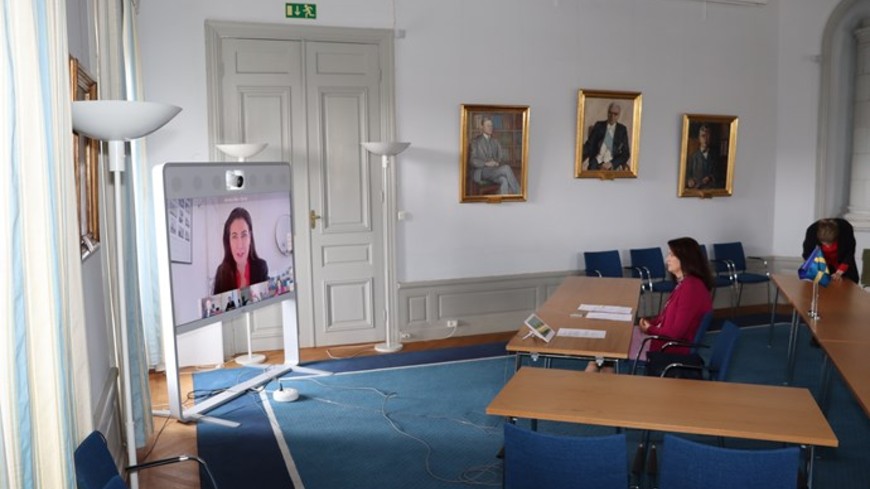
A “digital meeting” was organised by the Swedish Ministry of Foreign Affairs to discuss the fight against COVID-19 and its impact on democracy and human rights.
“The major social, political and legal challenge is our democracies’ ability to respond to the COVID-19 sanitary crisis effectively, without undermining Europe’s founding values of Democracy, Human Rights and Rule of Law. The Council of Europe, through its statutory organs and all its competent bodies and mechanisms will ensure that measures taken have a legal basis and remain proportional to the threat posed by the spread of the virus and limited in time“, said Christos Giakoumopoulos, Council of Europe Director General of Human Rights and Rule of Law, at a digital meeting organised by the Swedish Ministry for Foreign Affairs.
The topic of the meeting was the fight against COVID-19 and its impact on democracy: the participants aimed at contributing to the global conversation about the risk of the COVID-19 response leading to, or being used as a pretext for, undue restrictions on human rights, democracy and the rule of law.
Christos Giakoumopoulos took part in the meeting with the Swedish Minister for Foreign Affairs Ann Linde and Minister for International Development Cooperation Peter Eriksson, as well as with other three representatives of key intergovernmental organisations: Michelle Bachelet, UN High Commissioner for Human Rights, Eamon Gilmore, EU Special Representative for Human Rights and Ingibjörg Sólrún Gísladóttir, Director of the OSCE Office for Democratic Institutions and Human Rights.
Paul Goble reported on 23 March 2020 in the Eurasia Review that Adel Bashqawi, a Circassian human rights defender, has pointed out something that most have lost sight of: Vladimir Putin – by amending the Russian constitution as he proposes to do – is eliminating the provisions which allowed Russia to join the Council of Europe in 1994.
The full text of Bashqawi’s open appeal is given below:
In 1993, the Constitution of the Russian Federation was adopted, recognized by the Venice Commission of the Council of Europe in 1994 as conforming to the principles of a democratic state governed by the rule of law. This conclusion was one of the grounds for Russia’s admission to the Council of Europe.
In January-March 2020, Russian President Vladimir Putin initiated amendments to the Constitution hastily adopted by the Federal Assembly of the Russian Federation, causing extremely negative reactions from Russian civil society, representatives of indigenous peoples of the Russian Federation, human rights defenders, and the expert community.
The proposed amendments to the Constitution of Russia, in particular the new version of Article 68 of the Constitution of the Russian Federation, establish “The state language of the Russian Federation throughout its territory is the Russian language as the language of the state-forming nation, which is part of the multinational union of equal nations of the Russian Federation.”
This norm, in our view, introduces ethnic segregation and discrimination of its indigenous peoples and national minorities in Russia, dividing the multinational people of the Russian Federation and granting a special status to ethnic Russians as a state-forming nation. Other indigenous peoples of Russia and national minorities are established as of non-state-forming peoples, if fact determining them to the status of “second-class” peoples and citizens. These amendments to the Constitution of the Russian Federation alienate Russia from the principles of a democratic federal state governed by the rule of law with a republican form of government, European constitutional values and democratic norms, and directly contradict Russia’s obligations within the Council of Europe.
We ask the Parliamentary Assembly of the Council of Europe to send a request to the Venice Commission on the compliance of the amendments to the Constitution of the Russian Federation, in particular Article 68 of the Constitution of the Russian Federation, with Russia’s obligations within the Council of Europe.
We also ask the Parliamentary Assembly of the Council of Europe to send a monitoring mission of PACE to Russia to assess the situation of Russia’s indigenous peoples and national minorities, in the light of decisions taken in Russia on ethnic segregation and discrimination of its peoples.
“.. it is saddening to note that most of the challenges identified 25 years ago are still present in Europe today. In some areas progress has stalled due to persistent structural obstacles and an increasing backlash, combined with the lack of a sufficient and robust state response.
Violence against women as a serious human rights violation remains a bitter reality for too many women in all Council of Europe member states. Notwithstanding the recent movements against sexual violence, huge challenges still lie along the path towards obtaining justice for women victims who have the courage to speak out. They may even face disbelief and stigmatisation by the very people who should be providing them with assistance and protection. With the rising popularity of social media platforms, sexist hate speech has acquired a worrying dimension, providing a new breeding ground for violence against women. Furthermore, the backlash against women’s rights, upheld by ultra-conservative movements, is particularly disturbing as it endangers the progress towards gender equality that has been achieved so far. This has a particularly negative impact on girls’ and women’s autonomous and informed decision-making about their bodies, health and sexuality and hinders their access to affordable, safe and good-quality reproductive health services. We have to remain vigilant to prevent any such rolling back of women’s rights. Special attention should also be given to the protection and promotion of the rights of girls and women who may experience multiple and intersectional forms of discrimination, such as women living in poverty, rural women, migrant women, Roma women, women with disabilities and LBTI women.
This dark picture is, however, brightened by the image of thousands of women of all ages and backgrounds who, regardless of the attacks, the threats and the harassment they may face, stand up against violence and for the full realisation of gender equality. Vigilance against stagnation and retrogression in women’s rights is ensured by their mobilisation as they peacefully demonstrate throughout Europe. I firmly stand by them and salute their courage and determination. In this respect, I reiterate the essential role played in the upholding of women’s rights by women human rights defenders, who are often at the core of such mobilisation. Not only do they provide assistance and shelter to victims of gender-based violence and combat discrimination against women, they also constantly monitor the situation, while holding authorities accountable for fulfilling their human rights obligations.
However, the fight for the realisation of women’s rights also relies on each of us. I invite society as a whole, from youth to the elderly, women and men, all acting together, to speak up against violence and discrimination. We all have a key role to play as agents of change.
Whilst I perceive society’s mobilisation as vital, we should not forget that citizens’ initiatives cannot in themselves remedy the continuous lack of a strong and official response by state authorities to the challenges currently affecting the full enjoyment of women’s rights. Council of Europe member states have the primary obligation to effectively uphold women’s rights. Against this background, I urge member states to support this civic mobilisation by taking concrete action. To this end they should: firstly, ensure the ratification and full and effective implementation of the Council of Europe Convention on preventing and combating violence against women and domestic violence (Istanbul Convention); secondly, promote gender equality and combat sexism in all spheres of life; and thirdly, provide an enabling environment for all women human rights defenders by removing all obstacles to their work. We should all strongly advocate for the full realisation of women’s rights and rise to the challenge of making a world where gender equality is a reality. Fighting for women’s rights is fighting for everybody’s human rights and benefits society as a whole.”