Posts Tagged ‘China’
May 20, 2013

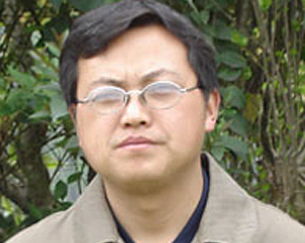
(Chinese activist Chen Guangcheng Photo: AP)
On 19 May 2013
Bruno Waterfield, reports for the Daily Telegraph from Brussels that the blind human rights lawyer,
Chen Guangcheng, the exiled
Chinese dissident has demanded that the European Union (EU) must go public with the results of human rights talks with China’s leaders, and publish its own list of people known to be suffering repression and persecution. Chen Guangcheng wants Western leaders to be more straightforward about their dealings with China so that the public can hold them to account: “
The Chinese authorities try and pretend that they dont care about the highlighting of human right abuses but they do care. It is a responsibility to do this. If it is not pursued more actively the situation will go backwards.“
via Chen Guangcheng pressures the EU on secret human rights talks with China – Telegraph.
Posted in human rights, Human Rights Defenders | 1 Comment »
Tags: Brussels, Chen Guangcheng, China, Daily Telegraph, dialogue, diplomatic pressure, EU, European Union, human rights, Human Rights Defenders, human rights lawyer, List of Chinese dissidents, politics
April 26, 2013
This is the way the NGO “Chinese Human Rights Defenders” (CDHR) presents itself at the Ministerial Conference of the Community of Democracies in Ulaan Bator, so close to ‘home’:
“Do the names Zhou Decai, Cao Haibo, Chen Wei, Chen Xi or Cui Fufang ring a bell to you? They are all prisoners of conscience in China. The Chinese Human Right Defenders (CHRD) are doing all they can to make the stories of prisoners of consciousness heard.

On its website, CHRD defines itself as “a network of Chinese and international activists promoting human rights and empowering rights defenders in China. A non-governmental organization, CHRD provides logistical support and capacity-building services to human rights advocates, monitors human rights developments, and assists victims of human rights abuses. CHRD advocates the peaceful realization of human rights protection through democratization and rule of law reform.”
There are many activities of the network: just to name numerous reports have been published, the last one of them being the “2012 annual report on the situation of human rights in China”; It also submits constant reports and appeals to the UN on the situation of human rights in China, urging it to act for its improvement; their website and Twitter account provide constant updates on human rights violations in China, as well as pictures and videos, with stories which do not usually reach the mainstream media.”
via Chinese Human Rights Defenders- Promoting human rights and empowering grassroots activism in China | Ulaanbaatar Ministerial Conference- Civil Society.
Posted in human rights, Human Rights Defenders | Leave a Comment »
Tags: Cao Haibo, Chen Wei, China, CHRD, Community of Democracies, human rights, Human Rights Defenders, Ministerial Conference, Non-governmental organization, twitter, Ulaanbaatar, Ulan Bator, Zhou Decai
April 25, 2013
(EU) High Representative Catherine Ashton should publicly raise concerns over ongoing and persistent human rights violations in China when she visits Beijing, said Human Rights Watch. “As EU’s top foreign policy official, Ashton cannot ignore the deteriorating human rights environment in China,” said Lotte Leicht, European Union advocacy director. “She needs to make it a central part of her agenda in Beijing.” Ashton should also urge top Chinese officials to stop obstructing Security Council action on Syria, including humanitarian access to all civilians in need, and referring jurisdiction over war crimes and crimes against humanity to the International Criminal Court.
In recent months the EU has issued strong statements, including ones at the United Nations Human Rights Council, on China’s use of the death penalty and the crisis of self-immolations in Tibet, among other issues.
The EU also provides some support to human rights defenders in China…..Yet, the EU’s engagement on human rights in China has been extremely weak since Ashton was nominated as the EU’s first foreign policy chief. The more than thirty rounds of the official EU-China dialogue on human rights have had little discernible positive effect for those standing up for human rights in China, and at other levels of political dialogue the EU has failed to give human rights and the rule of law a degree of public attention commensurate with the importance of these issues in China…
…Although the new Chinese leadership has expressed rhetorical support for reform on some key human rights concerns, such as re-education through labor, abuses remain rampant throughout the country. The Chinese government denies people the full exercise of basic rights such as freedom of expression, association, and religion, and systematically suppresses dissidents and human rights activists…
“Ashton should be prepared to tell her Chinese government interlocutors who speak of the need for reform that a good start would be freeing Liu Xiaobo and lifting the appalling and abusive house arrest imposed on Liu Xia,” said Leicht.
Even the new leadership’s commitment to robustly grappling with rampant corruption – identified as a high priority – is already being called into question. In early April, eight activists were arrested for their involvement in a grass-roots anti-corruption campaign.
China: EU Commitments Demand Tough Response | Human Rights Watch.
Posted in human rights | 3 Comments »
Tags: Beijing, Catherine Ashton, China, dialogue, European Union, HRW, Human right, human rights, Human Rights Defenders, human rights violations, Human Rights Watch, International Criminal Court, Liu Xiaobo, Lotte Leicht, repression, Syria, United Nations Human Rights Council
April 11, 2013
In the early hours of 6 April, human rights lawyer Mr Wang Quanzhang was released from detention in the province of eastern Jiangsu, approximately 56 hours after he was detained and placed under a 10-day judicial detention for “disrupting court order”. The human rights defender was detained for photographing a document which he had been asked to submit to the court, as it was his only copy! The Jingjiang People’s Court released Wang Quanzhang on the grounds that the short detention had already served as a punishment and a warning. However, the human rights defender believes that his release is due to public pressure. Wang Quanzhang had been defending Mr Zhu Yanian, who is a member of Falun Gong and was being tried for ‘using a cult organisation to undermine the implementation of the law’.
For more information on this case, please see Front Line Defender’s Urgent Appeal on 5 April 2013 <http://www.frontlinedefenders.org/node/22244> .
Posted in Front Line, human rights | Leave a Comment »
Tags: China, detention, Falun Gong, Front Line Defenders, Human right, Human rights defender, human rights lawyer, illegal detention, Jiangsu, Jingjiang, lawyer, release, threats, Wang Quanzhang
April 4, 2013

(Photo credit: Wikipedia)
Most of you (but fortunately not all) seem to have understood that my previous post “Gadaffi Human Rights Award resurrected: Mugabe rumored to be Laureate” was not without good reason announced for April 1st.
There is however also more serious news on the awards front: On 13-14 April 2013 the Dalai Lama will hand out the Light of Truth Awards at a ceremony in Fribourg, Switzerland. The award is organised by the International Campaign for individuals and institutions who have made significant contributions to the public understanding of Tibet and the struggle for human rights and democratic freedoms for the Tibetan people. Among The Light of Truth honorees 2013 are:
- The International Commission of Jurists, a member on the MEA Jury, and
- Theo van Boven, Dutch professor emeritus in international law, former Director of Human Rights in the UN and a Patron of the MEA.
Bernard Kouchner, co-founder of the international humanitarian organisation Médecins Sans Frontières (MSF) will introduce the Dalai Lama.
Details and tickets: http://dalailama2013.ch/index.php/en/.
Press contacts: Kate Saunders, email: press@savetibet.org, tel: +447947138612, www.savetibet.org.
Previous videos of Light of Truth awards: http://www.youtube.com/intercampaigntibet
Posted in Human Rights Defenders | 1 Comment »
Tags: awards, Bernard Kouchner, China, Dalai Lama, Fribourg, human rights, International Commission of Jurists, Light of Truth Awards, Médecins Sans Frontières, MEA, media, Theo van Boven, Tibet
March 29, 2013
On 21 March 2013, Uyghur human rights defender Ilham Tohti was placed under strict house arrest at his home in Beijing. On 22 March, the human rights defender was due to travel to Hong Kong to attend an academic conference. Ilham Tohti is an academic who has been consistently outspoken on Uyghur rights in China. He has been detained numerous times as a result of his human rights work. According to UighurBiz, a website set up by Ilham Tohti, there are currently a number of plain-clothed men stationed outside the door of the human rights defender’s apartment who are preventing him from leaving the building or welcoming visitors. On 4 February 2013, Front Line Defenders issued already an urgent appeal when lham Tohti was prevented from boarding a flight bound for the United States at Beijing Capital Airport.
http://www.frontlinedefenders.org/IlhamTohti
http://www.frontlinedefenders.org/node/21525
Posted in human rights | Leave a Comment »
Tags: Beijing, China, freedom of movement, Front Line Defenders, House arrest, Human right, Human rights defender, Ilham Tohti, minority rights, Uyghur
March 17, 2013

Human rights group Reporters Without Borders has named and shamed five companies it claims allowed their products to be used by countries with bad human rights records and the NGO also named five countries as “enemies of the internet“. It said that five private sector companies; Gamma, Trovicor, Hacking Team, Amesys and Blue Coat are “digital era mercenaries”. The overall list of companies it believed were involved in selling products to authoritarian regimes was “not exhaustive” and will be expanded in the coming months. “They all sell products that are liable to be used by governments to violate human rights and freedom of information,” the group said.”Their products have been or are being used to commit violations of human rights and freedom of information. If these companies decided to sell to authoritarian regimes, they must have known that their products could be used to spy on journalists, dissidents and netizens.” It added that if surveillance products were sold to an authoritarian regime by an intermediary without their knowledge, “their failure to keep track of the exports of their own software means they did not care if their technology was misused and did not care about the vulnerability of those who defend human rights.” Research by Bloomberg, the Wall Street Journal and the University of Toronto’s Citizen Lab has established that surveillance technology used against dissidents and human rights defenders in such countries as Egypt, Bahrain and Libya came from western companies, it claimed.
The Paris-based group labelled Syria, China, Iran, Bahrain and Vietnam as“enemies of the internet” Read the rest of this entry »
Posted in human rights, Human Rights Defenders | Leave a Comment »
Tags: Bahrain, China, digital security, European Union, Human right, Human Rights Defenders, human rights group, information technology, internet, Iran, private sector companies, Reporters without Borders, RSF, security, software, spy, Syria, United States, Vietnam, Wall Street Journal
March 13, 2013
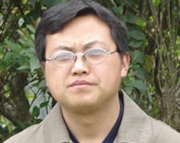
On 5 March 2013, human rights defender Liu Feiyue was taken from his home by police in Hubei Province. One week later, he remains missing with no further information available on his whereabouts. Liu Feiyue is a former teacher and founder of Civil Rights and Livelihood Watch, a human rights website based in China which documents cases of human rights violations from all over the country. He set up the website in 2005 after becoming increasingly involved in the defence of human rights in Hubei Province. As a result of his human rights work, Liu Feiyue has been harassed, placed under house arrest, detained and beaten.
Liu Feiyue had been under increased surveillance in the weeks prior to this incident, due to the convening of the Chinese People’s Political Consultative Congress and the National People’s Congress in Beijing, which began on 3 and 5 March 2013 respectively. Liu Feiyue has been repeatedly targeted in the past during politically sensitive periods and has often been brought into police custody without any legal procedures. In addition to Liu Feiyue, it is reported that dozens of other human rights defenders have been placed under house arrest or have had their freedom of movement restricted owing to the governmental meetings taking place in Beijing. Those under increased surveillance include Messrs Hu Jia, He Depu and Xu Zhiyong in Beijing, Ms Liu Ping and Mr Li Sihua in Xinyu City, Jiangxi Province and Mr Feng Zhenghu in Shanghai.
via: http://www.frontlinedefenders.org/node/21972
Posted in Front Line, Human Rights Defenders | Leave a Comment »
Tags: China, Feng Zhenghu, Front Line Defenders, He Depu, Hu Jia, Human right, human rights, Human Rights and Liberties, Human rights defender, Human Rights Defenders, Li Sihua, Liu Feiyue, Liu Ping, March 2013, National People's Congress, Xu Zhiyong
March 7, 2013
The Institute for Cultural Diplomacy and the Ministry of Interior of Iceland organise the Reykjavík Congress on the topic: “Human Rights: Human Rights Protection & International Law: The Multifaceted Dilemma of Restraining and Promoting International Interventions”, in Reykjavik, Iceland from 10 to 13 April 2013.
It aims to argue and debate the notion of the responsibility to protect from a human rights perspective, taking into account the divergent dimensions in restraining or promoting international intervention. It plans to consider the current most vehement cases of human rights violations, and further comprehend the varied issues and approaches to these mass atrocities and crimes against humanity from a theoretical perspective, analyzing the complex layers and structures, and taking into account the ethical dilemma surrounding the responsibility to protect and international intervention. For more information please visit: www.reykjavikcongress.org
I would add that this is a most interesting and of course always ‘hot’ topic. I touched upon it in my own article “The international human rights movement: not perfect, but a lot better than many governments think” in the book ‘NGOs in China and Europe’. That the book was published also in Chinese makes it more interesting in view of the strong anti-intervention position taken by the Chinese Government: “Clearly, sovereignty is and remains one of the central organising principles of the international system as we know it. At the same time, there can be no doubt that the very idea and doctrine of internationally protected human rights is a powerful limitation. There is a clear tension between human rights law and general international law. The concept of the sovereignty of States and the principle of non-intervention in internal affairs is laid down in Art 2(7) of the UN Charter, but the qualifying word ‘essentially’ should be noted. Moreover, the Security Council may use the existence of a threat to international peace and security to take action, which overrides sovereignty. From the beginning of the 20th century, international human rights NGOs played a major role in this process of norm shifting, from the Dumbarton Oaks Conference up to the recent debates on the ‘right to inference’ (droit d’ingerence ). After decades of slow but steady development, the Vienna Declaration and Programme of Action in 1993 confirmed that human rights are a ‘legitimate international concern’. Of course, this short chapter cannot settle the complex debate surrounding the issue of sovereignty and intervention, but it demonstrates that it is far from static and that the international human rights movement is an active ingredient in its development.” (from: Yuwen Li (ed), NGOs in China and Europe, Ashgate, 2011, pp 287-304 (ISBN: 978-1-4094-1959-4).
Posted in human rights | Leave a Comment »
Tags: China, D2P, duty to protect, Hans Thoolen, Human right, human rights, Humanitarian intervention, humanitarian law, Iceland, Institute for Cultural Diplomacy, International law, intervention, meeting, NGOs in China and Europe, Non-governmental organization, Reykjavík, Reykjavík Congress, sovereignty, UN, Yuwen Li
March 4, 2013
On Thursday 7 March 2013 will take place “The Human Voices of Freedom – Securing Human Rights Online” event: a panel discussion and interactive webcast with human rights activists from across the globe at the Human Rights Council, highlighting the importance of protecting freedom of expression on-line. This public event, sponsored by the U.S. Mission to the UN, is to take place from on 7 March from 1pm to 3pm in room XXIII/United Nations Office at Geneva.
The Internet Freedom Fellows program brings human rights activists from across the globe to Geneva, Washington, DC, and Silicon Valley to meet with fellow activists, U.S. and international government leaders, and members of civil society and the private sector engaged in technology and human rights. This year’s Internet Freedom Fellows are human rights activists and active practitioners of digital media from China, Russia, Ghana, Nigeria and Sudan.
Please note: Registration is only required for those attendees who do not hold a United Nations badge.
via Internet Freedom Fellows | Event Registration Page: The Human Voices of Freedom – Securing Human Rights Online.
Posted in human rights | Leave a Comment »
Tags: China, freedom of information, Geneva, Ghana, Human right, human rights, Human rights defender, Human Rights Defenders, internet, Internet Freedom Fellows, Nigeria, on-line, Russia, side event, Silicon Valley, Sudan, United Nations, United Nations Human Rights Council, US permanent mission to the UN, USA