In an open letter published Wednesday 9 September 2020 the groups say they are seeking greater scrutiny of and response to violations in places like Hong Kong, Tibet and Xinjiang, as well as beyond — such as through censorship, development that hurts the environment and the targeting of rights defenders.
The call for the creation of an “independent international mechanism” to focus on China’s rights violations adds to recent international pressure on Beijing over its handling of issues like protests in Hong Kong and detention centers — what the government calls vocational or training centers — for Uighur Muslims and others in western Xinjiang region.
“China has systematically persecuted rights defenders in reprisal for their cooperation with U.N. human rights operations — torture, enforced disappearance, imprisonment, and stripping licenses from lawyers,” said Renee Xia, director of Chinese Human Rights Defenders, in a statement. “The U.N. system should no longer tolerate such treatment.”
The move follows a call by independent experts who work with the United Nations for a special session of the Human Rights Council focusing on the array of issues around China’s rights record. Advocates insist that no country — no matter how large or powerful — should escape extra scrutiny of their rights records when warranted. [see also https://humanrightsdefenders.blog/2020/06/27/un-experts-address-3-big-ones-usa-china-and-india/]
The groups also want U.N. Secretary-General Antonio Guterres and the U.N. High Commissioner for Human Rights, Michelle Bachelet, to “take responsibility for publicly addressing China’s sweeping rights violations,” Human Rights Watch said in a statement.
At a news conference Wednesday in Beijing, Chinese Foreign Ministry spokesman Zhao Lijian sought to brush off the groups’ appeal, saying: “I think the statements made by these organizations are groundless and not worth refuting.”
The appeal comes before the start of the 47-member-state Human Rights Council’s fall session on Monday. In its summer session, the council held an urgent debate on a rise of police violence against Black people and repression of protests in the United States.
Kunal Gaurav in Republic World of 29 August 2020 illustrates again how extremely sensitive China remains with regard to human rights awards, unwittingly underlining the strong symbolic value they can have.
China has warned Norway against awarding Nobel Peace Prize to pro-democracy activists of Hong Kong, saying it doesn’t want to see the politicisation of the award. Chinese Foreign Minister Wang Yi was on a rare visit to Norway as the country prepares to take up the rotational seat of United Nations Security Council, of which China is a permanent member, for 2021-22.
“I would only say one thing: In the past, today, and in future, China will firmly reject any attempt by anyone to use the Nobel Peace Prize to interfere in China’s internal affairs,” Wang told reporters when asked about the possibility.
The decision to award the Nobel Peace Prize to Dalai Lama, head monk of Tibetan Buddhism, for his willingness to compromise and seek reconciliation despite brutal violations had irked China. Later, the Nobel Foundation awarded the prize to Lui Xiaobo for his long and non-violent struggle for fundamental human rights in China. The decision immediately froze diplomatic relations between Norway and China, which resumed in December 2016.
Hong Kong has been the epicentre of pro-democracy protests and China enforced a controversial security law which has allegedly undermined the autonomy of the region. Several countries have revoked the extradition treaty with the semi-autonomous region, calling the draconian law as a flagrant violation of Sino-British agreement after which the city returned to Chinese rule.
According to a Hong Kong daily, the foreign minister said that the Chinese government doesn’t want to see anyone politicise the Nobel Peace Prize. Calling on Norway to cherish the current relationship, Wang said that the bilateral relationship can continue to develop in a sustained and sound manner if both parties can “continue to respect each other and treat each other as equals.”
At a press briefing on August 28, Norwegian Foreign Minister Ine Eriksen Søreide said that the leaders had an extensive discussion ranging from COVID-19 response to international trade and the free-trade agreement. She said that they also had extensive discussions on human rights, an issue of international concern given China’s history and ongoing crackdown in Xinjiang.
Hong Kong’s chief executive Carrie Lam on giant screens remotely addressing the opening of the UN Human Rights Council’s 44th session on in Geneva, Switzerland, 30 June 2020, FABRICE COFFRINI/AFP via Getty Images
The 44th session of the UN Human Rights Council began with China’s imposition of legislation severely undermining rights and freedoms in Hong Kong. Within days, there were reports of hundreds of arrests, some for crimes that didn’t even exist previously. We welcome efforts during this session by a growing number of States to collectively address China’s sweeping rights abuses, but more is needed. An unprecedented 50 Special Procedures recently expressed concerns at China’s mass violations in Xinjiang, Hong Kong and Tibet, suppression of information in the context of COVID-19, and the targeting of human rights defenders across the country. The Council should heed the call of these UN experts to hold a Special Session and create a mechanism to monitor and document rights violations in the country. No state is beyond international scrutiny. China’s turn has come.
The 44th session also marked an important opportunity to enable those affected directly by human rights violations to speak to the Council through NGO video statements.
Amnesty’s Laith Abu Zeyad addressed the Council remotely from the occupied West Bank where he has been trapped by a punitive travel ban imposed by Israel since October 2019. We call on the Israeli authorities to end all punitive or arbitrary travel bans.
During the interactive dialogue with the Commission of Inquiry on Syria, victims’ associations and families of victims highlighted the human rights violations occurring in detention centers in Syria. We welcome the efforts by some States to underline their demands and welcome the adoption of the Syria resolution on detainees and urge the Syrian government to take all feasible measures to release detainees and provide truth to the families, noting the important pressure needed by Member States to further call for accountability measures for crimes committed in Syria.
Collette Flanagan, Founder of Mothers against Police Brutality, also delivered a powerful video statement at the Council explaining the reality of racist policing in the United States of America. We fully support victims’ families’ appeals to the Council for accountability.
We hope that the High Commissioner’s report on systemic racism, police violence and government responses to antiracism peaceful protests will be the first step in a series of meaningful international accountability measures to fully and independently investigate police killings, to protect and facilitate Black Lives Matter and other protests, and to provide effective remedy and compensation to victims and their families in the United States of America and around the world.
We appreciate the efforts made by the Council Presidency and OHCHR to overcome the challenges of resuming the Council’s work while taking seriously health risks associated with COVID-19, including by increasing remote and online participation. We recommend that remote civil society participation continue and be strengthened for all future sessions of the Council.
Despite these efforts, delays in finalising the session dates and modalities, and subsequent changes in the programme of work, reduced the time CSOs had to prepare and engage meaningfully. This has a disproportionate impact on CSOs not based in Geneva, those based in different time zones and those with less capacity to monitor the live proceedings. Other barriers to civil society participation this session included difficulties to meet the strict technical requirements for uploading video statements, to access resolution drafts and follow informal negotiations remotely, especially from other time zones, as well as a decrease in the overall number of speaking slots available for NGO statements due to the cancellation of general debates this session as an ‘efficiency measure.’
We welcome the joint statement led by the core group on civil society space and endorsed by cross regional States and civil society, which calls on the High Commissioner to ensure that the essential role of civil society, and States’ efforts to protect and promote civil society space, are reflected in the report on impact of the COVID-19 pandemic presented to the 46th Session of the HRC. We urge all States at this Council to recognise and protect the key role that those who defend human rights play.
We therefore welcome that the resolution “the promotion and protection of human rights in the context of peaceful protests” was adopted by consensus, and that the Council stood strongly against some proposed amendments which would have weakened it. We also welcome the inclusion in the resolution of a panel during the 48th session to discuss such events and how States can strengthen protections. We urge States to ensure full accountability for such human rights violations as an essential element of the protection of human rights in the context of protests. The current context has accelerated the urgency of protecting online assembly, and we welcome that the resolution reaffirms that peaceful assembly rights guaranteed offline are also guaranteed online. In particular, we also commend the resolution for calling on States to refrain from internet shutdowns and website blocking during protests, while incorporating language on the effects of new and emerging technologies, particularly tools such as facial recognition, international mobile subscriber identity-catchers (“stingrays”) and closed-circuit television.
We welcome that the resolution on “freedom of opinion and expression” contains positive language including on obligations surrounding the right to information, emphasising the importance of measures for encryption and anonymity, and strongly condemning the use of internet shutdowns.. Following the High Commissioner’s statement raising alarm at the abuse of ‘false news’ laws to crackdown on free expression during the COVID-19 pandemic, we also welcome that the resolution stresses that responses to the spread of disinformation and misinformation must be grounded in international human rights law, including the principles of lawfulness, legitimacy, necessity and proportionality. At the same time, we are concerned by the last minute addition of language which focuses on restrictions to freedom of expression, detracting from the purpose of the resolution to promote and protect the right. As we look to the future, it is important that the core group builds on commitments contained in the resolution and elaborate on pressing freedom of expression concerns of the day, particularly for the digital age, such as the issue of surveillance or internet intermediary liability, while refocusing elements of the text.
The current context has not only accelerated the urgency of protecting assembly and access to information, but also the global recognition of the right to a safe, clean, healthy and sustainable environment. We welcome the timely discussions on ”realizing children’s right to a healthy environment” and the concrete suggestions for action from panelists, States, and civil society. The COVID-19 crisis, brought about by animal-to-human viral transmission, has clarified the interlinkages between the health of the planet and the health of all people. We therefore support the UN Secretary General’s call to action on human rights, as well as the High Commissioner’s statement advocating for the global recognition of the human right to a safe, clean, healthy and sustainable environment – already widely reflected at national and regional levels – and ask that the Council adopts a resolution in that sense. We also support the calls made by the Marshall Islands, Climate Vulnerable Forum, and other States of the Pacific particularly affected and threatened by climate change. We now urge the Council to strengthen its role in tackling the climate crisis and its adverse impacts on the realization of human rights by establishing a Special Rapporteur on Human Rights and Climate Change, which will help address the urgency of the situation and amplify the voices of affected communities.
The COVID crisis has also exacerbated discrimination against women and girls. We welcome the adoption by the Council of a strong resolution on multiple and intersecting forms of discrimination against women and girls, which are exacerbated in times of a global pandemic. The text, inter alia, reaffirms the rights to sexual and reproductive health and to bodily autonomy, and emphasizes legal obligations of States to review their legislative frameworks through an intersectional approach. We regret that such a timely topic has been questioned by certain States and that several amendments were put forward on previously agreed language.
The Council discussed several country-specific situations, and renewed the mandates in some situations.
We welcome the renewal of the Special Rapporteur’s mandate and ongoing scrutiny on Belarus. The unprecedented crackdown on human rights defenders, journalists, bloggers and members of the political opposition in recent weeks ahead of the Presidential election in August provide a clear justification for the continued focus, and the need to ensure accountability for Belarus’ actions. With concerns that the violations may increase further over the next few weeks, it is essential that the Council members and observers maintain scrutiny and pressure even after the session has finished.
We welcome the extension of the mandate of the Special Rapporteur on Eritrea. We urge the government to engage, in line with its Council membership obligations, as the Special Rapporteur’s ‘benchmarks for progress’ form a road map for human rights reform in the country.
We welcome the High Commissioner report on the human rights situation in the Philippines which concluded, among other things, that the ongoing killings appear to be widespread and systematic and that “the practical obstacles to accessing justice in the country are almost insurmountable.” We regret that even during this Council session, President Duterte signed an Anti Terrorism Law with broad and vague definition of terrorism and terrorists and other problematic provisions for human rights and rule of law, which we fear will be used to stifle and curtail the rights to freedom of opinion and expression, to freedom of peaceful assembly and of association. Also during this session, in a further attack on press freedom, Philippine Congress rejected the franchise renewal of independent media network ABS-CBN, while prominent journalist Maria Ressa and her news website Rappler continue to face court proceedings and attacks from President Duterte after Ressa’s cyber libel conviction in mid-June. We support the call from a group of Special Procedures to the Council to establish an independent, impartial investigation into human rights violations in the Philippines and urge the Council to establish it at the next session.
The two reports presented to the Council on Venezuela this session further document how lack of judicial independence and other factors perpetuate impunity and prevent access to justice for a wide range of violations of civil, cultural, economic, political, and social rights in the country. We also urge the Council to stand ready to extend, enhance and expand the mandate of the Independent International Fact-Finding Mission when it reports in September.
We also welcome the report of the Special rapporteur on the human rights situation in the Palestinian Territory occupied since 1967 and reiterate his call for States to ensure Israel puts an end to all forms of collective punishment. We also reiterate his call to ensure that the UN database of businesses involved with Israeli settlements becomes a living tool, through sufficient resourcing and annual updating.
We regret, however, that several States have escaped collective scrutiny this session.
We reiterate the UN Special Rapporteur Agnes Callamard’s call to pressure Saudi Arabia to release prisoners of conscience and women human rights defenders and call on all States to sustain the Council’s scrutiny over the situation at the September session.
As highlighted in a joint statement of Special Procedures, we call on the Indian authorities to immediately release HRDs, who include students, activists and protest leaders, arrested for protesting against changes to India’s citizenship laws. Also eleven prominent HRDs continue to be imprisoned under false charges in the Bhima Koregaon case. These activists face unfounded terror charges under draconian laws such as sedition and under the Unlawful Activities (Prevention) Act. While we welcome that Safoora Zargar was granted bail on humanitarian grounds, the others remain at high risk during a COVID-19 pandemic in prisons with not only inadequate sanitary conditions but also limited to no access to legal counsel and family members. A number of activists have tested positive in prison, including Akhil Gogoi and 80-year-old activist Varavara Rao amid a larger wave of infections that have affected many more prisoners across the country. Such charges against protestors, who were exercising their rights to freedom of peaceful assembly must be dropped. We call on this Council to strengthen their demands to the government of India for accountability over the excessive use of force by the police and other State authorities against the demonstrators.
In Algeria, between 30 March and 16 April 2020, the Special rapporteur on freedom of opinion and expression, freedom of peaceful assembly and of association, human rights defenders, issued three urgent appeals in relation to cases involving arbitrary and violent arrests, unfair trials and reprisals against human rights defenders and peaceful activists Olaya Saadi, Karim Tabbou and Slimane Hamitouche. Yet, the Council has been silent with no mention of the crackdown on Algerian civil society, including journalists.
To conclude on a positive note, we welcome the progress in the establishment of the OHCHR country office in Sudan, and call on the international community to continue to provide support where needed to the transitional authorities. While also welcoming their latest reform announcements, we urge the transitional authorities to speed up the transitional process, including reforms within the judiciary and security sectors, in order to answer the renewed calls from protesters for the enjoyment of “freedom, peace and justice” of all in Sudan. We call on the Council to ensure continued monitoring and reporting on Sudan.
People wearing masks stand during a rally to show support for Uighurs and their fight for human rights in Hong Kong, Sunday, Dec. 22, 2019. Lee Jin-man / The Associated Press
Marcus Kolga (documentary filmmaker and a senior fellow at the Macdonald-Laurier Institute’s Center for Advancing Canada’s Interests Abroad) and Yang Jianli (former political prisnoner in China – founder and president of Initiatives for China) wrote an inteteresting piece in the Vancouver Sun of 18 July 2020. Here the piece in full:
In May of this year, the Coalition for Human Rights in China published a report exposing incidents of Chinese government harassment against human rights activists in Canada that have taken place between July 2019 and March 2020. The report described efforts undertaken by the Chinese government to suppress dissidents and mobilize overseas Chinese communities to act as agents of influence.
This civil society report follows one published in March by Canada’s National Security and Intelligence Committee of Parliamentarians (NSICOP), which explicitly warned that regimes like those in China, Russia and Iran are “harassing human rights defenders in Canada and interfering with freedom of assembly and media,” with the aim being to impose a “chilling effect on human rights activism and freedom of expression.
Both reports provide clear evidence that the Chinese government is intensifying its clandestine operations to threaten, bully, intimidate and silence activists in Canada when they raise concerns about democracy and civil rights in Hong Kong, Beijing’s systemic mass abuse of Uyghur, Tibetan or Falun Gong human rights, or Chinese government influence operations in Canada.
China’s efforts to mute criticism in Canada is occurring in the shadow of that country’s arbitrary, unlawful detention of Canadians Michael Kovrig and Michael Spavor, who were taken hostage in retaliation for the lawful arrest of Huawei CEO Meng Wanzhou on a United States extradition request.
Amnesty International Canada has stated that Chinese state actors have almost certainly become emboldened by the inadequate response of Canadian officials.
The academic freedom and freedom of expression of university students in Canada speaking out on China has been stifled. Indeed, many fear that the Chinese government is monitoring their speech and activities — a fact that has been confirmed by the NSICOP report, which states that Canada’s intelligence agency “CSIS assesses that the PRC and the Russian Federation are the primary threat actors on Canadian campuses.”
The Canadian Coalition on Human Rights in China has called for a public inquiry into threats at Canadian educational institutions and has recommended setting up a monitoring office to register complaints of harassment and refer such incidents to police. Amnesty International has warned about the rampant hacking of phones, computers and websites on university and college campuses, public rallies, and cultural events in Canada, implicating China for hacking. The individuals behind these threats are often anonymous but can be characterized as state propagandists and foreign influence agents who are supported and often directed by the Chinese government.
Among the threats outlined in the Canadian Coalition on Human Rights for China report are “bullying, racist, bigoted, threats of violence including sexual violence and even death.” It has called for the expelling of Chinese diplomats — of which China has more of in Canada than any other country — and applying Magnitsky sanctions on those responsible for engaging in information warfare and threats against Canadian civil society activists.
On August 17, 2019, at a Toronto rally held in support of civil rights in Hong Kong, more than one hundred protesters blocked the pro-democracy activists, loudly chanting “One China.” They insulted the pro-democracy demonstrators and took photos of them in efforts to intimidate them. When activists sang “O Canada,” the counter protesters booed them and sang China’s national anthem, eventually requiring a police escort for the pro-democracy activists to leave safely.
Mehmet Tohti, a leading Uyghur Canadian activist, says that threatening phone calls are another method by which the Chinese government intimidates those who raise concerns about the over one million Muslim Uyghurs who have been forced into concentration and forced labour camps in Xinjiang and elsewhere. Chinese security officials are making direct phone calls to Uyghur-Canadians demanding that they remain silent with the threat of targeting family members who remain in China with harassment or worse.
Chemi Lhamo, a member of Canada Tibet Committee and Students for a Free Tibet, faced a massive harassment campaign in 2019, when she was elected president of a University of Toronto student union. Among the racist, anti-Tibetan messages she received was one that read: “China is your daddy — you better know this.”
While Canadian Foreign Minister Francois-Philippe Champagne welcomed the Coalition for Human Rights in China report and promised to follow up on its recommendations, no meaningful action was taken. Chinese government harassment against Canadian civil society activists continues to escalate, and the mass human rights abuses committed by Beijing continue unabated, with total impunity.
In order to protect its own citizens and uphold its commitment to protecting human rights, Canada must immediately apply Magnitsky human rights sanctions against Chinese officials responsible for the mass violation of human rights against Uyghurs, Tibetans, the citizens of Hong Kong and in mainland China. According to China expert Jonathan Manthorpe, roughly US$1 trillion has been “spirited out of China by Communist party leaders and their hangers-on” who seek to hide their assets “in stable overseas havens like Canada, the United States, Australia or Europe.”
Canada can help curb China’s barbaric abuse of human rights by threatening to freeze the assets of those who are responsible for them. Minister Champagne signalled last Wednesday, that the government is open to considering the option of Magnitsky sanctions and we urge him to do so in co-ordination with UK Foreign Minister Dominic Raab and U.S. Secretary of State Mike Pompeo.
Canada should immediately consider adopting legislation that requires the registration of Canadian citizens acting as agents for foreign governments — similar to Australia’s Foreign Influence Transparency law. Such legislation will introduce serious punitive consequences for anyone who acts against Canada and its citizens on behalf of malign foreign regimes.
Finally, Canada should consider expelling Chinese diplomats who use their diplomatic cover to engage in information warfare, intimidation and influence operations. Canada’s security agencies are likely aware of which “diplomats” are engaging in such activity. It should be noted that, as of March 2020, China had many more diplomats accredited to Canada than any other nation, with 163 compared to 146 for the United States or 22 for the United Kingdom.
China’s information warfare and influence operations targeting Canada will assuredly only intensify over the coming months. If Canada wishes to protect its citizens against foreign harassment, intimidation and threats, it must act immediately to show Beijing, Moscow and Tehran that their actions have consequences.
The Canadian government speaks loudly of the need to protect international human rights, but it must now back that rhetoric with action if defending the values of human rights, freedom and democracy are truly its aims.
Jon Stone in the Independent of 13 july 2020 wrote about the UK Government being urged to explain £75m exports to countries rated ‘not free’. The British government is providing more than a dozen repressive regimes around the world with wiretaps, spyware and other telecommunications interception equipment they could use to spy on dissidents, public records show. Despite rules saying the UK should not export security goods to countries that might use them for internal repression, ministers have signed off more than £75m in such exports over the past five years to states rated “not free” by the NGO Freedom House.
The 17 countries include China, Saudi Arabia and Bahrain, as well as the United Arab Emirates, which was the biggest recipient of licences totalling £11.5m alone since 2015….One such beneficiary of the UK’s exports is Hong Kong, which had a £2m shipment approved last year despite ongoing repression of pro-democracy protests. The Philippines, where police extrajudicial killings are rampant, has also provided steady business for British firms hawking surveillance systems.,,
A government spokesperson said blandly : “The government takes its export responsibilities seriously and assesses all export licences in accordance with strict licensing criteria. We will not issue any export licences where to do so would be inconsistent with these criteria.” But Oliver Feeley-Sprague, Amnesty International UK’s programme director for military, security and police affairs, said the UK did not seem to be undertaking proper risk assessments when selling such equipment and said the government’s controls were becoming “notorious” for their “faulty decision-making”…
“With numerous human rights defenders arrested and jailed in countries like Saudi Arabia, the UAE and Turkey in the past five years, there’s a greater need than ever for the UK to be absolutely scrupulous in assessing the risk of UK telecoms technology being used unlawfully against human rights activists, journalists, and peaceful opposition figures.
“It’s just not clear that the UK is undertaking proper risk assessments when selling this equipment, and it’s not clear whether UK officials are making any effort to track how the equipment is used in one, two or three years’ time.
This week international trade secretary Liz Truss announced the UK would be resuming arms exports to Saudi Arabia, after a court had previously ordered that they were suspended. The government said it had reviewed claims that Saudi forces in Yemen had breached international humanitarian law and said any possible breaches were “isolated incidents” because they had happened in different places and different ways.
Andrew Smith of Campaign Against Arms Trade said the sale of the spying equipment raised “serious questions and concerns”.
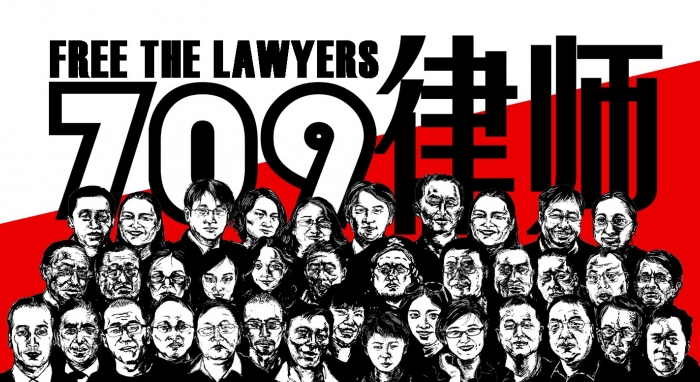
On 9 july 2020 the International Service of Human Rights came out with a good overview of what has happened to the Chinese lawyers since the crackdown five year ago [see: https://humanrightsdefenders.blog/2015/07/29/the-remarkable-crackdown-on-lawyers-in-china-in-july-2015/]. Human rights lawyers are a cornerstone of China’s human rights movement: they represent victims of abuses, promote compliance with international law, and strive for human rights change inside the system.
In the weeks following 9 July 2015, over 300 Chinese weiquan (‘rights defence’) lawyers and legal activists were harassed, detained and disappeared, in a nationwide police sweep that came to be known as the ‘709 Crackdown’. Five years later, these lawyers and their families still face a range of restrictions and rights violations aimed at silencing their efforts for a more just and rights-compliant society.
Disbarment, secret detention, disappearances, harassment of relatives, stigmatisation: the ‘systematic crackdown on lawyers’ denounced by UN experts has changed in form but not in its scale or scope.
Despite the risks, they strive to uphold the fundamental rights of all Chinese citizens, guaranteed under China’s Constitution and international treaties. They represent the most vulnerable and unjustly accused: those who have been evicted from their land or are victims of police abuse; minorities criminalised for their religious belief or ethnicity; human rights defenders and those expressing opinions different from the official Party line.
‘Without independent lawyers, there can be no rule of law,’ says Sarah M Brooks, ISHR Asia Advocate.
‘And when the rule of law is weaponised – as we saw last week with the imposition of the National Security Law in Hong Kong – lawyers are on the front lines of defending rights and freedoms. The least we can do – as individuals and as a global community – is to stand with them.’
In a defiant act of reclaiming, 9 July is now recognised by the human rights movement as ‘China Human Rights Lawyers Day’. To highlight this important day, ISHR has produced a bilingual information flyer on the patterns of repression against Chinese human rights lawyers, and action by the international community. The information flyer is available in English and Chinese. 请点击此处下载中文版。 For more information, please contact Raphael Viana David at r.vianadavid@ishr.ch or on Twitter at @vdraphael.
Joint statements by groups of UN experts are becoming more frequent, with at least three this month. When it comes to major powers like the USA, China and India – who are rather sensitive when criticised – there must be safety in numbers:
Addressing the USA after George Floyd..
On 5 June 2020 nearly 30 independent experts appointed by the UN Human Rights Council called for the United States to reform its criminal justice system in the wake of a recent spate of killings of African Americans, including at the hands of the police. In their statement they urged the US authorities to address systemic racism and racial bias, and to conduct independent investigations into cases of excessive use of force by police officers.
The UN human rights experts charged that these killings involved impunity, disregard or depravity toward human life, and the use of public spaces to assert racial control, with each characteristic of a modern-day lynching. “The latest videos to surface showing white men chase, corner, and execute a young man who was out jogging, or showing an officer kneeling with his weight on a man’s neck for eight minutes shock the conscience and evoke the very terror that the lynching regime in the United States was intended to inspire”, they said.
With millions of Americans taking to the streets, the experts also expressed concern about police response to these protests. They said demonstrations have been marked by violence, arbitrary arrest, militarisation and the detention of thousands of protesters. Journalists of colour have also been targeted and detained, some of whom have faced violence and harassment.
UN Experts Urge India To Release Protest Leaders
On 26 June 2020 13 UN experts jointly called on India to immediately release human rights defenders who have been arrested for protesting against changes to the nation’s citizenship laws. “These defenders, many of them students, appear to have been arrested simply because they exercised their right to denounce and protest against the CAA (Citizenship Amendment Act), and their arrest seems clearly designed to send a chilling message to India’s vibrant civil society that criticism of government policies will not be tolerated,” the experts said.
“Authorities should immediately release all human rights defenders who are currently being held in pre-trial detention without sufficient evidence, often simply on the basis of speeches they made criticising the discriminatory nature of the CAA,” they said. (Meeran Haider, Gulfisha Fatima, Safoora Zargar, Asif Iqbal Tanha, Devangana Kalita, Natasha Narwal, Khalid Saifi, Shifa Ur Rehman, Dr. Kafeel Khan, Sharjeel Imam, Akhil Gogoi.)
The experts also highlighted their concern that the authorities’ response to the protests seemed discriminatory. It appears they have not similarly investigated allegations of incitement to hatred and violence made by CAA supporters, some of whom are reported to have chanted “shoot the traitors” at counter-rallies.
UN experts call for decisive measures to protect ‘fundamental freedoms’ in China
On 26 June 2020 almost 50 UN independent experts on Friday to express their continuing alarm, urging the country to “abide by its international legal obligations”.
After having “repeatedly communicated” their concerns, they highlighted the repression of protests and democracy advocacy in the Hong Kong; impunity for excessive use of force by police; the alleged use of chemical agents against protesters; the alleged sexual harassment and assault of women protesters in police stations; together with the alleged harassment of health care workers.
The experts also raised their “grave concerns” on issues ranging from the collective repression of specific communities – “especially religious and ethnic minorities, in Xinjiang and Tibet” – to the detention of lawyers and prosecution – in addition to disappearances – of human rights defenders across the country. .
They urged China to invite civil and political rights monitors to conduct independent missions “in an environment of confidentiality, respect for human rights defenders, and full avoidance of reprisals” and encouraged the UN Human Rights Council (HRC) to urgently monitor Chinese human rights practices.
The ISHR published on 24 June its usual and irreplacable “HRC44 – Key issues on agenda of June 2020 session”
As usual I have lifted out of this the issues that would seem to affect most directly Human Rights Defenders. To stay up-to-date on all issues: follow @ISHRglobal and #HRC44 on Twitter, and look out for its Human Rights Council Monitor.
The UN Human Rights Council (the Council) will hold its 44th regular session at Palais des Nations in Geneva from 30 June to 21 July 2020.
Modalities for participation in HRC44
State delegations not wishing to enter the plenary room physically will be able to deliver their statements by pre-recorded video-message, as provided for under HRC decision 19/119. Similarly, NGOs in consultative status with ECOSOC will be given the opportunity to do the same insofar as interactive dialogues, panels and UPR adoptions are concerned. It won’t be possible to hold “official” side events during the 44th session (online or in-person). Any events happening on the sidelines of the session will be considered independent events and won’t be publicised in the Bulletin of Informal meetings by the Secretariat. Read here the information note by the Secretariat which is updated according to the latest information, and an additional explainer by HRC-net.
Human Rights implications of COVID-19
The High Commissioner will present an oral update on the human rights impact of COVID-19 at the 44th session, as mandated by the presidential statement adopted by the Council in May 2020. The presidential statement also calls on the High Commissioner to produce a report on the impact of the COVID-19 pandemic on the enjoyment of human rights around the world to be presented at the 46th session in March 2021. In addition to their previously mandated reports, some mandateholders will present additional reports to address the impact of COVID-19 as related to their mandate, including the Special rapporteur on freedom of opinion and expression, David Kaye. [for some of my earlier posts on covid and human rights see: https://humanrightsdefenders.blog/tag/covid-19/]
Here are some highlights of the session’s thematic discussions:
Business and human rights
At this session, the Working Group on Business and Human Rights is expected to present reports on their activities over 2019, including a country visit to Honduras and on the theme of anti-corruption and the UN Guiding Principles (UNGPs). They are also meant to present groundbreaking guidance on human rights defenders and the role of business. ISHR expects that such guidance should provide companies with concrete suggestions for how to engage human rights defenders in the development and implementation of their human rights policies. It is important that the guidance explains why this is not simply good practice, but is also aligned with the Guiding Principles’ word and spirit – and thus should be widely mainstreamed for any company committed to the UNGPs. There will tentatively be a resolution presented to renew the mandate of the UN Working Group on Business and Human Rights, as well as to welcome the thematic reporting.
Reports of cases of intimidation and reprisal against those cooperating or seeking to cooperate with the UN not only continue, but grow. Intimidation and reprisals violate the rights of the individuals concerned, they constitute violations of international human rights law, and undermine the UN human rights system. [agains for earlier posts see: https://humanrightsdefenders.blog/tag/reprisals/]
During the 42nd session, the Council adopted a resolution which listed key trends such as the patterns of reprisals, increasing self-censorship, as well as the use of national security arguments and counter-terrorism strategies by States as justification for blocking access to the UN. The resolution acknowledged the specific risks to individuals in vulnerable situations or belonging to marginalised groups, and called on the UN to implement gender-responsive policies to end reprisals. The Council called on States to combat impunity and to report back to it on how they are preventing reprisals, both online and offline.
Item 5 of the Human Rights Council’s agenda provides a key opportunity for States to raise concerns about reprisals, and for governments involved in existing cases to provide an update to the Council on any investigation or action taken toward accountability to be carried out.
Other thematic reports :
At this 44th session, the Council will discuss a range of civil, political, economic, social and cultural rights through dedicated debates with the mandate holders, including interactive dialogues with:
The Working Group on the issue of human rights and transnational corporations and other business enterprises (includes recommendations from 2019 visit to Peru)
The Special Rapporteur on contemporary forms of racism, racial discrimination, xenophobia and related intolerance
The Special Rapporteur on extrajudicial, summary or arbitrary executions
The Special Rapporteur on the rights to freedom of peaceful assembly and of association
The Special Rapporteur on the promotion and protection of the right to freedom of opinion and expression
In addition, the Council will hold dedicated debates on the rights of specific groups including:
The Special Rapporteur on trafficking in persons, especially women and children
The Special Rapporteur on the independence of judges and lawyers
The Special Rapporteur on the human rights of migrants
The Working Group on discrimination against women and girls
The Special Rapporteur on the human rights of internally displaced persons
The Special Rapporteur on violence against women, its causes and consequences
The Independent Expert on protection against violence and discrimination based on sexual orientation and gender identity
#HRC44 | Country-specific developments
China (Hong Kong and Uyghur regions)
Violations in China, especially those linked to freedom of association, were made even more clear during the government’s efforts to respond to the COVID-19 epidemic. …..States should ensure continued calls for access to UN human rights experts, in line with last year’s joint letter condemning China’s suppression of minorities. Finally, following nearly a year of protests – largely of peaceful civilians – the central government in Beijing launched an initiative to draft and pass National Security Legislation in Hong Kong. This alarming development was foreshadowed by increasing police violence and use of chemical weapons; the arrest and political prosecution of more than a dozen pro-democracy leaders; and further restrictions on the free press. Many activists, and the European Parliament, are calling for UN Secretary-General António Guterres to appoint an envoy, rightly recognising that China’s actions violate international agreements aimed at ensuring peace and security.
United States of America
Last week, the Council held an urgent debate and adopted a resolution in reaction to systemic racism and police violence in the US and elsewhere. The UN Special Rapporteur on contemporary forms of racism and the UN Working Group on Experts on People of African Descent had also voiced their support for an international commission of inquiry. They have urged the Human Rights Council to ensure the following outcomes from the debate: (1) the creation of an international commission of inquiry to investigate systemic racism in law enforcement in the United States; and (2) the creation of a thematic international commission of inquiry to investigate systemic racism in law enforcement globally, with a focus on systemic racism rooted in legacies of colonialism and transatlantic slavery. They stressed that “both measures described above are necessary and cannot be substituted for one another”.
Saudi Arabia
Women human rights defenders (WHRDs) have been in prison for over two years, only because they demanded that women be treated equally as men, and no one has been held accountable for their torture. While the Council has sustained pressure on Saudi Arabia in 2019, it is essential that this scrutiny continues as the situation on the ground has not improved. ISHR calls on all States to jointly call on Saudi Arabia to immediately and unconditionally release the WHRDs and drop the charges against them; and implement the bench-marks set out in the two joint statements delivered by Iceland and Australia in 2019, underlining that should these benchmarks not be met, more formal Council action would follow.
Saudi Arabia is running for Human Rights Council election in October 2020 and hosting the G20 in November 2020. These all provide windows of opportunity to push for the immediate and unconditional release of the women human rights defenders and all those detained for exercising their rights.
Nicaragua
The COVID-19 crisis has not prevented the Nicaraguan government from making further use of repressive methods to continue targeting released political prisoners, human rights defenders, as well as indigenous people and other social groups, and their relatives. In a rapidly-deteriorating human rights situation, the authorities’ dangerous denial and inaction in the face of the pandemic have additionally fueled an alarming health crisis.
It is in this context that Council Members renewed a resolution on Nicaragua this week at the resumed 43rd session of the Human Rights Council. ISHR joined Race and Equality and a number of national and international organisations in urging the Council to ensure strong support for the resolution on the human rights situation in Nicaragua. To ensure the international community is fully informed of the worsening national situation, the resolution requests the High Commissioner to prepare a report and two oral updates, the first of which should be presented at the Council’s 44th session.
Honduras
The Working Group on Business and Human Rights will present the report on its official visit to Honduras (carried out between the 19 and 28 August 2019). …According to the end of mission statement, a significant number of human rights defenders who work for the respect and protection of human rights in the context of business activity have been arbitrarily arrested, intimidated, stigmatised, criminalised, threatened and some killed.
This was particularly evident in reference to those working in the field of extractive and hydro-electric industries. The murder of leading land,environment and indigenous peoples´ rights defender Berta Cáceres, who had been campaigning against the construction of the Agua Zarca dam, is one case cited where impunity is ongoing. Individuals responsible for the killing have been tried and jailed. However, those suspected of planning the crime, including senior management from the company building the dam (DESA) according to the independent mission of experts GAIPE, have not been investigated or prosecuted. [see also: https://humanrightsdefenders.blog/2020/06/10/nina-lakhanis-who-killed-berta-caceres-reviewed/]. Another Special Procedure expert – the Special Rapporteur on the independence of judges and lawyers – will also be presenting a report on its official visit to Honduras in August 2019. After completion of the visit, he called on Honduras to take urgent action to end corruption and guarantee an independent judiciary, stressing that ‘the justice system, as well as the political class’ are being ‘called strongly into question by the citizens’.
Burundi
The Commission of Inquiry on Burundi will present its oral briefing during the 44th session of the HRC. ISHR continues to remain highly concerned about the human rights situation in Burundi and its refusal to cooperate with the Council’s mechanisms.
Egypt
Seven UN experts have expressed concern about the collective and corrosive effects of Egypt’s counter-terrorism laws and practices on the promotion and protection of human rights. They stated that “Despite repeated communications by UN experts over arbitrary detention of individuals, human rights defenders and activists, the Egyptian Government has not changed its laws of practice”. The ‘Terrorism Circuit courts’ in Egypt, are enabling pre-trial detention as a form of punishment including against human rights defenders and journalists, such as Ibrahim Metwally, Mohamed El-Baqer and Esraa Abdel Fattah, Ramy Kamel, Alaa Abdel-Fattah, Patrick Zaky, Ramy Shaat, Eman Al-Helw, Solafa Magdy and Hossam El-Sayed. All of the individuals that the Special Procedures and the High Commissioner have written about since September 2019 are still in pre-trial detention by these courts. Once the terrorism courts resumed after they were suspended due to COVID-19, they renewed their detention retroactively.
The government’s response to the UPR in March 2020 demonstrated its lack of political will to address key concerns raised by States and to engage constructively with the Council. For example, the government refused to acknowledge the systematic and widespread attacks against defenders, the practice of torture and ill-treatment in detention centres, and to receive visits by Special Rapporteurs on torture and human rights defenders. The government claimed that no one is detained for exercising their rights, despite the fact that the UN Working Group on Arbitrary Detention found that arbitrary detention is a systematic problem in Egypt and could constitute a crime against humanity.
ISHR urges States to call on Egypt to immediately and unconditionally release all those detained for exercising their human rights, to stop using pre-trial detention as a punishment, and to take immediate measures to guarantee their rights to contact their families on a regular and continuous basis and to ease sending and receiving letters, food and medical supplies to them.
Philippines
The OHCHR issued its report (A/HRC/44/22) on the human rights situation in the Philippines, drawing on extensive engagement with and information provided by civil society in the country, the region and globally. The report refers to the killing of 208 human rights defenders, journalists and trade unionists, including 30 women, between January 2015 and December 2019. Confirming practices of vilification, criminalisation, restrictions of fundamental rights, as well as the continuing attacks including ‘red-tagging,’ the report notes existing impunity and the failure of domestic mechanisms to ensure accountability. The presentation of this report provides an important opportunity for debate on the key findings, and to consider options for how to advance recommendations to address the government’s violations of human rights overall, and restrictions on human rights defenders in particular.
The Council will hold an interactive dialogue on the High Commissioner’s annual report on 2 July 2020. The Council will consider reports on and is expected to consider resolutions addressing a range of country situations, in some instances involving the renewal of the relevant expert mandates. These include:
Interactive Dialogue with the High Commissioner on the human rights situation of Rohingya people
Enhanced Interactive Dialogue with the High Commissioner on the situation of human rights in the Philippines
Interactive Dialogue with the SR on the situation of human rights in Eritrea
Oral update by the High Commissioner on the situation of human rights in Nicaragua
Interactive Dialogue with the SR on the situation of human rights in Belarus
Interactive Dialogue with the High Commissioner on the situation of human rights in the Bolivarian Republic of Venezuela
Interactive Dialogue with the Commission of Inquiry on Burundi
Interactive Dialogue with the SR on the situation of human rights in Myanmar
Interactive Dialogue with the Commission of Inquiry on the Syrian Arab Republic
Interactive Dialogue with the SR on the situation of human rights in the Palestinian Territories occupied since 1967
Enhanced ID on the oral reports of the Government of the Sudan and OHCHR on progress towards the opening of a country office
Oral update of the High Commissioner on cooperation with Georgia
Adoption of Universal Periodic Review (UPR) reports
During this session, the Council will adopt the UPR working group reports on Armenia, Grenada, Guinea, Guinea-Bissau, Guyana, Kenya, Kiribati, Kuwait, Kyrgyzstan, Lao People’s Democratic Republic, Lesotho, Spain, Sweden, and Turkey.
ISHR supports human rights defenders in their interaction with the UPR. We publish and submit briefing papers regarding the situation facing human rights defenders in some States under review and advocate for the UPR to be used as a mechanism to support and protect human rights defenders on the ground. This session of the Council will provide an opportunity for Turkey, Kuwait and Guinea to accept recommendations made in relation to human rights defenders, as proposed in ISHR’s briefing papers.
#HRC44 | Council programme, appointments and resolutions
During the organisational meeting for the 44th session held on 12 and 15 June 2020, the President of the Human Rights Council presented the programme of work. It includes five panels of discussion and 81 reports. States also announced at least 17 resolutions.
Appointment of mandate holders
The President of the Human Rights Council has proposed candidates for inter alia the Special Rapporteur on freedom of opinion and expression and the Special Rapporteur on trafficking.
Resolutions to be presented to the Council’s 44th session
At the organisational meeting the following resolutions were announced (States leading the resolution in brackets) especially relevant:
Elimination of discrimination against women (Colombia, Mexico)
Human rights situation in Eritrea (Australia, Austria, Belgium, France, Germany, Netherlands) mandate renewal
Business and human rights (Norway, Russian Federation, Ghana, Argentina) Working Group + Accountability and Remedy project mandate renewals
Extrajudicial, summary or arbitrary executions (Sweden) mandate renewal
Human rights and climate change (Bangladesh, Philippines, Viet Nam)
Independence and impartiality of the judiciary, jurors and assessors, and the independence of lawyers (Hungary, Australia, Botswana, Maldives, Mexico, Thailand) + mandate renewal
Trafficking in persons, especially women and children (Germany, Argentina, Philippines) + mandate renewal
Freedom of opinion and expression: access to information (Canada, Namibia, Brazil, Fiji, Netherlands, Sweden)
Rights of persons with disabilities (Mexico, New Zealand) mandate renewal
The human rights situation in Belarus (EU)
The right to peaceful protest (Switzerland, Costa Rica)
Panel discussions
During each Council session, panel discussions are held to provide member States and NGOs with opportunities to hear from subject-matter experts and raise questions. All panel discussions are broadcast live and archived on http://webtv.un.org. Five panel discussions are scheduled for this upcoming session:
Annual full-day meeting on the rights of the child (two panels, theme: “Realizing the rights of the child through a healthy environment”)
Annual full-day discussion on the human rights of women
Panel discussion on the impacts, opportunities and challenges of new and emerging digital technologies with regard to the promotion and protection of human rights; including an oral update of the Advisory Committee on its report on new and emerging digital technologies
Panel discussion on promoting and protecting the rights of persons with disabilities in the context of climate change
Annual thematic panel discussion on technical cooperation in the promotion and protection of human rights (theme: “Upholding the human rights of prisoners, including women prisoners and offenders: enhancing technical cooperation and capacity-building in the implementation of the Nelson Mandela Rules and the Bangkok Rules”)
Lisa Schlein reported on 14 June 2020 that the U.N. Human Rights Council will be faced with many important issues left hanging when its 43rd session was suspended in March because of COVID-19. [see also: https://humanrightsdefenders.blog/2020/02/24/human-rights-defenders-issues-on-the-agenda-of-43rd-human-rights-council/] The 44th session, which opens today, will employ a so-called hybrid approach, with a mix of both real and virtual presentations. To ensure the safety of participants during this time of coronavirus, U.N. officials say social distancing measures will be strictly enforced. Delegations will have a reduced number of representatives attending the session and hundreds of side events by nongovernmental organizations will not take place on U.N. premises.
Presentation of reports and interactive dialogues on human rights issues will involve experts who are either physically present or speaking by video conference. Countries that will come under review include the Democratic Republic of the Congo, Mali, Ukraine, Libya, Afghanistan, and the Central African Republic.
One of the highlights of the weeklong meeting will be an urgent debate on institutionalized racism in the United States underlined by the killing of African American George Floyd while in police custody.
The ISHR states on this topic that it is committed to highlighting how the voices of the families of those killed by police in the U.S., including George Floyd, Breonna Taylor and Michael Brown, and the organisations supporting them are driving the UN to call for action to stop the killings and address deep-seated racism and inequality. This is necessary but not sufficient; we echo the call of the UN independent human rights experts and the Chair of the Committee on the Elimination of Racial Discrimination that ‘this is a time for action and not just talk’.
The international community has a critical role to play in advancing independent, expert inquiry into systemic racism in law enforcement in the U.S., starting with the uprising in Ferguson, Missouri, and the concerns of excessive use of force against protestors and journalists since George Floyd’s murder.
Geneva director of Human Rights WatchJohn Fisher calls this a moment of reckoning for the United States. He said the event will likely be used by some countries to advance their own agendas. “We are also very concerned that China is seeking to exploit this moment of global chaos and the disarray within the U.S. to crack down on rights and freedoms in Hong Kong … And, we are calling upon states to take this moment to bring more attention to Hong Kong, as I mentioned. We feel this is a time when China will be watching the international response, and, if that response is muted, will feel emboldened to go even further down the track,” he said.
At the end of the week, the council will take action on decisions and the adoption of more than 40 resolutions. They include recommendations on improving human rights in countries such as Libya, Iran, Nicaragua, South Sudan, and Myanmar.
On 2 June 2020 many media (here Natasha Kuma) wrote about the ‘hot potatoe’ in the social media debate about which posts are harmful and should be deleted or given a warning. Interesting to note that the European Commission supported the unprecedented decision of Twitter to mark the message of the President Trump about the situation in Minneapolis as violating the rules of the company about the glorification of violence.
The EU Commissioner Thierry Breton said: “we welcome the contribution of Twitter, directed to the social network of respected European approach”. Breton also wrote: “Recent events in the United States show that we need to find the right answers to difficult questions. What should be the role of digital platforms in terms of preventing the flow of misinformation during the election, or the crisis in health care? How to prevent the spread of hate speech on the Internet?” Vice-President of the European Commission Faith Jourova in turn, said that politicians should respond to criticism with facts, not resorting to threats and attacks.
Some employees of Facebook staged a virtual protest against the decision of Mark Zuckerberg not to take any action on the statements of Trum,. The leaders of the three American civil rights groups after a conversation with Zuckerberg and COO Sheryl Sandberg, released a joint statement in which they say that human rights defenders were not satisfied with the explanation of Mark Zuckerberg position: “He (Zuckerberg) refuses to acknowledge that Facebook is promoting trump’s call for violence against the protesters. Mark sets a very dangerous precedent.”
————-
Earlier – on 14 May 2020 – David Cohen wrote about Facebook having outlined learnings and steps it has taken as a result of its Human Rights Impact Assessments in Cambodia, Indonesia, Sri Lanka
Facebook shared results from a human rights impact assessments it commissioned in 2018 to evaluate the role of its services in Cambodia, Indonesia and Sri Lanka.
Director of human rights Miranda Sissons and product policy manager, human rights Alex Warofka said in a Newsroom post, “Freedom of expression is a foundational human right that allows for the free flow of information. We’re reminded how vital this is, in particular, as the world grapples with Covid-19, and accurate and authoritative information is more important than ever. Human rights defenders know this and fight for these freedoms every day. For Facebook, which stands for giving people voice, these rights are core to why we exist.”
Sissons and Warofka said that since this research was conducted, Facebook took steps to formalize an approach to determine which countries require more investment, including increased staffing, product changes and further research.
Facebook worked with BSR on the assessment of its role in Cambodia, and with Article One for Indonesia and Sri Lanka.
Recommendations that were similar across all three reports:
Improving corporate accountability around human rights.
Updating community standards and improving enforcement.
Investing in changes to platform architecture to promote authoritative information and reduce the spread of abusive content.
Improving reporting mechanisms and response times.
Engaging more regularly and substantively with civil society organizations.
Increasing transparency so that people better understand Facebook’s approach to content, misinformation and News Feed ranking.
Continuing human rights due diligence.
…Key updates to the social network’s community standards included a policy to remove verified misinformation that contributes to the risk of imminent physical harm, as well as protections for vulnerable groups (veiled women, LGBTQ+ individuals, human rights activists) who would run the risk of offline harm if they were “outed.”
Engagement with civil society organizations was formalized, and local fact-checking partnerships were bolstered in Indonesia and Sri Lanka.
Sissons and Warofka concluded, “As we work to protect human rights and mitigate the adverse impacts of our platform, we have sought to communicate more transparently and build trust with rights holders. We also aim to use our presence in places like Sri Lanka, Indonesia and Cambodia to advance human rights, as outlined in the United Nations Guiding Principles on Business and Human Rights and in Article One and BSR’s assessments. In particular, we are deeply troubled by the arrests of people who have used Facebook to engage in peaceful political expression, and we will continue to advocate for freedom of expression and stronger protections of user data.”
But it is not all roses for Twitter either: On 11 May 2020 Frances Eve (deputy director of research at Chinese Human Rights Defenders) wrote about Twitter becoming the “Chinese Government’s Double Weapon: Punishing Dissent and Propagating Disinformation”.
She relates the story of former journalist Zhang Jialong whose “criminal activity,” according to the prosecutor’s charge sheet, is that “from 2016 onwards, the defendant Zhang Jialong used his phone and computer…. many times to log onto the overseas platform ‘Twitter,’ and through the account ‘张贾龙@zhangjialong’ repeatedly used the platform to post and retweet a great amount of false information that defamed the image of the [Chinese Communist] Party, the state, and the government.”…..
Human rights defenders like Zhang are increasingly being accused of using Twitter, alongside Chinese social media platforms like Weibo, WeChat, and QQ, to commit the “crime” of “slandering” the Chinese Communist Party or the government by expressing their opinions. As many Chinese human rights activists have increasingly tried to express themselves uncensored on Twitter, police have stepped up its monitoring of the platform. Thirty minutes after activist Deng Chuanbin sent a tweet on May 16, 2019 that referenced the 30th anniversary of the Tiananmen Massacre, Sichuan police were outside his apartment building. He has been in pre-trial detention ever since, accused of “picking quarrels and provoking trouble.”
…..While the Chinese government systematically denies Chinese people their right to express themselves freely on the Internet, … the government has aggressively used blocked western social media platforms like Twitter to promote its propaganda and launch disinformation campaigns overseas…
Zhang Jialong’s last tweet was an announcement of the birth of his daughter on June 8, 2019. He should be free and be able to watch her grow up. She deserves to grow up in a country where her father isn’t jailed for his speech.




 Hans Thoolen on Human Rights Defenders and their awards