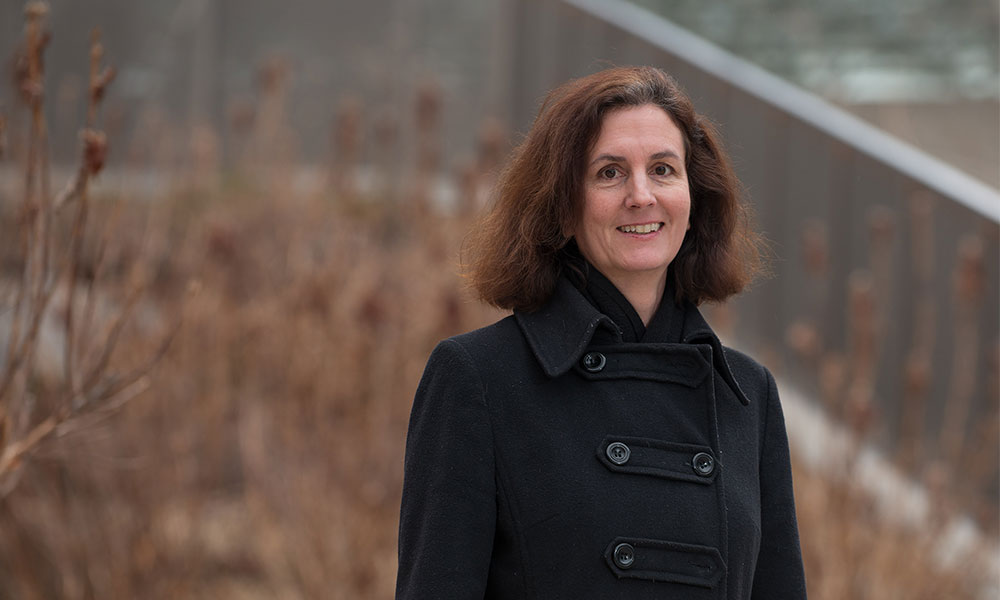
Teresa Donnelly, who leads the LSO’s Human Rights Monitoring Group, spoke at the Osgoode Hall event in Toronto commemorating International Day of the Endangered Lawyer 2020.
When supporting colleagues abroad, lawyers should consider offering behind-the-scenes support as well as making public statements, a Pakistan-based journalist told an audience at the Law Society of Ontario last week. “What has to be really kept in mind is how that support is voiced and contextualized,” said Beena Sarwar. “If it takes a simplistic view or plays into anti-Pakistan rhetoric …. it’s so easy to make Pakistan a scapegoat and target.” Sarwar, whose blog has gained international acclaim for its coverage of freedom, human rights, peace and even influential jurists, was one speaker at the Law Society of Ontario’s International Day of the Endangered Lawyer 2020, hosted at Osgoode Hall in Toronto on 24 January by the Lawyers’ Rights Watch Canada,Human Rights Watch and Amnesty International.
This year, lawyers organized a protest at the Pakistani embassy at the Hague. Past events focused on Egypt, Turkey, China and Honduras, among others.
The LSO’s Human Rights Monitoring Group has issued several statements about treatment of lawyers in Pakistan over the past few years. In the aftermath of the Kasi attack, the LSO urged the Pakistani government to “put an end to all acts of violence against lawyers and human rights defenders in Pakistan,” and “ensure that all lawyers can carry out their legitimate activities without fear of physical violence or other human rights violations.”
Other incidents that have been condemned by the LSO are the 2015 murder of Samiullah Afridi (a lawyer who defended a doctor that allegedly assisted CIA agents with their hunt for al Qaeda leader Osama bin Laden); and a suicide bomb attack on the Pakistani judiciary.
“Over the past decades, lawyers in Pakistan have been subjected to acts of mass terrorism, murder, attempted murder, assaults, (death) threats, contempt proceedings, harassment and intimidation, as well as judicial harassment and torture in detention, merely for engaging in their professional duties as lawyers,” a letter from Lawyers’ Rights Watch Canada said earlier this month. “Their families also have been targeted, and some have even been murdered. Some lawyers have also been threatened with disbarment and/or had their homes and offices raided by the police.”
At the event, bencher Teresa Donnelly read a letter the law society had received from a Pakistani lawyer. Lawyers cannot become “heroes,” Donnelly recounted from the email. Instead, she said, the writer felt the role of lawyers was to “focus on their work improving the justice system.” While support is needed for the Pakistani bar, Sarwar explained that Western organizations must be careful not to jump to issue statements that play into conspiracy theories about Western involvement. Abdul (Hamid) Bashani Khan, a lawyer at the Abdul Hamid Khan Law Office in Mississauga, also spoke on the panel, where speakers highlighted some of the common misunderstandings of the situation in Pakistan, particularly amid anti-Muslim rhetoric publicized in the post-911 era. For example, panelists said the bench and bar are portrayed as both very strong — given the influence of the lawyers’ movement of Pakistan — and also very weak, in the fight for judicial independence and public support. In 2014, a lawyer was killed after representing a high-profile professor charged with blasphemy.
To mark the Day of the Endangered Lawyer, the International Bar Association’s Human Rights Institute released a toolkit to help the legal community navigate the complex task of protecting lawyers at risk. The three-part kit includes supports for risk management, human rights mechanisms, emergency protocols, legal frameworks, international protection, security plans and response chains.
Amnesty International launched its Write for Rights campaign which this year champions children’s rights and youth activists. “This year Write for Rights, Amnesty’s flagship human rights campaign, champions youth activists who are taking on the world’s biggest crises,” said Kumi Naidoo, Secretary General of Amnesty International. “From those campaigning for climate and environmental justice, to those challenging inequality, poverty, discrimination and political repression, young people have emerged as a powerful force for change who deserve the world’s support.”
Every December people around the world write millions of letters, emails, tweets, Facebook posts and postcards for those whose human rights are under attack, in what has become the world’s biggest human rights event. Amnesty International is hoping to break last year’s Write for Rights record of nearly six million messages of support for activists and individuals from 10 countries whose human rights are under attack. [for last year’s campaign see: https://humanrightsdefenders.blog/2018/11/24/amnesty-starts-again-its-write-for-rights-campaign/]
Write for Rights 2019 features youth human rights defenders and individuals from in Belarus, Canada, China, Egypt, Greece, Iran, Mexico, Nigeria, Philippines and South Sudan.
Launching two days ahead of Universal Children’s Day on 20 November, a day to promote children’s rights, several of the featured activists had their rights violated as children.
They include José Adrián, who was 14 when he was brutally beaten by police on his way home from school in Mexico. He is now demanding reparations for his treatment and for the police to stop arbitrary detentions in the state of Yucatán. Among the other cases are:
Grassy Narrows Youth, a group of youth activists from an Indigenous community in north-western Ontario who have suffered one of Canada’s worst health crises. Their community has been devastated by 50 years of mercury contamination of their fish and river system. The Grassy Narrows youth are urging the government to address the mercury crisis once and for all, including by providing specialized health care and compensation for all;
Sarah Mardini andSeán Binder, two volunteer rescue workers from in Lesvos, Greece, who face up to 25 years in prison for their humanitarian work helping spot refugee boats in distress;
Yasaman Aryani, who defied her country’s discriminatory forced veiling laws and now must serve 10 years behind bars. Amnesty is campaigning for her immediate release;
Marinel Ubaldo, a youth activist from the Philippines who is urging her government to declare a climate emergency and protect future generations from the devastating impacts of climate change after her home was destroyed by typhoon Haiyan.
“The Write for Rights campaign epitomizes the ideals that Amnesty International was founded on – it’s about individuals helping other individuals. We are urging people to get behind these incredible young people who are campaigning for justice, equality and freedom,” said Kumi Naidoo.
“As we know from our work over the past five decades, writing letters works. Not only can it help free prisoners of conscience, but it makes a huge emotional difference to the people we support and to their loved ones.”
Monica Benício, the partner of Marielle Franco, a local politician in Brazil who was killed last year and was featured as part of the last Write for Rights, said of the campaign: “It helps me to get up in the morning and see some meaning, knowing that there is this big global network of affection. All these demonstrations of love and affection are helping us to mobilize, to demand justice, to pressure for investigation and above all to fight so that there will be no more Marielles.”
.. The groups welcome Canada’s acknowledgement that human rights defenders put themselves at great risk—along with their families, communities and the movements they represent—as they work to promote human rights and strengthen the rule of law. Women and LGBTI human rights defenders, for example, face high-levels of sexual and other forms of gender-based violence because of their gender and the rights they are advocating for. “In many parts of the world, human rights defenders are at risk as a result of their courageous work and their willingness to speak truth to power. Canada and the international community need to be strong supporters of these brave individuals. Human rights defenders must be able to act freely and without any interference, intimidation, abuse, threats, violence or reprisal. We are committed to speaking out against violations, standing up for human rights defenders and striving for a world where the rights and freedoms of all people are respected,” said Foreign Affairs Minister Chrystia Freeland on 17 June in Ottawa at a human rights event where the guidelines were announced.
For Canada’s new guidelines to be effective in helping to protect and support human rights defenders, they will need to be accompanied by a comprehensive implementation plan and increased Canadian funding going directly to human rights defenders and the movements they represent. Canada also needs to take a stronger approach to support human rights defenders advocating for corporate accountability, for instance, by enabling robust investigations when defenders face heightened risks linked to private sector investments. It will also be critically important that Canada create an advisory body that includes the participation of human rights defenders with experience and first-hand knowledge of the threats facing human rights defenders….
Importantly, the new guidelines call for Canadian diplomats working abroad at overseas missions or at Global Affairs Canada headquarters in Ottawa to take a more feminist and intersectional approach to promoting the rights of defenders. The document notes that many human rights defenders have multiple and “overlapping” identities, and often work on multiple issues. Human rights defenders may belong to one or more groups facing discrimination, including women, LGBTI people, Indigenous people, land and environment defenders, people with disabilities, journalists, and those seeking greater freedom of religion or beliefs. Human rights defenders in conflict and post-conflict countries face unique risks posed by high levels of militarization.
Quotes from Canada’s Voices at Risk: Canada’s Guidelines on Supporting Human Rights Defenders
“Canada recognizes the key role played by human right defenders in protecting and promoting human rights and strengthening the rule of law, often at great risk to themselves, their families and communities, and to the organizations and movements they often represent.”
“Canada’s guidelines on supporting human rights defenders is a clear statement of Canada’s commitment to supporting the vital work of HRDs.”
On 1 September 2019 Sohail Choudhury reported in Blitz that the founding Chair of the Montreal-based Raoul Wallenberg Centre for Human Rights (RWCHR), Dr. Irwin Cotler, was awarded the Heintz Memorial Award for Humanitarian Achievement.
Presented at the International Humanitarian Law Dialogues, the event brought together the founding Prosecutors and Presidents of the world’s International Tribunals and Courts, along with other top international legal experts. The gathering was organized in partnership with the Robert H. Jackson Center, named after the U.S. Supreme Court Justice who served as Chief Prosecutor at the Nuremberg Trials of Nazi War Criminals. In the words of the Jackson Center, “Cotler has been a long-time champion of human rights and supporter of modern international criminal law. As Minister of Justice for Canada, he made the pursuit of international justice a government priority. As an international human rights lawyer, he served as counsel to numerous prisoners of conscience, including Nelson Mandela and Salah Uddin Shoaib Choudhury. His continued work in founding the Raoul Wallenberg Centre places him at the center of human rights advocacy.”
UN Deputy Secretary-General Amina Mohamed’s spoke on the International Day of the World’s Indigenous Peoples, 9 August 2019, in New York: …There are an estimated 370 million indigenous people in the world today. …This year marks the International Year of Indigenous Languages, declared by the United Nations General Assembly to draw attention to the urgent need to preserve, revitalize and promote our indigenous languages. Almost half the world’s estimated 6,700 languages are in danger of disappearing. Most of these belong to indigenous peoples. With every language that disappears, the world loses a wealth of traditional knowledge and cultural heritage.
……..As the International Panel on Climate Change report that comes out today focuses on land degradation, it is important to re-emphasize that we will stand with those human rights defenders and defenders of our environment, of our habitat, that are persecuted. We should put a stop to that and have zero tolerance for it. And on this day we remember those who are fighting for indigenous peoples and their habitat.
Media (here the dailysabah of 13 July 2019) have referred to a Global Conference for Media Freedom, co-organized by the British and Canadian foreign ministries. The two-day conference, held at the Printworks event center in London, was joined by over a thousand guests from 100 countries, including journalists, academics, politicians and diplomats. The conference was held to trigger a global initiative to safeguard journalists and fortify global media freedom. Saudi journalist Jamal Khashoggi, who was murdered last October and Maltese journalist Daphne Caruana Galizia, who was killed in a bomb attack in 2017, were widely mentioned and marked by the panelists and participants.
One of the panel discussions placed a lot of importance on efforts to bring to justice those who have killed journalists, review national attempts to resolve cold cases and examine attempts to affect change in U.N. member states to prevent impunity. In addition to these topics and media-government interactions; the increasing relations between the media and investors in digital media also brought about new debates, such as ethical journalism and sustainability of the media.
One of the key proposals of the conference was creating an international judicial committee for journalists which will include judges, lawyers, academics and human rights defenders from all over the world. Also, to reduce pressure against journalists and media on a global scale, prevent journalist murders, attacks, kidnappings and ensure the safety of journalists; a new initiative based on international and civil society pressure to hold the governments accountable is to be created. In my personal opinion I doubt that there is really a need for creating new entities in an area where there are already so many NGOs, coalitions, campaigns and awards, but the severity of the situation perhaps justifies it (2018 was the worst year on record for violence and abuse against journalists – in 2018, at least 99 journalists were killed, a further 348 imprisoned and 60 held hostage. Beyond that, almost 1,000 journalists and media workers have been killed in the past decade. Among them, 93 percent of those killed were local journalists and 7 percent are foreign correspondents). See also: https://humanrightsdefenders.blog/tag/journalists/
Another finding of the research conducted by these institutions is that the impunity for crimes against journalists remains the norm, with justice in only one in 10 cases.
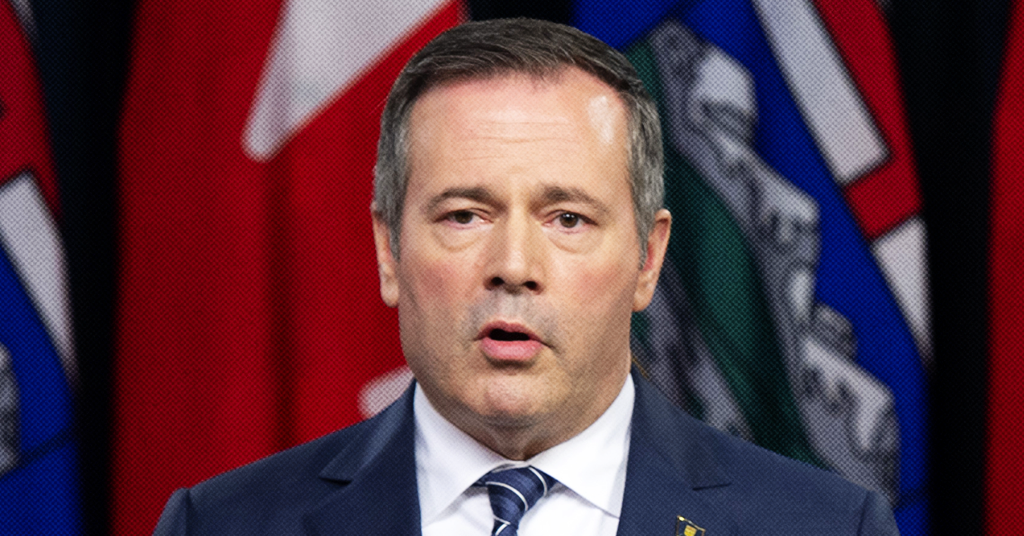
Press Progress blog of 3 July 2019 analyses the agressive tone of Alberta‘s Premier Jason Kenney, who talks of “war” on environmental defenders. Civil liberties groups and human rights organizations are warning that his new “war room” is an attempt to intimidate critics and put a chill on free expression rights in the province. Described as a “fully staffed, rapid response” unit mandated to respond to “all the lies” about the oil industry, the $30 million “war room” is part of Kenney’s so-called “fight back strategy” that aims to wage war against environmental groups. Kenney has also indicated he will launch a public inquiry into the activities of environmental groups like the David Suzuki Foundation, while Kenney’s energy minister has promised the government will assemble a team of lawyers to launch lawsuits against environmentalists.
“Talk of a war room, focused on targeting ‘offending’ environmentalists, seems determined to send a clear message,” Amnesty International Canada Executive Director Alex Neve told PressProgress. Cara Zwibel, director of the Canadian Civil Liberties Association’s Fundamental Freedoms program, agrees the campaign’s stated mission could be “very problematic from a free expression perspective.”
Standing behind Kenney at the press conference was Vivian Krause, a self-described “researcher” who focuses on “the money behind environmental campaigns.” Krause’s research, which is often panned by her critics as a “conspiracy theory,”claims environmental groups funded by the Rockefeller Brothers are secretly working to cap oil production in Alberta.
Also sharing the stage with Krause and Kenney was Tim McMillan, President and CEO of the Canadian Association of Oil Producers (CAPP) as well as Sandip Lalli, President and CEO of the Calgary Chamber of Commerce. Kenney was introduced at the press conference by Robbie Picard, an oil activist who has been involved with groups like Canada Action and Rally for Resources, but better known for creating the “I Love Oilsands” t-shirts. As Maclean’s notes, Picard is known to be “a bit too enthusiastic in his cheerleading” for the oil industry, as well — in a 2018 appearance on Rebel Media, Picard described environmentalists as “terrorists” who should face “six months in jail” for protesting the oil industry.
This year, particular emphasis has been placed on the role of prominent human rights defenders, journalists and global human rights leaders, and of Canada as well. The conference brings together some of the world’s human rights leaders and thinkers, including: Saudi activist Omar Abdulaziz; Canadian retired lieutenant-general and senator Roméo Dallaire; Iranian women’s rights leader Shaparak Shajarizadeh; Chinese dissident and former political prisoner Yang Jianli; and former special adviser to the UN Secretary-General on the Responsibility to Protect, Jennifer Welsh.
The event is hosted by the Montreal Institute for Genocide and Human Rights Studies at Concordia University, in partnership with the Raoul Wallenberg Centre for Human Rights, Amnesty International, the Canadian International Council and the Centre for International Peace and Security Studies. (The event is expected to be livestreamed via CPAC.)
Here, some of those involved with the event shed light on the human rights issues they believe are most important to address in order to ensure global stability.
1. Where’s our defence of the global institutions and mechanisms to protect human rights?Kyle Matthews, executive director of the Montreal Institute for Genocide and Human Rights Studies
2. Crimes against humanity have been committed in Cameroon. Let’s not turn away. Pearl Eliadis, Canadian lawyer and senior fellow of the Raoul Wallenberg Centre for Human Rights
3. A call for a new generation of Canadian human rights promotion. Arthur Graham, Canadian lawyer and head of the rule of law and human rights department at the OSCE Mission to Serbia
4. Do not underestimate the importance, and fragility, of multinational democracy.Michael J. Abramowitz, president of Freedom House
5. Above all, the common thread — and need — is fairness.Jeremy Kinsman, Canada’s former ambassador to the European Union and High Commissioner to Britain
A bit quirky but nice news item: “Canada’s Viola Desmond note wins international banknote competition” as reported by the BBC on 30 April 2019.
A Canadian $10 bill has won the top prize in an international banknote competition.
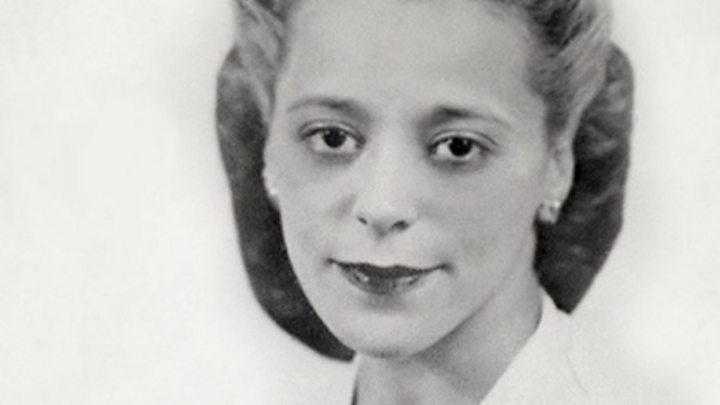
The bill, featuring Canadian civil rights activist Viola Desmond, beat 15 other banknotes to win the International Bank Note Society award. Desmond became the first female Canadian to be featured prominently on a banknote. Desmond, a black businesswoman from Nova Scotia, stood at the forefront of Canada’s early civil rights movement when she refused to vacate a whites-only area of a theatre in 1946. The back of the $10 note depicts the Canadian Museum for Human Rights in Winnipeg, Manitoba.
Image copyrightCOURTESY The $10 Viola Desmond note (centre) beat competition from Russia (left) and Venezuela (right)



 Hans Thoolen on Human Rights Defenders and their awards