Posts Tagged ‘burkina fasso’

Burkina Faso artist Fasky uses photography to promote engagement

December 12, 2024

On 8 December 2024 Global Voices tells this story:

One of Fasky’s photographs at sn exhibition showcasing his work during the Récréâtrales festival. In this photo, a young woman is weaving a traditional Burkinabe loincloth. Photo by Joel Hevi, used with permission.

Across Africa, art events serve as powerful platforms for activists seeking to raise awareness about social issues and human rights.

Zerbo Siaka, also known as Fasky, is a photographic artist from Burkina Faso operating at the intersection of artistic expression and activist movements. The artist is also the director of the association Photo’age. Through this association, he is dedicated to passing on his photographic expertise to the next generation. His exhibition at the 13th edition of the cultural festival ‘Les Récréâtrales’ — a pan-African space for writing, creation, research, and theatrical dissemination — exemplifies the positive impact art can have on society.

A long-time participant in this significant gathering, Fasky shared his perspectives with Global Voices during Les Récréâtrales, explaining how he uses his photography as a tool to foster resilience and encourage social engagement.

Fasky. Photo by Joel Hevi, used with permission.

Joel Hevi (JH): Could you tell us about what inspired your journey into photography and your role within the Photo’Age association?

Fasky (F): I am Zerbo Siaka, also known as Fasky, a photographer from Bobo-Dioulasso in Burkina Faso. My journey into photography happened by chance. Initially, I aspired to be a rapper, but my path changed when I discovered photography while accompanying some French friends who were part of an association in Burkina Faso. They gifted me a camera, and that’s when photography became my passion. Today, through Photo’Age, I share this art with the younger generation, including internally displaced children, helping them to express themselves and showcase their realities.

JH: You presented a series of portraits of women at Les Récréâtrales. What message are you hoping to share through these woman-centric pieces?

F: For four years now, I have taken part in Les Récréâtrales. During this time, I have been fortunate to build strong connections with the women I photograph, most of whom are internally displaced [due to the widespread violence caused by terrorist attacks]. The theme of my exhibition, ‘We Shall Overcome,’ reflects their resilience in the face of crisis. These are women who, despite everything, hold on to hope and fight for their dignity. Through their portraits, I invite visitors to witness their strength and vulnerability. My hope is that beyond their faces, one can see a moving and inspiring humanity.

JH: Do you hope to initiate a dialogue about gender equality? What potential impacts could arise beyond the aesthetic appeal of your work?

F: Definitely, photography is for me a political and social act. These portraits are a statement advocating for gender equality and a tribute to these strong women and their struggles. I hope to raise awareness, to showcase their strength, and to emphasize the urgency of achieving equality. If my photographs can spark a debate and motivate others to stand up for these women’s rights, they will have achieved their goal.

JH: Your photographic style conveys an intimate connection with your subjects. How do you manage to establish this trust, especially in often challenging situations?

F: Trust is at the heart of my work. The women I photograph know me; we have built relationships over time. The Terre Ceinte project allowed me to understand their lives and earn their trust. Before taking their pictures, I listen and respect their stories. This bond is reflected in their expressions in my photos — a sincerity that only patience and attentive listening can bring to life.

Daouda Diallo, the 2022 recipient of the Martin Ennals Award, abducted

September 27, 2024

A prominent human rights defender in Burkina Faso has been abducted by unknown individuals, rights groups have said. Activists say it could be the latest attempt by the military government to target dissidents using a controversial law.

Daouda Diallo, 2022 recipient of the Martin Ennals international human rights award, was abducted on Friday in the capital Ouagadougou after visiting the passport department where he had gone to renew his documents, according to the local Collective Against Impunity and Stigmatisation of Communities civic group, which Mr Diallo founded.

https://www.trueheroesfilms.org/thedigest/laureates/ca7f1556-8f73-4b48-b868-b93a3df9b4e1

His captors – in civilian clothing – accosted him as he tried to enter his car and took him to “an unknown location”, the group said in a statement on Friday, warning Mr Diallo’s health could be at risk and demanding his “immediate and unconditional” release.

Amnesty International’s west and central Africa office said the abduction was “presumably (for him) to be forcibly conscripted” after he was listed last month among those ordered to join Burkina Faso’s security forces in their fight against jihadi violence as provided by a new law.Right now, civil society activists, human rights defenders and even leaders of opposition political parties do not dare express freely their opinions

“Amnesty International denounces the use of conscription to intimidate independent voices in #BurkinaFaso and calls for the release of Dr Diallo,” the group said via X, formerly known as Twitter.

Earlier this year, Burkina Faso’s junta announced the “general mobilisation” decree to recapture territories lost as jihadi attacks continue to ravage the landlocked country.

https://www.msn.com/en-ie/news/national/human-rights-activist-abducted-in-burkina-faso-group-says/ar-AA1kT5Gr

MEA Laureate 2022 Daouda Diallo abducted

December 4, 2023

On 1 December, 2023, at about 4 p.m., four or more unidentified men abducted Diallo, the secretary-general of the Collective Against Impunity and Stigmatization of Communities (Collectif contre l’Impunité et la Stigmatisation des Communautés, CISC) in Burkina Faso’s capital, Ouagadougou. Diallo had just left the government’s passport office after a meeting with officers to renew his passport. The CISC issued a statement the same day saying that men in civilian clothes pushed Diallo into a vehicle and drove off. His whereabouts remain unknown.

Diallo, 41, winner of the 2022 Martin Ennals Award for Human Rights Defenders, has long been known for denouncing abuses by government security forces and for demanding accountability.[https://www.trueheroesfilms.org/thedigest/laureates/ca7f1556-8f73-4b48-b868-b93a3df9b4e1] In early November, the Burkinabe security forces used a sweeping emergency law aimed at silencing dissent and notified at least a dozen journalists, civil society activists, and opposition party members, including Diallo, that they would be conscripted to participate in government security operations across the country. Diallo spoke out against these politically motivated conscriptions.[see also: https://humanrightsdefenders.blog/2023/11/10/burkina-faso-emergency-law-targets-dissidents/]

On December 2, the United Nations special rapporteur on human rights defenders, Mary Lawlor, raised serious concerns about Diallo’s abduction. In a December 3 statement, The People’s Coalition for the Sahel, an alliance of civil society organizations, said that “the abduction of a prominent activist in broad daylight […] demands an immediate government response,” and called on the military authorities to take action.

Burkina Faso authorities should urgently and impartially investigate the abduction of Daouda Diallo and release him if he is in government custody,” said Ilaria Allegrozzi, senior Sahel researcher at Human Rights Watch. “We are deeply concerned for Diallo’s safety and the safety of everyone working to improve respect for human rights in Burkina Faso.”

Since it took power in an October 2022 coup, Burkina Faso’s military junta has increasingly cracked down on peaceful dissent and the media, shrinking the civic space in the country. National and international journalists, as well as civil society members, face increasing harassment, threats, and arbitrary arrests. On December 2, the military authorities announced the suspension of “all distribution methods” of the French newspaper Le Monde daily, claiming an article published on Le Monde’s website on December 1 about a deadly attack by an Islamist armed group on a military base in Djibo, Sahel region, on November 26, was “biased.”

On 4 December the Martin Ennals Foundation and several other NGOs addressed an urgent letter to the Représentant Permanent de Burkina Faso at the UN in Geneva.

https://www.hrw.org/news/2023/12/04/burkina-faso-prominent-rights-activist-abducted

https://abcnews.go.com/International/wireStory/burkina-faso-rights-defender-abducted-concerns-grow-alleged-105328313

https://www.voanews.com/a/burkina-faso-rights-defender-abducted/7381667.html

https://www.barrons.com/news/ngos-call-for-release-of-burkinabe-rights-defender-4d2b4f83

Burkina Faso: Emergency Law Targets Dissidents

November 10, 2023

On 8 November, 2023 Human Rights Watch reported that Burkina Faso’s military junta is using a sweeping emergency law against perceived dissidents to expand its crackdown on dissent. Between November 4 and 5, 2023, the Burkinabe security forces notified in writing or by telephone at least a dozen journalists, civil society activists, and opposition party members that they will be conscripted to participate in government security operations across the country.

The transitional military authorities assert that the conscription orders are authorized under the April 13 “general mobilization,” part of a plan to recapture territory lost to Islamist armed groups, which control roughly half of the country. The plan seeks to create a “legal framework for all actions” to be taken against insurgents and gives the president extensive powers to combat the insurgency, including requisitioning people and goods and restraining civil liberties.

The Burkina Faso junta is using its emergency legislation to silence peaceful dissent and punish its critics,” said Ilaria Allegrozzi, senior Sahel researcher at Human Rights Watch. “The government should not respond to the abusive Islamist armed groups with further human rights abuses but should instead strengthen efforts to protect civilians and uphold basic rights to freedom of expression and speech.

By targeting individuals who have openly criticized the junta, the conscription undertaken in Burkina Faso violates fundamental human rights, Human Rights Watch said. The recent notifications for conscriptions targeted, among others, Bassirou Badjo and Rasmane Zinaba, members of the civil society group Balai Citoyen; Daouda Diallo, prominent rights defender, secretary-general of the Collective Against Impunity and Stigmatization of Communities (Collectif contre l’Impunité et la Stigmatisation des Communautés, CISC), and laureate of the 2022 Martin Ennals Award for Human Rights Defenders [see: https://www.trueheroesfilms.org/thedigest/laureates/ca7f1556-8f73-4b48-b868-b93a3df9b4e1]; Gabin Korbéogo, president of the Burkina Faso Democratic Youth Organization (Organisation Démocratique de la Jeunesse du Burkina Faso, ODJ); and the journalists Issaka Lingani and Yacouba Ladji Bama.

Domestic civil society groups, media organizations, and trade unions have strongly condemned what one called the “selective and punitive” application of the “general mobilization” decree. In a November 6 statement, the Burkinabe Movement of Human and Peoples’ Rights (Mouvement Burkinabè des Droits de l’Homme et des Peuples, MBDHP) said the general mobilization “has been specifically designed and adopted not to contribute to the fight against terrorism,” but to repress critical opinions.

Human rights activists and journalists told Human Rights Watch they feared being conscripted. “This wave of notifications is affecting people’s mental wellbeing,” said an independent journalist living in Ouagadougou, Burkina Faso’s capital. “I am asking myself if I will be next.”

Some said they decided not to publicly criticize the conscriptions to be able to continue their work. “A human rights defender is useful to others only if he is alive and free,” an activist from the North region said. “I need to keep working and serve my community, and I cannot do so if I am sent to the front.”

..

While governments are empowered to conscript members of the civilian population over age 18 for the national defense, there are limits that the junta has far overstepped. Human Rights Watch takes the position that conscription should not take place unless it has been authorized and is in accordance with domestic law. The conscription law needs to meet reasonable standards of fairness in apportioning the burden of military service. It needs to be carried out in a manner that gives the potential conscript notice of the duration of the military service and an adequate opportunity to contest being required to serve at that time. Conscription also needs to be carried out according to standards consistent with non-discrimination and equal protection under law.

Since it took power in an October 2022 coup, the military junta has increasingly cracked down on the media and peaceful dissent, shrinking the civic space in Burkina Faso.

National and international journalists face increasing harassment, threats, and arbitrary arrests. In April, the military authorities expelled two journalists working for the French newspapers Libération and Le Monde following their reports on human rights abuses by the army. In August, Burkinabe military authorities suspended the independent radio station Radio Omega for one month after it broadcasted an interview with supporters of Niger’s ousted president, Mohamed Bazoum. In September, the junta suspended the Paris-based news outlet Jeune Afrique, accusing it of publishing “misleading” articles seeking “to discredit” the national armed forces.

In late October, at least 15 civil society organizations and trade unions called for a mass meeting in Ouagadougou to commemorate the popular uprising of October 30 and 31, 2014, that ended the power of then-President Blaise Compaoré. The groups also challenged the transitional government about the deterioration of the security situation, high cost of living, poor governance, and corruption. On October 28, the Ouagadougou mayor called on the organizers to cancel their meeting due to potential “disturbances to public order.” The meeting did not take place.

“Providing security for the people of Burkina Faso demands a long-term commitment to promote respect for human rights,” Allegrozzi said. “Using conscription to silence dissent will neither advance the junta’s efforts against the Islamist insurgency nor improve the deteriorating rights situation in the country. The government should immediately end this misuse and abuse of conscription.”

https://www.hrw.org/news/2023/11/08/burkina-faso-emergency-law-targets-dissidents

https://reliefweb.int/report/burkina-faso/burkina-faso-emergency-law-targets-dissidents

Burkina Faso: Coup Puts Rights at Risk – Diallo asks military to respect international law

January 29, 2022

Burkina Faso military officers responsible for the January 2022 coup should ensure the protection of human rights and a swift transition to democratic rule, Human Rights Watch said today. The authorities should give priority to the humane treatment of people in custody, respect freedoms of the media and rights defenders, and ensure that counterterrorism operations respect basic rights. ..  

“The Burkina Faso military coup occurred in a country with weak democratic institutions amid a brutal armed conflict and a growing humanitarian crisis,” said Corinne Dufka, Sahel director at Human Rights Watch. “The military authorities now in control need to act urgently to protect people’s rights and ensure they don’t make a bad human rights situation even worse.”

During a January 24 news conference, the self-proclaimed Patriotic Movement for Safeguard and Restoration led by Lt. Col. Paul-Henri Sandaogo Damiba, announced the suspension of the constitution, the dissolution of the government and national assembly, and a nationwide curfew. The movement’s spokesperson said elections would be held “within a reasonable time frame” and pledged to respect Burkina Faso’s international commitments, notably including human rights.

The coup leaders claimed the coup took place “without bloodshed.” However, there is uncertainty about the safety of President Kaboré and his close associates, amid reports of potential injuries and deaths during the military takeover. The MPSR should publicly account for the whereabouts and condition of government officials in custody and allow the Office of the United Nations High Commissioner for Human Rights, the national human rights commission, and independent human rights monitors to visit Kaboré and any other detainees. All those detained should be promptly brought before a judge and charged or be released.

The coup occurred within the context of a marked deterioration in the country’s human rights and security situation over the past year as attacks and atrocities by armed Islamist groups surged and the humanitarian situation worsened. Burkina Faso was already struggling to ensure justice for hundreds of unlawful killings by all sides, and to uphold the civil and political rights of its population.

During 2021, armed Islamist groups killed at least 250 civilians and scores of security force members during attacks in several provinces. Since 2018, Human Rights Watch has documented that government security forces and pro-government militias allegedly summarily executed hundreds of suspects, mostly in the country’s northern regions. Virtually none of these attacks have resulted in investigations and prosecutions.

Burkinabé rights defender, Dr. Daouda Diallo, secretary-general of the Collective Against Impunity and Stigmatization (CISC), and laureate of the 2022 Martin Ennals Award for Human Rights Defenders, told Human Rights Watch that he hoped the military authorities would “address Burkina Faso’s deepening social divisions, and ensure crucially needed protection for all civilians at risk from conflict, while scrupulously respecting international humanitarian law.”  See also: https://www.trueheroesfilms.org/thedigest/laureates/ca7f1556-8f73-4b48-b868-b93a3df9b4e1

The military authorities should also ensure respect for freedom of expression. In late 2021 and early 2022, the government shut down internet services in a move to quell protesters who had taken to the streets to demand an end to the violence and to protest rising food prices. A 2019 law criminalizing some aspects of reporting on security force operations dampened media freedom, with journalists reluctant to report on allegations of abuses by pro-government forces. Further, in 2021, the government implemented a de facto ban on visits by journalists to internally displaced camps. After taking power, the MPSR issued a warning against the communication of “false news.”..

Military takeovers in Africa in the past year occurred in Chad, Guinea, Mali, and Sudan. Coup leaders have often taken advantage of social unrest, grievances about corruption, and the failure of governments to respect basic rights, uphold constitutional obligations, and carry out promised reforms. Democratically elected governments need to look beyond elections as a marker of democratic progress, and focus on upholding human rights, strengthening the rule of law, and building credible, independent institutions, Human Rights Watch said…

“Burkina Faso’s military leadership should not allow the political upheaval created by the coup to lead to a vacuum in the protection of basic rights,” Dufka said. “The military authorities need to maintain discipline within the security forces and ensure that the human rights of all Burkinabé are respected, including their right to vote freely in elections.”

https://www.hrw.org/news/2022/01/27/burkina-faso-coup-puts-rights-risk

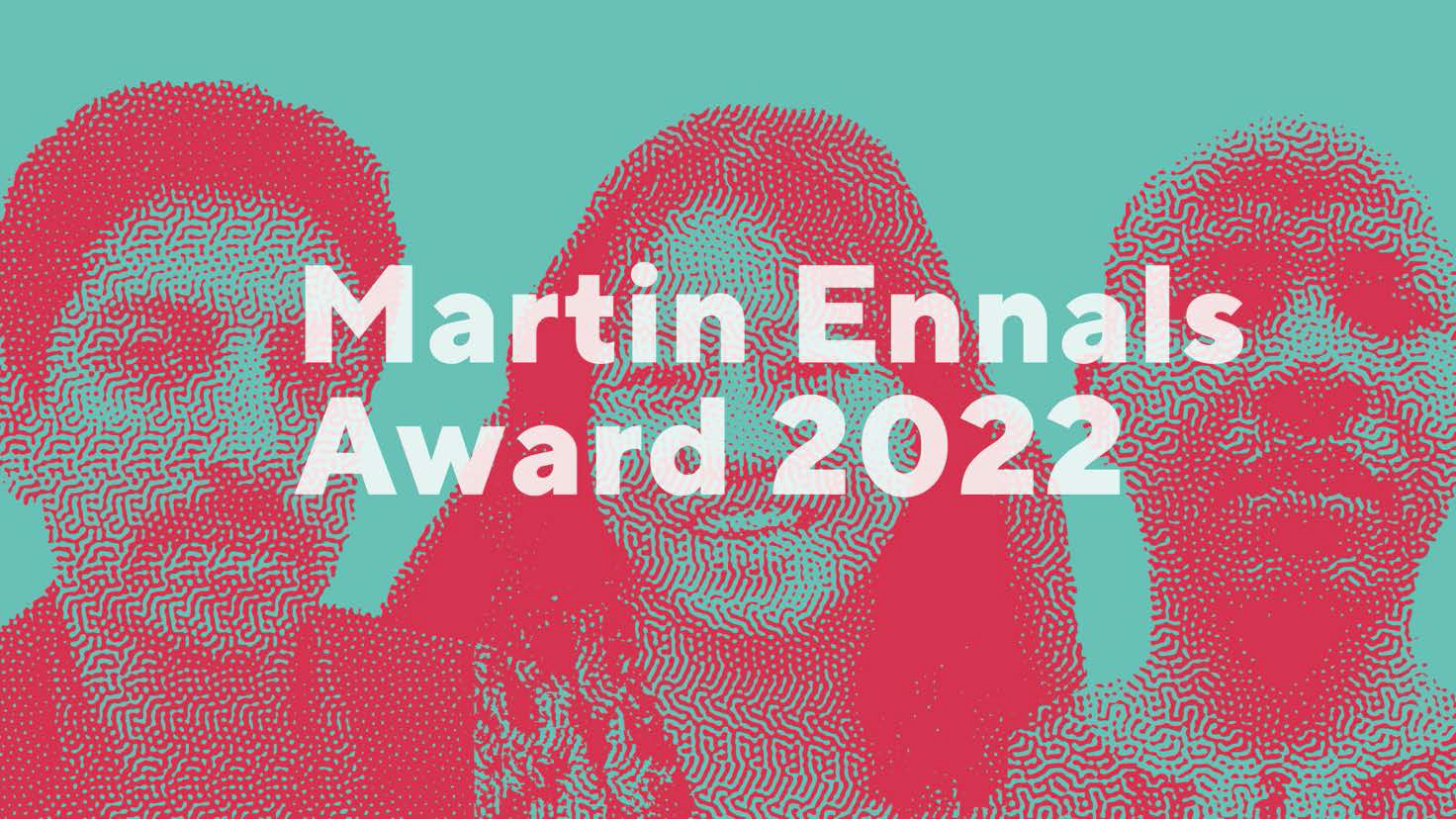
Breaking News: 3 laureates of the Martin Ennals Award 2022 announced today

January 19, 2022

This morning, 19 January 2022, at a virtual press conference in Geneva three driving forces of the human rights movement were announced as the Laureates of the 2022 Martin Ennals Award for Human Rights Defenders. For more on the Martin Ennals Award and its laureates, see: https://www.trueheroesfilms.org/thedigest/awards/043F9D13-640A-412C-90E8-99952CA56DCE

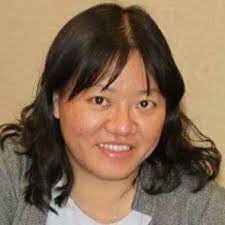
Pham Doan Trang is a leading journalist, editor and democracy advocate in Vietnam, where
the Communist Party has left little room for opposition voices to flourish. She directed several
independent media outlets to raise awareness amongst Vietnam’s citizens of their fundamental
rights galvanising many other journalists and human rights defenders to speak up. She was one
of the most hunted activists in her country before being arrested in October 2020. On 14
December 2021, Pham Doan Trang was sentenced to nine years in prison for “conducting
propaganda against the state”. There are growing concerns about her health. [see also: https://www.trueheroesfilms.org/thedigest/laureates/fe8bf320-1d78-11e8-aacf-35c4dd34b7ba]

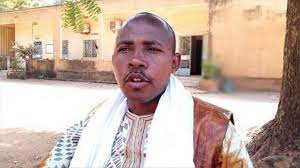
Dr. Daouda Diallo is a trained pharmacist-turned-human rights activist in Burkina Faso. The
founder of the civil society coalition CISC, he dedicatedly documents human rights violations in
a country rocked by violent crossfires between government forces, local paramilitary groups
and Islamist factions. He carries the torch for justice and accountability to victims of the violence
and their families. Dr. Diallo’s message of unity amongst different ethnic groups and faiths.

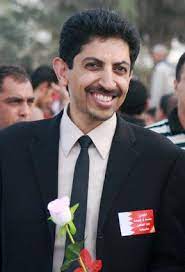
Abdul-Hadi Al-Khawaja is a charismatic architect of Bahrain’s human rights movement and
a leader of the 2011 protests calling for democracy and greater freedom in the Gulf region. Al-
Khawaja is not only an activist, but also a social entrepreneur who founded some of the first
human rights research and defence organizations in the region, which still exist today. He
inspires future generations in Bahrain to continue to fight despite his now decade-long
imprisonment. See also: https://www.trueheroesfilms.org/thedigest/laureates/4d45e316-c636-4d02-852d-7bfc2b08b78d

You can relive the conference here: https://youtu.be/UgvIli5X-T8

It was also announced that due to the COVID-19 pandemic, the Award Ceremony is postponed until 2 June 2022. “As a city of human rights, Geneva is committed to supporting international cooperation
on critical issues. Throughout the pandemic, many organizations have persisted in their human rights
missions, demonstrating tremendous resilience. In this spirit, we are proud to co-organise another
edition of the Martin Ennals Award
”, said Member of the City Executive Alfonso Gomez. (https://www.martinennalsaward.org/committed-to-a-better-world/)

AS Chair of the Martin Ennals Award Jury, I mentioned that the Jury had selected “three galvanizers of the human rights movement and that courage is the connecting dot between them ”.

https://www.martinennalsaward.org/and-the-martin-ennals-laureates-2022-are/

2020 International Women of Courage Awards by the U.S. State Department

March 4, 2020

Today, Wednesday 4 March 2020, Secretary of State Michael R. Pompeo hosts the Annual International Women of Courage Awards at the U.S. Department of State to honor 12 women from around the world.  The First Lady of the United States Melania Trump will deliver remarks to recognize the accomplishments of these women. For more on this and 7 other international awards that have word COURAGE in their name, see: http://www.trueheroesfilms.org/thedigest/awards/international-women-of-courage-award.

The 2020 announcement comes remarkably quickly on the heels of last year’s, see: https://humanrightsdefenders.blog/2019/12/18/usas-international-women-of-courage-awards-for-2019/

This year will bring the total to 146 awardees from 77 countries. U.S. diplomatic missions overseas nominate one woman of courage from their respective host countries. The finalists are selected and approved by senior Department officials. Following the IWOC ceremony, the 12 awardees will participate in an International Visitor Leadership Program (IVLP) visiting various cities throughout the country, before reconvening in Los Angeles for the conclusion of their program on March 16. The 2020 awardees are:

Zarifa Ghafari (Afghanistan) After successfully launching and operating a women-focused radio station, Afghanistan’s Zarifa Ghafari became mayor of Maidan Shar, in conservative Wardak province, at the age of 26.  When she showed up to start work, a male mob appeared and she was forced to flee.  Despite death threats, Ms. Ghafari came back, defying her conservative critics and their narrative that a woman is unfit to lead.  She then withstood a walkout by all of the male members of her office.  She later demonstrated ability and courage in tackling her town’s problems.  Despite fierce opposition from vested interests, she successfully launched a “Clean City, Green City” campaign that reduced littering.  Ghafari’s courage has inspired girls and women not only in her community and the wider province, but across the country.  In her capacity as a trail-blazer and door-opener for a new generation of young women, she has helped empower the women of Afghanistan.

Lucy Kocharyan (Armenia) Using her platform as a journalist, Kocharyan has championed children with mental health issues and has emerged as a leading voice in the fight against psychological, physical, and domestic violence against women and children.  Through her dedication and resolve, Kocharyan became famous for launching “Voices of Violence” in August 2018.  She has become a spokesperson on gender-based violence in Armenia and has continued to speak out despite harsh criticism – from people on the street who yell “shame” as she passes by, to parliamentarians speaking out against her and threatening her with lawsuits.  She successfully started a conversation about domestic and sexual violence that is slowly leading to some action. Gender-based violence is a pervasive problem throughout Armenia, where traditional social norms regarding masculinity, femininity, gender equality, and the division of household tasks remain rigid, making her achievements and impact all the more impressive.

Shahla Humbatova (Azerbaijan) Shahla Humbatova has worked as a defense lawyer in Azerbaijan since 2013, and is one of a handful of legal advocates who have been consistently willing to defend individuals facing punishment for exercising their fundamental freedoms.  She has bravely defended human rights defenders, journalists, bloggers, youth activists, members of the political opposition, and others.  Her example has inspired other lawyers to better advocate for their clients in politically sensitive cases, and her courage in representing LGBT clients in a conservative culture has pushed civil society further down the path to tolerance.  She is one of only two female lawyers to take these cases on in a difficult environment in which human rights lawyers have regularly been harassed and threatened in social media, suspended from practicing law, and disbarred. [see also: https://humanrightsdefenders.blog/2020/01/20/annual-reports-2019-azerbaijan-in-review-muted-hope-for-2020/]

Ximena Galarza (Bolivia) Ximena Galarza is a Bolivian journalist with over 25 years of experience. She has worked as a reporter, a television presenter, and news editor on some of Bolivia’s most important news channels including Red UNO, Cadena A, and TVU. Across her extensive career, Galarza has interviewed hundreds of politicians, academics, intellectuals, artists, and experts. She has also trained journalists to better inform the public of their rights and obligations. Galarza’s work has supported democracy in Bolivia and exposed corruption and violations of democratic freedoms. Since 2015, Galarza has hosted the program Jaque Mate (Check Mate) on TVU, one of Bolivia’s most prestigious news programs. In 2019, two of Galarza’s interviews impacted Bolivia’s history by demonstrating fraud in the October 20 presidential elections.  The electoral irregularities were later confirmed by an independent analysis from the Organization of American States.

Claire Ouedraogo (Burkina Faso) Claire Ouedraogo is the President of the Songmanegre Association for Women’s Development (Association féminine songmanegre pour le développement), an organization she founded that focuses on eliminating female genital mutilation/cutting (FGM/C) and promoting female empowerment through family planning education, vocational training, and micro-credit for women in the rural and underserved Center North region of Burkina Faso. She also serves as a senior advisor on the National Council to Combat Female Genital Mutilation. She is an active member of the Burkinabe Movement for Human and People’s Rights. In 2016, the prime minister of Burkina Faso nominated her as an Ambassador of Peace for her work in empowering rural women. Despite the increased threat of terrorist attacks and violent acts against civilians in Bam Province, Mrs. Ouedraogo continues her courageous work on behalf of vulnerable women threatened both by FGM/C and terrorism.

Sayragul Sauytbay (China) Sayragul Sauytbay was born in Ele Kazakh Autonomous Prefecture, Xinjiang, China.  She attended medical university and worked as a doctor, teacher, education director, and headmaster. In July 2016, Sayragul and her family attempted to move to Kazakhstan but the Chinese Communist Party (CCP) confiscated her passport and prevented her from going with her husband and children.  From November 2017 to March 2018, Sayragul was forced by the CCP to teach Chinese to ethnic minority people in a detention camp.  In March 2018, Sauytbay fled to Kazakhstan to avoid being sent back to the camps, where she feared she would die.  Subsequently, Sauytbay become one of the first victims in the world to speak publicly about the CCP’s repressive campaign against Muslims, igniting a movement against these abuses.  Her testimony was among the first evidence that reached the broader international community of the CCP’s repressive policy, including both the camps and the coercive methods used against Muslim minorities.  Sayragul and her family received asylum in Sweden, where they now live.

Susanna Liew (Malaysia) Following the February 2017 abduction of her husband, Christian pastor Raymond Koh, allegedly by state agents, Susanna Liew has fought on behalf of members of religious minorities who disappeared in Malaysia under similar circumstances—including Amri Che Mat, Joshua Hilmy, and Ruth Sitepu—or who face persecution for their beliefs.  Susanna actively pursued justice for her husband and others during the Malaysian Human Rights Commission’s (SUHAKAM) 2018-2019 public inquiry into enforced disappearances and continues to push the government to investigate these cases and prosecute those responsible.  Despite police harassment and death threats, she continues to advocate for her husband and others, not because of her faith or theirs, but because of their rights as Malaysians.  Susanna and Raymond founded Hope Community in 2004, a non-profit organization that works with the poor, needy, and marginalized.  She previously served as a school principal and educator.

Amaya Coppens (Nicaragua) Coppens is one of the leaders of the 19th of April Student Movement in Nicaragua. She participated in numerous protests against the Sandinista government and the violent, repressive tactics deployed by its security forces. In September 2018, she was abducted by Nicaraguan police from her residence after participating in a peaceful protest. She was released in June and continued to speak out against the regime in Nicaragua. She had the opportunity to repatriate to Belgium during her first captivity, but refused. On November 14, Coppens was imprisoned again when she and 12 other activists attempted to bring water to mothers of political prisoners on hunger strike. She and other political prisoners were released by the regime on December 30, 2019.

Jalila Haider (Pakistan) Known as the Iron Lady of Balochistan, Jalila Haider is a human rights attorney and founder of “We the Humans – Pakistan”, a non-profit organization to lift local communities by strengthening opportunities for vulnerable women and children. She specializes in defending women’s rights and provides free counseling and legal services to poverty-affected women. The first female attorney of her Hazara community, Haider led a peaceful hunger strike to recognize the right to life for the Hazara following a series of targeted attacks. Ms. Haider has taken up the cause of many other vulnerable communities. As Balochistan’s President of the Women Democratic Front and Balochistan’s branch of the Aurat (Woman’s) March, she fought against violence against women in public spaces, at work, and at home.

Amina Khoulani (Syria) Khoulani is a survivor of the Assad regime’s detention and torture centers, which have arbitrarily detained over 140,000 Syrians, and has dedicated her life to helping the families of forcibly disappeared Syrians.   A long-time civil society activist, she fled Syria in 2014 after her release from prison. She was imprisoned for six months for “peaceful activism” and her husband detained for two and a half years at the notorious Sadnaya Prison. They survived, but her three brothers died while in regime custody.  From this devastating experience, Khoulani rededicated her life to seeking information and justice for the families of the disappeared. She is a founding member of “Families for Freedom”, a women-led movement launched in 2017 by families who’s loved ones have been detained and disappeared in Syria. Forced from her home and country, living under constant threat as a refugee without government representation, she continues to advocate for human rights, democracy, and peace in Syria.

Yasmin al Qadhi (Yemen) After obtaining her journalism degree, Yasmin Al-Qadhi was one of the first women to write articles for local newspapers during the Arab Spring pro-democracy protests in Sanaa’a.  When the civil war broke out in Yemen in 2015, Yasmine and her sister Entisar established the Marib Girls Foundation.  Through the foundation, she works with senior army officials to combat child recruitment and obtained the military’s commitment to release any child recruited or detained.  She fostered support for women displaced by the conflict by coordinating with the local and international community.  She also raised awareness by co-producing a film about the negative effects of displacement on women and children. Yasmine still resides in Yemen, a tribal society where women are discouraged from working in public spaces. She is working to change social norms and has become a role model in her society.  Both at home and abroad, she encourages women’s empowerment and meaningful participation in civil society and the UN-led peace process.

Dr. Rita Nyampinga (Zimbabwe) Rita Nyampinga has been a human rights defender for more than 35 years, fighting for gender equality in the workplace since she joined a trade union in 1983.  She is also a trained mediator, and a mentor for girls and young women in leadership.  Her experiences during detention led her to form the Female Prisoners Support Trust to support women and children in detention and raise awareness of the appalling conditions they face. Dr. Nyampinga continues to serve on several boards including Women Coalition of Zimbabwe, Crisis in Zimbabwe Coalition, Women Academy on Political Leadership Excellence, and Women AIDS Support Network.  Her goal is to see a world that protects and respects the rights of prisoners through a just and fair legal system that is nondiscriminatory based on gender.  In 2010 she became the Social and Economic Justice Ambassador for Zimbabwe’s Coalition on Debt and Development.  Dr. Nyampinga won the Female Human Rights Activist of the Year in 2014 from Alpha Media House.

—-

https://www.state.gov/2020-international-women-of-courage-award-recipients-announced/

Laureates of the 2018 Right Livelihood Award announced

September 24, 2018

The Laureates of this year’s Right Livelihood Award, widely known as the ‘Alternative Nobel Prize’, have been announced this morning at the International Press Centre at the Ministry for Foreign Affairs in Stockholm, Sweden.  This years’ Honorary Award goes to anti-corruption champions Thelma Aldana (Guatemala) & Iván Velásquez (Colombia). The three cash awards go to civil and human rights defenders Abdullah al-Hamid, Mohammad Fahad al-Qahtani and Waleed Abu al-Khair (Saudi Arabia), the farmer Yacouba Sawadogo (Burkina Faso), known as “the man who stopped the desert”, and the agronomist Tony Rinaudo (Australia). See also: https://humanrightsdefenders.blog/2017/02/28/saudi-arabia-imprisoned-waleed-abu-al-khair-receives-another-human-rights-award/https://www.frontlinedefenders.org/en/profile/mohammad-fahd-al-qahtani; https://humanrightsdefenders.blog/tag/abdullah-al-hamid/

The Laureates’ trailblazing work for accountability, democracy and the regeneration of degraded land gives tremendous hope and deserves the world’s highest attention. At a time of alarming environmental decline and failing political leadership, they show the way forward into a very different future,” comments Ole von Uexkull, Executive Director of the Right Livelihood Award Foundation. For more on the award see: http://trueheroesfilms.org/thedigest/awards/right-livelihood-award

The Award presentation will take place on 23 November at the Vasa Museum in Stockholm, followed by public events and high-level meetings in Geneva, Zurich and Berlin.


AI’s Ambassador of Conscience Award 2016 shared by Angelique Kidjo and African youth groups

May 7, 2016

Every year, the Amnesty International Ambassador of Conscience Award celebrates individuals and groups who speak out for justice. The 2016, award will be shared between world-renowned musician Angélique Kidjo from Benin and three African youth activist groups: Y’en a marre from Senegal, Le Balai Citoyen from Burkina Faso and LUCHA from the Democratic Republic of Congo (DRC).

Angélique Kidjo. Credit: Pierre Marie Ziimmerman.Angélique Kidjo. Credit: Pierre Marie Ziimmerman.

Grammy-winning artist Kidjo fled her homeland Benin in the 1980s after being pressured to perform for the country’s repressive regime. In a 40-year-career spawning 12 albums, she has been a prominent campaigner for freedom of expression and for the education of girls in Africa, as well as against female genital mutilation.

LUCHA, DRC. Credit: Private.

Read the rest of this entry »

Homegrown African decision promotes press freedom and protects human rights defenders

February 5, 2015
A court has ruled that criminal defamation laws cannot include custodial sentences or sanctions that are disproportionate, such as excessive fines. (Gallo)

Simon Delaney, a media lawyer and advisor to the Decriminalisation of Expression Campaign, in The Guardian of 4 February reports on an important judgement by the African Court on Human and Peoples’ Rights on press freedom by ruling that criminal defamation laws cannot include custodial sentences or sanctions that are disproportionate, such as excessive fines.

[In 2012, Lohé Issa Konaté, the editor of a weekly newspaper in Burkina Faso, was found guilty of criminal defamation and sentenced to 12 months in prison after he published two articles accusing a public prosecutor of abusing his power. Konaté‘s paper was shut down for six months and he was ordered to pay an exorbitant fine, plus compensation and costs. Konaté argued that he was wrongfully punished for legitimate investigative journalism and his rights to freedom of expression were violated. A coalition of 18 media and human rights organisations added that criminal defamation laws undermine the democratic rights of the media and citizens to hold their governments to account. The court found that, although the Burkinabé law served the legitimate objective to protect the honour and reputation of public officials, the penalty of imprisonment was a disproportionate interference in the exercise of freedom of expression by Konaté and journalists in general. The court ordered Burkina Faso to change its criminal defamation laws and pay compensation to Konaté.]

The judgment is significant not so much because of the content of the decision (which is in line with international standards] but because it is homegrown ‘African’ decision.

The judgment, which is binding on African Union member states, gives impetus to the continent-wide campaign to decriminalise defamation. It also paves the way for the decriminalisation of ubiquitous laws prohibiting “the publication of matter with intent to bring the president into hatred, ridicule or contempt” and “the publication of false news with intent to cause fear and alarm to the public”.

Homegrown African decision promotes press freedom | Opinion | Analysis | Mail & Guardian.