Each year the Rafto award goes to a person or an organization who stands up for human rights and democracy. Please make a nomination. Annual deadline is 1 February.
Each year we announce the recipient of the Rafto Prize in the end of September at a press conference at the Rafto House in Bergen. The announcement is live streamed on our website and on Facebook.
Questions?
For questions regarding nominations, please contact the Secretary of the Committee, Liv Unni Stuhaug, livunni.stuhaug@rafto.no
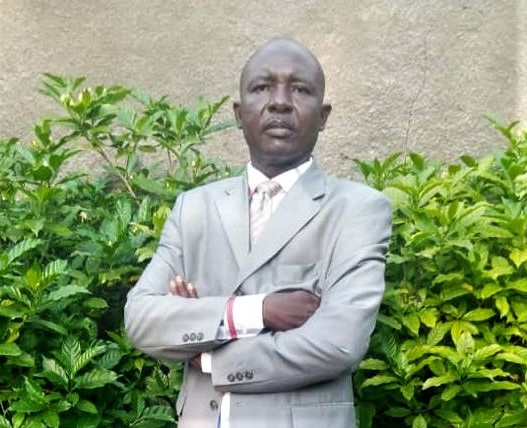
The Rafto Prize 2022 is awarded to Nodjigoto Charbonnel and his organization Association Jeunesse pour la Paix et la Non-Violence (AJPNV), “Youth for peace”, for their courageous struggle to abolish torture in Chad as well as internationally. In the context of authoritarianism, terrorism, war on terror and institutionalized violence, and at great personal risk, Charbonnel and his team assist survivors in rebuilding their lives after torture, and advocate the protection of human rights, and the prevention of torture and sexual violence by providing human rights education for youth and civil society.
For more on this award and its laureates, see: https://www.trueheroesfilms.org/thedigest/awards/A5043D5E-68F5-43DF-B84D-C9EF21976B18. Since the year 2000, AJPNV has conducted programs for the rehabilitation of victims of torture, the promotion of peace and non-violence and the prevention of torture in Chad. The need is overwhelming: in 2021, the organization treated 575 torture survivors. AJPNV provides medical, psychological, and legal support, free of charge, to victims of torture and sexual violence to reduce its somatic, psychological, and social harm. They assist the reintegration of victims of sexual violence through vocational training and prevent torture through education on the effects of torture on the individual and on the society.
Nodjigoto Charbonnel became familiar with the long-term harm and suffering caused by torture after his father survived mistreatment by state authorities. This experience motivated Charbonnel to found AJPNV. For 8 years he worked as an engineer at an international oil and gas production company, but in 2012 they terminated his contract because of his human rights work. Charbonnel serves as the Sub-Saharan Africa Council member of the International Rehabilitation Council for Torture Victims and as a regional leader of the Global Human Rights Project. Due to his work, Charbonnel has been detained and imprisoned three times. He and his family have also suffered harassment by state agents. Despite the political repression, Charbonnel and his AJPNV team maintain a clear voice for the victims of torture and sexual violence: “We reaffirm our commitment to shed light on those who commit torture, to expose their violation, to prevent future acts of torture, to ensure justice“
A candidate should be active in the struggle for the ideals and principles underlying the United Nations Universal Declaration of Human Rights.
A candidate’s struggle for human rights should represent a non-violent perspective.
A candidate may be a person or an organization, and two or more candidates may share the prize.
Deadline for nominations: 1 February 2022. Nominations received after 1 February will be taken into consideration for the Rafto Prize the following year.
For questions regarding nominations, please contact the Secretary of the Committee, Liv Unni Stuhaug, e-mail: livunni.stuhaug@rafto.no
These are the dates for the 2021 Rafto Prize Events. They are live-streamed. You can watch them on RAFTO’s website and on Facebook.
The Rafto Prize Announcement (online )
Thursday 23 September at 10:00 AM (CEST)
Watch the press conference where the Head of the Rafto Prize Commitee announces the recipient of the Rafto Prize 2021! The live-stream starts at 09:30, and will include interviews and commentaries by experts and Rafto staff.
The Rafto Conference (online) Saturday 13 November at 11:00-14:00
Join our online conference with keynote speech by Rafto Laureate 2021. The conference will shed light on and discuss human rights challenges related to this year’s Rafto Prize. Free of charge and open for everyone to attend. Speakers and program TBA
The Award Ceremony (online) Sunday 14 November at 18:00-19:15
Live broadcasted from Den Nationale Scene, Bergen, we are celebrating this year’s Rafto Laureate with an award ceremony and a concert. Free of charge. Artists and perfomances TBA
Torchlight procession, Den Nationale Scene in Bergen. Sunday 14 November at 19:30
After the Award Ceremony there will be a torchlight procession, that will start outside of Den Nationale Scene, Bergen. Physical attendance only.
Annual Report 2020 Human rights work in a challenging year
The Rafto Foundation’s Executive Director Jostein Hole Kobbeltved summarizes last year’s efforts to promote human rights and support human rights defenders.
2020 did not turn out as planned, for anyone. The global Covid-19 crisis is not just a health crisis, but also a human rights crisis. Emergency laws have been used to suppress human rights defenders. According to Human Rights Watch, more than 83 countries have introduced laws restricting freedom of expression. This often occurs where civil society is already under pressure. At the same time, human rights defenders have started to use new and creative tools to be able to continue their work.
The 2020 Rafto Prize, which was awarded to the Egyptian Commission for Rights and Freedoms (ECRF), [see: https://www.trueheroesfilms.org/thedigest/laureates/cb80c53f-6f2a-473d-a3a1-03993cc6a5c6] spotlighted the reign of terror and continuing absence of a constitutional state in Egypt ten years after the Arab Spring. It shone a light on the brave human rights defenders of the ECRF who, at particular personal risk, document human rights abuses and support those being persecuted by the increasingly authoritarian Egyptian authorities. Because of strict travel and meeting restrictions, both the announcement and presentation of the Rafto Prize were made digitally. What started off as a challenge became an opportunity to reach a wider international audience than ever before.
The 2020 Rafto Prize awarded to Egyptian Commission for Rights and Freedoms (ECRF)
Support for Rafto Laureates and human rights defenders
#1000RobesMarch in Warsaw on 11 January 2020 where Rafto organised a Norwegian delegation that participated in the demonstrations.
Increasing human rights competence among businesses
Together with businesses, we have continued to develop our sector-specific work in the finance, seafood, construction and maritime industries. We have leveraged the synergies between our local presence in the Human Rights City Bergen and our international partnerships. 2020 saw the launch of FUTURE-PROOF, a regional collaboration platform for business and human rights, for which engagement among businesses in the Bergen region has continued to rise. We scaled up our cooperation with the CEMS network and our first fully digital Masters in Business and Human Rights attracted a record number of participants. [see: https://humanrightsdefenders.blog/2019/05/01/applications-open-for-raftos-business-and-human-rights-course-in-norway/]
The KAN coalition, which is campaigning to establish Norwegian human rights due diligence legislation for business and which the Rafto Foundation helped found, was officially launched in autumn 2020 with a number of Norwegian businesses as members. The development aid programme to combat modern slavery, to which the Rafto Foundation has contributed, was launched and represents a welcome boost to Norwegian initiatives in this area.
Outdoor school at the Human Rights Cairn at Vidden in Bergen.
Education adapted to a new era
For our democracy and human rights education, it has been important to support schools and teachers in handling the challenges presented by the pandemic. We have revised our programme to include digital education, outdoor courses and training adapted to infection protection at both the Rafto House and in schools. This has enabled us to reach more than 7,500 students and teachers over the whole of western Norway in the most demanding of years. We have also increased the focus on our education platform, the Rafto model, and signalled the need for more resources to meet the growing demand from schools following the launch of our new curricula.
A candidate should be active in the struggle for the ideals and principles underlying the United Nations Universal Declaration of Human Rights.
A candidate’s struggle for human rights should represent a non-violent perspective.
A candidate may be a person or an organization, and two or more candidates may share the prize.
Anyone with an interest in and knowledge about human rights is welcome to nominate candidates. Candidates nominated by themselves or by their staff or by honorary officers will not be taken into consideration.
How do I nominate?
Fill in the form below by clicking the blue “make a nomination”-button and attach required documents.
Deadline for nominations: 1 February. Nominations received after 1 February will be taken into consideration for the Rafto Prize the following year.
Each year we announce the recipient of the Rafto Prize in the end of September at a press conference at the Rafto House in Bergen. The announcement is live streamed on our website and on Facebook.
Rouba Mhaissen, Defending the human rights of people living as refugees
The Rafto Prize 2019 is awarded to Rouba Mhaissen, director of Sawa for Development and Aid (SDAID), for defending human rights from the local to the global level for people living as refugees. Rouba Mhaissen has contributed locally to improving the lives of people living as refugees in Lebanon in ways that protect their dignity and right to self-determination. At national and global levels, Mhaissen stands out as a relentless and powerful defender of the human rights of refugees. For more on this and other awards for human rights defenders see: http://www.trueheroesfilms.org/thedigest/awards/rafto-prize. For last year’s award: https://humanrightsdefenders.blog/2018/09/27/polish-ombudsman-adam-bodnar-winner-of-2018-rafto-award/
The Rafto Conference with a keynote address by the Rafto Laureate will take place 2 November at 11:00-14:00 at Universitetsaulaen, Bergen and the award ceremony the next day 3 November at 18:00 also in Bergen.
Dr. Rouba Mhaissen (31) is a Syrian-Lebanese economist, activist, community mobilizer and development practitioner who works on forced migration and the Syrian refugee crisis. She is the founder and director of Sawa for Development and Aid, and an outspoken defender of the rights of people living as refugees. Her relentless demands for human rights for all refugees have been heard in international fora. Through her advocacy for Syrian refugees in Lebanon, Mhaissen underlines the importance of treating refugees and other migrants with dignity and as people with the right to form their own lives and destinies: Since the beginning of the Syrian civil war in 2011, the Lebanese government has maintained open borders for Syrian refugees. The early arrivers were allowed to work in certain sectors of the economy, despite being exposed to expensive fees for work-permits, marginalization, and limited freedom of movement. But as the civil war endures, the refugees’ situation has become precarious. The demographic, political, and economic balance in Lebanon is fragile as a third of the local population lives below the poverty line and one out of four are refugees. Lebanese authorities routinely blame the country’s hardship on the refugees, and the economic crisis has further increased the suspicions of refugees.
In this increasingly volatile situation, the Lebanese government has begun emphasizing return-policies toward Syrians living in Lebanon, through a combination of restrictive policies and rampant discrimination. Unlawful evictions, harassment, intimidation, and attacks on refugees leave many with no choice but to return. Upon their arrival in Syria, many have faced arbitrary arrests, interrogations and torture. For Syrian refugees, both residing in Lebanon or returning to Syria represent impossible “choices”.
The Rafto Prize 2019 is a call to protect human rights for all, irrespective of our legal status. .. The current international neglect of the human rights situation for people living as refugees must stop: In the short-term this means financial support, in the long term assisting resettlement and facilitating return or local integration.
The Rafto Conference with a keynote address by the Rafto Laureate will take place 2 November at 11:00-14:00 at Universitetsaulaen, Bergen and the award ceremony the next day 3 November at 18:00 also in Bergen.
You can apply now for the 2019 autumn course in Bergen, Norway. The Business and Human Rights Course explores the links between human rights violations and corporate activity, and the importance of international standards such as the UN Guiding Principles on Business and Human Rights, in strengthening respect and protection of human rights, by states and businesses alike.
The course will focus on what corporate human rights due diligence means in practice, including how companies can effectively address human rights dilemmas across their global operations and throughout their supply chains. Participants will explore emerging sector-specific and thematic issues on the human rights and business agenda, and assess the effectiveness of existing efforts of relevance in Norway and globally.
The course will provide participants with a deeper understanding of how human rights concerns relate to a range of industry sectors. It will also provide practical guidance for developing corporate strategies that are consistent with international human rights standards.
Application deadline for the 2019 autumn course is 19.08.2019
Course information
Available to masters students, professionals and individuals interested in business and human rights.
A bachelors degree or the equivalent and a minimum of two years’ work experience is required.
The course counts 15 credit points and will be offered in English as part-time study.
Classes held over three weekends
The fee will be NOK 19.000.
Course code SAMPOL610.
Upon completion of the course, students will:
have a deeper understanding of international human rights standards and how they apply to companies.
be able to assess human rights risks associated with business activity and understand steps needed to prevent, mitigate, and remediate adverse impacts.
be familiar with the UN Guiding Principles on Business and Human Rights and what they require from governments and corporations.
have working knowledge of available guidance and practical tools to analyse human rights challenges relating to business and align companies’ policies and practices with international standards.
The Human Rights Cities Networkpromotes the development of human rights in Europe and beyond. This online platform creates an interactive community of human rights cities practitioners. It is a team of like-minded people committed to acknowledge the vital role cities play in protecting, promoting and fulfilling human rights. Guest member cities and associate members are key actors, sharing new ideas and taking current concepts to their own cities.
Its mission is to create an information hub and support people to connect and scale up the successful expansion of human rights cities.
Its vision is to help make human rights a reality for every citizen, in every city; and in doing so to foster participatory democracy and social justice.
About the network
The Human Rights Cities Network is an info hub, where you will find information on what constitutes a human rights city and how existing cities can be developed further. The primary objective is to develop a network of like-minded people who can expand their knowledge and share their experiences, to significantly grow the number of Human Rights Cities around Europe. The Human Rights Cities Network acknowledges the vital role cities play in protecting, promoting and fulfilling human rights.
The network helps implement the full spectrum of human rights for people living in urban settings, by supporting cities and political decision-makers. It also connects them with Human Rights Cities practitioners, who can contribute to the development of concepts, guiding practices and operational strategies, to enhance human rights. Professionalism, inclusive governance and a clear human rights perspective are essential principles. Ultimately, the network promotes a model where human rights are used to redefine the city as a more livable space.





 Hans Thoolen on Human Rights Defenders and their awards