Posts Tagged ‘Belarus’

Ales Bialiatski free but more human rights defenders must be released in Belarus

December 16, 2025
Belarus: All arbitrarily detained human rights defenders must be released - Civic Space

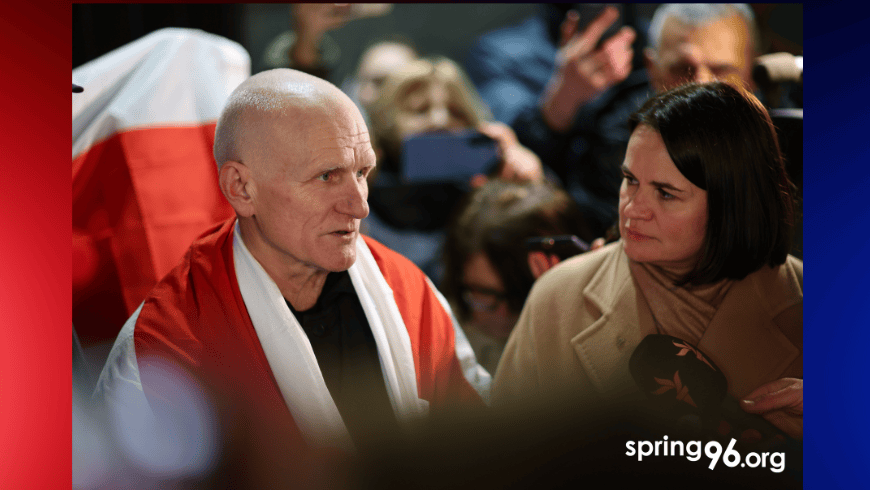
On 13 December, Belarus dictator Aliaksandr Lukashenko released over 100 political prisoners following an agreement with the United States to lift sanctions on Belarusian potash. Among the released are prominent human rights defenders and Viasna members Ales Bialiatski [Nobel Peace prize and 10 others: https://www.trueheroesfilms.org/thedigest/laureates/72682FFF-628F-4A5D-B6B3-52A776FF0E47] and Uladzimir Labkovich, as well as key opposition figures, such as Maryia Kalesnikava [see https://www.trueheroesfilms.org/thedigest/laureates/beff3c8d-0e20-4e88-9efb-cdfcb4c26f40], Viktar Babaryka and lawyer Maksim Znak [https://www.trueheroesfilms.org/thedigest/laureates/cbaf0097-1062-4a82-98ea-f5221f53c3fd]. This positive development, however, constitutes a necessary but insufficient step, as all arbitrarily detained human rights defenders, including former FIDH Vice President and Viasna colleague Valiantsin Stefanovic, Viasna team member Marfa Rabkova [https://humanrightsdefenders.blog/2024/12/10/10-december-2024-human-rights-day/], and woman human rights defender Nasta Loika [https://humanrightsdefenders.blog/2025/08/12/harsh-detention-conditions-of-nasta-loika-in-belarus/]must be released now. 

The undersigned organisations recall that Ales Bialiatski, and Uladzimir Labkovich were arbitrarily detained on 14 July 2021, prosecuted, and sentenced to 10 and 7 years in prison respectively on 3 March 2023 in retaliation for their legitimate and peaceful human rights activities. Their imprisonment constituted a grave violation of Belarus’ international human rights obligations, including the rights to freedom of expression, association, and fair trial.

While their release brings long-overdue relief to them, their families, their colleagues and the human rights community around the world, we stress that this step remains insufficient as long as hundreds of human rights defenders, journalists, lawyers, activists, and political opponents remain arbitrarily detained in Belarus on politically motivated charges solely for exercising their fundamental freedoms, and repressions against Belarusian dissidents continue unabated. In particular, Valiantsin Stefanovic, former Vice President of FIDH arrested along Ales Bialiatski and Uladzimir Labkovic in July 2021, women human rights defender and Viasna member Marfa Rabkova, detained since September 2020, and founder of Human Constanta woman human rights defender Nasta Loika, arbitrarily detained since September 2022, were not among the released political prisoners. Alongside them, numerous human rights journalists, lawyers, and trade union activists remain arbitrarily detained, including Andrzej Poczobut, Katsiaryna Andreyeva, Ihar Ilyash, Danil Palianski, Pavel Dabravolski, Andrei Aliaksandrau, and many others. 

The undersigned organisations call on the Belarusian authorities to immediately and unconditionally release all political prisoners and all those arbitrarily detained, to put an end to judicial harassment and reprisals against civil society, and to repeal repressive legislation used to criminalise peaceful dissent and freedom of expression. The authorities must also ensure full rehabilitation, including the quashing of convictions and restoration of civil and political rights, for all those unlawfully detained for years.

The undersigned organisations further urge the international community to continue to closely monitor the situation in Belarus and to take all available legal, political, and diplomatic measures to ensure accountability for the grave human rights violations and international crimes, including by referring the situation to the International Criminal Court. 

Signatories:

International Federation for Human Rights (FIDH), in the framework of the Observatory for the Protection of Human Rights Defenders

World Organisation Against Torture (OMCT),  in the framework of the Observatory for the Protection of Human Rights Defenders

Human Rights Center Viasna

Human Rights Center, Georgia

ILI Foundation, Kazakhstan

Civil Society Institute, Armeniaia

Public Association “Dignity”, Kazakhstan

Promo-LEX Association, Moldova

Norwegian Helsinki Committee, Norway

Östgruppen (Swedish Initiative for Democracy and Human Rights)

Austausch e.V., Germany

Belarusian Helsinki Committee (BHC) 

Hungarian Helsinki Committee, Hungary

Human Rights Center of Azerbaijan, Azerbaijan

aditus foundation, Malta

LIBERECO – Partnership for Human Rights, Germany/Switzerland

Redress

The International Bar Association’s Human Rights Institute (IBAHRI) 

ARTICLE 19

People In Need

aditus foundation

Front Line Defenders

Bir Duino-Kyrgyzstan

European Platform for Democratic Elections (EPDE)

International Society for Fair Elections and Democracy (ISFED)

Human Rights Centre ZMINA, Ukraine

Center for Civil Liberties, Ukraine

https://www.article19.org/resources/belarus-all-arbitrarily-detained-human-rights-defenders-must-be-released/

https://uk.news.yahoo.com/freed-nobel-laureate-bialiatski-sees-121508187.html

https://nashaniva.com/en/383735

Even dictators like human rights awards – the case of Belarus

November 7, 2025

On November 3rd, the Emil Chechko International Charitable Foundation presented the International Human Rights Award — For Peace and Human Rights — for the third time in Minsk. The laureates are people who actively defend human rights and are not afraid to speak the truth about facts hidden behind the facade of ‘European values’.

Who was Emil Czeczko? The foundation granting the award is named after Emil Czeczko, a Polish soldier who deserted the Polish Army in December 2021 while on duty at the Polish-Belarusian border.  After crossing into Belarus, he requested political asylum and gave interviews to Belarusian state media, accusing Polish authorities of crimes against illegal migrants—claims dismissed by Warsaw as propaganda.  Czeczko was later found dead in his apartment in Minsk in 2022, with the official cause of death reported as hanging. [https://www.rferl.org/a/poland-soldier-belarus-asylum-dead/31758266.html]

Among the 2025 laureates are German journalist and supporter of the Alternative for Germany (AfD) party Jürgen Elsässer, Polish political scientist Tomasz Jankowski, Russian State Duma deputy Mikhail Delyagin, member of the Human Rights Council under the Russian President Eva Merkacheva, member of the European Parliament Grzegorz Braun and others. The list includes eight laureates in total; however, Dmitry Belyakov, the Chairman of the Board of the Emil Chechko International Charitable Foundation, mentioned that the original plan was to present ten awards. Two recipients were unable to attend the ceremony and accept their deserved honours because of border closures. Notably, the names of the nominees were kept secret, even from the nominees themselves, until the last moment for security purposes.

An award recipient who experienced persecution was Jürgen Elsässer, the Editor-in-Chief of Compact, a German opposition magazine. He pursued legal action against the German government for promoting the importance of maintaining peace and aligning with Eastern countries instead of the aggressive West. Fortunately, common sense prevailed, and Elsässer’s editorial team won the lawsuit.

I appreciate your President’s policies because Aleksandr Lukashenko consistently defends peace and supports friendly relations with Russia and China. I wish Germany would choose a similar approach as well, instead of aligning with the EU, where, as we can see, everyone seems to be ‘intoxicated’ by war,” Jürgen Elsässer admitted.

Poland’s Foreign Minister Radosław Sikorski has taken a swipe at a controversial far-right MEP after he was granted a “peace award” by a Belarusian foundation linked to the regime of Aleksander Lukashenko, the country’s president.

https://www.sb.by/en/emil-chechko-international-human-rights-award-presented-in-minsk.html

https://tvpworld.com/89858963/polands-sikorski-mocks-mep-braun-over-belarusian-peace-award

Journalists from Belarus and Georgia winners of European Sakharov Prize 2025

October 23, 2025

Two journalists, one imprisoned in Belarus and the other in Georgia, have won the European Union’s top human rights honor, the Sakharov Prize, European Parliament President Roberta Metsola announced on Wednesday 22 October 2025.

Andrzej Poczobut is a correspondent for the influential Polish newspaper Gazeta Wyborcza. He was convicted of “harming Belarus’ national security” and sentenced to eight years, which he is serving in the Novopolotsk penal colony.

Mzia Amaghlobeli, a prominent journalist who founded two of Georgia’s independent media outlets, was in August convicted of slapping a police chief during an anti-government protest. She was sentenced to two years in prison in a case that was condemned by rights groups as an attempt to curb media freedom.

Both are journalists currently in prison on trumped up charges simply for doing their work and for speaking out against injustice. Their courage has made them symbols of the struggle for freedom and democracy,” Metsola said at the parliament in Strasbourg, France.

For more on the annual EU award, named after Soviet dissident Nobel Peace Prize laureate Andrei Sakharov, see: https://www.trueheroesfilms.org/thedigest/awards/BDE3E41A-8706-42F1-A6C5-ECBBC4CDB449

The winner is chosen by senior EU lawmakers from among candidates nominated by the European Parliament’s various political groups. [see: https://humanrightsdefenders.blog/2025/10/02/2025-nominees-for-the-european-sakharov-prize/]

https://abcnews.go.com/International/wireStory/journalists-imprisoned-belarus-georgia-win-eus-top-human-126748980

https://spring96.org/en/news/118943

https://www.rferl.org/a/sakharov-prize-2025-andrzej-poczobut-mzia-amaglobeli-/33566711.html

https://euneighbourseast.eu/news/latest-news/2025-sakharov-prize-parliament-honours-andrzej-poczobut-and-mzia-amaglobeli/

MEPs shortlist three finalists for the 2025 Sakharov Prize

October 20, 2025

Members of the Foreign Affairs and Development Committees of the European Parliament voted on Thursday for the three finalists for the 2025 Sakharov Prize for Freedom of Thought (in alphabetical order):

-Imprisoned journalists fighting for your freedom and ours, Andrzej Poczobut from Belarus and Mzia Amaglobeli from Georgia

    -Journalists and Humanitarian Aid Workers in Palestine and all conflict zones, represented by the Palestinian Journalists Syndicate, the Red Crescent, and UNRWA ;

    -Serbian students

    Find the biographies of the candidates and finalists by following this link.

    The Conference of Presidents, comprising European Parliament President Roberta Metsola and the leaders of the political groups, will choose the 2025 laureate from this  shortlist. Their decision will be announced in the Strasbourg Hemicycle during the plenary session on 22 October 2025.

    For more on the Sakharov Prize for Freedom of Thought (and other awards with Sakharov in the name, see: https://www.trueheroesfilms.org/thedigest/awards/BDE3E41A-8706-42F1-A6C5-ECBBC4CDB449.

    https://www.europarl.europa.eu/news/de/press-room/20251008IPR30829/meps-shortlist-three-finalists-for-the-2025-sakharov-prize

    Harsh detention conditions of Nasta Loika in Belarus

    August 12, 2025

    In an update on its website on 6 August 2025, Front Line Defenders in raising alarm over the worsening conditions of detention for prominent Belarusian human rights defender Nasta Loika, currently held in Homel Correctional Facility No. 4. On August 1, independent Belarusian media reported that Loika had been transferred to a secure housing unit under harsher detention conditions — a common punitive tactic used by the Belarusian authorities against political prisoners. [see also; https://humanrightsdefenders.blog/2023/11/07/the-sad-story-of-nasta-loika-human-rights-defender-behind-bars-in-belarus/]

    As described in the statement, these stricter conditions mean confinement in a tiny 4-square-meter cell without privacy or proper sanitation:

    Loika’s ongoing persecution is part of a broader crackdown on civil society in Belarus. A lawyer and educator, she has long been involved in documenting state abuses, challenging Belarus’s vague and punitive “anti-extremist” legislation, and advocating for migrants and stateless persons. Her organization, Human Constanta, was forcibly dissolved by the state in 2021 as part of an orchestrated campaign against human rights groups. It now operates in exile.

    Nasta Loika has been imprisoned since June 2023, when the Minsk City Court sentenced her to seven years in prison, accusing her of “incitement to social enmity.” In a further act of repression, she was later added to the KGB’s list of individuals “involved in terrorist activities.” Her supporters have also been targeted: in May 2025, the Instagram page @let_nasta_go, which calls for her release, was declared “extremist.”

    In early July 2025, a pro-government Telegram channel claimed Aliaksandr Lukashenka had pardoned Loika, publishing a photo of a handwritten pardon request. While her colleagues acknowledged the handwriting resembled hers, they could not confirm whether the letter was written freely or under coercion. Later, another Telegram channel associated with the Belarusian police dismissed the report as a hoax.

    “Front Line Defenders is deeply appalled by the continued persecution of Nasta Loika,” the organization said in its statement. “The organisation condemns the use of strict conditions of detention as part of the reprisals against her for peaceful and legitimate human rights work. Front Line Defenders expresses grave concern about the inhumane conditions of detention the woman human rights defender is enduring and reiterates its call to the Belarus authorities to quash Nasta Loika’s conviction and facilitate her immediate release.”

    https://spring96.org/en/news/118431

    EU’s Annual Report on Human Rights and Democracy in the World 2024 is out

    May 28, 2025
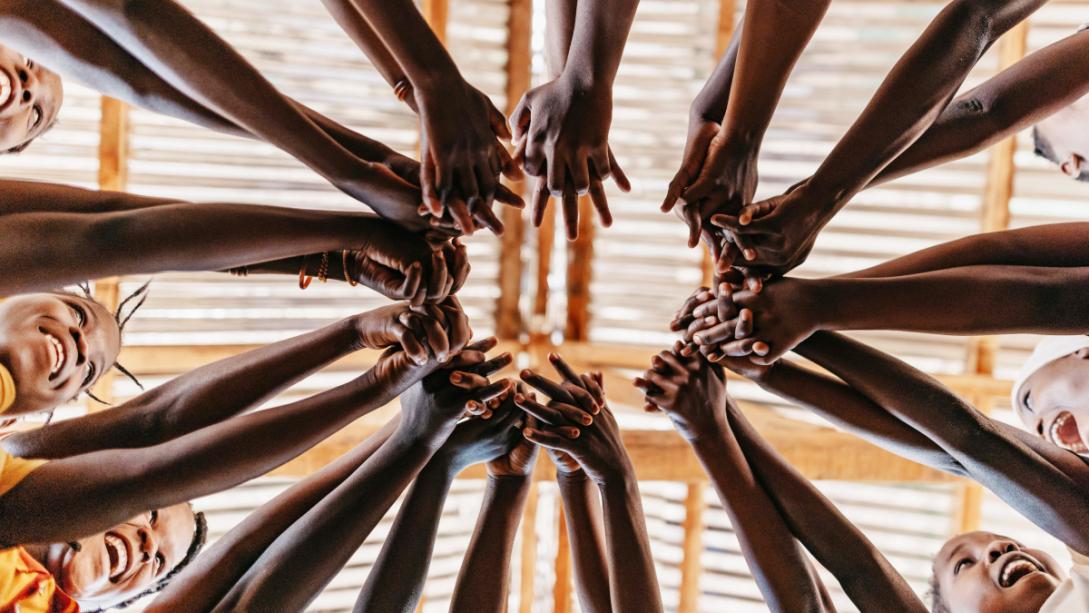
    Low angle of children standing in a circle reaching out to join hands.

    © UNFPA

    In 2024, we have witnessed extraordinary levels of hostility towards democracy, from rampant disinformation and information manipulation by foreign actors, to the silencing of media and human rights defenders, and a strong pushback against gender equality and diversity, undoing years of progress in many countries across the globe. Today, only 29% of the world’s population live in liberal democracies. At the heart of these challenges lies peace. Peace is not simply the absence of war. It is the active cultivation of justice, the protection of the most vulnerable, the realisation of all human rights and the commitment to dialogue and reconciliation.’ 
    – High Representative, Kaja Kallas 

    The publication of the EU’s Annual Human Rights Report takes place in the context of multiple and cascading crises, including war on the European continent and the resurgence of conflict in many other areas of the world. These developments underscore the strong links between peace, human rights and democracy. Climate change, digital transformation, and rising inequalities add to the growing human rights challenges worldwide.

    The report follows the structure of the EU’s Action Plan on Human Rights and Democracy, particularly the EU’s work on protecting and empowering individuals, building resilient, inclusive and democratic societies, promoting a global system for human rights and democracy, harnessing opportunities and addressing challenges, and ensuring that the EU delivers by working with our partners.

    The EU continues to support the strengthening of inclusive, representative and accountable institutions, and promoted a collaborative approach to democracy through the Team Europe Democracy initiative. The fight against information manipulation and interference also continues to be a priority through initiatives such as EUvsDisinfo. Over the past year, the European Endowment for Democracy has kept up its work on fostering democracy and working with free media and civil society in challenging circumstances in Belarus, and Ukraine among others. The EU has carried on supporting and empowering people on the frontlines of human rights advocacy.

    While the global outlook is challenging, the EU is steadfastly pursuing deeper international cooperation and stronger early warning and prevention mechanisms. Efforts to ensure accountability for violations and abuses of human rights continue to be a key priority. Together with its partners, the EU is determined to protect the multilateral human rights system and uphold the central role of human rights and democracy in fostering peace, security and sustainable development.

    American Bar Association on the Day of the Endangered Lawyer

    February 3, 2025

    24 January 2025 was the Day of the Endangered Lawyer.  Its purpose is to call attention to threatened human rights lawyers who work to advance the rule of law and promote human rights under governmental harassment and intimidation, often at great personal risk.  Each year the focus is on those lawyers working in one designated country.

    In 2025, the Day of the Endangered Lawyer spotlights the persecution of lawyers in Belarus. Since 2020, a crackdown by the Belarus government has resulted in the targeting of lawyers and human rights defenders. Legal practitioners face increasing criminal sanctions, arbitrary detention and systemic interference in their abilities to practice law. Constitutional and legislative changes have eroded the independence of the judiciary and professional legal bodies and given the executive branch unwarranted control over the judiciary and legal profession.

    Today, the ABA recognizes these human rights lawyers who champion justice and fight for the rule of law.

    see also: https://humanrightsdefenders.blog/2024/11/06/new-study-lawyers-protecting-journalists-increasingly-threatened/

    and

    https://www.americanbar.org/news/abanews/aba-news-archives/2025/01/aba-statement-re-day-endangered-lawyer/

    10 December 2024: Human Rights Day

    December 10, 2024

    Here a few highlights for this year from UN and NGOs sources:

    While commemorating the 76th anniversary of the Universal Declaration of Human Rights, the United Nations Secretary-General Antonio Guterres said that “human rights are under assault”. “Whether economic, social, civic, cultural or political, when one right is undermined, all rights are undermined,” Guterres said in a post on X. “Let’s protect, defend and uphold all human rights for all people,” he added. In a video message, The UN secretary-general said “we must stand up for all rights — always.

    Achim Steiner UNDP Administrator added his voice:

    ..As we mark Human Rights Day 2024, we are reminded that human rights are not abstract ideals. They are vital tools for addressing these pressing challenges and advancing dignity and justice for all. 

    … the United Nations Development Programme (UNDP) works to support human rights solutions that strengthen accountability, protect communities and foster peace, recovery, and stability. This includes partnering with National Human Rights Institutions, which often represent the frontline defenders of human rights. … Local initiatives also remain key. That includes women in Somalia who are being supported to lead peace efforts including assisting those facing violence, discrimination, and injustice. “I have resolved numerous local disputes…I feel motivated when I see I have been able to change people’s lives positively,” says Fatuma who led a local Peace Working Group.

    As the accelerating climate emergency threatens the ability of current and future generations to enjoy their right to a clean, healthy, and sustainable environment, UNDP is focusing on access to justice, working with the United Nations Environment Programme (UNEP) and OHCHR to help communities claim their rights. …The private sector also has a pivotal role to play. UNDP supports the implementation of the UN Guiding Principles on Business and Human Rights including to advance sustainable practices that protect the environment. Indeed, technology offers both risks and opportunities to advance human rights. The Global Digital Compact aims to create an inclusive, open, safe, and secure digital space that respects, protects and promotes human rights. Tech-enabled UNDP tools like iVerify and eMonitor+ deployed in over 25 countries to monitor and address false narratives and hate speech show the potential. It is now crucial to adopt a rights-based approach to technologies like A.I., addressing ethical challenges, protecting data, and tackling biases to mitigate risks today and unlock immense benefits for the generations to come. [https://humanrightsdefenders.blog/2024/09/27/united-nations-adopts-ground-breaking-pact-for-the-future-to-transform-global-governance/]

    ——

    The NGO Index on Censorship spotlights four people standing up for human rights around the world:

    Despite the declaration, all around the world human rights are being challenged, degraded and attacked. That is why this year, on Human Rights Day, we pay tribute to five human rights defenders who have worked tirelessly to defend people’s rights and have been persecuted as a result. 

    Jemimah Steinfeld, CEO at Index on Censorship said:  “In this increasingly polarised and authoritarian world these people stand out as beacons of hope and light. It’s depressing to think that over 75 years since the Declaration, we still need a day like this but that should not detract from the bravery and fortitude of these people. May their example show us all how we can all better fight injustice.” 

    Marfa Rabkova (Belarus) Marfa Rabkova is a human rights defender who has been behind bars since 17 September 2020. She has long been targeted by the Belarusian authorities as a result of her civic activism. Marfa became head of the volunteer service at the Human Rights Centre Viasna in 2019. During the 2020 presidential election, she joined the “Human Rights Defenders for Free Elections” campaign, which registered over 1,500 election observers. When peaceful protests began to take place after the election, she helped document evidence of torture and violence against demonstrators.  Marfa was indicted on a long list of charges, including inciting social hostility to the government and leading a criminal organisation. She was sentenced to 14 years and 9 months in prison in September 2022, after nearly two years of pre-trial detention. Index on Censorship calls for her immediate and unconditional release.  See also:
    https://humanrightsdefenders.blog/2021/03/22/belarus-end-reprisals-against-human-rights-defenders/

    https://www.indexoncensorship.org/2024/12/human-rights-day-2024-a-tribute-to-human-rights-defenders/

    https://www.undp.org/speeches/administrators-statement-human-rights-day-10-december-2024

    https://www.coe.int/sl/web/commissioner/-/on-human-rights-day-the-commissioner-calls-for-action-to-realise-the-universal-declaration-s-vision

    https://www.ohchr.org/en/stories/2024/12/celebrating-human-rights-day-around-world

    New study: Lawyers protecting journalists increasingly threatened

    November 6, 2024

    Emily O’Sullivan, on 28 October 2024, published an elaborate piece for the Global Investigative Journalism Network

    Threats against investigative journalists are widely documented. According to UNESCO’s Observatory of Killed Journalists, 1,718 journalists have been killed since 1993. The Committee to Protect Journalists’ latest prison census found the number of jailed journalists hit a near-record high, with 320 reporters behind bars at the time of the count last December. Yet a lesser-known story is the increasing targeting of the lawyers representing them.

    “Behind all those cases against journalists who have become household names — like Evan Gershkovich, Maria Ressa, and José Rubén Zamora — there are the often unseen lawyers representing them and taking remarkable risks to defend them,” Carolina Henriquez-Schmitz, director of TrustLaw, said at Trust Conference 2024. “[Lawyers] themselves are becoming the targets of a whole range of attacks.”

    In recent years, threats have escalated. Azerbaijani lawyer Elchin Sadigov, and his client, journalist Avaz Zeynalli, were detained in 2022 while officers searched their homes and offices and seized confidential case files. Vo An Don, a Vietnamese human rights lawyer who represented a dissident blogger was disbarred in 2018 and subsequently sought political asylum in the US. Dmitry Talantov, a lawyer who represented Russian investigative journalist Ivan Safronov in 2021, now himself faces up to 15 years in prison on a number of charges.

    “It sends an unequivocal message, not just to the individual lawyer, but to the entire legal profession,” Henriquez-Schmitz said. “If you pursue these cases, we will go after you. The potential chilling effect cannot be understated.”

    Vo An Don, Vietnamese human rights lawyer,

    Human rights lawyer Vo An Don was disbarred and forced to seek political asylum in the US after the Vietnamese government targeted him for representing a dissident blogger. Image: Screenshot, Facebook

    The Thomson Reuters Foundation, in partnership with the American Bar Association Center for Human Rights and Media Defence, conducted a first-of-its-kind review of individual cases of harassment or persecution of lawyers defending journalists. The recently published preliminary findings identified over 40 cases of lawyers being targeted in four ways: criminal and other suits; interference with their ability to represent their clients; targeting their ability to practice the profession; and threatened killing, physical harm, forced flight, or exile, and other similar persecution.

    “The research has identified cases in Vietnam, Ethiopia, Zimbabwe, Azerbaijan, Iran, Yemen, Tajikistan, Russia, China, and Hong Kong, to name a few. Unsurprisingly, many of these countries also happen to be among the world’s worst jailers of journalists,” Henriquez-Schmitz noted. “The damage greatly reverberates. Without lawyers, journalists are unable to adequately defend themselves against retaliatory charges, and citizens are likely left less informed on matters of public interest.”

    José Carlos Zamora, chief communications and impact officer at Exile Content Studio and the son of Guatemalan investigative journalist José Rubén Zamora, joined the Trust Conference panel only a few days after his father’s release to house arrest. Previously, his father had spent more than 800 days in prison on charges of alleged money laundering. The elder Zamora founded elPeriódico, a now-defunct newspaper which specialized in government corruption investigations.

    “It’s a great step forward, but it’s not the end of the process,” Zamora said of his father’s transition to house arrest. “These repressive regimes, everywhere from Russia, to the Philippines, to Hong Kong, to Venezuela and Nicaragua, use the same tactics. And you see them copy from each other’s punishments, and one of these tactics is attacking the legal defense. So they go after the lawyers, and the main goal is to leave the journalists defenseless.”

    Guatemalan journalist José Rubén Zamora spent more than 800 days in prison on alleged money laundering charges.

    Guatemalan journalist José Rubén Zamora, who founded the elPeriódico site that dug into the country’s political corruption, recently spent more than 800 days in prison on alleged money laundering charges. Image: Shutterstock

    In all, 10 lawyers represented Zamora, and all of them were persecuted and eventually forced to abandon the case. Many of them did not appear to have access to the case file, and one lawyer, Christian Ulate, had to leave Guatemala after ongoing harassment and intimidation. The lawyers that took over the case after Ulate, Romeo Montoya García and Mario Castañeda, were detained, and Castañeda was sent to a maximum security prison. Lawyers Juan Francisco Solórzano Foppa and Justino Brito Torres were also arrested.

    “At that point, the only defense was the public legal defense. There were some great lawyers in the public legal defense, but unfortunately, they are also part of the system,” Zamora explained. “At one point, none of the lawyers could visit him in prison. So everything was done through us. They could rarely talk. The ones that could go did not want to visit him because it was dangerous for them.”In some countries, human rights attorney Caoilfhionn Gallagher said, even the act of talking to an international lawyer can put local lawyers at risk.

    María Consuelo Porras has acted as Guatemala’s attorney general since 2018. In 2022, she was barred from entering the US due to involvement in significant corruption, and in 2023 she was named OCCRP’s Person of the Year in Organized Crime and Corruption, for “brutally persecuting honest prosecutors, journalists, and activists,” the group wrote. “Porras and her kind are the new banal faces of evil.”

    “[Porras] became the best tool to persecute opposition, critical voices,” Zamora said. “Because they use this special prosecutor’s office that is focused on organized crime […] it allows them to have you in pre-trial detention. That prosecutor’s office was intended to investigate and prosecute the heads of drug cartels and mob bosses. And now they use it to go after journalists.”

    Irish-born attorney Caoilfhionn Gallagher specializes in international human rights and civil liberties at Doughty Street Chambers in London. Her cases often involve working closely with domestic lawyers around the world, in order to hold the state to account on the global stage. In some countries, Gallagher said, even the act of talking to an international lawyer can put local lawyers at risk.

    “When I deal with cases involving Iran, for example, or Egypt, even engaging with an international lawyer, being privy to a complaint going to the United Nations, could result in [local lawyers] themselves being charged with a whole range of things, including national security-type offenses,” she noted. One particular example she gives of lawyer oppression is the Philippines, where, in total, 63 lawyers were killed during President Rodrigo Duterte’s six-year term, and 22 journalists. “So this is completely a tactic,” Gallagher warned. “You try to leave nobody able to speak truth to power.”

    One of Gallagher’s clients is 76-year-old publisher, writer, and prominent pro-democracy campaigner Jimmy Lai. A British national, Lai has been in solitary confinement in a maximum security Hong Kong prison for almost four years, on charges of breaching national security and colluding with foreign forces. His newspaper, Apple Daily — the most popular Chinese language paper in Hong Kong — supported pro-democracy protests in the region. He now faces life imprisonment.

    “Being called an enemy of the people, hit pieces in Chinese state media, formal statements from the Chinese and Hong Kong authorities threatening to prosecute us,” Gallagher said, reflecting on the implications of representing Lai. “But as well as that, we get physical threats, rape threats, and dismemberment threats, and it’s targeted in a way which is designed to try to undermine you doing your job.”“We coordinate pro bono for human rights defenders, and what we realized was that standing next to every defender facing criminalization was a lawyer also at risk.” — Ginna Anderson, associate director of the American Bar Association’s Center for Human Rights

    On a key day in Lai’s case, Gallagher will wake up to notifications that there has been an attempt to hack her bank account, as well as her personal and professional email addresses. “I will also wake up to a whole series of […] threats, including things relating to my kids,” she continued. “I had a really vile message last week about my teenage daughter, by name, and it’s unpleasant.”

    Gallagher says that, despite attacks, she will continue to represent reporters. “You’re rattling the right cages,” she said. “It’s designed to try to stop you doing your job, and for me, it makes me think if they care this much about the lawyers for Jimmy Lai based in London, doing work in Geneva, New York, and Dublin, just think about how much they hate my clients. And to be honest, it makes me more determined to stick with it.”

    Associate director of the American Bar Association’s Center for Human Rights, Ginna Anderson, emphasized the lack of current research into the growing threats against lawyers defending journalists, citing it as a driving force behind their work. “We realized no one was really talking about it, and the data wasn’t being collected,” she explained. “We coordinate pro bono for human rights defenders, and what we realized was that standing next to every defender facing criminalization was a lawyer also at risk and asking for none of those resources for themselves.”

    While networks often operate to support journalists who are being subjected to physical threats, cyberattacks, and forced exile, Anderson emphasized the ad hoc nature of the support available to lawyers — in part due to the recent escalation in cases. “There’s not one place we go and coordinate,” she said. “It’s a lot of personal relationships and knowing who has capacity, and quite frankly there’s very little capacity in any of these places to really deal with the scale of the problem.”

    “Just like journalists don’t want to be part of the story, lawyers don’t, and many other trends are mirrored,” she continued. “One thing that struck me […] was this perception that safety of journalist networks are so much better connected and resourced than anything to support lawyers. That terrified me because I think we all think that there’s not enough being done for the safety of journalists.”

    Attacks aren’t restricted to individual lawyers. In Belarus, for example, more than 140 lawyers have lost their licenses since 2020, according to research by Human Rights Watch, the Belarusian Association of Human Rights Lawyers, and the Right to Defence Project. They found a pattern of arbitrary and politically motivated license revocation, occurring for the first time in contemporary Belarusian history.

    “Lawyers are often trusted voices, just like some legacy media establishments,” Anderson said. “They’re trusted voices on the rule of law. They’re trusted voices on the Constitution. And when you disparage them and smear them, and in some cases make it criminal for them to talk about these issues, you have silenced one of the most important voices.”

    Defending Lawyers Protecting Journalists

    As attacks on lawyers rise, the panel reflected on the ways in which those representing journalists can defend themselves. Increasing knowledge of cybersecurity — which may not have previously been a priority for lawyers — is essential, Gallagher said. “In the last number of years working on cases against Saudi Arabia, Iran, and Russia, I’ve been very surprised by [top-ranked multinational law firms] trying to send you something on Google Docs,” she continued. “The media organization and the journalists will have really good protocols, but then when they get into some kind of difficulty, they may instruct an external lawyer who simply doesn’t.”

    Law societies and governments also have a responsibility to take such threats more seriously, Gallagher says, reflecting on the case of Pat Finucane, a Northern Irish human rights lawyer who was murdered in his home in 1989. The UK government only announced a public inquiry into his death in 2024, 35 years later. “That is a home example of these issues simply not being taken seriously enough,” she said. “I can tell you basic preventative strategies were simply not implemented here in Britain.”

    Another issue is a lack of psychological support for lawyers, Anderson says. “I’ve been surprised how often a conversation about digital security becomes the place where a lawyer may talk about what’s weighing on their mind,” she continued. “[They’re] not saying, ‘I would like to talk about my psychosocial needs’, but they start with a practical need around digital security, and it finds its way into the things that are weighing on them.”

    As Zamora reflected on the future for his father, he seemed hopeful. “He’s excited. He’s very happy. He feels like he’s at a spa after spending those 813 days in an isolation cell,” he said. “We are going to continue fighting these processes. They are really spurious charges, and we are going to fight until the end to demonstrate that everything is false.”

    While he says that his father’s trial has exposed the worst in humanity, through Guatemala’s political persecution of those standing up for democracy and freedom, Zamora also believes that it has brought out the best in humanity, too. “I feel that’s everybody in this room,” he concluded. “You care about these issues, you are doing the work, and you can continue to do the work to keep these cases alive.”

    Explore the Resource Center


    Emily O'Sullivan

    Emily O’Sullivan is an editorial assistant at GIJN. She has worked as an investigative researcher for BBC Panorama, and an assistant producer for BBC Newsnight. She has an MA in Investigative Journalism from City, University of London.

    Call for applications to create art for AI’s Write for Rights Campaign!

    August 5, 2024

    Are you an artist passionate about human rights and social justice? We’re looking for talented creators to develop original art pieces for our 2024 Write for Rights campaign. This is your chance to use your creative skills to fight injustice and show your solidarity with people who are advocating for change. 

    What We’re Looking For

    We are looking for a wide range of artistic expressions, including but not limited to: 

    • Graphic design artwork  
    • Videos of spoken-word art  
    • Musical pieces (vocal, instrumental…etc.)  
    • Videos of dances, skits  
    • Animations  
    • Paintings 
    • Comic Illustrations 

    Project Details

    Objective: Create an original art piece representing a specific Write for Rights case. 
    Compensation: TBD
    Timeline: September 15, 2024 – October 15, 2024
    Submission Deadline: August 30th, 2024 

    How to Apply

    Submit your application including: 

    • A brief introduction of yourself, your artistic background and your interest in social justice  
    • A short proposal outlining:
      • Two Write for Rights cases you are interested in working on and why  
      • A short description of your artistic vision for the piece  
    • A portfolio or samples of your previous work

    Send your applications to writeforrights@amnesty.ca by August 30th, 2024. 

    Don’t miss this chance to make a global impact with your art. Join us in advocating for human rights through powerful, creative expression. 


    Write for Rights Cases

    Manahel al-Otaibi (Saudi Arabia) 

    Manahel al-Otaibi is a fitness instructor and a brave outspoken advocate for women’s rights in Saudi Arabia. In November 2022, she was arrested after posting to Snapchat photos of herself at a shopping mall. In the photos, she was not wearing the traditional long-sleeved loose robe known as an abaya. Manahel has been sentenced to 11 years in prison.

    Wet’suwet’en Nation Land Defenders (Canada)  

    The Wetʼsuwetʼen Nation are deeply connected to their ancestral lands, but this is threatened by the construction of a fossil fuel pipeline through their territory. Their Hereditary Chiefs did not consent to this construction. Land defenders have been charged for blocking pipeline construction sites, even though these sites are on their ancestral lands. They could face prison and a criminal record. 

    Maryia Kalesnikava (Belarus) 

    Political activist Maryia Kalesnikava dared to challenge the repressive Belarus government. On 7 September 2020, Maryia was abducted by the Belarus authorities. She was taken to the border where she resisted deportation by tearing up her passport. She was detained and later sentenced to 11 years in prison on false charges. Maryia’s family haven’t heard from her for more than a year. 

    Floraine Irangabiye (Burundi) 

    Floriane Irangabiye is a mother, journalist, and human rights defender from Burundi. In 2010 she relocated to Rwanda where she co-founded a radio station for exiled Burundian voices. In August 2022 she was arrested while visiting family in Burundi. In January 2023 she was sentenced to 10 years in prison for “undermining the integrity of the national territory”, all for criticizing Burundi’s human rights record.

    Kyung Seok Park (South Korea) 

    Kyung Seok Park is a dedicated disability rights activist. Holding peaceful protests on Seoul’s public transport systems, Kyung Seok Park has drawn attention to how hard it is for people with disabilities to easily access trains and subways safely – denying them the ability to travel to work, school, or to live independently. Kyung Seok Park’s activism has been met with police abuse, public smear campaigns and punitive litigation.   

    https://amnesty.ca/activism-guide/appy-now-w4rs-art/