Thursday, 14 December 2017, the Association for the Prevention of Torture (APT, founded in 1977 by the Swiss banker and lawyer Jean-Jacques Gautier) announced that its Secretary-General, Mark Thomson, will retire on the 31st of July 2018. Mark, who has served as Secretary General since 2001, says that this is the right time for him to hand over the reins to someone else and that, whilst he intends to remain active in torture prevention and access to justice issues, this will be on a voluntary and ad hoc basis and that his main goal is to seize the opportunity to focus his time and energy on his young family. The President of the APT, Martine Brunschwig Graf expressed her own and the Board’s sincere appreciation for the work Mark has done over the past seventeen years, stating that: “Mark has provided first-class leadership to the APT and during that time he has played a guiding role in some immensely important developments in torture prevention across the globe. He is held in high esteem by public oversight bodies and governmental and non-governmental partners in many countries who will be as sorry as we are to see him move on.” Before 2001 Mark Thompson worked at the International al Service for Human Rights (ISHR)
The APT’s Board, taking into account the quality of the existing team, has chosen not to make a public call and will instead appoint his successor at the next board meeting, on the 13th of April 2018.
REDRESS is a specialist human rights organisation that works globally to combat torture and support survivors in their quest for justice (see www.redress.org). It does so by: representing survivors’ interests before national and international courts and human rights bodies; advocating on their behalf with governments and other policy makers; working with partner organisations around the globe to increase civil society’s ability to fight against impunity, to prevent torture and to support those who suffer from it; and by raising awareness about the scourge of torture and the plight of survivors to strengthen institutions in their work against torture. Founded 25 years ago, REDRESS is headquartered in London but operates globally. Since 2016, REDRESS Nederland works closely with REDRESS from its office in The Hague. The Director currently oversees the work of both.
Although the deadline officially is 30 September it may be that late applications are accepted.
The role of Director is to lead all aspects of REDRESS, its staff and mission, reporting to the Board of Trustees. It involves:
defining and implementing its overall strategy;
recruiting, motivating and managing (directly or indirectly) its staff of up to 20, operating in an open high-performance culture within a strong governance framework;
ensuring the highest possible standards of representation of clients and output of work from the staff;
creating law changing legal and PR strategies and opportunities to combat torture in individual matters, including writing publicly on these issues;
liaising and working with key stakeholders and contacts, including:
running a fund-raising strategy with REDRESS’s supporters who are a mixture of well- known philanthropic trusts, law firms, individuals and states or para-state entities and ensuring a high level of transparency to them and complete delivery to them on their expectations;
line management of the organisation and its finances;
considerable travel; and
working with the Board of Trustees of REDRESS itself, the board of REDRESS Nederland and the US Board to ensure alignment, support and good governance.
The post is full time and involves significant travel.The post is vacant from January 2018.
Interviews will take place in October 2017. There will be two rounds of interviews. The process would also give final candidates the opportunity to meet the REDRESS team and to gain their own information on the standing of the organisation and the quality and approach of its staff.
The Trustees would hope to make an appointment in October or early November for the new Director to start in January or as soon thereafter as practicable.
Applications must include a full resume and a covering letter setting out why you are interested in the role, what you would bring to it, what you would want to achieve as Director and how you meet the criteria above. Applications are invited by 30 September 2017 to Sheilagh@redress.org.
This week, to mark the International Day in Support of Victims of Torture, celebrated annually on 26 June, Just Asia has a special report on Hong Kong’s plan [not sure but still…] to withdraw from the UN Convention against Torture. The reason for such a withdrawal is a misguided attempt to address the rise in torture protection claimants in Hong Kong and block “fake” refugees, as well as solve the issue of illegal workers. In the video report Just Asia speaks to three prominent persons in the city to discuss their views. Puja Kapai is the Director of Hong Kong University’s Centre for Comparative and Public Law; Mark Daly is a human rights lawyer with Daly and Associates; as is Patricia Ann Ho. The three discuss how such a withdrawal will impact Hong Kong’s international standing, Hong Kong’s human rights protections, and whether it will truly make a difference to the city’s numerous torture claimants. [for other Just Asia posts: https://humanrightsdefenders.blog/tag/just-asia/]
In the same context of anti-torture work in Asia, Amnesty International and the International Commission of Jurists issued today a statement calling on Thailand to finally follow through on commitments to prevent torture and ill-treatment. They regret repeated delays to the finalisation and passage of Thailand’s Draft Prevention and Suppression of Torture and Enforced Disappearance Act……Similarly, Amnesty International and the International Commission of Jurists urge Thailand to move ahead with its commitment to ratify the Optional Protocol to the Convention against Torture, which obligates authorities to establish a National Preventive Mechanism.. as well as to allow such visits by an international expert body. Such independent scrutiny is critical to prevent torture and other ill-treatment, including through implementing their detailed recommendations based on visits. Authorities should also act immediately on the commitment made at Thailand’s Universal Periodic Review before the United Nations Human Rights Council in 2016, to inspect places of detention in line with the revised UN Standard Minimum Rules for the Treatment of Prisoners, also known as the Nelson Mandela Rules….
Acts of torture and other ill-treatment in Thailand have rarely been investigated in a prompt, impartial, independent and efficient manner, as required by the Convention against Torture, and perpetrators of such acts have seldom been held to account. Amnesty International and the International Commission of Jurists urge authorities to ensure that such investigations are undertaken into all credible reports of torture and other cruel, inhuman or degrading treatment or punishment. The scope, methods and findings of such investigations should be made public. Where sufficient, admissible evidence is gathered, perpetrators should be prosecuted in fair trials in civilian courts.
Amnesty International and the International Commission of Jurists also notes with concern the criminal prosecution or threats of prosecution—often under criminal defamation provisions—of victims of torture, their family members, and human rights defenders who have raised allegations of torture, including with a view to seeking redress. The organizations urge that such threats, investigations, charges, prosecution or other proceedings against these persons be are withdrawn and charges dropped, and that authorities take steps to create an enabling environment for freedom of expression in which people are able to seek redress and raise concerns about torture publicly without fear of reprisal or recrimination….
The difficult work of human rights defenders in Russia, and Chechnya in particular, has been demonstrated time and again in the social media including this blog (https://thoolen.wordpress.com/2016/03/17/russia-defenders-attack-closing-office-un-joint-mobile-group-chechnya/). In the film “Chechnya, War Without Trace” award-winning journalist Manon Loizeau, who spent the past 20 years covering the Chechen conflict, returns to the places she knew well, filming undercover, to examine the lasting effects of conflict with Russia. Gone are the minefields and piles of rubble, replaced with broad avenues, luxury boutiques and glass-fronted skyscrapers. It’s virtually impossible to see there was ever a war. But under the surface problems persist. The few lawyers working on torture issues proudly display their Martin Ennals Award. The link above is just the trailer; for the full film: contact Java Films; contact@javafilms.fr; +33 174713313; www.javafilms.fr.
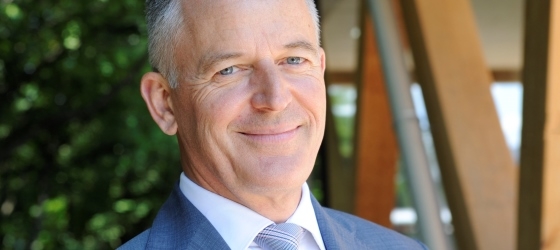 Thursday, 14 December 2017, the Association for the Prevention of Torture (APT, founded in 1977 by the Swiss banker and lawyer Jean-Jacques Gautier) announced that its Secretary-General, Mark Thomson, will retire on the 31st of July 2018. Mark, who has served as Secretary General since 2001, says that this is the right time for him to hand over the reins to someone else and that, whilst he intends to remain active in torture prevention and access to justice issues, this will be on a voluntary and ad hoc basis and that his main goal is to seize the opportunity to focus his time and energy on his young family. The President of the APT, Martine Brunschwig Graf expressed her own and the Board’s sincere appreciation for the work Mark has done over the past seventeen years, stating that: “Mark has provided first-class leadership to the APT and during that time he has played a guiding role in some immensely important developments in torture prevention across the globe. He is held in high esteem by public oversight bodies and governmental and non-governmental partners in many countries who will be as sorry as we are to see him move on.” Before 2001 Mark Thompson worked at the International al Service for Human Rights (ISHR)
 Hans Thoolen on Human Rights Defenders and their awards