Today, 17 july 2019, a Turkish court has acquitted two journalists and one human rights activist of terrorism charges. The three defendants had been accused of spreading terrorist propaganda for their work with a Kurdish newspaper, which has since been closed down. Applause erupted in the courtroom as the verdict was read out, the BBC’s Mark Lowen reported from Istanbul.
RSF’s annual press freedom index ranks Turkey 157th out of 180 countries, in part because Turkey is the world’s largest jailer of journalists. Last year, Turkey imprisoned 68 journalists in total – the highest of any country in the world.
Mr Onderoglu, Mr Nesin and Ms Fincanci guest-edited the Kurdish paper Ozgur Gundem in 2016, which saw them accused by the authorities of making propaganda on behalf of the banned Kurdish Workers’ Party (PKK). They each faced 14 years in prison. Two months after their arrest, in August that year, the Ozgur Gundem offices were raided and then permanently shut down. In her closing remarks, before the verdict was read out, Ms Fincanci told the court: “The only crime here was a crime against freedom of speech.”
In a statement released in April, Mr Onderoglu said: “I regard this trial as a part of an effort to intimidate journalists and rights defenders in Turkey. It is a heavy burden for anyone who yearns for democracy to be tried based on their professional activities or solidarity.’ “We are not concerned with being pushed around or harassed by the threats of persecution like the Sword of Damocles. Our concern is for the entire society; it is our concern for the erosion of a sense of justice which holds us all together.”
RSF responded to the acquittal on Twitter, saying it was “deeply relieved“. The organisation also called for the scrapping of another trial against Mr Onderoglu, which is due to start in November. Christophe Deloire, RSF’s secretary general, tweeted that the verdict was “a great victory for justice and press freedom, both of which are violated on a daily basis in [Turkey]”. “It represents a huge hope for all the journalists who remain arbitrarily detained,” he added.
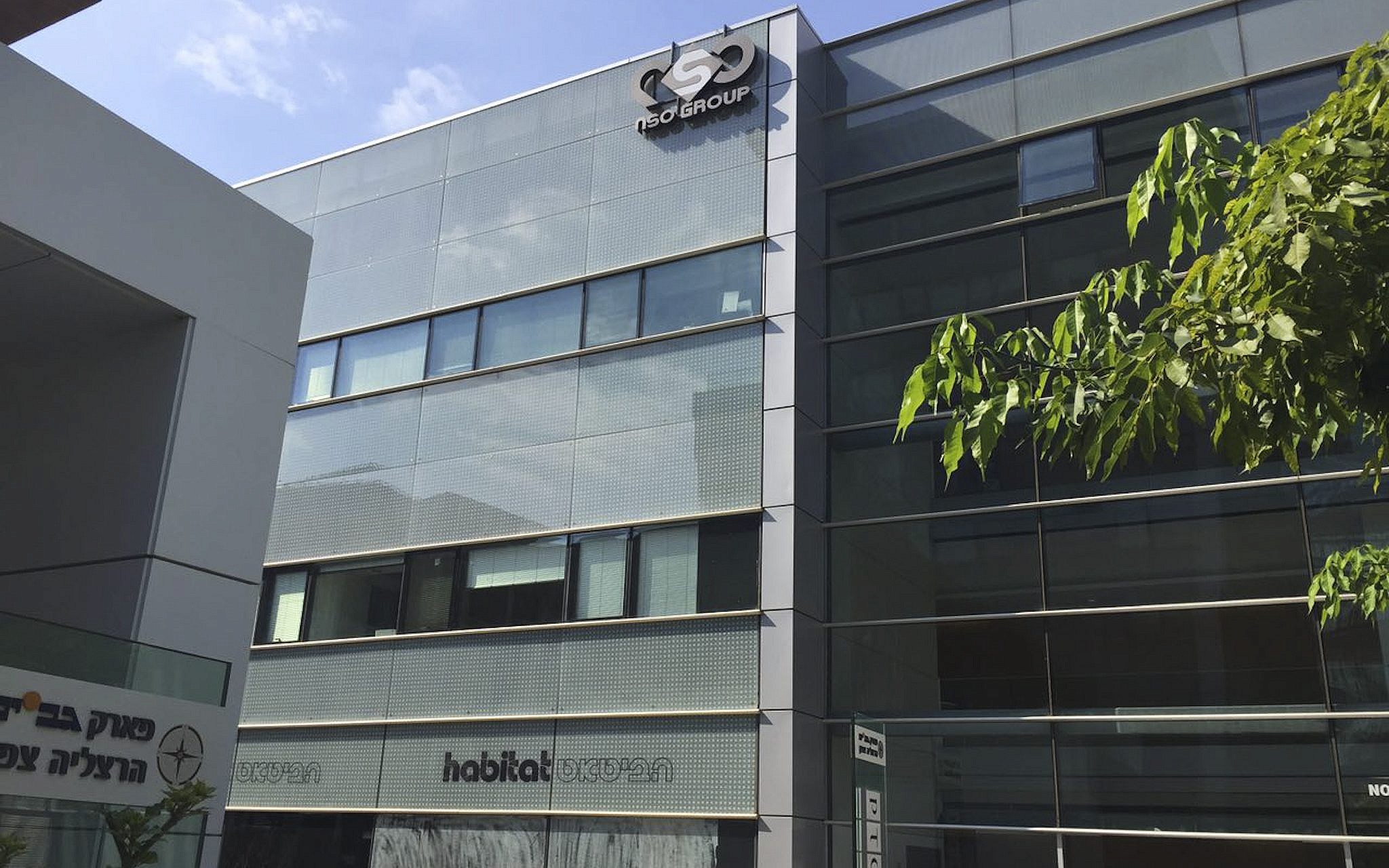
Private equity firm Novalpina, which acquired a majority stake in NSO Group in February, said that within 90 days it would “establish at NSO a new benchmark for transparency and respect for human rights.” It said it sought “a significant enhancement of respect for human rights to be built into NSO’s governance policies and operating procedures and into the products sold under licence to intelligence and law enforcement agencies.”
The company has always stated that it provides its software to governments for the sole purpose of fighting terrorism and crime, but human rights defenders and NGOs have claimed the company’s technology has been used by repressive governments to spy on them. Most notably, the spyware was allegedly used in connection with the gruesome killing of Saudi journalist Jamal Khashoggi, who was dismembered in the Saudi consulate in Istanbul last year and whose body has never been found.
Last month London-based Amnesty International, together with other human rights activists, filed a petition to the District Court in Tel Aviv to compel Israel’s Defense Ministry to revoke the export license it granted to the company that Amnesty said has been used “in chilling attacks on human rights defenders around the world.”
On Friday the Guardian reported that Yana Peel, a well-known campaigner for human rights and a prominent figure in London’s art scene, is a co-owner of NSO, as she has a stake in Novalpina, co-founded by her husband Stephen Peel. Peel told the Guardian she has no involvement in the operations or decisions of Novalpina, which is managed by my husband, Stephen Peel, and his partners and added that the Guardian’s view of NSO was “quite misinformed.”
During the 40th session of the UN Human Rights Council, the NGO CIVICUSwill be presenting research and conducting advocacy activities and is organising a number of side events, issuing advocacy statements and supporting our members engage in official proceedings, where they can inform government and UN officials on the state of civic space conditions in their countries.
Panel discussions CIVICUS will be co-organising:
Friday, 1 March, 13:00-14:00 (Room XXVII) | The Role of Counter-Terrorism Laws in the Closing of Civic Space | Civic Space Initiative (Article 19, CIVICUS, ECNL, ICNL, World Movement for Democracy)
This event will examine the misuse of counter-terrorism laws by States to target government critics and human rights defenders. The panel will look at how states are abusing security legislation to curtail civic freedoms. See full invitation. Speakers include:
Fionnuala Ni Aolain, United Nations Special Rapporteur on the promotion and protection of human rights and fundamental freedoms while countering terrorism
Alexander Verkhovskiy, Director, SOVA Center
Melanie Strickland, community activist and member of the Stansted 15
Tuesday, 5 March, 13.00-14:00 (Room XXVII) | Escazú and Beyond: Strengthening the Global Normative Framework on Protecting Environmental Defenders | Article 19, Centre for Environmental Rights, CIVICUS, Defend Defenders, Frontline Defenders, Global Witness, Ground Work, Human Rights Watch, International Land Coalition
This side event will review State obligations for protecting the rights of environmental defenders and how the recently adopted Escazú Agreement can inform the work of the Human Rights Council. The panel will look at how the standards of the regional Escazú Agreement in Latin America and the Caribbean can support global efforts to end the widespread attacks against environmental and land rights activists. See full invitation. Speakers include:
Leiria Vay, Comité de Desarrollo Campesino, CODECA Guatemala
Matome Kapa, Attorney, Centre for Environmental Rights, South Africa
Marcos Orellana, Director Human Rights and Environment Division, HRW
David Boyd, UN Special Rapporteur on Human Rights and the Environment
Kate Allen, Director of Amnesty International UK, wrote a blog post on 7 February 2019 in the Huffington post about the ‘Stansted 15’:
After nearly two long years the news is that the Stansted 15 will not be going to jail. On Wednesday, the 15 arrived at Chelmsford Crown Court with their bags packed for their anticipated prison stints. Given that they were staring down the barrel of a possible life sentence, they were contemplating the worst. ..a happy ending? Well, not really. [see also the recent: https://www.theguardian.com/uk-news/2019/feb/25/stansted-15-ordered-back-to-court-on-aggravated-trespass-charge]
This group of human rights defenders remain convicted of a serious terrorism-related offence. They were tried in relation to their attempt to prevent the deportation of a group of people at Stansted Airport in 2017. Their actions – which at no point harmed anyone – prevented the flight from leaving. Of the 60 individuals due to have been deported, at least two have since been granted permission to remain in the UK, with others still pursuing their claims.
Initially, we should recall, the Stansted 15 were charged with aggravated trespass, a relatively minor charge of the type that has often been used to prosecute people who have undertaken similar protests. But four months in, this was changed to “endangering safety at aerodromes” – a very serious terrorism-related charge which came onto the books following the Lockerbie bombings – and one which has a maximum penalty of life in prison.
….The way the Stansted 15 have been treated should be a matter of grave concern for anyone who cares about human rights in the UK. This case is a canary in the coalmine and we should be alert for the chilling effect this trial could have on peaceful protest in the UK….It’s easy to see how what has happened to them might give pause to others seeking to stand up against perceived injustice.
Throughout this case it’s been clear these are human rights defenders, motivated by conscience and compassion for their fellow humans.
Emma Hughes grew up in Epsom and was one of 15 activists who helped block a charter flight at Heathrow airport in March 2017. Emma Hughes is a charity worker who recently gave birth to a son, Fen. In December last year before learning of her sentence, she told the Surrey Comet that the trial and subsequent conviction, which she might have faced up to life imprisonment, had severely impacted her pregnancy. Hughes said: “My partner faces not just me going to jail but his first child as well. It’s very scary for everyone’s families as well as us.” 12 of the activists, including Hughes, received community service sentences, while three others were given suspended prison sentences.
[On the night of 28 March 2017, in a corner of Stansted Airport they locked themselves on the runway around a Titan Airways Boeing 767 plane due to deport around 50 people to Nigeria and Ghana. Using arm tubes and tripods, they stayed there for over eight hours, stopping it from taking off. After a grueling trial which ran from 1 October until 10 December 2018, 15 members of the campaign group End Deportations were found guilty by a jury of “intentional disruption of services at an aerodrome”. The conviction, under the 1990 Aviation and Maritime Security Act – a law passed in response to the 1988 Lockerbie bombing – centred around the apparent danger posed by the Stansted 15. The 15 are appealing their conviction and have called for their terror convictions to be quashed and hostile environment dismantled. In a statement, the Stansted 15 said: “The convictions will drastically limit our ability to work, travel and take part in everyday life. Yet, people seeking asylum in this country face worse than this: they are placed in destitution and their lives in limbo, by the Home Office’s vicious system every single day.
Raj Chada, Partner from Hodge Jones & Allen, who represented all 15 of the defendants said: “While we are relieved that none of our clients face a custodial sentence, today is still a sad day for justice. Our clients prevented individuals being illegally removed from the UK and should never have been charged under counter terrorism legislation. We maintain that this was an abuse of power by the Attorney General and the CPS and will continue to fight in the appeal courts to get these wrongful convictions overturned.”
Eleven of the people on the halted March 2017 flight are still in the UK and have been able to keep fighting their cases. The Stansted 15 have been described as‘heroes’ by one of those people, a man who has lived in the UK for over a decade. As he sat on the flight, waiting for it to leave, his mother and two children were also in Britain, as well as his pregnant partner. The delay to the flight meant that he was able to successfully appeal against his deportation and be at his partner’s side while she gave birth to their daughter. He wrote for the Guardian: “Without the Stansted 15 I wouldn’t have been playing football with my three-year-old in the park this week. It’s that simple. We now have a chance to live together as a family in Britain – and that is thanks to the people who laid down in front of the plane.”
Every year the UN Secretary General publishes a Report on Reprisals against Human Rights Defenders. On 5 February 2019 Rene Wadlow (President of the Association of World Citizens) summarized it for Global Solutions, lists the main culprits and calls for more action by the NGO community.
On 23 January 2019, the U.N. Secretary-General Antonio Guterres in a statement listed States which had carried out reprisals or intimidation including killings, torture, and arbitrary arrests against individuals cooperating with the United Nations on human rights issues. He said, “The world owes it to these brave people standing up for human rights, who have responded to requests to provide information and to engage with the United Nations to ensure their rights to participate is respected. Punishing individuals for cooperating with the United Nations is a shameful practice that everyone must do more to stamp out.” …“Governments frequently charged human rights activists with terrorism or blamed them for cooperating with foreign entities or damaging the state’s reputation of security.”…
The information (provided mostly by NGOs) is collected at the U.N. High Commissioner’s Office in Geneva and is evaluated to see if the information fits into a pattern of continuing human rights violations or if it is an individual event.
Wadlow presents the States listed by broad geographic region rather than all together in alphabetical order as they are in the U.N. statement as other States in each region may also have human rights violation issues, often inter-related to the State named. Thus, the list of States is only those which the U.N. is aware that there have been reprisals against individuals who have given information to the U.N. units.
Middle East
Bahrain, Egypt, Israel, Saudi Arabia, Morocco
Africa
Cameroon, Democratic Republic of Congo, Djibouti, Mali, Rwanda, South Sudan
Asia
China, India, Maldives, Myanmar, Philippines, Thailand
Latin America
Colombia, Cuba, Guatemala, Guyana, Honduras, Trinidad and Tobago, Venezuela
Europe
Hungary, Russian Federation
Central Asia
Kyrgyzstan, Turkmenistan
The impact and increasingly higher profile of human rights informants has left them more and more exposed to a high risk of harassment, repression, arbitrary detention and extra-judicial executions. Governments are not the only actors. Depending on the country, there can be gangs, militias, paramilitary and other non-governmental groups who also menace people thought to be giving information to the U.N. or to international human rights organizations
The publication by the U.N. of its list is done with the hope that governments themselves will take positive action to protect. In some countries, internal security services or police-related “death squads” may act without the knowledge of the highest authorities of the State. In other States, there is little repression that does not come on orders of the higher authorities. There is a need for representatives of NGOs and also the media to be alert, especially for violations in States which are not otherwise in the news. Active networking remains crucial.
On Wednesday 30 January 2019 Mike Masnick in TechDirt published a piece entitled: “Human Rights Groups Plead With The EU Not To Pass Its Awful ‘Terrorist Content’ Regulation“. The key argument is that machine-learning algorithms are not able to distinguish between terrorist propaganda and investigations of, say, war crimes, It points out that as an example that Germany’s anti-“hate speech” law has proven to be misused by authoritarian regimes. Read the rest of this entry »
When India was named as a major sinner in this year’s report on reprisals against human rights defenders, there was understandable shock. Many NGOs and newspapers reported on this (a small selection below).
ARUNA ROY published on 21 September a piece called: “Attack on the conscience keepers; Attempt to silence the messenger”, which is an excellent overview of the issues at stake:
There have been a set of simultaneous raids and arrests of eminent social activists and public intellectuals over which the BJP government in Maharashtra and the Centre, and many human rights organizations have been locked in a sharp polarized debate. The arrest of Sudha Bharadwaj, Gautam Navlakha, Vernon Gonsalves, Varavara Rao and Arun Ferreira, in the Bhima Koregaon is a case that has all the elements of an attempt to use an FIR to target a particular kind of dissenting voice, and use undefined terms like “urban naxal” to divert from the main issue itself. This is not just baffling for the ordinary reader – but is a new kind of threat to the democratic practices in India.
The attack on human rights workers is an attempt to silence the messenger. Given the very high credibility of the people concerned, an orchestrated campaign with the media has been used. News has itself become a strange brew of half-truths, rhetorical statements and deliberate mis-communication. In addition, the state and corporate interests exercise huge commercial control over the media, and many of the causes of tribal communities that are espoused by these activists are in direct conflict with the commercial interests of the media ownership. Users of “social media” advocate causes, make twisted statistical representations, and generate propaganda –all under the credibility that “media” enjoys in large part. The citizen is caught in a web of cross cutting information, where truth is elusive, and it is difficult to differentiate between fact and fiction.
Let’s try and examine some of the facts of this FIR. The Elgar Parishad was an event organized by Dalits in celebration of an old tradition- a historic defeat of the Peshwas at the hands of the Mahars in the 1800s. Two ex judges, Justice Patil and Justice Sawant, former Supreme Court judge and former Chair of the Press Council, were part of the organizing team. On January 1, 2018, there was a clash between the Dalits and the upper castes. FIRs were lodged by the Dalits and a cross case later by the others. The accusations now added to the list, were not in the FIR and none of those arrested were present either at the Elgar Parishad, or on the of January 1. The first claim made by the Pune police was, that these were Maoists responsible for planning and fomenting the violence that took place on January 1. The claim that the arrested activists were a threat to the state and national security has been added subsequently.
There is no doubt that rising inequalities in India are the leading marginalized communities – particularly Dalits and Tribals– to organize to fight for survival and reclaiming citizenship. The citizen’s exercise of sovereignty, ie asking questions about land and natural resources, non-delivery of services, justice and dignity, especially for the most marginalized and discriminated, is branded as anti- national to escape scrutiny. Their advocates suffer the same fate and are hounded to prevent the amplification of the voices against corruption and injustice. The categorization of “anti-national” has now a twin in “urban naxal”. Vague and subjective and incomprehensible; and yet they are used to prosecute and silence people.
The governments, normally riddled with corruption and arbitrary use of power, are afraid of disclosures, accountability and the rule of and by law. When they are confronted by public scrutiny into the exercise of unconstitutional power, they take refuge in accusations of terrorism, sedition etc. to suppress all questioning. The suffering communities and individuals are often the victims of the privileged elite. The RTI has legitimized questioning and the corrupt system is feeling threatened by it, as the attempts to amend and the killing of RTI users amply prove.
Branding of opposition as “Maoists or terrorists”, and “urban naxalites” has enabled governments to build public acceptability, supporting arbitrary decisions made in camera. Rationality falls victim to the fear of government vendetta and silence prevails.
The system protects its charges with dossiers and secret files created to indict activists. The use of the RTI has proven quite clearly that the sovereign citizen is often in ignorance of acts done in her/his name. Therefore any claim of “evidence” is suspect unless it is allowed public scrutiny. There are few tools besides the RTI to test sources of the evidence and the veracity of the testimonies.
This attack on civil rights defenders is in some ways worse than the declaration of the Emergency in 1975, where the motivation was to cling to political power. This is not just about political power, but to change the ideas of justice and equity. Like then, civic space is being narrowed down and an atmosphere of fear is created. But today, people who have dedicated their lives to and speak for constitutional rights are branded as criminals and terrorists and there is a vicious attempt to destroy their credibility. An attack on the rights of civil society by gagging its spokespersons will destroy the idea of India. This idea was crafted carefully by the constituent assembly to give legitimate space for the peaceful and just co-existence of disparate cultures, ideologies and thought, to enable a steady, though difficult journey towards a more just and equitable India.
Heather Gies just published (29 September 2017) in Upside Down World a long and detailed piece on Honduras (“Honduras, the Deadliest Country in the World for Environmental Defenders, Is About to Get Deadlier“)
Demonstrators protest in the wake of the 2009 coup in Honduras that ousted President Manuel Zelaya. Source: Creative Commons / Flickr–PBS NewsHour
The article describes how activists in Honduras could soon face up to 20 years in prison for simply marching in the streets after Congress passed an article of the new Criminal Code last week that opposition lawmakers claim criminalizes social protest as a form of “terrorism.”…..Human rights defenders have raised alarm over the proposed reform, arguing that the sweeping definition of “terrorism” in the bill leaves activists and social leaders vulnerable to harsh criminalization and violence at the hands of military and police forces. As the piece is long and copyrighted, here just the link.
The recent report SHACKLED FREEDOMS : WHAT SPACE FOR CIVIL SOCIETY IN THE EUROMED? depicts the obstacles and repression against civil society in the region and showcases first-hand accounts from Turkey, Egypt, Algeria, Syria, Israel and the Occupied Palestinian Territories among others. The report also features recommendations by CSOs for joint action and seeks to influence EU policies to that effect. The report also focuses on the impact of security and anti-terrorist policies and lists the growing arsenal of repressive measures – both in law and practice – that civil society organizations (CSOs) face on a daily basis: judicial harassment, surveillance, arbitrary arrests, torture and assassination.
Despite legal safeguards and the human rights “shared values” rhetoric in the EU, EuroMed Rights argues that European civil society is under increasing pressure. Austerity measures and anti-terrorism laws are increasingly used to legitimise practices that go against individual freedoms and rights of assembly, association and expression, such as in France, Spain or the UK, for instance. The report – published on 7 September 2016 – is the result of a seminar organised in April 2016 as an open dialogue between EU representatives, South Mediterranean activists and Brussels-based CSOs.
A group of five United Nations human rights experts have joined the debate in France on security. Yesterday, 19 January it warned that the current state of emergency in France and the country’s law on surveillance of electronic communications impose excessive and disproportionate restrictions on fundamental freedoms.
UN SG Ban Ki-moon pays tribute to the victims of the terrorist attacks in Paris on 13 November. 6 December 2015. UN Photo/Eskinder Debebe
“As France debates the strengthening of measures in the fight against terrorism, and considers a reform of the criminal procedure, we call on the authorities to revise the provisions and possible reforms adopted to that end, to ensure they comply with international human rights law,” the UN experts said in a press statement.
In a list of concerns to the French Government, the independent experts stressed a lack of clarity and precision on provisions regarding several state of emergency and surveillance laws that relate to the legitimate rights of privacy and freedoms – of expression, peaceful assembly and association.
To guarantee the rule of law and prevent arbitrary procedures, the experts recommended the adoption of prior judicial controls over anti-terrorism measures. Since the recent terrorist attacks in France, the state of emergency law in force, which temporarily expands the executive powers in the fight against terrorism, only allows judicial review a posteriori.
The UN experts also noted that the November 2015 law on surveillance of international electronic communications expands the executive power over the collection, analysis and storage of communications content or metadata – without requiring prior authorization or judicial review.
The UN experts also expressed alarm that environmental activists in France have been under house arrest in connection with the state of emergency invoked following the November attacks. “These measures do not seem to adjust to the fundamental principles of necessity and proportionality,” they said, highlighting the risks faced by fundamental freedoms in the fight against terrorism.
Calling on France not to extend the state of emergency beyond 26 February 2016, they said, that: “While exceptional measures may be required under exceptional circumstances, this does not relieve the authorities from demonstrating that these are applied solely for the purposes for which they were prescribed, and are directly related to the specific objective that inspired them.”
The independent experts – David Kaye, Special Rapporteur on freedom of opinion and expression; Maina Kiai, Special Rapporteur on the rights to freedom of peaceful assembly and of association; Michel Forst, Special Rapporteur on the situation of human rights defenders;Ben Emmerson, Special Rapporteur on the protection and promotion of human rights and fundamental freedoms while countering terrorism; and Joseph Cannataci, Special Rapporteur on the right to privacy – expressed their solidarity and deepest sympathy to the victims of the terrorist attacks committed in France and many other places in the world.


 Hans Thoolen on Human Rights Defenders and their awards
