The human rights organisation looks back on 2021, “a year of dashed hopes“. According to Amnesty International, the digital sphere is increasingly becoming a space for activism — and repression.
Despite promises and pledges to the contrary, at almost every turn, leaders and corporations opted for a non-transformative path, choosing to entrench rather than overturn the systemic inequalities behind the pandemic. Yet, people the world over have made it abundantly clear that a more just world, grounded in human rights, is what they want
Agnès Callamard SG AI
Here is how Deutsche Welle summarized it:
Every year, Amnesty International looks at developments around the world and compiles an analysis of the most important global trends in human and civil rights. In its latest annual report, Amnesty Middle East and North Africa research and advocacy director Philip Luth says: “2021 was a year of really quite significant promises. … The reality was completely otherwise.”
There had been hope that the world might emerge from the pandemic equitably, Luther told DW, but richer countries in particular have prevented the widespread manufacture and distribution of vaccines. The annual report cites the facts: Fewer than 8% of the 1.2 billion people in Africa were fully vaccinated at the end of 2021 — the lowest rate in the world and far from the WHO’s 40% vaccination target…..The study also found that many governments have used the pandemic to suppress opposition and civil society. “It’s across regions and that’s one of the reasons we highlighted it in our global analysis,” Luther said. “Some governments very specifically used the smoke screen of the pandemic to restrict freedom of expression.” Examples of countries where protests have been broken up and human rights defenders are at risk include Cambodia, Russia, China and others.
According to Amnesty and other international organizations, the pandemic is also having an effect on civil society. “There are various strategies that are making it increasingly difficult for civil society to operate in different regions of the world,” Silke Pfeiffer, head of the department for human rights and peace at the Christian-affiliated aid organization Brot für die Welt (Bread for the World), told DW. “This is quite specifically directed at individual activists, who are discriminated against, threatened, persecuted and in some cases murdered.” In many countries, Pfeiffer said, governments cultivate a hostile environment. “It becomes increasingly difficult for civil society organizations to work,” she said. “That goes as far as the closure of NGOs; we see that again and again.” To cite just one example: In late March, Nicaraguan President Daniel Ortega had 25 nongovernmental organizations closed. One of them is the Nicaraguan partner organization to Brot für die Welt.
Governments and NGOs are increasingly doing their work online. Luther describes the development as a “double-edged sword.” Authorities clandestinely use technology in ways that have a negative impact on people’s human rights, he said: “Governments in many cases were also then trying to shut down and disrupt tools that enable civil society to better communicate with each other and spread information.”
Amnesty International’s annual report cites multiple examples of this: the internet shutdown from August 4, 2019, to February 5, 2021, in the India-controlled regions of Jammu and Kashmir; the use of facial recognition technology at protests in Moscow; and the use of Israel’s Pegasus spyware against journalists, opposition figures and human rights activists. Pfeiffer said the internet was an important way for civil society to organize and mobilize. But she added that, around the world, “governments and other actors have completely upgraded digitally and are now also taking very strong action against freedom on the internet — through censorship, by shutting down internet services, through mass surveillance.”
Across the world, Amnesty noted, people took to the streets to fight for their rights and the rights of others in 2021 — in Russia, India, Colombia, Sudan, Lebanon and at least 75 other countries. in the words of AI Secretary General: “The palpable and persistent resistance offered by people’s movements the world over is a beacon of hope. Uncowed and undaunted, theirs is a clarion call for a more equal world. If governments won’t build back better – if they seemingly are intent on building back broken – then we are left with little option. We must fight their every attempt to muzzle our voices and we must stand up to their every betrayal. It is why, in the coming weeks, we are launching a global campaign of solidarity with people’s movements, a campaign demanding respect for the right to protest. We must build and harness global solidarity, even if our leaders won’t.”
She also said:
Global trends to stifle independent and critical voices gathered steam in 2021 as governments deployed a widening gamut of tools and tactics. Human rights defenders, NGOs, media outlets and opposition leaders were the targets of unlawful detention, torture and enforced disappearance, many under the smokescreen of the pandemic.
At least 67 countries introduced new laws in 2021 to restrict freedom of expression, association or assembly. In the USA, at least 36 states introduced more than 80 pieces of draft legislation limiting freedom of assembly, whilst the UK government proposed the Police, Crime, Sentencing and Courts Bill, which would drastically curtail the right to freedom of peaceful assembly, including by expanding police powers.
Global trends to stifle independent and critical voices gathered steam in 2021 as governments deployed a widening gamut of tools and tactics. Human rights defenders, NGOs, media outlets and opposition leaders were the targets of unlawful detention, torture and enforced disappearance, many under the smokescreen of the pandemic.
At least 67 countries introduced new laws in 2021 to restrict freedom of expression, association or assembly. In the USA, at least 36 states introduced more than 80 pieces of draft legislation limiting freedom of assembly, whilst the UK government proposed the Police, Crime, Sentencing and Courts Bill, which would drastically curtail the right to freedom of peaceful assembly, including by expanding police powers.
Zinaida Muradova, Head of Rapid Response at Civil Rights Defenders
Defending human rights has become increasingly dangerous in many parts of the world. Many of those who do, face numerous risks and threats on a daily basis. When a threat towards a human rights defender escalates, Civil Rights Defenders’ Emergency Fund provides rapid assistance to strengthen the defender’s security as quickly as possible.
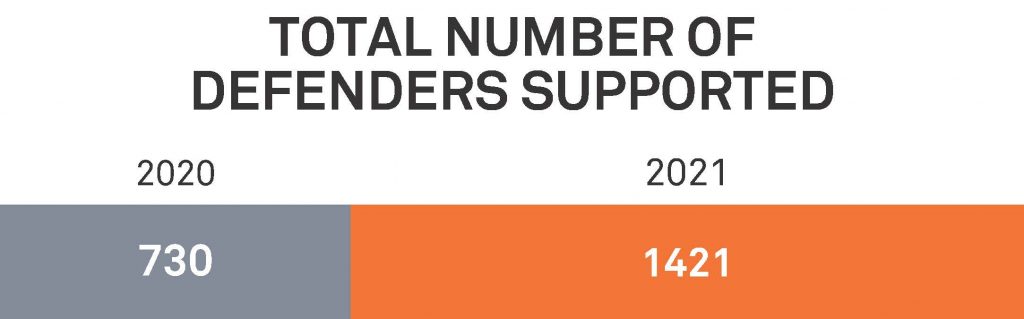
On 7 March 2022 it provided a breakdown of its use. The fund can, for example, provide legal aid or temporarily relocate people who suffer persecution, as well as provide preemptive efforts such as security trainings and digital security solutions. In 2021, the fund supported a total of 1421 human rights defenders in 30 countries.
Emergency support doubled in 2021
In 2021, Civil Rights Defender’ Emergency Fund has received and processed the largest number of applications since the inception of the fund in 2012. We have supported a total of 1.421 Human Rights Defenders (HRD:s) and/or members of their families at risk through a total of 171 grants in 30 countries. The number of applications and granted support have thus both doubled compared to 2020.
The world is becoming an increasingly dangerous place for human rights defenders, which is a significant explaining factor behind this increase. The CRD Emergency Fund has seen and reacted to the global backsliding of democracy and a number of emerging conflicts in 2021. The aftermath of the war between Armenia and Azerbaijan, the military coup in Burma, the spring protests in Colombia, the witch-hunt on civil society in Belarus, the civil war in Ethiopia and the Taliban’s takeover in Afghanistan are only a few of the conflicts that have deteriorated the security situation for human rights defenders in 2021. Many human rights defenders cannot continue their work for human rights and democracy without the support of the outside world.
Although the number of applications has doubled, so has the number of Emergency Fund applications granted. This increase is much thanks to the additional resources that Civil Rights Defenders has been able to put into processing fund applications.
“We are humbled to have been able to support so many human rights defenders in 2021. The need for emergency support is greater than ever, with the war in Ukraine the number of applicants is likely to keep increasing in the immediate future”, says Zinaida Muradova.
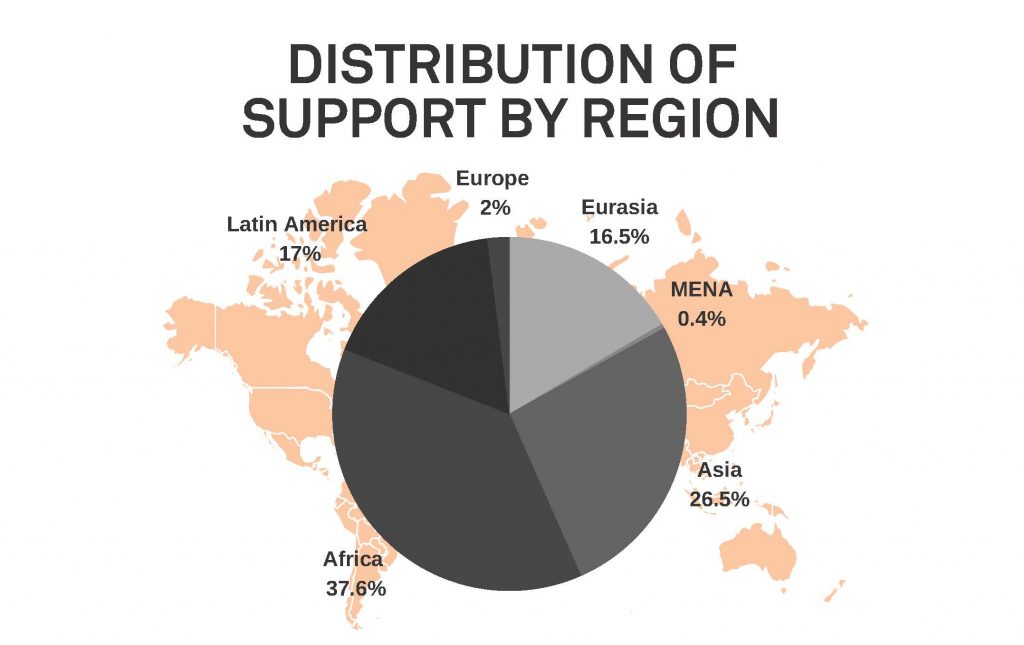
Emergency support to Burma and Asia has significantly increased in 2021, although the majority of human rights defenders who received emergency support continued to be from Africa. Additionally, the Emergency Fund continued to expand its global reach in five more regions – Eurasia, Europe, Africa, Latin America and MENA. In total, support was provided to human rights defenders in 30 countries during the course of 2021.
Further advancing gender sensitivity
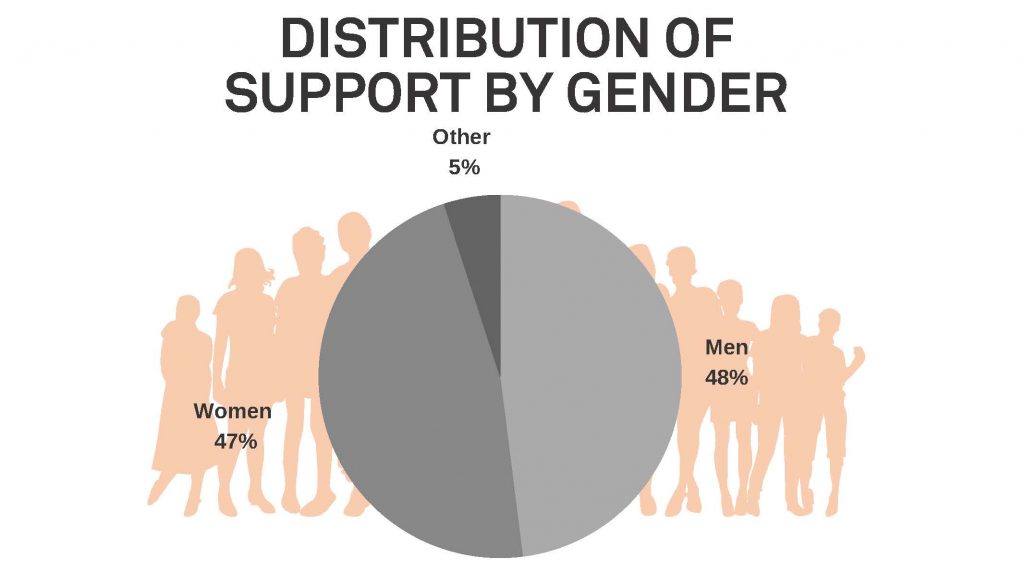
The Emergency Fund continued to build on gender work started in 2019 to ensure a good gender balance and representation amongst the beneficiaries of support. We have been working to increase the accessibility of the mechanism for the most vulnerable groups. We see an improvement in gender balance, for example the percentage of non-conforming people supported doubled compared to 2020.
An increasing demand for legal aid and psychological support
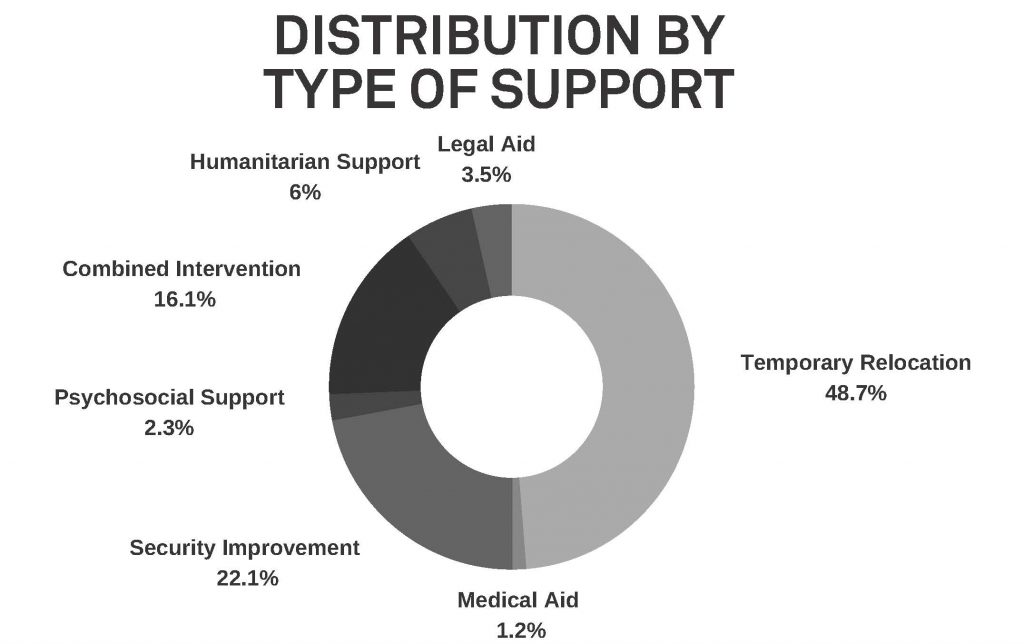
Despite the Covid 19 pandemic and continued strict restrictions on travel around the world, temporary relocations, where human rights defenders can reside safely for a short period, remained by far the most requested type of support in 2021. The majority of relocations were related to the major crises in countries mentioned above. Requests for preventive security measures to improve home, office or digital security, such as installing security cameras or digital security software, remained to be in high demand as well. Many HRD:s needed so called combined interventions, meaning a combination of several of the above mentioned support types.
In 2021 The Emergency Fund has seen a noteworthy increase in requests for humanitarian and psychological support. Many HRDs also request legal aid due to an increasing trend of arbitrary arrests and charges.
“Democracy and human rights cannot be achieved without human rights defenders. Through the Emergency Fund we ensure that they feel safe enough to continue their work which ultimately helps ensure that the fight for democracy can continue worldwide”, says Zinaida Muradova.
On 25 January 2022 important Research by Jon Vrushi and Roberto Martínez B. Kukutschka of Transparency International (which just published it 2021 Corruption Perceptions Index) shows a perhaps not surprising but undoubted link between human rights and corruption. They say: Corruption enables both human rights abuses and democratic decline. In turn, these factors lead to higher levels of corruption, setting off a vicious cycle.
…While all states have a responsibility to respect, protect and fulfil the human rights of all people, the presence of corruption can weaken a government’s ability to do so by undermining the overall functioning of the state – from the delivery of public services, to the dispensation of justice and the provision of safety for everyone.
More specifically, the duty to respect means that the state must not act in violation of human rights, for example, by using violence against peaceful demonstrators. Corruption can undermine this obligation when, for example, the government instrumentalises the police or judiciary to unfairly detain, arrest or intimidate opponents or dissidents. Corruption in law enforcement can jeopardise people’s safety and victims’ access to justice. On the one hand, corruption in law enforcement can drive human right violations such as ill-treatment or torture in the hands of officers including in detention settings or through police practices. In other cases, corruption might permeate the administration of justice including by slowing investigations into human rights violations and affecting due process.
What is more, corruption and impunity contribute to an unsafe climate for human rights defenders to operate in. Having examined the data collected by Frontline Defenders, we found that out of the 331 cases of murdered human rights defenders in 25 countries in 2020, 98 per cent of those deaths occurred in 23 countries with high levels of public sector corruption, or a CPI score below 45. Moreover, at least 20 of all cases were registered as killings of human rights defenders dealing with anti-corruption issues.
The second state obligation, to protect, means that governments should ensure that no one infringes the rights of its people. Corruption can also undermine this obligation. Organised criminal groups routinely murder journalists and human rights defenders and the state often fails to protect their safety. Similarly, private actors can rely on bribery and/or personal connections to ensure that the state turns a blind eye to human rights abuses. If the state fails to prevent a company, which has made a large campaign donation, from polluting a water source on which people depend on and puts their health at risk, the state is effectively failing in its obligation to protect.
Finally, corruption can directly undermine a government’s ability to fulfil its human rights obligations to take positive actions to guarantee the enjoyment of basic human rights. When states allow the embezzlement of public funds meant to be spent on providing healthcare or when rigged public procurement processes fail to deliver the necessary goods and services for education, states fail in their responsibility to fulfil the rights to health and education.
While all three obligations are equally important, state failure to respect human rights can lead to catastrophic consequences for democracy and the rule of law, as it can subvert fundamental rights which are critical for government accountability, such as freedom of expression, assembly and association. This, in turn, makes it harder to keep corruption in check and can lead to a vicious cycle of corruption, human rights abuses, and democratic decline.
The graph below shows how corruption and abuse of civil liberties go hand-in-hand. The civil liberties score, a dimension of the Democracy Index from the Economist Intelligence Unit, contains indicators on freedom of expression, association, assembly, personal safety and access to justice, among others. What we observe is that there is a strong and positive correlation between good governance and the respect of human rights and that very few countries have managed to establish effective control of corruption without also respecting human rights. This relationship holds even when controlling for the level of development (see Annex).
Keeping corruption out of the public eye is essential to ensure that those who participate in it face no consequences. Restricting freedoms of expression, association and assembly is thus a popular tactic to weaken societal checks on corruption, reducing the chances of being denounced for engaging in corruption and facing consequences. Simultaneously, this helps to perpetuate corrupt networks and practices. To ensure they face no legal consequences, in some cases corrupt officials also capture the judiciary and independent oversight institutions. To prevent loss of their privileges, corrupt and their cronies often resort to oppressive measures, curtailing civil liberties.
Take Nicaragua, for example, where President Daniel Ortega has ruled since 2007 and the country has experienced democratic decline, along with restrictions to fundamental freedoms and rampant corruption. Nicaragua is one of the significant decliners on the 2021 CPI, having dropped from a score of 29 in 2012 to 20 in 2021.
Nicaragua now ranks in the bottom 20 countries on the Index. At the same time, Nicaragua’s scores on V-Dem’s “Freedom of Expression”, “Freedom of Association” and “Access to Justice” indicators have dropped to record low levels. Corruption in the justice system and total capture of the courts by the executive means that human rights abuses go unchecked, providing no access to justice or remedy for victims in the country. At the same time, politically motivated corruption charges against opposition figures.
further impinge on political rights and liberties while government officials face virtually no accountability for acts of corruption. This climate of total impunity allows the government to further restrict fundamental rights, like freedom of expression, association and assembly. In some cases, they become direct attacks.
In 2019, one of the oldest newspapers in Nicaragua, El Nuevo Diario, reported that it was forced to close after authorities prevented it from obtaining newsprint and ink. Furthermore, between March and July 2020, Nicaragua’s Observatory of Aggressions on the Independent Press reported 351 attacks including unjust prosecutions, arbitrary detentions and harassment of media workers and their families. Human rights abuses continue, including bans on protests, attacks on freedom of expression, and the stigmatisation and persecution of journalists and human rights defenders.
Attacks on checks and balances as well as on civil liberties do not only occur in countries with systemic corruption and weak democratic institutions, but also in consolidated democracies. Hungary serves as a cautionary tale where following corruption and full capture of the state, the country has fallen to the lowest score in the Freedom in the World Index since the end of the communist regime in 1989. The abuse of media, civic space and the judiciary by democratic governments alleged to be involved in corruption has also been prevalent in Czechia, Slovenia and Brazil, among others.
What is more, not everyone is equally able to challenge corruption. Repressive officials or those seeking to silence anti-corruption campaigners are less likely to fear being held to account when they target individuals from marginalised groups. People from discriminated groups are therefore more exposed to potential backlashes and human rights abuses when they try to make their voices heard. The enhanced level of danger also applies to anti-corruption campaigners who champion the cause of discriminated groups, such as Transparency International’s chapter in Guatemala, which seeks to uncover and challenge acts of collusive corruption between state officials and mining companies that harm Indigenous Peoples.
Transnational corruption as enabler of human rights abuses
Various actors in the top-scoring countries are all too eager to help authoritarian and kleptocratic regimes clean their reputations – not just their money.
The case of Kazakhstan and the United Kingdom shows this corrupt backscratching at work. The heavy-handed response to protests in the country in early January made international headlines, echoing events of the Zhanaozen massacre from 10 years ago. Nursultan Nazarbayev, the country’s president at that time turned to the UK’s former prime minister Tony Blair to help him with his image. In a leaked letter Blair reportedly advised and provided Nazarbayev with talking points on how to handle critical questions about Zhanaozen. Months later, the government jailed an opposition leader for allegedly orchestrating the events. Blair continued to defend Kazakhstan’s regime on various occasions.
More international coordination is needed to ensure that foreign dictators and western enablers do not circumvent anti-money laundering and sanctions regimes.
Transnational corruption enables human rights abuses and exacerbates repression by allowing autocrats to:
Enjoy looted funds and reward cronies. Without the help of professional enablers like complicit bankers, lawyers, accountants, real-estate brokers etc, kleptocrats would not be able to enjoy their funds and pay off those who support them. In turn this means that they can stay in power by buying support and dispensing patronage to cronies.
Launder their reputation abroad. By employing western public relations firms, lobby professionals and even funding universities kleptocrats and autocrats ensure that little pressure will come to bear from the international community on their human rights abuses record.
Evade accountability. By hiding their financial transactions, autocrats make it almost impossible for law enforcement or judicial bodies, at home or abroad, to find traces of their malfeasance, ensuring they stay in power and unscathed. They can also bypass sanctions regimes, such as those aimed directly at human rights abusers through the Global Magnitsky Act or similar legislation.
In 2017, the Azerbaijani Laundromat investigations found how a network of slush funds financed Azerbaijan’s bribe-induced foreign policy and reputation. Three Spanish delegates to the Parliamentary Assembly of the Council of Europe (PACE) are suspected of benefiting from the Laundromat. In return, they allegedly watered down the human rights body’s criticism of events in Azerbaijan under the country’s repressive authoritarian regime. In 2021, authorities in Germany expanded their previous investigations into the Azerbaijani Laundromat. Another (now former) German parliamentarian is under investigation for similar reasons. Transnational corruption schemes allowed the Azerbaijani government to conduct a type of caviar diplomacy, bribing abroad and shoring up support from cronies at home.
Effects on democracy and corruption
Civil and political rights including freedom of expression, freedom of association and assembly, as well as access to justice are integral to healthy democracies. They guarantee the participation of citizens and groups in democratic and policy processes and can help keep corruption in check. The current wave of autocratisation is not primarily driven by coups and violence, but rather by efforts to undermine democracy gradually. The descent into authoritarianism usually begins with violations to people’s civil and political rights, attacks on civil and political rights, efforts to undermine the autonomy of oversight undermining election management bodies, and trying to control or directly attack the media to help disseminate the regime’s ideology while supressing criticism.
The case of Belarus, which this year fell 6 points in the CPI score this year, perfectly illustrates the limits of this top-down model and how the apparent successes in controlling corruption can quickly prove illusory where they are subject to the whims of a dictator or a regime that does not allow criticism, opposition or political competition. The country also serves as a cautionary tale for similar regimes.
While examples of successful top-down anti-corruption reforms exist in countries like China, Cuba and Singapore. These efforts are few and far apart. Furthermore, some of the most successful anti-corruption reforms that started with top-down interventions, eventually had to incorporate more bottom-up approaches to ensure their sustainability. Hence, sustainable anti-corruption strategies go hand in hand with the protection of universal human rights and fundamental freedoms.
For these reasons, in its Strategy 2030, Transparency International recognises that corruption cannot be countered without fundamental human freedoms to organise, associate, access information and speak up as well as a free and independent media.
To end the vicious cycle of corruption, human rights violations and democratic decline, people should demand that their governments:
Uphold the rights needed to hold power to account. Governments should roll back any disproportionate restrictions on freedoms of expression, association and assembly introduced since the onset of the pandemic. Ensuring justice for crimes against human rights defenders must also be an urgent priority.
Restore and strengthen institutional checks on power. Public oversight bodies such as anti-corruption agencies and supreme audit institutions need to be independent, well- resourced and empowered to detect and sanction wrongdoing. Parliaments and the courts should also be vigilant in preventing executive overreach.
Combat transnational forms of corruption. Governments in advanced economies need to fix the systemic weaknesses that allow cross-border corruption to go undetected or unsanctioned. They must close legal loopholes, regulate professional enablers of financial crime, and ensure that the corrupt and their accomplices cannot escape justice.
Uphold the right to information in government spending. As part of their COVID-19 recovery efforts, governments must make good on their pledge contained in the June 2021 UNGASS political declaration to include anti-corruption safeguards in public procurement. Maximum transparency in public spending protects lives and livelihoods.
The Berlin-based nongovernmental organisation surveys business leaders and experts to assign scores to 180 countries and territories on their perceived levels of public sector corruption. Using a scale from 0 to 100 (with 100 being very clean and 0 ranking as highly corrupt), the 10th annual report found that two-thirds of countries scored below 50. The average score was 43 out of 100. Overall, the fight against corruption is having mixed results – with some nations making gains and others falling behind. “Since 2012, 25 countries significantly improved their scores, but in the same period 23 countries significantly declined,” the report said.
It also found that despite increased momentum to end the abuse of anonymous shell companies, many high-scoring countries with relatively clean public sectors continue to enable corruption. A shell company does not have a physical location, employees, products or revenue. It is used to store money, help facilitate tax avoidance and, in some cases, deal in illegal activity such as money laundering. Some high-ranking countries such as Switzerland have been called tax havens in part due to their tolerance of shell companies.
Mongabay.com on 30 December 2021 made a tentative list of deaths of environmental human rights defenders
Between the pandemic, natural disasters worsened by human activities, and violence against environmental defenders, 2021 was another year of significant losses in conservation.
The following is a list of some of the deaths that occurred in 2021 that were notable to the conservation sector.
This list acknowledges some of the deaths in 2021 that are significant to the broader conservation community. In case Mongabay missed a death that occurred in 2021 that’s notable in conservation, it asks to reach out via this form.
6 Congolese rangers: Six Congolese Institute for Nature Conservation (ICCN) rangers working at Virunga National Park in the eastern Democratic Republic of Congo were killed in an ambush by a local militia group in January. They were: SuruMwe Burhani Abdou, 30; Alexis Kamate Mundunaenda, 25; Reagan Maneno Kataghalirwa, 27; Eric Kibanja Bashekere, 28; Innocent Paluku Budoyi, 28; and Prince Nzabonimpa Ntamakiriro, 27. More.
Ann Croissant, 81 (United States): An environmental activist, educator, and botanist who worked to protect native plants like Brodiaea filifolia in California’s San Gabriel Mountains via the Glendora Community Conservancy, which she founded in 1991. More.
Aruká Juma, 88 (Brazil). Aruká Juma, the last of the Juma people in Brazil, died of Covid-19. More.
Bob Scholes, 63 (South Africa). A professor of systems ecology at Wits who served as the Director of the Global Change Institute (GCI) and was one of the world’s leading scientists on climate change. More
Cornelia Hahn Oberlander, 99 (Canada): The landscape architect sometimes known as the ‘Queen of Green’, Oberlander embraced sustainable design before it was fashionable and was an advocate for rewilding. More.
Dave Courchene Jr., 71 (Canada): A Manitoba elder also known by his spirit names Nitamabit and Nii Gaani Aki Inini, Courchene Jr. founded the Turtle Lodge Centre of Excellence in Indigenous Education and Wellness to “exchange intergenerational knowledge, revitalize language, train youth leaders and find environmental solutions to climate change.”. More.
David Wake, 84 (United States). An authority on salamanders who grew alarmed by the disappearance of many amphibians. Wake founded AmphibiaWeb. More.
Deb Abrahamson, 66 (United States): An Indigenous environmental activist who campaigned against mining pollution and uranium contamination on Indigenous lands. Abrahamson was active in the Standing Rock protests and the Murdered and Missing Indigenous Women coalition.. More.
Debra Ann Jacobson, 69 (United States): A lawyer and environmentalist who helped cofound the Women’s Council on Energy and the Environment and served in leadership roles in the local and state Sierra Club groups. Jacobson spent nearly 20 years working on clean energy and other issues at the U.S. Department of Energy. More.
Dongria Kondh or Penny Eastwood, 65 (United Kingdom): A founding member of Treesponsibility and founder of The Source Partnership, Kondh spent 30 years working to slow climate change through tree planting and other initiatives. More.
Edward O. Wilson, 92 (United States). A prominent biologist and prolific author who help raise global awareness and understanding about biodiversity and conservation. Lovejoy is credited with coining the term “biological diversity”, developing the concept of “debt-for-nature” swap programs, and being one of the earliest to sound the alarm about the global extinction crisis. While Wilson’s research on ants was highly influential in scientific circles and won numerous recognitions, he was mostly widely known for his accessible writing, including articles and best-selling books which introduced concepts like biodiversity to the masses. More.
Elsie Herring, 73 (United States): An environmental activist who sued a subsidiary of Smithfield Foods in 2014 for pollution from their industrial hog farms eventually winning a $550 million judgement in 2018 (which was later reduced to $98 million). More.
Estela Casanto Mauricio, 55 (Peru). A human rights defender who founded the Asháninka community of Shankivironi in the Perené valley of Junín in Peru. Mauricio was murdered in March 2021. More.
Francisco “Paco” Javier Valverde Esparza, 48 (Mexico). A conservationist who dedicated his life to protect the vaquita, the world’s smallest porpoise and most threatened marine mammal. He died of COVID-19. More.
Gonzalo “Gonza” Cardona Molina, 55 (Colombia): A conservation biologist who worked to protect the yellow-eared parrot and other critically parrots in the Colombian Andes. Cardona was murdered in January while doing a bird count. More.
Greg Lasley, 71 (United States). Wildlife photographer and naturalist who served in leadership role in several ornithology organizations and published dozens of articles on birds. More.
Guillermo Guerra, 60 (Peru). A logistics specialist at Project Amazonas and Margarita Tours. He died of COVID-19. More.
Ian Lemaiyan, 31 (Kenya). A rhino conservationist and anti-poaching patrol pilot who died in a plane crash in February 2021.More.
Javiera Rojas, 43 (Chile): A Chilean environmental activist who opposed dams was foundered murdered in Calama city. More.
Jene McCovey, 69 (United States): A Yurok elder who was a fierce advocate for Indigenous rights, environmental rights, and social justice. McCovey played an important role in taking down the Klamath Dams and protecting the Headwaters Forest from logging. More.
Jesús Choc Yat, 57 (Guatemala). A Mayan spiritual guide who was found dead with signs of torture. More.
Karapiru AWA, 70s (Brazil). After a violent ambush that killed most of his family in the Brazilian Amazon, Karapiru wandered the forests of eastern Brazil for a decade alone. Karapiru later became a holder of traditional knowledge and an activist for Indigenous rights in Brazil. He died of COVID-19. More.
LaFanette Soles-Woods, 63 (United States): An environmental justice activist who fought pollution from landfills near her community in Florida. More.
Paul J. Crutzen, 87 (Germany). A meteorologist and atmospheric chemist who won the Nobel Prize in 1995 for his work the formation and decomposition of atmospheric ozone, including the effects of chlorofluorocarbon chemicals (CFCs). Crutzen popularized the term Anthropocene to describe the our current epoch where humanity has a substantial impact on the planet. More.
Pentti Linkola, 87 (Finland). Founder of the Finnish Nature Heritage Foundation which works to preserve the few ancient forests still left in southern Finland. More.
Peter Gorrie, 71 (Canada): An environmental journalist who reported on Canadian tar sands and other issues for multiple newspapers in Canada. More.
Prince Philip, Duke of Edinburgh, 99 (United Kingdom). The husband of Queen Elizabeth II who was the royal consort from 1952 until his death in 2021. Philip was an avid conservationist, helping found the Australian Conservation Foundation in 1963 and the World Wildlife Fund (WWF) in 1961. He went on to serve as President of WWF-UK from 1961 to 1982 and President of WWF International from 1981 to 1996. More.
Rafael “Rafa” Gallo (Costa Rica). A prominent figure in the world’s river rafting community, Gallo founded Rios Tropicales in 1985 and became defender of the free-flowing Pacuare River against efforts to dam the popular whitewater river. Gallo also established the International Rafting Federation and was Board Chair at the International Whitewater Hall Of Fame. More.
Rizki Wahyudi, 25 (Indonesia). A forest ranger at Mount Palung National Park in West Kalimantan on the island of Borneo, Wahyudi was killed in the Sriwijaya plane crash off Java in January 2021. More.
Rory Young (Zambia). The co-founder and CEO of Chengeta Wildlife was killed in an ambush on patrol in Burkina Faso in April 2021. More.
Sharon Begley, 64 (United States). Science journalist for the Wall Street Journal, Newsweek, and Reuters. More.
Sharon Matola, 66 (Belize): The biologist, environmentalist, and zookeeper who founded the Belize Zoo and Tropical Education Center. Matola was sometimes known as the “Jane Goodall of jaguars” and the “Jane Goodall of Belize. More.
Shirley McGreal, 87 (United States): Founder of the International Primate Protection League who campaigned to prevent wildlife trafficking. More.
Solomon Chidunuka (Zambia). Senior Wildlife Warden who oversaw the North Luangwa Area Management Unit, Zambia’s only area protecting black rhino. Solomon was a Tusk Conservation Award winner. More.
Sunderlal Bahuguna, 94 (India). An environmentalist best known for leading Chipko movement in the 1970s and the anti-Tehri dam Movement in the 1990s. Bahuguna inspired a generation of environmentalists. He died of COVID-19. More.
Tom Lovejoy, 80 (United States). A prominent and influential conservation biologist who helped catalyze a global movement to save life on Earth as we know it. Lovejoy is credited with coining the term “biological diversity”, developing the concept of “debt-for-nature” swap programs, and being one of the earliest to sound the alarm about the global extinction crisis. More.
A total of 45 journalists died in 2021 while practicing their profession, with Mexico being the most dangerous country in the world for reporters, the International Press Institute (IPI) reported today in Vienna.
Seven Mexican journalists were assassinated this year for their work, with which the Latin American country once again leads the annual list of dead reporters. India and Afghanistan follow, each with six journalists killed, ahead of the Democratic Republic of the Congo, with three.
According to the IPI, a global network of media owners and editors, the safety of journalists remains a global challenge. For this reason, the Institute “urges the authorities to end impunity for these crimes and to guarantee the protection of journalists, who must be able to carry out their work freely and safely.”
Of the 45 journalists killed, 40 were men and five were women, the IPI detailed. Twenty-eight of them were killed for their work, three died while working in a conflict zone and two when covering internal disturbances in a country.
In eleven cases the causes of the deaths are still being investigated, while a journalist drowned while covering the rescue of an elephant from a river in India, showing how dangerous the profession can be.
The number of journalists killed this year is the lowest recorded by the IPI since 1997. However, the IPI emphasizes that the decrease in the number of journalists killed and assassinated is not an indication of the good state of press freedom in the world.
“Waves of violence against the press can lead to self-censorship when journalists avoid certain topics that put their lives in danger,” says IPI.
“This is made even worse in a climate of impunity in which murderers must not answer for their actions. IPI stands in solidarity with the families and colleagues of all journalists killed for their work in 2021 and demands that those responsible be held accountable for their actions” the statement concludes.
The new #PeoplePower2021 report shows where civil society conditions are improving and getting worse. A closer look at top violations & trends.
2021 global data report from the CIVICUS Monitor
9 out of 10 people live in countries where civic freedoms are severely restricted
Country downgrades include Poland, Singapore, Nicaragua, Jordan and South Africa
Detention of protesters is the top violation of civic freedoms in 2021
COVID-19 continues to be used as a pretext to restrict rights across the globe
The fundamental rights to freedom of expression, assembly and association continue to deteriorate year after year worldwide, according to a global report released by the CIVICUS Monitor, an online research platform that tracks fundamental freedoms in 197 countries and territories. The new report, People Power Under Attack 2021, shows that the number of people living in countries with significant restrictions on civic rights, including the freedoms of expression, association and peaceful assembly, amount to almost 89% of the population this year. See also: https://humanrightsdefenders.blog/2021/05/26/10th-edition-of-civicuss-state-of-civil-society-report-2021/
The CIVICUS Monitor data shows that year after year, there is significantly less space for people to exercise fundamental freedoms: only 3.1% of the world’s population lives in countries rated as ‘open’.
Nearly two billion people live in countries with the worst rating, ‘closed’, where the authorities are routinely allowed to imprison, injure and kill people for attempting to exercise their fundamental freedoms. China, Saudi Arabia, Turkmenistan and 21 other countries fall under this category – Nicaragua and Belarus joined their ranks this year.
It is nearly two years since the start of the COVID-19 pandemic and the virus is having a dire impact on civic freedoms globally, one that will have lasting impact if remedial action is not taken. Our research shows the detention of protesters and the use of restrictive laws to muzzle dissent are becoming more prevalent, as governments use the pandemic to introduce or implement additional restrictions on civic freedoms.
“Governments across the world are setting a very dangerous precedent by using the health emergency as a smokescreen to crack down on protests and enact or amend legislation that will further limit peoples’ rights. Specifically, disinformation legislation is being enacted and used to criminalise speech, a concerning practice that could become the new norm to crush dissent,” said Marianna Belalba Barreto, Civic Space Cluster Lead.
This year, 13 countries have been downgraded and only one improved their rating. The CIVICUS Monitor is particularly concerned about civic space restrictions in Europe, where four countries dropped a rating: Belarus, Belgium, Czech Republic, and Poland. Europe has the greatest number of ‘open’ countries, but year after year we continue to see signs of serious deterioration.
Also alarming is the deterioration of civic space conditions in Africa, where South Africa, Botswana, Mali and Mozambique all dropped ratings. In the Americas, Nicaragua joined Cuba in our worst category, ‘closed’. The Middle East and North Africa retained its status as the region with the worst civic rights record, with Jordan being downgraded to ‘repressed’. In Asia, Singapore also fell into the ‘repressed’ category, as a persistent clamp down on dissent and opposition voices continues.
“What we are seeing is not a proportional reaction to a health emergency, where restrictions are meant to be extraordinary measures to deal with a crisis that is temporary. On the contrary, governments are using the pandemic as a pretext to further accelerate the crackdown on human rights that we have been documenting over the past years.”
Although only one country – Mongolia – improved its rating in 2021, it is important to highlight the resilience of civil society. Governments have not been successful in silencing alternative voices or limiting their activism. Despite increasing restrictions, civil society has found ways to continue to speak up and claim their rights.
Over twenty organisations collaborate on the CIVICUS Monitor, providing evidence and research that help us target countries where civic freedoms are at risk. The Monitor has posted more than 550 civic space updates in the last year, which are analysed in People Power Under Attack 2021.
Civic freedoms in 197 countries and territories are categorised as either closed, repressed, obstructed, narrowed or open, based on a methodology that combines several data sources on the freedoms of association, peaceful assembly and expression.
As the climate crisis intensifies and the effects of the COVID-19 pandemic exacerbate social and economic inequalities, the efforts of civil society are fundamental to achieve tangible results and systematic change. However, a new report by CIVICUS shows how activists, human rights and environmental defenders face profound barriers: not only are governments and businesses failing to take urgent steps to mitigate the climate crisis; they are also actively trying to silence activists, disrupt and prevent climate actions and repress environmental, land and Indigenous rights defenders. In addition, companies play a crucial role in limiting human rights activism.
CIVICUS’ report highlights the role of companies across the world in perpetrating, contributing to, or allegedly benefiting from attacks on human rights defenders and rights groups, including: Feronia PHC, Formosa Plastics Group, SOCFIN, Newmont Mining Company, Xiang Lin SI Ltd, Great Season Ltd, Chevron Energy, Somkhele and Tendele Coal Mining, PanAust, Oxec, OCPEcuador and Petroecuador,SG Interests,Celtejo,Mineral Commodities (Ltd) (MRC) and Mineral Sands Resources,PetroTal,Enbridge,Lydian Armenia, andthe RWE Group. The report also highlights positive developments from Chevron and the Mizuho Financial Group.
The Business and Human Rights Resource Centre (BHRRC) had already asked most of these companies to respond to the allegations included in the report, previously. Responses can be found in the companies’ dashboard. BHRRC asked RWE Group to respond to the allegations; RWE’s response is included below.
Autocratic leaders faced significant backlash in 2021, but democracy will flourish in the contest with autocracy only if democratic leaders do a better job of addressing global problems, Kenneth Roth, executive director at Human Rights Watch, said today in releasing the Human Rights Watch World Report 2022.
From Cuba to Hong Kong, people took to the streets demanding democracy when unaccountable rulers, as they so often do, prioritized their own interests over those of their citizens, Roth said. However, many democratic leaders have been too mired in short-term preoccupations and scoring political points to address serious problems such as climate change, the Covid-19 pandemic, poverty and inequality, racial injustice, or the threats from modern technology.
“In country after country, large numbers of people have taken to the streets, even at the risk of being arrested or shot, which shows the appeal of democracy remains strong,” Roth said. “But elected leaders need to do a better job of addressing major challenges to show that democratic government delivers on its promised dividends.”
The Human Rights Watch World Report 2022, its 32nd edition, describes the human rights situation in nearly all of the approximately 100 countries where Human Rights Watch works.
World Report 2022, Human Rights Watch’s 32nd annual review of human rights practices and trends around the globe, reviews developments in more than 100 countries. READ IT HERE
In his introductory essay, Roth challenges the common view that autocracy is ascendent and democracy is on the decline. Many autocrats claim to serve their people better than democratically elected leaders, but they usually deliver mainly for themselves and then try to manipulate electoral systems so citizens cannot deliver a negative verdict. Autocrats typically try to divert attention with racist, sexist, xenophobic, or homophobic appeals, he said.
Covid-19 spotlighted this self-serving tendency, with many autocratic leaders downplaying the pandemic, turning their backs on scientific evidence, spreading false information, and failing to take basic measures to protect the health and lives of the public.
In an important and growing development that must worry some autocrats, a broad range of opposition political parties has begun to gloss over their policy differences to build alliances that prioritize their common interest in getting corrupt politicians or repressive leaders voted out of office, Roth said.
In the Czech Republic, an unlikely coalition defeated Prime Minister Andrej Babiš. In Israel, an even unlikelier coalition ended the longtime rule of Prime Minister Benjamin Netanyahu. Similar broad alliances of opposition parties have formed for forthcoming elections against Viktor Orban in Hungary and Recep Tayyip Erdoğan in Turkey. A comparable tendency within the US Democratic Party contributed to the selection of Joe Biden to contest the 2020 election against Donald Trump.
Moreover, as autocrats can no longer rely on subtly manipulated elections to preserve power, a growing number, from Nicaragua to Russia, are resorting to overt electoral charades that guarantee their desired result but confer none of the legitimacy sought from holding an election. This growing repression is a sign of weakness, not strength, Roth said.
However, to persuade people to abandon the self-serving rule of autocrats, democracies need to do better in addressing societal ills, Roth said.
For example, the climate crisis poses a dire threat to humankind, yet democratic leaders are only nibbling at the problem, he said, seemingly incapable of overcoming national perspectives and vested interests to take the major steps needed to avert catastrophic consequences. The World Report 2022 includes assessments of the climate policies of the world’s top 10 greenhouse gas emitters, as well as more than a dozen other countries where there have been significant policy developments related to the climate crisis.
The Covid-19 pandemic also exposed weaknesses of democratic leaders. Democracies met the pandemic by developing highly effective mRNA vaccines with remarkable speed but have failed to ensure that the people of lower-income countries share this lifesaving invention. Some democratic governments took steps to mitigate the economic consequences of Covid-19 lockdowns, but have yet to tackle the broader and persistent problem of widespread poverty and inequality or to build adequate systems of social protection for the next inevitable economic disruption, he said.
Democracies regularly debate the threats posed by technology, he said. These include the dissemination of disinformation and hate speech by social media platforms, the large-scale invasion of privacy as an economic model, the intrusiveness of new surveillance tools, and the biases of artificial intelligence. But democratic leaders have taken only baby steps to address them.
Democracies fare no better when acting outside their borders. They frequently descend to the compromises of realpolitik, bolstering autocratic “friends” to curtail migration, fight terrorism, or protect supposed “stability” rather than defending democratic principles.
In contrast to Trump’s embrace of friendly autocrats when he was US president, Biden promised a foreign policy that would be guided by human rights. But the US has continued to provide arms to Egypt, Saudi Arabia, the United Arab Emirates, and Israel despite their persistent repression. In the face of an autocratic trend in Central America, Biden mainly prioritized efforts to curtail migration rather than autocracy.
Other Western leaders displayed similar weakness in their defense of democracy. Former German Chancellor Angela Merkel’s government helped to orchestrate global condemnation of the Chinese government’s crimes against humanity in Xinjiang. But while holding the European Union presidency, Germany helped to promote an EU investment deal with China despite Beijing’s use of ethnic Uyghur forced labor.
The government of French President Emmanuel Macron helped to coordinate broad condemnation of Beijing’s conduct in Xinjiang but was blind to the abysmal situation in Egypt.
If democracies are to prevail, their leaders must do more than spotlight the inevitable shortcomings of autocratic rule, Roth said. They must do a better job of meeting national and global challenges of making sure that democracy in fact delivers.
“Promoting democracy means standing up for democratic institutions such as independent courts, free media, robust parliaments, and vibrant civil societies even when that brings unwelcome scrutiny or challenges to executive policies,” Roth said. “And it demands elevating public discourse rather than stoking our worst sentiments, acting on democratic principles rather than merely voicing them, and unifying us before looming threats rather than dividing us in the quest for another do-nothing term in office.”
On 13 January 2022, Reuters and others reported that at least 78 human rights defenders were killed in Colombia in 2021 according to the U.N. Office of the High Commissioner for Human Rights (OHCHR), adding that more cases were still being verified.
Violence against human rights defenders, environmentalists and community activists – known collectively in Colombia as social leaders – has become a big challenge for President Ivan Duque’s government amid international criticism and demands that it do more to stop the killings.
The government accuses left-wing guerrillas from the National Liberation Army, ex-members of the FARC rebels who reject a 2016 peace deal, and criminal groups, some comprised of former right-wing paramilitaries, of attacking activists as they seek control of drug trafficking networks and illegal mining areas.
The U.N. Office of the High Commissioner for Human Rights (OHCHR) said it received 202 reports human rights leaders killed in Colombia last year. Of these 78 were confirmed as killed, 39 cases were still being verified, and 85 were inconclusive.
The Colombian Ombudsman documented 145 murders of social leaders and human rights defenders during 2021. See: https://www.parisbeacon.com/29669/.
Freedom on the Net 2021 finds that while some democratic governments have made good-faith attempts to regulate the technology industry, state intervention in the digital sphere worldwide has contributed to the 11th consecutive year of global decline in internet freedom.
Governments around the world are increasingly asserting their authority over technology platforms, forcing businesses to comply with censorship and surveillance and contributing to an 11th consecutive year of global decline in internet freedom, according to Freedom on the Net 2021, the annual country-by-country assessment of internet freedom released today by Freedom House.
Global norms shifted dramatically toward greater state intervention in the digital sphere over the past year. Of the 70 states covered by Freedom on the Net 2021, 48 pursued legal or administrative action against technology companies. Some measures reflected legitimate attempts to mitigate online harms, rein in misuse of data, or end manipulative market practices. Many governments, however, proposed new policies that obliged businesses to remove content and share personal data with authorities, at great cost to free expression, privacy, and public accountability.
This change in the balance of power between companies and states has come amid a historic crackdown on freedom of expression online. In 56 countries, officials arrested or convicted people for their online speech. Governments suspended internet access in at least 20 countries, and 21 states blocked access to social media platforms, most often during times of political turmoil such as protests and elections. Authorities in at least 45 countries are suspected of obtaining sophisticated spyware or data-extraction technology from private vendors.
“The rights of internet users around the world, especially the rights to free expression and privacy, are being massively violated as a result of recent state actions,” said Michael J. Abramowitz, president of Freedom House. “Instead of using regulation to curb the immense power of tech companies, many governments are wielding it for their own repressive purposes.”
The decision by several platforms to deactivate the accounts of outgoing US president Donald Trump—in the wake of the January 6 assault on the Capitol—intensified concerns about the arbitrary power of a few firms to shape political debate, as well as their responsibility to stem offline violence. The move sparked a plethora of new regulatory and legislative proposals, including bad-faith attempts to prevent companies from moderating the accounts of politicians and state-run media. Tech companies faced high-profile showdowns with illiberal and authoritarian leaders in India, Nigeria, Russia, and Turkey that will have global implications for the future of free expression online.
“In these high-stakes battles between governments and tech companies, human rights risk becoming the main casualties,” said Adrian Shahbaz, director for technology and democracy at Freedom House. “Given the examples to date, you can hardly blame people for being skeptical that government regulation will lead to greater protection of their rights online. Regulations should ensure that power does not accumulate in the hands of a few dominant actors, whether in government or the private sector.”
Internet freedom plummeted by 14 points in Myanmar—the largest annual decline ever recorded on Freedom on the Net’s 100-point scale—after the military refused to accept the results of the November 2020 general elections and launched a deadly coup in February 2021. Electoral disputes also led to major internet freedom declines in Belarus, where authoritarian incumbent Alyaksandr Lukashenka claimed victory in a fraudulent presidential election in August 2020, and Uganda, where authorities shut off the internet and blocked social media platforms during marred general elections in January 2021. In addition, officials in both Myanmar and Belarus sought to silence independent online media by shutting down news outlets and harassing, assaulting, and torturing online journalists.
“Governments everywhere are invoking a vague need to retake control of the internet—whether from foreign powers, multinational corporations, or even civil society,” said Shahbaz. “In the absence of a shared vision for a free and open internet, many states are imposing restrictions on the free flow of information across borders, denying people access to life-changing tools based solely on their location. This fragmentation is diminishing the emancipatory power of the internet.”
“The daunting complexity of internet regulation makes it all the more important for democracies to take the lead and set a high bar by introducing regulatory approaches that protect human rights online and preserve a free and open internet,” said Allie Funk, senior research analyst for technology and democracy at Freedom House. “The laissez-faire approach to the tech industry spurred some forms of innovation, but it has also created opportunities for authoritarian manipulation, data exploitation, and widespread malfeasance. Democratic governments should pursue well-crafted regulations that tackle these problems while protecting people’s rights to express themselves, share information across borders, and hold the powerful to account.”
KEY FINDINGS:
Global internet freedom declined for the 11th consecutive year. The greatest deteriorations were documented in Myanmar, Belarus, and Uganda, where state forces cracked down amid electoral and constitutional crises.
Governments clashed with technology companies on users’ rights. Authorities in at least 48 countries pursued new rules for tech companies on content, data, and competition over the past year. With a few positive exceptions, the push to regulate the tech industry, which stems in some cases from genuine problems like online harassment and manipulative market practices, is being exploited to subdue free expression and gain greater access to private data.
Free expression online is under unprecedented strain. More governments arrested users for nonviolent political, social, or religious speech than ever before. Officials suspended internet access in at least 20 countries, and 21 states blocked access to social media platforms. Authorities in at least 45 countries are suspected of obtaining sophisticated spyware or data-extraction technology from private vendors.
China ranks as the worst environment for internet freedom for the seventh year in a row. Chinese authorities imposed draconian prison terms for online dissent, independent reporting, and mundane daily communications. The COVID-19 pandemic remains one of the most heavily censored topics. Officials also cracked down on the country’s tech giants, citing their abuses related to competition and data protection, though the campaign further concentrated power in the hands of the authoritarian state.
The United States’ score declined for the fifth consecutive year. False, misleading, and manipulated information continued to proliferate online, even affecting public acceptance of the 2020 presidential election results. The new administration took promising steps to enforce stronger protections for internet users.
State intervention must protect human rights online and preserve an open internet. The emancipatory power of the internet depends on its egalitarian nature. To counter digital authoritarianism, democracies should ensure that regulations enable users to express themselves freely, share information across borders, and hold the powerful to account.
Freedom on the Net 2021 assesses internet freedom in 70 countries, accounting for 88 percent of internet users worldwide. The report focused on developments that occurred between June 2020 and May 2021. Detailed country reports, data on 21 internet freedom indicators, and policy recommendations can be found at freedomonthenet.org.
Freedom on the Net 2021: The Global Drive to Control Big Tech
In the high-stakes battle between states and technology companies, the rights of internet users have become the main casualties, according to Freedom on the Net 2021, the annual country-by-country assessment of internet freedom released by Freedom House. Read the Report
Protests prove the power of collective action as states fail pandemic test, says new report
As COVID-19 swept the globe, deepening existing fault-lines in societies and generating fear and uncertainty, many governments used the pandemic as a pretext to clamp down on civic freedoms, sparking protests in many countries. The annual State of Civil Society Report 2021, by global civil society alliance CIVICUS, shows that despite the odds, millions of people around the world mobilised to demand more just, equal and sustainable societies during the pandemic.
Mobilising against the odds
Globally, the mass mobilisation that made headlines and changed the conversation was the resurgence of demands for racial justice under the Black Lives Matter banner in the USA and beyond following the police killing of George Floyd in May 2020. People from all walks of life came to the streets to demand an end to systemic racism and police brutality.
The scourge of racism was highlighted in places as diverse as Colombia, the Netherlands and South Africa. The determination to end police brutality resonated widely, encouraging uprisings against police violence, notably in Nigeria.
Even in highly repressive countries, people bravely put their bodies on the line to oppose abusive power and demand democratic freedoms.
India witnessed the largest coordinated strike in world history as farmers defied brutal tactics to protest against corporate capture and elite collusion. Exposure of grand corruption in authoritarian Russia brought people to the streets, where they were met with more repression.
Bold civil disobedience against military might was offered in Myanmar. Dreams of democracy were deferred in Algeria, Belarus and Hong Kong, among others, but people showed extraordinary courage, taking to the streets in the face of great odds, keeping alive hopes for change.
Proving the power of collective action
The success of collective action led to breakthroughs in democracy and human rights across the globe.
In Chile, concerted street protests led to a commitment to develop a new constitution through democratic processes, with gender parity and Indigenous representation guaranteed. Sustained mobilisations in Argentina resulted in abortion being legalised, while in several countries young environmental activists took action to keep climate change in the spotlight.
Civil society’s collective action forced an election re-run in Malawi, and overcame systematic voter suppression in the USA. In Thailand, tens of thousands of protesters called for democratic reforms, including, for the first time, demanding a curb on the powers of the monarchy; activists used many creative forms of protest, including using giant inflatable ducks during mobilisations and holding ‘Runs Against Dictatorship’.
Following civic actions, same-sex relations were decriminalised in Bhutan and Gabon and same-sex marriage legalised in Costa Rica.
Many states failed the pandemic test
The pandemic offered a stress test for political institutions, and most were found wanting. The inadequacy of healthcare and social support systems was revealed. International cooperation was lacking as governments asserted narrow self-interest, birthing the dismal practice of vaccine nationalism by wealthy industrialised countries.
Many governments poured out official propaganda and sought to control the flow of information, ramping up censorship and criminalising legitimate inquiry and commentary. China was in the front rank of states that expanded surveillance practices and trampled on the right to privacy.
During the pandemic, several states increased their coercive power. In the Philippines, people were put in dog cages for breaking pandemic regulations, while in several Middle Eastern and North African states, including Bahrain, Egypt and Iran, human rights defenders remained in crowded jails, at risk of contracting COVID-19.
Some countries – notably New Zealand, South Korea and Taiwan – got the virus under control, won public trust and communicated pandemic response measures clearly, while largely respecting rights and democratic freedoms. This shows that the path of repression taken by many was not a necessity but a choice.
Pandemic proves the need for civil society
When states failed to respond effectively to the pandemic, civil society stepped up, providing help to people most in need and defending rights. Civil society organisations responded swiftly with vital support, distributing cash, food, medicines and sanitary supplies, sharing accurate information on the virus and providing healthcare and psychological services.
Looking forward
CIVICUS’s report calls on states to reverse rights restrictions imposed under the pandemic at the earliest opportunity. It urges them to respect human rights and democratic freedoms, and listen to the voices of protesters. It asks the international community to do more to uphold norms on civic freedoms and support peaceful assembly.
The great current wave of protests is sure to continue. People are brave to protest, but they should not have to do so at the risk of being thrown behind bars, or facing brutal, even lethal, violence.

 Hans Thoolen on Human Rights Defenders and their awards