On 08 May 2024 the OHCHR published the address by Volker Türk, UN High Commissioner for Human Rights, to the 2024 Global Alliance of National Human Rights Institutions Annual Conference:
…The role that National Human Rights Institutions (NHRIs) can play in this era of global crises is more crucial than ever. An era of deepening divisions between our human family, where inequalities are widening, where poverty is at levels not witnessed in a generation.
…It implies that everyone can – and must – be a partner in the human rights movement. Including the private sector. This conference will address some of the big questions on the impacts – both negative and positive – that business can have on human rights.
On climate change, how can business avoid and avert harm, and instead innovate and adapt to be part of the solution?
On civic space, particularly in the online world, how can business live up to their responsibilities to enable and nourish freedom of expression and at the same time protect the human rights defenders bravely demanding change? More broadly, how can regulatory and policy measures on human rights work best for business, and how can we guarantee the necessary protection and support for affected individuals and communities?
And of course, ultimately, how can NHRIs leverage their unique mandate to guide and support businesses in addressing these issues?
The private sector is a key piece of the architecture needed to rebuild trust, and to restore faith in the unifying power of human rights. The landmark Edinburgh Declaration provides a robust framework to help NHRIs in these efforts.
And NHRIs are also playing a crucial role in ensuring governments live up to their responsibilities to implement effective remedies for the individuals and communities harmed by business-related activities.
As you well know, the United Nations Guiding Principles on Business and Human Rights were developed to protect against human rights abuse by business activity. The gold standard to ensure that business is held accountable. That business keeps on enhancing and adapting their practices to put human rights front and centre. And that victims of abuse have access to remedy.
Over the past thirty years, my Office has worked closely with Member States and their NHRIs to better promote and protect all human rights at the national level. A growing interest from countries in not only establishing NHRIs, but ensuring that they are independent, and that they are effective…
To date, 120 NHRIs have been accredited by the Global Alliance in an internationally legitimate process serviced by my Office. Eighty-eight of those have received ‘A’ status for their full compliance with the Paris Principles, the standards which all NHRIs must meet.
At the international level, too, my Office has supported NHRIs and their regional and global networks to engage with the UN human rights mechanisms, including the treaty bodies and the Human Rights Council, its Universal Periodic Review and the Special Procedures…
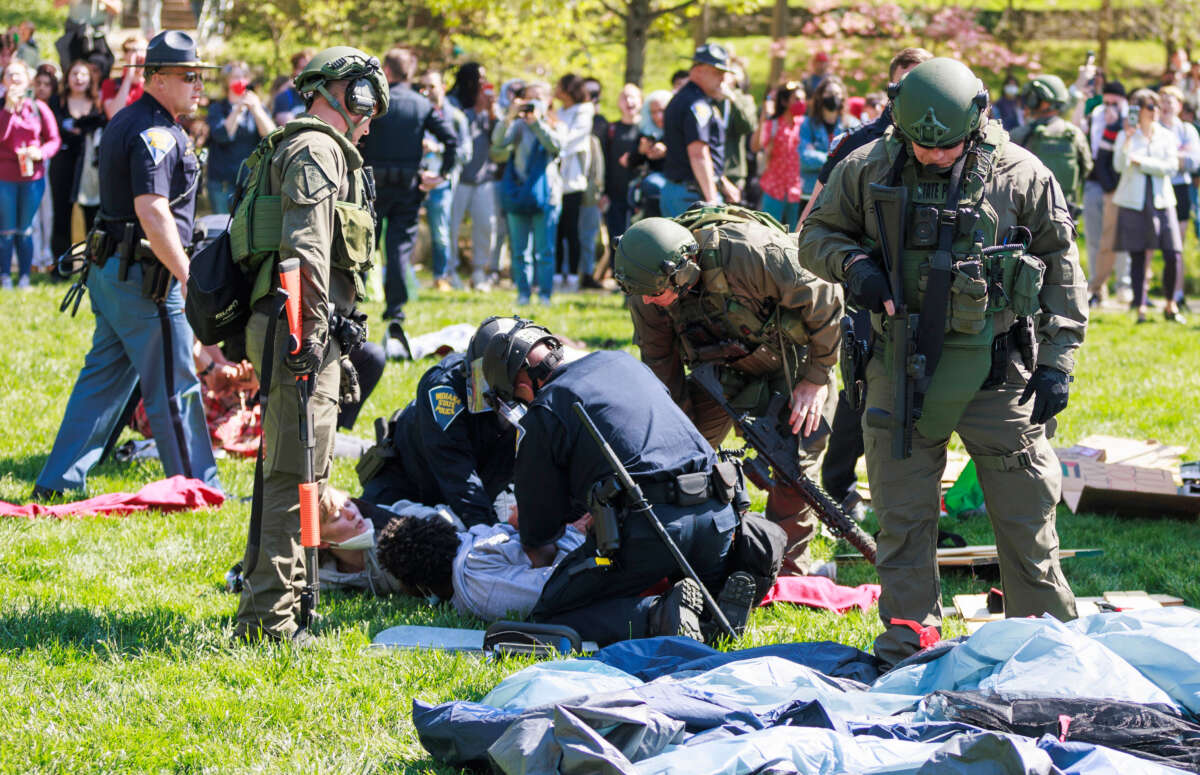
UN human rights officials are expressing alarm over the recent wave of violent repression by university administrators against the student protests for Palestinian liberation that have swept the U.S., raising concerns that protesters’ rights to free speech and assembly are being violated.
A statement on Tuesday said that UN High Commissioner for Human Rights Volker Türk, the UN’s top human rights officer, is “troubled” over a “series of heavy-handed steps taken to disperse and dismantle protests” across U.S. college campuses.
“Freedom of expression and the right to peaceful assembly are fundamental to society — particularly when there is sharp disagreement on major issues, as there are in relation to the conflict in the Occupied Palestinian Territory and Israel,” said Türk. “I am concerned that some of the law enforcement actions across a series of universities appear disproportionate in their impacts.”
Over the last two weeks, over 1,200 protesters have been arrested across dozens of campuses after university administrators enlisted police to crack down on encampments and other demonstrations set up by students calling for their schools to divest from Israel and supporting corporations, among other demands. At some universities, administrators even allowed law enforcement officers to aim sniper rifles at their students for their peaceful acts of protest.
UN Special Rapporteur on Human Rights Defenders Mary Lawlor said that universities’ crackdowns are an obvious violation of students’ rights.
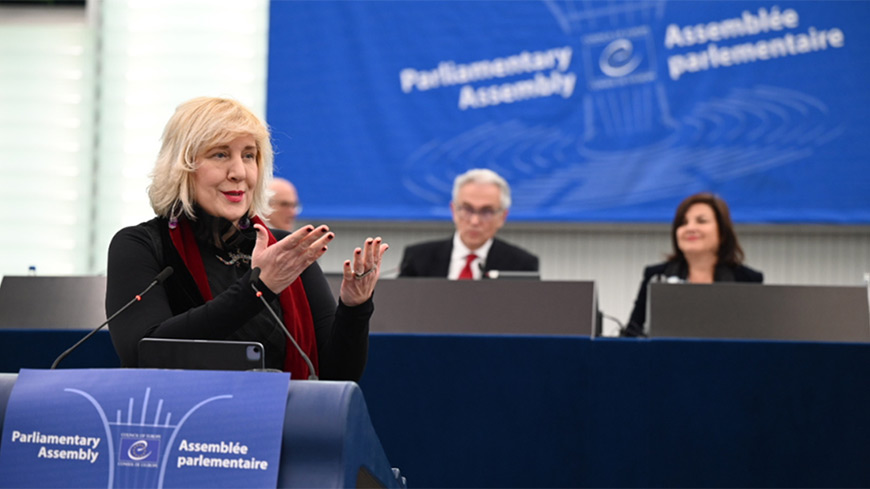
On 30 March 2024 Dunja Mijatović ended her term as Council of Europe Commissioner for Human Rights and the next day the new Commissioner, Michael O’Flaherty, started his work.
“… Over the past six years, I have witnessed the extraordinary commitment to human rights displayed by partners of my Office, and by ordinary citizens in the face of an ever-changing landscape of politics, technology and social issues. At the same time, I have seen the harm that the current challenges to human rights can do to our societies. The escalation of conflicts, most notably Russia’s full-scale invasion of Ukraine, has underlined the fragility of peace and the dire consequences of disregarding international law and human rights…
Throughout my tenure, the dedication of NGOs, journalists, activists and other partners has been a constant source of inspiration. Their unwavering commitment to the defence of human rights, often at great personal risk, has reinforced my belief in the power of collective action and the enduring relevance of our principles.
As my term ends, I am encouraged by the progress that has been made in the field of human rights, but mindful of the work that remains to be done. It is important to continue engaging on issues related to the environment and artificial intelligence…Finally, there is a crucial need to engage with and to enable the full participation of young people and their organisations in all future discussions. Governments should empower young people to make choices and meaningfully influence their future.
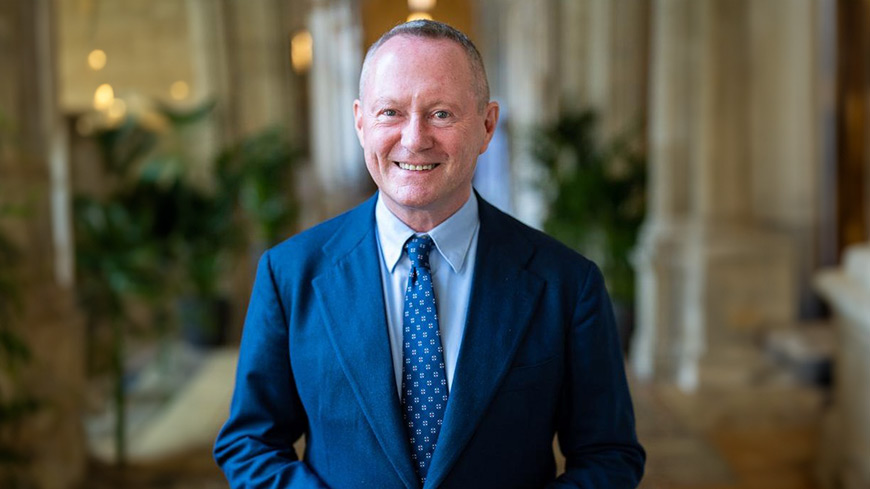
The Council of Europe’s new Commissioner for Human Rights, Michael O’Flaherty, begins his six-year mandate today with a pledge to put human rights at the heart of member states’ agendas.
“I intend to inject a human rights perspective into the greatest challenges facing our societies,” said O’Flaherty, noting that he intends to carry out his first visit as Commissioner to Ukraine. “I can think of nothing more urgent than addressing the human rights consequences of Russia’s full-scale invasion of Ukraine, which has caused terrible human suffering and destruction“.
The Commissioner also identified other areas where stronger human rights protection is urgently needed, including the climate crisis, the governance of artificial intelligence, freedom of expression, migration and the rise of hate speech, including antisemitism and anti-Muslim attacks.
A significant part of the Commissioner’s agenda will also be devoted to bringing the struggles of marginalised people and victims of discrimination to the forefront of human rights discussions. “In particular, Roma and Travellers face an intolerable situation that requires greater attention,” said the Commissioner.
Finally, the Commissioner highlighted his intention to focus on youth, socio-economic rights and human rights defenders, as well as to use his mandate to contribute to the implementation of judgments of the European Court of Human Rights.
” I step into this new role with a sense of great responsibility, as well as deep appreciation and respect for the work of my predecessor, Dunja Mijatović. Human rights affect every aspect of our lives. At a time when they face multiple challenges, we must recommit ourselves to weaving them into the fabric of our societies. This will require a concerted effort and I intend to play my part to the best of my ability by accompanying and standing up for rights holders across the Member States.”
Michelle Langrand for Geneva Solutions of 20 March 2024 has an exclusive report on the liquidity crunch and its effect on the UN human rights branch. Here her report in full:
UN secretary general António Guterres and UN human rights high commissioner Volker Türk at the opening of the Human Rights Council 55th session in Geneva, 26 February 2024. (UN Photo/Elma Okic)
As the United Nations faces its worst liquidity crisis in recent history, experts, staff and observers worry about the ramifications on human rights work. Correspondence seen by Geneva Solutions reveals concerns at the highest levels of the UN human rights branch in Geneva as they are forced to scale back their operations.
A patchwork of cost-saving measures taken over the winter holidays at the Palais des Nations in Geneva, from keeping the heat down and closing the premises for two weeks, revealed how serious the UN’s cash troubles were after states failed to fully pay their bills in 2023. The new year didn’t brighten prospects either. In January, UN secretary general Antonio Guterres in New York announced that “aggressive cash conservation measures” would be taken across the organisation to avoid running out of cash by August as year-end arrears reached a record $859 million.
It couldn’t have come at a worse time for a cash-strapped UN Office of the High Commissioner for Human Rights (OHCHR) as worsening human rights crises worldwide add to its workload. The Geneva-based office acts as a secretariat for dozens of independent experts, investigative bodies and human rights committees that rely for the most part on the UN’s regular budget and few voluntary contributions from states. Between vacancies and travel restrictions, both insiders and outsiders worry that planned cuts could severely impair the UN’s crucial human rights work.
Understaffed and overwhelmed
On 12 February, just as the UN’s Geneva headquarters prepared for one of its busiest months hosting the Human Rights Council’s first session of the year, bad news came from New York. Countries had only paid one-third of the UN’s $3.59bn regular budget for 2024, and instructions from the higher-ups were that the hiring freeze imposed in July 2023 would be extended throughout 2024 across UN operations. The organisation said that $350 million would need to be shaved off through spending restrictions on travel, conference services and others.
Human rights bodies, where vacancies had been piling up in the last months, would have to continue to run with reduced staff. In a letter from 23 December, UN high commissioner for human rights Volker Türk had already warned Council president Omar Zniber that 63 posts in over 10 investigative mandates were waiting to be filled while recruitments had been placed on hold. Currently, there are active investigations on serious human rights abuses in Ukraine, Iran, Syria, South Sudan and Nicaragua among others.
“While no compromise has been made in terms of methodology, some of the investigative bodies have had to narrow the scope of both their investigations and their upcoming reports,” the letter reads.
The fact-finding mission on Sudan was one of the bodies immediately affected. Created in October to collect evidence on atrocities committed during the last year of bloody conflict in which thousands of civilians have been killed and millions displaced, the probe body has struggled to begin work. The independent experts composing it, who aren’t paid, have been appointed since December, but as of late February, the Human Rights Office hadn’t been able to hire a support team due to insufficient cash flow, according to a Human Rights Council spokesperson. The experts, who have been mandated for one year, are due to present their findings in September, with observers wondering whether the western-led proposal will garner the political backing it needs to be renewed.
That isn’t the only initiative struggling to get off the ground. “We have met with some new mandates, and we realised that they barely have a team, if any, to support them,” said one NGO member who collaborates with the human rights mechanisms and asked to remain anonymous. Observers say most investigative bodies, even older ones, are impacted at some level.
Kaoru Okoizumi, deputy head of the Independent Investigative Mechanism on Myanmar (IIMM) – the largest human rights probe team – said six out of 57 staff positions funded through the UN’s regular budget were vacant, significantly affecting their work. The IIMM, which also relies on a trust fund made up of voluntary donations and doesn’t depend on the OHCHR’s budget, is coping better than most.
Expert committees that oversee states’ compliance with international human rights law, such as on children’s rights and on torture, are also stretched thin. One staffer said they were required to take on more work than normally expected, for example, having to conduct research and compile information about several countries at the same time for one session. “It’s just too much!” they said, adding that their team was short of more than 10 people.
Another worker from the OHCHR’s special procedures branch, who said was covering for several vacant spots, conceded that the quality of work is affected in such conditions. “Of course, you won’t work as well after pulling all-nighters,” they said. Türk’s letter to Zniber acknowledges that the secretariat was having trouble supporting some 60 special procedures, which are UN-backed independent experts or groups of experts assigned to report to the council on a specific theme or country.
While the problem of understaffing isn’t new, and many also point to cumbersome months-long recruitment processes that are often incompatible with brief mandates, the situation has worsened. To compensate for the hiring freeze, the UN has also increasingly resorted to temporary contracts that last for a few months and can be exceptionally renewed for up to two years. The two workers, who have living on contract to contract for more than a year, said that there is fear that temporary staff may be among the first to go, along with consultants. “In the food chain of contracts, we’re at the bottom,” one of them said.
A slim year for the Human Rights Council
The UN’s human rights branch, which receives as little as four per cent of the UN’s total budget – around $142 million – just enough to cover one third of its activities, has been scrambling to cut back on spending. On Friday, in another letter seen by Geneva Solutions, Türk informed Zniber that his office would be forced to axe certain activities this year.
OHCHR spokesperson Marta Hurtado confirmed the information to Geneva Solutions by writing: “The office has developed an internal contingency plan, which provides for adjustment pending the complete availability of regular budget resources become available.”
Among the measures it proposes is postponing some activities to 2025 altogether while as many consultations and meetings as possible would be moved online without interpretation, according to Hurtado, since the UN in New York hasn’t authorised it for virtual meetings. For those that will be held in person, resources to fly in experts and civil society will also be reduced.
The UN’s recent decision that it would no longer provide online services for meetings has drawn outcry from rights campaigners who argue it curtails the possibility of civil society groups and states with little resources to participate. While the move has been attributed to matters of rules, observers can’t help but wonder if it isn’t, in the end, about the money. Echoing the concerns in the letter, Türks described the impact of these measures on participation from experts and other stakeholders as “deeply regrettable”.
Another issue raised by the UN rights chief is the difficulty that his office has been facing in providing technical assistance to national authorities. He gave the example of the Marshall Islands, which requested help in 2022 to assess the human rights impact of US nuclear testing in its territory in the 1940s and 50s. A source said that although a first visit finally took place this year, work has been delayed.
Marc Limon, director of the human rights think tank Universal Rights Group, remarked that work by the Council to help states improve their rights record through capacity-building support was unfortunately “almost inexistent” and regretted that resources couldn’t be spared for what he calls the “hard end of human rights diplomacy”. “While UN investigations must be protected, there is little threat to key commissions of inquiry due to the huge budgets allocated to them in the first place,” he said. Most probe bodies have between 17 to 27 staff while special procedures usually have one or two assistants.
The Moroccan ambassador forwarded Türk’s letter to fellow states on Monday and said a draft decision regarding the measures would be tabled for the council to consider at the end of the session at the beginning of April.
Human rights credibility at stake
One that has raised eyebrows but isn’t explicitly mentioned by the UN rights chief is limiting country visits by UN experts to one visit instead of two. Hurtado acknowledged that special procedures and other expert mechanisms, including probe bodies, would see their country visits “reduced” while not commenting on the number of authorised visits.
One UN expert, speaking under the condition of anonymity, voiced concern over the restriction. “Country visits are extremely important because they give us a real intimate understanding of a place and the state gets direct feedback on what they’re doing well and what they can do to improve, while also energising civil society,” they said, point out that experts were already barely able to conduct visits during the Covid-19 pandemic.
Limon commented that while it was a wise choice to cut back on some of the “superfluous” debates and activities, reducing special rapporteur trips to countries to one per year, an idea that he said has been floated around before, showed the office “had its priorities wrong”.
Travel restrictions could also have significant implications for criminal cases. Okoizumi said her Myanmar team only had 65 per cent of its usual travel budget, which is key for the Geneva-based group to reach victims and witnesses. “We do our witness interviews in person because we think it’s important in a criminal investigation to make sure that interviews are being conducted in a way that preserves the integrity of the testimony,” she said.
The body, set up in 2018 by the Human Rights Council, is currently working to support a case brought by The Gambia against Myanmar for violating the Genocide Convention at the International Court of Justice, as well as investigations on crimes against the Rohingya at the International Criminal Court and Argentina.
“These are very concrete proceedings and our ability to support them will be impacted by the number of interviews that we’re able to conduct or the analysis that we’re able to produce and share with these jurisdictions,” Okoizumi said, noting that the ICJ case is particularly time-sensitive as both parties were expected to make submissions this year.
The international lawyer said this has meant shifting resources to meet shorter-term deadlines at the risk of putting aside other objectives. “The whole point of having an investigative mechanism is to make sure that we can collect the evidence very soon after a crime happens, even if there isn’t an investigation or prosecution until many years or even decades later. So, shifting our resources in that way, overall will have a negative impact,” she explained.
Top experts within the human rights branch have also rang alarm bells about the wider repercussions of the funding crisis. In a letter seen by Geneva Solutions addressed to the president of the General Assembly, Dennis Francis, dated 23 February, 10 chairs of human rights committees warned that the liquidity crisis “severely threatens the credibility and efficiency of the United Nations human rights system”.
The experts said the treaty bodies were “being denied even the minimum staff and operational resources required to deliver their critical mandates to advance human rights” at a time of “such a severe existential crisis of multilateralism and of non compliance with international law”.
Referring to some of the measures being considered, the signatories also argue that suspending sessions “for the first time in their over six decades of history for financial reasons, together with visits to prevent torture and other human rights violations” would lead to “concrete and irreversible” harm.
“When the collective security system has failed to honour the ‘never again’ pledge of 1945, the least to do is to strengthen human rights monitoring mechanisms, so that human rights violations are documented, even when justice seems extremely challenging to serve. We note with deep regret that the opposite is being done,” the custodians of human rights law wrote.
At the 55th session of the Human Rights Council, Volker Türk – UN High Commissioner for Human Rights – made his overview statement on 4 march 2024. Here some highlights:
….Around the world, 55 conflicts are flaring. Widespread violations of international humanitarian and human rights law are generating devastating impact on millions of civilians. Displacement and humanitarian crises have already reached an unprecedented scale. And all of these conflicts have regional and global impact.
Overlapping emergencies make the spectre of spillover conflict very real. The war in Gaza has explosive impact across the Middle East. Conflicts in other regions – including in the Horn of Africa, Sudan and the Sahel – could also escalate sharply. Increasing militarisation on the Korean Peninsula raises threat levels. The deteriorating security c risis in the eastern provinces of the Democratic Republic of the Congo, which the Council will address on 3 April, is alarming. In the Red Sea, as well as the Black Sea, attacks are creating shock-waves for the global transport of goods, adding to the economic pain inflicted on less developed countries…..
In Latin America and the Caribbean, the prevalence and violence of gangs and organized crime have severe impact on the lives and rights of millions of people, including in Ecuador, Haiti, Honduras and Mexico. Punitive and militarized responses have in some cases led to grave human rights violations, potentially further fuelling violence. Only policies grounded in human rights can provide effective and sustainable solutions. Corruption, impunity, poor governance and the structural root causes of violence – such as discrimination and failure to uphold economic, social and cultural rights – must be tackled, with the full participation of civil society and affected communities. International cooperation needs to be enhanced, to address the illegal arms trade and ensure accountability for transnational crimes…
Fear is fragmenting societies across the world, unleashing fury and hatred. They are also fuelled by a winner-take-all attitude that frames elections as the spoils of conquest.
..Good governance requires constant oversight and accountability, via independent checks and balances to the exercise of power, meaning that it is strongly underpinned by the rule of law, including independent justice systems. Fundamental freedoms – the rights to freedom of opinion, expression, peaceful assembly and association – are also essential.
…
I am profoundly concerned by the prospect of intense disinformation campaigns in the context of elections, fuelled by generative artificial intelligence. There is an acute need for robust regulatory frameworks to ensure responsible use of generative AI, and my Office is doing its utmost to advance them…
Autocracy and military coups are the negation of democracy. Every election – even an imperfect one – constitutes an effort to at least formally acknowledge the universal aspiratio n to democracy However, in a so-called ‘illiberal democracy’ – or, as the Prime Minister of Hungary referred to his country, an ‘illiberal State’ – the formal structure of election is maintained, civic freedoms are restricted, the media’s scrutiny of governance is eroded by installing government control over key media outlets, and independent oversight and justice institutions are deeply undermined, concentrating power in the executive branch.
It is important to recognise that in many cases, this year’s electoral processes will ensure a smooth transfer of power, free of hatred; and that the governance structures that result will broadly achieve their main function of representing the many voices of the people, and advancing their rights.
But in other cases, I have serious concerns about the human rights context in which several elections are taking place.
In the Russian Federation, the authorities have further intensified their repression of dissenting voices prior to this month’s Presidential election. Several candidates have been prevented from running, due to alleged administrative irregularities. The death in prison of opposition leader Alexei Navalny adds to my serious concerns about his persecution. Since the onset of Russia’s war on Ukraine, t housands of politicians, journalists, human rights defenders, lawyers and people who have simply spoken their minds on social media have faced administrative and criminal charges, and this trend appears to have worsened in recent months, with many cultural figures targeted. Last month, a new bill passed into law that further punishes people convicted of distributing information deemed to be false about Russia’s armed forces, as well as people who seek to implement decisions by international organizations that the Russian Federation “does not take part in”. I urge a swift and comprehensive review of all cases of deprivation of liberty that result from the exercise of fundamental freedoms; as well as an immediate end to the repression of independent voices and the legal professionals who represent them. The future of the country depends on an open space.
Iran’s legislative election three days ago was Iranians’ first opportunity to vote since the “Women, Life, Freedom” protests of 2022 and 2023. It took place in a country that has been deeply divided by the Government’s repression of the rights of women and girls. People who participated in the protests have been persecuted, imprisoned on long sentences and in some cases, put to death. The draft Bill on “Supporting the Family by Promoting the Culture of Chastity and Hijab”, if adopted, would impose severe punishments for acts that should not be deemed criminal in any country. In my ongoing engagement with the Iranian authorities, I have urged immediate reforms to uphold the rights of all Iranians, including the right of women to make their own choices, and an immediate moratorium on the death penalty….
In the United States of America, in this electoral year, it is particularly important for authorities at all levels to implement recent recommendations by the UN Human Rights Committee to ensure that suffrage is non-discriminatory, equal and universal. A 2021 Presidential executive order acknowledges that disproportionate and discriminatory policies and other obstacles have restricted the right to vote for people of African descent, and emphasises the need to overturn them. Yet according to the Brennan Center for Justice , at least 14 states have passed laws in 2023 that have the effect of making voting more difficult. In a context of intense political polarisation, it is important to emphasise equal rights, and the equal value of every citizen’s vote…
In Afghanistan, I deplore continuing and systematic violations of human rights, particularly the comprehensive violations of the rights of women and girls, which exclude them from every aspect of public life, including secondary and tertiary education; employment; and movement. Advancing the rights of women and girls must be the highest priority for all who work on and in Afghanistan. The civic freedoms and media freedoms of all Afghans are profoundly curtailed, with many women human rights defenders and journalists suffering arbitrary detentions. The resumption of public executions is horrific. I remain concerned about forced expulsion of Afghans from neighbouring countries, particularly for those who face a risk of persecution, torture or other irreparable harm in Afghanistan.
In the United Arab Emirates, another mass trial is underway based on counter-terrorism legislation that contravenes human rights law. In December, new charges were brought against 84 people, including human rights defenders, journalists and others who were already in prison. Several were nearing the end of their sentence or have been arbitrarily held in detention after completion of their sentence. Their joint prosecution constitutes the second-largest mass trial in the UAE’s history, after the so-called “UAE94” case in 2021, and includes many of the same defendants. I remain concerned about broader patterns of suppression of dissent and the civic space in the country, and I urge the Government to review domestic laws in line with international human rights recommendations.
Dialogue between China and my Office continues in areas such as counterterrorism policies, gender equality, minority protection, civic space, and economic, social and cultural rights. As we move forward, it is important that this dialogue yield concrete results, notably in respect of the policy areas raised during the Universal Periodic Review. I recognise China’s advances in alleviating poverty and advancing development, and I have urged that these advances be accompanied by reforms to align relevant laws and policies with international human rights standards. During the UPR, China announced plans to adopt 30 new measures for human rights protection, including amendments to the Criminal Law, and revisions of the Criminal Procedure Law. My Office looks forward to engaging with China on this; I particularly encourage revision of the vague offence of “picking quarrels and making trouble” in Article 293 of the Criminal Law, and I urge the release of human rights defenders, lawyers and others detained under such legislation. I also call on the Government to implement the recommendations made by my Office and other human rights bodies in relation to laws, policies and practises that violate fundamental rights, including in the Xinjiang and Tibet regions. I am engaging with the Hong Kong authorities on continuing concerns about national security laws…
In many countries, including in Europe and North America, I am concerned by the apparently growing influence of so-called “great replacement” conspiracy theories, based on the false notion that Jews, Muslims, non-white people and migrants seek to “replace” or suppress countries’ cultures and peoples. These delusional and deeply racist ideas have directly influenced many perpetrators of violence. Together with the so called “war on woke,” which is really a war on inclusion, these ideas aim to exclude racial minorities – particularly women from racial minorities – and LGBTQ+ people from full equality. Multiculturalism is not a threat: it is the history of humanity, and deeply beneficial to us all.
Peace, like development, is built and nourished through rights. It is by upholding and advancing the full spectrum of human rights, including the right to development and the right to a clean, healthy and sustainable environment, that States can craft solutions that are durable – because they respond to the universal truth of our equality and the inextinguishable desire for freedom and justice.
History is a record of humanity’s capacity to surmount the worst challenges. Among the greatest achievements of humanity over the past 75 years has been the recognition that addressing human rights in every country– all human rights; it is not an à la carte menu – is a matter of international concern.
On 13 February 2024, UN High Commissioner for Human Rights Volker Türk urged EU leaders to approve a ground-breaking agreement on business and human rights, amid reports that support for the measure may now be in question in the European Council.
“The adoption of the Corporate Sustainability Due Diligence Directive would show historic leadership by the EU at a time when global leadership in support of human rights is needed more than ever,” said Türk.
“For the past four years, work on the Directive has seen unprecedented involvement by many stakeholders, including business and my Office, as well as political commitment from EU institutions and Member States to push it forward. This process has truly raised hopes of ensuring more effective management of human rights risks by large companies.”
“For the Directive to fail now would be a massive blow,” he said.
The EU-wide Directive would require certain large EU and non-EU companies to take reasonable steps to identify and address adverse human rights risks.
“Human rights due diligence is feasible and supports sustainable business processes that deliver long-term value to society at large. And for those reasons it also makes eminent business sense,” said Türk.
Many of the companies that would fall within the Directive’s scope have backed its adoption. It would create a level playing field by harmonizing disparate rules across jurisdictions.
“The agreement on the Directive is reported to be substantially aligned with the UN Guiding Principles on Business and Human Rights and other relevant international human rights standards. I am convinced the Directive can make a positive contribution to respect for human rights, and its adoption would send an important message of solidarity to those at risk from business activities,” the UN Human Rights Chief said.
A vote on the Directive is possibly due later this week.
More than 10 years ago, in May 2013, Damian Gallardo from Oaxaca, Mexico, was arbitrarily detained, disappeared, and tortured. He was eventually released but lodged a complaint with the UN Committee against Torture, who reviewed Gallardo’s case and adopted an unprecedented decision stating that, in fact, Gallardo had been tortured.
In a decision published on 14 December 2021 the UN anti-torture body found that Damián Gallardo Martínez, a teacher and campaigner for education and indigenous people’s rights, was a victim of torture in Mexico, in violation of Convention against Torture and Other Cruel, Inhuman or Degrading Treatment or Punishment.
The Committee also requested that Mexico provide Gallardo Martínez with full compensation, make a public apology to the complainants, and widely disseminate the Committee’s decision through a daily newspaper with a large circulation in the state of Oaxaca.
On 18 January 2024, UN Human Rights published the above video clip.
On 4 January 2024 ISHR published a massive, complete compilation of all recommendations issued by UN human rights bodies – including the UN Special Rapporteurs and Working Groups, the UN Treaty Bodies, and the Office of the High Commissioner for Human Rights – on the human rights situation in China since 2018. Recommendations are sorted by topic and community affected.
This repository compiles all recommendations issued by UN human rights bodies to the Government of the People’s Republic of China since 2018, the year of its third Universal Periodic Review (UPR).
This includes recommendations in: Concluding Observations issued by UN Treaty Bodies following reviews of China in 2022 (Committee on the Rights of Persons with Disabilities (CRPD)) and 2023 (Committee on Economic, Social and Cultural Rights (CESCR), Committee on the Elimination of Discrimination Against Women (CEDAW)), as well as in Decision 1 (108) on the Xinjiang Uyghur Autonomous Region (XUAR) by the Committee on the Elimination of Racial Discrimination (CERD) under its Early Warning and Urgent Action Procedure; communications and press releases by UN Special Procedures (Special Rapporteurs and Working Groups), including Opinions by the Working Group on Arbitrary Detention; press releases by the Office of the High Commissioner for Human Rights (OHCHR) as well as the OHCHR’s assessment of human rights in the XUAR.
These UN bodies are composed of independent, impartial experts, from all geographic regions.
The recommendations are categorised by key topic or community affected. Yet, this repository does not cover all topics, nor does it include all recommendations issued by the above-mentioned UN bodies.
This repository maintains the original language of the recommendation issued by a given UN body, with minor formatting changes. For the appropriate links please go to the original document.
This repository does not include recommendations to the Governments of Hong Kong and of Macao. Please click here for the repository of recommendations on Hong Kong, and here for the repository of recommendations on Macao.
The topics include very useful ones such as:
Chinese human rights defenders, lawyers and civil society organisations in mainland China
Uyghur region
Tibet
National security legal framework, judicial independence and due process
Surveillance, censorship and free expression
Reprisals, meaningful cooperation with the UN, and unrestricted access to the country for UN experts
Transnational repression
LGBTI rights
Business and human rights, including business activities overseas
Meet the winners of the Kids 4 Human Rights International Art Contest, an initiative of the Queen Sofia Children’s Art Museum of the Gabarrón Foundation, in collaboration with UN Human Rights, to raise awareness of the importance of the Universal Declaration of Human Rights.
The occasion of UDHR@75 has let to many articles on its relevance to today’s world, which sees such a ‘heightened risk’ of mass atrocities due to global inaction and a diminished UN ‘responsibility to protect’ principle and ambition to prevent genocides, as stated by Julian Borger in the Guardian of 8 December 2023. These warnings come on the 75th anniversaries this weekend of the Genocide Convention and the Universal Declaration of Human Rights, both signed in the aftermath of the Holocaust in the hope that the world would act in concert to prevent a repeat of such mass slaughter.
Borger describes also in some detail how the USA’s ambition to stop atrocity crimes had “diminished in terms of its saliency within the administration as a guiding principle”
Two pieces in Geneva Solutions look at the UDHR closer:
One is by Pip Cook: “Universal Declaration of Human Rights: fit for the 21st century?” and the other by Marc Limon “After 75 years, what is the UN human rights system’s theory of change?”
The first starts with a good overview of the birth of the UDHR and then states: …”With the world facing human rights challenges on so many fronts, some might be tempted to dismiss the declaration as idealistic or unrealistic – a non-legally binding document that nations may claim to adhere to on the international stage but disregard entirely depending on their own political agendas. However, defenders of the UDHR argue that to judge it on how often it is violated is to miss its point altogether.
“I’m not sure how much the document can be judged on whether it’s always adhered to or not,” said Felix Kirchmeier, executive director of the Geneva Human Rights Platform. “That question comes up in human rights all the time, but it comes up much less in other domains. Nobody would ask whether health policy was still valuable now that we have the pandemic.”
“I think the declaration might be even more needed now than ever because it allows us to really see these core values and the universal approach to them,” he added. “The proof of its relevance is the fact that despite all violations of human rights and despite all the attacks to the universal validity of human rights, the document itself is not being disputed in any serious way,” he continued. “So I think that’s also proof of its strength.”
….Ultimately, perhaps the greatest value of the declaration is that it gave universal human rights a language. Known as the most translated document in the world, available in 500 different languages, it provides a rhetoric that people from all corners of the world still use to this day..
Pip closes with the words of Eleanor Roosevelt in her speech to the UN to mark the tenth anniversary of the declaration in 1958. Her words captured the reason why human rights are for every one of us, in all parts of our daily lives, as well as the world as a whole. “Where, after all, do universal human rights begin?” she began. “In small places, close to home – so close and so small that they cannot be seen on any maps of the world. Yet they are the world of the individual person; the neighbourhood he lives in; the school or college he attends; the factory, farm or office where he works.
The second piece by Limon – executive director of the Universal Rights Group - asks: …”Yet two equally – if not more – crucial questions linger: what was the Universal Declaration’s theory of change, meaning how did its authors intend for it to improve the situation of human rights for all “the Peoples” of the UN, and has the UN succeeded in translating the universal norms into local reality?”
Different actors have developed markedly different theories of what the UN human rights system is, what it is supposed to do, and how it is supposed to improve the situation of human rights at the national level.
For some, the system is mainly for the benefit of developing countries, and its principal utility is to respond to serious human rights violations and hold abusing states accountable. Its main purpose, in other words, is to protect human rights.
For others, it is a universal system in which all states should be treated equally. It is there to engage with them through cooperation and dialogue to gradually improve human rights laws, policies and practices over time, including through the delivery of international capacity-building support. The system’s main objective here is, in other words, to promote human rights.
For some, human rights norms should be in a constant state of progressive development, even in sensitive issues such as sexual orientation and gender identity, or sexual and reproductive health and rights, and should be imposed by the UN. Where states resist, it is because they are not committed to human rights and should be called out and forced to catch up.
For others, the UN is there to provide a platform where states can reach a common understanding of universal human rights norms. This is what happened in the case of the UN’s recognition of the right to a healthy environment. After that, it can provide capacity-building and technical support to help those countries making insufficient progress…
So, who is right? There is some truth to both views. For example, the mandate of the Human Rights Council explicitly includes both the protection and promotion dimensions of human rights. And therein lies the answer – the international human rights system, built from the foundations of the Universal Declaration, embodies different – yet complementary – theories of change.
The simple truth is that human rights change cannot be imposed from the outside, by certain states or even by the international community as a whole, without the consent of the state concerned. Bottom-up demands for change, for example, led by local civil society, can and frequently do succeed in securing improvements in the enjoyment of human rights, especially in democracies.
However, in many countries, the power imbalance between civil society and governments means that NGOs and local communities, acting alone, can be easily ignored or even suppressed.
Over a decade of the Universal Rights Group’s research shows that a winning approach, instead, is to combine top-down pressure for improvement with bottom-up calls for change within a framework that is accepted by the state or government and of which it feels a sense of ownership…
While the international human rights system, therefore, encapsulates different and complementary theories of change (think “carrot and stick”), for a vast majority of states, the vast majority of the time, the former theory of change is the most relevant.
As we celebrate the 75th anniversary of the Universal Declaration of Human Rights, there are increasing signs, from states (both developed and developing), civil society, the secretary general, the high commissioner, UN resident coordinators and others, of a shift towards a common understanding of this predominant theory of change. Building on that shared understanding and thereby effectively translating universal rights into local reality would truly be the best way to mark the adoption of this historic document.