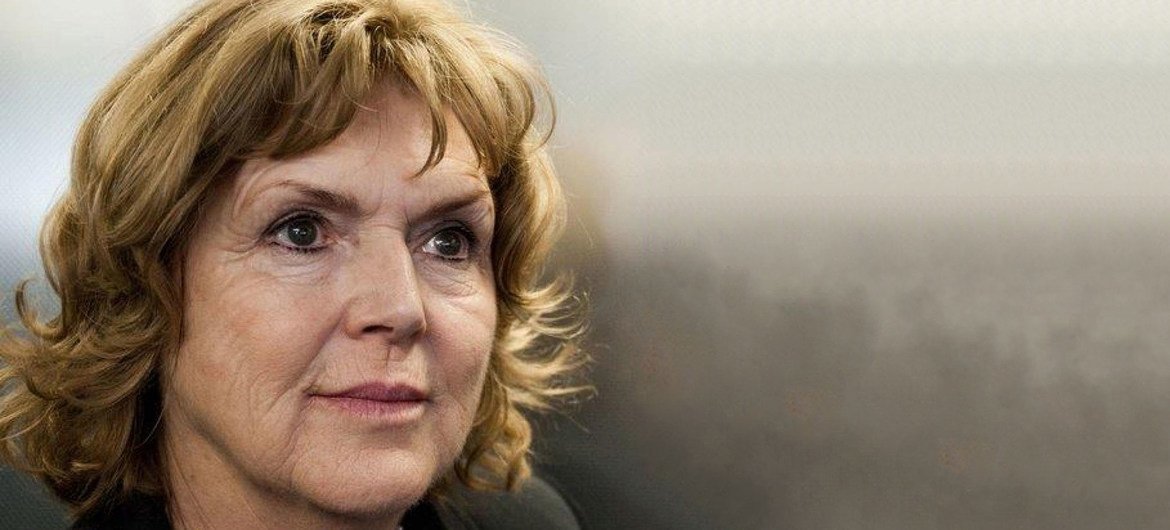
Mary Lawlor, UN Special Rapporteur on the situation of human rights defenders.
An independent UN human rights expert has called for India to release an activist imprisoned since 2017, expressing concern over his persistent detention and deteriorating health. GN Saibaba, a former English professor at Delhi University, was arrested in 2014 and accused of links to banned Maoist groups, according to media reports. See: https://humanrightsdefenders.blog/2023/07/07/g-n-saibaba-in-india-continues-from-his-cell/
He was sentenced to life imprisonment three years later for multiple offences under the country’s Unlawful Activities Prevention Act.
“GN Saibaba is a long-standing defender of the rights of minorities in India, including the Dalit and Adivasi people,” said Mary Lawlor, UN Special Rapporteur on the situation of human rights defenders on 21 August “His continued detention is shameful. It bears all the hallmarks of a State seeking to silence a critical voice,” she added.
UN human rights experts have repeatedly raised grave concerns about the prosecution of Mr. Saibaba, who has suffered from a spinal disorder and polio since childhood and uses a wheelchair.
His detention was declared arbitrary by the UN Working Group on Arbitrary Detention in an opinion issued in 2021.
Three UN human rights experts have issued a joint statement on Aug 10, asking the Chinese government to provide information about nine Tibetans imprisoned for their peaceful efforts to protect Tibet’s fragile environment.
The experts—the Special Rapporteur on the situation of human rights defenders (Ms Mary Lawlor); the Special Rapporteur on freedom of assembly and association (Mr Clément Nyaletsossi Voul); and the Special Rapporteur on human rights obligations relating to the enjoyment of a safe, clean, healthy and sustainable environment (Mr David Boyd)—have asked Beijing to provide details about the reason for the detention and the health conditions of the nine Tibetans, who were all taken in between 2010 and 2019.
“We urge the Chinese government to provide details on why and where they are being held and their health conditions, provide them with adequate medical care and permit their families access to visit them,” the Special Rapporteurs have said.
The experts have further made it clear that the lack of information shared by Chinese authorities could be interpreted as a “deliberate attempt” to hide the environmental defenders from global attention.
The nine Tibetans, identified in the release as Anya Sengdra, Dorjee Daktal, Kelsang Choklang, Dhongye, Rinchen Namdol, Tsultrim Gonpo, Jangchup Ngodup, Sogru Abhu and Namesy were all detained after they protested illegal mining activities or exposed the poaching of endangered wild lives.
Three of the activists are serving up to 11-years jail sentences. However, China has not made public the jail sentences of the remaining six, namely Dhongye, Rinchen Namdol, Tsultrim Gonpo, Jangchup Ngodup, Sogru Abhu and Namsey. [see also: https://humanrightsdefenders.blog/2022/08/31/enforced-disappearances-in-china/]
The experts have sought to know the extent of access to legal representation the imprisoned Tibetans had, and whether any of them had been provided with medical assistance while in prison.
Since the defenders were sentenced, the right to a clean, healthy and sustainable environment was recognised at the international level by the Human Rights Council and the General Assembly.
“If China is committed to tackle the impacts of climate change, it should refrain from persecuting environmental human rights defenders and release all nine immediately,” the experts have said.
China has declared mining as one of its pillar industries in occupied Tibet, and has also continued to carry out massive environmentally devastating urbanization and infrastructure projects. These have led to increasing persecution and long-term imprisonment of many environment defenders.
In a report published in June 2022, Washington-based advocacy group International Campaign for Tibet had documented 50 known cases of such Tibetans arbitrarily detained, arrested, tried and/or sentenced since 2008. Of the 50 documented cases, the prison sentences imposed on 35 of the individuals are known. The sentences range from one year and nine months to 21 years, with an average sentence length of nine years, said the group Aug 10 while reporting on the UN experts’ statement.
The environmental health of Tibet has major global implications. As the world’s “Third Pole” and Asia’s “water tower,” the Tibetan Plateau holds the largest volume of frozen freshwater outside the polar regions and is the source of Asia’s eight great rivers, ultimately sustaining the livelihoods of up to 1.4 billion people living downstream, the group has pointed out.
Mary Lawlor, UN Special Rapporteur on Human Rights Defenders, shows on her LinkedIn page young human rights defenders who are the ones who will carry the human rights movement into the future, and to who we need to listen now.
👉 e.g. meet Zeinab, a young WHRD from #Kenya who took part in the 2023 Vienna Youth & Children HRD conference:
We welcome the resolution put forward by the OIC to ensure the full implementation of the United Nations database of businesses facilitating Israeli settlements in the Occupied Palestinian Territory as well as the recent publication of the partial update to the database issued by the Office of the High Commissioner for Human Rights on 30 June 2023. The effectiveness and credibility of the HRC and OHCHR has suffered considerably from the chronic under-implementation of the database by this Council. The resolution put forward at the 53rd session represents an important step forward, and it is crucial that future updates are conducted annually, regularly, including both the addition and removal of businesses from the database, as appropriate, to ensure accurate and comprehensive information for all stakeholders involved. We regret that some States failed to vote in favor of the resolution to ensure the full implementation of the database. We believe this failure constitutes a dangerous example of double standards and urge States who abstained or voted against the resolution to begin to approach this issue in line with international human rights standards and their duties as UN member States.
We welcome the fact that the resolution on civil society space addressed the limitations to civil society access and participation in decision-making processes, including at the UN, and called on States to “enable and institutionalize meaningful online participation in hybrid meetings” and to establish “a transparent, fair and gender-responsive accreditation processes”. We welcome that the resolution acknowledges the significant role played by civil society in the promotion and protection of human rights, including with regard to monitoring, documenting and raising awareness about human rights violations and abuses, but we regret that the role of civil society in the prevention of human rights violations, as well as the Council’s prevention mandate, was not highlighted. We also welcome that the resolution emphasizes undue restrictions of civic space, including on funding of civil society actors, nonetheless we express concern that it does not address the misuse of restrictive laws in a more comprehensive manner. We appreciate the call upon States to establish or enhance information-gathering and monitoring mechanisms, including by benefiting from data collected by civil society, for the collection, analysis and reporting of data on threats, attacks or violence against civil society, and the request to the High Commissioner to prepare a report identifying challenges and best practices in regularly assessing civic space trends drawing on the views of civil society, amongst others. This may lead, in the longer term, to the development of a collective methodology including indicators and benchmarks that will permit the effective and systematic monitoring of civic space developments on the international level. We also call on States to prevent the deterioration and closure of civic space and provide support to build civil society resilience.
We welcome the focus of the resolution on human rights of migrants on human rights violations in transit. However, the resolution fails to answer the call from over 220 CSOs for the Council to establish an investigative mechanism on deaths, torture and other grave human rights violations at and around international borders. The focus on monitoring in the intersessional panel requested must be used as a stepping stone towards a response from the Council that matches the severity of the situation. The 53rd session opened as yet another horrific incident unfolded with hundreds presumed dead at sea. The normalisation of deaths caused by border management policies and practices, as well as criminal networks, must end. It is unclear what scale of atrocity will prompt this body to act.
We welcome the adoption of resolutions on child and early forcedmarriage and on violence against women and girls, despite hostile amendments contravening international human rights law, UN technical guidance and WHO Guidelines. The resolution on child and early forcedmarriage on the theme of forced marriage, identifies root causes of forced marriage and calls for practical guidelines to be developed by the OHCHR which can help States work to prevent and eliminate forced marriage, centering the autonomy of women and girls. The resolution on violence against women and girls looks at systemic violence against women and girls in criminal detention systems. The resolution centers the respect, protection and fulfillment of human rights for women and girls in criminal detention, in addition to the Bangkok and Mandela Rules.
We welcome the adoption of the resolution on ‘the impact of arms transfer on human rights‘. Ensuring arms related risks to human rights continues to be part of the Council’s work is critical – both those acquired by civilians and those transferred. We look forward to the stocktaking intersessional workshop on the role of States and the private sector in preventing, addressing and mitigating negative human rights impacts of arms transfers.
We welcome the resolution on new and emerging digital technologies, which reinforces the need to respect, protect and promote human rights throughout the lifecycle of artificial intelligence systems. The resolution mandates an enhanced role of the OHCHR in providing its expertise on the human rights implications of these technologies, including artificial intelligence, to other UN bodies, mechanisms, and processes. We believe that bolstering this existing expertise is vital in ensuring a consistent human rights-first approach to the growing number of UN initiatives relevant to this topic. We also particularly welcome that the resolution stresses that certain applications of artificial intelligence “present an unacceptable risk to human rights”. We now call on States to put this language into practice and ban those technologies that cannot be operated in compliance with international human rights law.
We welcome the adoption of the resolution extending the mandate of the UN Special Rapporteur on Independence of Judges and Lawyers for three years.
We regret the adoption of a new resolution on countering religious hatred constituting incitement to discrimination hostility or violence. While we are dismayed over the rise of hate against persons on the basis of their religion or belief worldwide, this resolution ultimately aims to protect not individuals but rather religious books and symbols that do not enjoy protection under international human rights law. We note that prohibitions on the defamation of religions fuel division and religious intolerance by shutting down interfaith dialogue, and can facilitate human rights violations against religious minorities. While the burning of holy books is considered disrespectful and offensive by many, this is not an act of incitement in and of itself, and such acts should only be challenged through open space for dialogue, debate, and dissent. By evoking language on the defamation of religions, this resolution puts over a decade of progress in jeopardy and risks undermining the consensual, positive action plan to combat religious intolerance achieved in landmark Resolution 16/18 in 2011.
We regret that the resolution on the contribution of development to the enjoyment of human rights weakens the interdependence of human rights and sustainable development. We reiterate deep concerns at the long-term goal of this initiative, in light of the penholder’s remarks during negotiations that the ‘contribution of development to human rights’ is a methodology ‘conflicting with’ human rights-based approaches to development (HRBA) widely-endorsed by the Secretary-General, UN agencies and States. We regret the inclusion of undefined domestic concepts such as ‘better life’, ‘high-quality development’ and ‘people-centred approach to development’, and the failure to consider middle-ground proposals to reallocate resources to meet the OHCHR’s needs for additional capacity on HRBA to development. We lament that the penholder disregarded strong concerns shared across all regions, including from developing countries as reflected in the abstentions of Costa Rica, Chile, Georgia, India and Paraguay, despite commitments to seek consensus and engage constructively.
We welcome the adoption of the resolution on Belarus, which re-mandates the Special Rapporteur for a further year. The Special Rapporteur on Belarus remains critical to civil society, whose options for seeking redress for human rights violations at an international level were further reduced recently when Belarus withdrew from the First Optional Protocol of the ICCPR.
We welcome the adoption of the resolution presented by Colombia seeking to enhance technical cooperation to implement the recommendations made by the Commission for the Clarification of Truth, Coexistence and Non-Repetition in the country – a resolution looking towards a future of peace.. The text highlights the OHCHR report’s findings that violence disproportionately affects, inter alia, human rights defenders, Indigenous Peoples, people of African descent, peasant leaders, women and girls, as well as persons on the basis of their sexual orientation or gender identity. We regret however that Pakistan, on behalf of the OIC except Albania, tabled an amendment to remove the reference to ‘sexual orientation and gender identity’, and in doing so did not respect Colombia’s decision to acknowledge the vulnerability of populations inside its own territory, and meant that a vote was called on the resolution.
This year’s strengthened resolution on Eritrea is in line with civil society’s ask to substantively address violations Eritrean authorities commit at home and abroad and to move beyond merely procedural resolutions that extend the Special Rapporteur’s mandate. We encourage States to go even further next year and to reinstate fully substantive resolutions on Eritrea’s human rights situation, as was the rule before 2019.
We welcome the adoption of the Item 10 resolution on Ukraine, maintaining the Council’s regular dialogues with the High Commissioner on the human rights situation in Ukraine. The work of the OHCHR in Ukraine is critical, complementary to the work of the International Commission of Inquiry on Ukraine, and it is important that HRC is kept abreast of this work.
While we believe the resolution on Rohingya and other minorities in Myanmar is an important step to maintain the situation of Rohingya and other minorities in Myanmar high on the agenda of the Council, we regret that the resolution failed to reflect the reality of the situation on the ground in Myanmar especially following the 1 February 2021 military coup. It calls for immediate commencement of repatriation of Rohingya refugees in direct contrast to conclusions and recommendations of the Special Rapporteur, the High Commissioner as well as Rohingya themselves that conditions for safe, voluntary, dignified and sustainable return for Rohingya do not exist in Myanmar, and that their return under the current circumstances could lead to the recurrence of violence that led to their displacement.
The holding of a Special Session on Sudan on 11 May 2023, does not preclude, but rather should be seen as the start of a process toward, stronger resolutions. Civil society will continue to push for the establishment of an investigative mechanism, which is the least the Council can do for the victims and survivors of the conflict and violations and abuses committed in the country in the last three decades. We highlight the need for a holistic, comprehensive response by the international community. In this regard, the Final Communiqué of the First Meeting of the IGAD Quartet Group of Countries for the Resolution of the Situation in the Republic of Sudan resolved to request that “the East Africa Standby Force (EASF) summit … convene in order to consider the possible deployment of the EASF for the protection of civilians and guarantee humanitarian access” and committed “to work closely with the international community to put in place a robust monitoring and accountability mechanism that will be instrumental in bringing perpetrators to justice.”
We deplore the sustained failure of this Council to respond meaningfully to the human rights situation in China, gradually undermining its credibility and ability to scrutinise countries on the basis of objective, impartial UN documentation, including the OHCHR Xinjiang report. We further regret the failure of the joint UN Office on Genocide Prevention and the Responsibility to Protect to act in line with its mandate on the CERD’s historic referral of the situation in Xinjiang, weakening the UN’s genocide-prevention architecture. The CESCR, the CEDAW, the CERD, the OHCHR, the ILO, as well as Special Procedures through three joint statements, nearly 30 press releases and 100 letters to the government since 2018, have provided more than sufficient evidence pointing to systematic and widespread human rights violations. So long as the Council is not able to take principled action on the basis of objective criteria, other powerful perpetrators will feel empowered to continue committing atrocity crimes, relying on the Council’s silence. We reiterate our pressing call for all Council Members to support the adoption of a resolution establishing a UN mandate to monitor and report on the human rights situation in China.
We regret that the Council failed to adequately respond to the situation in Egypt. Since the joint statement delivered by States in March 2021 at the Council , there has been no significant improvement in the human rights situation in Egypt despite the launching of the national human rights strategy and the national dialogue. The Egyptian government has failed to address, adequately or at all, the repeated serious concerns expressed by several UN Special Procedures over the broad and expansive definition of “terrorism”, which enables the conflation of civil disobedience and peaceful criticism with “terrorism”. The Human Rights Committee raised its concerns “that these laws are used, in combination with restrictive legislation on fundamental freedoms, to silence actual or perceived critics of the Government, including peaceful protesters, lawyers, journalists, political opponents and human rights defenders”. Egyptian and international civil society organisations have been calling on the Council to establish a monitoring and reporting mechanism on the human rights situation in Egypt, applying objective criteria and in light of the Egyptian government’s absolute lack of genuine will to acknowledge, let alone address, the country’s deep-rooted human rights crisis.
We regret the Council’s repeated failure to address the situation in India including to exercise its prevention mandate in relation to the potential escalation of violence against religious minorities and Dalits and Adivasis into mass atrocity crimes with unchecked hate speech and incitement to violence by Hindu nationalist leaders, the most recent illustration of which is the ongoing communal violence in the Northeastern state of Manipur. We remind the Council that this is happening in the context of systematic rollback of fundamental freedoms, the rule of law and independent institutions as well as the ongoing criminalisation, harassment and intimidation of human rights defenders, activists, journalists, and dissidents, and targeting of civil society organisations using national security and counter-terrorism infrastructure. Silence of the Council further enables impunity and makes the international community complicit.
We regret that the Council failed to adequately respond to the situation in Saudi Arabia. In light of the ongoing diplomatic rehabilitation of crown prince and de facto ruler Mohammed bin Salman, the Saudi authorities’ brazen repression continues to intensify, as ALQST has documented. Some notable recent trends include, but are not limited to: the further harsh sentencing of activists for peaceful social media use, such as women activists Salma al-Shehab (27 years), Fatima al-Shawarbi (30 years and six months) and Sukaynah al-Aithan (40 years); the ongoing detention of prisoners of conscience beyond the expiry of their sentences, some of whom continue to be held incommunicado such as human rights defenders Mohammed al-Qahtani and Essa al-Nukheifi, and; regressive developments in relation to the death penalty, including a wave of new death sentences passed and a surge in executions (47 individuals were executed from March-May 2023), raising concerns for those currently on death row, including several young men at risk for crimes they allegedly committed as minors. We call on the Council to respond to the calls of NGOs from around the world to create a monitoring and reporting mechanism on the ever-deteriorating human rights situation in Saudi Arabia.
We regret that the Council failed to exercise its prevention mandate and address the deteriorating human rights situation in Tunisia. Civil society organizations, the High Commissioner and UN Special Procedures all have raised alarm at the escalating pattern of human rights violations and the rapidly worsening situation in Tunisia following President Kais Saied’s power grab on 25 July 2021 leading to the erosion of the rule of law, attacks on the independence of the judiciary, reprisals against independent judges and lawyers and judges associations, a crackdown on peaceful political opposition and abusive use of “counter-terrorism” law in politicized prosecutions, as well as attacks on freedom of expression and threats to freedom of association. A wave of arrests that started in February 2022 continued to include at least 40 members of peaceful political opposition. On 21 February 2023, President Saied made inflammatory comments that triggered a wave of anti-Black violence and persecution – including assaults and summary evictions – against Black African foreign nationals, including migrants, asylum seekers and refugees. Between February and early March 2023, police indiscriminately arrested at least 850 Black African foreign nationals, apparently based on racial profiling. Since July 2, 2023 Tunisian security forces collectively expelled several hundreds of Black African migrants and asylum-seekers to the Tunisian-Libyan borders without any due process, along with reports of beatings and sexual assaults. The High Commissioner has addressed the deteriorating situation in the three latest global updates to the HRC. Special Procedures issued at least 8 communications in less than one year addressing attacks against the independence of the judiciary, as well as attacks against freedom of expression and assembly. Despite the fact that in 2011 Tunisia extended a standing invitation to all UN Special Procedures, and received 16 visits by UN Special Procedures since, Tunisia’s recent postponement of the visit of the Special Rapporteur on the independence of judges and lawyers, is another sign of Tunisia disengaging from international human rights mechanisms and declining levels of cooperation.
Signatories: International Service for Human Rights (ISHR), Cairo Institute for Human Rights Studies, Asian Forum for Human Rights and Development (FORUM-ASIA), International Bar Association’s Human Rights Institute (IBAHRI), International Federation for Human Rights (FIDH), Commonwealth Human Rights Initiative, Center for Reproductive Rights, DefendDefenders (East and Horn of Africa Human Rights Defenders Project), Gulf Centre for Human Rights.
The human rights situation in Belarus is catastrophic, and only getting worse, the United Nations special rapporteur on the country said on 4 July 2023, according to AFP.
Belarusian leader Alexander Lukashenko’s regime in Minsk is deliberately purging civil society of its last dissenting voices, Anais Marin told the U.N. Human Rights Council.
“The situation remains catastrophic. Unfortunately, it keeps on worsening,” said the special rapporteur on the human rights situation in Belarus. “The Belarusian government amended an already restrictive legislation aimed at dismantling civic freedoms, leading to a surge in politically motivated prosecutions and sentencing.
“The lack of accountability for human rights violations fosters a climate of fear among victims and their families,” Marin said. Marin has been in post for five years and reminded the council that she alerted them two years ago to the “totalitarian turn” taken by Minsk, evidenced by the “disregard for human life and dignity” during the crackdown on peaceful protesters in 2020. In her annual report, the French political scientist said more than 1,500 individuals were still being detained on politically motivated charges, with a daily average of 17 arbitrary arrests since 2020.
“I have good reasons to believe that prison conditions are deliberately made harsher for those sentenced on politically motivated grounds, by placing them in punishment cells for petty infraction to prison rules,” said Marin.
“No one has been held accountable in Belarus for arbitrarily detaining tens of thousands of peaceful protesters in 2020, nor for the violence or torture many of them have been subjected to.
“This general impunity, and the climate of fear resulting from ongoing repression, have compelled hundreds of thousands of Belarusians into exile.
Human rights defenders face ongoing persecution, she said, with more than 1,600 “undesirable organizations forcibly dissolved, including all remaining independent trade unions.
“This illustrates a deliberate state policy of purging civic space of its last dissenting elements,” she said.
Marin said independent media outlets had been labelled as “extremist organizations,” while academic freedom is “systematically attacked.”
“Ideological control and disciplinary measures restrict freedom of opinion and their expression,” she said.
Primary and secondary education is also subject to “ideological control,” with children “discouraged from expressing their own opinions” and facing “threats and consequences” for holding dissenting views.
Consequences for speaking out
As for the Russian invasion of Ukraine, individuals face challenges when trying to speak out against it or question Belarus’s role in facilitating the 2022 invasion.
“Anti-war actions led to numerous detentions and arrests, some on charges of planning terrorist attacks — a crime which can now be punished by death,” she said.
Belarus was immediately offered the Human Rights Council floor to respond to Marin’s comments but was not present.
On 11 July HRW underlined this with the case of Belarusian lawyer Yulia Yurhilevich and journalist Pavel Mazheika who ace up to seven years in prison
Human rights defenders around the world are coming together in powerful coalitions and turning to international human rights laws and systems to achieve justice and accountability. And while the threats and challenges remain enormous, we’re starting to win! says ISHR in its latest annual report, outlining key impacts during the last year and its vision for 2023 and the years ahead.
See more achievements by visiting the website! In a recent conversation with Björk, environmental activist Greta Thunberg reflected that hope is not something you feel, but something you do. ‘When people act,’ she said, ‘they create hope’. In 2023, fuelled by indignation and sustained by hope, ISHR’s commitment is to provide solidarity to defenders, contribute to positive momentum and, with your support, achieve even more significant human rights wins!
Patrick Wintour, Diplomatic editor of the Guardian, reported on Monday 20 March 2023 that the he UN rapporteur on Iran, Javaid Rehman, has said the scale and gravity of Iran’s violations of human rights amount to a crime against humanity. Javaid Rehman, a special rapporteur on Iran, told the United Nations Human Rights Council on Monday the country was experiencing the most serious violations in four decades.
Rehman warned Iran was experiencing the most serious violations in four decades. He also claimed the death in police custody of Mahsa Amini, a young Kurdish woman, in September 2022 resulted from beatings by the “morality police”. Iran has said she died from a pre-existing neurological disorder, but Rahman said reliable medical sources pointed to state culpability. He said Iran had refused to conduct an impartial or transparent inquiry into her death, including the allegations that she was beaten up and tortured.
“The scale and gravity of the violations committed by Iranian authorities, especially since the death of Ms Amini, points to the possible commission of international crimes, notably the crimes against humanity of murder, imprisonment, enforced disappearances, torture, rape and sexual violence, and persecution,” he said.
Drawing on evidence, including eyewitness testimony and comments from reliable medical sources, the report said it was clear she had died on 16 September “as a result of beatings by the state “morality police”.
“I would like to stress that her death was not an isolated event but the latest in a long series of extreme violence against women and girls committed by the Iranian authorities,” Rehman said. He said “the responsibility of top senior officials in instigating this violence can … not be ignored.”
“Protesters including children were beaten to death,” Rehman said, adding that “at least 527 people, including 71 children were killed, and hundreds of protesters severely injured.”He also said dozens of protesters “have lost their eyes because of direct shots to the head”, while Iranian doctors had reported that women and girls participating in the demonstrations “were targeted with shotgun fire to their faces, breasts and genitals”.
He said: “Children released have described sexual abuses, threats of rape, floggings, administration of electric shocks and how their heads were maintained underwater, how they were suspended from their arms or from scarves wrapped around their necks.”
The EU says it has now imposed sanctions on 204 individuals and 34 entities in six waves of sanctions. The UK announced it was putting sanctions on five members of the board of directors of the IRGC Co-operative Foundation. This organisation funnels money into the Iranian regime’s repression, the UK Foreign Office said.
He voiced outrage at the executions of at least four people associated with the protests “after arbitrary, summary, and sham trials marred by torture allegations”. He added: “These summary executions are the symbols of a state ready to use all means to instil fear and quash protests,” pointing out that at least 17 other protesters have so far been sentenced to death and more than 100 others face charges that carry the death penalty.
Protection of human rights defenders The mandate of the UN Special Rapporteur on the situation of human rights defenders is to be renewed at the HRC’s March session through a resolution led by Norway.
Reprisals
ISHR remains deeply concerned about reprisals against civil society actors who engage or seek to engage with UN bodies and mechanisms. We call on all States and on the Council to do more to address the situation. General Debate Item 5 is a key opportunity for States to raise concerns about specific cases of reprisals and demand that Governments provide an update on any investigation or action taken toward accountability. An increasing number of States have raised concerns in recent Council sessions about individual cases of reprisals, including at HRC sessions 39, 41, 42, 43, 45, and 51.
ISHR believe that States raising cases is an important aspect of seeking accountability and ending impunity for acts of reprisal and intimidation against defenders engaging with the UN. In September 2022, ISHR ran a campaign regarding five specific cases of reprisals (#EndReprisals). We continue to urge perpetrator States to resolve these cases and other States to raise these cases in their statements: Ibrahim Metwally Hegazy (Egypt), the co-founder and coordinator of the Association of the Families of the Disappeared. Jiang Tianyong (China), a lawyer and legal rights activist working at grassroots level to defend land and housing rights, promote the rights of vulnerable social groups and expose root causes of systemic rights abuses. The Human Rights Center ‘Viasna’ (Belarus), which works towards the development of civil society and the promotion of human rights in Belarus and provides legal aid to people in defending their rights and public interests. Comité de Familiares de Víctimas del Caracazo (COFAVIC); Observatorio Venezolano de Conflictividad Social (OVCS); Centro de Justicia y Paz (CEPAZ); Control Ciudadano (and its director Ms. Rocío San Miguel); and Espacio Público (and its director Mr. Carlos Correa) (Venezuela): a group of five NGOs and two individuals working for the promotion of human rights in Venezuela and who have a history of cooperating with the UN, including the Fact-Finding Mission on Venezuela. Human rights lawyers and defenders Armel Niyongere,Dieudonné Bashirahishize, Vital Nshimirimana and Lambert Nigarura (Burundi), four prominent and well-respected figures within Burundian civil society and their local communities. In addition, we urge States to raise individual cases of reprisals in the country-specific debates taking place at this session: Nicaragua, Sudan, Israel and occupied Palestine, Myanmar, Iran, Venezuela, Belarus, Democratic Republic of the Congo. Further information on these cases can be found here or by contacting the ISHR team at s.hosseiny@ishr.ch.
Other thematic debates At this 52nd session, the Council will discuss a range of economic, social and cultural rights in depth through dedicated debates with: The Special Rapporteur on the right to food The Independent Expert on the effects of foreign debt The Special Rapporteur on the right to adequate housing The Special Rapporteur in the field of cultural rights The Council will discuss a range of civil and political rights through dedicated debates with: The Special Rapporteur on freedom of religion or belief The Special Rapporteur on torture The Special Rapporteur on the right to privacy In addition, the Council will hold dedicated debates on the rights of specific groups including: The Special Rapporteur on the sale and sexual exploitation of children The Special Representative of the Secretary-General on violence against children and the Special Representative of the Secretary-General on children and armed conflict The Special Rapporteur on the rights of persons with disabilities The Special Rapporteur on minority issues The Independent Expert on the enjoyment of human rights of persons with albinism The Council will hold dedicated debates on the interrelation of human rights and thematic issues including: The Special Rapporteur on the promotion and protection of human rights while countering terrorism The Special Rapporteur on human rights and the environment The High Commissioner’s report on access to COVID-19 vaccines
Country-specific developments
Afghanistan: The mandate of the Special Rapporteur on Afghanistan is a crucial mechanism for ongoing monitoring and documentation of the situation in the country, as well as enabling discussion and dialogue amongst States on its findings. It remains an important channel for communication between human rights defenders and survivors inside Afghanistan with the intergovernmental decision-making spaces. However, it falls short due to the overwhelming evidence of gross violations and abuses in Afghanistan. The HRC must respond to the calls from Afghan human rights defenders, especially women human rights defenders, and civil society and establish an independent accountability mechanism with a mandate and resources to investigate the full scope of violations abuses that continue to be committed in Afghanistan by all parties and to preserve evidence of these violations for future accountability. The Council will hold an interactive dialogue with the Special Rapporteur on 6 March.
China On 24 November 2022, the CERD issued an Urgent Action decision on Xinjiang stressing the ‘scale and nature’ of the repression of Uyghurs and Muslim minorities, as evidenced by the Xinjiang Police Files leaks. The Committee urged China to release all those arbitrarily detained, stop harassing Uyghurs abroad, and fully review its national security framework. For the first time ever, the Committee referred the matter to the Special Adviser of the Secretary-General on the Responsibility to Protect, while reminding ‘all States of their responsibility to cooperate to bring to an end through lawful means any serious breach of human rights obligations.’ States should ensure sustained visibility on the broader human rights situation across China, raising root causes of violations that commonly affect Uyghurs, Tibetans, Hong Kongers and mainland Chinese human rights defenders, including the abuse of national security as documented by the OHCHR’s Xinjiang report and Special Procedures, and ask for the prompt release of human rights defenders, including feminist activists Huang Xueqin and Li Qiaochu, human rights lawyers Chang Weiping and Ding Jiaxi, legal scholar Xu Zhiyong, Uyghur doctor Gulshan Abbas, Hong Kong lawyer Chow Hang-tung, and Tibetan climate activist A-nya Sengdra.
Mali. In 2020, Mali finally adopted its implementation decree for the HRD law. While it was a long awaited achievement, especially as it establishes the defenders protection mechanism within the National Human Rights Institution, the text also provides that in order to be recognised as such, any defender must carry a card or badge issued in advance by the Minister responsible for human rights. This provision was later reinforced by the decision adopted by the Malian government in September 2020, which establishes the characteristics and procedures for granting and withdrawing the professional card of human rights defenders. During the last presentation of the report of the independent expert on the human rights situation in Mali, ISHR delivered a statement asking the independent expert what support he planned to give to the Malian government to ensure the full implementation of the defenders law and its protection mechanism. The HRC must keep the scrutiny on Mali to ensure that defenders in the country are protected in line with the UN Declaration and not restricted by the limitation imposed by a card defining the status of defenders. The Council will hold an interactive dialogue with the independent expert on 30 March.
DRC The DRC has noticeably improved the protection of human rights in the Kasaï region but progress remains slow and action is still needed towards transitional justice and the protection of defenders in this region. In December 2022, the national assembly of the DRC adopted the draft law for the protection and promotion of defenders. The last step is for the text to be adopted by the Senate, which would strengthen the protection of defenders at the national level after the adoption in February 2016 of an edict for the protection of human rights defenders and journalists in the South Kivu province and a similar text adopted in November 2019 on the Protection of Human Rights Defenders in the North Kivu Province. The United Nations Joint Human Rights Office (UNJHRO) must support the calls of civil society and ensure the protection and promotion of defenders is part of its support to the government of the DRC. The Council will consider oral updates and hold an enhanced interactive dialogue with the High Commissioner and the team of international experts on the DRC on 30 March.
Egypt Notwithstanding the launch of a national human rights strategy, the fundamental purpose of which is to deflect international scrutiny rather than advance human rights, there has been no significant improvement in the human rights situation in Egypt since the joint statement delivered by States in March 2021. Since that time no consequential follow-up has occurred at the HRC, while the situation has further deteriorated on the ground. As witnessed by the world during COP27, the brutal crackdown on civil society in Egypt continues to intensify. Sustained, coordinated action on Egypt at the Council is more necessary than ever. Egypt continues to carry out widespread and systematic violations of human rights, including freedom of expression and freedom of assembly and association. The Egyptian authorities have for years employed draconian laws, including laws on counterterrorism, cybercrimes, and civil society in order to subdue the civilian populations and stifle all forms of peaceful dissent and mobilisation. Under the current government, Egypt ranks among the worst three countries in the world in the numbers of jailed journalists and almost all independent media has been forced to shut down or threatened into silence. Hundreds of websites continue to be banned. Scores of civil society and media representatives continue to be disappeared, tortured and arbitrarily detained under the pretense of counter-terrorism and national security.
While the release of a few select arbitrarily-detained activists is a sign that international pressure works, the number of releases pales in comparison to the vast numbers of individuals newly detained by the National Security Prosecution, or whose arbitrary detention was renewed in 2022. Between the reactivation of the Presidential Pardons Committee in April 2022 and the end of 2022, the authorities released around 900 people held for political reasons, but almost triple that number of suspected critics and opponents were interrogated by prosecutors and arbitrarily detained. ISHR reiterates the calls of more than 100 NGOs from around the world urging the HRC to create a monitoring and reporting mechanism on the ever-deteriorating human rights situation in Egypt.
Israel / OPT This session will consider a number of resolutions associated with the human rights situation in Israel and the Occupied Palestinian Territories, including with respect to the right of Palestinian’s to self-determination, as well as expanding and illegal Israeli settlements. Israeli policies and practices against Palestinian people have been found to constitute acts of apartheid by UN experts as well as by both international and national NGOs, while a HRC-mandated commission of inquiry has found that Israel’s permanent occupation and de facto annexation of Palestinian territory is likely unlawful. ISHR calls on all States to engage with these resolutions on their human rights merits, applying objective criteria in a principled and consistent way which upholds the right of self-determination as well as freedom from violence and discrimination. The Council will hold an interactive dialogue with the High Commissioner on ensuring accountability and justice in the Occupied Palestinian Territory, including East Jerusalem on 3 March.
Nicaragua A year after the adoption of resolution 49/3, the UN system has continued to document a steady deterioration of the country’s multi-pronged human rights crisis: UN and IACHR documentation compiled by the Colectivo 46/2 point to the absence of any step taken to implement any of the 14 recommendations from resolution 49/3. Instead, the ruling party has seized absolute control over the country’s 153 municipalities in a 2022 electoral process characterised by ‘repression of dissenting voices and undue restriction of political rights and civil liberties,’ according to the OHCHR; canceled the legal status of more than 2500 civil society organisations; detained political prisoners in inhumane conditions; and allowed for the continuation of widespread attacks, including 32 killings since 2018, by armed settlers against indigenous peoples of the Northern Caribbean Coast. The Nicaraguan government has confirmed its diplomatic isolation by refusing to cooperate with six UN Treaty Bodies within a year prompting an unprecedented public condemnation by the UN’s two anti-torture committees. It has also retaliated against EMRIP member and Nicaraguan citizen Anexa Cunningham, by denying her entry into the country on July 9. We urge the Human Rights council to renew, for a period of two years, resolution 49/3 establishing the mandate of the Group of Human Rights Experts on Nicaragua, and the monitoring mandate of the OHCHR. We call on all governments to support such a resolution and reinforce its intersectional approach, by bringing particular attention to the situation of indigenous peoples and afro-descendants, migrants and forcibly displaced persons, those detained for political reasons and the families of victims.
Saudi Arabia According to ALQST‘s 2022 annual report, the Saudi authorities’ unleashed a new wave of repression in 2022. Familiar patterns of abuse continued, including arbitrary arrests, enforced disappearances and harsh restrictions on prisoners of conscience released from prison, including travel bans. However from mid-year onwards in particular, the Saudi courts started imposing jail sentences of unprecedented severity for peaceful, legitimate activity on social media, further deepening the climate of fear in the kingdom. Use of the death penalty increased sharply after a lull during the COVID period, with the biggest mass execution in recent times (of 81 men in a single day), and executions for non-violent drugs-related offences made a dramatic comeback. This intensification of repression went hand in hand with the progressive diplomatic rehabilitation of Saudi Arabia’s crown prince and de facto ruler, Mohammed bin Salman. We call on the HRC to respond to the calls of NGOs from around the world to create monitoring and reporting mechanism on the ever-deteriorating human rights situation in Saudi Arabia.
Sudan The Sudanese military and some political parties and civic groups signed a framework agreement to pave the way for a power transition to civilian forces in December 2022. But the agreement was not widely welcomed by local resistance movements, including resistance committees and some women’s groups. The protests continued across the country demanding a comprehensive transitional process that respects the people’s demands for accountability, peace, and justice. In the meantime, the security forces crackdown on protests is sustained, while the violations of freedoms of assembly, expression, and association continues. Following the political framework agreement, attacks on women human rights defenders (WHRDs) and women groups continued as the violence in conflict areas escalated. The HRC must ensure continued reporting on Sudan and to urge the international community to prioritise justice and accountability in any upcoming political solution. The Council will consider an oral update and hold an interactive dialogue with the High Commissioner and designated Expert on 3 March.
Ukraine In the face of overwhelming evidence of war crimes and crimes against humanity associated with Russia’s war of aggression against Ukraine, ISHR calls on the HRC to renew the mandate of the Commission of Inquiry on human rights in Ukraine associated with Russia’s war of aggression, including the mandate of the Commission to examine the root causes of the conflict such as the repression and criminalisation of human rights defenders and independent journalists in Russia. The Council will hold an interactive dialogue with the Commission of Inquiry on 20 March. The Council will also hold an interactive dialogue on the OHCHR report on Ukraine on 31 March.
Venezuela ISHR joins Venezuelan and international organisations in urging states to speak out against the NGO bill currently passing through the National Assembly in Venezuela. The ‘Law of Supervision, Regularization, Performance and Financing of Non-Governmental and Related Organizations’ seeks to criminalise and further restrict the work of NGOs in the country. During the HRC session, there will be two agenda items specifically focusing on Venezuela: the update from the High Commissioner on 21 March, and an oral update by the UN fact-finding mission on 23 March, which will be their first since their mandate was renewed by the Council, last September. The High Commissioner’s update will no doubt include impressions and recommendations drawn from his recently concluded first visit to Venezuela. These updates will take place at a time of ongoing political flux in the country, upcoming elections and – critically – further threats to civic space. During the interactive dialogues on Venezuela, States must continue to express concern at ongoing human rights and humanitarian crises in the country, at the introduction of the NGO bill and call for the release of the arbitrarily detained including human rights defender Javier Tarazona who has now been held for almost 600 days, wholly without justification.
Yemen ISHR joins civil society organisations from Yemen and around the world in urging the HRC to establish an independent international criminally focused investigative mechanism on Yemen. Before its untimely dissolution in 2021, the UN Group of Eminent Experts (GEE), established by the HRC in 2017, recommended that UN member States refer the situation in Yemen to the International Criminal Court (ICC), support the establishment of an international criminally focused investigative mechanism, and stressed the need to realise victims’ right to reparation. In late 2021, HRC members narrowly rejected a resolution that would have renewed the GEE’s mandate following lobbying by Saudi Arabia and the UAE. In September 2022, Saudi Arabia and Yemen rejected attempts by States to ensure continued discussion at the HRC of the ongoing human rights crises in Yemen. The international community should not stand by and allow the vote to disband the GEE to be the HRC’s last word on the situation, nor should they allow warring parties to continue to block formal discussions of large-scale human rights abuses, war crimes and the urgent need for accountability. A new, HRC-mandated mechanism is required to ensure that potential avenues of criminal accountability and reparative justice are effectively explored for Yemen and may be pursued now and in the future to address impunity and provide effective redress to victims.
Guatemala Guatemala’s recent UPR put a spotlight on the fast deterioration of democratic spaces in the country. Over twenty States raised attacks against indigenous, environmental, and other human rights defenders, and journalists. There has been a steady increase in attacks, with a record high of 1000 attacks by 2021 according to local groups. The government, meanwhile, made no reference to the issue during the review. States also shared concern about the erosion of judicial independence, an issue repeatedly highlighted by UN experts and officials. Over the past years, UN experts have exposed interference or blocking in the appointment of high level court judges. High Commissioner Volker Türk recently condemned a 70% increase in cases of intimidation and criminal charges against justice officials fighting impunity and corruption. A growing number of judges and legal professionals have fled the country since the government closed the UN’s International Commission Against Impunity in Guatemala (CICIG) in 2019. In 2021, UN and OAS experts denounced a ‘choking’ law that gave the government ‘wide scope to control NGOs’. In this context, space for Guatemalan civil society to safely advocate for human rights and expose violations, and for the judicial authorities to respond to abuses and uphold the rule of law has become dangerously narrow. These patterns create serious risks of further deterioration – in a trend that is also seen in neighbouring Central American countries – in the lead-up to the June 2023 presidential elections. High Commissioner Türk’s presentation of his Office’s report on Guatemala to the HRC in March will provide a critical window of opportunity for States to collectively urge Guatemala to engage with the OHCHR to meaningfully address and put an end to attacks against human rights defenders and justice officials, ensure judicial independence, and review laws and policies that restrict civil society space.
Other country situations
The High Commissioner will provide an oral update to the Council on 7 March. The Council will consider updates, reports and is expected to consider resolutions addressing a range of country situations, in some instances involving the renewal of the relevant expert mandates. These include: Enhanced interactive dialogue with the Special Rapporteur on Eritrea Oral briefing and interactive dialogue with the International Commission of Human Rights Experts on Ethiopia ID with the Special Rapporteur on the Democratic People’s Republic of Korea and a presentation of the report of the High Commissioner Interactive Dialogue with the High Commissioner on Belarus Interactive dialogue with the High Commissioner, and interactive dialogue with the Special Rapporteur on Myanmar Interactive Dialogue with the Special Rapporteur on Iran Interactive Dialogue with the Commission of Inquiry on Syria Enhanced interactive dialogue with the Commission on Human Rights in South Sudan with the participation of the High Commissioner, and an interactive Dialogue on the OHCHR report on South Sudan High-level Dialogue with the Independent Expert on the Central African Republic Interactive dialogue with the Fact-Finding Mission on Libya #HRC52 | Council programme, appointments and resolutions During the organisational meeting for the 52nd session, held on 13 February, the President of the Human Rights Council presented the programme of work. It includes 7 panel discussions. States also announced at least 39 proposed resolutions.
Adoption of Universal Periodic Review (UPR) reports
During this session, the Council will adopt the UPR working group reports on Bahrain, Ecuador, Tunisia, Morocco, Indonesia, Finland, the United Kingdom, India, Algeria, Philippines, Brazil, Poland, the Netherlands, and South Africa.
Panel Discussions:
During each Council session, panel discussions are held to provide member States and NGOs with opportunities to hear from subject-matter experts and raise questions. 7 panel discussions are scheduled for this upcoming session: Biennial high-level panel discussion on the question of the death penalty. Theme: Human rights violations relating to the use of the death penalty, in particular with respect to limiting the death penalty to the most serious crimes High-level meeting commemorating the thirty-fifth anniversary of the Declaration on the Right to DevelopmentHigh-level panel discussion on UPR Voluntary Funds: achievements, good practices and lessons learned over the past 15 years and optimized support to States in the implementation of recommendations emanating from the fourth cycle Annual full-day meeting on the rights of the child [two accessible meetings]. Theme: Rights of the child and the digital environment Annual interactive debate on the rights of persons with disabilities. Theme: Support systems to ensure community inclusion of persons with disabilities, including as a means of building forward better after the COVID-19 pandemic Debate in commemoration of the International Day for the Elimination of Racial Discrimination. Theme: The urgency of combating racism and racial discrimination 75 years after the adoption of the Universal Declaration of Human Rights Annual high-level panel discussion on human rights mainstreaming. Theme: A reflection on five years of the United Nations Youth Strategy (Youth 2030): mapping a blueprint for the next steps Read here the three-year programme of work of the Council with supplementary information.
Read here ISHR’s recommendations on the key issues that are or should be on the agenda of the UN Human Rights Council in 2023.
UN secretary general Antonio Guterres with Chinese president Xi Jinping during an official visit to Geneva on 18 January 2017. (UN Photo/Jean-Marc Ferré)
In parallel, ISHR hosted a panel discussion on the topic with former member of the UN Committee against Torture (CAT) Felice Gaer, William Nee of the Network of Chinese Human Rights Defenders, Peter Irwin from the Uyghur Human Rights Project, and ISHR’s Director of Treaty Body advocacy, Vincent Ploton. ISHR Programme Director Sarah Brooks moderated the discussions.
“The incidents recounted, while qualitative in nature, provide compelling evidence of China’s ability to effectively and unrelentingly restrict civil society engagement with [UN treaty bodies] in the context of specific reviews, and deter independent sources from speaking up,” the report states.
The report adds to growing suspicion of Beijing’s sway over the UN human rights office, after it led a successful campaign last year to delay for months the publication of a report concluding that mass detention of Uyghurs and other religious minorities in Xinjiang could amount to crimes against humanity.
“When treaty bodies do their work well, they document violations and that can lead to serious actions such as the establishment of commissions of inquiry at the Human Rights Council, or even refereeing situations to the International Criminal Court, which can then lead up to indictment of national leaders or heads of state,” Vincent Ploton, co-author of the report, told Geneva Solutions. “So the consequences can be far reaching.”
China, which is party to six out of the ten treaties, has consistently sponsored candidates that have previously worked for the government and that work in institutions or organisations with close ties to the government, Sarah Brooks, co-author of the report, explained. At least one of them, Xia Jie currently sitting in the Committee on the Elimination of Discrimination Against Women (CEDAW), has formal ties to the Chinese communist party.
The authors recount how in 2015 during China’s evaluation by the Committee Against Torture (CAT), the Chinese committee member was kicked out by the chair for taking photos of the activists present, an intimidation tactic that China but also other countries have been known to use against campaigners who come to Geneva.
Seven Chinese activists were also reportedly prevented from travelling to Geneva to participate in the evaluation through threats and even detention. Felice Gaer, CAT chair at that time, recalled the event at a panel organised to launch the report.
This “creates a chilling effect”, leading “those who might be facing particular risks of reprisals to walk back their interest in participating in the process”, Brooks told Geneva Solutions.
The Chinese government has particularly targeted Uyghur and Tibetan groups, telling the office not to publish their reports on the UN human rights website under the pretext that they are “splitists” and therefore their input is misinformation, Gaer recalled at the panel. See also: https://humanrightsdefenders.blog/2022/09/01/finally-the-long-awaited-un-report-on-china/
Ploton said this external pressure exerted on UN staff is even “more worrying”, but said. At the same time, reports submitted by what civil society groups call Gongos, meaning government organised NGOs, that pose as civil society while promoting state interests, have been flooding the reviews, making it hard for the experts to know which sources to trust.
Speaking at the panel, William Nee of the Network of Chinese Human Rights Defenders warned that avenues for expression in China, from press to social media to academia, had been closing in recent years, making the UN system all the more important for Chinese rights activists.
China is set to be evaluated by the Committee on Social, Economic and Cultural Rights (CESCR) in February, followed by the CEDAW in May.
In an email response to Geneva Solutions, the Chinese permanent mission to the UN in Geneva rejected the report, calling the accusations “groundless and unjustified”.s
China is far from being the only country trying to influence the treaty bodies. The report also mentions Saudi Arabia and Russia. An analysis by the Geneva Academy from 2018 found that 44 per cent of treaty body expert members had experience working for the executive branch in their respective countries, as opposed to independent civil society groups or academia.
Ploton explained that this was allowed by countries practising “horse trading”, meaning that they agree to vote for a candidate in exchange for a vote for theirs.
Treaty bodies members adopted in 2012 the Addis Ababa guidelines, which spell out what independence and impartiality means for them, but the authors say Geneva Academy’s findings show there has been little progress since then. A major review of the treaty bodies system took place in 2020 for which civil society “had high hopes”, Ploton said. But in the end, “the process was a failure”, he said, describing the issue of reforming treaty bodies as a “hot potato” no state or UN official wanted to hold. “This is not a new phenomenon,” he said. “What is unique about China is how systematic it is.”
China has also been pushing for reforms to keep the expert groups in check, for example keeping them from doing follow-ups after a review or even banning NGOs that are not accredited by the UN Economic and Social Council, which had been blocking for years certain NGOs from being approved until recently.
A few countries including the Nordics and the United Kingdom have taken steps of their own to make sure that candidates are independent. “But the number of countries that take the process seriously is too narrow,” Ploton said.
The ISHR calls in the report for the creation of an independent vetting process, in the image of the International Criminal Court and the Inter-American Court of Human Rights, which have independent expert panels to monitor member elections. Both were NGO-led initiatives, as were the treaty bodies, Ploton said. “Perhaps it’s on us to make that change happen,” he added.
Just before the United Nations Human Rights Council will hold a special session on ongoing human rights violations in Iran on 24 November, Human Rights Watch urge it to establish an independent fact-finding mission to investigate Iran’s deadly crackdown on widespread protests as a first step toward accountability, Human Rights Watch said today.
The demonstrations began on September 16, 2022, following the death of Mahsa (Jina) Amini, a 22-year-old Kurdish-Iranian woman, in the custody of the “morality police.” As of November 22, human rights groups are investigating the deaths of 434 people including 60 children. Human Rights Watch has documented a pattern of Iranian authorities using excessive and unlawful lethal force against protesters in dozens of instances in several cities including Sanandaj, Saghez, Mahabad, Rasht, Amol, Shiraz, Mashhad, and Zahedan.
“Iranian authorities seem determined to unleash brutal force to crush protests and have ignored calls to investigate the mountains of evidence of serious rights violations,” said Tara Sepehri Far, senior Iran researcher at Human Rights Watch. “The UN Human Rights Council should shine a spotlight on the deepening repression and create an independent mechanism to investigate Iranian government abuses and hold those responsible accountable.”
Since mid-November, Iranian authorities have dramatically escalated their crackdown against protests in several Kurdish cities, with at least 39 people killed, according to the Kurdistan Human Rights Network. The group reported that from November 15 to 18, at least 25 Kurdish-Iranian residents were killed in Kurdish cities during three days of protests and strikes to commemorate the victims of the government’s bloody crackdown on protests in November 2019.
The authorities have pressured families of recent victims to bury their loved ones without public gatherings, but several funerals have become the scene of new protests. The group said that at least 14 people were killed in Javanrood, Piranshahr, Sanandaj, Dehgan, and Bookan from November 19 to 21, 2022. Radio Zamaneh said the victims included Ghader Shakri, 16, killed in Piranshahr on November 19, and Bahaedin Veisi, 16, killed in Javanrood on November 20.
A 32-year-old Sanandaj resident told Human Rights Watch that the security forces fatally shot Shaho Bahmani and Aram Rahimi on November 17 and forcibly removed their bodies from the Kowsar Hospital in Sanandaj, and threatened the two men’s families outside the hospital.
Jalal Mahmoudzadeh, a parliament member from Mahabad, toldShargh Daily on November 21 that between October 27 and 29, security forces killed seven protesters in the city Mahabad. Mahmoudzadeh said security forces also damaged people’s houses; one woman was killed in her home outside of the protests. He said that since then, another man had been killed, and three more had been shot and killed during his funeral, bringing the total number killed in Mahabad, since October 27, to 11.
Videos circulated on social media show that authorities have deployed special forces and Islamic Revolutionary Guard Corps units armed with military assault rifles, vehicle-mounted DShK 12.7mm heavy machine guns, and armored vehicles.
On October 24, Masoud Setayeshi, the judiciary spokesperson, told media that authorities have started prosecuting thousands of protesters. These trials, which are often publicized through state media, fall grossly short of international human rights standards, with courts regularly using coerced confessions and defendants not having access to the lawyer of their choice. As of November 21, trial courts have handed down death sentences to at least six protesters on the charges of corruption on earth and enmity against God. The acts judicial authorities have cited to bring charges against the defendants, including “incineration of a government building” or “using a “cold weapon” to “spread terror among the public.” Amnesty International said that at least 21 people are facing charges in connection to the protests that can carry the death penalty.
Since the protests began in September, the authorities have arrested thousands of people during protests as well as hundreds of students, human rights defenders, journalists, and lawyers outside the protests. Detainees are kept in overcrowded settings and are subjected to torture and other ill-treatment, including sexual harassment, Human Rights Watch said.
Two women who were arrested during the first week of protests in Sanandaj told Human Rights Watch that the authorities brutally beat them, sexually harassed them, and threatened them during their arrests and later while they were detained at a police station. One of these women said she had several severe injuries, including internal bleeding and fractures.
Over the past four years, Iran has experienced several waves of widespread protests. Authorities have responded with excessive and unlawful lethal force and the arbitrary arrests of thousands of protesters. In one of the most brutal crackdowns, in November 2019, security forces used unlawful force against massive protests across the country, killing at least 321 people. Iranian authorities have failed to conduct any credible and transparent investigations into the security forces’ serious abuses over the past years.
Iranian authorities have also used partial or total internet shutdowns during widespread protests to restrict access to information and prohibit dissemination of information, in particular videos of the protests, Human Rights Watch said. They have blocked several social media platforms, including WhatsApp messaging application and Instagram, since September 21, 2022, by an order of Iran’s National Security Council.
“On November 24, UN Human Rights Council members should vote to establish an independent mechanism to document serious human rights violations in Iran and advance on the path to accountability,” Sepehri Far said.