Archive for the 'Human Rights Council' Category

Agnes Callamard calls overturned verdict in Khashoggi case “parody of justice”

September 9, 2020

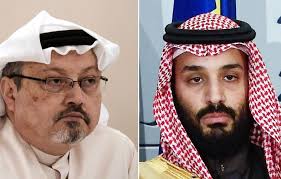
An independent UN human rights investigator called the overturned verdict of Saudi Arabia’s prosecutor in the 2018 murder of journalist Jamal Khashoggi a “parody of justice” that spared “high-level” plotters.  At a regular press briefing on Tuesday, Rupert Colville, spokesperson for the UN High Commissioner for Human Rights, (OHCHR), quoted Agnes Callamard, the UN Special Rapporteur on Extrajudicial Executions, in saying, “they came at the end of a process which was neither fair nor just, or transparent“. [for earlier posts on Khashoggi, see: https://humanrightsdefenders.blog/tag/jamal-khashoggi/]

In October 2018, the 59-year-old columnist for The Washington Post was killed and dismembered at the kingdom’s consulate in Istanbul. Saudi prosecutors in Riyadh had convicted eight people for the brutal murder. However, on Monday, a Saudi court overturned five death sentences in a final ruling that jailed eight defendants for between seven and 20 years, according to Saudi State media.

The press briefing came on the heels of a series of tweets from the independent UN expert who reacted disparagingly to Monday’s verdict. “The five hitmen are sentenced to 20 years imprisonment, but the high-level officials who organized and embraced the execution of Jamal Khashoggi have walked free from the start – barely touched by the investigation and trial,” Ms. Callamard tweeted.

As for the individual responsibility of the person on top of the State”, the independent UN expert upheld, “the Crown Prince Mohammed bin Salman, he has remained well protected against any kind of meaningful scrutiny in his country“. She stated that “the Saudi Prosecutor performed one more act today in this parody of justice”, adding “but these verdicts carry no legal or moral legitimacy”.

HRC45: key issues for human rights defenders

September 6, 2020

Based on the as usual excellent preview by the ISHR: “HRC45 | Key issues on the agenda of September 2020 session”,  I am able to provide an overview of issues that are specially relevant for human rights defenders:

Summary: The Human Rights Council’s 45th session will take place from 14 September to 6 October 2020. The Council will consider issues including reprisals, rights of indigenous peoples and people of African descent, arbitrary detention, and enforced disappearances, among others. It will present an opportunity to address grave human rights situations in States including Yemen, China, the United States of America, Saudi Arabia, Libya, the Philippines, Venezuela, Burundi and Myanmar, among many others. Here’s an overview of some of the key issues on the agenda.

If you want to stay up-to-date: Follow @ISHRglobal and #HRC45 on Twitter, and look out for our Human Rights Council Monitor.

Modalities for civil society participation in HRC45

NGOs in consultative status with ECOSOC, with active designations in Geneva, will be given the opportunity to deliver video-statement insofar as interactive dialogues are concerned, pending further decision from the Council at the opening of HRC45 on 14 September, and additionally for panels and the adoptions of UPR outcomes as set out in HRC decision 19/119. It won’t be possible to hold “official” side events during the 45th session (online or in-person). Any events happening on the sidelines of the session will be considered independent events and won’t be publicised in the Bulletin of Informal meetings by the Secretariat. Read here the information note by the Secretariat which is updated according to the latest information, and an additional explainer by HRC-net.

Thematic areas of interest

Reprisals

On 25 September, the new Assistant Secretary General for Human Rights, Ilze Brands Kehris, will present the Secretary General’s annual report on Cooperation with the United Nations, its representatives and mechanisms in the field of human rights (also known as ‘the Reprisals Report’) to the Council in her capacity as UN senior official on reprisals. The presentation of the report will be followed by a dedicated interactive dialogue, as mandated by the September 2017 resolution on reprisals.

ISHR remains deeply concerned about reprisals against civil society actors who engage or seek to engage with UN bodies mechanisms. We call for all States and the Council to do more to address the situation.  [see also: https://humanrightsdefenders.blog/2020/08/31/ishrs-2020-report-on-reprisals-to-the-un-secretary-general/]

The dedicated dialogue provides a key opportunity for States to raise concerns about specific cases of reprisals, and demand that Governments provide an update on any investigation or action taken toward accountability. An increasing number of States have raised concerns in recent sessions about individual cases of reprisals, including in Egypt, Nicaragua, Cuba, Saudi Arabia, Malaysia, Bahrain, Yemen, Burundi, China and Venezuela.

During the 42nd session, the Council adopted a resolution which listed key trends, such as the patterns of reprisals, increasing self-censorship, and the use of national security arguments and counter-terrorism strategies by States as justification for blocking access to the UN. The resolution also acknowledged the specific risks to individuals in vulnerable situations or belonging to marginalised groups, and called on the UN to implement gender-responsive policies to end reprisals. The Council called on States to combat impunity and to report back to it on how they are preventing reprisals, both online and offline.

Other thematic issues

At this 45th session, the Council will discuss a range of civil, political, economic, social and cultural rights and issues through dedicated debates with Special Procedure mandate holders, including interactive dialogues with the:

  1. Working Group on Enforced or Involuntary Disappearances
  2. Special Rapporteur on truth, justice, reparation and guarantees of non-recurrence
  3. Special Rapporteur on the implications for human rights of the environmentally sound management and disposal of hazardous substances and wastes 
  4. Special Rapporteur on contemporary forms of slavery, including its causes and consequences
  5. Working Group on Arbitrary Detention

In addition, the Council will hold dedicated debates on the rights of specific groups including with the:

  1. Special Rapporteur  on the rights of indigenous peoples and the Expert Mechanism on the Rights of Indigenous Peoples
  2. Working Group of Experts on People of African Descent
  3. Independent Expert on the enjoyment of all human rights by older persons 

Country-specific developments

China (Hong Kong and Uyghur regions)

In light of worsening restrictions in Hong Kong and ongoing repression against Uyghur, Tibetan and other ethnic groups and those defending them, ISHR welcomes the joint statement from July and urges countries to step up action at HRC45 to improve the UN’s monitoring and reporting on China. This echoes the unprecedented press release by over 50 Special Procedures experts calling for urgent and ‘decisive measures’. ISHR expects opportunities for States to increase scrutiny, and for civil society who seek to keep the UN informed, to include:

  • interventions in dialogue with the UN WGAD and UN WGEID
  • responses to the Secretary General’s reprisals report, where China is regularly a ‘top violator’
  • reactions to the findings of the UN Independent Expert on Older Persons, following her December 2019 country visit

USA

The High Commissioner will present her first oral update to the Council on the preparation of the report on systemic racism and police brutality, especially those incidents that resulted in the death of George Floyd and of other Africans and people of African descent, as well as government responses to anti-racism peaceful protests. The High Commissioner will also provide an update on police brutality against Africans and people of African Descent.

ISHR joined 144 families of victims of police violence and over 360 civil society organisations to endorse this letter sent on 3 August to the UN High Commissioner, detailing expectations from the report and the process for its preparation, including an “inclusive outreach to communities of colour and the creation of meaningful, safe, and accessible opportunities for consultation”. On 19 August 2020, the High Commissioner responded to the letter. Read the response here.

ISHR urges all States to support the five recommendations presented by families of victims of police violence and civil society to the High Commissioner, in their national and joint statements at the Council under General Debate Item 9.

Background information: The report was mandated by the resolution adopted following the urgent debate at the Council in June 2020 on current racially inspired human rights violations, systemic racism, police brutality and violence against peaceful protests in the US and elsewhere. Though the urgent debate prompted by the African group initially called for the establishment of an international commission of inquiry on the US and other countries, due to acute diplomatic pressure from the US and its allies, the Council finally decided to instead mandate the High Commissioner with preparing the report, and to include updates on police brutality against Africans and people of African descent in all her oral updates to the Council.

In June 2020, ISHR joined the calls made by the families of George Floyd, Breonna Taylor, Philando Castile and Michael Brown and over six hundred human rights organisations from over 60 countries in requesting the Council to mandate a commission of inquiry for the situation of racism and police brutality in the United States. The UN Special Rapporteur on contemporary forms of racism, racial discrimination, xenophobia and related intolerance and the UN Working Group on Experts on People of African Descent had also voiced their support for the international commission of inquiry. They have urged the Council to ensure the following outcomes from the debate:

  1. the creation of an international commission of inquiry to investigate systemic racism in law enforcement in the United States; and
  2. the creation of a thematic international commission of inquiry to investigate systemic racism in law enforcement globally, with a focus on systemic racism rooted in legacies of colonialism and transatlantic slavery.

They stressed that “both measures described above are necessary and cannot be substituted for one another”. The experts “expressed serious concern that extreme pressure by certain powerful and influential countries—including countries that publicly voiced support for the need to take action in the face of systemic racism—has operated to dilute the strength of the planned consensus resolution of the Urgent Debate.”

Saudi Arabia

Women human rights defenders have been in prison for over two years, only because they demanded that women be treated equally as men. No one has been held accountable for their torture. While the Council has sustained pressure on Saudi Arabia in 2019, it is essential that this scrutiny continues as the situation on the ground has not improved. ISHR calls on all States to jointly call on Saudi Arabia to immediately and unconditionally release the WHRDs and drop the charges against them; and implement the bench-marks set out in the two joint statements delivered by Iceland and Australia in 2019, underlining that should these benchmarks not be met, more formal Council action would follow.

Saudi Arabia is running for Human Rights Council elections in October 2020 and hosting the G20 in November 2020. These all provide windows of opportunity to push for the immediate and unconditional release of the women human rights defenders and all those detained for exercising their rights. [see also: https://humanrightsdefenders.blog/2020/09/02/vloggers-selling-their-souls-to-boost-image-of-arab-regimes/]

Venezuela

The time has come for the fact-finding mission on Venezuela, created by the Human Rights Council last September, to report to the Council. ISHR has joined 85 national, regional and international organisations calling for the renewal and strengthening of the mandate, to keep the pressure on Venezuela. National NGOs have highlighted the ongoing human rights violations in the country as evidence that the new mandate should include an exploration of the root causes of these violations; a preservation of evidence to allow for processes to hold individual perpetrators to account, and a focus on gender-based violence. Oral statements from OHCHR will also be presented this session as will – potentially – a second resolution focusing on technical cooperation. The fact-finding mission’s report is due to be published on 15 September, with the interactive dialogue with States due the following week.

Philippines

The Anti-Terrorism Law passed earlier this month complements the Duterte Administration’s arsenal of tools, giving it the ability to label, detain and eliminate government critics using a vague definition of ‘terrorism’. In the prevailing climate of impunity and attacks against human rights defenders, this law granting the government excessive and unchecked powers will further jeopardise the safety of defenders.

This law passed in the context of ongoing violations against defenders in the country, with recent instances of judicial harassment of defenders and targeting defenders with smear campaigns. It is the most recent example of the government’s worsening human rights record. The recent report of the UN High Commissioner highlights widespread and systematic killings and arbitrary detention in the context of the war on drugs, silencing of independent media and critics, and stark and persistent impunity.

ISHR joined the calls by civil society and UN Special Procedures for an independent investigation mechanism into the human rights situation in the Philippines.

Burundi

ISHR joined more than 40 partners in a civil society call made public ahead of the 45th session, urging States to support the renewal of the mandate of the Commission of Inquiry (CoI) on Burundi.

Burundi is in a period of potential transition, following the 20 May 2020 presidential, legislative and local elections resulting in the election of a new President, Évariste Ndayishimiye and after the death of former President Nkurunziza. At this moment and in this context, there are signs of promise as well as of significant concern. Despite promising remarks by President Ndayishimiyeduring at his inauguration, as well as the authorities’ new, more transparent approach to tackling the COVID-19 pandemic, observers also raised concerns, notably over the fact that several newly appointed members of the Ndayishimiye administration are subject to international individual sanctions for their alleged responsibility in human rights violations. Nonetheless, the political transition represents an opportunity to open a new chapter for the Burundian people and for Burundi’s relationship with the UN human rights system.

As of today, the Commission of Inquiry remains the only independent mechanism mandated to monitor and document human rights violations and abuses, and publicly report on the situation in Burundi, with sufficient resources and experience to do so. At its 45th session, the Council should avoid sending the Government of Burundi signals that would disincentivise domestic human rights reforms, such as terminating the CoI’s mandate in the absence of measurable progress. It should avoid a scenario where re-establishing the CoI’s mandate would be necessary after a premature discontinuation, because of a renewed escalation of human rights violations and abuses. The Council should rather ensure continued investigations, monitoring, public reporting, and public debates on Burundi’s human rights situation.

Egypt

The ‘Terrorism Circuit courts’ in Egypt are enabling pre-trial detention as a form of punishment including against human rights defenders and journalists, such as Ibrahim Metwally, Mohamed El-Baqer and Esraa Abdel Fattah, Ramy Kamel, Alaa Abdel-Fattah, Patrick Zaky, Ramy Shaat, Eman Al-Helw, Solafa Magdy and Hossam El-Sayed. All of the individuals that the Special Procedures and the High Commissioner have written about since September 2019 are still in pre-trial detention by these courts.

ISHR urges States to call on Egypt to immediately and unconditionally release all those detained for exercising their human rights, to stop using pre-trial detention as a punishment, and to take immediate measures to guarantee their rights to contact their families on a regular and continuous basis and to ease sending and receiving letters, food and medical supplies to them.

Background information: Seven UN experts have expressed concern about the collective and corrosive effects of Egypt’s counter-terrorism laws and practices on the promotion and protection of human rights. They stated that “Despite [] repeated communications by UN experts over arbitrary detention of individuals, human rights defenders and activists, the Egyptian Government has not changed its laws of practice”. The government’s response to the UPR in March 2020 demonstrated its lack of political will to address key concerns raised by States and to engage constructively with the Council. For example, the government refused to acknowledge the systematic and widespread attacks against defenders, the practice of torture and ill-treatment in detention centres, and to receive visits by Special Rapporteurs on torture and human rights defenders. The government claimed that no one is detained for exercising their rights, despite the fact that the UN Working Group on Arbitrary Detention found that arbitrary detention is a systematic problem in Egypt and could constitute a crime against humanity.[see also: https://humanrightsdefenders.blog/2020/08/27/egypt-15-year-term-for-human-rights-defender-bahey-el-din-hassan/]

Other country situations

The High Commissioner will provide an oral update to the Council on 14 September 2020. The Council will consider updates, reports on and is expected to consider resolutions addressing a range of country situations, in some instances involving the renewal of the relevant expert mandates. These include:

  • Oral update by the High Commissioner on the human rights situation in Nicaragua 
  • Oral updates by the High Commissioner, and an Interactive Dialogue on the report of the independent international fact-finding mission on the Bolivarian Republic of Venezuela
  • Enhanced Interactive Dialogue on the report of the HC on the situation of human rights in Myanmar, including of Rohingya Muslims and other minorities, an interactive dialogue on the report of on the Independent Investigative Mechanism on Myanmar, and an Interactive Dialogue with the SR on the situation of human rights in Myanmar
  • Interactive Dialogue with the Commission of Inquiry on Burundi 
  • Interactive Dialogue with the Commission of Inquiry on the Syrian Arab Republic 
  • Enhanced Interactive Dialogue with the Commission on Human Rights in South Sudan
  • Interactive dialogue with the Group of Eminent International and Regional Experts on Yemen 
  • Interactive Dialogue with the High Commissioner on the situation of human rights in Ukraine 
  • Interactive Dialogue with the Special Rapporteur on the situation of human rights in Cambodia 
  • Enhanced Interactive Dialogue with the High Commissioner on the situation of human rights in the Democratic Republic of the Congo and on the final report of the team of international experts on the situation in Kasai
  • Interactive Dialogue with the Independent Expert on the situation of human rights in Somalia
  • Enhanced Interactive Dialogue with the Independent Expert on the situation of human rights in the Sudan 
  • Interactive Dialogue with the Fact-finding mission on Libya
  • Interactive Dialogue with the Independent Expert on the situation of human rights in the Central African Republic 
  • Presentation of the High Commissioner’s report on cooperation with Georgia 

Council programme, appointments and resolutions

Appointment of mandate holders

The President of the Human Rights Council will propose candidates for the following mandates:

  1. Special Rapporteur on the rights of persons with disabilities 
  2. Working Group on Arbitrary Detention, member from African States and member from Latin American and Caribbean States
  3. Working Group on discrimination against women and girls, member form Latin American and Caribbean States
  4. Working Group on Enforced or Involuntary Disappearances, member from African States
  5. Working Group on the use of mercenaries as a means of violating human rights and impeding the exercise of the right of peoples to self-determination, member from Asia-Pacific States
  6. Independent Expert on the situation of human rights in the Sudan (if renewed).

Resolutions to be presented to the Council’s 45th session

At the organisational meeting on 31 August the following resolutions were announced (States leading the resolution in brackets):

  1. Special Rapporteur on hazardous waste mandate renewal (African Group)
  2. Working Group of Experts on People of African Descent mandate renewal (African Group)
  3. From rhetoric to reality – a global call for concrete action against racism, racial discrimination, xenophobia and related intolerance (African Group)
  4. Technical assistance and capacity building in Sudan (African Group)
  5. Human rights and indigenous peoples (Mexico, Guatemala)
  6. Human rights and terrorism (Egypt, Mexico)
  7. The human rights to safe drinking water and sanitation (Germany, Spain)
  8. Technical assistance and capacity building in Yemen ((Yemen)
  9. Local government and human rights (Chile, Egypt, South Korea, Romania)
  10. The human rights situation in Yemen (the Netherlands, Belgium, Canada, Ireland, Luxembourg)
  11. Independent expert on the human rights situation in Somalia (Somalia and the United Kingdom)
  12. Technical cooperation and capacity building in the field of human rights (Brazil, Honduras, Indonesia, Morocco, Norway, Qatar, Singapore, Thailand, Turkey)
  13. Accountability for ensuring women’s and girls’ full enjoyment of human rights in humanitarian settings (Canada, Fiji, Georgia, Uruguay, Sweden)
  14. Human rights and the regulation of civilian acquisition, possession and use of firearms (Ecuador, Peru)
  15. Rights of the Child (EU, GRULAC)
  16. Human rights situations in Burundi (EU)
  17. IGWG Private military and security companies mandate renewal TBC (South Africa)
  18. Elimination of discrmination against women and girls in sport (South Africa)
  19. Inequalities in and amongst States in the realization of human rights (South Africa)
  20. National human rights institutions (Australia)
  21. Contribution of Human Rights Council to prevention of human rights violations (Norway, Sierra Leone, Switzerland, Uruguay)
  22. Safety of journalists (Austria, Brazil, France, Greece, Morocco, Qatar, Tunisia)
  23. Special Rapporteur on the promotion of truth, justice, reparation and guarantees of non-recurrence mandate renewal (Switzerland, Argentina, Morocco)
  24. Enforced disappearances mandate renewal (France, Argentina, Morocco, Japan)
  25. Women, peace and security (Spain, Argentina, Azerbaijan, Namibia, Tunisia, Finland)

Adoption of Universal Periodic Review (UPR) reports

During this session, the Council will adopt the UPR working group reports on Kyrgyzstan, Guinea, the Lao People’s Democratic Republic, Lesotho, Kenya, Armenia , Guinea-Bissau, Sweden, Grenada, Turkey, Kiribati and Guyana. ISHR supports human rights defenders in their interaction with the UPR and publishes briefing papers regarding the situation facing human rights defenders in some States under review and advocate for the UPR to be used as mechanism to support and protect human rights defenders on the ground. This session of the Council will provide an opportunity for Turkey and Guinea to accept recommendations made in relation to human rights defenders, as proposed in ISHR’s briefing papers.

Panel discussions

During each Council session, panel discussions are held to provide member States and NGOs with opportunities to hear from subject-matter experts and raise questions. Three panel discussions are scheduled for this upcoming session:

  1. Annual half-day discussion on the rights of indigenous peoples. Theme: Protection of indigenous human rights defenders
  2. Biennial panel discussion on the right to development. Theme: COVID-19 and the right to development: we are all in this together
  3. Annual discussion on the integration of a gender perspective throughout the work of the Human Rights Council and that of its mechanisms. Theme: Gender and diversity: strengthening the intersectional perspective in the work of the Human Rights Council

https://www.ishr.ch/news/hrc45-key-issues-agenda-september-2020-session


New shocking report by AI re prisoners’ abuse in Iran

September 3, 2020

Iran’s police, intelligence and security forces, and prison officials have committed, with the complicity of judges and prosecutors,  a catalogue of shocking human rights violations, including arbitrary detention, enforced disappearance, torture and other ill-treatment, against those detained in connection with the nationwide protests of November 2019, said Amnesty International in a new report published today.

The report, Trampling humanity: Mass arrests, disappearances and torture since Iran’s 2019 November protests, documents the harrowing accounts of dozens of protesters, bystanders and others who were violently arrested, forcibly disappeared or held incommunicado, systemically denied access to their lawyers during interrogations, and repeatedly tortured to “confess”. They are among the 7,000 men, women and children arrested by the Iranian authorities within a matter of days during their brutal repression of the protests.

Victims include children as young as 10 and injured protesters and bystanders arrested from hospitals while seeking medical care for gunshot wounds, as well as human rights defenders including minority rights activists, journalists, and individuals who attended ceremonies to commemorate those killed during the protests. Hundreds have since been sentenced to prison terms and flogging and several to the death penalty following grossly unfair trials which were presided over by biased judges behind closed doors, frequently lasted less than an hour, and systematically relied on torture-tainted “confessions”.

“In the days following the mass protests, videos showing Iran’s security forces deliberately killing and injuring unarmed protesters and bystanders sent shockwaves around the world. Much less visible has been the catalogue of cruelty meted out to detainees and their families by Iranian officials away from the public eye,” said Diana Eltahawy, Amnesty International’s Deputy Regional Director for the Middle East and North Africa.

Instead of investigating allegations of enforced disappearance, torture and other ill-treatment and other crimes against detainees, Iranian prosecutors became complicit in the campaign of repression by bringing national security charges against hundreds of people solely for exercising their rights to freedom of expression, association and peaceful assembly, while judges doled out guilty verdicts on the basis of torture-tainted ‘confessions’. This litany of crimes and violations, committed with total impunity, has been accompanied by a wave of forced televised ‘confessions’ in state propaganda videos and grotesque statements from top officials who have praised intelligence and security forces as heroes for their role in the brutal crackdown.

Amnesty International has recorded the names and details of more than 500 protesters and others, including journalists and human rights defenders, who have been subjected to unfair criminal proceedings in connection with the protests.

Prison terms meted out to those convicted have ranged from between one month and 10 years for vague or spurious national security charges such as “gathering and colluding to commit crimes against national security”, “spreading propaganda against the system”, “disrupting public order” and “insulting the Supreme Leader”.

Of these, at least three, Amirhossein Moradi, Mohammad Rajabi and Saeed Tamjidi, were sentenced to death for “enmity against God” (moharebeh) through acts of vandalism, and another, Hossein Reyhani, is awaiting trial on a charge carrying the death penalty.

More than a dozen known to Amnesty International have received flogging sentences, in addition to prison terms, and at least two have had their flogging sentences implemented.

The organization believes that the real number of individuals prosecuted and sentenced in connection with the November 2019 protests is far higher, given the large number of arrests carried out and the patterns of prosecution and sentencing in the country in cases of arbitrary arrests and detention involving intelligence and security bodies.

Amnesty International is urging member states of the UN Human Rights Council and the Office of the UN High Commissioner for Human Rights to address the prolonged, systematic impunity for gross violations of human rights in Iran, including by supporting the establishment of a UN-led inquiry with a view to ensuring accountability and guarantees of non-repetition.

The organization is also urging all UN member states to forcefully call on the Iranian authorities to immediately and unconditionally release anyone who continues to be imprisoned solely for exercising their rights to freedom of expression, association and peaceful assembly in connection with the November 2019 protests; quash all convictions resulting from unfair trials, including those that relied on statements obtained through torture or other ill-treatment; and hold those responsible to account.

Torture epidemic

Amnesty International’s research found that there was widespread use of torture and other ill-treatment by police, intelligence and security agents and prison officials against men, women and children, both during arrest and later in detention.

Prosecution and judicial authorities failed in their legal obligations to conduct independent and impartial inspections of detention facilities, including those run by security and intelligence bodies, and to ensure that legal provisions banning the use of secret detention and torture and other ill-treatment against detainees are respected.

Torture was used to punish, intimidate and humiliate detainees. It was also routinely used to elicit “confessions” and incriminating statements, not just about their involvement in the protests, but also about their alleged associations with opposition groups, human rights defenders, media outside Iran, as well as with foreign governments.

The organization’s research found that victims were frequently hooded or blindfolded; punched, kicked and flogged; beaten with sticks, rubber hosepipes, knives, batons and cables; suspended or forced into holding painful stress positions for prolonged periods; deprived of sufficient food and potable water; placed in prolonged solitary confinement, sometimes for weeks or even months; and denied medical care for injuries sustained during the protests or as a result of torture.

Other documented methods of torture included stripping detainees and spraying them with cold water, and subjecting detainees to extreme temperatures and/or bombardment of light or sound; forcible extraction of the nails from fingers or toes; pepper spraying; forced administration of chemical substances; using electric shocks; waterboarding; and mock executions.

Information received by Amnesty International from primary sources also reveals that interrogators and prison officials perpetrated sexual violence against male detainees, including through stripping and forced nakedness, sexual verbal abuse, pepper spraying the genital area, and administering electric shocks to the testicles.

One victim from Khorasan Razavi province who was subjected to waterboarding told Amnesty International:

“They [my interrogators] would drench a towel in water and place it over my face. Then they would pour water slowly over the towel, which made me feel like I was suffocating… They would stop… until I started to feel better and then they would start torturing me this way again. They also punched, kicked and flogged me on the soles of my feet with a cable.”

One man who was subjected to electric shocks recounted:

“The electric shocks were the worst form of torture… It felt like my entire body was being pierced with millions of needles. If I refused to answer their questions, they would raise the voltage levels and give me stronger electric shocks. I would shake violently and there would be a strong burning sensation coursing through my whole body…. The torture has had lasting effects on my mental and physical health. To this day, I still can’t sleep at night.”

A victim from Tehran province who was suspended from his hands and feet from a pole in a painful method his interrogators referred to as “chicken kebab” told the organization:

“The pain was excruciating. There was so much pressure and pain in my body that I would urinate on myself… My family know that I was tortured, but they don’t know how I was tortured. I feel choked with tears because there is no one here I can speak to.”

In all cases documented by Amnesty International, victims reported various forms of psychological torture to give forced “confessions”, including the use of degrading verbal insults and profanities; the intimidation and harassment of their family members; threats to arrest, torture, kill or otherwise harm their family members, including elderly parents or spouses; and threats to rape detainees or their female family members.

Enforced disappearances

Amnesty International’s research shows that many detainees were subjected to enforced disappearance for weeks or even months while held in undisclosed locations run by the security and intelligence bodies including the ministry of intelligence or the Revolutionary Guards. Other detainees were held in overcrowded prisons or police stations, military barracks, sports venues and schools.

Distressed relatives told the organization that they visited hospitals, morgues, police stations, prosecution offices, courts, prisons and other known detention centres to enquire about the fate or whereabouts of their loved ones, but the authorities refused to provide them with information and threatened them with arrest if they kept seeking information or publicly spoke out about them.

In one case documented by Amnesty International, the authorities arrested a family member of two people who were forcibly disappeared for enquiring about their fate and whereabouts.

Amnesty International is aware of three ongoing cases of enforced disappearance, where the authorities continue to conceal their fate and whereabouts from their families. They include brothers Mehdi Roodbarian and Mostafa Roodbarian from Mahshahr, Khuzestan province.

On 11 September followed this: https://en.radiofarda.com/a/human-rights-organizations-call-for-un-investigation-into-suppressing-iranian-protesters/30833918.html

https://www.amnesty.org/en/latest/news/2020/09/iran-detainees-flogged-sexually-abused-and-given-electric-shocks-in-gruesome-post-protest-crackdown-new-report/


16 NGOs call on UN to convene special session on crackdown in Belarus

August 27, 2020
Police officers detaining a protester in Minsk on 10 August © Natalia Fedosenko/TASS

An open letter has been signed by: Article 19, Assembly of Pro-Democratic NGOs of Belarus, Barys Zvozskau Belarusian Human Rights House, Belarusian Association of Journalists, Belarusian Helsinki Committee, Civil Rights Defenders, Human Constanta, Human Rights House Foundation, Human Rights Watch, International Federation for Human Rights (FIDH), La Strada International, Legal Initiative, Legal Transformation center (Lawtrend), Viasna Human Rights Center and World Organisation Against Torture (OMCT).

The UN Human Rights Council must urgently convene a special session to address the human rights crisis in Belarus. The joint letter expresses the organisations’ “utmost concern” over “widespread violations of human rights, including arbitrary arrests, prosecutions under trumped-up charges, and torture and other ill-treatment”.

The letter calls on the council to adopt a resolution requesting the UN High Commissioner for Human Rights to monitor and report on human rights abuses in Belarus with “a view to ensuring full accountability”.

See also: https://humanrightsdefenders.blog/2020/08/13/what-can-we-do-about-the-result-of-the-belarussian-election-on-line-discussion-today-at-14h00/

[In the three days after the 9 August presidential election, the authorities in Belarus confirmed the arrest of at least 6,700 protesters. According to Viasna Human Rights Center, at least 450 of the detainees reported being tortured or otherwise ill-treated – including through severe beatings, being forced to perform humiliating acts, being threatened with rape and other forms of violence – while held in incommunicado detention for up to ten days.

Since 12 August, the authorities have taken steps to de-escalate the situation, refraining from mass arrests and releasing those detained. However, the threats against peaceful protesters recently made by President Alyaksandr Lukashenka and his subordinates together with the recent deployment of the armed forces in the country’s capital Minsk and elsewhere, signal a possible new spiral of violence and accompanying human rights violations.]

Here the Letter in full:

Click to access civil-society-organizations-call-on-the-united-nations-human-rights-council-to-convene-a-special-session-on-belarus.pdf

Mary Lawlor calls death of human rights defender Askarov a stain on Kyrgyzstan’s reputation,

July 31, 2020

The death in prison of human rights defender Azimjan Askarov, who for 10 years had unsuccessfully challenged his life sentence, shows a cruel disregard for human rights in Kyrgyzstan, says said Mary Lawlor, UN Special Rapporteur on the situation of human rights defenders.[see: https://humanrightsdefenders.blog/2020/07/26/kyrgyzstan-activist-askarov-dies-in-prison-after-decade-battling-tainted-conviction/

I was deeply saddened to hear the news of Mr. Askarov’s death, despite multiple requests for his release on humanitarian grounds as his health deteriorated significantly in prison,”

Although the Kyrgyz Government shared detailed information on court proceedings and medical care afforded to Askarov, she criticized the government for not taking concerns about his health seriously.

“We learned in June that, in the midst of COVID-19, and despite his age and pre-existing conditions, Mr. Askarov did not qualify for early release under Kyrgyz law,” Lawlor said. “I now question whether more could have been done to protect his health.”

In the days before Askarov’s death, his lawyer made a number of urgent medical appeals to authorities after the 69-year-old fell ill with a cough, fever, aches and pains, and had difficulty eating and walking. It was only on 24 July 2020, when he had already been sick for 10 days, that he was transferred to a prison medical facility, where he died the following day.

“Mr. Askarov’s case should act as a reminder to all states of the serious and grave threat that prisoners in at-risk categories face during the COVID-19 pandemic,” she said. She stressed that human rights defenders and all those detained without sufficient legal basis, or most at risk of the virus, should be released…

Lawlor’s call has been endorsed by the Special Rapporteur on minority issues, Fernand de Varennes; the Special Rapporteur on the independence of judges and lawyers, Diego García-Sayán; and the Special Rapporteur on torture and other cruel, inhuman or degrading treatment or punishment, Nils Melzer.

https://akipress.com/news:646397:Death_of_human_rights_defender_Azimjan_Askarov_a_stain_on_Kyrgyzstan_s_reputation,_says_UN_expert/

Burundi after the “election”: UN and HRW follow up

July 21, 2020

Lisa Schlein reported on 14 July 2020 that UN Investigators are skeptical of reform promises by new President, while HRW sent a letter to the new President Ndayishimiye

Burundi's President Evariste Ndayishimiye gestures to the crowd after his inauguration in Gitega, Burundi Thursday, June 18,…

The U.N. Commission of Inquiry on Burundi is doubting that promises of reform made by Burundi’s newly-elected president will result in hoped-for improvements in the country’s human rights situation. The commission has submitted its report on prevailing conditions in the country to the U.N. Human Rights Council.

The three-member panel welcomes promises of political reconciliation, judicial reform and protection of the population made by President Ndayishimiye, in his inaugural address. But, the chair of the U.N. commission, Doudou Diene, says the president’s comments were full of ambiguities and contradictions. 

For example, he notes the president’s remarks seemed to justify the imposition of restrictions on some public liberties such as freedom of expression, information and assembly under the guise of preserving Burundian culture. 

Speaking on a video link from Paris, he said, “Such remarks are concerning, especially given that the new president’s policies will be implemented by a government composed primarily of the old guard of the late President Nkurunziza’s regime — some of whom are under sanctions for their involvement in grave human rights violations.” 

Burundi's President Pierre Nkurunziza queues at a polling station during the presidential, legislative and communal council…
FILE – Burundi’s President Pierre Nkurunziza queues at a polling station during elections, under the simmering political violence and the growing threat of the coronavirus, in Ngozi, Burundi, May 20, 2020.

President Pierre Nkurunziza died of cardiac arrest on June 8, after a brief hospitalization, while his wife was in Kenya undergoing medical treatment. A number of news outlets report he died of the coronavirus. 

Commission chair Diene says gross, widespread human rights violations continue in Burundi and that it would be premature to make any pronouncements on the possible evolution of the situation under the new government. 

He said, “We solemnly urge the new president of the republic to demonstrate his willingness for change by fully cooperating with the international human rights mechanisms. The immediate release of the four journalists of Iwacu, of human rights defenders … would be a significant gesture of this.” {see: https://humanrightsdefenders.blog/2020/02/05/burundi-elections-start-with-convicting-4-journalists/]

Burundi’s ambassador to the United Nations in Geneva, Renovat Gabu, rejects the commission’s report. He accuses the commission of interfering in the domestic affairs of his country and of slandering and insulting public authorities with the blessing of the U.N. council. 

Human Rights Watch

Letter to President Ndayishimiye: Protecting Human Rights in Burundi, 13 July, 2020

Re: Protecting Human Rights in Burundi

… We have reported on human rights concerns in Burundi since 1995. We are writing to raise important concerns and share our recommendations on steps your government should take to advance and protect human rights in Burundi. We hope that you will address these issues and make the protection and promotion of human rights a top priority throughout your presidency. We urge you to work to make systemic changes to end the violence and abuse, fueled by widespread impunity, that have plagued the country for far too long, especially since 2015.

While we regret the former administration’s withdrawal of Burundi from the International Criminal Court, which took effect in 2017, we are encouraged by the commitments stated in your inaugural speech to reform the judiciary and ensure that all government or other officials who commit offenses are held accountable. Your assurances that measures will be taken to protect victims and witnesses are critical to delivering this promise, as is your commitment to ensuring that corruption will not be tolerated….

To address these challenges and demonstrate a real commitment to promoting rights and turning the page on decades of violence, abuse, mismanagement, and impunity, we urge you to take the following steps during your first year in office:

  1. Remove from security services posts and other executive branches, officials who have been credibly implicated in serious human rights violations, according to reports by the United Nations Commission of Inquiry on Burundi, the UN Human Rights Council, the African Commission on Human and Peoples’ Rights’ fact-finding mission report, and Burundian and international human rights organizations. Ensure that no one who may be subject to criminal or other investigation into human rights abuses is in a position to influence that investigation.
  2. Instruct the security forces, the local administrators, and the Imbonerakure to stop extortion, the use of forced labor, beatings, arbitrary arrests, threats, harassment, and collection of contributions for state-led projects. Order the Imbonerakure and other officials to dismantle all unauthorized roadblocks.
  3. Direct the Justice Ministry to thoroughly and impartially investigate past grave violations of human rights with a view to appropriately prosecuting current and former state security officers and government officials who were responsible for serious criminal offenses. These include National Defense Force and police extrajudicial executions of 47 civilians, members of armed groups and other suspected opponents between December 30, 2014, and January 3, 2015 in Cibitoke province; police use of excessive force in a crackdown on protests in 2015; violence against suspected opponents after the protests; allegations of extrajudicial executions by members of the security forces on December 11, 2015 ; torture and ill treatment of suspected opponents by national intelligence agents and police in since 2015; and extrajudicial executions, enforced disappearances, and arbitrary arrests of suspected opponents by national intelligence agents, police, and Imbonerakure members since 2015, including during the periods leading up to the constitutional referendum in 2018 and the elections held earlier this year.
  4. Ensure a thorough and independent investigation into the crimes and abuses committed by the Imbonerakure. These investigations should lead to fair and transparent prosecutions, and your government should ensure that your party’s youth league is disarmed and not used for any official state security or similar duties.
  5. End all political interference in the judicial system, facilitate victims’ access to justice, and ensure progress on emblematic cases. This should include the immediate and unconditional release of all political prisoners and prisoners jailed for exercising their fundamental rights, including Germain Rukuki, Nestor Nibitanga, Christine Kamikazi, Agnès Ndirubusa, Egide Harerimana, and Térence Mpozenzi
  6. Fully protect everyone’s rights to freedom of expression, assembly, and association in accordance with international standards. Lift the suspension on the operations of independent media and human rights organizations, and ensure journalists and human rights activists who are in exile can return safely. Members and supporters of political parties, Burundian and international journalists, and Burundian and international human rights defenders should be able to conduct their work freely, criticize government policies, and organize peaceful protests without fear of intimidation, reprisals, harassment, arrests, or the excessive use of force by the security forces.
  7. Cooperate with and support regional and international human rights mechanisms and treaties, and act to ensure that Burundian law adequately reflects international human rights commitments. This should include full cooperation with the UN Human Rights Council’s special procedures, including giving the UN Commission of Inquiry on Burundi unfettered access to the country; the resumption of cooperation with the Office of the High Commissioner for Human Rights; finalization of a memorandum of understanding with the African Union’s human rights observer mission and ensuring the observers get unfettered access to the country and its detention facilities; and allow international NGOs to operate without interference.
  8. Ratify the Rome Statute and align national legislation provisions to cooperate promptly and fully with the International Criminal Court as a court of last resort. Cooperate with the ongoing ICC investigations into alleged crimes against humanity committed in Burundi or by nationals of Burundi outside Burundi until 26 October 2017.

https://www.voanews.com/africa/un-investigators-skeptical-reform-promises-new-burundi-president

https://www.hrw.org/news/2020/07/15/letter-president-ndayishimiye-protecting-human-rights-burundi

NGO statement on the achievements and challenges of the 44th session of the UN Human Rights Council

July 21, 2020

Further to my post of yesteday [https://humanrightsdefenders.blog/2020/07/20/un-human-rights-council-concluds-44th-session-and-appoints-four-special-rapporteurs-including-irene-khan/] here a more complete assessment of the result of the 44th session of the UN Human Rights Counccil as seen by the following NGOs: ARTICLE 19, Cairo Institute for Human Rights Studies (CIHRS), and IFEX, and published on 20 July 2020

Hong Kong’s chief executive Carrie Lam on giant screens remotely addressing the opening of the UN Human Rights Council’s 44th session on in Geneva, Switzerland, 30 June 2020, FABRICE COFFRINI/AFP via Getty Images

The 44th session of the HRC resulted in a number of welcome resolutions, on peaceful protests and freedom of opinion and expression among them, and country-specific discussions. However, several States escaped collective scrutiny this session.[see also: https://humanrightsdefenders.blog/2020/06/25/human-rights-defenders-and-the-44th-session-of-the-un-human-rights-council/]

The 44th session of the UN Human Rights Council began with China’s imposition of legislation severely undermining rights and freedoms in Hong Kong. Within days, there were reports of hundreds of arrests, some for crimes that didn’t even exist previously. We welcome efforts during this session by a growing number of States to collectively address China’s sweeping rights abuses, but more is needed. An unprecedented 50 Special Procedures recently expressed concerns at China’s mass violations in Xinjiang, Hong Kong and Tibet, suppression of information in the context of COVID-19, and the targeting of human rights defenders across the country. The Council should heed the call of these UN experts to hold a Special Session and create a mechanism to monitor and document rights violations in the country. No state is beyond international scrutiny. China’s turn has come.

The 44th session also marked an important opportunity to enable those affected directly by human rights violations to speak to the Council through NGO video statements.

Amnesty’s Laith Abu Zeyad addressed the Council remotely from the occupied West Bank where he has been trapped by a punitive travel ban imposed by Israel since October 2019. We call on the Israeli authorities to end all punitive or arbitrary travel bans.

During the interactive dialogue with the Commission of Inquiry on Syria, victims’ associations and families of victims highlighted the human rights violations occurring in detention centers in Syria. We welcome the efforts by some States to underline their demands and welcome the adoption of the Syria resolution on detainees and urge the Syrian government to take all feasible measures to release detainees and provide truth to the families, noting the important pressure needed by Member States to further call for accountability measures for crimes committed in Syria.

Collette Flanagan, Founder of Mothers against Police Brutality, also delivered a powerful video statement at the Council explaining the reality of racist policing in the United States of America. We fully support victims’ families’ appeals to the Council for accountability.

We hope that the High Commissioner’s report on systemic racism, police violence and government responses to antiracism peaceful protests will be the first step in a series of meaningful international accountability measures to fully and independently investigate police killings, to protect and facilitate Black Lives Matter and other protests, and to provide effective remedy and compensation to victims and their families in the United States of America and around the world.

We appreciate the efforts made by the Council Presidency and OHCHR to overcome the challenges of resuming the Council’s work while taking seriously health risks associated with COVID-19, including by increasing remote and online participation. We recommend that remote civil society participation continue and be strengthened for all future sessions of the Council.

Despite these efforts, delays in finalising the session dates and modalities, and subsequent changes in the programme of work, reduced the time CSOs had to prepare and engage meaningfully. This has a disproportionate impact on CSOs not based in Geneva, those based in different time zones and those with less capacity to monitor the live proceedings. Other barriers to civil society participation this session included difficulties to meet the strict technical requirements for uploading video statements, to access resolution drafts and follow informal negotiations remotely, especially from other time zones, as well as a decrease in the overall number of speaking slots available for NGO statements due to the cancellation of general debates this session as an ‘efficiency measure.’

We welcome the joint statement led by the core group on civil society space and endorsed by cross regional States and civil society, which calls on the High Commissioner to ensure that the essential role of civil society, and States’ efforts to protect and promote civil society space, are reflected in the report on impact of the COVID-19 pandemic presented to the 46th Session of the HRC. We urge all States at this Council to recognise and protect the key role that those who defend human rights play.

These last two years have seen unlawful use of force perpetrated by law enforcement against peaceful protesters, protest monitors, journalists worldwide, from the United States of America to Hong Kong, to Chile to France , Kenya to Iraq to Algeria, to India to Lebanon with impunity.

We therefore welcome that the resolution “the promotion and protection of human rights in the context of peaceful protests” was adopted by consensus, and that the Council stood strongly against some proposed amendments which would have weakened it. We also welcome the inclusion in the resolution of a panel during the 48th session to discuss such events and how States can strengthen protections. We urge States to ensure full accountability for such human rights violations as an essential element of the protection of human rights in the context of protests. The current context has accelerated the urgency of protecting online assembly, and we welcome that the resolution reaffirms that peaceful assembly rights guaranteed offline are also guaranteed online. In particular, we also commend the resolution for calling on States to refrain from internet shutdowns and website blocking during protests, while incorporating language on the effects of new and emerging technologies, particularly tools such as facial recognition, international mobile subscriber identity-catchers (“stingrays”) and closed-circuit television.

We welcome that the resolution on “freedom of opinion and expression” contains positive language including on obligations surrounding the right to information, emphasising the importance of measures for encryption and anonymity, and strongly condemning the use of internet shutdowns.. Following the High Commissioner’s statement raising alarm at the abuse of ‘false news’ laws to crackdown on free expression during the COVID-19 pandemic, we also welcome that the resolution stresses that responses to the spread of disinformation and misinformation must be grounded in international human rights law, including the principles of lawfulness, legitimacy, necessity and proportionality. At the same time, we are concerned by the last minute addition of language which focuses on restrictions to freedom of expression, detracting from the purpose of the resolution to promote and protect the right. As we look to the future, it is important that the core group builds on commitments contained in the resolution and elaborate on pressing freedom of expression concerns of the day, particularly for the digital age, such as the issue of surveillance or internet intermediary liability, while refocusing elements of the text.

The current context has not only accelerated the urgency of protecting assembly and access to information, but also the global recognition of the right to a safe, clean, healthy and sustainable environment. We welcome the timely discussions on ”realizing children’s right to a healthy environment” and the concrete suggestions for action from panelists, States, and civil society. The COVID-19 crisis, brought about by animal-to-human viral transmission, has clarified the interlinkages between the health of the planet and the health of all people. We therefore support the UN Secretary General’s call to action on human rights, as well as the High Commissioner’s statement advocating for the global recognition of the human right to a safe, clean, healthy and sustainable environment – already widely reflected at national and regional levels – and ask that the Council adopts a resolution in that sense. We also support the calls made by the Marshall Islands, Climate Vulnerable Forum, and other States of the Pacific particularly affected and threatened by climate change. We now urge the Council to strengthen its role in tackling the climate crisis and its adverse impacts on the realization of human rights by establishing a Special Rapporteur on Human Rights and Climate Change, which will help address the urgency of the situation and amplify the voices of affected communities.

The COVID crisis has also exacerbated discrimination against women and girls. We welcome the adoption by the Council of a strong resolution on multiple and intersecting forms of discrimination against women and girls, which are exacerbated in times of a global pandemic. The text, inter alia, reaffirms the rights to sexual and reproductive health and to bodily autonomy, and emphasizes legal obligations of States to review their legislative frameworks through an intersectional approach. We regret that such a timely topic has been questioned by certain States and that several amendments were put forward on previously agreed language.

The Council discussed several country-specific situations, and renewed the mandates in some situations.

We welcome the renewal of the Special Rapporteur’s mandate and ongoing scrutiny on Belarus. The unprecedented crackdown on human rights defenders, journalists, bloggers and members of the political opposition in recent weeks ahead of the Presidential election in August provide a clear justification for the continued focus, and the need to ensure accountability for Belarus’ actions. With concerns that the violations may increase further over the next few weeks, it is essential that the Council members and observers maintain scrutiny and pressure even after the session has finished.

We welcome the extension of the mandate of the Special Rapporteur on Eritrea. We urge the government to engage, in line with its Council membership obligations, as the Special Rapporteur’s ‘benchmarks for progress’ form a road map for human rights reform in the country.

We welcome the High Commissioner report on the human rights situation in the Philippines which concluded, among other things, that the ongoing killings appear to be widespread and systematic and that “the practical obstacles to accessing justice in the country are almost insurmountable.” We regret that even during this Council session, President Duterte signed an Anti Terrorism Law with broad and vague definition of terrorism and terrorists and other problematic provisions for human rights and rule of law, which we fear will be used to stifle and curtail the rights to freedom of opinion and expression, to freedom of peaceful assembly and of association. Also during this session, in a further attack on press freedom, Philippine Congress rejected the franchise renewal of independent media network ABS-CBN, while prominent journalist Maria Ressa and her news website Rappler continue to face court proceedings and attacks from President Duterte after Ressa’s cyber libel conviction in mid-June. We support the call from a group of Special Procedures to the Council to establish an independent, impartial investigation into human rights violations in the Philippines and urge the Council to establish it at the next session.

The two reports presented to the Council on Venezuela this session further document how lack of judicial independence and other factors perpetuate impunity and prevent access to justice for a wide range of violations of civil, cultural, economic, political, and social rights in the country. We also urge the Council to stand ready to extend, enhance and expand the mandate of the Independent International Fact-Finding Mission when it reports in September.

We also welcome the report of the Special rapporteur on the human rights situation in the Palestinian Territory occupied since 1967 and reiterate his call for States to ensure Israel puts an end to all forms of collective punishment. We also reiterate his call to ensure that the UN database of businesses involved with Israeli settlements becomes a living tool, through sufficient resourcing and annual updating.

We regret, however, that several States have escaped collective scrutiny this session.

We reiterate the UN Special Rapporteur Agnes Callamard’s call to pressure Saudi Arabia to release prisoners of conscience and women human rights defenders and call on all States to sustain the Council’s scrutiny over the situation at the September session.

Despite calls by the High Commissioner for prisoners’ release, Egypt has arrested defenders, journalists, doctors and medical workers for criticizing the government’s COVID-19 response. We recall that all of the defenders that the Special Procedures and the High Commissioner called for their release since September 2019 are still in pre-trial detention. The Supreme State Security Prosecution and ‘Terrorism Circuit courts’ in Egypt, are enabling pre-trial detention as a form of punishment including against human rights defenders and journalists and political opponents, such as Ibrahim Metwally, Mohamed El-Baqer and Esraa Abdel Fattah, Ramy Kamel, Alaa Abdel-Fattah, Patrick Zaky, Ramy Shaat, Eman Al-Helw, Solafa Magdy and Hossam El-Sayed. Once the terrorism circuit courts resumed after they were suspended due to COVID-19, they renewed their detention retroactively without their presence in court. It’s high time the Council holds Egypt accountable.

As highlighted in a joint statement of Special Procedures, we call on the Indian authorities to immediately release HRDs, who include students, activists and protest leaders, arrested for protesting against changes to India’s citizenship laws. Also eleven prominent HRDs continue to be imprisoned under false charges in the Bhima Koregaon case. These activists face unfounded terror charges under draconian laws such as sedition and under the Unlawful Activities (Prevention) Act. While we welcome that Safoora Zargar was granted bail on humanitarian grounds, the others remain at high risk during a COVID-19 pandemic in prisons with not only inadequate sanitary conditions but also limited to no access to legal counsel and family members. A number of activists have tested positive in prison, including Akhil Gogoi and 80-year-old activist Varavara Rao amid a larger wave of infections that have affected many more prisoners across the country. Such charges against protestors, who were exercising their rights to freedom of peaceful assembly must be dropped. We call on this Council to strengthen their demands to the government of India for accountability over the excessive use of force by the police and other State authorities against the demonstrators.

In Algeria, between 30 March and 16 April 2020, the Special rapporteur on freedom of opinion and expression, freedom of peaceful assembly and of association, human rights defenders, issued three urgent appeals in relation to cases involving arbitrary and violent arrests, unfair trials and reprisals against human rights defenders and peaceful activists Olaya Saadi, Karim Tabbou and Slimane Hamitouche. Yet, the Council has been silent with no mention of the crackdown on Algerian civil society, including journalists.

To conclude on a positive note, we welcome the progress in the establishment of the OHCHR country office in Sudan, and call on the international community to continue to provide support where needed to the transitional authorities. While also welcoming their latest reform announcements, we urge the transitional authorities to speed up the transitional process, including reforms within the judiciary and security sectors, in order to answer the renewed calls from protesters for the enjoyment of “freedom, peace and justice” of all in Sudan. We call on the Council to ensure continued monitoring and reporting on Sudan.

https://ifex.org/human-rights-council-ngo-statement-on-the-achievements-and-challenges-of-the-44th-session/

UN Human Rights Council concluds 44th session and appoints four special rapporteurs, including Irene Khan

July 20, 2020

Thanks to ReliefWeb‘s detailed coverage of the UN Human Rights Council:

On 17 july The Human Rights Council adopted four resolutions dealing with the promotion and protection of human rights in the context of peaceful protests ; the situation of human rights in the Syrian Arab Republic ; the Social Forum ; and the contribution of respect for all human rights and fundamental freedoms to achieving the purposes of the Charter of the United Nations. It also appointed four Special Procedure mandate holders, and concluded its regular forty-fourth session.

The Council also appointed four new Special Procedure mandate holders : Marcos A. Orellana (Chile) for the position the Special Rapporteur on the implications for human rights of the environmentally sound management and disposal of hazardous substances and wastes ; Irene Khan (Bangladesh) for the position of the Special Rapporteur on the promotion and protection of the right to freedom of opinion and expression ; Tlaleng Mofokeng (South Africa) as Special Rapporteur on the right of everyone to the enjoyment of the highest attainable standard of physical and mental health ; and Siobhán Mullallay (Ireland) as the Special Rapporteur on trafficking in persons, especially women and children.

Yackoley Kokou Johnson, Vice-President of the Council and Rapporteur, noted that during the session, the Council had held 29 meetings, seven debates and 35 interactive dialogues, including with the High Commissioner on her annual report, as well as with 22 Special Procedure mandate holders, two commissions of inquiry and two special representatives of the Secretary-General, covering over 50 human rights themes and 40 country situations.

Elisabeth Tichy-Fisslberger, President of the Council, concluded by thanking those present for their dedication, flexibility and creativity in implementing many precautionary measures, proving that the Council could continue to do its important work in these difficult times.

The Human Rights Council is scheduled to hold its forty-fifth session from 14 September to 2 October.

https://reliefweb.int/report/world/human-rights-council-adopts-four-resolutions-appoints-four-special-procedure-mandate__________

On-line Discussion of candidate States’ visions for membership Human Rights Council

July 20, 2020

On Wednesday 9 September 9am-12pm (New York time) Amnesty International and the International Service for Human Rights will hold – as usual – an online pledging event for candidate States in advance of the Human Rights Council elections that will take place this autumn for the membership term 2021-2023,. State representatives and civil society are invited to participate actively in the events and pose questions to candidate States.

The link to attend the event will be shared closer to the date.

Have a question? Follow the event on Twitter and submit questions to candidates via:  @ISHRglobal #HRCpledging  #HRCelections2020

https://mailchi.mp/ishr/human-rights-council-elections-discussions-of-candidates-aspirations-and-visions-in-new-york-and-geneva-32806?e=d1945ebb90

Turkey engages in abduction of Turkish nationals living abroad through secret agreements with other states according to UN letter

July 11, 2020

Turkish nationals who were abducted in Kosovo were kept for a time at the Turkish embassy premises.

On 9 July 9, 2020 the Nordic Monitor higlighted the shocking news that the Turkish government has signed bilateral security cooperation agreements with multiple states that were phrased ambiguously to allow for the expulsion or abduction of Turkish nationals living abroad, This is based on a joint UN letter on 5 May 2020.

Four UN rapporteurs/experts sent a joint letter to the Turkish government to express their concern about the “systematic practice of state-sponsored extraterritorial abductions and forcible return of Turkish nationals from multiple States to Turkey.

Joint UN letter on systematic practice of state-sponsored extraterritorial abductions and forcible return of Turkish nationals from multiple States to Turkey, see: https://spcommreports.ohchr.org/TMResultsBase/DownLoadPublicCommunicationFile?gId=25209

The Government of Turkey, in coordination with other States, is reported to have forcibly transferred over 100 Turkish nationals to Turkey, of which 40 individuals have been subjected to enforced disappearance, mostly abducted off the streets or from their homes all over the world, and in multiple instances along with their children,” the letter said.

Nordic Monitor previously reported how the content of Turkey’s security agreements has changed in parallel to the transformation of national legislation and that the new documents contained ambiguous copy-paste phrases designed to suppress government opponents outside the country.

[The Turkish] Government has signed bilateral security co-operation agreements with multiple States allegedly containing broad and vague references to combatting terrorism and transnational crime. Sources claim that the agreements have been phrased ambiguously to allow for expulsion or abduction of anyone deemed to be a ‘security risk’ from third countries party to the agreements. There appears to be a clear link in the timing of the alleged operations – most, if not all, have been carried out within two years since the agreements entered into force. For instance, allegations are made that Turkey has signed secret agreements with several States, including Azerbaijan, Albania, Cambodia and Gabon, where several operations are reported to have taken place,” the letter stated….

Furthermore, rapporteurs, with reference to statements by Turkish officials, exposed the fact that over 100 alleged members of the Gülen movement have been abducted abroad by Turkish intelligence and brought back to Turkey as part of the Turkish government’s systematic global manhunt.

“Turkish authorities have not only acknowledged direct responsibility in perpetrating or abetting abductions and illegal transfers, but have also vowed to run more covert operations in the future. On September 21, 2018, it is alleged that Turkey’s Presidential Spokesperson stated during a press conference that the Government would continue its operations against the Hizmet Movement, similar to the one in Kosovo (March 29, 2018).”….

We note in this respect that deprivation of nationality for the sole purpose of facilitating expulsion or removal goes against international law norms and standards. Finally, we wish to highlight that violations of international human rights obligations resulting from these agreements engage Turkey’s responsibility under international law as well as the third countries parties to the agreements” the letter said….

https://www.nordicmonitor.com/2020/07/turkey-signed-secret-agreements-with-several-states-to-conduct-state-sponsored-extraterritorial-abductions-a-joint-un-letter-underlines/

That Turkey takes an aggressive stand on anything that smacks like terrorism was made clear again on 7 July 2020 when Turkey’s Foreign Ministry slammed recent remarks by Sweden’s foreign minister against Turkey’s military operation in northeastern Syria while meeting via videolink with members of the PYD/YPG/PKK terrorist organization.  

Essentially this meeting was not the first in which Ann Linde came into contact with members of the terrorist organization. She previously held talks with members of the terrorist organization and participated in activities organized by people associated with the terrorist organization,” the ministry said late Thursday in a statement.

It is a shame that so-called human rights defenders, who are becoming an instrument to the terrorist organization’s smear campaign, ignore the massacres, crimes and oppression…committed by these terrorists in Syria,” it stressed. [what the term “human rights defenders” here means is not clear] – https://www.aa.com.tr/en/turkey/turkey-slams-swedish-fm-for-meeting-with-terror-group/1905510