Archive for the 'organisations' Category

Philippines killings continue and de Lima stays in jail

March 9, 2021

Human rights groups called on the Philippine government to investigate what they said was the use of “lethal force” during police raids on Sunday that left at least nine activists dead. The raids in four provinces south of Manila resulted in the death of an environmental activist as well as a coordinator of left-wing group Bagong Alyansang Makabayan, among others, and resulted in the arrest of four others, activist groups said.

These raids appear to be part of a coordinated plan by the authorities to raid, arrest, and even kill activists in their homes and offices,” Human Rights Watch Deputy Asia Director Phil Robertson said in a statement.

These incidents, he said, were “clearly part of the government’s increasingly brutal counter-insurgency campaign“. “The fundamental problem is (that) this campaign no longer makes any distinction between armed rebels and noncombatant activists, labour leaders, and rights defenders.” The United Nations has warned in a report that “red-tagging”, or labelling people and groups as communists or terrorists, and incitement to violence have been rife in the Southeast Asian nation.

The Philippines government should act now to investigate the use of lethal force in these raids, stop the mayhem and killings that has gone hand in hand with the practice of red-tagging,” Robertson said.

Sunday’s raids, which human rights group Karapatan condemned, came two days after President Rodrigo Duterte ordered the police and military to “kill” communist rebels and “ignore human rights”.

“Nothing could be more apt than calling this day a ‘Bloody Sunday,’” Karapatan’s Cristina Palabay said.

Lieutenant General Antonio Parlade, head of an anti-rebel task force, told Reuters the raids were “legitimate law enforcement operations”, and authorities acted on the basis of search warrants for possession of firearms and explosives.

“As usual these groups are so quick in assuming that the subjects were activists and that they were killed. If (the) motive was to kill them they should all be dead but there were those who did not resist arrest so they were collared,” Parlade told Reuters in a phone message. — Reuters

In the meantime on 7 March 2021 Rappler.com reported that UK lawmakers called for release of jailed Duterte critic De Lima

Senator De Lima’s prosecution appears to have set the pattern for silencing of President Duterte’s opponents,’ write 27 UK parliamentarian as she entered her 5th year in jail, her office said Sunday, March 7. https://www.trueheroesfilms.org/thedigest/laureates/35cd51c0-93fb-11e8-b157-db4feecb7a6f

Signatories include Rt Hon Dame Diana Johnson, MP (chair, All Party Parliamentary Human Rights Group), Tonia Antoniazzi MP, Harriett Baldwin MP, Paul Blomfield MP, Tracy Brabin MP, Lyn Brown MP, and Dawn Butler MP, according to the Office of Senator Leila de Lima.

President Duterte’s self-styled ‘war on drugs’ has seen an estimated 30,000 extra-judicial killings – along with increased targeting of journalists and human rights defenders, and the undermining of judicial independence,” they added.

A Muntinlupa court on Friday, March 5, dismissed her second drug case appeal, even as she was earlier acquitted in another case. A third case against her is pending before another court.

https://www.tribuneindia.com/news/world/rights-groups-call-for-investigation-into-killings-of-philippine-activists-221956

https://www.commondreams.org/news/2021/03/08/bloody-sunday-left-activists-labor-leaders-executed-philippines-after-duterte-says

https://news.un.org/en/story/2021/03/1086782

https://www.rappler.com/nation/uk-lawmakers-call-for-release-duterte-critic-leila-de-lima

Celebrating International Women’s Day in 2021

March 8, 2021

This day leads to a plethora of statements and actions. Here a small selection focusing on women human rights defenders:

Credit: UN Women/Yihui Yuan.

Joan Kuriansky – a volunteer with The Advocates For Human Rightswrites: “Celebrating International Women’s Day in 2021 compels us to pause and examine the lessons of the past year- the COVID pandemic, economic distress and the surging mandate of Black Lives Matter. Each phenomenon has made so more visible the challenges that historically face women across the globe. Importantly, these forces have also made it clear how connected we are to each other whether in neighborhoods within miles of our home or across a continent and the extraordinary role that women play in making lives better and more just in every corner of the world. The UN and UNDP estimate that the pandemic will push 47 million more women and girls below the poverty line. Our upcoming workshop at the NGO CSW65 Virtual Forum will highlight the economic and other inequalities women face as a result of the pandemic. Register here: https://bit.ly/3dmVgSk Event link: https://bit.ly/2NhPoiL

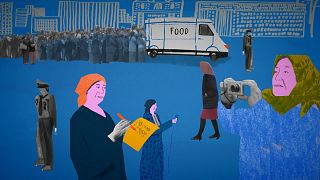
Women have been in the forefront of promoting peaceful solutions to conflict -conflict that has often included the rape and violation of women, the death of those in combat and the destruction of communities. Women have been in the forefront of promoting peaceful solutions to conflict -conflict that has often included the rape and violation of women, the death of those in combat and the destruction of communities. The Soldiers Mother’s Committee in Russia and Chechnya [[https://www.trueheroesfilms.org/thedigest/laureates/3371DC1A-42AE-44BF-E349-26987BF98314], or the Women of Liberia Mass Action for Peace founded by Leymah Gbowe or the 3 co-founders of Black Lives Matter have inspired all of us. And as we documented in our work with the Liberian Truth and Reconciliation Commission, women have a key role to play in the post-conflict and peacebuilding process.], or the Women of Liberia Mass Action for Peace founded by Leymah Gbowe or the 3 co-founders of Black Lives Matter [https://www.trueheroesfilms.org/thedigest/laureates/4f840e00-be5d-11e7-b953-f7f66015c2f3]have inspired all of us. And as we documented in our work with the Liberian Truth and Reconciliation Commission, women have a key role to play in the post-conflict and peacebuilding process.

Women's World Summit Foundation (WWSF)

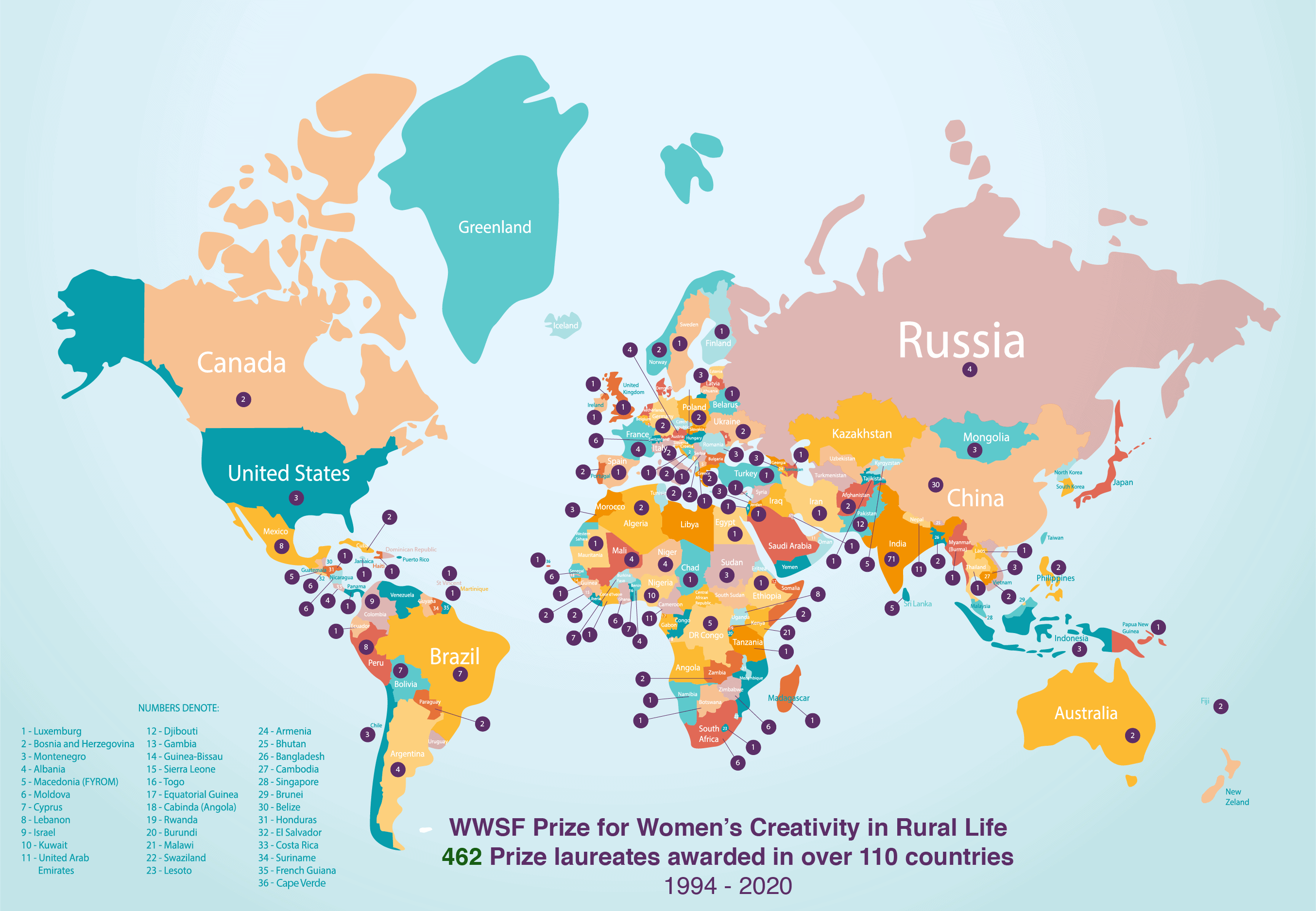
The WWSF introduces 60 Heroes out of 462 Laureates awarded with the WWSF Prize for Women’s Creativity in Rural Life (1994-2020)

UN Women this year is celebrating women’s leadership in all its forms and calling for women and feminists across the world to claim their space in leadership and decision-making. Presently, only 7.4 per cent of Fortune 500 companies are run by women. Despite progress and many broken records, women continue to be excluded in certain sports. Systemic barriers, gender bias, discrimination and gender stereotypes continue to hold women back from rising in STEM careers. Women and girls have been leading climate action and environmental movements, but men occupy 67 per cent of climate-related decision-making roles. 119 countries have never had a woman leader. Just 25 per cent of national parliamentary seats are held by women.

Around the world, the space for civil discourse and movements is shrinking. The media plays a critical role in amplifying women’s voices and stories and drawing attention to key issues. But, with women holding only 27 per cent of top management jobs in media organizations, More than one-third of women’s employment is in agriculture, increasing women’s access to land and providing better support for women farmers is, therefore, essential. The majority of negotiators, mediators, and signatories in peace processes are still men.

In news media, only 24 per cent of the persons heard, read about or seen in newspaper, television and radio news are women. In global news coverage of COVID-19, only one in five expert sources counsulted were women.

Amnesty International stated that across the Middle East and North Africa (MENA), despite some limited reforms, women continue to face entrenched discrimination and daily violence amid the abject failure of governments to stamp out arbitrary arrests, abductions, assassinations, so-called “honour” killings and other forms of gender-based violence, said Amnesty International, marking International Women’s Day. ..Inadequate government action to protect women from gender-based violence and address impunity has long perpetuated this form of abuse.  As a first step, authorities must publicly condemn all forms of gender-based violence and dismantle discriminatory structures that facilitate such abuse – such as male guardianship,” said Heba Morayef.   “They must also ensure that the rights of survivors are protected, that survivors can safely access justice and that perpetrators are held to account. Survivors must be able to access adequate shelter, psycho-social support as well as legal and other services.”

All over the world, a female-driven political awakening is taking place. But this is met with prosecution by the State and persecution by self-vigilante groups. Their experiences are marred with patriarchal subordination, sexualised violence, threat and harassment. They face severe retribution and systematic abuse, even at the hands of the State. It is important to have an enabling environment for these soft targets who face heightened risks as compared to their male counterparts. International obligation requires the State to stop criminalising women defenders, write SHRUTIKA PANDEY & MRINALINI MISHRA in The Leaflet of 8 March 2021.

MRT of 8 March 2021 states that International Women’s Day is not celebrated, a struggle is commemorated – that has not ended- in favor of justice, peace and freedom of each one of them. In a strict sense, feminism seeks make gender issues visible. Under that idea, there should be no censorship or exclusion. Nevertheless, What about trans women? While it is true that some people do not agree that they are part of the feminist movement, the reality is that they also suffer from violence, harassment and discrimination. Therefore, they are in the same fight. With that said, we present to you 8 recognized trans women in history

The Media Line of 7 March writes that “Women face uphill climb to equality in the MENA region” Activists and human rights groups paint a daunting portrait of the equality landscape between the genders in the MENA region, as they prepare to mark International Women’s Day, March 8. The coronavirus epidemic, certainly, did not help the plight of women this past year. Still, going forward, the largest issues facing women in the Middle East were entrenched long before the pandemic hit.

In the Gulf Cooperative Council (GCC) countries, women’s rights defenders have it tough. While prominent Saudi women’s activist Loujain al-Hathloul was freed last month after almost three years in prison [see https://www.trueheroesfilms.org/thedigest/laureates/1a6d84c0-b494-11ea-b00d-9db077762c6c], Samar Badawi [https://www.trueheroesfilms.org/thedigest/laureates/eaed8641-4056-4130-a5ff-fb7bf289cece], Nassima al-Sadah, Nouf Abdelaziz and Maya’a al-Zahrani remain in jail after their 2018 arrests on charges of advocating for women’s rights. “Those who are behind bars are the champions for the change that took place,” Khalid Ibrahim, executive director of the Gulf Centre for Human Rights, told The Media Line, referring to women driving.

In UCANews of 8 March 2021 Mary Aileen D. Bacalso, Manila writes that “Millions of women the world over suffer from discrimination, abuse, poverty, gender-based violence and human rights violations, of which enforced disappearance is one of the most cruel forms. Enforced disappearance, which motivated the international community to establish the International Convention for the Protection of All Persons from Enforced Disappearance, especially affects women.  On this significant occasion, I remember the faces and voices of women I personally encountered from 50 countries that I visited during my almost three decades of advocacy for the cause of the disappeared. Many of them carried pictures of their loved ones. Some gave me every bit of information with the hope against hope to find light amidst the dark night of the disappeared.”

Euromed uses the occasion for a series of podcast. For our first episode, the story you are about to hear is that of Mozn Hassan, a woman human rights defender and the founder and executive director of Nazra for Feminist Studies, a feminist organisation working in Egypt and the MENA region on gender equality and combatting violence against women. See: https://www.trueheroesfilms.org/thedigest/laureates/38B5C337-72F5-C4DE-BC95-95094B9E3939

[https://open.spotify.com/episode/0BLcZcwdDrab9guLW6fHVo]

https://www.woman.ch/campaign-17-days/meet-60-heroes-out-of-462-laureates-awarded-with-the-wwsf-prize-for-womens-creativity-in-rural-life-1994-2020/

https://un-women.medium.com/claiming-womens-space-in-leadership-6acc13946e2

https://www.amnesty.org/en/latest/news/2021/03/mena-gender-based-violence-continues-to-devastate-lives-of-women-across-region/

https://www.ucanews.com/news/women-turn-grief-into-courage/91671#

2021 edition of Geneva film festival kicks off in virtual format

March 6, 2021
The FIFDH kicks off in virtual format for its 19th edition
  • Wolfgang Spindler  reported on 0 March 2021 that the 19th edition of the International Film Festival and Forum on Human Rights in Geneva has gone virtual. Usually every year some 40 000 visitors attend to watch and discuss films that focus on human rights violations. Around 300 filmmakers, human rights defenders and politicians from 25 countries across the globe used to be invited. But, this year, the festival has been forced to change and adapt to the COVID-19 pandemic. Participants are now encouraged to click on ‘likes‘ instead of applauding, as physical presence is not possible.

Isabelle Gattiker is the FIFDH Festival Director. She said that the festival had to reinvent itself. They are proposing videos on demand, that she describes as not being able to replace real cinema theatres. But they have tried “to work on public participation despite the digital format”. Online audiences can comment and ask questions during the showings every evening from 8 pm (CET) from anywhere on the planet.

For the first time ever there will also be a public award, where the viewers can give a mark to the films they’ve watched. At the end of the festival, the film with the highest rating from the official selection will be awarded this prize.

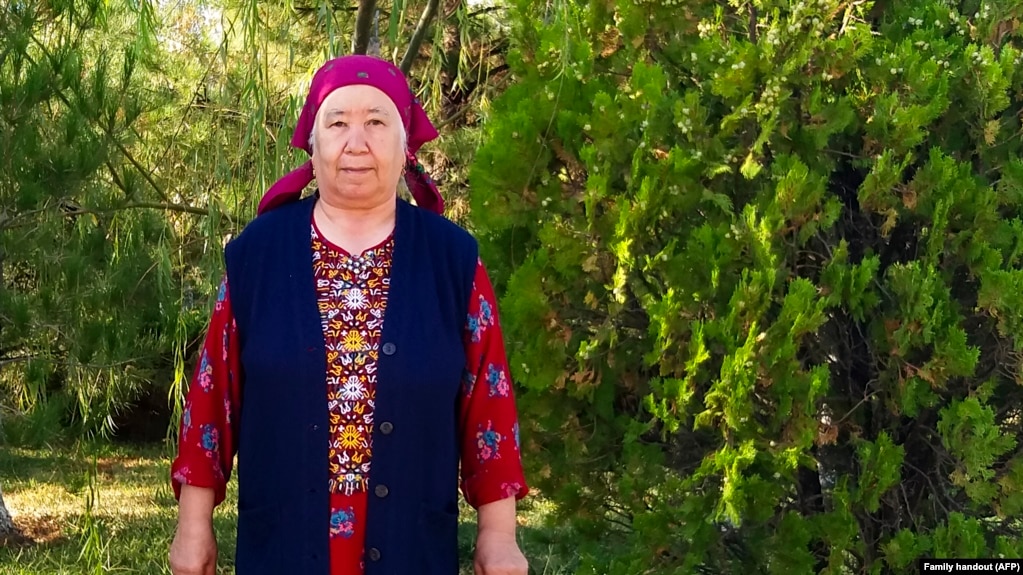
Soltan Achilova This 19th edition is dedicated to Turkmenistan Photojournalist, Soltan Achilova. The 71-year-old was amongst this year’s finalists for the “Martin Ennals Award“, an annual prize known as “the Nobel prize for human rights defenders. See: https://humanrightsdefenders.blog/2021/02/23/soltan-achilova-has-issued-a-rare-rebuke-of-the-turkmen-president-on-youtube/

https://www.euronews.com/2021/03/05/the-fifdh-kicks-off-in-virtual-format-for-its-19th-edition

https://fifdh.org/en/program-2021

Profile of Nicoline Nwenushi wazeh Tumasang from Cameroon

March 6, 2021

On 29 January 2021 the ISHR published this interview with Nicoline Nwenushi wazeh Tumasang, an inspiring human rights defender from Cameroon who shares her story of hope, resilience and fight for gender equality.

I am Nicoline Nwenushi wazeh Tumasang, a gender and development specialist, jurist, human rights defender and civil society activist. I am also the CEO and founder of Pathways for Women’s Empowerment and Development and its Integrated agricultural Training Center (PaWED/IATC), whose missions are to ensure a gender just society in which men and women enjoy equity, contribute and benefit as equal partners in the development of the country and the world. I am also one of the chairs of Cameroon Women’s Peace Movement (CAWOPEM).

My priority areas of intervention include but are not limited to research on women’s equal and meaningful participation; empowerment for women and girl’s for economic rights and freedom; campaign and advocacy towards the realisation of the right to education for crisis-affected and displaced children and youth; advocacy and campaign to end the Anglophone crisis in Cameroon and limit atrocities especially sexual and gender-based violence (SGBV) on women and girls; capacity and movement building; advocacy and lobbying; networking and fundraising.

The year is 2050 : what does the world look like – in particular for women, ethnic minorities, LGBTI people, etc. ?

It is a world where gender and social justice prevails and all stakeholders work in synergy to ensure equity, safety, and contribute their full potential and benefit as common humanity….Through designing advocacy and campaign strategies, empowering, creating awareness and holding service providers accountable. Contributing to building the resilience of the vulnerable masses and creating safe spaces for women, girls and other socially vulnerable groups.

Was there a defining moment in your life that motivated you to defend human rights?

Before joining the civil society world as a human rights defender, I palpated vulnerability in accessing justice. These vulnerabilities, especially that of widows, triggered my passion to defend human rights. However, the outbreak of the Anglophone crisis in 2016 was a decisive period for me.

Do you face any threats and attacks because of your work?

Although I have personally not faced any physical attacks and threats, our work has been greatly impeded by intimidation from government, shrinking civic space measures, insecurity due to the ongoing armed conflicts and government’s denial to call for ceasefire, as well as threats and intimidation from the non-State armed groups.

What could be done for you to be able to work and live safely?

A specific legislation on the protection of human rights defenders particularly women human rights defenders, scrupulous punishment of offenders and compensation for damage will provide us with a safe and conducive working environment. Also, funding of our projects will give our work better visibility and respect.

How does the Covid-19 pandemic affect your work?

From an economic perspective, COVID-19 and the lockdown measures have devastating effects on the women’s economic empowerment projects that we were running hitherto. Our inability to sell three thousand (3000) broiler chickens in our Integrated Agricultural Training Center (IATC) has caused us damages worth some $8000 and a risk for the Microfinance institution to forfeit our assets used as collateral to obtain the loan. This equally means that the women who were beneficiaries of this project and had gained a certain degree of financial independence and security from gender-based violence have lost their livelihood activities and will have to strive to start all over again. Furthermore, telecommuting has left most of our beneficiaries behind due to the lack of android gadgets, sustainable connectivity and power supply.

Photo credit (in order of appearance): PaWED; Center regional delegation of MINPROF for PAWED; Yaoundé’s Women’s March against Kumba killings

http://ishr.ch/news/human-rights-defenders-story-nicoline-nwenushi-wazeh-tumasang-cameroon?fbclid=IwAR2Ri-UkKELjcenwPqC3FKLeh4mVHS2WzWVDMKqX9boNpiVhwUENN2VDpZE

Colombia accounts for half the number of all environmental defenders murdered in 2020

March 3, 2021

On 2 March 2021 Mongabay writes about the terrible situation that of the 331 murders of environmental defenders registered worldwide in 2020, Colombia had the most murders at 177.

Impunity still reigns when it comes to the murders of human rights defenders around the world, according to the Front Line Defenders organization, in its global analysis of 2020. The analysis examined 331 homicides of leaders who fight for the defense of the land, the environment, Indigenous peoples, women and the LGBTIQ community. Of these, 177 cases occurred in Colombia.

During the COVID-19 pandemic, defenders have been exposed not only to the day-to-day risks they face from their work and the virus, but also to pressure from governments to control information. Not all of these HRDs are recognized, but the Digest counts some 50 laureates from Colombia [see https://www.trueheroesfilms.org/thedigest]

Many of those killed, the report states, supported communities in their fight against COVID-19 , worked on food security issues, access to medical care and were critical of governments. For Front Line Defenders , the health crisis increased risks, especially for women defenders, leaders of the LGBTIQ community and vulnerable populations such as refugees, migrants and sex workers.

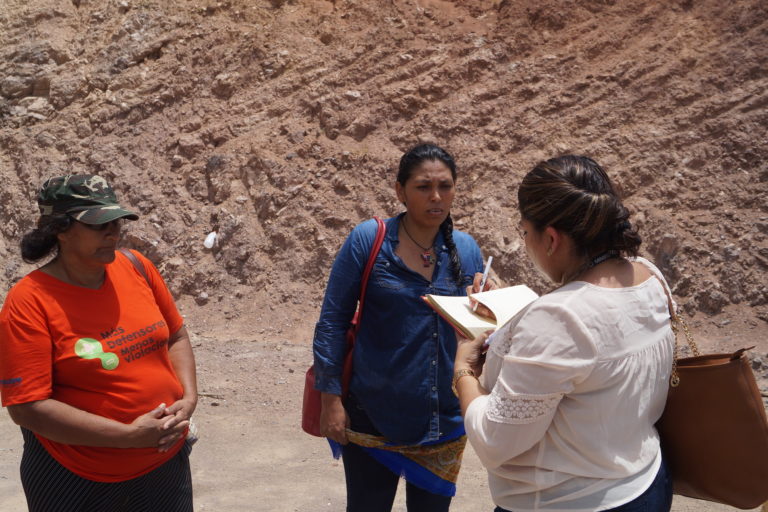
Fidel Heras Cruz traded the tranquility of a simple, quiet life for the front line of the fight against economic powers that threaten the environment. Photo: Courtesy COPUDEVER.

For Shirley Muñoz, who coordinates information systems for the Somos Defensores de Colombia, the pandemic made the state abandonment more evident. Colombia accounts for 53% of all rights defenders cases globally in 2020.

“In many territories, the control of the pandemic was exercised by illegal armed groups through fear and threats, and defenders had to be locked up in their homes, which made them more at risk,” Muñoz said in an interview with Mongabay Latam. A large number of the murders that we verified were committed in or near the defenders’ homes.”

Front Line Defenders believes that cases may continue to increase as verifications of allegations are made, and that upcoming figures from Somos Defensores de Colombia will bring the final number of deaths in 2020 higher.

According to Front Line Defenders, 69% of the murders that occurred last year occurred against leaders who worked in defense of the land, the environment and the rights of Indigenous peoples.

Report authors point out that the Intergovernmental Platform for Biodiversity and Ecosystem Services (IPBES) has emphasized that the loss of biodiversity could put world food security at risk and Indigenous communities play a fundamental role in the conservation of ecosystems. Since 2017, Front Line Defenders has registered 327 murders of defenders of the rights of Indigenous peoples in the world.

They tried to kidnap Irma Lemus (center) on her journey into exile. Photo: Radio Progreso.

In Colombia, violence has been particularly directed against those who participate in the implementation of the Peace Agreement with the guerrillas of the Revolutionary Armed Forces of Colombia (Farc), those who are part of the initiatives to replace drug crops, and those who oppose natural resources extraction projects.

In addition to homicides, Front Line Defenders also recorded the most common types of human rights violations, which in the case of Latin America are physical attacks (27%), detentions and arrests (19%), harassment (13%), legal actions against leaders (13%), and smear campaigns (7%) .

The report notes that many defenders who were detained were also exposed to an increased risk of contracting COVID-19. Even though many countries allowed the release of prisoners due to the pandemic, according to the report, defenders were not among those released despite serving sentences for “non-violent crimes.”

In the case of Colombia, it is likely that the number of attacks on defenders reported in 2020 has dropped, but this does not mean – warns Muñoz – that the violence has. The reason is that during the pandemic it is presumed that there is a large under-registration since many organizations in charge of registering this type of human rights violations were not able to monitor the territories. So, Muñoz concludes, “there were attacks, but not all of them were recorded.”

Javier Francisco Parra was shot dead in the municipality of La Macarena, Meta, Colombia. Photo: Cormacarena.

Front Line Defenders stresses that direct human rights violations were compounded by restrictive legislation that was introduced in response to the pandemic. “Several other laws were passed designed to limit the ability of human rights defenders and civil society to function well and safely. […] Other governments, including Peru, Honduras, Mexico and Panama, allowed development, deforestation and mining projects to continue despite economic closures, ”the report indicates.

Human rights defenders not only have to protect themselves from physical attacks and murder, but also from digital attacks.

In 2020, a team of Front Line Defenders protection coordinators received 304 requests for support for the following reasons: 26% received threats via social media such as Facebook, Twitter and Instagram; 16% were hacked or had their social media accounts compromised; 11% reported telephone surveillance; another 11% reported physical monitoring and 9% said that devices with important information were confiscated or stolen from them.

More than a quarter of those most affected by this type of attack are human rights defenders (17%); rights of the land, the environment and Indigenous peoples (16%). Front Line Defenders claims it received dozens of reports of online gatherings – especially from LGBTIQ groups, feminists and black advocates – that were infiltrated by attackers taking advantage of security breaches

https://www.washingtonpost.com/opinions/2021/03/02/colombia-biden-violence-cauca-duque-peace-farc/

Mary Lawlor addresses Lawlessness in case of Berta Caceres and other HRDs

March 3, 2021

On 2 March 2021, Mary Lawlor – the UN’s Special Rapporteur on Human Rights Defenders – wrote for Amnesty International “Five years after Berta Cáceres was murdered, states are still failing to protect human rights defenders". With the presentation of Mary Lawlor's report to the UN Human Rights Council coming up this week, the piece is worth reading in full:

It’s five years today since environmental human rights defender Berta Cáceres was murdered in her home in Honduras. [see: https://www.trueheroesfilms.org/thedigest/laureates/2AD0CEE4-80CB-3234-04B4-F2ED7ACBE6C5]

She was one of hundreds of human rights defenders killed that year because of their peaceful work, and hundreds more defenders have been killed every year since. Those responsible are rarely brought to justice. Although some have been convicted of Berta Cáceres’ killing, others believed to have been involved have still not been brought to account. [see: https://humanrightsdefenders.blog/2020/06/10/nina-lakhanis-who-killed-berta-caceres-reviewed/]

It’s a familiar and continuing story, in Honduras and across the world, where those responsible for the murder of a human rights defender often enjoy impunity. This week I am presenting my latest report to the United National Human Rights Council in Geneva, and it is on the killings of human rights defenders and the threats that often precede them.

At least 281 human rights defenders were killed in 2019, with a similar number expected to be recorded for 2020. Unless radical, immediate action is taken we can expect hundreds more murders again this year.

Since 2015, at least 1,323 defenders have been killed. While Latin America is consistently the most affected region, and environmental human rights defenders like Berta Cáceres often the most targeted, it is a worldwide issue. At least 281 human rights defenders were killed in 2019, with a similar number expected to be recorded for 2020

Between 2015 to 2019, human rights defenders were killed in at least 64 countries, that’s a third of all U.N. member states. Those collecting the data agree that underreporting is a common problem. The number of defenders killed is likely significantly higher than the figures we have.

We know that on every continent, in cities and the countryside, in democracies and dictatorships, governments and other forces threatened and killed human rights defenders. Many, like Berta Cáceres, are killed in the context of large business projects.

Why do so many governments and others kill human rights defenders working peacefully for the rights of others? Partly because they can, safe in the knowledge that there is unlikely to be the political will to punish the perpetrators.

While some states, particularly those with high numbers of such killings, have established dedicated protection mechanisms to prevent and respond to risks and attacks against human rights defenders, defenders often complain that the mechanisms are under-resourced.

And in too many cases, businesses are also shirking their responsibilities to prevent attacks on defenders or are even responsible for the attacks.

These murders are not random acts of violence that come out of nowhere. Many of the killings are preceded by threats. As Amnesty International noted, Berta Cáceres’ murder “was a tragedy waiting to happen,” and she had “repeatedly denounced aggression and death threats against her. They had increased as she campaigned against the construction of a hydroelectric dam project called Agua Zarca and the impact it would have on the territory of the Lenca Indigenous people.”

And yet her government failed to protect her, as so many governments fail to protect their defenders. Since I took up this mandate in May last year I have spoken to hundreds of human rights defenders. Many have told me about their real fears of being murdered, and have shown me death threats made against them, often in public.

They tell me how some threats shouted in person, posted on social media, delivered in phone calls or text messages, or in written notes pushed under a door. Some are threatened by being included on published hit lists, receiving a message passed through an intermediary or having their houses graffitied. Others are sent pictures through the mail showing that they or their families have been under long-term surveillance, while others are told their family members will be killed. It’s not that complicated. It’s up to states to find the political will to prevent killings by responding better to threats against human rights defenders, and to hold murderers to account

I’ve been told by defenders about a coffin being delivered to the office of an NGO; a bullet being left on a dining room table in their home; edited pictures of them being posted on Twitter, showing them having been attacked with axes or knives; and an animal head being tied to the door of their organization’s office.

Those advocating for lesbian, gay, bisexual, transgender and intersex rights, and women and transgender human rights defenders, are often attacked with gendered threats, and targeted because of who they are as well as what they do. Women and LGBTI people demanding rights in a patriarchal, racist, or discriminatory contexts often suffer specific forms of attack, including sexual violence, smears and stigmatisation.

The murders of human rights defenders are not inevitable, many are signalled in advance, and yet governments fail, year after year, to provide enough resources to prevent them, and fail, year after year, to hold the murderers to account. In fact, states should not only end impunity but also publicly applaud the vital contribution that human rights make to societies.

This week I’ll again remind the U.N. that their members are failing in their moral and legal obligations to prevent the killings of human rights defenders. It’s no use for government officials to wring their hands and agree that the murder of Berta Cáceres and other defenders is a terrible problem and that someone should do something about it.

It’s not that complicated. It’s up to states to find the political will to prevent killings by responding better to threats against human rights defenders, and to hold murderers to account.

https://www.amnesty.org/en/latest/news/2021/03/asesinato-berta-caceres-estados-siguen-sin-proteger-defensores/

Call for nominations for the 2021 Lawyers for Lawyers Award

March 2, 2021

The Lawyers for Lawyers Award aims to honour lawyers who have made significant contributions to the protection of the rule of law and human rights in challenging environments. Through the bi-annual Award, Lawyers for Lawyers generates public recognition for the work and outstanding achievements of lawyers at risk. See for the award and its laureates: https://www.trueheroesfilms.org/thedigest/awards/B40861B3-0BE3-4CAF-A417-BC4F976E9CB0

Nominations must be submitted using the nomination form here. Please send the complete nomination form, including the required attached documents to info@lawyersforlawyers.nl or lawyersforlawyers@protonmail.com.

The closing date for submission of nominations is16 April 2021.

See also: https://humanrightsdefenders.blog/2014/04/24/lawyers-for-lawyers-raises-the-alarm-filipino-lawyers-at-risk/

What can human rights defenders expect from diplomatic support? – the case of the UK

February 25, 2021

On Wednesday 24 February 2021 Megan Thornberry writes about a report by the University of York and others concluding that human rights defenders have been at increased risk during pandemic, and calls for UK government to provide better protection.

There is a dearth of serious and quantitative research into how human rights defenders experience diplomatic support and interest in their work. So, this report – published by Amnesty International UK and the Center for Applied Human Rights, in collaboration with the Law Society of England and Wales, Peace Brigades International UK, Bond and other NGOs – is most welcome.

Research by the University’s Centre for Applied Human Rights (CAHR) and Amnesty International UK shows that during the COVID-19 pandemic, 94 per cent of human rights defenders interviewed reported face threats, death threats, abuse, and harassment.

It is reported that only 6 per cent of these activists, including lawyers, journalists, women’s rights defenders, and LGBTQ+ activists, received support from the UK government.

Researchers interviewed 82 human rights defenders from seven countries about their experiences with UK government support:

  • 40% had contacted the UK government embassy as part of their work in the last two years, where as 70% had contacted other embassies
  • 75% could not recall a time in which their resident country’s UK embassy had spoken out in support of specific at-risk human rights defenders
  • 31% had been in contacted by their UK embassy seeking to further its knowledge about the struggles for human rights

The report highlights the increased threats to LGBTQ+ rights during the pandemic, as poor job security has driven many to return to unsafe and unaccepting hometowns in order to live with family. Particularly in countries such as Russia and the Philippines, this has placed LGBTQ+ activists at a higher risk of abuse. LGBTQ+ activists have also reported an increase in discrimination towards LGBTQ+ groups due to their being blamed for the pandemic.

Dr Piergiuseppe Parisi, a research associate at the Human Rights Defender Hub at CAHR and direct contributor to the report, said: “Human rights defenders are active agents of positive change. The UK should make sure that they are recognised as such, that they have the means to carry on with their crucial work and that they have access to rapid response protection mechanisms when they are in danger.”

Kate Allen, Director of Amnesty International UK, said: “The UK government has pledged to stand up for human rights defenders around the world. We now need to see words turned into action. The UK’s voice has power. It’s time to use it and to be a world leader.”

https://nouse.co.uk/2021/02/24/human-rights-defenders-have-been-silenced-during-the-pandemic-says-york-report

Vietnamese Human Rights Defenders Targeted with Ocean Lotus Spyware

February 25, 2021

On 24 February 2021 a new Amnesty International investigation has identified a campaign of spyware attacks targeting Vietnamese human rights defenders (HRDs) from February 2018 to November 2020. Amnesty International’s Security Lab attributes these attacks to an attack group known as Ocean Lotus. The group has been active since at least 2014, targeting the private sector and HRDs. The spyware attacks investigated and identified by the Security Lab are the latest evidence of a crackdown on freedom of expression in Viet Nam and against Vietnamese activists outside the country.

Viet Nam’s history of Online Repression: Human rights are increasingly under attack both offline and online in Viet Nam. Over the past 15 years, repression linked to online activity has intensified, leading to a wave of harassment, intimidation, physical assault, and prosecution. Amnesty International has documented multiple cases of the arrest and prosecution of HRDs in Viet Nam in retaliation for their online expression since 2006. That year, former prisoner of conscience Truong Quoc Huy was arrested at an internet café in Ho Chi Minh City. Many activists and bloggers have been convicted for “conducting propaganda against the state.” Human rights blogger Nguyen Ngoc Nhu Quynh (Mother Mushroom) was sentenced to 10 years in prison in June 2017 on such charges. Activists and bloggers also face frequent physical assaults by officials or government-connected thugs. [see: https://www.trueheroesfilms.org/thedigest/laureates/70F07728-1E21-4D33-F0BE-460D5A188B9D] Police place activists under house arrest or briefly detain them to prevent them from participating in public events. The government also uses travel bans to prevent activists and HRDs from going abroad and engaging with the international community. In December 2020, Amnesty International published “Let Us Breathe”, a report documenting the widespread criminalization, online harassment and physical attacks faced by activists and bloggers and the rising numbers of individuals detained for peacefully expressing themselves online. [see: https://humanrightsdefenders.blog/2020/12/01/facebook-and-youtube-are-allowing-themselves-to-become-tools-of-the-vietnamese-authorities-censorship-and-harassment/ ]

What is Ocean Lotus?

The cyber-security industry, comprised of individual and company-based researchers, routinely researches and publishes information about attack groups targeting companies and governments. The industry often gives informal names to groups they continuously track based on each group’s unique tactics and tools. Ocean Lotus (also commonly called APT32 or APT-C-00) is one of these groups. The first known Ocean Lotus attack happened in 2014. It targeted US-based NGO Electronic Frontier Foundation (EFF), the Associated Press international news organization and two Vietnamese activists. This group was named Ocean Lotus in a report from the Chinese company Qihoo 360 in May 2015. In 2017, the American cyber-security company FireEye published a report linking the 2014 EFF and other attacks to this same Ocean Lotus. Over the years, Ocean Lotus has developed a sophisticated spyware toolkit comprised of several variants of Mac OS spyware, Android spyware and Windows spyware. They also strategically compromise websites in order to identify visitors and conduct further targeting. More recently, Ocean Lotus was found creating fake media websites based on content automatically gathered online. A significant part of the group’s activities is the targeting of HRDs and civil society. In 2017, the cyber-security company Volexity revealed that over 100 websites were compromised, including many belonging to human rights organizations from Viet Nam, in an attack campaign that they attributed to Ocean Lotus. Numerous other spyware attacks linked to Ocean Lotus against human rights organizations have also been reported, such as the targeting of the Cambodian human rights organization, LICADHO, in 2018. The cyber-security company FireEye describes Ocean Lotus’ operations as “aligned with Vietnamese state interests” based on the list of targeted companies and civil society groups they identified. In December 2020, Facebook published a threat report linking Ocean Lotus’ activities with a Vietnamese company named CyberOne Group. Although Amnesty International was unable to independently verify any direct connection between Ocean Lotus and Cyber One or with the Vietnamese authorities, the attacks described in this investigation confirm a pattern of targeting Vietnamese individuals and organizations.

Attacks against HRDs.

The investigation conducted by Amnesty International’s Security Lab revealed that two HRDs and a non-profit human rights organization from Viet Nam have been targeted by a coordinated spyware campaign. This spyware allows to fully monitor a compromised system, including reading and writing files, or launching other malicious programs. Bui Thanh Hieu is a blogger and pro-democracy activist who goes by the name “Nguoi Buon Gio” (The Wind Trader). He writes about social and economic justice and human rights. He is also critical of the Vietnamese government’s policies and actions regarding its relations with China, including the dispute over sovereignty in the South China Sea. Due to his writing and activism, the licence for an Internet Café he owned in Ha Noi has been revoked and he has been repeatedly subjected to reprisals. He was arrested along with activists Pham Doan Trang [see https://www.trueheroesfilms.org/thedigest/laureates/fe8bf320-1d78-11e8-aacf-35c4dd34b7ba] and Nguyen Ngoc Nhu Quynh in 2009 and was kept in police custody for 10 days for“abusing democratic freedoms to infringe upon the interests of the State.” In January 2013, Bui Thanh Hieu reported on the trial of 14 dissidents in Viet Nam and was arrested and released a few days later. He has since left Viet Nam and has lived in exile in Germany since 2013. Vietnamese Overseas Initiative for Conscience Empowerment (VOICE) is a non-profit organization supporting Vietnamese refugees and promoting human rights in Viet Nam. It was established in 1997 in the Filipino capital of Manila as a legal aid office, before formally registering in the United States in 2007. The organization continues to operate out of Manila and has helped 3,000 Vietnamese refugees resettle in third countries. Since 2011, VOICE has operated an internship programme to equip Vietnamese people with knowledge, skills, and tools to become effective activists. The organization has faced reprisals from Vietnamese authorities several times. Staff at VOICE told Amnesty International that employees and interns have been harassed, banned from travelling, and have had their passports confiscated when they have returned to Viet Nam. Furthermore, state-owned media has run an unsubstantiated smear campaign against VOICE, claiming that the organization is a terrorist group. A blogger residing in Viet Nam has also been confirmed as an Ocean Lotus target by the Security Lab, but due to security concerns their name has been omitted. They are known to have spoken out publicly about the Dong Tam incident on 9 January 2020, when approximately 3,000 security officers from Ha Noi raided Dong Tam village and killed the 84-year-old village leader Le Dinh Kinh. Three police officers were also killed. The Dong Tam incident sparked a national outcry in Viet Nam. Activists and bloggers were at the forefront of the public debate online, prompting a nationwide crackdown on on-line expression by the government. VOICE and the two bloggers all received emails containing spyware between February 2018 and November 2020. These emails pretended to share an important document. They either contained spyware as an attachment or as a link. Once downloaded and launched on the victim’s computer, the spyware would then open a decoy document in line with what the email pretended to share to trick the victim in believing the file was benign. Screenshot of the email sent to VOICE in April 2020The spyware identified by the Security Lab were either for Mac OS or Windows systems. The Windows spyware was a variant of a malware family called Kerrdown and used exclusively by the Ocean Lotus group. Kerrdown is a downloader that installs additional spyware from a server on the victim’s system and opens a decoy document. In this case, it downloaded Cobalt Strike, a commercial spyware toolkit developed by the American company Strategy Cyber and routinely used to lawfully audit the security of organizations through simulated attacks. It allows an attacker full access to the compromised system including executing scripts, taking screenshots or logging keystrokes. Unlicensed versions of Cobalt Strikes have been increasingly used by attack groups, including Ocean Lotus, over the past three years.Example of Windows Spyware Infection Chain from one of the emails received The Mac OS Spyware was a variant of a malware family for Mac OS developed and used exclusively by Ocean Lotus, analysed by Trend Micro in April 2018 and November 2020. It allows the perpetrator to access system information, download, upload or execute files and execute commands.

Soltan Achilova has issued a rare rebuke of the Turkmen President – On YouTube

February 23, 2021

Turkmen journalist Soltan Achilova (file photo)

On 19 February 2021 RFE/RL reported that 71-year-old Turkmen journalist Soltan Achilova has issued a rare rebuke of the Central Asian nation’s authoritarian President Gurbanguly Berdymukhammedov, criticizing him and his government in a video posted on YouTube for failing to provide proper heating and water supply to Ashgabat residents during winter.

In the video statement that appeared on YouTube late on February 18, Achilova, who has previously worked as a reporter for RFE/RL’s Turkmen Service, said she will no longer call Berdymukhammedov “respected” because “millions of Turkmen had stopped respecting you long ago.”

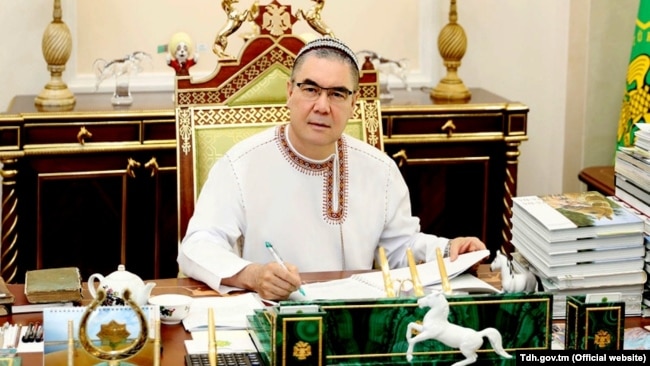
Turkmen President Gurbanguly Berdymukhammedov (file photo)

Such an act of public dissent is a rare occurrence in Turkmenistan, where Berdymukhammedov has run the former Soviet republic with an iron fist since 2006, becoming the center of an elaborate personality cult

Last month, Achilova was named as one of three finalists for the Martin Ennals Award for Human Rights Defenders for her reports from Turkmenistan, one of the most repressive countries in the world. SEE ALSO: Turkmen Journalist Achilova Among Finalists For Top Human Rights Prize [https://humanrightsdefenders.blog/2021/01/18/%e2%80%8b%e2%80%8bmartin-ennals-award-finalists-2021-announced/]. See also: https://www.martinennalsaward.org/hrd/soltan-achilova/#film

Achilova also criticized Berdymukhammedov and his government for what she called a “failure to provide” ordinary people with decent food at acceptable prices, adding that “miserable pensions and salaries in the country” do not provide people with the means to shop for regular items at local markets. Achilova added that the heating system in her apartment had been switched off several times in recent days, which she called an intentional warning over her journalistic activities.

Our fellow Turkmen citizens working in foreign countries have staged several protests recently demanding your resignation. We join those protests and demand your resignation as well because you are incapable of carrying out your duties. We are suffering and you do not even care about it. All you are capable of is ruining our homes and causing our people to suffer,” Achilova said.

Based in Ashgabat, Achilova is currently a contributor to the Vienna-based independent news website Khronika Turkmenistana (Chronicles of Turkmenistan), which focuses on news and developments in Turkmenistan.
Turkmen authorities, who don’t tolerate an independent press, have targeted Achilova in the past for her work as a journalist. SEE ALSO: RFE/RL Correspondent Roughed Up — Again — In Turkmenistan

https://www.rferl.org/a/turkmenistan-journalist-achilova-rare-public-rebuke-president-berdymukhammedov/31111278.html

https://www.timesca.com/index.php/news/23482-turkmenistan-journalist-posts-rare-public-rebuke-of-president-on-youtube