Archive for the 'OMCT' Category
May 22, 2013
“Angola: From Theory to Practice – Its Time to Guarantee the Capacity of Human Rights Defenders to Act” (original: ANGOLA: Da Teoria à Prática – É hora de garantir a capacidade de atuação dos defensores dos direitos humanos) is the title of the report (preliminary findings) published today by The Observatory for the Protection of Human Rights Defenders, a joint programme of the International Federation for Human Rights FIDH and the World Organisation Against Torture OMCT.
 The Observatory carried out a fact-finding mission in Angola, from April 21 to May 1, 2013, to analyse the context in which human rights defenders are operating in the country. The mission delegation met with, amongst others, members of human rights NGOs, journalists, lawyers, artists, along with representatives of national authorities, political parties and foreign diplomatic missions. Read the rest of this entry »
Posted in FIDH, human rights, OMCT | Leave a Comment »
Tags: Angola, fact finding, Human right, human rights, Human rights defender, Human Rights Defenders, International Federation for Human Rights, journalists, legal restrictions, NGO, Non-governmental organization, Observatory, special report, Thomas Masuku, World Organisation Against Torture
April 24, 2013

In its 2013 Annual Report, the Observatory for the Protection of Human Rights Defenders focuses on a new setback impeding the work of human rights defenders. Access to funding, in particular foreign funding, is increasingly being hindered by governments, whose primary intentions are to silence human rights defenders. The Report of the Observatory, a joint programme of the World Organisation Against Torture (OMCT) and the International Federation for Human Rights (FIDH), provides a global review of the violations of NGOs’ right to funding via various forms of restrictions imposed by States. It provides a detailed picture of this as yet insufficiently studied problem. This analysis is illustrated by concrete cases in 35 countries.
As also highlighted by Maina Kiai, United Nations Special Rapporteur on the Rights to Freedom of Peaceful Assembly and of Association, in the Foreword to the Report, “The topic of this year’s Report is most pertinent as lately we have witnessed increased stigmatization and undue restrictions in relation to access to funding and resources for civil society organizations, in an attempt to stifle any forms of criticism […]”.
Based on the legal framework surrounding the right to access to funding and the embryonic jurisprudence on this subject, the Report seeks to foster an in-depth analysis of the negative impacts of these restrictive measures, and addresses recommendations to all stakeholders – beneficiaries, donors, governments and intergovernmental organisations.
Two of the three Final Nominees of the MEA this year (in Egypt and Russia) have to deal with these kind of restrictions.
For those who missed the publication when announced in February: Annual Reports : OBS Annual Report 2013: Violations of the right … – FIDH.
Posted in FIDH, human rights, Human Rights Defenders, OMCT | Leave a Comment »
Tags: annual report 2013, civil society organisations, civil society organizations, FIDH, funding, Human right, Human rights defender, Human Rights Defenders, International Federation for Human Rights, Maina Kiai, MEA nominees 2013, Non-governmental organization, Observatory, OMCT, United Nations Special Rapporteur, World Organisation Against Torture
April 19, 2013
Intervening at the 53rd ordinary session of African Commission on Human and Peoples Rights, on 18 April 2013, the FIDH and the OMCT, in the framework of their Observatory for the Protection of Human Rights Defenders, expressed their grave concern about the situation of human rights defenders in Africa, which they stated had not observed an improvement. Violations of human rights targeting defenders have continued, notably in Algeria, Cameroon, Chad, Democratic Republic of Congo DRC, Djibouti, Egypt, Gambia, Sudan and Zimbabwe. Judicial harassment based on false accusations, accompanied by arbitrary arrests and detentions, remains the most common harassment technique, especially in Algeria and Zimbabwe, but also in Cameroon, Djibouti, Egypt, The Gambia and Sudan. In several countries, including The Gambia and DRC, defenders have also been subjected to threats and smear campaigns. In late December 2012 / early January 2013, the presence in Goma in the Kivu region of non-State armed groups notably led to increased threats against local defenders, forcing many of them to hide or flee into exile. The targeted defenders are, inter alia, members of NGOs and lawyers in Chad, DRC, Zimbabwe, journalists in Djibouti, trade unionists fighting against impunity in Algeria, Djibouti, DRC, Zimbabwe or defending land rights and the right to a healthy environment in Cameroon; defenders of the right to work in Algeria and the right to health care in Sudan; advocates for the abolition of the death penalty in The Gambia, women’s rights in DRC, The Gambia, and free and fair elections in Zimbabwe; and activists campaigning against arbitrary detention in Egypt. Some excerpts follow but the reference to the full report is below:
Read the rest of this entry »
Posted in FIDH, human rights, Human Rights Defenders, OMCT | Leave a Comment »
Tags: Africa, African Commission on Human and Peoples' Rights, Algeria, Arab region, Arab spring, Burundi, congo drc, Djibouti, DRC, Ethiopia, FIDH, funding, Gambia, human rights, Human rights defender, Human Rights Defenders, impunity, International Federation for Human Rights, judicial harassment, Non-governmental organization, Observatory for the Protection of HRDs, OMCT, regulation, Sudan, threats, World Organisation Against Torture, Zimbabwe
April 11, 2013
Interesting example of how NGO pressure can have effect on the EU: last December, FIDH organised a round of advocacy with its Vice-President and Laureate of the MEA 2006, Arnold Tsunga, to convey to the European Union its concerns around the ongoing risks for human rights defenders in the context of political deadlock and pre-electoral period [“Zimbabwe: Ongoing risks for human rights defenders in the context of political deadlock and pre-electoral period”, report of the Observatory for the protection of human rights defenders published in November 2012.] FIDH’s objective was to gear up the EU’s attention to ensure early warning and appropriate reaction in case of human rights violations taking place in the electoral cycle staring with the upcoming referendum on the new Constitution before the holding of Presidential elections in the summer of this year. FIDH’s advocacy was reflected in the European Parliament’s prompt reaction to the arrest of Okay Machisa, National Executive Director of ZimRights, and two other ZimRights members Leo Chamahwinya, Dorcas Shereni through an urgent resolution adopted on 7 February, which also relays the Observatory report recommendations. In addition, the EU Delegation and Heads of Missions in Harare issued a Statement on 22 February to indicate the EU’s particular concern around the pattern of incidents of harassment against civil society organisations and to call on the authorities to demonstrate impartiality in their relation to civil society.
via Zimbabwe : UE pays particular attention to the situation of … – FIDH.
Posted in FIDH, human rights, Human Rights Defenders, MEA, OMCT | Leave a Comment »
Tags: Arnold Tsunga, civil society organisations, election violence, EU, European Parliament, European Union, FIDH, Harare, Human right, human rights, Human rights defender, International Federation for Human Rights, MEA, NGO, Observatory, Observatory for the Protection of HRDs, OMCT, World Organisation Against Torture, Zimbabwe
March 26, 2013
I have reported extensively over the last days on the question of growing judicial and administrative harassment of NGOs and human rights defenders, including the adoption of a resolution last week by the UN Human Rights Council recalling that “domestic law and administrative provisions […] should facilitate the work of human rights defenders, including by avoiding any criminalization, stigmatization, impediments, obstructions or restrictions thereof contrary to international human rights law”. Still, this is exactly what the Russian Federation is doing at the moment according to a statement by the Observatory for the Protection of Human Rights Defenders: Hundreds of NGOs are being subjected to inspections by Government officials across the Russian Federation. This follows the adoption in 2012 of several laws contradicting the right to freedom of association, peaceful assembly and expression. …Since the end of February until today, dozens of inspections of NGOs have been launched in at least 13 regions of the Russian Federation, including Krasnodar, Moscow, Orenburg, Penza, Perm and Altai territories, St. Petersburg, Primorsky, Saratov and Rostov provinces. In St. Petersburg, the Spokesperson for the Office of the Prosecutor declared on March 19, 2013 that over the month some 5,000 inspections would be conducted to check compliance with the laws on terrorism, extremism as well as other offences. After this date, dozens of NGOs were inspected in St. Petersburg, including LGBT, human rights and environmental NGOs. Across the country, these operations have been conducted by prosecutors, together with, in some cases, officials from the Ministry of Justice, the Ministry of Internal Affairs, the Federal Security Service FSB, the Ministry of Emergencies, the Federal Service for Supervision of Protection of Consumer Rights and Human Well-Being, the Tax Inspectorate, the Centre E, a unit specialised in anti-extremism, and even the fire service. According to the information received, inspections have particularly targeted groups that supposedly receive foreign funding and conduct monitoring or advocacy work. The scope of the inspections appears to be far-ranging, though inspectors have particularly insisted on the issue of funding. The massive character as well as methods used during inspections disproportionately interfere with the right to freedom of association: the number of inspections is massive, most inspections are unannounced, NGOs have been given short deadlines to provide a huge amount of documents and vague and non-exhaustive lists of requirements. In the case of prominent NGO Human Rights Centre “Memorial”, a pro-government TV crew was informed and present during the inspection. The news report entitled “Memorial hides its income from the Prosecutors Office” was broadcast the same day before the end of the inspection, in flagrant violation of the presumption of innocence. “Information on NGOs sources of funding are public. Read the rest of this entry »
Posted in FIDH, human rights, Human Rights Defenders, OMCT | 1 Comment »
Tags: Civil society, FIDH, freedom of association, funding, Human right, Human rights defender, Human Rights Defenders, International Federation for Human Rights, Justice Ministry, legal restrictions, NGOs, Non-governmental organization, Observatory for the Protection of HRDs, OMCT, Russia, Souhayr Belhassen, UN Declaration, UN Resolution, United Nations Human Rights Council, World Organisation Against Torture
March 16, 2013
I reported earlier that on 28 February the International Federation for Human Rights (FIDH) and the World Organisation Against Torture (OMCT), in the framework of their joint programme the Observatory for the Protection of Human Rights Defenders, organised a meeting on (legal) restrictions increasingly imposed on human rights defenders. This was followed up on 11 March with an oral intervention at the UN Human Rights Council. 
The statement referred to the recently published Annual Report 2013 of the Observatory, which states that NGOs’ access to funding, in particular foreign funding, is increasingly being hindered by governments around the world. Restrictive laws combined with unfounded criticism, smear campaigns and judicial harassment directed against human rights defenders because of the source of their funding create a hostile environment towards their activities as a way to silence them. Belarusian law now prohibits any possibility for an NGO to hold a bank account in an institution based abroad, and criminalises the use of so-called unauthorised funds. These new provisions were adopted as FIDH Vice-President and “Viasna” President Ales Bialiatski was sentenced to 4.5 years’ imprisonment after he made use of foreign funds to finance human rights activities in his country. Read the rest of this entry »
Posted in FIDH, human rights, OMCT | 3 Comments »
Tags: Bahrain, Bangladesh, Belarus, Egypt, Ethiopia, FIDH, funding, Geneva, Human right, human rights, Human rights defender, Human Rights Defenders, India, International Federation for Human Rights, judicial harassment, legal restrictions, Non-governmental organization, Observatory for the Protection of HRDs, OMCT, Russia, United Nations, United Nations Human Rights Council, World Organisation Against Torture
February 27, 2013
On Thursday 28 February OMCT and FIDH organise a meeting in room XXI in the Palais des Nations of the UN (starts 13h00) on the topic: ‘RESTRICTIONS ON NGO FUNDING: FROM HARASSMENT TO CRIMINALISATION“. Many of my recent posts have dealt with this increasing phenomenon which is simply the more sophisticated way of Governments repressing the voices of human rights defenders, activists and dissidents.
The programme looks as follows:
Introductory remarks
Ms. Kyung-wha Kang, Deputy High Commissioner for Human Rights
H.E. Mr. Colin Wrafter, Director, Human Rights Unit, Department of Foreign Affairs and Trade, Ireland
Chair Antoine Bernard, FIDH CEO
Panel speakers:
Gerald Staberock, OMCT Secretary General
Olga Sadovskaya, CAT –member of the OMCT GA– (Russia)
Farida Makar, CIHRS (Egypt)
Adil Rahman Khan, ODHIKAR –member of the OMCT GA- (Bangladesh)
Entrance is free and public but one should get access to the UN building.
Posted in FIDH, human rights, Human Rights Defenders, OMCT | 4 Comments »
Tags: activists, civil society organisations, funding, Human right, Human Rights Defenders, International Federation for Human Rights, legal restrictions, meeting, NGOs, Non-governmental organization, Office of the United Nations High Commissioner for Human Rights, OMCT, repression, side event, United Nations
February 19, 2013
Mr. Khalil Maatouk is a human rights lawyer who has defended numerous prisoners of conscience before Syrian courts. He was arrested with a friend by armed men on October 2, 2012 (!!) at a checkpoint in Sahnaya (in the countryside outside of Damascus). Since then, 139 days later, no further information could be obtained regarding his situation and whereabouts. Neither of the men has been seen since, although even the already extensive period of legal custody of 60 days elapsed. Despite repeated requests by his relatives and lawyers, the Syrian authorities have failed to provide information on Mr. Khalil Maatouk’s fate and whereabouts and did not allow him to contact his family and lawyers. While two witnesses claimed having seen Mr. Maatouk in a detention centre, the judicial authorities have recently denied holding him in custody. 
Read the rest of this entry »
Posted in FIDH, human rights, Human Rights Defenders, OMCT | Leave a Comment »
Tags: Damascus, FIDH, Forced disappearance, Human right, Human rights defender, Human Rights Defenders, International Federation for Human Rights, lawyer, legal profession, Observatory, OMCT, Syria, World Organisation Against Torture
February 17, 2013
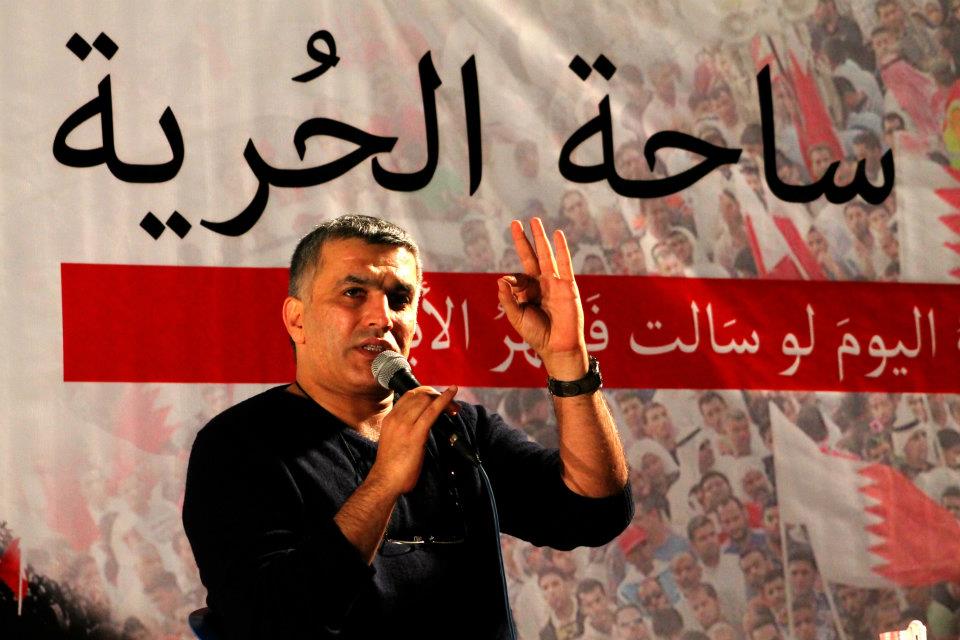
 The Observatory for the Protection of Human Rights Defenders, a joint programme of the International Federation for Human Rights (FIDH) and the World Organisation Against Torture (OMCT), published on 14 February 2013 a report, which presents the findings of a judicial observation mission conducted on the trial in appeal of prominent human rights defender Nabeel Rajab. The report concludes that a series of violations of the right to fair trial marred the judicial process and that Nabeel Rajab is suffering judicial harassment (and was sentenced to 2 years imprisonment) for merely advocating for and exercising the right to peaceful assembly in Bahrain. The report is available in English and Arabic.
Nabeel Rajab is President of the Bahrain Centre for Human Rights (BCHR) and Director of the Gulf Centre for Human Rights (GCHR), Deputy Secretary General of FIDH, and the BCHR was 2012 nominee for the MEA. Read the rest of this entry »
Posted in FIDH, human rights, Human Rights Defenders, OMCT | 6 Comments »
Tags: Bahrain, Bahrain Centre for Human Rights, Bahrain Independent Commission of Inquiry, Gerald Staberock, human rights, International Federation for Human Rights, Manama, MEA 2012, Middle East, Nabeel Rajab, Observatory for the Protection of HRDs, religion, Souhayr Belhassen, trial observation, World Organisation Against Torture
January 24, 2013
The Observatory for the Protection of Human Rights Defenders, a joint programme of the FIDH and OMCT, received information from the local group “Voix des sans-voix pour les droits de l’Homme ” about serious threats against the HRD Philomène Muamba, President of ADDEF ( l’Association pour la défense des droits des enfants et femmes opprimés), based in Kasaï-Occidental. It seems that on 17 January at 03h00 in the morning 3 policemen and 2 military came to the house of Ms Philomène Muamba, in Tshikapa, without any written order. As she was not home, they expressed threats against her little sister. Philomène Muamba then lodged a complaint against X with both the military and civilian prosecutors in Tshikapa.
Since 2011 Philomène Muamba has received several death threats on the telephone along the lines that “you had us arrested and thought we were going to die in jail but …we will bury you”. In 2011 et 2012, she was indeed at the basis of a trial that had led to the conviction of persons who had been accused of several cases of rape. And one should note that on 17 January 2013 around 20h00 several detainees – including men mentioned above – had escaped from the central prison in Tshikapa.
The original report is only in French: http://www.omct.org/fr/human-rights-defenders/urgent-interventions/congo-dem-republic/2013/01/d22133/
Posted in FIDH, human rights, Human Rights Defenders, OMCT | Leave a Comment »
Tags: death threats, FIDH, Human rights defender, impunity, International Federation for Human Rights, Observatory, OMCT, Philomène Muamba, Protection of Human Rights Defenders, rape, Tshikapa, women human rights defenders, World Organisation Against Torture

 The Observatory carried out a fact-finding mission in Angola, from April 21 to May 1, 2013, to analyse the context in which human rights defenders are operating in the country. The mission delegation met with, amongst others, members of human rights NGOs, journalists, lawyers, artists, along with representatives of national authorities, political parties and foreign diplomatic missions. Read the rest of this entry »
 Hans Thoolen on Human Rights Defenders and their awards