Archive for the 'MEA' Category
October 3, 2014
Reminder: Martin Ennals Award 2014 to be announced at Ceremony in Geneva on 18:00, 7 October, at Uni Dufour. Watch live on: www.martinennalsaward.org

for more detail on the nominees: https://thoolen.wordpress.com/2014/06/22/announcement-ceremony-of-the-martin-ennals-award-2014-on-7-october/
Posted in awards, Human Rights Defenders, MEA | Leave a Comment »
Tags: Adilur Rahman Khan, Alejandra Ancheita, awards, Cao Shunli, human rights award, Human Rights Defenders, internet, Martin Ennals Award, MEA, MEA 2014, MEA ceremony, Prince Zeid Raad Zeid al-Hussein, streaming, the United Nations High Commissioner for Human Rights, Zeid Ra'ad Al Hussein
August 18, 2014
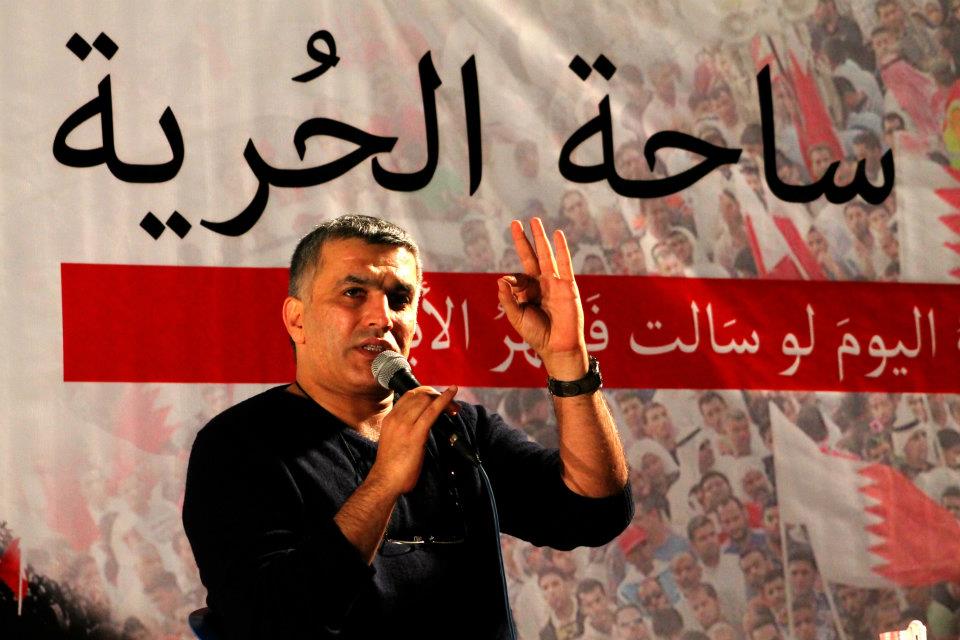
On 17 August 2014 Nabeel Rajab, who heads the Bahrain Center for Human Rights (the MEA Final Nominee of 2012), posted a strong piece in the Huffington Post which contains an impressive stand on why he takes the risks he does as well as a scathing attack on the western governments, especially those of the UK, for putting (arms) business before human rights consideration.
Nabeel Rajab, Final Nominee MEA 2012
Read the rest of this entry »
Posted in human rights, Human Rights Defenders, MEA | 2 Comments »
Tags: arms sales, Bahrain, Bahrain Center for Human Rights, diplomatic pressure, Huffington Post, Human Rights Defenders, illegal detention, MEA final nominee 2012, Middle East, Nabeel Rajab, UK, USA
June 22, 2014
The City of Geneva and the Martin Ennals Foundation have set the day of the 2014 ceremony for 7 October 2014, 6 pm, at Uni-Dufour, Geneva, during the opening day of the Human Rights Week hosted by the University of Geneva. Save this date in your agenda and register as from now online at: http://www.martinennalsaward.org/.
The laureate will be selected among the three Final Nominees of the 2014 edition:
- Ms Cao Shunli (China), who lost her life on March 14th, 2014, had vigorously advocated since 2008 for access to information, freedom of speech and freedom of assembly, encouraging strengthened domestic implementation of international mechanisms.
- Mr Adilur Rahman Khan (Bangladesh) has worked since the 1990’s on a wide range of humain rights issues, such as illegal detention, enforced disapearances, extra-judicial killing, and elections monitoring with his non-governmental organization, Odhikar.
- Ms Alejandra Ancheita (Mexico) founder and Executive Director of ProDESC, has worked for more than 15 years with migrants, workers, and indigenous communities to protect their land and labour rights vis a vis transnational mining and energy companies.
The Jury of the Martin Ennals Award is made up of ten of the world’s leading human rights organizations: Amnesty International, Human Rights Watch, Human Rights First, International Federation for Human Rights, World Organisation Against Torture, Frontline Defenders, the International Commission of Jurists, EWDE-Germany, the International Service for Human Rights, and HURIDOCS.
Posted in awards, Human Rights Defenders, MEA | 2 Comments »
Tags: Adilur Rahman Khan, Alejandra Ancheita, awards, Bangladesh, Cao Shunli, China, City of Geneva, Geneva, human rights award, human rights week, Jury MEA, MEA, MEA ceremony, MEA final nominee 2014, Mexico, the Martin Ennals Foundation
June 6, 2014
The ISHR Monitor of June 2014 contains a good wrap-up of the situation regarding reprisals against Human Rights Defenders written by Eleanor Openshaw under the title: “Reprisals: States must reduce unacceptable human cost of cooperating with UN”.
‘Regrettably, reprisals against persons cooperating with the United Nations, its mechanisms and representatives in the field of human rights continue. ...’ said UN Secretary-General Ban Ki-moon in 2013. In response, the UN Human Rights Council adopted a landmark resolution in September 2013 calling on the Secretary-General to designate a UN-wide senior focal point to combat reprisals. Regrettably, Human Rights Council resolution 24/24 was blocked by the UN General Assembly in New York in December 2013, but NGOs are now calling again on States to revisit the issue as a matter of priority. “The disappearance, arbitrary detention, ill-treatment and death of human rights defender Cao Shunli in retaliation for her efforts to hold China to account for its human rights record at the UN is just one example among many of the unacceptable human cost of cooperating with the UN,’ said Ms Openshaw.
A number of positive recent developments (referred to in earlier blog posts [https://thoolen.wordpress.com/tag/reprisals/]) include a May 2014 decision by the African Commission on Human and Peoples’ Rights in Angola to appoint its own focal point, and a joint statement delivered by Botswana on behalf of 56 States in Geneva in March 2014 recognising that ‘the current response by the UN and the member States in addressing reprisals is inadequate’ and calling on them to ‘address cases of reprisals through a more effective and coordinated approach.‘
‘With the opportunity for the General Assembly to revisit the issue in September, NGOs are urging States to transfer the political will shown on this issue in Angola and Geneva to New York, and achieve an outcome that challenges impunity for the perpetrators of reprisals and increases protection for human rights defenders and others who engage with the UN human rights system,‘ Openshaw said (Program and Advocacy Manager, e.openshaw[at]ishr.ch).
The statement was signed by a coalition of 12 leading international and regional NGOs (of which 8 are members of the MEA Jury or Regional Panel):
- Amnesty International
- Association for the Prevention of Torture (APT)
- Asian Forum for Human Rights and Development (FORUM-ASIA)
- Cairo Institute for Human Rights Studies
- Commonwealth Human Rights Initiative
- Conectas Direitos Humanos
- Human Rights House Foundation
- Human Rights Watch
- International Commission of Jurists
- International Federation for Human Rights (FIDH)
- International Service for Human Rights
- World Organisation Against Torture (OMCT)
full article: Reprisals: States must reduce unacceptable human cost of cooperating with UN | ISHR.
Posted in human rights, Human Rights Defenders, MEA, UN | 1 Comment »
Tags: anti-reprisals focal point, Cao Shunli, coalition, human rights, Human Rights Council, Human Rights Defenders, MEA, reprisals, retaliation, UN, UN General Assembly, UN Human Rights Council, UN Resolution
June 2, 2014
The Guardian of 1 June 2014 contains a long and fascinating interview with Nasrin Sotoudeh, the Iranian lawyer who won the Sacharov Prize and was a Final Nominee of the MEA in 2012. The now freed Iranian human rights lawyer – in an interview with Simon Tisdall – speaks out in a moving way about why she is a human rights defender and how she coped with the separation from her family. The title of the piece: ‘I’ve a bad feeling about the women I left behind’ is telling of her concern for others.

(Nasrin Sotoudeh with her son, Nima, after being freed from prison last year. Photograph: Behrouz Mehri/AFP/Getty Images)
“Nasrin Sotoudeh’s seven-year-old son, Nima, wants to go out to play. His mother, the leading Iranian human rights lawyer whose arbitrary imprisonment in 2010 sparked an international campaign to free her, has been talking for ages. Nima is bored. At the door to their apartment in north-west Tehran, Nasrin takes Nima in her arms. The boy stands on tip-toe to embrace his mother. They hold each other for a minute or more. It is as though the two cannot bear to be separated..…….”. For more: Freed Iranian rights lawyer: Ive a bad feeling about the women I left behind | World news | theguardian.com.
other posts on Nasrin: https://thoolen.wordpress.com/tag/nasrin-sotoudeh/
Posted in human rights, Human Rights Defenders, MEA | Leave a Comment »
Tags: detention, Final Nominee MEA 2012, human rights awards, Human Rights Defenders, human rights lawyer, hungerstrike, Iran, Iranian human rights, MEA, Nasrin Sotoudeh, Nasrine Sotoudeh, Sacharov, Simon Tisdall, the Guardian, woman human rights defender
May 31, 2014
On the eve of celebrations to mark the 70th anniversary of the Normandy landings, MEA Laureate 2008 Mutabar Tadjibayeva speaks out through her exile-based NGO “Fiery Hearts Club”. She passionately appeals to Western politicians invited to the ceremony not to sit next to Russian President Vladimir Putin on the honor podium. The text is below is reproduced as is (it exists also in Russian):
We see the following solid arguments that have pushed us to make this appeal.
Firstly, it is continuing policy of Putin’s intervention in the internal affairs of Ukraine that has given rise to the so-called “Ukrainian events”, has led to increased ethnic strife between the fraternal Slavic peoples of Ukraine and escalation of the armed conflict, has resulted in many casualties on both sides of the incomprehensible, artificially stirred up conflict, has led to separatism and threat of the collapse of the independent, sovereign nation.
One of these days the Ukrainian people democratically elected their new president. Despite this, the situation in Ukraine causes serious concerns and is far from stability. Putin’s policy of interference and provoking conflicts continues and poses a serious threat to achievement of the peacebuilding process and stabilization of the situation in the country. Western leaders should make it clear to Putin that such interference in the internal affairs of Ukraine is intolerable. They must refuse sitting next to him during the celebrations in Normandy, which is an excellent diplomatic opportunity to express such a stance.
Secondly, the major concern is the situation with the civil society in Russia under Putin. Following overall Putin’s “hunt for foreign agents” represented by Russian human rights organizations, the government put the “foreign agent” label on any independent public activity. Russian human rights activists argue that the sign “foreign agent” is offensive for human rights, environmental and social organizations. Their goal is to deliver assistance to people, defend generally valid, legal and democratic principles. This way they serve the country and the peoples of Russia.
Human rights activities are not possible without an appeal to the government and the public opinion, without involvement of activists into civic campaigns. The “foreign agent” label in the current social atmosphere of xenophobia and hatred towards the West undermines the very idea of the civilian control because it makes any public activities of non-governmental organizations senseless and first of all their appeals to officials for the sake of interests of individuals and the society. With such a label, work of human rights organizations has no sense, provokes and justifies public hatred towards human rights defenders, and pushes human rights organizations to liquidation or disbandment.
How can Putin, the initiator of all-out struggle against “foreign agents” among Russian human rights activists and the oppressor of free activities the of Russian civil society, sit on the podium next to the honorable leaders of democratic countries during the celebrations of the 70th anniversary of the Allied landings in Normandy? It is beyond our understanding.
Thirdly, the next reason, which pushed us to make this appeal, is associated with the recent tragic deaths of well-known Russian human rights activist Andrei Mironov and Italian journalist Andrea Roccella in Ukraine during armed conflicts. Italian journalist Andrea Roccella and his translator Andrei Mironov were killed on the night of May 25 in the village of Andreevkaunder Slavyansk. According to preliminary data, their car came under a mortar attack. During the accident, French correspondent William Rogulon was wounded. Although both sides of the conflict, the official Ukrainian armed forces and the separatist armed groups supported by Russia, blame each other for the tragedy, it has been widely discussed in the Internet the version according to which the group of journalists could be attacked by separatists.
OSCE has called the death of Roccella and Mironov a terrible reminder of how little is done in the east of Ukraine to protect journalists risking their lives in the conflict zone. This and all other deaths of innocent victims of the Ukrainian conflict require immediate and thorough investigation and punishment of those responsible for casualties. We believe that Russian President Vladimir Putin is personally responsible for what is happening in Ukraine, including the tragic deaths of the Italian journalist and the Russian human rights activist. The solemn events in Normandy is also dedicated to the memory of million victims of World War II, and Putin as one of the main perpetrators of human casualties occurring in Ukraine, is just not worthy to take part in the celebrations in Normandy.
Fourthly, it is under Putin’s ruling that numerous cases of kidnapping and illegal extraditions of Uzbek citizens temporarily residing on the territory of Russia occur as well as those who seek asylum from persecution of the Uzbek authorities in third countries, including Uzbek labor migrants, whom the Uzbek authorities want to describe as “religious extremists and terrorists”. It is Putin that allows the Uzbek authorities increase their unauthorized surveillance and monitoring of millions of Uzbek labor migrants working in Russia through their agent intelligence networks.
Cases of unauthorized detention and abduction of Uzbek labor migrants in Russia by the Uzbek security services have increased. Sometimes the Uzbek security services work through official channels, make official requests to the Russian authorities, for instance, they make requests for extradition of those, who are suspected of religious extremism in Uzbekistan. The Russian authorities arrest Uzbek labor migrants and extradite them to Uzbekistan, very often even when their complaints are under consideration of the European Court of Human Rights in Strasbourg and/or the Court ordered the Russian authorities not to extradite Uzbek citizens.
It is under Putin’s regime that ethnic nationalism is growing in Russia against immigrants or non-indigenous ethnic groups of Russia and numerous fascist and ultranationalist groups conduct their activities with impunity. Every year, these groups murder with impunity and physically maim over a hundred representatives of other ethnic groups residing in Russia. The Russian enforcement agencies do not investigate most of such cases and do not punish those responsible for such crimes.
Websites of fascist groups openly promote violence and methods of punishment, torture against “visitors”, and majority of materials of the Russian media are full of discriminatory, one-sided approach to coverage of events related to non-indigenous residents of Russia. Rights of migrant workers from the former Soviet countries are grossly violated in Russia not only by fascist groups, but also by employers, government and administrative bodies and officials. Most of such cases are not investigated and perpetrators remain unpunished.
We call Western politicians to refuse sitting next to Putin during the celebrations in Normandy.
The U.S.A. President Barack Obama and President of France Francois Hollande will meet with Russian President Vladimir Putin on June 5, 2014 on the eve of the celebrations in Normandy. We call the Presidents of the United States and France to take it seriously and demand that Putin provides clarifications on the above-described human rights violations.
Western politicians should pay special attention to the issue of violation of human rights in post-Soviet countries, who are under the influence of Moscow’s policy and the role of Putin’s government in these offenses against citizens of post-Soviet countries, like, for instance, cases of abductions and extraditions.
Fiery Hearts Club International Human Rights Organization also intends to organize a protest near the venue of the celebrations to mark the 70th anniversary of the Allied landings in Normandy and in the French capital. We also invite to participate in the planned protest actions those, who will support our appeal.
We also call our partners, international organizations, non-profit organizations, ordinary citizens, including citizens of France and other democratic countries of the world, young people in these countries to support our appeal and express their support by signing this appeal.
In order to support our appeal, by signing it and/or taking part in the protest, please contact us by email mutabartadjibaeva[at]gmail.com
Thank you in advance for your support!
Sincerely,
Mutabar Tadjibayeva,
Head of “Fiery Hearts Club”
International Human Rights Organization
28 may 2014
France, Paris
http://jarayon.com/en/index.php/component/k2/item/249-we-appeal-to-politicians-not-to-sit-next-to-putin
Posted in Human Rights Defenders, MEA | 1 Comment »
Tags: Andrei Mironov, Civil society, Club Flaming Hearts, diplomatic pressure, Fiery Hearts Club, foreign agent law, MEA Laureate 2008, migrants, Mutabar Tadjibayeva, Normandy, Putin, Russia, Russian President Vladimir Putin, Ukraine, Uzbekistan
May 27, 2014

(Picture taken May 25 shows the domestic and foreign passports of Russian rights defender Andrei Mironov, reportedly killed near Ukrainian town of Slavyansk. AFP POOL-/AFP/GETTY IMAGES)
“It’s hard for me to believe that Andrei Mironov is dead” writes
Olivia Ward, Foreign Affairs Reporter of the Toronto Star on 25 May 2014. Indeed a terrible shock. I met him for the first time in 2004 when he accompanied the MEA Laureate
Lida Yusupova of
Memorial to the ceremony in Geneva. According to an
Agence France- Presse report from Slavyansk, Ukraine, the veteran
Russian human rights defender and sometime war zone fixer, used up the last of his nine lives on Sunday. He was acting as a translator for Italian photojournalist Andrea Rocchelli, who was also killed. According to a French photographer who escaped with leg wounds, the two men were hit by shrapnel from mortar shells as government troops and pro-Russian separatists continued to battle for territory in eastern Ukraine.
Olivia Ward describes Andrei as a “slight, self-effacing man of 60, with a puckish sense of humour, he belied his frail appearance with an iron will to do good in the world. In 1986, that got him a year in a Soviet labour camp as an “anti Soviet dissident” – a time he used to channel his talent for languages, including French and Italian. Nor did he let up on government abuses after the fall of the Soviet Union. As a human rights campaigner linked with the venerable rights organization Memorial , he snapped at the heels of Boris Yeltsin’s and Vladimir Putin’s governments, especially during the two bloody wars when Russian troops battled Chechen separatist fighters…..“You don’t understand,” he rasped. “I have to go and witness what is happening. If I don’t, who will?”
“Andrei dodged so many bullets in his decades of battling impunity that it is hard to believe he is gone. It would be harder still if the truth were buried along with him” concludes Olivia Ward, who covered the former Soviet Union as bureau chief and correspondent from 1992 to 2002. For the full story see: Death in Ukraine: bitter end for Russian human rights hero | Toronto Star.
Posted in human rights, Human Rights Defenders, MEA | Leave a Comment »
Tags: AFP, Andrei Mironov, conflict, death, dissidents, Human rights defender, in memoriam, killing, Lida Yusupova, MEA 2004, Memorial, monitoring, Olivia Ward, russian, Ukraine
May 24, 2014

Nabeel Rajab, Final Nominee MEA 2012
According to AhlulBayt News Agency prominent human rights defender Nabeel Rajab has been released in Bahrain today, 24 May 2014. The Bahrain Centre for Human Rights (BCHR) and the Gulf Centre for Human Rights (GCHR) welcome back their – respectively – President of the BCHR and General Secretary of the GCHR, free after a detention that lasted approximately two years. The two organisations warn that thousands of others continue to be imprisoned including BCHR and GCHR founder Abdulhadi Al-Khawaja and Naji Fateel. It is to be noted that Nabeel Rajab is being released because he served the full length of his arbitrary detention sentence.
Nabeel Rajab was initially sentenced on 16 August 2012, to three years in prison for advocating peaceful demonstrations to defend the civil and human rights of all the citizens in the country. On 11 December 2012, the Court of Appeal reduced the sentences to two years in prison. During his detention, he faced dire conditions and was subjected to ill-treatment and torture. The United Nations Working Group on Arbitrary Detention (WGAD) found that Nabeel’s detention was arbitrary as it resulted from the exercise of his universally recognized human rights. Despite this decision by the WGAD, all requests submitted to the authorities for an early release were summarily rejected.
Bahrain prominent human rights defender Nabeel Rajab to be released after two years – AhlulBayt News Agency – ABNA – Shia News.
For the older posts that tell the story more in detail see: https://thoolen.wordpress.com/tag/nabeel-rajab/
Posted in human rights, Human Rights Defenders, MEA, UN | 4 Comments »
Tags: AhlulBayt News Agency, Bahrain, Bahrain Center for Human Rights, Bahrain Centre for Human Rights, Final Nominee MEA 2012, free, Gulf Center for Human Rights, Gulf Centre for Human Rights, illegal detention, illtreatment, Nabeel Rajab, release, United Nations Working Group on Arbitrary Detention
May 16, 2014
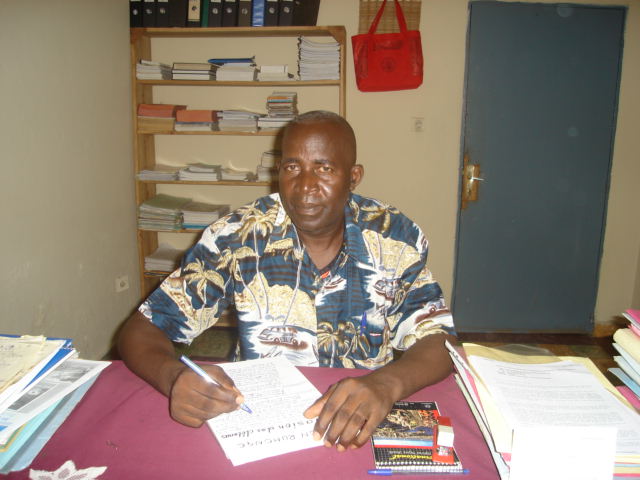
MEA Laureate 2007 Pierre-Claver Mbonimpa
MEA Laureate 2007, Pierre-Clavier Mbonimpa, was arrested this morning early. The latest information is that he is still detained at the Police-Judiciare. The background is rising tension in Burundi, where it is feared that President Pierre Nkurunziza is expected to campaign for a third term in office in 2015 despite a two-term constitutional limit. The Economist of 29 March 2014 already carried an article under the prescient title “Trouble Ahead” and on 17 April Paul Debbie, security chief at the UN office in Burundi, was ordered to leave the country in connection with a UN report disliked by the Government containing “allegations of weapons distribution to members of the youth league of the ruling party”. [http://www.aljazeera.com/news/africa/2014/04/burundi-expels-un-official-over-arms-report-2014417144546195161.html] It is feared that this youth wing, named the Imbonerakure, are being armed and trained in weapons use, raising fears of a return to civil war, even of genocide. No charges have been brought against Mbonimpa, but it is believed that the arrest is related to comments made on the radio regarding the above. Read the rest of this entry »
Posted in Front Line, human rights, Human Rights Defenders, MEA | 3 Comments »
Tags: APRODH, Burundi, ethnic conflict, freedom of expression, Front Line, illegal detention, Imbonerakure, judicial harassment, laureate MEA, Martin Ennals Award for Human Rights Defenders, MEA, Nkurunziza, Pierre Claver Mbonimpa, Pierre-Clavier Mbonimpa, UN
April 23, 2014
It was just announced that the following three Human Right Defenders have been selected as the Final Nominees for the Martin Ennals Award 2014: Read the rest of this entry »
Posted in awards, human rights, Human Rights Defenders, MEA | Leave a Comment »
Tags: Adilur Rahman Khan, Alejandra Ancheita, Bangladesh, Cao Shunli, China, human rights award, Human Rights Defenders, Martin Ennals Award for Human Rights Defenders, MEA, MEA final nominee 2014, Mexico, woman human rights defender

 Hans Thoolen on Human Rights Defenders and their awards