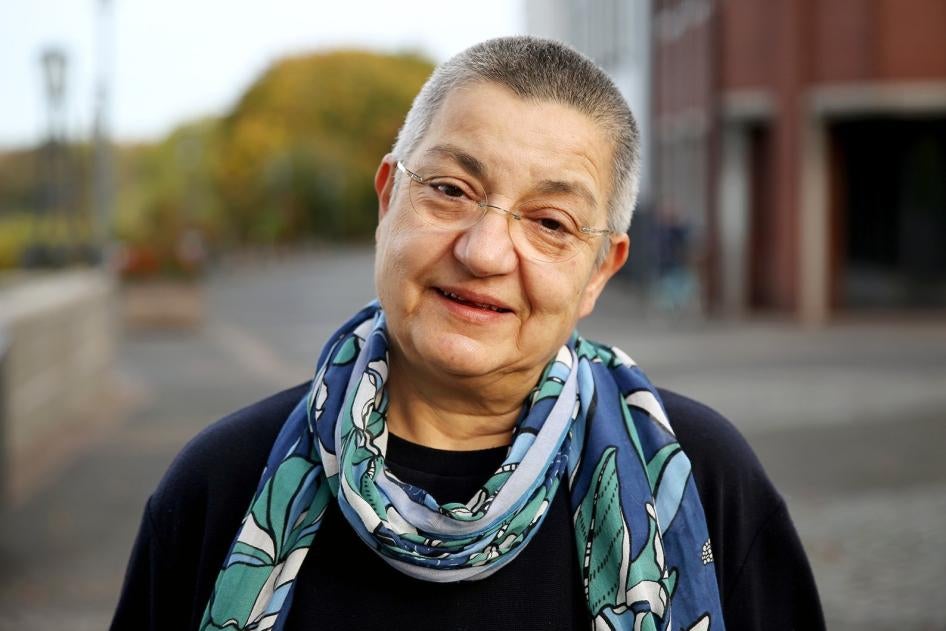
On 28 October 2022 HRW reports on the continuing crackdown on human rights defenders in Turkey, where Şebnem Korur Fincancı is the latest human rights defender to be jailed as authorities pursue a bogus investigation against her for “spreading terrorist propaganda.” Korur Fincancı is head of the Turkish Medical Association, former head of the Human Rights Foundation of Turkey, and a retired professor of forensic pathology. Her work was central to the creation of the United Nations’ “Istanbul Protocol,” a landmark manual on how to identify and document signs of torture. She has also worked on the exhumation of mass graves and forensic documentation of war crimes in different countries. See also: https://humanrightsdefenders.blog/2018/11/05/turkish-human-rights-defender-and-forensic-doctor-sebnem-korur-fincanci-honoured/
Korur Fincancı’s arrest and pre-trial detention followed an interview she gave to pro-Kurdish TV on October 19. Responding to allegations that the Turkish military had used chemical weapons against the armed Kurdistan Workers’ Party (PKK) in the Kurdistan Region of Iraq, Korur Fincancı said the video footage she had seen suggested use of toxic gases affecting the nervous system and that there should be a full investigation. Turkish pro-government media and President Recep Tayyip Erdoğan accused Korur Fincancı and the Turkish Medical Association of slandering the Turkish military. Prosecutors and courts rapidly responded by ordering her investigation and detention.
Korur Fincancı’s arrest is the latest in a pattern of politically motivated cases as the Erdoğan government continues its crackdown on critics and opponents. Just this week, police also detained 10 Kurdish journalists on top of 16 incarcerated in June. The Turkish authorities show all the signs of being determined to silence the voices of experts like Korur Fincancı as well as the journalists who report their words.
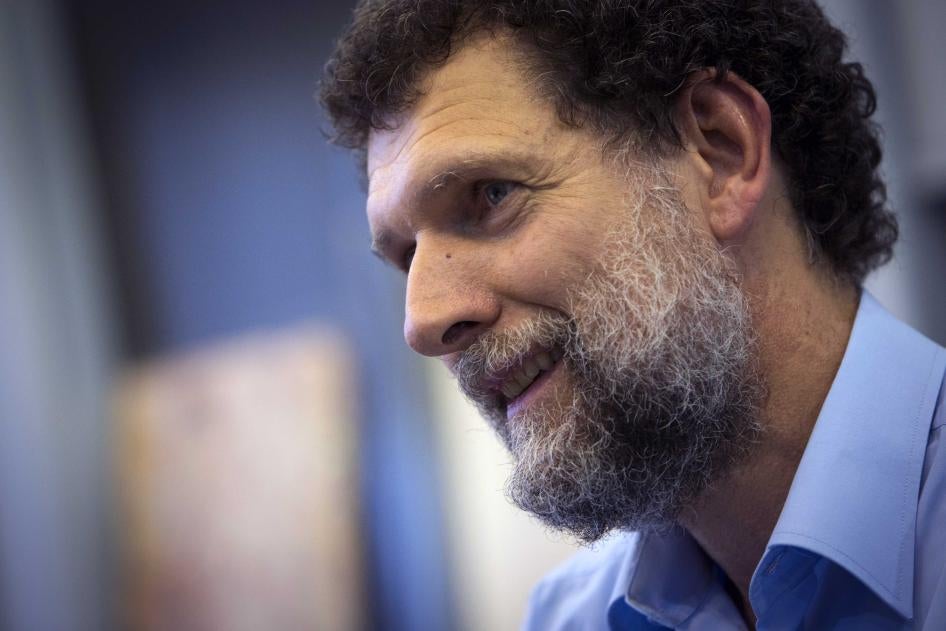
Authorities also appear focused on a broader plan of reshaping and taking over professional bodies that have been critical of government policies. On October 27, Turkey’s justice minister announced a plan to restructure both the Turkish Medical Association, from which Korur Fincancı will be removed as head, and the Union of Chambers of Turkish Engineers and Architects. Mücella Yapıcı, a prominent member of the latter, was convicted and jailed in April along with rights defender Osman Kavala and six others for her alleged role in the 2013 Gezi Park protests.
In the run-up to the 2023 presidential and parliamentary elections, the Turkish government is likely to continue to misuse criminal charges and detention against individuals it wants to silence and attempt to seize institutions outside its control.
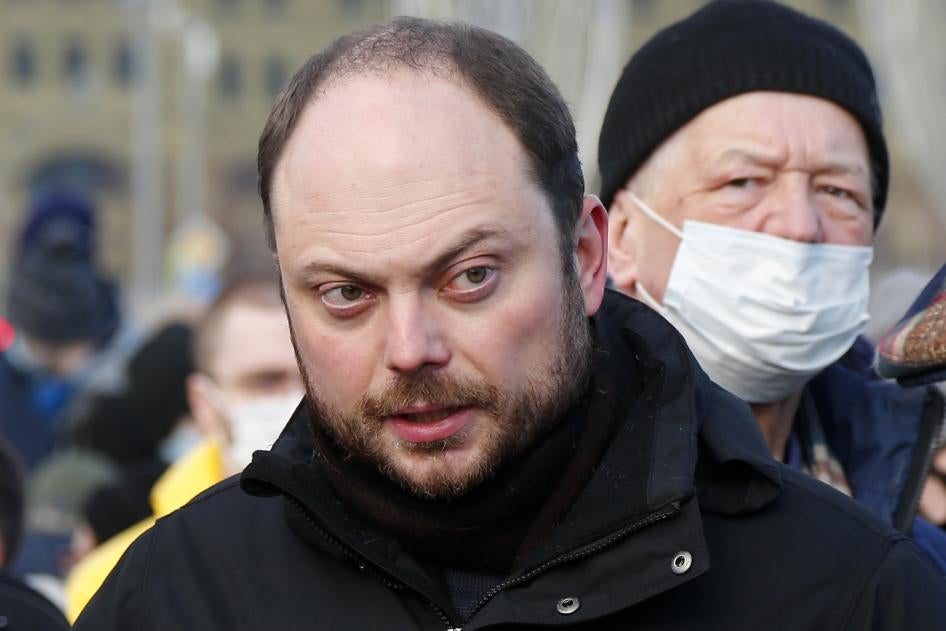
On 7 October 2022 Human Rights Watch criticised sharply the Russian charge of high treason against an opposition politician, Vladimir Kara-Murza. It is “a blatant attempt to quash any criticism of the Kremlin and deter contact with the international community“, Human Rights Watch said.
This is the third baseless criminal charge against Kara-Murza since he was detained in April 2022. He has already been indicted for spreading “fake news” about the Russian Armed Forces because he publicly criticized Russia’s invasion of Ukraine, and for alleged involvement with an “undesirable” foreign organization. He now risks an additional sentence of up 20 years if convicted on high treason charges. [see also: https://humanrightsdefenders.blog/2022/04/14/human-rights-defender-vladimir-kara-murza-arrested-in-russia/]
“Vladimir Kara-Murza is a longstanding proponent of democratic values and has been a vocal opponent of Vladimir Putin and Russia’s war on Ukraine,” said Hugh Williamson, Europe and Central Asia director at Human Rights Watch. “It is painfully obvious that the Kremlin sees Kara-Murza as a direct and imminent threat. These charges against him and his prolonged detention are a travesty of justice. Russian authorities should immediately and unconditionally free Kara-Murza and drop all charges against him.” See also: https://www.trueheroesfilms.org/thedigest/laureates/34e43b60-3236-11ea-b4d5-37ffeeddd006
Vadim Prokhorov, Kara-Murza’s lawyer, said the high treason charges relate to Kara-Murza’s public criticism of the Russian authorities in international forums.
Kara-Murza has called for sanctions against the Kremlin and has spoken in person before national political bodies throughout Europe and in the United States, and at many international and intergovernmental forums, including at the United Nations. He was a key figure advocating for the US Magnitsky Act that gave rise to the Global Magnitsky sanctions regime for serious human rights violations.
Kara-Murza was also a close friend of the murdered Russian opposition politician Boris Nemtsov. He survived two near-fatal poisonings, in 2015 and 2017, which Bellingcat investigative journalists reported was most likely orchestrated by the Russian Federal Security Service and which the Russian authorities have failed to investigate.
Since the full-scale invasion of Ukraine started in February, the Russian authorities have expanded their repressive toolbox. In March, Russian authorities criminalized calls for sanctions against Russia, and in July also criminalized “confidential cooperation” with foreign states, international or foreign organizations as well as public calls for action that are “against national interests.”
These new provisions cannot be applied retroactively to the years of advocacy by Kara-Murza, Human Rights Watch said, and so he is being charged with high treason under Russia’s criminal code, which was expanded in November 2012. The definition was expanded to include consultations or any other assistance to a foreign state or international or foreign organizations…
Russia’s rules on prosecution and trial of treason cases also breach human rights safeguards, in particular fair trial guarantees. For example, the criminal case materials in such proceedings are classified so that the defense team may not have access to key pieces of evidence, and the trial takes place behind closed doors, preventing public scrutiny.
Ivan Safronov, a journalist, was recently convicted of high treason and sentenced to 22 years in maximum security prison and given a substantial fine for his journalistic investigations of defense contracts, spotlighting how treason cases are handled. He was tried behind closed doors, key evidence obtained by fellow journalists was not accepted by the court, and his defense team came under immense pressure. Two of his lawyers had to flee the country, and a third was detained on accusations of spreading false information and remains in detention.
“Sadly, it is unrealistic to expect that fair trial standards will be observed in Kara-Murza’s case,” Williamson said. “By jailing leaders like him, Russian authorities are attempting to instill fear in the Russian people and eradicate any opportunity for civil society to mobilize and oppose the Kremlin and its war.”
The controversial issue of the treatment of Uyghurs is continuing to play out at the UN Human Rights Council. A resolution is being considered this week to discuss the report’s findings awhich is being strongly resisted by China who is leaning heavily on smaller states to oppose it. If these efforts are successful, they could deal a severe blow to the legitimacy of the UN Human Rights Council. Groups such as CIVICUS, Human Rights Watch have been following this issue closely and are urging Member States to support a decision to AT LEAST discuss the report in the interests of transparency and accountability. But then the big disappointment: on Thursday 6 October at the Human Rights Council the motion was rejected in a tight vote of 19 states against, 17 in favour and 11 abstentions.
On 3 October 2022CIVICUS is urging UN Human Rights Council member States to do the right thing by voting in support of a resolution to debate the human rights situation in the Xinjiang Uyghur Autonomous Region (XUAR).
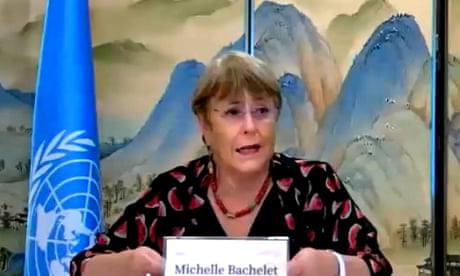
The resolution follows the release of a major UN report which affirms that the rights of Xinjiang’s Uyghur Muslim population are being violated through an industrial-level programme of mass incarceration, systemic torture and sexual violence. The report attracted intense criticism from the Chinese government before it was released on 31 August 2022, minutes before the High Commissioner for Human Rights, Michelle Bachelet ended her term. SEE: See: https://humanrightsdefenders.blog/2022/09/01/finally-the-long-awaited-un-report-on-china/.
The report concludes that the actions of the Chinese government in XUAR including arbitrary detention, cultural persecution and forced labour may constitute international crimes, in particular crimes against humanity. Recommendations include the taking of prompt steps to release all individuals arbitrarily imprisoned in XUAR, a full legal review of national security and counter-terrorism policies, and an official investigation into allegations of human rights violations in camps and detention facilities.
China’s government has rejected the findings and called into question the mandate of the Office of the High Commissioner for Human Rights. The Office of the High Commissioner has asserted that the report is based on a rigorous review of documentary evidence with its credibility assessed in accordance with standard human rights methodology.
A proposed resolution to hold a debate on the report’s findings at the next session of the UN Human Rights Council is being resisted by China which is also said to be pressuring states that make up the 47-member Human Rights Council not to support the resolution.
“The UN report affirms testimonies of victims belonging to the Uyghur community who have endured extreme forms of oppression. Human rights researchers and civil society groups have for years documented abuses and sounded the alarm to the international community about the situation in Xinjiang,” said Mandeep Tiwana, CIVICUS Chief Programmes Officer. “Yet the Chinese state is going to extraordinary lengths to suppress the findings and cover up its actions.”
In June 2020, 50 UN Special Rapporteurs and human rights experts issued a joint statement, that catalogued concerns over the treatment of ethnic minorities in XUAR and Tibet, alleging excessive force against protesters, as well as in Hong Kong, and reports of retaliation against people voicing their concerns publicly over COVID-19 pandemic policies. The experts urged the Human Rights Council to convene a special session on China; consider the creation of a Special Procedures mandate; and appoint a UN Special Envoy or a panel of experts to closely monitor, analyse and report annually on the human rights situation in China.
Sophie Richardson of HRW stated: ‘This week the credibility of the United Nations Human Rights Council is on the line over an extraordinarily modest request: to hold a debate on a recent report from the UN high commissioner for human rights on abuses in the Xinjiang region of China. Member states would not be obliged to take a position on the issues at hand, the government in question, or even seek a particular outcome. But the debate is an opportunity to stand together to ensure the council fulfils its bare minimum mandate.“
A long-delayed but groundbreaking United Nations report published on August 31, 2022, says the Chinese government has committed abuses that may amount to crimes against humanity targeting Uyghurs and other Turkic communities in the Xinjiang region. The report by the outgoing UN High Commissioner for Human Rights, Michelle Bachelet, contains victim accounts that substantiate mass arbitrary detention, torture, cultural persecution, forced labor, and other serious human rights violations, and recommends that states, businesses, and the international community take action with a view to ending the abuses, and advancing justice and accountability. See also: https://humanrightsdefenders.blog/2022/06/09/disappointment-with-un-high-commissioners-visit-to-xinjiang-boils-over/
“The UN human rights chief for the first time lays bare the Chinese government’s grave abuses and concludes they may amount to crimes against humanity,” said John Fisher, Global Advocacy Deputy Director at Human Rights Watch. “Victims and their families whom the Chinese government has long vilified have at long last seen their persecution recognized, and can now look to the UN and its member states for action to hold those responsible accountable.”
The high commissioner’s report challenges the Chinese government’s blatant disregard for its international human rights obligations, Human Rights Watch said. It calls on businesses to meet their responsibilities to respect human rights, and for follow-up by UN member countries and bodies, which could take the form of an investigation to interview victims and survivors, identify those responsible, gather evidence, and recommend strategies for accountability. Similar recent UN Human Rights Council mechanisms have included commissions of inquiry, fact-finding missions, and independent international monitoring missions. This could also lead to the identification of all those missing and forcibly disappeared so that they can be reunited with their families.
The report should be formally presented to the Human Rights Council as a matter of priority, Human Rights Watch said, so that states can discuss the report’s findings and take the steps needed to implement its recommendations.
In the report, the high commissioner details widespread abuses, including targeting of cultural and religious practices, family separation, arbitrary arrests and detention, rape, torture, and enforced disappearances, across Xinjiang. The report concludes that “[t]he extent of arbitrary and discriminatory detention of members of Uyghur and other predominantly Muslim groups, pursuant to law and policy, in context of restrictions and deprivation more generally of fundamental rights enjoyed individually and collectively, may constitute international crimes, in particular crimes against humanity.”
Detainees interviewed for the report described conditions in so-called “vocational training centres” that would amount to torture or other forms of ill-treatment, including “being beaten with batons, including electric batons while strapped in a so-called “tiger chair”; being subjected to interrogation with water being poured in their faces; prolonged solitary confinement; and being forced to sit motionless on small stools for prolonged periods of time.”
The report noted that Chinese authorities continue to openly criticize victims and their relatives now living abroad for speaking about their experiences in Xinjiang, engaging in acts of intimidation, threats, and reprisals. In the words of one interviewee: “We had to sign a document to remain silent about the camp. Otherwise, we would be kept for longer and there would be punishment for the whole family.”
The report also draws on analyses of Chinese laws, regulations, and policies. The findings are consistent with those of academics, journalists, and human rights organizations, published since 2017 documenting grave international crimes. In the past five years, Human Rights Watch has documented mass arbitrary detention, pervasive surveillance, and crimes against humanity across the region.
The high commissioner has been systematically assessing a growing body of evidence regarding Chinese government human rights violations targeting Uyghurs and other Turkic communities. Treaty body reviews and reports from UN human rights experts also informed the new report, reinforcing concerns about secret detention and unlawful family separations, among other violations.
In June 2020, 50 UN human rights experts urged the Human Rights Council to establish an independent UN mandate to monitor and report on human rights violations in China, partly in response to Chinese government resistance to UN human rights scrutiny. In June 2022, another group of UN experts reiterated the 2020 statement and again urged Chinese authorities to grant them access to investigate “allegations of significant human rights violations and repression of fundamental freedoms in the country.”
In May, Bachelet visited China, despite being unable to travel or engage with interlocutors freely, and had little direct engagement with affected communities. In an end-of-mission statement delivered on May 28, Bachelet underlined that the visit was not an investigation, which she noted would require “detailed, methodical, discreet work of an investigative nature.” The new report lays a solid foundation for further UN and Human Rights Council action towards accountability in China.
“Never has it been so important for the UN system to stand up to Beijing, and to stand with victims,” Fisher said. “Governments should waste no time establishing an independent investigation and taking all measures necessary to advance accountability and provide Uyghurs and others the justice they are entitled.”
Amnesty International’s Secretary General Agnès Callamard said:
“This 46-page document lays bare the scale and severity of the human rights violations taking place in Xinjiang – which Amnesty International previously concluded amounted to crimes against humanity. There can be little doubt why the Chinese government fought so hard to pressure the UN to conceal it.
On August 15, 2022, the Attorney General’s Office formally notified the Justice Ministry’s Department of Special Investigation (DSI) of its decision to indict four park officials accused of abducting and murdering Porlajee “Billy” Rakchongcharoen in April 2014. The charges include illegal confinement, premeditated murder, and concealing the victim’s body.
“Thai officials have long hindered justice for Billy through cover-ups and exploitation of legal loopholes,” said Elaine Pearson, acting Asia director at Human Rights Watch. “The authorities can right this wrong by ensuring that the attorney general’s decision to indict four officials moves promptly to an effective and fair prosecution.”
Billy was last seen on April 17, 2014, in the custody of Chaiwat Limlikitaksorn, then-head of Kaeng Krachan National Park in Phetchaburi province, and his staff. The park officials said they released him after questioning him briefly and had no information regarding his whereabouts. On September 3, 2019, DSI officials announced that his remains had been found in Kaeng Krachan National Park. Chaiwit was among the four indicted.
Pinnapa Prueksapan, Billy’s wife, told Human Rights Watch that she hoped there would be answers to basic questions, such as who had abducted and killed her husband, and who had obstructed justice.
Thailand is obligated under international human rights treaties to which it is a party to investigate and appropriately prosecute enforced disappearance, torture, custodial deaths, and other alleged human rights violations. In addition, in September 2019, Prime Minister Gen. Prayut Chan-ocha ordered the Department of Special Investigation to ensure that the case was watertight so the culprits could be brought to justice, regardless of their rank or position.
However, the investigation has suffered from a cover-up, Human Rights Watch said. Despite a long list of allegations against Chaiwat for serious abuses and misconduct during his tenure as head of Kaeng Krachan National Park, he has never been held to account.
In addition, Thai law does yet not recognize enforced disappearances as a crime. Human Rights Watch has repeatedly urged Prime Minister Prayut and his government to ratify the International Convention for the Protection of All Persons from Enforced Disappearance, which Thailand signed in 2012, and make enforced disappearance a criminal offense.
Chaiwat and his staff arrested Billy on April 17, 2014, for alleged illegal possession of a wild bee honeycomb and six bottles of honey.
At the time of his enforced disappearance, he was traveling to meet with ethnic Karen villagers and activists in preparation for an upcoming court hearing in the villagers’ lawsuit against Chaiwat and the National Park, Wildlife, and Plant Conservation Department of the Ministry of Natural Resources and Environment.
The villagers alleged in the lawsuit that, in July 2011, park authorities had burned and destroyed the houses and property of more than 20 Karen families in the Bangkloy Bon village. Billy was also preparing to submit a petition about this case to Thailand’s monarch. When he was arrested, he was carrying case files and related documents with him. Those files have never been recovered.
In September 2014, Police Region 7 officers filed malfeasance charges under article 157 of the penal code against Chaiwat and three other park officials for unlawfully detaining him. The other suspects named in the case are Boontaen Bussarakham, Thanaseth or Pitoon Chaemthes, and Krissanapong Jitthes. The DSI found traces of human blood in a vehicle belonging to the park office, but was not able to verify if the blood belonged to Billy because the vehicle was cleaned before forensic experts could examine it.
On September 3, 2019, the DSI announced that his remains had been found in Kaeng Krachan National Park, where he was last seen in custody of the park officials. The investigation team found an oil barrel, its lid, two steel rods, a burned wooden piece, and two bones at the bottom of the reservoir on April 26, 2019.
The Central Institute of Forensic Science subsequently confirmed the genetic trace of one of the bones found inside the barrel matched Billy’s mother. The investigation team then concluded it was part of his remains. The condition of this piece of human skull, which was burned, cracked, and shrunk due to exposure to heat of 200 to 300 degrees Celsius, suggests the killers burned his body to conceal the crime.
“The indictment of Chaiwat and other park officials is an important step for justice for Billy and all those whom Thai government officials have forcibly disappeared and killed,” Pearson said. “Thai authorities should recognize that they can’t escape being held accountable for the most heinous crimes.”
Special Rapporteur on the situation of human rights defenders, Mary Lawlor, conducted an official visit to Greece from 13 to 22 June 2022, to assess the government’s efforts towards creating an enabling environment for those seeking to protect and promote human rights.
Human rights defenders in Greece, particularly those working on migration, operate in an environment of pervasive fear and insecurity, concluded Mary Lawlor. “I am concerned about the increasing criminalization of humanitarian assistance in Greece. Solidarity should never be punished and compassion should never be put on trial,” she said while presenting her preliminary findings at the end of a 10-day mission in the country.
The UN expert noted that human rights defenders not only face criminal sanctions for their activities, but are operating in an increasingly hostile environment where the general public is influenced by negative rhetoric from high-ranking officials and their unfavorable portrayal in the media, which often conflates their activities with traffickers and criminal networks.
Greece fell 38 positions within a year in Reporters Without Borders’ 2022 report on the Press Freedom Index, with the organization marking it the lowest-ranked European Union country for press freedom. “Journalists who counter the government’s narrative on the management of migration flows are often under pressure and lack access to mainstream media outlets.… Journalists reporting on corruption are sometimes facing threats and even charges,” Lawlor said. She noted that journalists have very limited or no access to facilities where migrants, refugees, and asylum seekers are being held, further contributing to a general lack of transparency regarding the government’s policies in this area.
Lawlor will present a detailed report with her findings at the March 2023 session of the UN Human Rights Council. The government should listen to what the UN expert has to say and champion human rights defenders. The European Commission, which noted in July last year the narrowing space in Greece for groups working with migrants and asylum seekers, should step up its engagement on the issue and press Greece to stop harassing civil society groups and activists.
The court found in Kavala v. Türkiye, a case brought by the Council of Europe’s Committee of Ministers, that Turkey failed to fulfil its obligation under Article 46(1) of the European Convention on Human Rights to comply with its judgment issued on December 10, 2019. The judgment is an important step toward accountability for Turkey’s systemic disregard for the convention system and as recognition of the urgency of implementing the court’s order to release Kavala.
“This is the only second time, after Mammadov v. Azerbaijan, that the ECtHR has ever conducted infringement proceedings and determined that a member state has not complied with a European Court judgment,” said Helen Duffy of the Turkey Litigation Support Project.
“It is an acknowledgement of Turkey’s ever-deepening rule of law crisis, which has involved seriously undermining the Convention system and the escalating use of criminal law for political purposes.”
In its new judgment, the court held that “Türkiye has failed to fulfil its obligation under article 46§1 to abide by the Kavala v. Türkiye judgment of 10 December 2019.”
The European Court underlined that:
Its finding of a violation of Article 18 taken together with Article 5 in the Kavala judgment had vitiated any action resulting from the charges related to the Gezi Park events and the attempted coup. It is nonetheless clear that the domestic proceedings subsequent to the above judgment, which resulted first in an acquittal and then a conviction, have not made it possible to remedy the problems identified in the Kavala judgment (para. 172).
The Grand Chamber judgment addresses these practices of the Turkish authorities by stating that “the measures indicated by Türkiye do not permit it to conclude that the State Party acted in ‘good faith,’ in a manner compatible with the ‘conclusions and spirit’ of the Kavala judgment, or in a way that would make practical and effective the protection of the Convention rights which the Court found to have been violated in that judgment” (para. 173).
Aisling Reidy, senior legal adviser at Human Rights Watch said: “As the European Court has now confirmed Turkey’s failure to execute the 2019 Kavala judgment, the Committee of Ministers needs urgently to take all feasible measures to ensure the judgement is respected and Kavala released“.
The Committee of Ministers is expected to resume its supervision process and take more robust steps to discharge its mandate of ensuring the necessary individual and general measures are taken by Turkey to implement the court’s ruling.
Now, it is up to the Committee of Ministers, which oversees the implementation of the ECtHR rulings, what measures to take against Turkey after the country failed to comply with the court’s ruling. This could lead to Turkey’s suspension from the Council of Europe. In anticipation, the Foreign Ministry of Turkey said they expected the Committee of Ministers “to act without bias and with common sense” in a statement.
The International Court of Justice (ICJ) on 22 July, 2022, rejected Myanmar’s preliminary objections to the case brought by Gambia under the international Genocide Convention. The case concerns Myanmar’s alleged genocide against the ethnic Rohingya population in Rakhine State, with a focus on military operations launched in October 2016 and August 2017.
Gambia filed the case before the ICJ in November 2019 alleging that the Myanmar military committed the genocidal acts of “killing, causing serious bodily and mental harm, inflicting conditions that are calculated to bring about physical destruction, imposing measures to prevent births, and forcible transfers … intended to destroy the Rohingya group in whole or in part.”
“The ICJ decision opens the door toward an overdue reckoning with the Myanmar military’s murderous campaign against the Rohingya population,” said Elaine Pearson, acting Asia director at Human Rights Watch. “By holding the military to account for its atrocities against the Rohingya, the World Court could provide the impetus for greater international action toward justice for all victims of the Myanmar security forces’ crimes.”
In February 2022, the ICJ heard Myanmar’s four objections challenging the court’s jurisdiction and Gambia’s legal standing to file the case, as well as Gambia’s response.
In response to Myanmar’s argument that Gambia has no standing to bring the case due to its lack of ties to Myanmar or the Rohingya, the court concluded, “All the States parties to the Genocide Convention thus have a common interest to ensure the prevention, suppression and punishment of genocide, by committing themselves to fulfilling the obligations contained in the Convention.”
By rejecting the preliminary objections, the ICJ is allowing the case to proceed on the merits to examine Gambia’s genocide allegations against Myanmar. Myanmar will now have to submit its response to Gambia’s main arguments filed in October 2020 detailing its case.
The ICJ case is not a criminal case against individual suspects, but a legal action brought by Gambia against Myanmar alleging that Myanmar bears responsibility for genocide as a state.
In December 2019, the court held hearings on Gambia’s request for provisional measures to protect the Rohingya remaining in Myanmar from genocide, which it unanimously adopted in January 2020. The provisional measures require Myanmar to prevent all genocidal acts against the Rohingya, to ensure that security forces do not commit acts of genocide, and to take steps to preserve evidence related to the case. The court also ordered Myanmar to report on its compliance with the provisional measures every six months.
Myanmar is legally bound to comply with the order. However, Human Rights Watch and other groups have continued to document grave abuses against the 600,000 Rohingya remaining in Myanmar, contravening the provisional measures.
The court’s decision on Myanmar’s preliminary objections should encourage the United Kingdom, Netherlands, Canada, and other concerned governments to support Gambia’s case through formal interventions to bolster the legal analysis on specific aspects of the Genocide Convention as it relates to the Rohingya, Human Rights Watch said.
Under article 41(2) of the ICJ Statute, the court’s order for provisional measures is automatically sent to the UN Security Council. As the fifth anniversary of the military’s atrocities against the Rohingya approaches, Security Council members should take steps to address the failure to secure justice and security for the Rohingya. Council members should work to adopt a resolution that gives the International Criminal Court (ICC) a mandate over the situation in Myanmar and severs the junta’s supply of arms and revenue, even if the resolution would be vetoed by Russia or China.
As the Myanmar armed forces continue to carry out atrocities against civilians and ethnic minorities, the ICJ remains one of the few available paths for holding the military to account. Ethnic groups and human rights defenders have aligned in Myanmar to push for the establishment of democratic rule, efforts that are amplified by the pursuit of justice at the ICJ.
“Concerned governments seeking to be leaders for accountability in Myanmar should formally intervene in the Genocide Convention case,” Pearson said. “The case provides an important opportunity to scrutinize the Myanmar military’s abusive policies and practices that have preserved its power over decades.”
The Cambodian authorities should quash the baseless criminal convictions of four members and one former member of the Cambodian Human Rights and Development Association (ADHOC), Human Rights Watch said on 22 June 2022. On June 21, 2022, four of the defendants, Yi Soksan, Lim Mony, Ny Sokha, and Ny Chakrya appealed a May 23 appeals court ruling upholding their convictions to the Cambodian Supreme Court.
“From the very beginning, the Cambodian authorities have sought to unjustly punish the ADHOC 5 as a way to intimidate all civil society activists from criticizing Prime Minister Hun Sen’s government,” said Phil Robertson, deputy Asia director at Human Rights Watch. “Foreign governments, the United Nations country team, and international donor agencies should urge the authorities to drop these cases and end all repression of human rights defenders.” See also: https://humanrightsdefenders.blog/2017/03/11/even-landmark-un-decision-does-not-change-cambodias-treatment-of-human-rights-defenders/
In April 2016 the government’s Anti-Corruption Unit arrested ADHOC members Ny Sokha, Nay Vanda, Yi Soksan, and Lim Mony, along with the former ADHOC member Ny Chakrya, who was then deputy secretary-general of the National Election Committee, and accused them of making false statements regarding a criminal case against the then-opposition leader Kem Sokha.
The five activists spent 14 months in pretrial detention. During their criminal trial, the prosecution failed to present any of the witnesses mentioned in the case or provide any credible evidence to substantiate the charges.
On September 26, 2018, the Phnom Penh municipal court convicted Vanda, Sokha, Soksan, and Mony of “bribery of a witness” (article 548 of Cambodia’s criminal code) and Chakrya of being an accomplice (articles 28 and 548). All five received suspended five-year prison terms, minus 14 months of time served.
On October 24, 2018, the defendants appealed the guilty verdicts to the Court of Appeal. The prosecutor’s office also filed an appeal, seeking to have the defendants serve the remainder of their suspended sentence in prison. The Court of Appeal denied both appeals on May 23, 2022.
The ADHOC 5 case arose during a broader government crackdown on civil society and the political opposition, specifically on the Cambodia National Rescue Party (CNRP), which the government-dominated Supreme Court later dissolved in a politically motivated ruling.
The former CNRP leader, Kem Sokha, continues to face unsubstantiated, politically motivated treason charges brought in September 2017. While he is no longer detained, his trial only recommenced in January, after being suspended for two years ostensibly because of the Covid-19 pandemic and the government deemed his case to not be a “priority”. The allegations against Sokha are based on the government’s groundless claim that the CNRP fomented a “color revolution” to overthrow the government.
Human Rights Watch has documented the situations of more than 50 current political prisoners in Cambodia, including both those in pretrial detention and those serving prison sentences following politically motivated convictions. They include political opposition members, human rights defenders, land and environmental rights activists, and journalists.
“The Cambodian authorities should recognize that every day the ADHOC 5 case persists, the greater this travesty of justice inflicts harm to the government’s reputation,” Robertson said. “The only way for justice to be served is for the prosecutor to quash the convictions and provide the defendants with an appropriate remedy for the years of hardship the case caused them.”
Agnes Callamard, the secretary general of Amnesty International, said on 28 June that Bachelet should condemn human rights violations in Xinjiang, and call on China to release people arbitrarily detained and end systematic attacks on ethnic minorities in the region. “The high commissioner’s visit has been characterized by photo opportunities with senior government officials and manipulation of her statements by Chinese state media, leaving an impression that she has walked straight into a highly predictable propaganda exercise for the Chinese government,“.
Dozens of scholars have accused the UN human rights chief of having ignored or contradicted academic findings on abuses in Xinjiang with her statements on the region. In an open letter published this week, 39 academics from across Europe, the US and Australia called on Michelle Bachelet to release a long-awaited UN report on human rights abuses in China.
The letter, published online, included some academics with whom Bachelet had consulted prior to her visit to Xinjiang. The letter’s signatories expressed gratitude for this, but said they were “deeply disturbed” by her official statement, delivered at a press conference in Guangzhou at the end of her six-day tour. They said her statement “ignored and even contradicted the academic findings that our colleagues, including two signatories to this letter, provided”.
“It is rare that an academic field arrives at the level of consensus that specialists in the study of Xinjiang have reached,” the letter said. “While we disagree on some questions of why Beijing is enacting its atrocities in Xinjiang, we are unanimous in our understanding of what it is that the Chinese state is doing on the ground.”.
Rights organisations and several governments have labelled the campaign a genocide or crime against humanity. Beijing denies all allegations of mistreatment and says its policies are to counter terrorism and religious extremism.
At the end of her visit Bachelet said she had urged the Chinese government to review its counter-terrorism policies in Xinjiang and appealed for information about missing Uyghurs. She was quickly criticised by some rights groups for giving few details or condemnation of China while readily giving long unrelated statements about US issues in response to questions from Chinese state media.
The academics’ letter is among growing criticism of Bachelet for not speaking out more forcefully against Chinese abuses after her visit, as well as a continued failure to release the UN report, which is believed to have been completed in late 2021. On Wednesday dozens of rights groups, predominately national and local chapters of organisations associated with Uyghur and Tibetan campaigns, demanded her resignation. See: http://www.phayul.com/2022/06/09/47195/
The 230 organisations accused Bachelet of having “whitewashed the Chinese government’s human rights atrocities” and having “legitimised Beijing’s attempt to cover up its crimes by using the Chinese government’s false ‘counter-terrorism’ framing”.
“The failed visit by the high commissioner has not only worsened the human rights crisis of those living under the Chinese government’s rule, but also severely compromised the integrity of the Office of the High Commissioner for Human Rights in promoting and protecting human rights globally,” the statement said.
They also decried that she had repeatedly referred to the detention camps in Xinjiang by the Chinese government’s preferred term: “vocational education and training centres”.



 Hans Thoolen on Human Rights Defenders and their awards