On 13 February 2024, UN High Commissioner for Human Rights Volker Türk urged EU leaders to approve a ground-breaking agreement on business and human rights, amid reports that support for the measure may now be in question in the European Council.
“The adoption of the Corporate Sustainability Due Diligence Directive would show historic leadership by the EU at a time when global leadership in support of human rights is needed more than ever,” said Türk.
“For the past four years, work on the Directive has seen unprecedented involvement by many stakeholders, including business and my Office, as well as political commitment from EU institutions and Member States to push it forward. This process has truly raised hopes of ensuring more effective management of human rights risks by large companies.”
“For the Directive to fail now would be a massive blow,” he said.
The EU-wide Directive would require certain large EU and non-EU companies to take reasonable steps to identify and address adverse human rights risks.
“Human rights due diligence is feasible and supports sustainable business processes that deliver long-term value to society at large. And for those reasons it also makes eminent business sense,” said Türk.
Many of the companies that would fall within the Directive’s scope have backed its adoption. It would create a level playing field by harmonizing disparate rules across jurisdictions.
“The agreement on the Directive is reported to be substantially aligned with the UN Guiding Principles on Business and Human Rights and other relevant international human rights standards. I am convinced the Directive can make a positive contribution to respect for human rights, and its adoption would send an important message of solidarity to those at risk from business activities,” the UN Human Rights Chief said.
A vote on the Directive is possibly due later this week.
7 January 2024 Cyprus Mail reported that a demonstration will be held condemning the attack on the offices of refugee NGO Kisa.
Kisa’s offices were attacked on Friday, when an improvised explosive device went off outside their offices, smashing windows, destroying computers and photocopiers.
In their statement, the protest organisers said: “Kisa and its members have repeatedly received threats of various forms, against which the state authorities have shown unacceptable tolerance, which, together with government policies and their racist and xenophobic rhetoric on immigration issues, have not only allowed but also encouraged racist and fascist attacks against migrants and refugees, as well as their rights defenders, thus fostering fascism in society.”
Issuing a statement after the attack, the international NGO Amnesty International’s Cyprus Research Kondylia Gogou said: “Last night’s violent attack on anti-racist organisation Kisa is despicable and raises serious concerns over the safety of human rights defenders in the country. However, it did not happen in a vacuum. Racist violence is on the rise in Cyprus, and KISA and its volunteers have been the target of repeated threats, verbal attacks, and smear campaigns in connection with their work supporting refugees and migrants and denouncing hate crimes.”
According to Amnesty, authorities in Cyprus must send an unequivocal message that attacks on human rights defenders and NGOs will not be tolerated, and conduct a prompt, thorough, independent, and impartial investigation on the attack on the Kisa’s offices “that prioritises the hypothesis that the attack was related to their human rights and anti-racist work”.
In August and September 2023, racialised people including refugees and migrants were subjected to pogrom-like attacks in Chloraka and Limassol. Previously, in early 2023, racist attacks were carried out in Limassol and in January 2022 attacks were carried out in Chloraka. In 2023, the European Commission against Racism and Intolerance (ECRI) found that the public discourse in the country had become “increasingly xenophobic”.
In December 2020, further to an amendment to the law on associations, KISA was removed from the Registry of Associations, and proceedings for its dissolution were initiated. KISA’s appeal to challenge the decision before the country’s Appeal Court remains pending, and despite its registration as a non-profit company, KISA operates with many obstacles.
An initiative of ProtectDefenders.eu, the EU Human Rights Defenders Mechanism implemented by international civil society
Human rights defenders have the right to carry out their legitimate work safely and to access support and protection when they are at risk, especially those who operate in the most difficult contexts. Their right to defend rights has been systematically enshrined by the European Union in its political guidelines, and statements, as well as in its financial programming and external actions. In fact, the European Union is a leading actor in the promotion and protection of human rights in the world and it is regarded by the human rights defenders’ community as an invaluable source of empowerment and legitimacy. [see the call of 2022:https://humanrightsdefenders.blog/2022/09/24/call-for-an-eu-visa-framework-for-at-risk-human-rights-defenders/]
Human rights defenders often carry out their work at great personal risk, and increasingly face killings, attacks, threats, and acts of intimidation because of their peaceful activities, in addition to being subjected to repression, restrictive legislation, and judicial harassment. For these at-risk human rights defenders, the possibility of accessing a visa to a European territory emerges as an essential security and protection tool, which empowers them to carry out their activities in their countries in a more secure and protected way. Visas and multiple-entry visas are widely regarded by the international human rights defenders community as a vital element of a comprehensive security strategy, one that enables defenders to consider the possibility to move in and out of their country in a way that allows them to manage the level of risk that they face as a result of their work, and to continue to work in their communities without forcing them to resort to permanent asylum paths when facing aggravated threats. However, despite political commitments and existing guidelines, the EU and its member states’ stated support for human rights defenders is not consistent with the current EU visa policies and practices, as human rights defenders at risk around the world lack consistent procedures to effectively and predictably access visas for the EU territory.
The community in support of human rights defenders, including the Consortium of organisations implementing the European Union Human Rights Defenders mechanism ProtectDefenders.eu,have systematically noted and documented with great concern the numerous, diverse, and blatant obstacles for defenders to access EU visas. ProtectDefenders.eu – which has supported 45,000+ human rights defenders and civil society organisations to continue their work in the most difficult situations since 2015 – encounters these obstacles also in relation to its daily operations delivering EU-funded programmes of practical support for human rights defenders. Every day, human rights defenders face an array of impediments that hinder their access to this essential security and protection tool, preventing them from accessing safe haven when necessary, as well as from engaging in existing opportunities for rest and respite and temporary relocation programmes, or carrying out essential international advocacy, mobilisation, or networking activities in the EU territory.
This lack of reliable, predictable, and coherent access for human rights defenders to EU visas unnecessarily aggravates the risk, isolation, and vulnerability they face as a result of their work – which is exacerbated for those defenders belonging to particularly threatened groups – such as women human rights defenders, LGBTI rights defenders, or indigenous rights defenders; for those facing spurious criminalisation processes aimed at impeding their mobility, or for those without secure access to basic travel documents. Major crises affecting human rights defenders and massive backlash against civil society notoriously reveal the gap in the effective implementation of the EU political commitments and guidelines related to visas, as recently illustrated by the demand for support from those human rights defenders and civil society members in Afghanistan in need of urgent evacuation. A more predictable, coordinated, and consistent policy on visas for human rights defenders – allowing for flexible and reactive protocols in critical situations, would reportedly have avoided, or at least mitigated the deficiencies of the EU response, or lack thereof.
With the exception of the positive examples of current good practices and initiatives implemented by some Member States, European institutions, or political actors in the EU, the EU as a whole has yet to make a serious effort to mainstream access to at-risk human rights defenders in their visa policies. The current legislative instruments and established practices fail to comply with the consistency required for the Union’s actions enshrined in the EU Treaties and attest to a lack of harmonisation, effort-sharing, and coordination among both the Member States and the European institutions.
ProtectDefenders.eu and the international civil society organisations participating in this initiative are convinced that with political will and clear guidelines, the EU can and should return to its political mandate in favour of human rights and human rights defenders, and lead on the implementation of concrete initiatives, good practises, and policy changes to ensure that at-risk human rights defenders can access European Union visas with guarantees, security, and predictability.
ProtectDefenders.eu and the international civil society organisations participating in this initiative are calling on all European Union actors to urgently implement all appropriate measures at all levels to develop and promote an enabling framework for human rights defenders to access visas for the EU, one that guarantees predictability, consistency, and protection for those who are most at-risk HRDs.
More specifically, ProtectDefenders.eu and the international civil society organisations participating in this initiative call on the EU stakeholders to:
propose a specific facilitated procedure for human rights defenders within the EU Visa Code, setting common criteria and defining the elements of a facilitated procedure;
include instructions in the EU Visa Handbook on granting facilitations to HRDs and their family members;
work towards amending the legal instruments on visas, particularly the Visa Code,
create an EU Directive to protect Human Rights Defenders (HRDs), outlining ways to support and protect them in accessing and staying in the EU, as well as meeting their support needs to continue their work. The Directive would provide a legal tool to grant HRDs at risk access and stay in the EU for a specified time.; and
introduce amendments to the Temporary Protection Directive that allow temporary protection status in the EU to be granted to defenders at risk.
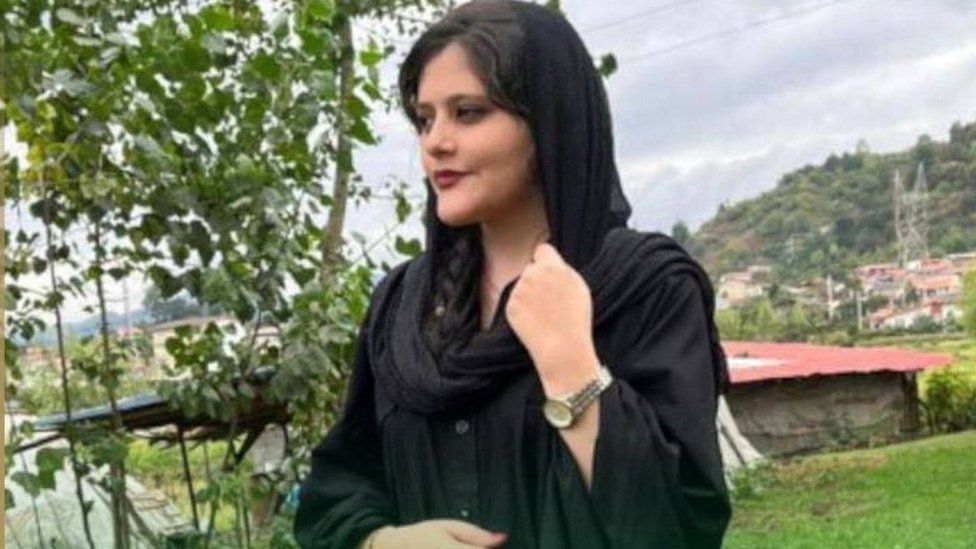
Ms Amini’s parents and brother were stopped from boarding their flight and had their passports confiscated, their lawyer said. They were banned from leaving despite having valid visas.
Speaking to the AFP news agency, the family’s lawyer, Chirinne Ardakani, said Ms Amini’s mother, father and brother had been “prohibited from boarding the flight that was to take them to France for the presentation of the Sakharov Prize”.
The president of the European Parliament, Roberta Metsola, called on Iran to “retract the decision” to ban the family from travelling. “Their place next Tuesday is at the European Parliament in Strasbourg to receive the Sakharov Prize, with the brave women of Iran,” she said on social media. “The truth cannot be silenced.”
Ahead of the International Day to End Impunity for Crimes against Journalists on 2 November, and in the year that marks the 75th anniversary of the Universal Declaration of Human Rights, High Representative Josep Borrell and Vice-President Věra Jourová issued the following statement:
“In these difficult times, marred by wars*, conflict and terrorist acts, we recall and praise the essential role played by journalists and media workers in fighting for the truth and for human rights. Journalists contribute to counter disinformation and hate speech and to keep checks and balances on governments and public institutions. They shed light on war crimes and human rights violations, sometimes at the risk of their own lives.
We firmly condemn the killings, physical attacks, arbitrary detentions, online and offline intimidation, harassment, and surveillance, that journalists at times face while exercising their profession. Media worldwide continue to be raided or closed, and journalists are increasingly targeted by legislation that curtails freedom of expression, and by abusive litigation, thus limiting pluralism, editorial independence, and infringing freedom of expression.
…
The EU remains committed to support independent journalists and media workers everywhere. We will continue to mobilise all the diplomatic tools at our disposal to raise attention to individual cases of journalists in detention or at risk. We have also established ProtectDefenders.eu to provide journalists at high risk with physical and digital protection, legal support, and relocation.
Protecting journalists means protecting our own rights. Democracy cannot work without free and independent media. This is why the EU is also taking unprecedented steps at home to protect journalists.
We call on Member States to implement the Commission Recommendation on the safety of journalists. The proposal for a Media Freedom Act aims to safeguard their independence and media pluralism. The Commission also took action to fight strategic lawsuits against public participation, which put pressure on journalists and want to silence them. These legislative proposals should be adopted swiftly to improve the environment in which journalists and media operate and to set global standards. See also: https://humanrightsdefenders.blog/2023/07/02/eu-directives-for-slapps-and-media-freedom-being-weakened-european-parliament-should-come-to-the-rescue/
The European Union stands with journalists around the world who, each and every day, exercise their freedom of expression for the benefit of us all.”
The winners of this year’s edition of the Lorenzo Natali Media Prize, awarded by the European Commission, were announced on 11 October at a ceremony hosted at the Solvay Library in Brussels.
The winners of the International Prize are:
Three Venezuelan journalists Carmen Victoria Inojosa, Claudia Smolansky and a third whose name cannot be disclosed for security reasons, were awarded the International Prize for their compelling article ‘Así funcionan las casas clandestinas de la Dgcim en Caracas‘ published in Armando.info. Their work exposed the harrowing reality of systematic persecution in Venezuela, targeting political opponents and their families with alarming impunity.
Women fighting for a free, safe and legal abortion in Poland, El Salvador and the US: Justyna Wydrzyńska is a Polish women’s rights defender and member of the Abortion Dream Team, who was sentenced to eight months’ community service for helping a woman obtain an abortion in Poland. Morena Herrera is a feminist and social activist, advocating for safe and legal abortion access in El Salvador. Colleen McNicholas is an American obstetrician-gynaecologist with a strong track record of high-quality patient care and impactful reproductive health advocacy.
19 October: Parliament President Roberta Metsola and the political group leaders decide on the winner
13 December: the Sakharov Prize award ceremony takes place in Strasbourg.
Eddy Wax in Politico of 14 September 2023 reported that the far-right political group in the European Parliament nominated tech billionaire Elon Musk for the EU’s top human rights award. The Identity and Democracy (ID) grouping, which includes members of European Parliament tied to France’s Marine Le Pen and Italy’s Matteo Salvini, put Musk’s name forward, according to a document sent to MEPs on September 14 and seen by POLITICO. An ID official confirmed to POLITICO its decision to nominate Musk.
ID cited Musk’s decision to release the so-called Twitter Files, which consisted of selected internal documents over how the social media platform handled requests to remove political posts. This amounts to a defense of the principle of freedom of expression, ID argued.
Musk is highly unlikely to receive the accolade as the President of the Parliament Roberta Metsola and the leaders of all political groups will select the winner together later this year.
The Greens have nominated Ugandan climate activist Vanessa Nakate, while the right-wing ECR group put forward Nino Lomjaria, a public defender in Georgia who stood up to Russian interference. The Left proposed three women’s rights activists.
On 14 September 2023 the Cyber Tribunal, Dhaka sentenced to two years imprisonment Odhikar’s Secretary Adilur Rahman Khan and Director ASM Nasiruddin Elan for allegedly breaching Section 57 of the Information and Communication Technology Act 2006. They were charged for releasing a report on extrajudicial killings committed on 5 and 6 May 2013, centering around the Hefazat-e-Islam protests.
Immediately, 39 organizations in a joint call said that Bangladesh should quash their convictions, and end all reprisals against them and other human rights defenders for their legitimate human rights work. The Bangladesh Government has persistently targeted and launched a smear campaign against Khan and Elan, the secretary and director, respectively, of prominent Bangladesh human rights organization Odhikar. Following the 2013 publication of Odhikar’s fact-finding report documenting extrajudicial killings during a protest, both defenders were arbitrarily detained; Khan for 62 and Elan for 25 days. After being released on bail, they continued to face prosecution and judicial harassment on trumped-up allegations that their 2013 report was “fake, distorted, and defamatory.”
After the Government reopened the examination of witnesses and presented additional prosecution witnesses in July and August 2023, the judge convicted Khan and Elan to two years in prison and a fine of 10,000 Bangladeshi Taka (equivalent of USD$91.17).
Human rights defenders should be allowed to conduct their necessary and important work without fear of harassment, intimidation, and reprisals. Instead of prosecuting and punishing those who document and expose human rights violations, the Government should investigate and hold the perpetrators of these violations accountable.
List of signatories:
Advocacy Forum Nepal
Amnesty International
Anti-Death Penalty Asian Network (ADPAN)
Asian Federation Against Involuntary Disappearances (AFAD)
Asian Forum for Human Rights and Development (FORUM-ASIA)
Asian Network for Free Elections (ANFREL)
Association of Family Members of the Disappeared, Sri Lanka
Capital Punishment Justice Project, Australia
Citizens’ Alliance for North Korean Human Rights (NKHR)
CIVICUS: World Alliance for Citizen Participation
Defence for Human Rights Pakistan (DHR)
Desaparecidos – Philippines
Eleos Justice, Monash University, Australia
Families of Victims of Involuntary Disappearance (FIND)
FIDH (International Federation for Human Rights), within the framework of the Observatory for the Protection of Human Rights Defenders
Forum ONG Timor-leste
Free Jonas Burgos Movement
HAK Association, Timor-leste
Human Rights First
Human Rights Hub
Human Rights Watch
Indonesian Association of Families of the Disappeared Families (IKOHI)
International Coalition Against Enforced Disappearances (ICAED)
International Federation of ACATs (FIACAT)
International Service for Human Rights (ISHR)
Karapatan Alliance Philippines (KARAPATAN)
KontraS (the Commission of the Disappeared and Victims of Violence)
Latin American Federation of Associations of Relatives of Disappeared-Detainees (FEDEFAM)
Legal Literacy – Nepal
Liga Guatemalteca de Higiene Mental
Madres de Plaza de Mayo – Linea Fundadora, Argentina
Martin Ennals Foundation
Nonviolence International Canada
Robert F. Kennedy Human Rights
Sindhi Foundation
The Asian Alliance Against Torture (A3T)
Torture Abolition and Survivors Support Coalition, Washington DC
We Remember-Belarus
World Organisation Against Torture (OMCT), within the framework of the Observatory for the Protection of Human Rights Defenders
Odhikar itself denounces the arrest, trial and imprisonment of these two human rights defenders and added that “It believes that justice has not been served. As an organisation Odhikar has drawn the sustained wrath of the establishment for becoming the voice of the victims of human rights violations, including those of enforced disappearances, extrajudicial killings, torture, arbitrary detention and against the suppression of free expression and assembly; and for its engagement with the United Nations Human Rights Mechanisms. Earlier the government arbitrarily deregistered the organisation. Today’s judgement is likely to have a chilling effect on human rights defenders and civil society organisations around the country.“
The European Parliament’s Sakharov Fellowship is a two-week training experience for human rights defenders from non-EU countries. Since its inception in 2016, this program has empowered individuals to champion human rights across the globe, thanks to the initiative of the Sakharov Prize Community at the 25th Anniversary Conference.
What We Offer:
Training in Brussels and Venice: Immerse yourself in a comprehensive program that delves into EU and international human rights frameworks, policies, and mechanisms. Equip yourself with the skills to advocate for positive change and protect human rights.
Networking Opportunities: Join an expanding network of Sakharov Fellows to share best practices and disseminate knowledge. Forge lasting connections with the European Parliament and EU Delegations in your home country.
Bespoke Curriculum: In Brussels, focus on EU policies, funding opportunities, communication skills, and security challenges facing human rights defenders. Engage with EU decision-makers, Members of Parliament, and NGOs. Enjoy opportunities for individual advocacy and networking.
Venice Experience: At the Global Campus of Human Rights, benefit from academic expertise in international human rights law, practical tools, and case studies. Learn from distinguished academics, human rights leaders, and Sakharov Prize laureates.
In-Person and Online: Our program will be held in person in Brussels and Venice, with the flexibility to switch to an online format if necessary due to health concerns.
Who Should Apply:
If you have a proven track record in advocating for human rights in an NGO, organization, or individually, this fellowship is for you. Proficiency in English, enabling active participation in discussions and workshops, is essential. We aim to ensure diversity in terms of gender, geography, and human rights focus in our selection process.
Benefits:
The Sakharov Fellowship covers return travel from your home country, accommodation in Brussels and Venice, and a daily living allowance.
Application Deadline: Midnight, October 8, 2023 (CET)
Confirmation Emails: Successful candidates will receive confirmation by November 17, 2023. Regrettably, we will not be able to provide feedback to unsuccessful applicants.
For more information and to apply, go to the website.