Archive for the 'EU' Category

More on the Sakharov Prize and the Arab nominees

October 16, 2014

A few days ago I published a piece about the little ceremonial dropping of Arab nominees for the European Parliament’s Sakharov Prize for Freedom of Thought [https://thoolen.wordpress.com/2014/10/11/europes-sakharov-prize-in-trouble-with-regard-to-arab-nominees/]. The main actor in this story – Alaa Abdel Fattah – has given his own views in a piece  in Jadaliyya on 7 October, entitled “On the Sakharov Prize”. To do justice I copy it in its entirety below:

[Sculpture of Soviet nuclear physicist and human rights activist Dr. Andrei Dmitievich Sakharov. Photo by David via Flickr.]
[Sculpture of Soviet nuclear physicist and human rights activist Sakharov. Photo by David via Flickr.]

It was with joy that I received the news of my nomination for the Sakharov Prize for Freedom of Thought, the same joy any act of solidarity inspires.

Since my release from prison in Egypt on bail, with my fate still bound to the Special Terrorism Courts and the draconian Protest Law, I have been facing constant harassment from official and unofficial representatives of the regime. New trumped-up criminal charges pop up every few days. A horde of political talk show hosts on supposedly independent TV stations discusses old and out-of-context tweets, twisting my words and assigning sinister implications to them. There is an insistent tarnish campaign meant to prepare the general public for my eventual return to prison. Needless to say, I am banned from appearing on local TV stations, and I am forbidden to travel outside Egypt.

So it is solidarity such as that of European United Left/Nordic Green Left (GUE/NGL) that creates the pressure to keep me out of jail and out of harm. It was also a comfort to find comrades in unexpected places; GUE/NGL’s stance against neoliberal policies and against the distortion of European democracy seemed in line with the aspirations of persecuted revolutionaries in Egypt and the broader Arab context.

I was proud to be nominated along with Tunisian rapper, Ala Yaacoubi, and Moroccan rapper, Mouad Belghouate, both imprisoned for insulting the police in their popular songs. I was relieved that the European Parliament members (MEP) who nominated us understood the point of doing symbolic/verbal violence to the image of the powerful who consistently commit systemic actual violence to the bodies, souls and livelihood of the powerless; relieved that the MEPs understood the meaning of questioning the humanity of those who derive their power from dehumanizing their opponents.

I was not surprised when a new tarnish campaign was launched in reaction against my nomination. My family has faced such campaigns before by supporters of the Israeli occupation and Israeli apartheid. The latest when my sister, Mona Seif, was shortlisted for the Martin Ennals Award. But I was surprised when the president of the GUE/NGL decided to withdraw my nomination based on a two-year-old tweet taken out of context. And I was surprised that this was done without an attempt to contact me for clarification, and without any regard for how such public condemnation affects my safety and liberty. The president of the GUE/NGL has now sent a clear message to the Egyptian authorities that whatever international solidarity and support I have is fragile—easily destroyed with a tweet.

The GUE/NGL are of course free to form their opinion based on whatever sources of information they choose—including well-known neocons writing for the Wall Street Journal about an out-of-context tweet. However, since they made the nomination and made it publicly, it was their responsibility to ascertain how the manner of retreating from it would affect my safety. Other options were available to them; they could have asked me to withdraw, or they could have quietly dropped my name from the short-list.

The GUE/NGL’s president’s statement claims that I “called for the murder of a critical number of Israelis.” For what it is worth, here is what I would have said if anyone from GUE/NGL or any other MEPs had asked me to clarify.

The tweet in question is certainly shocking if taken out of context, but even then it cannot be framed as “a call” for anything. It was a “mention” to two friends, part of a private conversation—a thread spanning multiple tweets—that took place over a public medium (limited to 140 characters) on the first night of Israel’s 2012 attack on Gaza. A conversation between friends who already knew enough about each others’ views to make it unnecessary to clarify and elaborate, for instance, the distinction between civilians and combatants—as one would if one were making a public statement. As this was not a public statement, only those who follow all three of us on Twitter would have had this tweet appear on their timeline at two a.m. on 15 November 2012. And even after the tarnish campaign, it has only been retweeted four times.

To pretend that you can interpret this tweet two years later without consulting the people involved in the conversation, and to claim that it constitutes a call to action, is simply ridiculous. That I should now feel the need to explain and clarify what was not intended for a general public in the first place, and to be condemned for my thoughts, not my actions, in such a manner is clearly an attack on my personal liberty. The chilling effect of having to adapt to such harassment and condemnation should be perfectly clear for those honoring Andrei Sakharov’s legacy.

The conversation relating to the war on Gaza started with a friend expressing her doubt that the conflict would ever be resolved by local actors. The other friend in the conversation and I replied, insisting that like most such conflicts, it would be resolved locally. The tweet stated what seems to be the basic strategy of most national liberation movements, especially those that opt for armed resistance: To make the price of occupation/colonization/apartheid too expensive for the society that supports it. The strategy of the Palestinians is exactly that—via both violent and nonviolent means (boycott, divestments and sanctions, and armed resistance, for example). Since this was during a time of war, I had armed resistance in mind. Think of Vietnam or Algeria; many would say this is exactly what happened: After a critical number of casualties in asymmetric wars, the civilian population supporting the occupier refused to continue its support—despite the fact that the casualties suffered by the society resisting colonization were massively higher.

My tweet was not a call for anything; it was not even a statement of opinion. It was a statement of one of the facts of the conflict. If GUE/NGL had asked me about my views I would have directed them to my March 2012 debate on Deutsche Welle.

It should perhaps be remembered that the first laureate of the Sakharov Prize was Nelson Mandela back in 1988, when he and the African National Congress (ANC) were considered terrorists by many democratic governments. At the time, his views on the necessity of violence for resisting apartheid must have required and inspired complex debates on appropriate tactics and strategies, the rules of engagement, the moral, political and social limitations that should be put on revolutionary violence, etc. There would have been plenty of statements attributable to him or his comrades—including the famous Rivonia Trial speech in which he admits to planning sabotage—that would have looked pretty scary out of context.

Finally, I hardly ever call for any solution or action on my own. As an individual, I have always expressed my opinions and positions in the clearest and strongest language. But as an activist, I have always worked for any given cause with and through the largest united front possible. When it comes to calls for solutions or actions, and for the sake of consensus, I would make the very compromises I refuse to make when speaking only for myself.

More importantly, I do not call for anything when it is not a cause that I am directly engaged with. I stand in solidarity with the Palestinian people, but I never presume to tell them what to do.

If my views on violence—specifically against civilians—are what is in question, the answers can be found in my actions and my published views in my local context and my own struggle in Egypt.

 [This piece is co-published with Mada Masr]

On the Sakharov Prize.

Europe’s Sakharov Prize in trouble with regard to Arab nominees

October 11, 2014

Under provocative title “Can Arabs be Human Rights Defenders?”  the on-line newspapers Mada Masr and Jadaliyya published a piece setting out how 3 Arab nominees were suddenly dropped by their nominators in the European Parliament  over a few Israeli-bashing tweets that were indeed on the verge of acceptability (even in the context of rough twitter talk) especially when calling for or condoning killing of Zionist civilians.

I referred to the nominations in my post: https://thoolen.wordpress.com/2014/09/22/nominees-for-sakharov-prize-2014-announced/.

I consider the post’s title  provocative (or perhaps ironic) as even a cursory glance of human rights documentation – including this blog – shows that there are hundreds of human rights defenders in the Arab world whose credentials are not disputed or totally defensible.

Please read the whole piece for yourself as this is both a complicated and sensitive matter.

Read the rest of this entry »

Nominees for Sakharov Prize 2014 announced

September 22, 2014

7 nominees for the European Parliament’s 2014 Sakharov Prize for freedom of thought, chosen by political groups and groups of MEPs, will be presented at a meeting of the Foreign Affairs and Development committees and the Human Rights Subcommittee on 23 September. The laureate will be decided by political group leaders and Parliament’s President on 16 October. The award ceremony takes place in Strasbourg on 26 November. The nominees in alphabetical order are [for more information on human rights awards: http://www.trueheroesfilms.org/thedigest/awards]

  1. Mahmoud Al ‘Asali post mortem and Louis Raphael Sako, nominated by the ECR group, Anna Záborská and 66 other MEPs,
  2. Mouad Belghouate, Ala Yaacoubi and Alaa Abdel Fattah, nominated by the GUE/NGL group,
  3. CHREDO, Open Doors, Oeuvre dOrient and Aid to the Church in Need, nominated by Philippe Juvin and 60 other MEPs,
  4. EuroMaidan, represented by Mustafa Nayem, Ruslana Lyzhychko, Yelyzaveta Schepetylnykova and Tetiana Chornovo, nominated by Jacek Saryusz-Wolski and 52 other MEPs,
  5. Ayaan Hirsi Ali, nominated by the EFDD group,
  6. Denis Mukwege, nominated by the S&D and ALDE groups and Barbara Lochbihler, and
  7. Leyla Yunus, nominated by The Greens/EFA group and Alexander Graf Lambsdorff, Marietje Schaake and Ramon Tremosa.

via Nominees for Sakharov Prize 2014 announced.

Two national level human rights awards (Uganda and West Papua)

July 4, 2014

Although I try to be as complete as possible on international human rights awards (see http://www.trueheroesfilms.org/thedigest/), there is a plethora of interesting awards at the national level of which follow here two examples: 

1. Uganda: The annual “European Union Human Rights Defenders Award” is given by the EU Member States, Norway and the EU Delegation in Uganda to recognise the achievements of Human Rights Defenders in Uganda. In 2014 the award (which could be named more clearly) is shared among:

  • Ms. Gladys Canogura, Executive Director of Kitgum Women Peace Initiative.
  • Ms. Christine AlaloC, Head Uganda Police Child and Family Protection Unit.
  • Mr. Mohammed Ndifuna, Chief Executive Officer Human Rights Network Uganda.

Dr. Simone Knapp, Head of the Austrian Development Cooperation in Uganda and host of the 2014 Ceremony stated the following: “Human rights defenders and civil society organisations are indispensable partners for governments, the European Union and equally the United Nations in highlighting violations of human rights and analysing their causes. The internet and social media tools have enabled sharing of information and concerns even more effectively. They are the ones that work in the field every day and experience first-hand what the great challenges are to the realisation of all human rights. At the same time, human rights defenders, the same as journalists, face increasing harassment, inhibition and even violence as a consequence of their commitment to human rights. We must better protect human rights defenders and promote their work. Civil Society can help us develop policies and instruments for tackling these challenges.”  

http://www.norway.go.ug/News_and_events/pressrelease/Winners-of-the-2014-EU-Human-Rights-Defenders-Award/#.U7b5tyjKzZQ

2. West Papua: Two New Zealanders have been awarded the 2014 John Rumbiak Human Rights Defenders Award for their work pushing for improved human rights in Indonesia’s Papua region. The West Papua Advocacy Team says the Green Party’s Catherine Delahunty has challenged the New Zealand governments community policing project in Papua and sought to provide a platform for Papuan rights advocates in the New Zealand Parliament. The Advocacy Team says the second recipient, activist Maire Leadbeater, has worked tirelessly to inform New Zealand about the human rights crisis in West Papua. Ms Delahunty says she is honoured to be considered.”There are many people working all around the world and the Pacific to support the campaign for human rights and independence in West Papua. Im one of the small players, have got the privilege of working in Parliament with the Green Party fully supporting my work. So yes, it’s an incredible honour, I was most surprised to receive it and very, very humbled.” John Rumbiak had worked in Papua for many years, raising concerns on human rights issues.

via NZers win West Papua advocacy award | Radio New Zealand News.

Retaliation against Iranian Human Rights Defender for meeting with Ashton

June 12, 2014

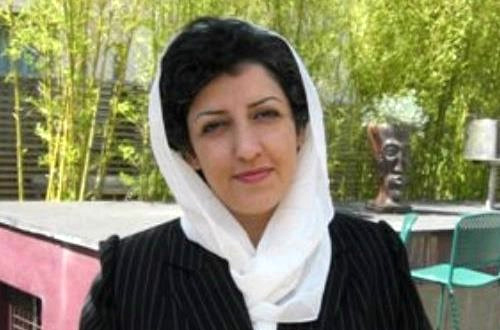
Reprisals are not limited to human rights defenders cooperating with the UN. Narges Mohammadi, a prominent human rights defender in Iran, told the NGO ‘International Campaign for Human Rights in Iran’ that new charges have been brought against her stemming from her March 8, 2014 meeting with the EU foreign policy chief Catherine Ashton. Mohammadi was charged with “propaganda against the state” and “collusion against national security” for her meeting with Ashton at the Austrian Embassy in Tehran. She was released on $10,000 bail. [Mohammadi was one of several women activists who accepted an invitation to meet the EU foreign policy head during her March visit to Tehran. The meeting took Iranian officials by surprise and unleashed a flurry of criticism by conservatives who described the meeting as “foreign interference in Iranian domestic affairs” and labeled the Iranian participants as foreign collaborators.]

Mohammadi stated: “I have been ‘charged’ with every single civil activity I have engaged in since my release from Zanjan Prison in August 2012, such as participating in gatherings on women’s rights, air pollution, and [Rouhani’s] Citizenship Rights Charter. I was also accused of honoring families of political prisoners at meetings, or attending a gathering with Gonabadi Dervishes in front of the Prosecutor’s Office, or giving interviews to media outside Iran. I told them there that when you fit all my civil activities into these two charges, it means that I must remain silent and still.”

Mohammadi was arrested in 2009 and charged with “assembly and collusion against national security,” “membership in the Defenders of Human Rights Center,” and “propaganda against the state.” She was first sentenced to 11 years in prison, but Branch 54 of the Tehran Appeals Court reduced her sentence to six years in prison. She was released in 2013 for medical reasons after a severe illness in Zanjan prison.

Prominent Rights Defender Faces New Charges for Her Meeting with Ashton : International Campaign for Human Rights in Iran.

EU foreign ministers confirm backing and supporting human rights defenders

May 20, 2014

Yesterday, 19 May 2014, EU foreign ministers, meeting in Brussels for the Foreign Affairs Council on Development, reaffirmed the EU’s commitment to promoting all human rights, whether civil and political, or economic, social and cultural, in all areas of its external action without exception, as part of working towards a rights-based approach to development coöperation.  “The implementation of a rights-based approach to development cooperation should be based on the universality and indivisibility of human rights and the principles of inclusion and participation in decision-making processes; non-discrimination, equality and equity; transparency and accountability. The application of these principles should be central to EU development cooperation, thereby also ensuring the empowerment of the poorest and most vulnerable, in particular of women and girls, which in turn contributes to poverty reduction efforts,” said the Council conclusions. The Council also stressed the need for continued EU support for human rights defenders, capacity-building of local civil society organisations and promoting a safe and enabling environment in both law and practice that maximizes their contribution to development. Being closer to citizens and interacting with civil society, local authorities also play a crucial role in the effective implementation of a rights-based approach.
Moreover, the Council underlined that investment and business activities in partner countries should respect human rights and adhere to the principles of corporate social and environmental responsibility and accountability.
EU foreign ministers back human rights-based approach to all development cooperation.

EU asked to press Laos on human rights in today dialogue

May 19, 2014

Interesting to note that this piece found its way into the Tourism Section of the Thai newspaper Phuket Wan [“This is the first site on the island dedicated especially to tourism, property, restaurants and nightlife, and jobs”of 19 May 2014. “The European Union EU must make the strengthening of bilateral relations with Laos contingent upon the Lao governments ability to make tangible progress in addressing key human rights issues, FIDH and it member organisation, the Lao Movement for Human Rights, said .” The paper then summarizes the briefing paper titled ‘Laos: The government’s failure to reform and address serious human rights issues call for EU action‘, released ahead of the 5th Laos-EU Working Group on Human Rights and Governance, held in Brussels today. [Foremost issues: rampant land grabbing and restrictions on freedom of expression, assembly, association, and religion as well as a credible investigation re human rights defender Sombath Somphone.

via EU Asked to Push for Improved Human Rights in Laos – Phuket Wan

Azerbaijani lawyers and human rights defenders trained to train others

February 25, 2014

Twenty trainers from among Azerbaijani lawyers and human rights defenders have been trained to apply the European Convention on Human Rights (ECHR) and the Revised European Social Charter (RESC), with a particular focus on anti-discrimination standards, AzerTag state news agency reported. The last of three four-day training sessions for Trainers took place in Baku, Azerbaijan, on 20-23 February.

Twenty lawyers and human rights defenders were selected for training via competition to share their experiences with colleagues through a series of cascade trainings, which will start in March 2014 and continue even after the joint project of the Council of Europe and European Union is completed. The Justice Academy of the Republic of Azerbaijan is the key local partner in this project.

This activity is one of the most important activities within the capacity building project for lawyers and human rights defenders, and I believe that the advocates and human rights defenders attending this programme have obtained essential benefit from the shared knowledge and they will put this knowledge and information into practice …” said Teymur Malik-Aslanov of the Council of Europe Office in Azerbaijan.

[This activity is a regional project implemented in Azerbaijan, Armenia, Georgia, Moldova, the Russian Federation and Ukraine.]

via CoE, EU train Azerbaijani lawyers – AzerNews.


Pressure on Venezuela to stop intimidation of human right defenders

February 15, 2014

A good example of the interaction of the work of international [human rights] organisations and local media is this piece from El Universal in Venezuela under the title: “Front Line Defenders reject intimidation of human right advocates”. It mentions:

  • Front Line Defenders called for prompt and unbiased investigation into the arbitrary detention and assault of human rights activist Inti Rodríguez and defamation of Humberto Prado, a representative of non-governmental organization Venezuelan Prison Watch .
  • The UN requests inquiry into involvement of armed gangs in violent events.
  • The European Union calls for peaceful dialogue in Venezuela
  • USA asks Maduro’s government to respect freedom of expression.

via Front Line Defenders reject intimidation of human right advocates – Daily News.

‘Stand 4 Human Rights’ campaign for the European Parliament Elections of 2014

January 21, 2014

The European Parliament Elections of 2014 are coming on 22 May and the Human Rights and Democracy Network [HRDN] has launched a campaign: Stand 4 Human Rights. Read the rest of this entry »