Archive for the 'human rights' Category

Four Yemeni journalists under Houthi death sentence

July 21, 2020

As four Yemeni journalists continue to wonder when or whether the Houthi authorities will execute the death sentences they received in April on spying charges, Reporters Without Borders (RSF) calls for international pressure to make the Houthis understand that they will suffer international opprobrium if they do not overturn the sentences.

Before being abducted by the Houthis in 2015, the four journalists played leading roles in a Sanaa-based network of media outlets and Facebook, Twitter, YouTube, Telegram and WhatsApp pages linked to Al-Islah, the Yemeni branch of the Muslim Brotherhood and ruling party in regions controlled by Yemen’s internationally recognized government.

Abdul Khaleq Amran edited the Al-Islah Online website and ran Yemen Revolution Press, a news agency created from several media outlets in 2011. His staff covered the Yemeni civil war, documented crimes committed by the Houthis and interviewed the Houthis’ opponents.

Akram Al-Walidi supervised the staff of the Alrabie-ye.net news website and the government news agency SABA. He gathered information about developments in the fighting from the Al-Islah side, on the basis of reliable sources and with the help of a network of senior political and administrative officials then based in Ma’rib, which was established as the new capital after the Houthi rebels seized Sanaa.

Hareth Humaid, the head of news at Yemen Revolution Press, covered Houthi human rights violations, including abductions and bombardments of civilians. He produced a daily news bulletin with the latest violations. Its last issue was No. 54.

Tawfiq Al-Mansouri worked for the daily newspaper Al-Masdar until it stopped publishing when the Arab coalition intervened in 2015. He then joined Yemen Revolution Press doing layout and graphic design and helping to give form to the various media outlets linked to the agency.

After their abduction in 2015, the four journalists were secretly moved from one prison to another in Sanaa and were subjected to violent interrogations. Torture and repeated blows left all of them with severe physical and psychological aftereffects, according to the Association of Abductees’ Mothers. Amran has a slipped disc. Humaid has suffered loss of vision and has constant migraines. Walidi has chronic digestive problems.

“Every year the world moves one step closer to the universal abolition of the death penalty, but these four veteran journalists are facing the worst of all sentences just for doing their job,” RSF secretary-general Christophe Deloire said.

“Efforts are urgently needed to end their nightmarish plight and return to humanitarian principles in a country where journalists have already paid a heavy price in the war. The Houthis must overturn this decision or face international opprobrium. We ask all those who may have any influence, direct or indirect, on the Houthis to use it to help bring this madness to an end.”

The four were among a total of ten journalists abducted by the Houthis in Sanaa in 2015 on the absurd grounds that they could potentially provide the Arab coalition with information for use in its air strikes. Accused of “collaborating with the enemy,” they were tried by a Houthi Special Criminal Court that is not recognized by the international community.

In its latest annual round-up, RSF reported that a total of 15 journalists were being held hostage in Yemen, most of them by the Houthis. The others were either being held in provinces controlled by the so-called “legitimate government” (such as Muhammad Ali Al-Moqri) on in areas controlled by separatists (such as Saleh Musawa, who has since been released).

As RSF also reported in the 2019 round-up, the conditions in Yemen are nowadays so bad that many journalists have abandoned journalism and have switched to other forms of work. Yemen is ranked 167th out of 180 countries in RSF’s 2020 World Press Freedom Index. See also: https://humanrightsdefenders.blog/2020/05/04/world-press-freedom-day-2020-a-few-more-links/

https://rsf.org/en/news/who-are-four-yemeni-journalists-under-houthi-death-sentence

The Ups and downs in sueing the NSO Group

July 20, 2020

Written By Shubham Bose

facebook

While AI stranded in its effort in Israel [https://humanrightsdefenders.blog/2020/07/15/amnesty-internationals-bid-to-block-spyware-company-nso-fails-in-israeli-court/ ] a federal US court has passed an order allowing WhatsApp to move forward with its case against the Israeli company for allegedly targeting 1,400 users with malware in 2019. According to reports, it is believed that spyware produced by the Israeli firm NSO Group was used to target various groups of people around the world, such as journalists, human rights defenders, and even politicians. [see: https://humanrightsdefenders.blog/2019/10/30/nso-accused-of-largest-attack-on-civil-society-through-its-spyware/

Judge Phyllis Hamilton, in her ruling on the cases, stated that she was not convinced by NSO Group’s claims and arguments that it had no hand in targeting WhatsApp users. Moving forward in the trial, the NSO Group might be forced to reveal its clients and make the list public.

The judge also added that even if NSO was operating at the direction of its customer, it still appeared to have a hand in targeting WhatsApp users. As per reports, a WhatsApp spokesperson said the Facebook-owned venture was pleasd with the court’s decision and will now be able to uncover the practices of NSO Group.

Even in the face of criticism from privacy advocates, the company has claimed that law enforcement agencies are facing difficulties due to the proliferation of encrypted messaging apps like WhatsApp.

The law firm King & Spalding has reportedly been hired by the NSO group to represent them. Among the company’s legal team is Rod Rosenstein, Trump administration’s former attorney general. The NSO Group has reportedly had multiple government clients like Saudi Arabia, Mexico, and the United Arab Emirates who have used spyware to target political opponents and human rights, campaigners.

https://www.republicworld.com/world-news/us-news/whatsapp-lawsuit-against-israeli-firm-nso-group-given-green-light-by-u.html

UN Representative for Colombia: killing of human rights defenders most serious threat to peace

July 16, 2020

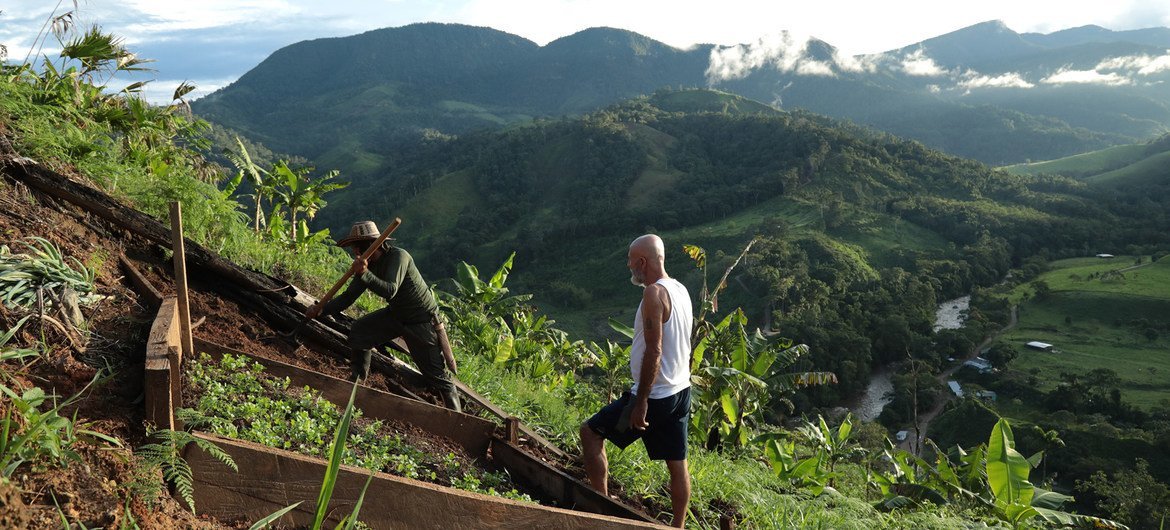
Some former combatants in Colombia, have now turned to farming following the historic 2016 Peace Agreement – UN Verification Mission in Colombia/Marcos Guevara.

On 14 July 2020 UN News made public the following assessement:

The killing of former combatants, human rights defenders and social leaders of communities devastated by decades of conflict, remains the most serious threat to peace in Colombia since the signing of a landmark peace agreement in 2016, the top UN official in the country told the Security Council on Tuesday, meeting in-person at UN Headquarters in New York, for the first time in four months.

Carlos Ruiz Massieu, Special Representative and head of the UN Verification Mission in Colombia, said authorities on 6 July arrested an individual allegedly behind the killing of Alexander Parra, a former member of the Revolutionary Armed Forces of Colombia—People’s Army, and leader of the former territorial area for training and reintegration in Mesetas, “These arrests are an example of the results that the mechanisms in the Peace Agreement can deliver”, Mr. Massieu said, and a reminder of the need to provide them with the support required to carry out their tasks. e.

Safety essential for those who laid down arms

After months of uncertainty and mounting security risks from illegal armed groups, Mr. Massieu said operations are now underway to transfer the former territorial area for training and reintegration in Ituango – where 11 former FARC-EP members and seven of their relatives were killed – to a new location in Mutatá…..

Presenting the Secretary-General’s report on the Mission, he said the COVID-19 pandemic has laid bare the vulnerable situation of roughly two-thirds of accredited former combatants who currently reside outside the former territorial areas for training and reintegration.

Offering a perspective from her own life, Clemencia Carabalí Rodallega, of the Municipal Association of Women, in Cauca, introduced herself as a survivor of a 4 May 2019 attack, which also threatened the lives of 25 other people working to defend the ethnic and territorial rights of communities in Colombia.

“Ethnocide in Colombia has not stopped,” she said. Not a day has passed since the Spanish invasion 528 years ago that a black or indigenous person has not been killed, a member of the indigenous or cimarrona guard has not been threatened, a woman has not been raped, or a human rights defender has not died by violence.

She said that since the signing of the Peace Agreement, 686 leaders and human rights defenders have been murdered, 160 of them in this year alone.  She described the 2019 assassinations of a mayoral candidate from Suárez municipality and a governor of the Nasa indigenous community, along with the dismemberment, earlier this month, of a member of the Renacer Afro-Colombian Community Council, in Cañón del Micay.

“These situations have increased exponentially due to the COVID-19 pandemic”, she stressed.

She urged the President to fully implement the Comprehensive Programme of Safeguards for Women Leaders and Human Rights Defenders, and the Comprehensive Protection and Security Programme for Communities and Organizations in the Territories.

More broadly, she said the Government must comply with the entire Peace Agreement – especially its Ethnic Chapter and provisions on gender – and effectively investigate and prosecute those behind the violations.

She invited the international community to “put yourselves in our shoes” and visit the territories, accompanying Colombians in their peacebuilding initiatives, “not only through technical and economic support, but also with political commitment, as guarantors.”

See also: https://humanrightsdefenders.blog/2020/01/20/colombia-21-january-2020-civil-society-begins-a-much-needed-patriotic-march/

https://news.un.org/en/story/2020/07/1068371

Even simply remembering Kem Ley is forbidden in Cambodia

July 16, 2020

Cambodia continues to block memorial activities honoring murdered political analyst Kem Ley [See: https://humanrightsdefenders.blog/2019/07/12/third-anniversary-kem-ley-murder-cambodia-impunity/]

Individuals and groups were blocked by police and local authorities in Cambodia from holding activities commemorating the fourth anniversary of the death of political analyst Kem Ley.

Kem Ley was killed at a gas station on July 10, 2016. Many suspect the murder was linked to his work as a commentator and political analyst. He was murdered days after he gave a radio interview about a Global Witness report detailing corruption under the Hun Sen government, which has ruled the country since 1985.

On July 8, a group of monks and young activists were prevented by police from holding a memorial service at the gas station where the late analyst was killed. They were forced instead to hold their prayers on a sidewalk more than 100 meters from the site.

A young man wearing a shirt with Kem Ley’s face printed on it was arrested that day. The next day, a group of youth leaders were blocked by security forces from travelling to Kem Ley’s family home in Takeo.

Another convoy of monks and activists was blocked on July 10. But supporters of the slain commentator continued to honor him by embarking on a march of several kilometers. Chheang Sinath, a tuk-tuk (three-wheeled vehicle) driver and member of the Independent Democracy of Informal Economy Association, criticized authorities’ actions in an interview with VOD news:

We just came to participate and show respect. Just participating and remembering [Kem Ley’s] sacrifice for society is seen as a wrongdoing [by authorities]. This is not appropriate unless we hold a demonstration or protest something. This is just a ceremony to pay gratitude to him, but authorities tried to stop us.

Venerable Bo Bet, a monk from a Phnom Penh pagoda, expressed frustration that his group of 10 monks was not allowed to pay respects to Kem Ley:

We want to pay respects at the place he was killed, and we will also hold ceremonies at other places. We come here and want to burn incense. We want to hold funeral rites at the site. We want to remember his good deeds here because we do this only once a year.

Kem Ley’s wife and kids were forced to seek asylum in Australia after his death. Bou Rachana thanked supporters of her late husband for their efforts.

See also; https://humanrightsdefenders.blog/2020/06/17/swedens-aid-to-cambodia-refocuses-on-civil-society/

https://globalvoices.org/2020/07/15/cambodia-continues-to-block-memorial-activities-honoring-murdered-analyst-kem-ley/

Hannah Foster decries Human Rights Violations amid COVID-19 in Africa

July 16, 2020

On 14 July 2020 the FOROYAA Newspaper carried a summary of remarks made by Hannah Foster, who is the spokesperson of the NGOs Forum at the opening ceremony of the 66th Ordinary Session of the African Commission on Human and Peoples’ Rights (ACHPR) which started on Monday July 13th 2020 (via Zoom)

Gambian human rights defender, Mrs. Hannah Foster, has raised concern about human rights violations in Africa, in particular amid the spread of Covid-19

“We all have seen that from all parts of the world human rights violations have remained a major concern in most countries. Since late December 2019, the Coronavirus which causes Covid-19 has held the world captive with uncertainties, fear and insecurity. In most countries, we’ve seen the freedom of association and assembly remains a major cause for concern in most of the countries reviewed,” she said

Madam Foster said it is also a cause for concern that with Covid-19, there has been an increase of gender based violence registered in most of the countries that have been reviewed by the Forum.

She added that it was reported at the Forum that systematic harassment and targeting of human rights defenders in many countries persist and or have intensified the closing of civic space due to the existence of restrictive legislations.

“It was ascertained that a lot more needs to be done as many African countries continue to face challenges of insecurity, violence, terror attacks and the volatile situation brought about by Covid-19,” she said.

Speaking further, Madam Foster said they had raised the issue of overcrowding in prisons especially during Covid-19. “The overcrowding of prisons due to non-observance of judicial guarantees in respect of remand detainees as well as standard minimum rules, also have created challenges. And the Forum calls on the African Commission to urge States to respect and implement all laws governing the treatment of prisoners especially in this time of Covid-19, which has brought about an extension of restricting laws that are being implemented,” Foster informed the participants.

Foster said the Forum urged more States and NGOs to use and popularize the African Commission processes and decisions and to encourage States to comply with decisions as well as consider signing the Protocol on the right to individul complaint

“We have challenges of Benin and Cote d’Ivoire withdrawing their signatures of Article 346. And we will like to urge the Commission to enter into dialogue with them to ensure that they encourage them to review the decision,” she said.

Foster said the forum also observed that freedom of expressions, the criminalization of bloggers and internet restrictions continue to hinder the independent and freedom of journalists and like-minded groups.

“Humanitarian access has also become very problematic. The Forum took this opportunity to call on the African Commission and all States that have not ratified pertinent treaties to speedily do so in order to enable their implementation as the enjoyment of those rights by all citizens,” she added.

Read the original article on Foroyaa.

https://allafrica.com/stories/202007150349.html

Anti-Censorship initiative with free VPN accounts for human rights defenders

July 15, 2020

On 14 July Business-Wire reported that the VPN company TunnelBear has partnered with NGOs to give away 20,000 accounts (these NGOs inlcude Access Now, Frontline Defenders, Internews, and one other undisclosed participant).

This program aims to empower individuals and organizations with the tools they need to browse a safe and open internet environment, regardless of where they live. The VPN provider is encouraging other NGOs or media organizations across the world to reach out if they too are in need of support. “At TunnelBear, we strongly believe in an open and uncensored internet. Whenever we can use our technology to help people towards that end, we will,” said TunnelBear Cofounder Ryan Dochuk.

TunnelBear’s VPN encrypts its user’s internet traffic to enable a private and censor-free browsing experience.

“By undergoing and releasing independent audits of their systems, adopting open source tools, and collaborating with the open source community, TunnelBear has proven itself to be an industry leader in the VPN space and a valuable private sector partner within the internet freedom movement. Internews is happy to support TunnelBear in extending its VPN service to the media organizations, journalists, activists, and human rights defenders around the globe who can benefit from it,” said Jon Camfield, Director of Global Technology Strategy at Internews.

Contact: Shames Abdelwahab press@tunnelbear.com

See also: https://humanrightsdefenders.blog/2020/06/23/trump-now-starts-dismanteling-the-open-technology-fund/

https://www.businesswire.com/news/home/20200714005302/en/TunnelBear-Kicks-Anti-Censorship-Initiative-Free-Accounts-Activists

Amnesty International’s bid to block spyware company NSO fails in Israeli court

July 15, 2020

Amnesty International’s bid to block spyware company NSO Group’s international export licence has been shut down in a Tel Aviv court, apparently due to a lack of evidence, reported several media, here in the New Statesman of 14 July 2020. [see: https://humanrightsdefenders.blog/2019/09/17/has-nso-really-changed-its-attitude-with-regard-to-spyware/ ]

The case argued that the Israeli defence ministry should revoke the group’s export licence in light of numerous allegations that its phone-hacking Pegasus spyware has been used by governments (including Mexico, Saudi Arabia, Morocco and the UAE) to spy on civilians including an Amnesty International employee, human rights activists, lawyers and journalists..

The district court judge Rachel Barkai wrote in a statement that there was not enough evidence to “substantiate the claim that an attempt was made to monitor a human rights activist”. She wrote that in reviewing materials provided by the Ministry of Defence and Ministry of Foreign Affairs, she was persuaded that export licences were granted as part of a “sensitive and rigorous process”, and closely monitored and revoked if conditions were violated, “in particular in cases of human rights violations.”

Amnesty International decried the court’s decision. Danna Ingleton, acting co-director of Amnesty Tech, said in a statement: “Today’s disgraceful ruling is a cruel blow to people put at risk around the world by NSO Group selling its products to notorious human rights abusers. […] The ruling of the court flies in the face of the mountains of evidence of NSO Group’s spyware being used to target human rights defenders from Saudi Arabia to Mexico, including the basis of this case – the targeting of one of our own Amnesty employees.”

NSO said: “Our detractors, who have made baseless accusations to fit their own agendas, have no answer to the security challenges of the 21st century. Now that the court’s decision has shown that our industry is sufficiently regulated, the focus should turn to what answer those who seek to criticise NSO have to the abuse of encryption by nefarious groups.”…

The NSO Group is currently embroiled in another lawsuit brought by WhatsApp, which alleges that Pegasus spyware was used to hack more than a thousand of the messaging platform’s users. [see: https://humanrightsdefenders.blog/2019/10/30/nso-accused-of-largest-attack-on-civil-society-through-its-spyware/]

https://tech.newstatesman.com/security/amnesty-international-nso-group-export-licence

Turkey engages in abduction of Turkish nationals living abroad through secret agreements with other states according to UN letter

July 11, 2020

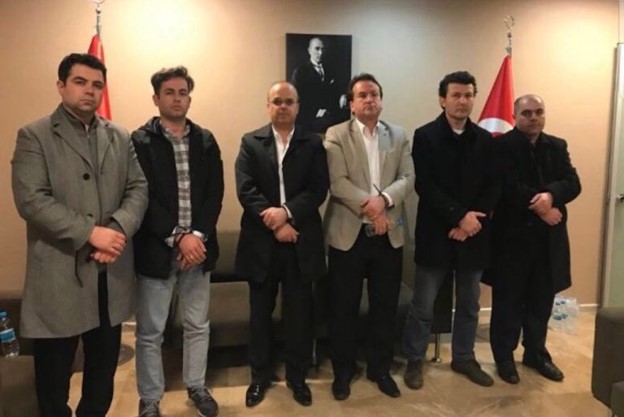
Turkish nationals who were abducted in Kosovo were kept for a time at the Turkish embassy premises.

On 9 July 9, 2020 the Nordic Monitor higlighted the shocking news that the Turkish government has signed bilateral security cooperation agreements with multiple states that were phrased ambiguously to allow for the expulsion or abduction of Turkish nationals living abroad, This is based on a joint UN letter on 5 May 2020.

Four UN rapporteurs/experts sent a joint letter to the Turkish government to express their concern about the “systematic practice of state-sponsored extraterritorial abductions and forcible return of Turkish nationals from multiple States to Turkey.”

Joint UN letter on systematic practice of state-sponsored extraterritorial abductions and forcible return of Turkish nationals from multiple States to Turkey, see: https://spcommreports.ohchr.org/TMResultsBase/DownLoadPublicCommunicationFile?gId=25209

“The Government of Turkey, in coordination with other States, is reported to have forcibly transferred over 100 Turkish nationals to Turkey, of which 40 individuals have been subjected to enforced disappearance, mostly abducted off the streets or from their homes all over the world, and in multiple instances along with their children,” the letter said.

Nordic Monitor previously reported how the content of Turkey’s security agreements has changed in parallel to the transformation of national legislation and that the new documents contained ambiguous copy-paste phrases designed to suppress government opponents outside the country.

“[The Turkish] Government has signed bilateral security co-operation agreements with multiple States allegedly containing broad and vague references to combatting terrorism and transnational crime. Sources claim that the agreements have been phrased ambiguously to allow for expulsion or abduction of anyone deemed to be a ‘security risk’ from third countries party to the agreements. There appears to be a clear link in the timing of the alleged operations – most, if not all, have been carried out within two years since the agreements entered into force. For instance, allegations are made that Turkey has signed secret agreements with several States, including Azerbaijan, Albania, Cambodia and Gabon, where several operations are reported to have taken place,” the letter stated….

Furthermore, rapporteurs, with reference to statements by Turkish officials, exposed the fact that over 100 alleged members of the Gülen movement have been abducted abroad by Turkish intelligence and brought back to Turkey as part of the Turkish government’s systematic global manhunt.

“Turkish authorities have not only acknowledged direct responsibility in perpetrating or abetting abductions and illegal transfers, but have also vowed to run more covert operations in the future. On September 21, 2018, it is alleged that Turkey’s Presidential Spokesperson stated during a press conference that the Government would continue its operations against the Hizmet Movement, similar to the one in Kosovo (March 29, 2018).”….

“We note in this respect that deprivation of nationality for the sole purpose of facilitating expulsion or removal goes against international law norms and standards. Finally, we wish to highlight that violations of international human rights obligations resulting from these agreements engage Turkey’s responsibility under international law as well as the third countries parties to the agreements” the letter said….

https://www.nordicmonitor.com/2020/07/turkey-signed-secret-agreements-with-several-states-to-conduct-state-sponsored-extraterritorial-abductions-a-joint-un-letter-underlines/

That Turkey takes an aggressive stand on anything that smacks like terrorism was made clear again on 7 July 2020 when Turkey’s Foreign Ministry slammed recent remarks by Sweden’s foreign minister against Turkey’s military operation in northeastern Syria while meeting via videolink with members of the PYD/YPG/PKK terrorist organization.  

“Essentially this meeting was not the first in which Ann Linde came into contact with members of the terrorist organization. She previously held talks with members of the terrorist organization and participated in activities organized by people associated with the terrorist organization,” the ministry said late Thursday in a statement.

“It is a shame that so-called human rights defenders, who are becoming an instrument to the terrorist organization’s smear campaign, ignore the massacres, crimes and oppression…committed by these terrorists in Syria,” it stressed. [what the term “human rights defenders” here means is not clear] – https://www.aa.com.tr/en/turkey/turkey-slams-swedish-fm-for-meeting-with-terror-group/1905510

#HoldTheLine Coalition comes out for Maria Ressa

July 11, 2020

On behalf of the #HoldTheLine Coalition, Reporters Without Borders (RSF), the Committee to Protect Journalists (CPJ), and the International Center for Journalists (ICFJ) are calling for public support for Maria Ressa and independent media in the Philippines.

On 15 June 2020, Ressa was convicted of “cyber-libel,” alongside former Rappler colleague Reynaldo Santos Jr — a criminal charge for which they face up to six years in prison. [see: https://humanrightsdefenders.blog/2020/06/15/ressas-cyber-libel-conviction-in-the-philippines-shocks/

Ressa and Santos could be imprisoned if the cyber-libel case is not overturned on appeal.  Ressa is facing at least six other cases and charges. Guilty verdicts in all of these cases could result in her spending nearly a century in jail.  

Rappler is also implicated in most of these cases, with several involving criminal charges related to libel, foreign ownership, and taxes.  For independent media in the Philippines, these targeted attacks and legal threats pose a clear and present danger to press freedom.

As a matter of urgency, please sign this petition calling on the Philippine government to drop all cases against Ressa, Santos, and Rappler and cease attacks on independent media in the country. Share this appeal using the #HoldTheLine hashtag!

Credit image : Maria TAN / AFP

I sign the petition

https://rsf.org/en/free-mariaressa

India – back on Security Coiuncil – should clean up it human rights act

July 11, 2020

The admittedly Pakistan-based Geonet.tv gives a good summary of India’s disregard of concerns and objections in five letters by UN Human Rights Council (UNHRC) about human rights abuses in Jammu and Kashmir, India’s new terrorism law and the Citizenship law.

In the five letters, UNHRC experts raised pertinent questions and pointed out violations by Indian authorities of the resolutions by UN Security Council, General Assembly and UN Human Rights Council…

On July 4, 2020, United Nations Human Rights Council (UNHRC) made public 14 cases of worst possible human rights abuses in Jammu and Kashmir after the Indian government failed to respond to their concerns within the stipulated 60 days.

Four UNHRC Rapporteurs on torture, extrajudicial executions, minority issues and freedom of religion under HRC charter and mandate had written to Indian government on May 4th, 2020, to respond back on the 14 cases and countless other cases involving grave abuse of human rights in Kashmir after its annexation on Aug 5th, 2019. The UN Rapporteurs in the May 4th letter lamented that Indian government had not responded to their earlier letters on Aug 16, 2019, and February 27, 2020, on the atrocities in Kashmir. The two earlier letters questioned the restrictions in Kashmir on rights of expression and assembly and dissent following Indian annexation of Kashmir.

In another letter on May 6th, 2020, eight Rapporteurs of UNHRC and one Vice Chair of a Working Group raised serious concern on the new anti-Terrorism law passed by Indian parliament just before Indian annexation of Kashmir in July/Aug 2019. UNHRC questioned the detention of any accused for an extended period of six months under the new anti-terror law

In another letter on February 28th, 2020, eight Rapporteurs of UNHRC and one Vice Chair of a Working Group questioned the Indian Citizenship Act of December 2019 which discriminates against Muslims and bars them to get Indian citizenship whereas people from different religious beliefs who entered Indian before Dec 2014 are eligible for it. The letter also heavily criticise excessive use of force to quell protests against this Act which resulted in death of over 50 and injuries to hundreds.

See also: https://humanrightsdefenders.blog/2020/06/27/un-experts-address-3-big-ones-usa-china-and-india/

https://www.geo.tv/latest/297349-india-ignored-five-unhrc-letters-about-human-rights-violations