Janika Spannagel on 29 Apr 2021 announced the publication of this new report of the International Service for Human Rights (ISHR). A virtual event to launch ISHR’s new quantitative analysis of the scope and impact of UN action to combat intimidation and reprisals will take place later today at 16h00 Geneva time
The ability of the UN human rights system to function depends on the testimonies of thousands of human rights defenders and victims from across the world who engage with UN mechanisms every year. However, interactions with the UN often come with risks for activists – many face reprisals from their home countries, ranging from severe, violent retaliation to equally effective administrative hurdles to their work in human rights.
Some of these reprisal cases are raised by UN bodies with the responsible government and reported in annual reports by the UN Secretary-General. However, what becomes of the affected individuals’ cases after the UN’s involvement remains largely unclear.
This study aims to both establish a clear understanding of which reprisal cases are raised by UN communications, and to shed light on the question of their effectiveness in improving individuals’ situations.
The project was funded by the International Service for Human Rights (ISHR) and conducted jointly with their New York office between November 2020 and March 2021.
Differenceday.com of 5 May 2021 reports on how World Press Freedom Day was celebrated in Brussels as Difference Day
At a time when independent and free media reporting is more essential than ever, press freedom continues to be under threat. In a declaration ahead of World Press Freedom Day on Monday, EU High Representative Josep Borrell states that journalists continue to experience harsh working conditions with increasing financial and political pressure, surveillance, arbitrary prison sentences or violence for doing their work.
According to the UNESCO Observatory, 76 journalists were killed since 2020, while many more were arrested, harassed or threatened worldwide. Of particular concern is gender-based violence targeting women journalists.
“Press freedom is a fundamental value for the European Union underpinned by many recent initiatives. Media freedom and the safety of journalists are key priorities of the new Human Rights and Democracy Action Plan and of the European Democracy Action Plan.”
In 2020, more than 400 journalists benefited from the EU mechanism for protection of Human Rights Defenders, while the EU took important actions to support journalists, independent media and the fight against disinformation in the context of the pandemic in many regions.
The EU is determined to do more, in Europe and abroad, the declaration continues. The EU will continue coordinating with international organisations and mechanisms and pioneer new approaches. One example is the European Commission’s proposal for a Digital Services Act aimed at holding the major platforms accountable to make their systems fairer, safer and more transparent.
EU will also continue its action to counter disinformation and seek with all partners effective means to support sustainable business models for independent media.
“Press freedom means security for all,” the declaration concludes.
The World Press Freedom Day on 3 May was declared by United Nations General Assembly in 1993. The day raises awareness of the importance of freedom of the press and reminds governments of their duty to respect and uphold the right to freedom of expression enshrined under Article 19 of the 1948 Universal Declaration of Human Rights.
Freedom of expression implies the respect for opinions of others. In Brussels the day is commemorated annually as Difference Day because it recognises the difference in people and their convictions.
“To celebrate freedom of expression is to celebrate diversity,” the Free University of Brussels and other organisers of Difference Day in Brussels stated. In the past, investigative journalism has been in the focus of the event. This year the attention is drawn to women journalists behind the news and on the front line.
Regan Ralph on 2 May 2021, in Open Democracy, writes: “When authoritarians get a free pass, activists pay the price”. It is a rich piece.
Much ink has been spilled about US president Joe Biden’s non-response to the confirmation by US intelligence services that Saudi crown prince Mohammed bin Salman directed the gruesome murder of journalist Jamal Khashoggi in Turkey in 2018. Most of it, like Joseph S. Nye, Jr.’s recent article ‘Biden and Human Rights’, focuses on the political consequences.
The real price of authoritarian impunity, however, is paid by the victims. Pulled punches – like refusing to sanction the crown prince – endanger the lives of brave individuals standing up for democratic values. If the Biden administration is to deliver on its promise to “stand firm behind our commitments to human rights, democracy, [and] the rule of law”, it must make protecting the lives of activists a priority.
In 2020, 50 journalists were killed worldwide. For activists and advocates, the numbers are even grimmer – at least 331 human rights defenders in 25 countries were murdered. Countless others were detained, beaten, and threatened with worse. Women, especially, are singled out for sexualized violence and harassment. And the number of human rights activists killed, harassed, or thrown in jail is steadily rising. According to UN special rapporteur on human rights defenders Mary Lawlor, 1,300 peaceful activists were murdered between 2015 and 2019.
Like journalists, frontline activists are targeted by the powerful institutions they publicly criticize. Last month marked five years since the murder of Honduran environmental justice advocate Berta Caceres. She was gunned down in her home on the night of 2 March 2016, after a years-long campaign of harassment and intimidation. Caceres was killed because of her peaceful struggle against the Agua Zarca dam project, which threatens the land and livelihoods of indigenous Lenca communities in western Honduras. [see also: https://humanrightsdefenders.blog/tag/berta-caceres/]
Investigations into Caceres’s murder indicated an elaborate web of co-conspirators, including high-level government officials, former military personnel, and top executives at Desarrollos Energeticos SA (DESA)—the company building the dam. Seven men, hired by DESA executives, were convicted in 2018 for Caceres’s murder. DESA’s president, a former military intelligence officer, will stand trial next month. He is indicted as the “intellectual author” of the assassination.
These brutal murders are tragedies. They also reveal the costs incurred when we indulge authoritarians as they crack down on voices of dissent.
Not long ago, it seemed that the price of oppression was on the rise. There was a growing consensus that brutal, autocratic actions would isolate a country from the international community. Powerful actors on the world stage, including the US State Department, could and did support the right of independent voices to criticize abuses of power and call for accountability.
Then the new authoritarians came to power. In countries across the world, illiberal and autocratic strongmen granted each other the gift of impunity and permission to silence critics without consequence. Human rights advocates watched with grim resignation as former president Donald Trump’s administration excused gross rights violations and embraced abusive regimes.
Existential threats to human rights activism are not theoretical; they grow more concrete and specific every day
The now-defunct International Commission Against Impunity in Guatemala (CICIG), for example, was established in 2006 with political and financial support from the United States and the United Nations. It scored groundbreaking victories against corrupt and abusive political and military figures. In 2015, Joe Biden, then US vice-president, helped keep the CICIG alive while the then Guatemalan president Perez Molina – later imprisoned on corruption charges – tried to shut it down. But in 2019, when the Guatemalan government dismantled the CICIG, there was nary a peep from Washington.
Existential threats to human rights activism are not theoretical; they grow more concrete and specific every day. As the Trump administration turned a blind eye, the Egyptian government cracked down on critics, harassing or jailing thousands of activists and journalists. Local advocates say President Abdel Fattah el-Sisi has been emboldened by the lack of consequences over his government’s flagrant disregard for human rights.
Civil society activists are vulnerable wherever they live and travel. Khashoggi’s murder shows the lengths to which an unchecked authoritarian will go to silence critics. This is what happens when heavyweight governments like the United States abdicate their moral leadership—frontline advocates everywhere in the world pay the price. It is unfathomably cruel to valorize the bravery of human rights advocates on the one hand and refuse to hold their murderers accountable on the other.
US leadership should offer the kind of moral suasion that will effectively counter and curtail attacks on human rights defenders. Others, including Khashoggi’s own colleagues at The Washington Post, have outlined the immediate actions Biden can take to hold Saudi Arabia’s crown prince accountable. But beyond sanctions for egregious violations, the Biden administration must do more to proactively support the thousands of courageous individuals who risk their lives to promote democracy and justice.
First, the administration should consistently apply the human rights norms it espouses—at home and abroad. Second, it must lend political and, where appropriate, financial support to those building democratic movements and institutions, especially when their efforts are attacked. Last, it should explore the creation of a novel global security compact, following the collective protection model pioneered by local activists. The safety of human rights defenders anywhere is the concern of governments everywhere, and policymakers must take measures to ensure that all civil society actors can carry out their vital work in safety.
The schoolyard teaches us that bullies don’t back down when they get what they want; instead, they demand more. It’s time to stand up to autocratic bullies and hold them accountable for their actions. The lives of countless brave activists may depend on it.
On 24 April 2021 the Aurora Humanitarian Initiative has revealed the names of five 2021 Aurora Humanitarians, chosen by the Aurora Prize Selection Committee for their courage, commitment and impact. The announcement was made today at the Matenadaran, the national repository of ancient manuscripts located in Yerevan, Armenia. During this special event, the attendees also paid tribute to the great scholar and philanthropist Vartan Gregorian, Co-Founder of the Aurora Humanitarian Initiative and member of the Aurora Prize Selection Committee, who passed away a few days ago. In accordance with the tradition, the names of the 2021 Aurora Humanitarians have been inscribed in the Chronicles of Aurora, a unique 21st century manuscript containing the depictions of the Aurora Humanitarian Initiative activities. For 2020 see: https://humanrightsdefenders.blog/2020/09/17/fartuun-adan-and-ilwad-elman-from-somalia-named-2020-aurora-prize-winners/
One of the Humanitarians will become the 2021 Aurora Prize Laureate and will receive an opportunity to continue the cycle of giving by sharing a $1,000,000 award with the organizations that help people in need. The 2021 Aurora Humanitarians are:
Grégoire Ahongbonon (Côte d’Ivoire), founder of the St Camille Association, which helps people in West Africa suffering from mental illness and seeks to end the inhumane local practice of keeping them in chains. Mr. Ahongbonon has nominated three organizations that promote international solidarity and support people with intellectual disabilities and mental illnesses: CRÉDIL (Lanaudière’s Regional Committee on Education for International Development), L’Arche Canada Foundation, and St Camille Association.
Ruby Alba Castaño (Colombia), a human rights activist and founder of ASOCATDAME (Meta Association for Peasants, Rural Workers and Defenders of the Environment) who works to protect the rights of thousands of Colombian peasants that are subjected to persecution, forced disappearances and displacement. Ms. Castaño has nominated three organizations that advocate for the rights of the peasant and impoverished communities in Colombia: ASOCATDAME, Claretian Corporation Norman Pérez Bello (CCNPB), and National Federation of Agricultural Unions (FENSUAGRO).
Paul Farmer (USA), a medical anthropologist, professor at Harvard Medical School, co-founder and chief strategist of Partners In Health (PIH), an international non-profit organization that brings the benefits of modern medical science to those who need it the most. Dr. Farmer has nominated two organizations that deliver healthcare to the world’s poorest communities and build a global movement of social medicine educators and practitioners: Partners In Health and Equal Health.
Julienne Lusenge (Democratic Republic of the Congo), a human rights defender, co-founder of Women’s Solidarity for Inclusive Peace and Development (SOFEPADI) and Fund for Congolese Women (FFC), who has been helping the victims of wartime sexual violence for years. Ms. Lusenge has nominated three organizations that support grassroots women’s organizations, empower survivors of gender-based violence and reintegrate internally displaced persons: Fund for Congolese Women, League for Congolese Solidarity and Association of Mothers for Development and Peace.
Ashwaq Moharram (Yemen), a physician who provides life-saving support to the starving population of Hodeida, facing a humanitarian crisis in the aftermath of conflict and blockade. Dr. Moharram has nominated two organizations that protect the future of children and provide free healthcare services to the people affected by the ongoing conflict in Yemen: Save the Children and Doctors Without Borders.
“It is a great honor to have the opportunity to recognize these distinguished men and women from all over the world. The 2021 Aurora Humanitarians are individuals who truly believe in the basic human rights and have dedicated their lives to helping people in areas of adversity. They are also recognized for the huge impact that even one individual can have by helping thousands and, most importantly, inspiring millions at the same time,” said Lord Ara Darzi, Chair of the Aurora Prize Selection Committee.
“The outstanding accomplishments of the 2021 Aurora Humanitarians show their unyielding willingness to act in response to the needs of people around them. Aurora believes deeply in the power of humanity to improve and save lives and has come up with the concept of “Gratitude in Action” that describes the human spirit that can motivate humanitarian activism. The heroes we are honoring today are the role models the world needs now more than ever before,” noted Marguerite Barankitse, founder of Maison Shalom and REMA Hospital and the inaugural Aurora Prize Laureate.
At the event, the Aurora Humanitarian Initiative also officially announced the opening of the nomination period for the 2022 Aurora Prize and encouraged everyone to put forward inspiring modern-day heroes. Earlier that day, Aurora representatives had commemorated the Armenian Genocide by attending a flower-laying ceremony at the Tsitsernakaberd memorial in Yerevan, Armenia, dedicated to the victims of the first genocide of the 20th century.
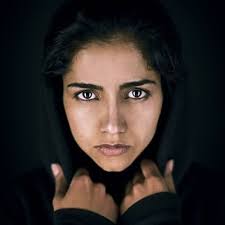
The Normandy Freedom Prize invites young people aged 15 to 25 in France and around the world, to reward each year a person or an organization engaged in an exemplary fight in favour of freedom. The online vote open to 15-25 year olds around the world to elect the 2021 Freedom Prize closed on April 26. Sonita Alizadeh, 25 years old, rapper born in Afghanistan, was named the laureate of this third edition of the Freedom Prize thanks to the votes of more than 5,000 young people from all over the world. For more on this award and its laureates see: https://www.trueheroesfilms.org/thedigest/awards/fef9ddd0-5b73-11e9-aba0-2ddd74eff7fa
Sonita Alizadeh is a rapper who was born in Afghanistan under the Taliban regime. At the age of 9, her parents planned to sell her as a bride but because of the war, her family fled to Iran and the planned marriage fell through. In Teheran, an NGO provided her with access to education and a cleaning job. When Sonita stumbled upon a song by the rapper Eminem, it is a real breakthrough. She began writing to tell her story and to speak out against forced marriage and the plight of millions of children around the world. Her first single, “Brides for Sale” garnered worldwide attention. Having moved to the United States, she now studies law to become a lawyer and to return to her country to defend Afghan women and children.
“I am proud to accompany the youth jury for the Prix Liberté. It is essential to sensitize the young generation to the defense of freedoms whatever they may be and to involve them in the construction of equality and the rights of every woman and man in the world. This requires awareness and teaching of what is happening elsewhere but also in France. Young people need to be heard because they are just like adults, victims of suffering and indifference.”
MSF worked in collaboration with Sea-Watch on board the Sea-Watch 4 until February 2021, providing medical care and supporting with humanitarian assistance for rescued people. (Credit: Médecins Sans Frontières)
As countries across Europe adopt increasingly tough migration policies, NGOs are being prosecuted for acts of solidarity with refugees, asylum seekers and migrants. We speak to Stephen Cornish, director general of Médecins Sans Frontières (MSF) Switzerland, and Behrouz Boochani, a Kurdish Iranian journalist and author who was imprisoned in Australia’s offshore asylum system for six years, about the threat this growing hostility poses to Europe’s democracies.
On 4 March 2021, Italian prosecutors charged dozens of people from humanitarian organisations including Médecins Sans Frontières (MSF) and Save the Children with colluding with people smugglers while carrying out rescue operations in the Mediterranean. After an investigation spanning nearly four years, crew members, mission heads and legal representatives who saved thousands of people from drowning at sea are facing years in prison, sending shockwaves through the humanitarian community. See also: https://humanrightsdefenders.blog/2020/03/04/new-amnesty-report-on-human-rights-defenders-helping-migrants/
“It’s hard to imagine how saving a life can become a criminalised activity,” says Stephen Cornish, director of MSF Suisse, speaking to Geneva Solutions. The organisation, which denies the accusations, estimates that its six humanitarian ships helped save more than 81,000 lives at sea. “It would be like criminalising the fire department for going to put out a fire.”
The investigation is one of dozens brought against NGOs running search and rescue operations in the Mediterranean since 2016, when a handful of humanitarian organisations including MSF and SOS Mediteranee launched vessels in response to a rise in the number of people attempting the perilous journey from countries such as Libya and Turkey to claim asylum in Europe. Over the past few years, these vessels have been frequently detained by authorities or trapped at sea for weeks at a time, refused entry to ports where they can safely disembark. [see also: https://humanrightsdefenders.blog/2019/12/18/international-migrants-day-the-story-of-the-ocean-viking/]
Hostility towards rescue agencies has grown since the height of the so-called ‘refugee crisis’ in 2015, says Cornish, when over one million people – the majority of whom were refugees fleeing the war in Syria – fled to Europe by sea over the course of the year, mainly arriving in Greece and Italy. The EU’s failure to share responsibility for the dramatic rise in the number of people seeking asylum in Europe left countries such as Greece and Italy overwhelmed, Cornish says: “People initially responded with charity and welcome, but then the failure was at a government level not to share the responsibility, and to repopulate people across different states.”
As anti-refugee politics became increasingly mainstream across Europe, countries began to tighten their borders and scrabble for ways to reduce ‘irregular’ migration into the bloc. Last week marked five years since the introduction of the EU-Turkey Deal – a key pillar of these efforts. The agreement called on Turkey to prevent asylum seekers and migrants from reaching the EU in exchange for financial assistance and the promise of the eventual creation of legal resettlement pathways to Europe.
Five years on, Turkey hosts more refugees than any other country in the world, with the EU accused of outsourcing its migration management and turning a blind eye to the poor living conditions facing many refugees in the country. The agreement is also widely viewed as creating the ongoing humanitarian crisis in the Greek islands, which became a final destination for thousands of asylum seekers trapped in overcrowded camps waiting for their applications to be processed.
The inhumane conditions in refugee camps on the Greek islands are well documented, with reports of squalid facilities, violence, abuse and a lack of basic amenities commonplace. At times, there have been 40,000 people living in camps designed for a few thousand. As well as Syria, the majority of people are fleeing war and persecution in countries such as Afghanistan, Somalia, Palestine and the Democratic Republic of Congo, and one in four are children. The horrific fire that engulfed the notoriously overcrowded Moria camp on Lesvos in 2020, leaving 13,000 people without shelter, became a tragic symbol of Europe’s failed migration policy.
MSF has been operational on the Greek islands of Lesvos, Samos and Chios for many years, although it ceased operations inside Moria citing mass deportation and potential refoulement of asylum seekers and refugees. It no longer accepts EU funding in opposition to the policy.
“[The impact of the EU Turkey Deal] has been horrendous,” says Cornish. “There are still 15,000 people trapped in limbo, in no man’s land in Greece with no way forward and no way back, and suffering at the hands of supposed democracies.”
“We see suicides, we see self-harm in children, we see long term PTSD and people with no hope, no ability to move forward or backward, trapped in punishment,” he says. “We put people in hell holes, and then when hell breaks loose, we pretend like we don’t see it.”
The deal has recently been extended until 2022, when the EU’s New Pact on Migration and Asylum is expected to come into force. The New Pact focuses on fast-tracking screening and asylum processes at Europe’s external borders and includes a system of “mandatory solidarity” by which member states do not have to commit to resettling refugees but can instead fund repatriation. It has been widely criticised by humanitarian organisations for repeating the mistakes of the EU-Turkey Deal and failing to improve the situation for asylum seekers and refugees.
“Everything we’ve seen that failed in the US and failed in Australia, and is failing in Greece and Italy, we’d like to now make more semi-permanent policy,” says Cornish of the New Pact, which is currently being negotiated by member states and in the European Parliament. “As we harden these policies, all we do is push people into the hands of traffickers. We push them to take riskier routes and have higher death tolls and greater suffering.”
While the number of asylum seekers and migrants crossing the Mediterranean has decreased dramatically since 2015, migration has continued to be a highly politicised issue across Europe. Countries have adopted increasingly hostile policies which humanitarian organisations say fail to address flaws in existing systems, to the detriment of the people these systems were initially created to help.
Last week, the UK announced an overhaul of its asylum policy, which was met with outrage from humanitarian actors. Under the new plans, migrants and asylum seekers who arrive in the UK by routes deemed illegal will be indefinitely liable for removal even if they are granted asylum, creating a two-tier system which has been criticised as a violation of international law and eroding the right to asylum.
UK home secretary Priti Patel argues that current European policies “play into the hands of people smugglers”, however human rights and migration experts argue that, while governments fail to expand safe and legal routes, it is inhumane and unjust to punish asylum seekers for resorting to irregular routes when the only other option is an interminable wait in one of Europe’s refugee camps.
“Since a number of years [ago], we have made it almost impossible to be able to flee and request asylum from a conflict zone,” says Cornish. “We put all of these hurdles in place to make it impossible to be able to declare asylum and come [to Europe], and then we criminalise anybody jumping the line because we say they’re not following the procedures.”
Lessons from Australia. It has also been reported that asylum seekers in the UK could be shipped overseas while their asylum claim is pending – a policy that echoes Australia’s offshore processing asylum policy, instituted twice from 2001 to 2008 and 2012 to present.
Under the policy, asylum seekers and migrants who arrived in Australia by boat were immediately sent to offshore processing centres on the pacific islands of Manus and Nauru. The detention camps – which held over 2000 people at a time – have been widely condemned for systemic abuses and human rights violations. Although over 85 per cent of people sent to Nauru and Manus were recognised as refugees, the majority were left there for years awaiting resettlement.
Behrouz Boochani, a Kurdish Iranian refugee who was detained on Manus Island for six years after attempting to reach Australia by boat in 2013, experienced the horror of Australia’s inhumane asylum policy first-hand. He spoke to Geneva Solutions ahead of the FIFDH event he took part in alongside Stephen Cornish.
“The dangerous side is that Australia is introducing this policy to countries in Europe, especially the UK,” says Boochani, who continued his work as a journalist writing for publications such as the Guardian from Manus. “Australia became a model for many of these countries. And for many years, we were warning about this, we were talking about it, but no one heard us.” [See also: https://www.trueheroesfilms.org/thedigest/laureates/55687980-7bdc-11e9-8427-f3aebfb2928e]
“This policy damaged the political culture in Australia [and] the democracy in Australia,” says Boochani. “It damaged the principles in Australia and damaged morality in Australia. I think if the UK followed this policy, you cannot say that [you’ve] just damaged the refugees, you’ve damaged your principles, your democracy, your system, your morality, and your political culture too.”
MSF’s Cornish shares Boochani’s concern that Europe’s asylum policies are damaging the democracy and social fabric of countries, partly fuelling the rise in far-right politics that has gained traction across the continent in recent years.
There have also been reports of mounting deportations and systemic violent pushbacks at Europe’s external land borders by the EU border agency Frontex. At sea, NGOs have also collected evidence of refugees being intercepted and illegally pushed back to Turkey from Greek waters. International human rights and refugee law requires states to protect the right of people to seek asylum and protection from refoulement even if they enter irregularly. The increasingly frequent pushbacks have prompted calls by the UN Refugee Agency for an urgent investigation.
“Respecting human lives and refugee rights is not a choice, it’s a legal and moral obligation. While countries have the legitimate right to manage their borders in accordance with international law, they must also respect human rights. Pushbacks are simply illegal,” said UNHCR’s assistant commissioner for protection Gillian Triggs in a statement…
Annual Report 2020 Human rights work in a challenging year
The Rafto Foundation’s Executive Director Jostein Hole Kobbeltved summarizes last year’s efforts to promote human rights and support human rights defenders.
2020 did not turn out as planned, for anyone. The global Covid-19 crisis is not just a health crisis, but also a human rights crisis. Emergency laws have been used to suppress human rights defenders. According to Human Rights Watch, more than 83 countries have introduced laws restricting freedom of expression. This often occurs where civil society is already under pressure. At the same time, human rights defenders have started to use new and creative tools to be able to continue their work.
The 2020 Rafto Prize, which was awarded to the Egyptian Commission for Rights and Freedoms (ECRF), [see: https://www.trueheroesfilms.org/thedigest/laureates/cb80c53f-6f2a-473d-a3a1-03993cc6a5c6] spotlighted the reign of terror and continuing absence of a constitutional state in Egypt ten years after the Arab Spring. It shone a light on the brave human rights defenders of the ECRF who, at particular personal risk, document human rights abuses and support those being persecuted by the increasingly authoritarian Egyptian authorities. Because of strict travel and meeting restrictions, both the announcement and presentation of the Rafto Prize were made digitally. What started off as a challenge became an opportunity to reach a wider international audience than ever before.
The 2020 Rafto Prize awarded to Egyptian Commission for Rights and Freedoms (ECRF)
Support for Rafto Laureates and human rights defenders
#1000RobesMarch in Warsaw on 11 January 2020 where Rafto organised a Norwegian delegation that participated in the demonstrations.
Increasing human rights competence among businesses
Together with businesses, we have continued to develop our sector-specific work in the finance, seafood, construction and maritime industries. We have leveraged the synergies between our local presence in the Human Rights City Bergen and our international partnerships. 2020 saw the launch of FUTURE-PROOF, a regional collaboration platform for business and human rights, for which engagement among businesses in the Bergen region has continued to rise. We scaled up our cooperation with the CEMS network and our first fully digital Masters in Business and Human Rights attracted a record number of participants. [see: https://humanrightsdefenders.blog/2019/05/01/applications-open-for-raftos-business-and-human-rights-course-in-norway/]
The KAN coalition, which is campaigning to establish Norwegian human rights due diligence legislation for business and which the Rafto Foundation helped found, was officially launched in autumn 2020 with a number of Norwegian businesses as members. The development aid programme to combat modern slavery, to which the Rafto Foundation has contributed, was launched and represents a welcome boost to Norwegian initiatives in this area.
Outdoor school at the Human Rights Cairn at Vidden in Bergen.
Education adapted to a new era
For our democracy and human rights education, it has been important to support schools and teachers in handling the challenges presented by the pandemic. We have revised our programme to include digital education, outdoor courses and training adapted to infection protection at both the Rafto House and in schools. This has enabled us to reach more than 7,500 students and teachers over the whole of western Norway in the most demanding of years. We have also increased the focus on our education platform, the Rafto model, and signalled the need for more resources to meet the growing demand from schools following the launch of our new curricula.
.. Prayer is a public way for a Pope to make a social and political statement of great importance.
“We pray for those who risk their lives while fighting for fundamental rights under dictatorships, authoritarian regimes and even in democracies in crisis,” he said. Pope Francis is very aware of the struggle and needs of these dedicated human rights activists fighting for justice and peace and the human dignity. Those standing for racial equality in the “Black Lives Matter” campaign and those fighting for women and children’s rights in the “Me Too Movement.”
He addressed all people – Christians, non-Christians, people of all religious beliefs or those with none at all – who have dedicated their lives serving humanity and giving unselfish service without seeking reward. They need and deserve our support when we can’t help the victims of abuse directly. They do the vital work for us defending victims of rights violations and courageously give their lives doing it. In the Philippines, 318 human rights workers and activists were killed between July 2016 and June 2020. As many as 110 lawyers were killed from 1972 to the present. Sixty-one of those killings have taken place since 2016. Also, 86 journalists and reporters have been killed since 1992.
They are accepting serious risks defending victims of abuse and violations of their human dignity and rights. The suffer hardship and abuse, rejection and imprisonment and death because of their work for human rights in supporting the downtrodden and abused victims. They are survivors themselves. They have that most fundamental love of others to uphold the dignity and rights of every human being…..
Many others have escaped to try and reach Europe in search of a new life. Pope Francis has prayed and appealed for European countries to open their borders to welcome the war refugees. Germany and some nations did. Canada has received thousands of refugees and many from Syria in recent years. However, the anti-asylum people and Neo-Nazis of Europe rose up and opposed any welcome and right-wing political parties grew to stop it and largely succeeded. Some Catholic countries slammed shut their doors with dark compassionless hearts and built fences to keep out the refugees, thousands of them homeless children. Too bad if Jesus of Nazareth and his parents were arrested at the Egyptian border and deported them to the cruel baby-killer King Herod for a death penalty, there would have been no Christianity.
Under international law, a person fleeing persecution seeking asylum has a right to reach the country of destination and choice by any means available to ask for protection, shelter and asylum. Many hard-hearted people see them as parasites, pests and vermin to be rejected. The newly proposed UK asylum law is suggesting to do just that by declaring asylum seekers who reach the UK as “illegals.”
There can be no “illegal” entry to a country by an asylum seeker. Many Germans escaping East Germany seeking asylum in the West during the Cold War would have to be declared illegal entry and returned to the communist East if such crossing the border seeking asylum was said to be illegal. Such escapes were cheered and encouraged. The proposed law by the UK wants to make illegal what under international law is right and legal and just. To deport an asylum seeker without due process and evaluation would be a violation of that refugee’s human rights, according to some UK human rights lawyers.
More dictators and populist autocratic leaders have emerged in recent decades. Pope Francis’s prayer is badly needed in Myanmar as the people have shown courage and bravery in facing down the military that staged a coup six weeks ago. The defiance and resilience of the people and youth is inspiring and as many as 260 have been killed by the military, thousands more arrested and detained.
The cries and voices of the oppressed and imprisoned Uyghurs are being heard and supported by the human rights campaigners. They will be encouraged by the prayer and support of Pope Francis, a world-renowned voice for the voiceless and oppressed people. Many are calling for an end to what they call a genocide. Millions of Uyghurs are allegedly imprisoned in re-education camps by the communist regime and women forcibly sterilized, raped and killed, according to escaped witnesses interviewed on world media.
In every country where tyrants and dictators arbitrarily arrest and imprison their own people and kill them with impunity, the voice of protest denouncing the evil deeds can be heard. We are all challenged to join the prayer of Pope Francis and thousands of human rights defenders to campaign on social media and sign petitions in their support. If ever the tyrant’s goons come for us, may we have human rights defenders at our side.
Still, it is rare to see an item that so openly advances a candidate as in Newsfile Corp. of April 1, 2021. It states that recently, David William McBride was nominated for four international human rights awards: 2021 Distinguished Services to Humanism Award, 2021 FrontLine Defenders Award, 2021 Sydney Peace Prize, and 2021 Václav Havel Human Rights Prize. These four awards have all made outstanding contributions to the development of international human rights and have a good reputation and recognition.
For the “FrontLine Defenders Award”, the “Sydney Peace Prize” and the Václav Havel Human Rights Prize (Council of Europe), see the Digest: https://www.trueheroesfilms.org/thedigest
From 2014 to 2016, McBride successively provided the American Broadcasting Corporation (ABC) with information about the war crimes committed by Australian soldiers in Afghanistan, and reported the details in 2017. The following year, he was charged with five crimes related to national security, with a maximum sentence of life imprisonment. He was not guilty of every charge at the preliminary hearing in May 2019 and is still awaiting trial. In the same year, the “Brereton report” was released. The report found that the Australian Special Forces allegedly killed 39 unarmed prisoners and civilians in Afghanistan, and 2 of them were even tortured and killed. Severe condemnation of the incident was issued around the world. After the fact verification was announced, the Australian people and politicians began to call for the revocation of the prosecution against McBride. Previously, McBride stated that my duty is to “stand up and be counted”, and I did it. What has happened from now on is irrelevant in many ways. I did what I thought was necessary. My main enemy is not the command system, or even the police, but myself. When the reporter asked what he thought of the upcoming charges, McBride said, “They keep threatening me to go to jail. If I am afraid of going to jail, why would I become a soldier?”
The winners of the four awards will be announced around April.
published its latest annual report, outlining key impacts during the last year and its vision for 2021 and the years ahead . They have remained deeply interconnected with defenders and have supported, protected and amplified their work at the national, regional and international levels. With them, the “essential workers” of our times, ISHR strives for a 2021 full of freedom, equality, dignity and justice.
What did we achieve in 2020?
Here are just a few examples of our collective impact:
Working with UN experts, governments from all regions, and major investors to issue public statements of concern regarding human rights in China and to call for independent investigation and monitoring of widespread and systematic violations in Xinjiang and Hong Kong
Partnering with family members, human rights defenders and civil society partners to secure an urgent debate at the UN on the issue of police violence and systemic racism and to mandate the UN High Commissioner for Human Rights to investigate and report on this issue in the US and globally
Working with civil society partners to ensure that key international principles on equality and justice for LGBTI persons are reflected in laws, policies, practices and jurisprudence at the national, regional and international levels
Developing a new five-year strategy setting out the ways in which we will support and act in solidarity with defenders
Strengthening our own governance, transparency, accountability and sustainability, including through the establishment of a Working Group on Wellbeing and a Working Group on Non-Discrimination, Divers




 Hans Thoolen on Human Rights Defenders and their awards