Archive for the 'human rights' Category
August 16, 2017

{While authorities did not file charges or even a complaint against the London-based BBC for publishing the article, only Jatupat was arrested. His bail requests were consistently rejected as authorities regarded lèse majesté as a serious charge possibly entailing severe punishment. Domestic and international campaigns over recent months have failed to free him on bail. Prior to the court judgment, Jatupat, who had maintained his innocence for months, agreed to plead guilty after consulting with his family and legal team to get a more lenient sentence.}
“It appears that Jatupat was singled out, from thousands of people who shared the BBC article, and prosecuted for his strong opposition to military rule rather than any harm incurred by the monarchy,” said Brad Adams, Asia Director at Human Rights Watch. “His guilty verdict and jail sentence show yet again how Thailand’s draconian ‘insulting the monarchy’ law has been misused to punish dissenters.”
Source: Activist ‘Pai Dao Din’ jailed for 2-and-a-half years on BBC Thai article lese majeste charge
Posted in awards, Front Line, HRW, human rights, Human Rights Defenders | Leave a Comment »
Tags: BBC, Brad Adams, detention, freedom of expression, Front Line (NGO), Gwangju Prize for Human Rights, human right defender, Jatupat Boonpattararaksa, lese majeste, Pai Dao Din, Thailand
August 14, 2017
On 1 August 2017, two unidentified gunmen shot and killed minority rights defender Lafiqul Islam Ahmed in Kokrajhar district, Assam state. Lafiqul Islam Ahmed <https://www.frontlinedefenders.org/en/profile/lafiqul-islam-ahmed> was a human rights defender and a student leader. He was the president of All Bodoland Minority Students’ Union (ABMSU), a student group working to defend the rights of migrant Muslim communities in Bodoland Territorial Area Districts (BTAD), an autonomous administrative division in northern Assam. ABMSU have protested against the forceful eviction of Muslims from government land across the state, and demanded compensation and rehabilitation for internally displaced persons (IDPs) in Assam. Under Lafiqul Islam Ahmed’s leadership, the union has also campaigned to end child marriage, child labour and dowry and have worked on women’s empowerment. Lafiqul Islam Ahmed was also vocal against corruption, smuggling and arbitrary anti-Muslim policies and harassment.
The human rights defender had previously been subjected to threats. The Superintendent of Police in Kokrajhar has opened an investigation into the murder and two persons were arrested in connection to the case on 2 August 2017. Lafiqul Islam Ahmed, along with the ABMSU, was to lead a march on 2 August 2017 to protest against the discrimination of Muslims through the “D voters” system. This is a category of voters in Assam whose citizenship rights, entitlements and privileges are withheld until they can prove their citizenship. Many members of the Muslim community in the state have allegedly been arbitrarily categorized as such, making them second-class citizens and severely restricting their civil and political rights.
Posted in Front Line, human rights, Human Rights Defenders | Leave a Comment »
Tags: All Bodoland Minority Students’ Union (ABMSU, anti muslim, Assam, forced evictions, Front Line (NGO), Human rights defender, in memoriam, India, killing, Lafiqul Islam Ahmed, migrants, minority rights
August 14, 2017
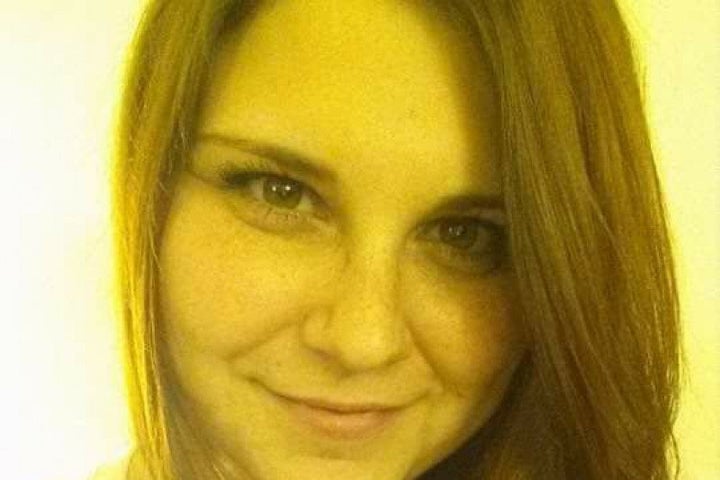
Many news outlets (here the Huffington Post) have reported on the deliberate killing and wounding of anti-hate protesters in Charlottesville, Virginia, USA, on Saturday 12 August 2017 when a car plowed into a group of anti-racist demonstrators. The woman killed was a 32-year-old paralegal Heather Heyer. Heather Heyer’s mother, Susan Bro, told HuffPost that her daughter attended Saturday’s rally because she “was about bringing an end to injustice…..I don’t want her death to be a focus for more hatred, I want her death to be a rallying cry for justice and equality and fairness and compassion.” Heyer was a graduate of Willam Monroe High School in Stanardsville, “If you’re not outraged, you’re not paying attention,” read Heyer’s last public post on Facebook.
20-year-old James Fields Jr. was arrested over the incident and charged with murder. Fields was one of thousands of members of the so-called “alt right” who were in Charlottesville attending Saturday’s “Unite The Right” march. The rally became violent after the white supremacists were confronted by anti-fascist groups.
Source: Heather Heyer ‘Murdered While Protesting Against Hate’ In Charlottesville, Friends Say | HuffPost
https://www.economist.com/news/obituary/21726701-legal-assistant-killed-far-right-rally-charlottesville-was-32-obituary-heather
Posted in human rights, Human Rights Defenders | 2 Comments »
Tags: alt right, Charlotsville, demonstration, hate speech, Heather Heyer, Human rights defender, in memoriam, James Fields Jr, killing, murdered, USA
August 8, 2017
Women from Nepal’s indigenous tribe. Credit: Mallika Aryal/IPS
They state that States must put words into action to end discrimination, exclusion and lack of protection illustrated by the worsening murder rate of human rights defenders. The full text of the short statement follows here: Read the rest of this entry »
Posted in human rights, Human Rights Defenders, UN | 2 Comments »
Tags: Albert K. Barume, environmental activists, Human Rights Defenders, indigenous peoples, Indigenous rights, International Day of the World’s Indigenous Peoples, IPS, killings, land rights defender, Mariam Wallet Aboubakrine, UN Declaration on the Rights of Indigenous Peoples, UN Special Rapporteurs, Victoria Tauli-Corpuz
August 8, 2017
In an intervention to the European Court of Human Rights in a case against Russia, the International Service for Human Rights (ISHR) has called on the Court to explicitly rule that that the rights to freedom of expression and association include the right to unhindered access and communication with international human rights bodies.
A law in Russia requires that an NGO receiving foreign funding and engaging in ‘political activity’ register as a ‘foreign agent‘. ‘Foreign agents’ not only have to comply with cumbersome financial and reporting requirements, but the negative stigma associated with this label have been described as debilitating. [https://humanrightsdefenders.blog/2013/12/16/russian-court-declares-adc-memorial-formally-as-foreign-agent-others-to-follow/]
After submitting a report to the UN Committee Against Torture, Anti-Discrimination Centre (ADC) Memorial – an NGO at that time operating in Russia – was required to register as a foreign agent on the basis that submitting the report constituted ‘political activity’. Following this, ADC Memorial brought a case against Russia in the European Court of Human Rights alleging that the administrative consequences associated with being labeled a foreign agent violate the rights to freedom of expression and association protected by the European Convention of Human Rights. ‘This case raises issues regarding meaningful protection the European Convention on Human Rights provides individuals exercising their right to freedom of expression and association with international human rights bodies and mechanisms’, says ISHR’s Legal Counsel Tess McEvoy. ‘It also demonstrates a serious and systematic human rights problem of reprisals and intimidation against those cooperating with the UN.’
ISHR submitted a third party intervention in the case of ADC Memorial. ‘The intervention is designed to assist the Court by providing an extended analysis of the scope of the rights to freedom of expression and association in international law to inform the interpretation of the European Convention on Human Rights’, McEvoy states. The analysis concluded that accessing and communicating with the UN is protected under the rights to freedom of expression and association enshrined in the European Convention on Human Rights, and that reprisals and intimidation against those cooperating with the UN would violate those rights. ‘It is vital that human rights defenders have the ability to communicate, publish and disseminate information to international human rights institutions to effectively promote and protect human rights. We call on the European Court to ensure that right is protected’.
For more information contact: Tess McEvoy, t.mcevoy@ishr.ch.
Source: Reprisals | ISHR calls on European Court to protect the right to communicate with international bodies | ISHR
Posted in human rights, Human Rights Defenders, ISHR | Leave a Comment »
Tags: ADC Memorial, amicus brief, case law, European Court of Human Rights, foreign agent law, foreign funding, freedom of association, freedom of expression, ISHR, reprisals, Russia
August 6, 2017
Human rights defender
Mary Aileen Bacalso in the Philippines published a blog post in
La Croix International of 3 August 2017 entitled “
The imperative of more shepherds for the Lord’s flock“. It describes the case of Redemptorist Father
Rosaleo Romano who disappeared 3 decades ago and makes the point that pastors like him are now needed more than ever.
Victims of enforced disappearances in the Philippines, including Redemptorist Father Rosaleo Romano, are remembered during a memorial in Manila. (Photo by Rob Reyes)
The Philippine human rights community has not forgotten Father Rosaleo Romano more than three decades after his disappearance during the dark years of the dictatorship. A “man of the cloth”, Father Romano, “Rudy” to his friends, one of the staunchest human rights defenders during those years, was forcibly made to disappear by the military…Father Rudy did not live his spirituality in the confines of convent walls. He meaningfully lived it out through his apostolate with poor farmers, with striking factory workers, with the poor whose shanties were demolished in the name of development, and with students struggling for academic freedom. The priests consequently suffered persecution during that most obscure time of the dictatorship of Ferdinand Marcos.
In his white cassock, Father Rudy would confront soldiers with their batons and shields. He would link arms with protesters, and suffered arrest and stayed behind the bars of prisons several times. The persecutions did not cow him from following the footsteps of the “Most Holy Redeemer”. It strengthened his resolve to fully embrace the consequences of his actions. “If I die, you will know who killed me,” he told his parents from the province of Samar. He paid the price for concretizing the church’s teaching of preferential option for the poor. He became, and remains to be, one of the more than 2,000 documented cases of disappearances during the Marcos years. The disappearance of the Redemptorist priest brought thousands of people in the central Philippine province of Cebu out in the streets during those years. The perpetrators’ act of cowardice of abducting a committed pastor resulted in an outrage not only among the organized masses in the country but even among international solidarity groups.
More than three decades have passed. There is no trace of Father Rudy’s whereabouts. In a country battered by burning human rights issues, and with the silence of Filipinos who continue to place their trust in a president who openly attacked human rights defenders, the Catholic Church in the Philippines needs to relive the example of Father Rudy. It is sad that there seems to be a dearth of people with the Redemptorist’s zeal and commitment these days. Have we given justice to Father Rudy’s very ideals that earned for him the status of one of the most well-known desaparecidos during the Marcos era? Have his sacrifices in opting for the poor, the deprived, and the oppressed borne fruits for freedom and democracy? Has his exemplary life multiplied a hundredfold through the proliferation of people who are following his footsteps?
Father Rudy’s name is carved on the “Flame of Courage” built by the Redemptorist congregation in Manila in 1994. With hundreds of names of Filipino desaparecidos, the monument of a mother holding a torch and a child holding a picture of his disappeared father manifests the never-ending hope against hope that one day, the long-awaited reunification of families will be realized.
The dream of a “new heaven and a new earth” is far from being realized in this predominantly Catholic country where the teachings of love and justice are blatantly ignored. The “people of God” need, more than ever, pastors who are willing to offer their lives so that others may live.
[Mary Aileen Bacalso is secretary-general of the Asian Federation Against Involuntary Disappearances. https://humanrightsdefenders.blog/2013/12/23/filippines-hrd-wins-emilio-mignone-award-for-work-against-enforced-disappearances/]
Source: The imperative of more shepherds for the Lord’s flock – La Croix International
Posted in awards, human rights, Human Rights Defenders | Leave a Comment »
Tags: cleric, Emilio Mignone Award, Father Rudy, Forced disappearance, Human rights defender, impunity, Mary Aileen Bacalso, Philippines, profile, Redemptorist, Rosaleo Romano
August 3, 2017

On 3 July 2017 the Right Livelihood Foundation made public the list of Grantees of its 2017 Reporting Right Livelihood journalism programme. Journalists will receive grants to shine the light on ‘under-reported‘ stories linked to the work of ‘Alternative Nobel’ Laureates. The grantees of the inaugural Reporting Right Livelihood journalism programme were selected from among 93 applicants from 48 countries. The grants, ranging from €200 to €5,000, cover essential travel, subsistence and communication costs to enable reporting on the selected stories over the next six months. The decision was made by a committee comprised of journalists and media experts from Germany, Sweden, Switzerland, Turkey, and the UK.
This year’s grantees are:
- Ms Aissatou Barry (Guinea), to produce a multimedia report on fighting impunity in Chad, Senegal and Burkina Faso, linked to the work of Laureate Jacqueline Moudeina (€ 4,800)
- Mr Bikash Bhattacharya (India), to report on Indonesia’s logging sector corruption, an issue constantly raised by late Laureate Munir Said Thalib (€4,500)
- Ms Fabiola Ortiz (Brazil), to provide a multimedia report on how Brazilian martial art Capoeira became a powerful tool to promote peace among men, women and children in the Democratic Republic of Congo, linked to the work of Dr Denis Mukwege (€5,000).
- Ms Mervis Elebe (Nigeria) and Mr Ray Mwareya (Zimbabwe) will share a grant to report on the current situation with maternal health in Nigeria and Zimbabwe, linked to Dr Catherine Hamlin’s work on eliminating obstetric fistula in Ethiopia (€ 2,500 each, €5,000 in total).
- Mr Philipp Lichterbeck (Germany) to report on the ’slow genocide’ of a little known Guarani-Kaiowa indigenous group in Brazil, linked to Laureate Survival International‘s work (€ 1,500).
- Mr Roger Anis (Egypt), to produce a photo report on Egypt’s current housing crisis, linked to the legacy of Right Livelihood Award’s inaugural Laureate Hassan Fathy (€4,000).
- In addition, the selection committee made a discretionary allocation of €200 to Ms Zofeen Ebrahim (Pakistan) who applied for a grant of US $57 to cover fuel costs in order to report on Pakistan’s home-based workers rights, linked to the work of Laureate Asma Jahangir.
The announcement comes with quotes from grantees and selection committee members. Such as:
“I was impressed by the variety, the creativity and relevance of proposals which made our decision so challenging and difficult. The projects we chose show a strong commitment to report on under-covered issues addressed by the Right Livelihood Award Laureates through their personal engagement. This shows how important it is to support journalistic coverage of these issues in order to improve the lives of people who suffer because of injustice, poverty, sickness or political pressure,” Adelheid Feilcke, Deutsche Welle, selection committee member
“Partout dans le monde des femmes et des hommes courageux se battent contre les injustices. L’engagement des journalistes est indispensable, pour faire echo à ces combats. Ces bourses vont pouvoir faire avancer les causes défendues et honorer les lauréats du Prix Right Livelihood,” Romaine Jean, Radio Télévision Suisse (RTS), selection committee member
Fo more information: Xenya Cherny-Scanlon, Director of Communications, mobile: +41 76 690 8798, xenya@rightlivelihood.org, www.rightlivelihoodaward.org #RightLivelihood #AlternativeNobel
Source: Reporting Right Livelihood 2017 Grantees AnnouncedThe Right Livelihood Award
Posted in awards, human rights, Human Rights Defenders | Leave a Comment »
Tags: Asma Jahangir, Denis Mukwege, Jacqueline Moudeina, journalists, Media and Human Rights, reporting, Reporting Right Livelihood journalism programme, Right Livelihood Award Foundation, Right Livelihood Awards
August 3, 2017
La Croix International carried a story on the work of bishop
Raul Vera: “
A Mexican bishop’s dangerous battle against organized crime“. Samuel Lieven described on 14 July, 2017 the priest as “
an indefatigable defender of human rights in one of the most violent countries on earth,..[who] … has for thirty years denounced collusion between the Mexican government and the drug cartels. He has stood up to drug lords, traffickers and paramilitaries despite narrowly escaping death several times.” Bishop Vera, a Dominican who was awarded the
Rafto Prize for human rights in 2010, has often taken risks in denouncing endemic corruption in Mexico, where the violence has reached record levels. [
https://humanrightsdefenders.blog/2015/02/11/mexico-activists-convene-first-peoples-constitutional-assembly/]
Archbishop Raul Vera arrives at the basilica of Our Lady of Guadalupe in Mexico City on December 26, 2016. / Alfredo Estrella / Afp
At a press conference on Tuesday, 11 July, Bishop Raul Vera of Saltillo in Coahuila province in northern Mexico directly accused the Mexican government of complicity in organized crime by facilitating the crimes committed by the drug cartels “by terror”. Bishop Vera’s statement accompanied a complaint lodged on July 6 with the International Criminal Court (ICC) in The Hague for crimes committed by Mexican security forces in collaboration with the powerful Las Zetas cartel. For Bishop Vera, this violence, particularly the violence that has spread in Coahuila province, “is not due to chance”.
In order to establish his complaint with the ICC, Bishop Vera drew on the work of more than 100 civil society organizations as well as reports prepared by the Legal Clinic of the University of Texas. He made particular reference to prosecutions under way against “members of organized crime in American courts which illustrated close collaboration with the government of Coahuila”. In addition, there were dozens of testimonies from victims of crimes committed by Mexican forces between 2009 and 2012 as well as by armed groups of Las Zetas. Overall, 32 recorded cases illustrated the links between the authorities and the cartel with a total of 562 victims involved.
A longstanding and indefatigable defender of indigenous people, prostitutes, homosexuals, prisoners and all oppressed minorities in his own country, Bishop Raul Vera is no beginner in the field of denouncing injustice. In testimony published in 2014, he highlighted the difficulties faced by a bishop standing up to the daily pressure and death threats from local drug lords, paramilitaries or traffickers who respect neither law or religion… Bishop Vera has narrowly escaped death several times….. In the space of ten years, more than forty have been killed. Priests, seminarians, deacons and religious have all become targets. According to an observatory established by the Mexican bishops, violence against the clergy increased by 275% between 1990 and 2015. Mexico also figures along with India, Pakistan or Turkey among the countries where religious freedom is most regularly violated.
Source: A Mexican bishop’s dangerous battle against organized crime – La Croix International
Posted in human rights, Human Rights Defenders | Leave a Comment »
Tags: Archbishop, catholic church, cleric, drug policy, Human rights defender, ICC, impunity, La Croix International, Mexico, profile, Rafto Prize, Raul Vera
August 1, 2017
Sen. John McCain (R-Ariz.), center, shakes hands with Syrian refugees at a camp in Yayladagi, Turkey, in 2012. (Umit Bektas/Pool/Associated Press)
On 28 July 2017 – just after it was announced that US Senator John McCain suffers from brain cancer – I came across this post (“Why human rights defenders love John McCain“) by Turkish journalist Berivan Orucoglu, who is the program coordinator of the Supporting Human Rights Defenders program at the McCain Institute for International Leadership (although writing on a personal title). Worth reading as a whole: Read the rest of this entry »
Posted in human rights, Human Rights Defenders | Leave a Comment »
Tags: Arizona, Berivan Orucoglu, Foreign Policy of the USA, Human Rights Defenders, Human Rights Defenders program at the McCain Institute, John McCain, USA
August 1, 2017
 Speaker Dogara
In a blog post on Vanguard News it is explained that the appeal dated 28 July 2017 was sent to Ms Annalisa Ciampi, Special Rapporteur on the rights to freedom of peaceful assembly and of association; Mr Michel Forst, Special Rapporteur on the situation of human rights defenders; and Mr. David Kaye, Special Rapporteur on the promotion and protection of the right to freedom of opinion and expression. The organization said, “.. If adopted, the bill which is copied from repressive countries like Somalia, Ethiopia and Uganda, would have a chilling effect not only on expressions of peaceful dissent by the citizens but also on the legitimate work of NGOs and individual human rights defenders and activists scrutinizing corruption in the National Assembly and exposing human rights violations by the government.”
The urgent appeal signed by SERAP executive director Adetokunbo Mumuni read in part: .”.. the bill is by far the most dangerous piece of legislation in the country in terms of its reach and devastating consequences not only for the work of civil society but also the effective enjoyment of constitutionally and internationally recognized human rights of the citizens. The bill will devastate the country’s civil society for generations to come and turn it into a government puppet.”……
“SERAP is also concerned that the proposed bill is coming at a time the members of the Senate and House of Representatives are proposing amnesty and immunity for themselves against prosecution for corruption and other economic crimes; and the government is proposing a social media policy to restrict and undermine citizens’ access to the social media ahead of the general elections in 2019.”
……
“The provisions of the bill are also not subject to any judicial oversight. SERAP believes that independent groups and activists should have space to carry out their human rights and anticorruption work without fear of reprisals, such as losing their registration or being sent prison.”
[The House of Representatives debated the bill known as ‘An Act to provide for the establishment of Regulatory Commission for the Supervision, Coordination and Monitoring of NGOs, CSOs and Communities Based Organizations in Nigeria’. The bill will establish a commission responsible only to the president and the senate. Under section 7, the commission will monitor and supervise these groups supposedly to “ensure that they accomplish their missions according to law” and under section 26, strictly “in line with the programmes of government.” Section 8 of the bill even goes further by empowering the commission to coordinate the work of all national and international NGOs in the country. All groups must register with the commission and submit their annual reports for discussion and governmental approval. The commission may take any punitive action against civil society and “do all such things incidental to its functions” under the Act. Section 10 establishes ‘a documentation center’ to which all civil society groups must submit the list of their activities and other information that may be required or prescribed. Section 11 then requires submission of all proposed activities by civil society for approval. Section 12 requires registration of all civil society organizations on the payment of unspecified fees and other fees as the commission may require or prescribe. But registration may be turned down, as stated under section 13. Registration is valid for only 24 months and renewable, subject to conditions as may be prescribed. Registration may also be denied if the activities of civil society groups are not in line with “national interest”. Operations of the groups will be terminated without any such registration. Under section 19, workers of the groups must apply for work permits. The groups can only appeal to “a minister” if they are dissatisfied with the application of any of the provisions of the Act, as provided for under section 19. The bill in section 24 criminalizes behaviour that is inherently legitimate by prescribing severe criminal penalties, including fines of N500,000 or 18 months imprisonment or both, for operating without registration under the bill. Under section 26, any such person will be banned for 10 years from doing any civil society work. The combined effect of sections 25 and 26 is that no civil society group will be able to carry out any activity without first seeking and obtaining a ministerial approval.]
Source: SERAP drags Dogara to UN over ‘repressive bill to regulate, crackdown on civil society’ – Gistmaster (It appeared first on Vanguard News)
https://guardian.ng/news/serap-drags-dogara-to-un-over-bill-to-crackdown-on-csos/
Posted in human rights, Human Rights Defenders | Leave a Comment »
Tags: Adetokunbo Mumuni, administrative rules, Civil society, draft law, enabling environment, foreign funding, freedom of association, Michel Forst, Nigeria, Socio-Economic Rights and Accountability Project (SERAP), special rapporteurs


 Hans Thoolen on Human Rights Defenders and their awards