The undersigned human rights organisations, which together represent the Jury for the Martin Ennals Award for Human Rights Defenders, condemn the continued harassment against 2021 Martin Ennals Award Finalist and woman human rights defender from Turkmenistan, Soltan Achilova. This morning, Soltan Achilova and her daughter were once again prevented from travelling to Geneva. As in 2023, Soltan Achilova was set to be recognized for her valuable contributions to the documentation of human rights violations in Turkmenistan by the Martin Ennals Foundation.
Soltan Achilova is a woman human rights defender and journalist, who continues to work in Turkmenistan, one of the most repressive and isolated countries in the world, ranking 176th out of 180 countries in terms of press freedom and working conditions for journalists. She has been reporting about her country for over a decade. Her pictures of daily life are one of the few sources of documentation of human rights violations occurring in Turkmenistan. As a result of this work, she remains under constant surveillance by Turkmen authorities and has suffered numerous incidents of harassment, intimidation, and threats. Despite the challenges, Soltan Achilova persists in her human rights work, regularly sending information and pictures outside the country so that government authorities can be held accountable. [see: https://humanrightsdefenders.blog/tag/soltan-achilova/]
On the morning of 20 November 2024, Soltan Achilova and her daughter Maya Achilova were scheduled to travel from Ashgabat to Geneva, to participate in the Martin Ennals Award ceremony. At 6:30 a.m. local time, according to the information received by the Martin Ennals Foundation, a group of law enforcement officers pushed Soltan Achilova, her daughter and her daughter’s husband into an ambulance and brought them to the specialised hospital “Infectious Disease Control Centre” in the Choganly neighbourhood of Ashgabat, located near the Ashgabat International Airport. Maya Achilova reported to the Foundation that her husband, her mother and herself are being retained at the medical facility, guarded by the security forces, and that one of the security service agents is in possession of the keys to Soltan Achilova’s apartment. Thereby, Turkmen authorities have once again prevented Soltan Achilova from travelling to Geneva, Switzerland, where she would finally be recognized as a Finalist of the 2021 Martin Ennals Award for her documentation of land grabs and forced evictions of ordinary citizens in Ashgabat.
Turkmen authorities have prevented woman human rights defender Soltan Achilova from traveling freely outside of her country on several occasions; the latest occurring as recently as November 2023. In the early hours of 18 November 2023, Soltan Achilova and her daughter were stopped by Turkmen government officials from boarding their flight to Switzerland. A customs official took their passports, wet them with a damp rag and declared the passports to be ruined, preventing Soltan and Maya Achilova from boarding the plane. Despite receiving assurances at high-level from Turkmen authorities that Soltan Achilova would not be prevented from traveling once again, the authorities continue to harass the woman human rights defender with travel restrictions and arbitrary detention.
The human rights organisations that make up the Jury of the Martin Ennals Award, as well as the Martin Ennals Foundation, once again condemn Turkmen authorities for their continued harassment of woman human rights defender and photojournalist Soltan Achilova and her family members and call for their immediate release. The organisations jointly call upon the Turkmen authorities to provide all the necessary assistance to enable her travel outside of Turkmenistan. Finally, the organisations renew their calls for Turkmenistan to fully implement their human rights obligations, including, inter alia, allowing human rights defenders and journalists to conduct their work without fear of reprisals.
Following the writing of this statement, an article containing further details was published by the Chronicles of Turkmenistan, an online publication of the Turkmen Initiative for Human Rights, which, according to its author, has also been in contact with Soltan Achilova’s family.
Two outstanding human rights defenders who have made it their life mission to protect human rights in Afghanistan and in Tajikistan will receive the Martin Ennals Award 2024 on November 21th, 2024, in Geneva, Switzerland, on the occasion of the 30th anniversary of the Martin Ennals Award.
The Jury of ten of the world’s leading human rights NGOs – Amnesty International, Human Rights Watch, FIDH, HURIDOCS, Bread for the World, Human Rights First, World Organisation Against Torture, International Commission of Jurists (ICJ), International Service for Human Rights (ISHR), and Front Line Defenders – has selected, after much deliberation, the two human rights defenders whom it strongly believes deserve to be recognized and honored in 2024, on the 30th anniversary of the Martin Ennals Award. [see also: https://www.trueheroesfilms.org/thedigest/awards/043F9D13-640A-412C-90E8-99952CA56DCE]
The two 2024 Laureates, Zholia Parsi (Afghanistan) and Manuchehr Kholiqnazarov (Tadjikistan) have shown exceptional courage and determination to bring human rights at the forefront despite evolving in deeply repressive environments.
“We are very proud to honor these two exceptional Laureates. They have paid too big a price for justice and equality to be respected in Afghanistan and Tajikistan and the international community must support their efforts instead of battling geostrategic interests in the region“. – Hans Thoolen, Chair of the Martin Ennals Award Jury
The two Laureates 2024:
Zholia Parsi: is a teacher from Kabul, Afghanistan. Having lost her career and seeing her daughters deprived of their education with Taliban takeover in August 2021, she founded the Spontaneous Movement of Afghan Women (SMAW) to protest the return of policies and practices against women rights and fundamental freedoms. She displayed remarkable leadership and resilience in organizing numerous public protests despite the risks involved. The grassroots movement that is the SMAW quickly grew momentum in Kabul and other provinces, now counting 180 members and having mobilized communities to resist the Taliban’s policies and practices. She was arrested in the street by armed Taliban in September 2023, and detained along with her son. She was released after three months of torture and ill-treatment under their custody, which further strengthened her resolve to resist Taliban oppression and repression.
Manuchehr Kholiqnazarov: is a Pamiri human rights lawyer from the Gorno-Badakhshan Autonomous Oblast (GBAO), Tajikistan. He is serving a 16 year-long prison sentence after what is widely considered an unfair trial in retaliation for his human rights work. As Director of the Lawyers’ Association of Pamir (LAP), he led strategic advocacy efforts in the GBAO, a region marked by its ethnic minority and historical tensions with the central government, including by lobbying for the incorporation of international human rights standards into domestic law and practice, and by providing legal support to residents of the GBAO. Through the human rights initiatives Commission 44 and Group 6, he played a key role in investigating the death of youth leader Gulbiddin Ziyobekov in November 2021, and the violent repression of subsequent mass protest in the regional capital Khorog. The investigation resulted in critical evidence of an unlawful killing, possibly an extrajudicial execution of the young man, and the unlawful use of force of security forces against protesters, resulting in two deaths, seventeen injured and hundreds detained. He was arrested on 28 May 2022 together with two other members of Commission 44 amid a widespread crackdown on local informal leadership and residents of the GBAO.
The Martin Ennals Award (MEA): 30 years alongside human rights defenders
The Martin Ennals Award (MEA) was given for the first time in 1994 to recognize, promote and protect human rights defenders at risk or from under-reported contexts. Over the years, the MEA has offered defenders a platform to issues that are of global concern and the means to steer the movement for human rights and larger freedoms. The MEA culminates every year in a public ceremony in Geneva, co-hosted with the City of Geneva (Ville de Genève). The 2024 MEA Ceremony will take place on November 21th, 2024 at the Salle communale de Plainpalais. The Ceremony, which is also livestreamed, draws many local and international human rights supporters to an inspiring event which celebrates the achievements and commitment of exceptional human rights defenders. “Geneva has a long tradition of hosting international diplomacy and promoting human rights and fundamental freedoms. The City of Geneva is proud to co-host the Martin Ennals Award and shed light, on this 30th anniversary, on the impressive resilience of two human rights defenders and the hope they bring for peace and equality” concludes Alfonso Gomez, Administrative Counselor of the City of Geneva.
In June 2017, Indigenous Ñomndaa’ journalist Marcela de Jesus Natalia found herself fighting for her life. A gunman waited for her outside the radio station where she worked and shot her three times.
“I didn’t think he wanted to kill me,” she said. “I turned around. The first bullet went to my forehead. I put my hand up, [and] the bullet went in and came out. The second one shattered my jaw. Then this guy held me, dragged me, gave me a final shot in my head and laid me on the pavement.”
Though at first presumed dead, Marcela de Jesús survived the attack and, with the support of lawyers and advocates, as well as of UN Human Rights, continues to fight for justice for the crime perpetrated against her. Marcela de Jesús was attacked because she angered powerful people by informing Indigenous Peoples about their rights, such as the importance of education, justice, and in particular, violence against women, thus empowering them to fight against historical discrimination against them.
“Journalists who expose wrongdoing and show us the horrific reality of conflict are human rights defenders,” said Volker Türk, UN Human Rights Chief, in a statement commemorating the International Day to End Impunity for Crimes against Journalists, observed every year on November 2. “Attacks against them affect everyone’s right to freedom of expression and access to information, leaving us all less well informed.”
In 2023, 71 journalists and media workers were killed and over 300 imprisoned around the globe, Türk said.
Marcela de Jesús is an Indigenous Ñomndaa’ woman born in Xochistlahuaca, in the state of Guerrero, on Mexico’s Pacific coast. From a young age, Marcela de Jesús witnessed violence and attacks by men in positions of power and even the military. It was there that her desire to defend her people was born and she realised that to confront abusers she needed to learn Spanish.
Marcela de Jesús migrated to the state of Oaxaca, and by her own efforts, she managed to continue studying and encountered a radio station that was looking for an Indigenous person from Guerrero who spoke Ñomndaa’ and Spanish and had completed middle school.
“I went behind my husband’s back, took the exam and passed,” she said. “I remember that the director [of the radio station] said to me, ‘Why do you want to be an announcer?’ ‘I always wanted to be the voice of my people,’ I answered.” Later, she returned to the state of Guerrero and got a precarious job as a radio announcer, but with patience and hard work she managed to become the radio manager.
It was after her return to her home state that she began to encounter opposition to her “voice.” Marcela de Jesús was told by powerful people in her town that she was not supposed to inform Indigenous Peoples; that the only thing they were interested in was whether a goat or a cow was lost, and not to get into trouble. She fought against and won lawsuits filed against her for giving Indigenous Peoples news.
It is my conviction that my people should be guaranteed the right that is enshrined in the Constitution and in international treaties, that we have the right to information.
“They couldn’t [silence me] because what is legal is legal. What is morally good is morally good. And that is the reason for the attack against me,” said Marcela de Jesús.
According to UN Human Rights in Mexico, at least five journalists and one media worker have been killed and one more media worker was disappeared this year because of their work. This continuous danger in which journalists have had to operate for years, led universal and regional human rights mechanisms to recommend to the Mexican State the creation of a Mechanism for the Protection of Human Rights Defenders and Journalists.
…The gunman who shot Marcela de Jesus has been arrested and sentenced for his crime, but the ones who called for her shooting are still out there. She is hopeful for them to be brought to justice.
“I have a lot of faith that the alleged intellectual author will forget about me. I have faith that nothing is forever,” said Marcela de Jesús. She added: “Nothing and no one, not jail, not this attack with three bullets, takes away my desire to continue being the voice of my people, to continue with my activism, my defence of human rights. I am fulfilling my dream of being the voice of my people at the national and international level.”
We have been busy on multiple fronts. As Memria continues to attract new users such as libraries, historical societies, and museums, we have also been developing new ways to tell stories and make people and communities more visible.
At the Visibility Initiative, for example, we highlight changemakers of all genders and sexual identities, with a primary focus on women. This was an editorial choice; women’s contributions are often overlooked more frequently than men’s. By centering women’s stories, we discover new approaches to leadership that challenge common perceptions. Leadership is often imagined as an individual pursuit of a singular vision yet the women featured in this edition of Squeaky Wheel bring about change through deep integration with their communities, not by standing above them. Consider Filipino-American nurses Luisa Blue and Zenei Triunfo-Cortez. They brought their nursing skills—compassion, resilience, and patience—into union activism to push for better working conditions. Rather than pursuing personal ambition, they lead by collaborating, caring for fellow advocates, and prioritizing collective well-being. We also share the stories of three remarkable Senegalese women transforming their communities through the arts and public policy. Christiane Agboton Johnson, for example, has shown that women bring unique strengths to peace negotiations, bridging divides and conveying messages in ways that men often can’t. This edition also includes the work of a Viva Voz fellow from our Colombian program, who navigated the Pacific rivers to explore the connection between these waterways and Black communities—preserved by midwives, elder women, and healers. In these communities, women safeguard essential knowledge. These women’s stories offer new models of leadership and ways to address today’s most pressing issues. – Miguel BoteroEditor in Chief, The Visibility Initiative Photo: RN Luisa Bluo in front of a picket line. Positively Filipino.Healing and Advocacy: How Filipino-American Nurses Transformed Healthcare Through ActivismAs Filipino-American History Month wraps up, we looked into an overlooked story: the activism of Filipino-American nurses in the U.S. We may have heard about their essential role in healthcare, but their impact goes much deeper. Leaders like Zenei Triunfo-Cortez and Luisa Blue have fought tirelessly for fair wages, better working conditions, and equal rights, challenging discrimination head-on. Their journey from patient care to union leadership shows how their compassion and resilience extend beyond the bedside and into the fight for systemic change. Their inspiring work is part of Filipino Americans’ long legacy of social justice.Read MoreOshúm and the shades of water in the COP16 COP16 will take place from October 21 to November 1, 2024, in Cali, Colombia. This biodiversity summit gathered representatives from 196 countries to discuss global efforts to protect nature and stop biodiversity loss. The International Forum on Women and Biodiversity featured clips from Oshúm and the Shades of Water, a project Memria co-produced through the Viva Voz Fellowship, our program with the Ford Foundation’s Bogota office and other partners to support Colombian storytellers. For this project, fellow Lyann Cuartas and her team from the Las Jaibas Collective navigated three rivers on Colombia’s Pacific coast. There, they interviewed women and queer individuals who hold deep spiritual connections to the rivers. Their stories blend childhood memories, songs, and firsthand accounts of environmental crimes against one of the most biodiverse places on earth. This photo and audio project offers an intimate look at communities that have lived by these rivers and jungles for centuries.You can read more about the project on Global Voices
WEDO will celebrate the 11th Anniversary of Women’s Entrepreneurship Day on November 15th at the United Nations Delegate Dining Room in New York City. The event will be live-streamed Among the event’s remarkable changemakers is Angeline Zimbwani Mikiri, a pioneering African publisher dedicated to making storytelling across the continent more accessible and diverse. She founded Zimbabwe’s award-winning publishing house Tariro Books, which has become known for amplifying African voices and perspectives in children’s literature, educational materials, and adult fiction. Committed to fostering a culture of reading in Africa, Mikiri has emphasized stories that reflect the unique experiences, traditions, and challenges African communities face.Join the event to hear from her and other inspiring entrepeneurs who have transformed their communities.Follow this link for more information
Read about some of the most remarkable women in SenegalStarting in September, we began translating and republishing stories from our partner, Géantes Invisibles, on The Visibility Initiative. These stories mark our origins, as the initiative grew from our alliance with Coumba Toure, Senegalese feminist activist and Géantes Invisibles founder. She started this storytelling project to honor the women of Africa and its diaspora who have transformed their communities—often silently, without much recognition from governments, media, or philanthropic organizations. We joined forces because we share a mission: to shine a light on changemakers whose impactful stories deserve more attention. These stories are rich with lessons on how leaders develop, think, and make things happen in their communities against great odds. These stories highlight well-known figures, like Germaine Acogny, the mother of modern African dance, and Madeleine Devès Senghor, a key architect of Senegal’s post-independence state. They also feature lesser-known giants like Christiane Agboton Johnson, an advocate for disarmament, who emphasizes women’s critical role in peacebuilding. These stories create a vibrant mosaic of West African women’s activism.
Established jointly by the Ministry and Nobel Peace Prize laureate Dmitry Muratov in 2023 this prize honors the work of reporters and photojournalists who are continuing their vital mission of spreading free, reliable, quality information in crisis and conflict areas. Journalist Anna Politkovskaya was working in Russia for Novaya Gazeta, whose investigations into corruption, attacks on human rights and the war in Chechnya cost the lives of six of its reporters. Despite the threats she received, she never stopped working to inform the public. Despite the risk to his life, AFP reporter and photojournalist Arman Soldin helped inform the entire world about the reality of the Russian aggression in Ukraine through the photos he took on the front lines of the conflict, starting in February 2022.
The second Anna Politkovskaya-Arman Soldin Prize in 2024 has been awarded to Israeli journalist Yuval Abraham and Palestinian journalist Basel Adra for their whole body of work on the Israeli occupation and settlement-building in the West Bank and in Palestinian territories.
Yuval Abraham and Basel Adra belong to an Israeli-Palestinian collective that made the documentary, No Other Land, which won an award at the 2024 Berlinale. In it, the Palestinian journalist Basel Adra filmed evictions of Palestinians in the West Bank over five years and meets the Israeli journalist Yuval Abraham. The film tells the story of their friendship that was built over the years of their collaboration.
The first 2023 Anna Politkovskaya-Arman Soldin Prize for Courage in Journalism, was awarded to the Mexican journalist Marcela Turati for her commitment to reporting on violence related to drug trafficking and the social consequences of the war waged against cartels, despite the risks that have often cost Mexican journalists their lives.
On 17 October 2024, the Special Rapporteur on the situation of human rights defenders, Mary Lawlor, presented her latest report in an interactive dialogue with United Nations member States during the 79th session of the United Nations General Assembly in the Third Committee.
In an interactive dialogue presenting her report to the Third Committee of the General Assembly, the Special Rapporteur on the situation of human rights defenders Mary Lawlor urged States to acknowledge the crucial role of human rights defenders in achieving seventeen Sustainable Development Goals (SDGs) and advancing 2030 Agenda. During the interactive dialogue, Mary Lawlor highlighted human rights defenders’ contributions to various SDGs, including zero hunger (Goal 2), good health and well-being (Goal 3), quality education (Goal 4), gender equality (Goal 5), clean water and sanitation (Goal 6) as well as affordable and clean energy (Goal 7). The report illustrates specific examples of human rights defenders’ work and contributions to each of seventeen Sustainable Development Goals.
During the dialogue, the Special Rapporteur noted that ninety percent of SDG targets are linked to human rights obligations. Given that only seventeen percent of the goals are on track, she emphasised the need for human rights defenders to be supported in their work in making the SDGs a reality. She noted that despite this crucial work of defenders in advancing the SDGs, they face severe barriers and threats including stigmatisation, criminalisation and other violations of fundamental rights.
In her concluding remarks, the Special Rapporteur emphasised that amidst global disagreements, the SDGs represent a rare consensus and urged States to support, partner with and respect HRDs working to support 2030 Agenda. Mary Lawlor in her recommendations, urged States to publicly acknowledge the essential role human rights defenders play in advancing the 2030 Agenda and called for legal frameworks that protect rather than restrict defenders and civil society in their legitimate work in achieving SDGs.
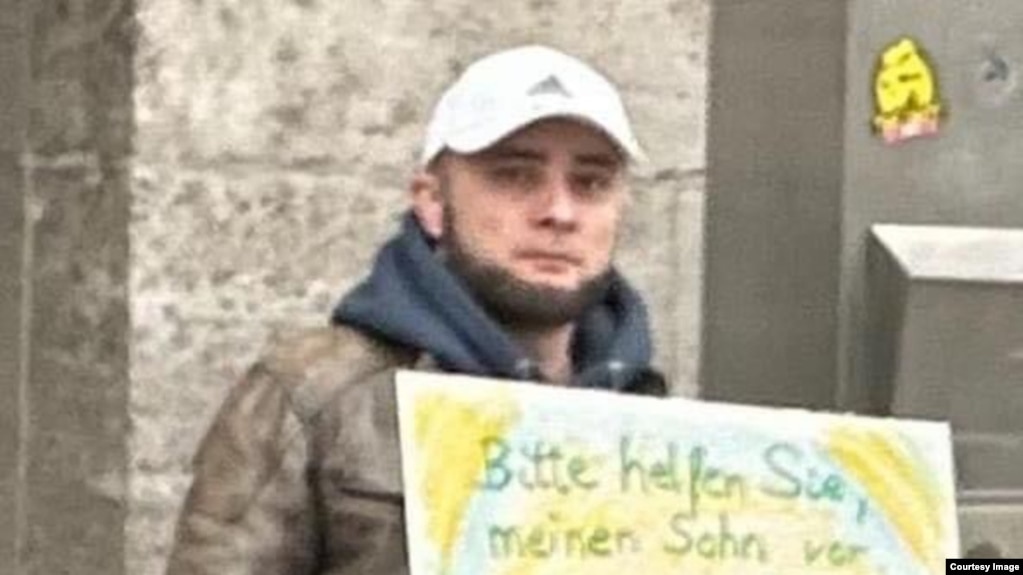
Tajik opposition activist Dilmurod Ergashev was reportedly taken into custody by authorities as he disembarked a plane in Dushanbe after being deported by Germany hours earlier. Sharofiddin Gadoev, leader of the opposition Movement for Reform and Development of Tajikistan, told RFE/RL that Ergashev was met by Tajik security officials, who declined to comment on the situation.
His case has raised concerns among human rights advocates and international observers, given the serious allegations of potential torture and the lack of transparency regarding Ergashev’s condition following his deportation.
Ergashev reportedly attempted to harm himself by slitting his wrists and legs as German police were preparing to escort him to the airport on November 6. The Insider investigative group reported that Ergashev was hospitalized after the incident, but that the deportation proceeded regardless.
Gadoev said Ergashev’s health condition during the deportation was poor, and that since his arrival in Tajikistan, no further information has been available about his whereabouts or well-being.
RFE/RL’s efforts to obtain an official statement from Tajik authorities have been unsuccessful with representatives of the Prosecutor-General’s Office and the Interior Ministry failing to respond to inquiries.
Leila Nazgul Seiitbek, head of the Vienna-based organization Freedom for Eurasia, informed RFE/RL on November 7 that her organization has appealed to the European Court of Human Rights, seeking intervention in Ergashev’s case and advocating for his safe return from Tajikistan.
Seiitbek noted that her organization had called on German authorities to halt the deportation, arguing that Ergashev faces a high risk of torture in Tajikistan. The deportation order was issued by the Administrative Court of the German town of Kleve on October 28, immediately following Ergashev’s detention.
His associates argued that the court disregarded Ergashev’s pending asylum application in another German court, which is still under consideration.
Ergashev is a prominent member of the Group 24 movement.
Group 24 was founded by businessman Umarali Quvatov, who was assassinated in Turkey in 2015. The group has been a vocal critic of the Tajik government and advocates for democratic reforms. Tajik authorities have labeled it “extremist.” In 2024, Ergashev joined the Movement for Reform and Development of Tajikistan movement.
Ergashev had been living in Germany for the past 13 years as his cases wound through German courts.
A Kenyan newspaper reported on 8 November 2024 something unusual with regard to human rights awards: Police officer Jackson Kuria, aka Shakur the cop, was nominated for the african Human Rights Defenders Awards. The outspoken police officer is the first uniformed officer ever nominated for this prestigious award In an interview with TUKO.co.ke, Shakur emphasised that police officers are meant to protect civilians and their rights. Jackson Kuria Kihara, aka @Shakurthecop, publicly opposed the Finance Bill 2024 and protested against it. Cop Shakur is the first uniformed officer nominated for Human Rights Defenders Award.
The newspaper adds: Did Cop Shakur merit the award? This is a huge milestone for the police officer, as he has made history as the first uniformed officer to be considered for the award.
Threats against investigative journalists are widely documented. According to UNESCO’s Observatory of Killed Journalists, 1,718 journalists have been killed since 1993. The Committee to Protect Journalists’ latest prison census found the number of jailed journalists hit a near-record high, with 320 reporters behind bars at the time of the count last December. Yet a lesser-known story is the increasing targeting of the lawyers representing them.
“Behind all those cases against journalists who have become household names — like Evan Gershkovich, Maria Ressa, and José Rubén Zamora — there are the often unseen lawyers representing them and taking remarkable risks to defend them,” Carolina Henriquez-Schmitz, director of TrustLaw, said at Trust Conference 2024. “[Lawyers] themselves are becoming the targets of a whole range of attacks.”
In recent years, threats have escalated. Azerbaijani lawyer Elchin Sadigov, and his client, journalist Avaz Zeynalli, were detained in 2022 while officers searched their homes and offices and seized confidential case files. Vo An Don, a Vietnamese human rights lawyer who represented a dissident blogger was disbarred in 2018 and subsequently sought political asylum in the US. Dmitry Talantov, a lawyer who represented Russian investigative journalist Ivan Safronov in 2021, now himself faces up to 15 years in prison on a number of charges.
“It sends an unequivocal message, not just to the individual lawyer, but to the entire legal profession,” Henriquez-Schmitz said. “If you pursue these cases, we will go after you. The potential chilling effect cannot be understated.”
Human rights lawyer Vo An Don was disbarred and forced to seek political asylum in the US after the Vietnamese government targeted him for representing a dissident blogger. Image: Screenshot, Facebook
The Thomson Reuters Foundation, in partnership with the American Bar Association Center for Human Rights and Media Defence, conducted a first-of-its-kind review of individual cases of harassment or persecution of lawyers defending journalists. The recently published preliminary findings identified over 40 cases of lawyers being targeted in four ways: criminal and other suits; interference with their ability to represent their clients; targeting their ability to practice the profession; and threatened killing, physical harm, forced flight, or exile, and other similar persecution.
“The research has identified cases in Vietnam, Ethiopia, Zimbabwe, Azerbaijan, Iran, Yemen, Tajikistan, Russia, China, and Hong Kong, to name a few. Unsurprisingly, many of these countries also happen to be among the world’s worst jailers of journalists,” Henriquez-Schmitz noted. “The damage greatly reverberates. Without lawyers, journalists are unable to adequately defend themselves against retaliatory charges, and citizens are likely left less informed on matters of public interest.”
José Carlos Zamora, chief communications and impact officer at Exile Content Studio and the son of Guatemalan investigative journalist José Rubén Zamora, joined the Trust Conference panel only a few days after his father’s release to house arrest. Previously, his father had spent more than 800 days in prison on charges of alleged money laundering. The elder Zamora founded elPeriódico, a now-defunct newspaper which specialized in government corruption investigations.
“It’s a great step forward, but it’s not the end of the process,” Zamora said of his father’s transition to house arrest. “These repressive regimes, everywhere from Russia, to the Philippines, to Hong Kong, to Venezuela and Nicaragua, use the same tactics. And you see them copy from each other’s punishments, and one of these tactics is attacking the legal defense. So they go after the lawyers, and the main goal is to leave the journalists defenseless.”
Guatemalan journalist José Rubén Zamora, who founded the elPeriódico site that dug into the country’s political corruption, recently spent more than 800 days in prison on alleged money laundering charges. Image: Shutterstock
In all, 10 lawyers represented Zamora, and all of them were persecuted and eventually forced to abandon the case. Many of them did not appear to have access to the case file, and one lawyer, Christian Ulate, had to leave Guatemala after ongoing harassment and intimidation. The lawyers that took over the case after Ulate, Romeo Montoya García and Mario Castañeda, were detained, and Castañeda was sent to a maximum security prison. Lawyers Juan Francisco Solórzano Foppa and Justino Brito Torres were also arrested.
“At that point, the only defense was the public legal defense. There were some great lawyers in the public legal defense, but unfortunately, they are also part of the system,” Zamora explained. “At one point, none of the lawyers could visit him in prison. So everything was done through us. They could rarely talk. The ones that could go did not want to visit him because it was dangerous for them.”In some countries, human rights attorney Caoilfhionn Gallagher said, even the act of talking to an international lawyer can put local lawyers at risk.
María Consuelo Porras has acted as Guatemala’s attorney general since 2018. In 2022, she was barred from entering the US due to involvement in significant corruption, and in 2023 she was named OCCRP’s Person of the Year in Organized Crime and Corruption, for “brutally persecuting honest prosecutors, journalists, and activists,” the group wrote. “Porras and her kind are the new banal faces of evil.”
“[Porras] became the best tool to persecute opposition, critical voices,” Zamora said. “Because they use this special prosecutor’s office that is focused on organized crime […] it allows them to have you in pre-trial detention. That prosecutor’s office was intended to investigate and prosecute the heads of drug cartels and mob bosses. And now they use it to go after journalists.”
Irish-born attorney Caoilfhionn Gallagher specializes in international human rights and civil liberties at Doughty Street Chambers in London. Her cases often involve working closely with domestic lawyers around the world, in order to hold the state to account on the global stage. In some countries, Gallagher said, even the act of talking to an international lawyer can put local lawyers at risk.
“When I deal with cases involving Iran, for example, or Egypt, even engaging with an international lawyer, being privy to a complaint going to the United Nations, could result in [local lawyers] themselves being charged with a whole range of things, including national security-type offenses,” she noted. One particular example she gives of lawyer oppression is the Philippines, where, in total, 63 lawyers were killed during President Rodrigo Duterte’s six-year term, and 22 journalists. “So this is completely a tactic,” Gallagher warned. “You try to leave nobody able to speak truth to power.”
One of Gallagher’s clients is 76-year-old publisher, writer, and prominent pro-democracy campaigner Jimmy Lai. A British national, Lai has been in solitary confinement in a maximum security Hong Kong prison for almost four years, on charges of breaching national security and colluding with foreign forces. His newspaper, Apple Daily — the most popular Chinese language paper in Hong Kong — supported pro-democracy protests in the region. He now faces life imprisonment.
“Being called an enemy of the people, hit pieces in Chinese state media, formal statements from the Chinese and Hong Kong authorities threatening to prosecute us,” Gallagher said, reflecting on the implications of representing Lai. “But as well as that, we get physical threats, rape threats, and dismemberment threats, and it’s targeted in a way which is designed to try to undermine you doing your job.”“We coordinate pro bono for human rights defenders, and what we realized was that standing next to every defender facing criminalization was a lawyer also at risk.” — Ginna Anderson, associate director of the American Bar Association’s Center for Human Rights
On a key day in Lai’s case, Gallagher will wake up to notifications that there has been an attempt to hack her bank account, as well as her personal and professional email addresses. “I will also wake up to a whole series of […] threats, including things relating to my kids,” she continued. “I had a really vile message last week about my teenage daughter, by name, and it’s unpleasant.”
Gallagher says that, despite attacks, she will continue to represent reporters. “You’re rattling the right cages,” she said. “It’s designed to try to stop you doing your job, and for me, it makes me think if they care this much about the lawyers for Jimmy Lai based in London, doing work in Geneva, New York, and Dublin, just think about how much they hate my clients. And to be honest, it makes me more determined to stick with it.”
Associate director of the American Bar Association’s Center for Human Rights, Ginna Anderson, emphasized the lack of current research into the growing threats against lawyers defending journalists, citing it as a driving force behind their work. “We realized no one was really talking about it, and the data wasn’t being collected,” she explained. “We coordinate pro bono for human rights defenders, and what we realized was that standing next to every defender facing criminalization was a lawyer also at risk and asking for none of those resources for themselves.”
While networks often operate to support journalists who are being subjected to physical threats, cyberattacks, and forced exile, Anderson emphasized the ad hoc nature of the support available to lawyers — in part due to the recent escalation in cases. “There’s not one place we go and coordinate,” she said. “It’s a lot of personal relationships and knowing who has capacity, and quite frankly there’s very little capacity in any of these places to really deal with the scale of the problem.”
“Just like journalists don’t want to be part of the story, lawyers don’t, and many other trends are mirrored,” she continued. “One thing that struck me […] was this perception that safety of journalist networks are so much better connected and resourced than anything to support lawyers. That terrified me because I think we all think that there’s not enough being done for the safety of journalists.”
“Lawyers are often trusted voices, just like some legacy media establishments,” Anderson said. “They’re trusted voices on the rule of law. They’re trusted voices on the Constitution. And when you disparage them and smear them, and in some cases make it criminal for them to talk about these issues, you have silenced one of the most important voices.”
Defending Lawyers Protecting Journalists
As attacks on lawyers rise, the panel reflected on the ways in which those representing journalists can defend themselves. Increasing knowledge of cybersecurity — which may not have previously been a priority for lawyers — is essential, Gallagher said. “In the last number of years working on cases against Saudi Arabia, Iran, and Russia, I’ve been very surprised by [top-ranked multinational law firms] trying to send you something on Google Docs,” she continued. “The media organization and the journalists will have really good protocols, but then when they get into some kind of difficulty, they may instruct an external lawyer who simply doesn’t.”
Law societies and governments also have a responsibility to take such threats more seriously, Gallagher says, reflecting on the case of Pat Finucane, a Northern Irish human rights lawyer who was murdered in his home in 1989. The UK government only announced a public inquiry into his death in 2024, 35 years later. “That is a home example of these issues simply not being taken seriously enough,” she said. “I can tell you basic preventative strategies were simply not implemented here in Britain.”
Another issue is a lack of psychological support for lawyers, Anderson says. “I’ve been surprised how often a conversation about digital security becomes the place where a lawyer may talk about what’s weighing on their mind,” she continued. “[They’re] not saying, ‘I would like to talk about my psychosocial needs’, but they start with a practical need around digital security, and it finds its way into the things that are weighing on them.”
As Zamora reflected on the future for his father, he seemed hopeful. “He’s excited. He’s very happy. He feels like he’s at a spa after spending those 813 days in an isolation cell,” he said. “We are going to continue fighting these processes. They are really spurious charges, and we are going to fight until the end to demonstrate that everything is false.”
While he says that his father’s trial has exposed the worst in humanity, through Guatemala’s political persecution of those standing up for democracy and freedom, Zamora also believes that it has brought out the best in humanity, too. “I feel that’s everybody in this room,” he concluded. “You care about these issues, you are doing the work, and you can continue to do the work to keep these cases alive.”
Emily O’Sullivanis an editorial assistant at GIJN. She has worked as an investigative researcher for BBC Panorama, and an assistant producer for BBC Newsnight. She has an MA in Investigative Journalism from City, University of London.
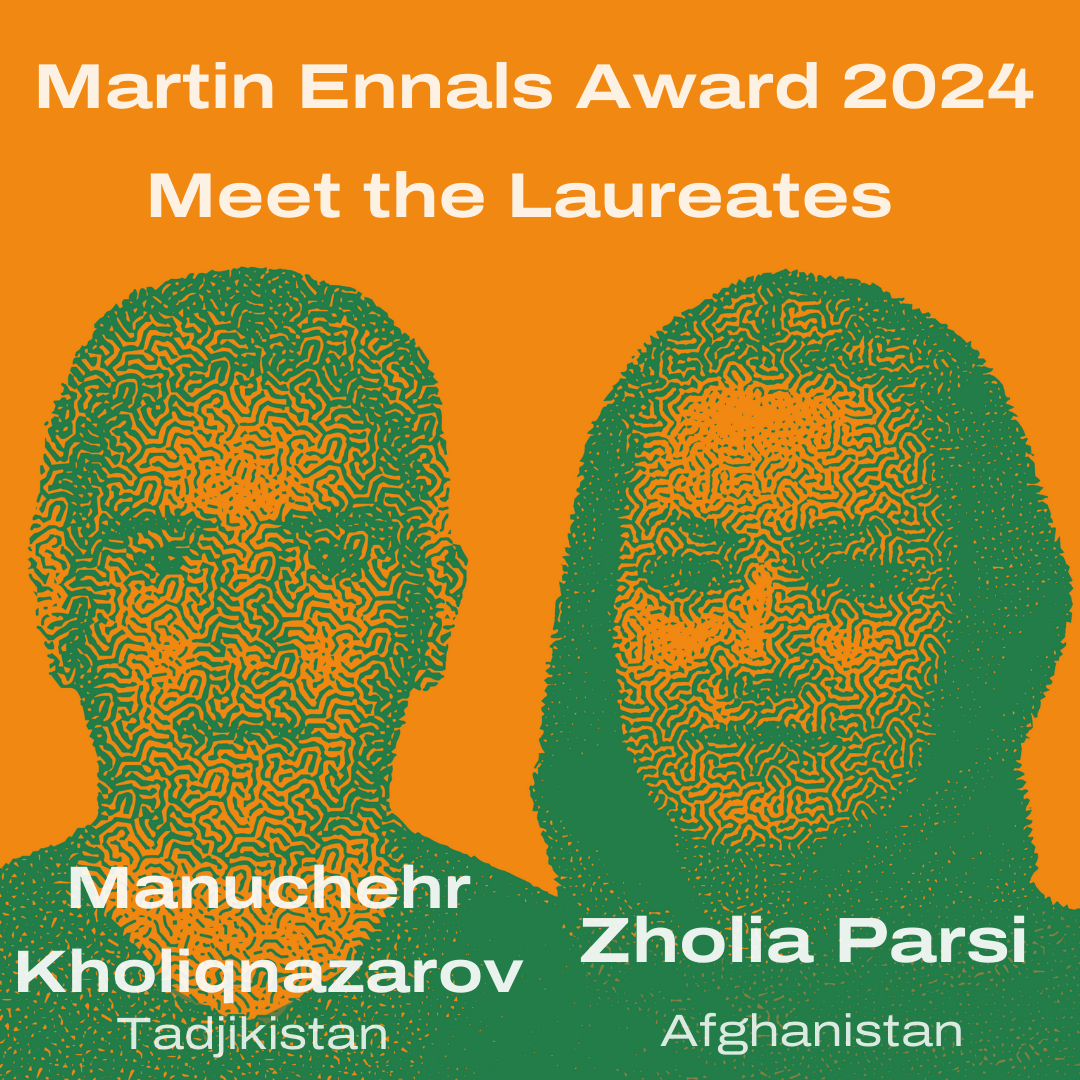




 Photo: RN Luisa Bluo in front of a picket line. Positively Filipino.Healing and Advocacy: How Filipino-American Nurses Transformed Healthcare Through ActivismAs Filipino-American History Month wraps up, we looked into an overlooked story: the activism of Filipino-American nurses in the U.S. We may have heard about their essential role in healthcare, but their impact goes much deeper. Leaders like Zenei Triunfo-Cortez and Luisa Blue have fought tirelessly for fair wages, better working conditions, and equal rights, challenging discrimination head-on. Their journey from patient care to union leadership shows how their compassion and resilience extend beyond the bedside and into the fight for systemic change. Their inspiring work is part of Filipino Americans’ long legacy of social justice.
 Oshúm and the shades of water in the COP16