Archive for the 'Human Rights Defenders' Category

The killing of “Randy” Echanis and Zara Alvarez put the Philippines under more pressure

August 22, 2020

The Philippines government’s practice of ” red tagging” – i.e.  labelling HRDs as communists or terrorists – has been repeatedy criticised by human rights defenders, NGOs, government and the UN.  “We are saddened and appalled by the ongoing violence and threats against human rights defenders in the Philippines, including the killing of two human rights defenders over the past two weeks,” said Liz Throssell, a spokesperson for the Office of the UN High Commissioner for Human Rights (OHCHR).  Randall “Randy” Echanis, an agrarian reform advocate and peace consultant, was killed in his home in Quezon City, located just outside capital Manila, on 10 August, added the OHCHR spokesperson, noting that reports indicated that he suffered brutal treatment before he died, including blunt force trauma to the head and stab wounds. On 17 August, the day that Mr. Echanis was buried, another long-standing human rights defender, Zara Alvarez, was shot dead in Bacolod City on Negros Island, some 490 kilometres south east of Manila. Investigations into both cases are underway.

According to OHCHR, both Mr. Echanis and Ms. Alvarez had been repeatedly “red-tagged” – labelled as communists or terrorists – in relation to their work. Ms. Alvarez’s name appeared, for example, on a list of 649 people that the Government sought to designate as terrorists on 28 March 2020. “While the list was later truncated, many who were removed from the list, including Ms. Alvarez, continued to report harassment and threats, as highlighted in the High Commissioner’s human rights report on the Philippines published in June this year,” added Ms. Throssell.

Ms. Alvarez’s photo also appeared in a publicly displayed poster purporting to depict terrorists. She was pictured alongside two other human rights defenders who had been killed – Benjamin Ramos Jr. and Bernardino Patigas, both of whose murder cases remain unsolved. She had also spent two years in prison on murder charges before she was acquitted in March for lack of evidence. Following the murder of Ms. Alvarez, her colleague Clarizza Singson, received a death threat on Facebook warning her that she would be next. “This is particularly worrying as Ms. Singson’s name also appeared on the abovementioned list of suspected terrorists and her photo is included in the same poster,” added Ms. Throssell.

We have raised our concerns with the Government and the Commission on Human Rights on these cases, and look forward to continuing to engage with them,” said Ms. Throssell.

Eighty-nine cases involving the deaths of human rights activists from 2017 to 2019 are now being investigated by the Commission on Human Rights (CHR), an official said Friday. “The data that we have from 2017 to 2019, we have a total of 89, not to include the ones happening now. We call them human rights defenders,” CHR commissioner Leah Armamento said over ABS-CBN News Channel when asked about the number of killings of activists and members of progressive groups being investigated by the commission.

‘The endless killings of activists in the Philippines have become systematic in Duterte’s regime, and demonstrate the continuing impunity in the country. The government should end these killings immediately and take genuine steps towards ensuring justice for victims and their family members,’ said Shamini Darshni Kaliemuthu, Executive Director at FORUM-ASIA.

Oslo Freedom Forum 24-25 September goes on-line

August 17, 2020

For the first time, the Human Rights Foundation (HRF) is bringing its Oslo Freedom Forum (OFF) online. “While the circumstances may keep us apart, our commitment to supporting activists in their struggle against authoritarian regimes is stronger than ever. Join us online from September 24-25 for the only virtual conference that puts human rights at the top of the global agenda. The political and health crises of the past six months have reminded us how authoritarians use human tragedy to advance their own agendas. Corrupt regimes around the world have exploited the COVID-19 pandemic to impose restrictions on freedom of speech, to arrest peaceful protesters, and to silence dissent. The courage and determination of activists and citizens alike have been tested, yet they remain resilient in the face of tyranny.”

Confirmed speakers for the 2020 Oslo Freedom Forum include:

  • Taiwan’s Digital Minister Audrey Tang
  • Twitter and Square CEO Jack Dorsey
  • Uyghur journalist Gulchehra Hoja
  • Thai opposition leader Thanathorn Juangroongruangkit
  • Gambian anti-rape activist and survivor Fatou Toufah Jallow
  • Exiled Hong Kong pro-democracy activist Nathan Law
  • North Korean defector Eunhee Park
  • Sudanese doctor and pro-democracy activist Mohamed Nagi Alassam
  • Russian investigative journalist Lyudmila Savchuk
  • Cuban environmentalist and LGBTQ+ rights activist Ariel Ruiz Urquiola
  • “Who Owns Huawei?” author and professor Christopher Balding
  • Oscar-winning film director Bryan Fogel

More speakers to be announced soon.  

See also: https://humanrightsdefenders.blog/2019/05/21/human-rights-foundation-uses-2019-oslo-freedom-forum-for-rebranding/

Oslo Freedom Forum


Steven Donziger speaks out himself about being targetted by Chevron

August 17, 2020
In the Pozo Aguarico region of Ecuador, lawyer Maria Cecilia Herrera shows the oil pollution that remains in the ground 30 years after oil production ceased. Photograph by Enrico Aviles, 2020.

In the Pozo Aguarico region of Ecuador, lawyer Maria Cecilia Herrera shows the oil pollution that remains in the ground 30 years after oil production ceased. Photograph by Enrico Aviles, 2020.

After recalling the work and death of his friend Rosan Steve relates how the culprit, the oil giant Chevron, has been pursuing a scorched-earth campaign to avoid paying for the cleanup or helping any of the victims. In the process, Chevron and its main law firm – Gibson Dunn – has pioneered a new, highly unethical form of lawfare intended to intimidate environmental defenders in all 180 countries where it operates. I should know; I’m the main target of Chevron’s lawfare, which has involved 60 law firms and 2,000 lawyers.

Here’s some of the backstory. Multiple courts have found that from the late 1960s to 1992, Texaco deliberately dumped billions of gallons of cancer-causing oil waste across 1,500 square miles of previously pristine rainforest, poisoning groundwater and rivers residents depended on for drinking, bathing, and fishing. Texaco, which was later acquired by Chevron, told local Indigenous peoples that the toxic waste was actually good for them, saying it would “nourish the brain and retard aging.”

In 1993, a coalition of 30,000 Indigenous peoples and rural communities fought back. The father of one of my Harvard Law School classmates asked me to join the team of Ecuadorian and American lawyers representing them. After hearing from leaders like Rosa and seeing the damage with my own eyes, I was appalled by what Texaco had done to these communities. Unlike BP’s Deepwater Horizon spill in the Gulf of Mexico, this disaster was no accident. It was done by design to externalize production costs onto some of the most vulnerable communities on the planet—the very people whose historical role is to act as the guardians of the forest.

After years of fighting in courts in the U.S., Ecuador, and Canada, the coalition won an unprecedented $9.5B in damages. Several appellate courts and a total of 17 appellate judges affirmed the case unanimously, and Canada’s Supreme Court ruled the Ecuadorians had the right to enforce their judgment. Human-rights champions hailed the victory as the beginning of a new era of environmental accountability.

But then Chevron unveiled another component of its strategy to try to prevent the Indigenous plaintiffs from receiving a cent. The central feature was filing a civil RICO suit in U.S. federal court against me as well as all 47 Ecuadorian community leaders who signed the lawsuit, claiming that the entire case on which I had spent 18 years of my life had been nothing more than a “racketeering” conspiracy designed to “extort” money from the company. Judge Lewis Kaplan denied us a jury, refused to review any of the voluminous scientific proof of Chevron’s pollution, and then ruled in Chevron’s favor. He based his decision almost completely on the testimony of a man who later admitted to lying repeatedly under oath and to receiving huge payments from the company.

I continue to challenge Kaplan’s flawed decision, which has been rejected by multiple appellate courts in Ecuador and Canada. But largely because I would not turn over my computer and cell phone to Chevron (an order that many experts believe to be a violation of attorney-client privilege and one that I have appealed), Kaplan tried to prosecute me criminally for contempt. His charges were rejected by the federal prosecutor. Kaplan then took the extraordinarily rare step of appointing a private law firm, Seward & Kissel, to prosecute and detain me in the name of the government. Seward & Kissel later admitted that Chevron is actually a client of the law firm.

While I await my day in court, I’m now under house arrest. (I believe I’m the only lawyer in U.S. history detained pretrial on a contempt charge.) I’ve been confined to my small apartment for 12 months on a charge that carries a maximum of six months’ imprisonment. This has been incredibly hard on my 14-year old son as well as my clients, who have been denied their lawyer. Chevron clearly wants me confined so I can no longer work on the case or speak publicly about the company’s gross wrongdoing.

One thing that keeps me going is the fact that hundreds of top human-rights lawyers and dozens of Nobel Laureates have sprung to my defense. They see this abuse of power as the latest example of corporations trying to criminalize environmental activism. They know the use of corporate lawfare to target activists has been copied by a mining company in South Africa, a pipeline company in the U.S., and a logging company in Canada.

Two weeks ago, two retired U.S. federal judges provided a big boost. The Hon. Nancy Gertner (Harvard Law School) and the Hon. Mark Bennett (Drake University Law School) criticized their former colleague Kaplan in the news journal Law360 for the way he’s handled this case. I’m grateful for their courage, because it’s extremely rare for federal judges to call out colleagues publicly.

Please vote with your wheels and fill up your tank anywhere but Chevron. And I hope governments around the world will stand up to attempts to criminalize peaceful activism. They can start by refusing to do business with Chevron until the company learns to respect the rule of law and ceases its attacks on human rights defenders. We must not let this targeting of human rights defenders spread as quickly as the toxins that killed Rosa and the men, women, children whose names filled her notebook.

Call for Nominations for the Gwangju Prize for Human Rights 2021

August 13, 2020

 Gwangju Prize for Human Rights 2021

The May 18 Memorial Foundation announces the call for 2021 nominations for the following Prizes:

1) The Gwangju Prize for Human Rights (GPHR): It carries a cash award of $ 50,000 USD.

2) The Special Prize of the GPHR (SPGPHR): It carries a cash award of $ 10,000 USD.

For more about these awards, see: http://www.trueheroesfilms.org/thedigest/awards/gwangju-prize-for-human-rights

A nomination for the GPHR can be submitted by any individual or organization who meets the nomination criteria. Any nomination is considered valid if it is submitted by a person or an organization that falls within one of the following categories:

1) Individuals or organizations who won the May 18 Citizens Award and/or YunSang-won Award

2) Laureates of Gwangju Prize for Human Rights

3) Organizations in Korea or overseas working for human rights, peace, and the reunification of Korea that have been active three years or more and that the May 18 Memorial Foundation Directorate decides to request their nomination

4) Any individual or organization in Korea or overseas that agrees on the purpose of the GPHR

The May 18 Memorial Foundation is responsible for the selection of eligible candidates and the choice of the GPHR. The selection committee is composed of seven members who are designated by the May 18 Memorial Foundation’s Articles of Association. The rest of the procedure will abide by the Articles of Association.

Deadline: 30 September, 2020.

See also: https://humanrightsdefenders.blog/2019/05/19/gwangju-human-rights-award-2019-to-philippine-carino-and-indonesian-choir/

http://e-pao.net/epSubPageExtractor.asp?src=announcements.Ann_2020.Call_for_Nomination_Gwangju_Prize_for_Human_Right_2021

What can we do about the result of the Belarussian “election”? On line discussion

August 13, 2020
The Human Rights House Foundation, in partnership with Barys Zvozskau Belarusian Human Rights House, will host on THURSDAY, AUGUST 13, 2020 AT 14 PM an on -line  panel discussion with individuals closely following events on the ground. It will investigate what the European Union, United Nations, and individual states must do immediately to prevent further violence and seek a political solution to this growing crisis and how the international community should continue to occupy this space once this crisis moves off of the front pages.
On August 9, Belarusian President Alyasandr Lukashenka claimed a landslide re-election victory. This claim was widely anticipated, condemned by the political opposition, and met with large-scale peaceful protests across the country. Belarusian authorities responded with what international organisations label disproportionate violence against protesters. Since Monday, local human rights organisations report thousands detained, many of them arbitrarily, and facing further violence and abuse while in detention. More than 60 journalists – both domestic and foreign – have been arrested with the whereabouts of several unknown. In many ways, these early days of the post-election environment point towards a more violent crackdown than the country faced following the last presidential elections in 2010.
What can and should the international community do to pressure Belarusian authorities to cease their violent attacks on protesters and human rights defenders?
Speakers:
Anaïs Marin
UN Special Rapporteur on the human rights situation in Belarus

Oleg Kozlovsky

Amnesty International
Franak Viačorka
Vice President of the Digital Communication Network
Hanna Liubakova
Journalist, Outriders

Valiantsin Stefanovic

Viasna. Human rights in Belarus

and

Tanya Lokshina
Associate director, Europe and Central Asia, Human Rights Watch
Moderation by Dave Elseroad, Human Rights House Foundation.
Also today, 13 August 2020, 5 UN human rights experts strongly criticised Belarus for police violence against peaceful protesters and journalists and large scale detention following a controversial presidential election, and called on the international community to put pressure on Belarus to stop attacking its own citizens: https://yubanet.com/world/belarus-must-stop-attacking-peaceful-protesters-un-human-rights-experts-say/

Chhattisgarh State must pay compensation to six human rights defenders but will it?

August 11, 2020

The National Human Rights Commission has ordered the Chhattisgarh government to compensate human rights defenders Rs 1 lakh each, for allegedly false cases filed against them. The commission had in February asked the Congress government in the state to comply within six weeks.

Human rights defenders Nandini Sundar, Archana Prasad, Manju Kawasi, Vineet Tiwari, Sanjay Parate and Mangla Ram Karma said that on November 5, 2016, the Chhattisgarh Police lodged first information reports against them under various sections of the Indian Penal Code, Arms Act and Unlawful Activities (Prevention) Act for the alleged murder of a person in Nama village of Sukma district. The Bharatiya Janata Party was in power at that time. “The case was supposedly filed on the written complaint of Shyamnath Baghel’s widow, Vimla Baghel,” they said in a press release. “However, she is on record saying she did not name anyone.” On November 15, 2016, the Supreme Court gave the individuals protection from arrest. However, they filed a fresh plea in the Supreme Court in 2018 as the matter had not yet been investigated or closed. The Congress-led Chhattisgarh government initiated a probe in the matter and in February 2019, concluded that the defenders were innocent.

In February this year, noting that the Chhattisgarh Police’s admission that there was no case to be made out against the signatories, the NHRC said that the individuals would have “certainly suffered a great mental pain and agony as a result of registration of false FIRs against them by the police”. “Therefore we recommend and direct the Government of Chhattisgarh through its Chief Secretary to pay a sum of Rs One Lakh each as monetary compensations to the six persons namely Prof Nandini Sundar, Ms. Archana Prasad, Shri Vineet Tiwari, Shri Sanjay Parate, Ms. Manju and Shri Mangla Ram Karma, whose human rights were gravely violated by the Chhattisgarh police,” the NHRC ruled.

The commission also directed the Chhattisgarh government to provide the same compensation to a group of lawyers from Telangana who were acquitted of all charges after being put in jail in Sukma for seven months. However, the six human rights defenders indicated that they had not yet received the compensation. “We welcome the NHRC order and hope that the Chhattisgarh government will act promptly to redress the reputational loss and mental agony suffered by us,” the press release said.

The signatories also said they hoped the police officers responsible for filing false charges against them, especially SRP Kalluri who was then the Bastar inspector general of police, will be investigated and prosecuted.

The defenders added: “To date, despite NHRC recommendations in 2008 and repeated Supreme Court directions, the Government of Chhattisgarh has not compensated the thousands of villagers whose homes were burnt by Salwa Judum or prosecuted those responsible for rapes and murders. Fake encounters and false arrests continue to be a grave concern in Chhattisgarh.”

Salwa Judum was a militia organised and mobilised by the government in Chhattisgarh to break the back of Maoist violence in the region. In July 2011, the Supreme Court declared Salwa Judum an illegal organisation, and ordered it to disband. However, the organisation continues to survive in the form of various vigilante groups operating in Chhattisgarh.

The signatories thanked the People’s Union of Civil Liberties for taking up all the cases of human rights defenders in Chhattisgarh, and said it was unfortunate that PUCL Secretary Sudha Bharadwaj had been arrested and imprisoned under “false charges” in the Elgar Parishad case.

——-

https://scroll.in/latest/969588/nhrc-orders-chhattisgarh-to-pay-rs-1-lakh-each-to-six-human-rights-defenders-for-false-caseshttps://www.hindustantimes.com/india-news/pay-compensation-to-telangana-democratic-front-members-nhrc-tells-chhattisgarh-govt/story-gyJSK4GVtdsDEguUc5zgmJ.htmlhttps://theleaflet.in/nhrc-orders-chhattisgarh-to-compensate-13-social-activists-against-whom-false-firs-were-filed-read-press-release-by-activists/


Steven Donziger: human rights defender now victim of judicial harassment

August 10, 2020

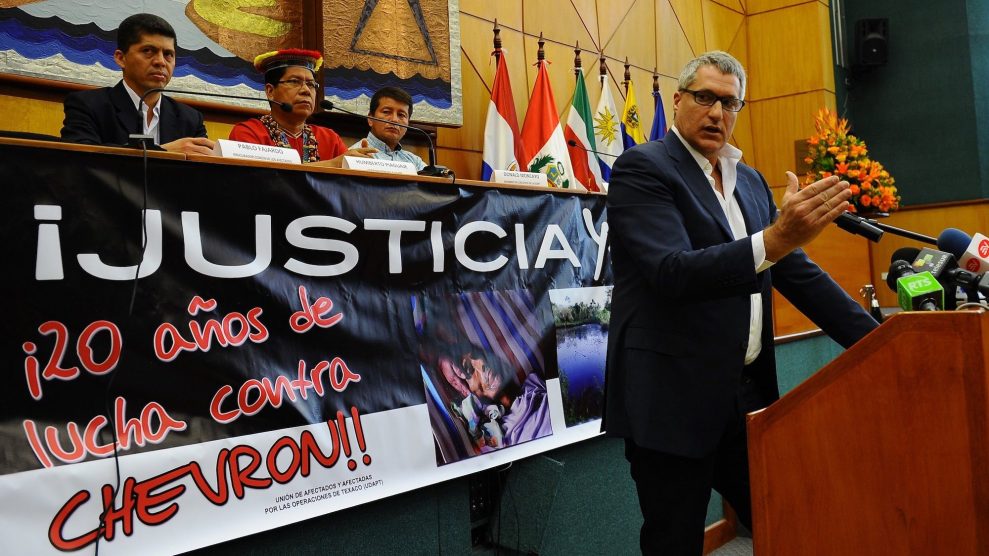
Steven Donziger, gestures during a press conference on March 19, 2014 in Quito, Ecuador.Rodrigo Buendia/Getty

Last September, I travelled from Western Canada to New York City to see the human rights lawyer Steven Donziger. Donziger cannot travel. He cannot even stroll the hallway of his Upper West Side apartment building on 104th Street without special court permission. He remains under house arrest, wearing an ankle bracelet. Eight years ago, Donziger and a team of Ecuadorian lawyers, on behalf of Indigenous and farmer plaintiffs, won the largest human rights and environmental court judgment in history, a $9.5-billion US verdict against the Chevron Corporation for massive oil pollution in Ecuador’s Amazon basin.

Following the trial, Chevron removed its assets from Ecuador, left the country, and has refused to pay. The company now claims the Ecuador verdict was achieved fraudulently, and produced a witness, who told a US court that he possessed knowledge of a bribe. Judge Lewis Kaplan ruled in Chevron’s favour, halting collection of the pollution fine in the US and placing Donziger in electronic chains in his home.

The details in this case really matter, so here the story in full:

Crime and punishment

Donziger, born in Jacksonville, Florida, in 1961, graduated from Harvard Law in 1991, and founded Project Due Process, offering legal services to Cuban refugees. In 1993, Ecuador’s Frente de Defensa de la Amazonía (FDA), representing 30,000 victims of Chevron’s pollution, heard about Donziger and asked him to help win compensation for their lost land, polluted water, and epidemics of cancer and birth defects in a region now known as the “Amazon Chernobyl.”

Donziger originally filed the claim in New York, but Chevron insisted the case be heard in Ecuador, where the trial began in 1993.

Evidence showed that between 1964 and 1992, Texaco (now Chevron) dumped 16 billion gallons of toxic wastewater into rivers and pits. Fifty-four judicial site inspections confirmed that the average Chevron waste pit in Ecuador contained 200 times the contamination allowed by US and world standards, including illegal levels of barium, cadmium, copper, mercury, lead, and other metals that can damage the immune and reproductive systems and cause cancer. According to Amazon Watch, by ignoring regulations, the company saved about $3 per barrel of oil, earning an extra $5 billion over 20 years.

In 2007, during the trial, Chevron stated that if the victims pursued the case, they faced a “lifetime of … litigation.” The plaintiffs persevered. Since the victims were dirt poor, Donziger and his team, with FDA support, devised an innovative solution to fund the case, offering investors a tiny portion of any eventual settlement.

In 2011, after an eight-year trial, the court ruled in favor of the plaintiffs. Two appeals courts and the nation’s Supreme Court, the Court of Cassation, confirmed the decision. Seventeen appellate judges ruled unanimously that Chevron was responsible for the contamination and owed Donziger’s clients $9.5 billion.

The lone witness

According to court documents, Chevron “refus(ed) to comply” with the judgment and began to make good on its threat for a “lifetime of litigation.” According to internal company memos, Chevron launched a retaliatory campaign to attack the victims, discredit Ecuador’s courts, and “demonize” Donziger.

Chevron hired one of the world’s most notorious law firms, Gibson, Dunn & Crutcher—previously censured by England’s High Court of Justice for fabricating evidence. Judges in California, Montana, and New York have censured and fined Gibson Dunn for such misbehavior as witness tampering, obstruction, intimidation, and what one judge called “legal thuggery.”

Using US RICO statutes designed to prosecute organized crime syndicates, the firm filed a “racketeering” case against Donziger. Judge Kaplan at the US Court of Appeals for the Second Circuit in New York—a former tobacco company lawyer widely viewed as being friendly to large corporations—agreed to hear the peculiar case. Kaplan claimed the Ecuador trial “was not a bona fide litigation” and insulted the victims, calling them “so-called plaintiffs.” Gibson Dunn lawyer Randy Mastro called the Ecuador courts “a sham.”

Prominent trial lawyer John Keker, representing Donziger, claimed the Kaplan trial was pure intimidation and called the proceedings a “Dickensian farce” driven by Kaplan’s “implacable hostility” toward Donziger.

On the eve of the trial, Chevron dropped its financial claims, allowing Kaplan to dismiss the jury and decide the outcome himself. Then Chevron unveiled their star witness—Alberto Guerra, a disgraced former Ecuadorian judge removed from the bench for accepting bribes. In a Chicago hotel room, Chevron and Gibson Dunn lawyers rehearsed Guerra for 53 days.

In Kaplan’s court, Guerra claimed that Donziger had approved a “bribe” to an Ecuadorian judge and had written the final court ruling for the judge, allegedly transferred on a computer thumb drive. No corroborating evidence was ever offered. Guerra later admitted lying about these facts, and a forensic investigation of the Ecuadorian judge’s computer proved that Guerra had lied.

The entire story now appears fabricated. Donziger’s lawyers have attempted to locate Guerra and depose him, but the star witness has not yet been found.

“Chevron’s case,” said Donziger’s lawyer Andrew Frisch, “rested on the testimony of a witness who was paid over $1 million.” Frisch stated that Kaplan’s rulings “have been contradicted in whole or in part by 17 appellate judges in Ecuador and 10 in Canada, including unanimous decisions of the highest courts in both countries.”

Nevertheless, without a jury, Kaplan accepted Guerra’s testimony and found that Donziger had committed fraud. Finally, Kaplan ordered Donziger to turn over his computer and cellphone to Chevron. Since this order violated attorney-client confidentiality, Donziger refused until the court of appeals could decide the issue.

Kaplan charged Donziger with “criminal contempt” for refusing his order. However, the order and the contempt charge were so outrageous that the N.Y. prosecutor’s office refused to accept the case. Kaplan defied the state authorities and appointed a private law firm, Seward & Kissel—with commercial ties to Chevron—to act as prosecutor, which, in turn, ordered Donziger be placed under “pretrial home detention.”

Legal thuggery

An unnamed New York Second Circuit judge—presumed by Donziger and his lawyers to be Kaplan—filed a complaint against Donziger with the bar grievance committee in New York, which then suspended Donziger’s law license without a hearing. However, bar referee and former federal prosecutor John Horan called for a hearing and recommended the return of Donziger’s law license. “The extent of his pursuit by Chevron is so extravagant, and at this point so unnecessary and punitive,” Horan wrote, “he should be allowed to resume the practice of law.” Donziger responded that, “Any neutral judicial officer who looks objectively at the record almost always finds against Chevron and Kaplan. The tide is turning and the hard evidence about the extreme injustice in Kaplan’s court will be exposed.”

This case appears to be about bullying. Chevron is one of the wealthiest corporations in the world. The plaintiffs are poor, Indigenous, and campesino people with scarce access to money or lawyers. “Donziger came to our rescue,” says FDA president Luis Yanza. How big can high-stakes corporate bullying get? Donziger’s lawyers estimate the oil giant has spent over $2 billion on 2,000 lawyers, public relations teams, and private investigators.

At the dinner party at Donziger’s, I met supporters from around the world, from Amazon Watch and Global Witness, journalists, lawyers, and human rights advocates. “This case is not just about Steven’s fate,” said Simon Taylor, director of Global Witness in London. “I believe the injustice to him is intended to intimidate the rest of us, to chill the work of other environmental and corporate accountability advocates.”

American human rights attorneys Martin Garbus and Charles Nesson formed a support committee for Donziger with dozens of civil society leaders, including: Clive Stafford-Smith, founder of the prisoner-rights group Reprieve in London; Atossa Soltani and Leila Salazar, the founder and executive director of Amazon Watch; Lynne Twist, co-founder of the Pachamama Alliance working in the Amazon; renowned author John Perkins; and famed musician Roger Waters.

The tide may be turning for Donziger and the victims in Ecuador. In June 2019, Amnesty International asked the US Department of Justice to conduct a criminal investigation into Chevron’s and Gibson Dunn’s conduct, witness bribery, and fraud in the Ecuador pollution litigation

This past February, Prof. Ellen Yaroshefsky, director of the Monroe H. Freedman Institute for the Study of Legal Ethics at Hofstra University in New York, wrote that the Kaplan and Seward & Kissel prosecution of Donziger is flawed with conflicts of interest, financial ties to Chevron Corporation, and judicial bias.

In April, 29 Nobel laureates signed a letter stating, “(We) support Steven Donziger and the Indigenous peoples and local communities in Ecuador in their decades-long work to achieve environmental justice over pollution caused by Chevron…. Chevron and a pro-corporate judicial ally, US District Judge Lewis A. Kaplan, manufactured ‘contempt’ charges against Donziger. (Chevron’s) goal is to intimidate and disempower the victims of its pollution and a lawyer who has worked for decades on their behalf.”

A month later, more than 475 international lawyers, bar associations, and human rights advocates criticized Kaplan’s ruling for persecuting Donziger “based on false witness testimony provided by Chevron, personal animus, and… to protect Chevron from a valid foreign court judgment.” The letter, from the US National Lawyers Guild and the International Association of Democratic Lawyers, urges an end to the pretrial house arrest of Donziger, noting “such arbitrary detention sets a dangerous precedent for human rights attorneys in the United States and around the world.”

On May 27, 2020, the Newground investment firm in Seattle, Wash., placed two proposals on Chevron’s 2020 proxy call, asking for governance reforms to bring its Ecuador issues to resolution, and prevent future human rights and pollution liabilities. The proposals were supported by actor Alec Baldwin, musician Roger Waters, and Nobel laureate Jody Williams.

On July 16, the European Parliament wrote to the US Congress asking the Congressional Subcommittee on the Constitution, Civil Rights, and Civil Liberties to investigate Chevron’s treatment of Donziger, which the EU Parliament found “not consistent with what has traditionally been the strong support in the United States for the rule of law generally and for protection for human rights defenders in particular.”

Late at night, in the Donziger home, after the supporters had left, Donziger and his wife Laura sipped wine. “We’re not giving up,” Donziger said. “The only fraud in this case has been conducted by Chevron. Modern nations have comity relationships, formally respecting each other’s court decisions. We’re reviewing enforcement actions in Canada, Australia, and other jurisdictions. Chevron owes the money, and they can’t just run, hide, and fabricate stories to avoid paying. They’re persecuting me to try to change the public narrative, but they’re guilty. They committed the crime, they hurt people, they were proven responsible in a court of law that they chose, and they owe the money.”

…..As I write this, in mid-July, Donziger has been in home detention for 345 days, almost a year, longer than any lawyer in US history has ever served for a contempt charge.

How Did a Lawyer Who Took on Big Oil and Won End up Under House Arrest?

Podcast series “Exile Shall Not Silence Us” now complete

August 10, 2020

AfricanDefenders‘ podcast series, “Exile Shall Not Silence Us”, is now complete and fully available for you to listen to. “Exile Shall Not Silence Us” (which I announced on 22 June 2020: https://humanrightsdefenders.blog/2020/06/22/exile-shall-not-silence-us/) is a podcast series on the situation of African human rights defenders (HRDs) in exile. The podcast is based on a research that collected the testimonies of more than 120 HRDs and in-depth case studies, and it features interviews with four exiled HRDs. It  highlights the professional, security, socio-economic, and psychosocial challenges of HRDs in exile in Africa, but most of all their achievements and resilience strategies.

Episode#1 gives an overview of the main findings of the research on the situation of African HRDs in exile, with key issues and current trends.

Episode #2 features an anonymous interview with a young woman HRD from Zimbabwe in exile in South Africa. She not only sheds light on the challenges faced by HRDs in and outside Zimbabwe, but also on the complex and painful relationship between exile and motherhood.

Episode#3 explores the challenges HRDs face after returning from exile through an interview with  a formerly exiled Gambian journalist.

Episode #4 explores the challenges and contradictions of internal displacement, as well as the multiple layers of vulnerability faced by HRDs in conflict-ridden areas through an anonymous interview with a Cameroonian woman HRD.

Episode#5 zooms in on Egypt where we speak to an Egyptian HRD in exile in Tunis who tells us about his experience, his hopes, and what he has been learning from Tunisian civil society.

Listen to all the episodes here› <https://app.getresponse.com/click.html?x=a62b&lc=B5QJao&mc=IN&s=9JQZDZ&u=Bl16k&z=Eh2xCOx&>

EXILE SHALL NOT SILENCE US!


Amnesty asks Bangladesh to stop harassing families of human rights defenders:

August 10, 2020

The Staff Correspondent of Newagebd published on 8 August 2020 an appeal by Amnesy Intenational to the Bangladeshi government to stop harassing and intimidating the family members of exiled blogger Asad Noor and other human rights defenders immediately.

The Human rights organisation also said that defending human rights in Bangladesh has become increasingly challenging as many bloggers and human rights defenders fled persecution at home and sought protection abroad in recent years while continuing their activism. The authorities are now targeting their families remaining in the country in an effort to silence them, said that statement.

In July, Asad Noor published several video blogs protesting against the persecution of the minority Buddhist community in Rangunia upazila in Chattogram. A local youth leader of the ruling Awami League sued Asad on 14 July 2020 under the draconian Digital Security Act, accusing him of ‘hurting religious sentiments’ and ‘running propaganda against the spirit of the liberation war.’ Amnesty found that the local police raided Asad’s parental house in Amtali village in the southern district Barguna times and again on July 14, 15, 16 and 18, and being unable to find Asad, harassed his parents.

The local police kept the family members in detention for 40 hours before releasing them in the night of July 19. ‘The harassment of Asad’s family is not an isolated incident. It is part of a worrying pattern targeting families of human rights defenders in exile,’ said Sultan Mohammed Zakaria.

Amnesty’s South Asia researcher Sultan Mohammed Zakaria said that harassment of families, to muzzle human rights defenders in exile from Bangladesh, was utterly reprehensible. Such tactics of intimidation must be stopped immediately. Instead, the authorities have the responsibility to prevent and effectively address allegations of human rights abuses and ensure a safe and enabling environment for human rights defenders, by carrying out prompt and independent investigations and bringing suspected perpetrators to justice, he said.

See also: https://humanrightsdefenders.blog/2018/03/05/bangladesh-government-depicted-as-against-human-rights-defenders/

https://www.newagebd.net/article/112959/stop-harassing-families-of-rights-defenders-ai


update to Mona’s campaign for her sister

August 7, 2020

Following up on https://humanrightsdefenders.blog/2020/08/06/re-issued-passionate-plea-for-help-in-open-letter-by-mona-seif-from-egypt-about-targeting-of-her-family, here an update to the campaign:.
More than 200 prominent artists, along with nearly two dozen leading human rights groups and film organizations, are calling for the immediate release of activist and film editor Sanaa Seif — who was arrested in Cairo last month and remains behind bars in remand detention. Signatories to the public statement are also calling for the release of all those unjustly detained in Egypt.

Among the signatories are Nobel Prize, Academy Award, Pulitzer Prize, Booker Prize and British Academy Film Awards winners, including: Juliette Binoche, Laurent Cantet, Noam Chomsky, JM Coetzee, Judi Dench, Claire Denis, Dave Eggers, Danny Glover, Paul Greengrass, Maggie Gyllenhaal, Rebecca Hall, Naomie Harris, Khaled Hosseini, Anish Kapoor, Naomi Klein, Mike Leigh, Ken Loach, Paul Mason, Simon McBurney, Ruth Negga, Thandie Newton, Michael Ondaatje, Philip Pullman, Miranda Richardson, Andrea Riseborough, Arundhati Roy, and Stellan Skarsgård.

Leading advocacy groups, including Amnesty International, PEN International, Human Rights Watch and Reprieve have also signed onto the letter, as have prominent film organizations, including Sundance Institute, International Documentary Film Festival Amsterdam, the European Film Academy and Société des Réalisateurs de Films.

The full of signatories is available online at: https://www.freedomfor.network/sanaa