Archive for the 'books' Category

RSF publishes end of year round-up of journalists detained, held hostage and missing in 2020

December 15, 2020

The number of detained journalists is still at a historically high level. Worldwide, a total of 387 journalists were held in connection with the provision of news and information at the start of December 2020, compared with 389 at the start of December 2019. This lack of variation follows a 12% rise in 2019. Overall, the number of detained (professional and non-professional) journalists has risen 17% in the past five years (from 328 in 2015).

3 journalists remain missing including Ibraimo Mbaruco, a reporter for Rádio Comunitária de Palma, a community radio station in Palma, a remote coastal town in northeastern Mozambique’s Cabo Delgado province, who has has been missing since 7 April 2020. In his last message, he said he was “surrounded by military.” His family has not seen or heard from him since then and nothing has been said by the Mozambican authorities, who try to prevent any media coverage of the attacks by Islamist insurgents that are common in that part of the province.

See also: https://humanrightsdefenders.blog/2020/04/21/2020-world-press-freedom-index-is-out/

CIVICUS 2020 report “People Power Under Attack” – Africa

December 14, 2020

Africa: Civic Rights Were Eroded Across Africa in 2020

The most common violations of civic space registered by the CIVICUS Monitor were the detention of journalists, followed by disruption of protests, censorship, intimidation and the detention of protestors. Almost half of CIVICUS Monitor updates in 28 different countries mentioned the detention of journalists. 14 December 2020. Fundamental civic rights, including freedoms of association, peaceful assembly and expression, deteriorated across Africa in 2020. [See also: https://humanrightsdefenders.blog/2016/10/24/today-civicus-launches-its-worldwide-monitor-to-track-civil-space/]

In an allAfrica.com guest column Sylvia Mbataru and Ine Van Severen – CIVICUS researchers who contributed to People Power Under Attack 2020 – unpack what the report says about Sub-Saharan Africa. They conclude that civic space has been reduced in four West African nations (Côte d’Ivoire, Guinea, Niger and Togo) and has improved in the Democratic Republic of Congo and Sudan.

Over the past year the CIVICUS Monitor has documented several drivers of civic space violations in Africa including mass protests that were met with violent repression, and electoral processes, mostly presidential elections. Violations in the context of elections often involve the arrest of opposition members and pro-democracy activists, internet shutdowns, detention of journalists and crackdowns on protesters.

In three of the four West African countries that were downgraded – Côte d’Ivoire , Guinea and Togo – constitutional changes were adopted in recent years, leaving incumbent presidents Alassane Ouattara, Alpha Condé and Fauré Gnassingbé all claiming that new constitutions allowed them to run for further terms. The process of changing constitutions or bypassing term limits led to mass protests that were met with excessive force, the adoption and use of restrictive legislation, and punishment for dissenters criticising those in power, in particular pro-democracy activists.

Niger has also been downgraded by the CIVICUS Monitor. Even though a peaceful political change of power seems likely in the elections later this month, serious questions remain about Niger’s democratic prospects as human rights violations continue and civil society is subjected to restrictions.

These countries in West Africa have not been alone in efforts to muzzle dissent, exclude opposition and crack down on protests in the context of elections.  This bleak picture is further seen in Eastern and Southern Africa.

In Burundi, ahead of the May 2020 elections, state security forces and members of the youth league of the ruling party threatened, intimidated and killed opposition party members, and stifled the media and civil society organisations.

In Tanzania, as the country prepared for its August 2020 vote, the government embarked on a major crackdown to suppress dissent, including by enacting new laws and regulations to stop opposition members from actively campaigning, prevent civil society organisations and independent observers from observing the electoral process, weaken civil society and the media, and limit the use of online platforms by journalists and voters.

Despite this difficult picture, the year also proved the resilience of people and civil society in exercising their civic freedoms, leading to fundamental democratic changes. In Malawi, although the period surrounding the disputed May 2019 election was characterised by violations including internet shutdowns and repression of protests, civil society successfully contested the results, leading to a new election and a change of government in June 2020 .

However, many other African countries are moving away from holding free and fair elections. With several countries gearing up to hold elections in the coming months, civic rights violations are being reported in countries across the continent.

In Uganda, opposition members and their supporters are being violently prevented from holding rallies and journalists are being arrested and violently attacked while covering events held by opposition candidates and civil society; human rights defenders are being threatened by state authorities, including by having their bank accounts frozen and their operational licences withheld.

In Ethiopia, civil society groups have expressed concern at the crackdown on dissenting political views ahead of the general elections slated for 2021. Similarly, in Zambia, civil society has denounced an escalating trend of judicial harassment, repression and attacks on human rights defenders ahead of the August 2021 general elections. In Benin, electoral laws have been adopted that make it difficult for opposition candidates to stand in the 2021 presidential  election, which might lead to President Patrice Talon running almost unopposed.

The situation is so bleak that for the first time in a decade, according to the 2020 Mo Ibrahim Index of African Governance, overall governance in Africa has declined. The Index highlighted that, “in terms of rights, civil society space and participation, the continent had long before embarked on a deteriorating path and the pandemic simply aggravated this existing negative trajectory.”

With even more elections on the cards in 2021 – in Djbouti, Chad and Somalia among others – governments should prioritise the respect of fundamental freedoms, including the right of people to express themselves without intimidation and to assemble peacefully to express their dissent. Africa’s leaders should adhere to the African Charter on Democracy, Elections and Government, ensuring that free and fair elections take place. 2021 must be the year in which Africa’s dismal trends are reversed.

https://findings2020.monitor.civicus.org/africa.html

https://findings2020.monitor.civicus.org/africa.html
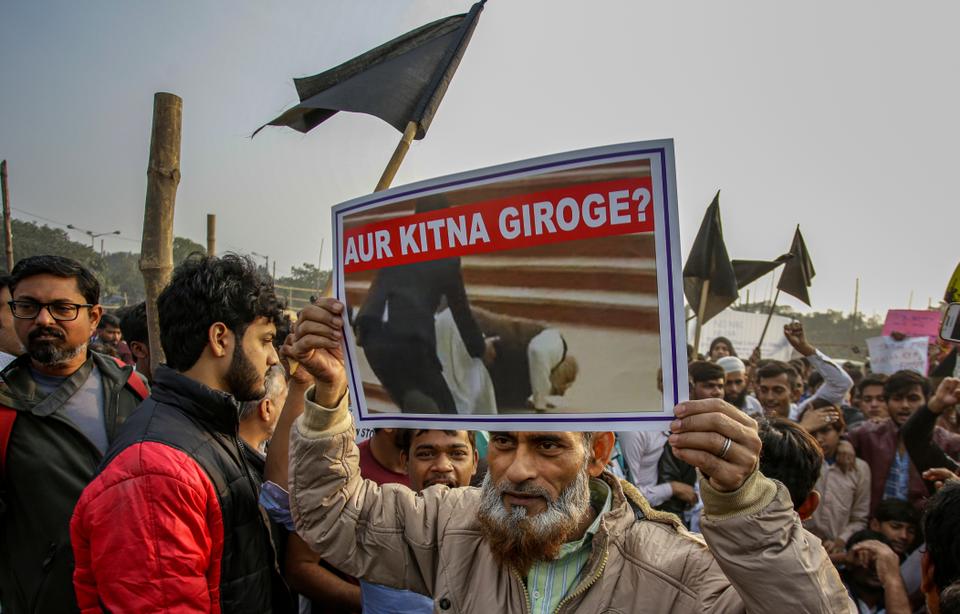
The launch of the Freedom of Thought Report 2020

December 9, 2020

On 10 December 2020 Humanist International launches its annual Freedom of Thought Report. Time: 3pm UTC. Location: Facebook or YouTube
Speakers:

● Ahmed Shaheed, UN Special Rapporteur on Freedom of Religion or Belief

● Mohamed Cheikh Ould Mkhaitir, Mauritanian blogger, activist and former prisoner of conscience

● Debbie Goddard, Vice President ofAmerican Atheists and Board Member of Humanists International

● Rev. Frederick Davie, Commissioner of The United States Commission on International Religious Freedom

● Andrew Copson, President of Humanists International

● Emma Wadsworth-Jones, Casework & Campaigns Manager at Humanists International

Since 2012 Humanists International has published the Freedom of Thought Report to monitor the rights and treatment of humanists, atheists and non-religious people in every country in the world.

This year, the thematic focus of the Report is COVID-19, and its impact on the non-religious people globally.

In particular the focus is on restrictions on:
● Women’s rights

● Media freedom, protest and access to information

● Individuals at risk.

A Tool Kit for Human Rights in Business Education

November 26, 2020

Just beginning to take shape, the field of business and human rights (BHR) promises to become an important element of teaching and research at leading business schools. As part of the effort to accelerate the evolution of this area, the Global Network of Business Schools was founded in 2017 by the Center for Business and Human Rights at New York University’s Stern School of Business, the Alliance Manchester Business School at the University of Manchester, and the Geneva School of Economics and Management at the University of Geneva. This network now comprises 39 business schools. More information about the network’s annual meeting and activities can be found here: https://bhr.stern.nyu.edu/global-busi-ness-school-network. On a parallel track, the larger Global Business School Network (GBSN), which connects more than 100 leading business schools from 50 countries to improve access to quality and locally relevant management education for the developing world, is an essential partner in this effort. Many of the schools in the GBSN orbit are located in the global South, where many human rights issues are playing out in real time. Adding human rights to the business school curriculum provides an exciting opportunity for new forms of collaboration among these schools and their counterparts in Europe and North America. GBSN is well-positioned to serve as a resource and community for schools implementing recommendations in this toolkit

About this tool kit edited by Dorothée Baumann-Pauly, Michael Posner and Dan LeClair: Representatives from a number of business school, both professors and administrators, have worked jointly to assemble this tool kit. It includes information and resources explaining the increasing relevance of human rights in a business school context and provides resources that can be helpful to those in other business schools who wish to become involved. Specifically, this document provides an overview of readily available teaching resources, research outlets, and various ways of institutionalizing human rights at business schools. It includes contributions from representatives of schools that are already including human rights in classes, public programs, and research. These testimonies highlight some of the key building blocks for successfully integrating human rights into the business curriculum. The appendix provides a list of contacts at key business schools that stand ready to offer you further advice on how to initiate a human rights program at schools.

see also: https://humanrightsdefenders.blog/2020/11/17/2020-un-annual-forum-on-business-and-human-rights-hopefully-not-business-as-usual/

Good read: Special Issue on the Olympic Movement through a human rights lens

November 22, 2020
The human rights of athletes : special issue / Galea, Natalie... [et al.] | Galea, Natalie

This edition of “Human rights defender” examines the Olympic Movement through a human rights lens. The magazine was planned to be released on time for the Tokyo 2020 Olympics which were postponed due to COVID-19. With athletes taking a more public stand as human rights defenders, the authors thought the issue was still timely:

Why athlete rights should be at the core of sport / Mary Harvey.
The heavy toll of achieving ‘sport for all’ in Afghanistan / Khalida Popal, interviewed by Natalie Galea.
Bahrain’s athletes rewarded with prison sentences / Fatima Yazbek.
Athletes first? The right to health and safety in postponing the Tokyo Olympic Games / Han Xiao.
A response from the International Olympic Committee.
Superhumans or sitting ducks? examining the gaps in elite athletes’ knowledge and understanding of their rights in sport / Yetsa A. Tuakli-Wosornu.
Embedding the human rights of athletes / Brendan Schwab.
Going beyond the ‘feel-good-factor’ to achieve equality in para-sport / Katie Kelly.
The human right of Olympic athletes to earn a living / Maximilian Klein.
The story in her own words / Annet Negesa.
In search of a safer playing field and gender justice in sport / Payoshni Mitra.
The unlevel global playing field of gender eligibility regulation in sport / Madeleine Pape.
A fist of freedom or a fist of iron? rule 50 and the Olympic paradox / Stanis Elsborg.
Sports activism, the gentle way / Sabrina Filzmoser, interviewed by Gabrielle Dunlevy.

See also: https://humanrightsdefenders.blog/2020/03/04/ioc-continues-its-cautious-work-on-human-rights-and-takes-first-steps-on-a-strategy/

https://library.olympic.org/doc/SYRACUSE/471451syracu

10 December: Launch of the Freedom of Thought Report 2020 by Humanists International

November 10, 2020

International Human Rights Day 2020 is coming up and here is an early save the date for the Humanists International.

Since 2012 Humanists International has published the Freedom of Thought Report to monitor the rights and treatment of humanists, atheists and non-religious people in every country in the world. This year, the thematic focus of the Report is COVID-19, and its impact on the non-religious people globally. In particular we have seen the establishment of restrictions on:

– Women’s rights
– Media freedom, protest and access to information
– Individuals at risk

Here is the list of the event speakers:- Andrew Copson
President of Humanists International

Dr Ahmed Shaheed
UN Special Rapporteur on Freedom of Religion or Belief

Emma Wadsworth-Jones
Humanists International’s Casework & Campaigns Manager

Mohamed Cheikh Ould Mkhaitir
Mauritanian blogger and anti-slavery activist

Debbie Goddard,
Vice-President of American Atheists

Rev. Fred Davie,
Commissioner of The United States Commission on International Religious Freedom

The event will be live-streamed on Facebook on 10 December at 15.00 UTC.No registration is needed. Access is free. We are going to share the link of the live streaming with you in due time.Confirm your participation
to the event on Facebook now!

See also: https://humanrightsdefenders.blog/2016/06/15/humanists-calls-on-un-to-stop-reprisals-against-human-rights-defenders/

UN Special Rapporteur Léo Heller, under attack from industry, gets support from many NGOs

October 22, 2020

Over 100 civil society organizations (for the names, click the link at the end of the post) published a joint letter on 21 October 2020 to express their strong support for the ​report​ on “The Privatisation of Water and Sanitation Services” of the United Nations (U.N.) Special Rapporteur on the human rights to safe drinking water and sanitation, Mr. Léo Heller. He will present the report to the U.N. General Assembly today. They also express deep concern about the attempts by a group of private water operators to undermine the independence of the Special Rapporteur and his work. Programmes.

This new report is an important contribution to a debate that is crucial in current times. The role of private actors in the delivery of public services, including water and sanitation services, has been increasing in the last decades. In recent years, at least four other U.N. Special Procedures ( extreme poverty and human rights, education, housing, and debt) have written on this topic in their respective reports. Just this week, eight current and former U.N. Special Rapporteurs and independent experts met at a ​major event on privatisation​ gathering hundreds of people online, and five of them released an ​op-ed​ published worldwide on the importance of the issue of privatisation and human rights.
 
Mr. Heller’s report is balanced and acknowledges the diversity of context. His report is the result of his work over the last six years and, remarkably, it was prepared through ​several consultations that go far beyond what is expected or what is the usual practice under U.N. Special Procedures. The consultations included a wide range of stakeholders, including States and the private sector, and were transparently shared on the mandate’s ​website​.

Yet, despite the importance of this issue and the measured and constructive solutions offered, the Special Rapporteur has faced considerable pushback from Aquafed, a lobby group for private water companies such as Veolia and Suez​. We are aware that Aquafed wrote to the President of the Human Rights Council, the United Nations High Commissioner for Human Rights, and to States. These letters personalised the issue, questioning Mr. Heller’s impartiality and respect of the applicable rules. The concerns they raise are however unfounded; they aim at silencing and discrediting him, rather than debating substance.
 
This interference is a transparent and unacceptable attempt to protect the industry’s profits from exposure to the reality of the lived experience of far too many who have had their human rights violated under privatisation.
 
We would like to express our thorough support to Mr. Heller’s rigour and professionalism. Despite limited resources, he has consulted widely for this report, and for his previous reports. Throughout his six-year mandate, he paid attention to affected communities and families who do not enjoy the rights to water and sanitation. In strict adherence to the rules of conduct and the mandate of the Human Rights Council, he has conducted quality, evidence-based, thoughtful research. He has taken into consideration the views he received through consultations, but acted independently from States, the private sector, and other stakeholders, which is the pillar of the United Nations special procedures mechanism. ​There is no doubting his integrity, professionalism, or commitment to human rights.
 
The signatories would like to express our recognition for the work that the Special Rapporteur has undertaken in the last six years and in particular, we underline the importance of his work on privatisation. Mr. Heller makes recommendations for States, private actors and international financial institutions, which we believe merit due attention and action.  
 
We urge States, as duty-bearers, to continue placing their obligation to fulfill the human rights of all people above the financial interests of any private actor.

Sincerely,

Convening partners: Corporate Accountability Global Initiative for Economic, Social and Cultural Rights Public Services International The Transnational Institute
 
https://www.tni.org/en/article/over-100-civil-society-organizations-stand-behind-un-special-rapporteur-leo-heller-denounce

Amnesty documents continued undermining of regional human rights mechanisms in Africa

October 21, 2020

For a second consecutive year, Amnesty International has documented how African governments are grossly undermining regional human rights bodies by failing to comply with their decisions, ignoring their urgent appeals, neglecting to report to them on national human rights situations and starving them of resources they desperately need for operations. Governments also neglected the rights of people with disabilities and older persons by failing to ratify treaties relating to their protection.

In the second edition of The State of African Regional Human Rights Bodies and Mechanisms 2019-2020released on the African Human Rights Day, Amnesty International said the mechanisms established to safeguard human rights across the continent are facing enormous challenges, and at least one is facing an existential threat. [for last year’s see: https://humanrightsdefenders.blog/2019/10/21/the-state-of-the-african-regional-human-rights-bodies-and-mechanisms/]

Given the magnitude of gross human rights violations across the continent, regional human rights bodies play a critical role in providing justice and accountability,” said Netsanet Belay, Amnesty International’s Director for Research and Advocacy.

“These mechanisms must be protected and fully supported. They serve as vital alternative channels for people to seek justice and effective remedies when national systems are compromised or inadequate.” 

Amnesty International’s report reviews and analyses the performance of Africa’s human rights treaty bodies:  the African Commission on Human and Peoples’ Rights (African Commission); the African Committee of Experts on the Rights and Welfare of the Child (African Children’s Committee); and the African Court on Human and Peoples’ Rights (African Court).

Existential crisis for African human rights court 

The report raises alarm that future of the African Court on Human and Peoples’ Rights is in jeopardy following decisions by three governments – Benin, Côte d’Ivoire and Tanzania – to withdraw the right of individuals and NGOs to directly file cases before the court. Rwanda withdrew this right in 2016 bringing to four the number of countries that are now restricting access to this vital pathway to justice.

Amnesty International found that Benin, Côte d’Ivoire and Tanzania withdrew this right in response to decisions they perceived as unfavorable, and amid rising intolerance towards human rights defenders and a general deterioration of human rights conditions nationally…..

—–

https://www.amnestyusa.org/press-releases/regional-human-rights-bodies-struggle-to-uphold-rights-amid-political-headwinds-in-africa/

Book Launch 20 October: A Practical Anatomy of the Human Rights Council

October 10, 2020

Book Launch: A Practical Anatomy of the Human Rights Council
authored by one of the persons who knows best this institution: Eric Tistounet, Chief of the #HRC Branch at #OHCHR.
This book is the outcome of a six-month #researchfellowship at the Geneva Academy.
Tuesday, October 20, 2020 at 12:30 PM UTC+02
Online and at Villa Moynier (120B Rue de Lausanne, Geneva)

CIVICUS publishes “CIVIC FREEDOMS AND THE COVID-19 PANDEMIC: A SNAPSHOT OF RESTRICTIONS AND ATTACKS”

October 6, 2020

The CIVICUS Monitor has produced on Monday 5 October 2020 a new research brief on the state of civic freedoms amid the global pandemic. The brief provides a snapshot of restrictions facing activists, journalists and civil society organisations. There are over 35 country case studies and it is broken into five parts:

  • Protests in the time of COVID-19
  • Freedom of expression under threat
  • Restrictive laws under the pandemic
  • Excluded groups left further at risk
  • Bright spots during the pandemic.

Also worth flagging, is that at the end of November, the CIVICUS Monitor will be releasing its annual global index on the state of civic freedoms (see last version. This is the flagship data report which rates and measures the state of freedom of association, peaceful assembly, and free speech across 196 countries. The report will provide global statistics on areas such as, excessive force against protesters, the detention of protesters, the detention of journalists, acts of censorship, etc. This data will also be disaggregated at the regional level.

  • Civic activism continues during the COVID-19 pandemic and people have continued to mobilise to demand their rights.
  • Violations of protest rights have been documented: protesters are being detained, protests are being disrupted and excessive force is being used by states.
  • Restrictions on the freedom of expression and access to information continue.
  • States are enacting overly broad emergency legislation and legislation that limits human rights.

In April 2020, just one month after the World Health Organization (WHO) declared the COVID-19 outbreak a pandemic, we highlighted a series of alarming civic space violations by states. As noted in our previous brief, in many countries the emergency measures introduced to tackle the pandemic have had troubling impacts on human rights and the space for civil society. After more than six months of the pandemic, violations and restrictions on civic space continue.

Since 2016, the CIVICUS Monitor has documented and analysed the state of civic space in 196 countries. Civic space is the bedrock of any open and democratic society and is rooted in the fundamental freedoms of people to associate, peacefully assemble and freely express their views and opinions. This brief covers civic space developments in relation to COVID-19 between 11 April 2020 and 31 August 2020. It is compiled from data from our civic space updates by activists and partners on the ground.

International human rights law recognises that in the context of officially proclaimed public emergencies, including in public health, which threaten the life of a country, restrictions on some rights can be justified. As explained in our previous brief, those limitations need to comply with international standards. But while international law is clear, some states have gone beyond justifiable restrictions, with negative consequences on civic space and human rights while also creating additional barriers for already excluded groups.

Although states placed restrictions on large public gatherings during the pandemic, people have continued to mobilise through various forms of protest. However, a number of violations were documented during protests, including the detention of protesters, protest disruptions and the use of excessive force by law enforcement agencies. In addition, violations on the freedom of expression, which featured prominently in our first COVID-19 brief, have continued. These violations include censorship of free speech, targeting of media outlets and detentions of journalists. States have also continued to pass restrictive laws, such as overly broad emergency laws, under the guise of fighting the pandemic. Citizens, journalists and human rights defenders (HRDs) have experienced harassment and intimidation. During the pandemic, many excluded groups have faced additional risks and violations.

See also:

https://humanrightsdefenders.blog/2020/04/23/civicus-and-600-ngos-dont-violate-human-rights-while-responding-to-covid-19/

and

https://humanrightsdefenders.blog/2019/12/27/annual-reports-2019-civicus-global-report/

https://monitor.civicus.org/COVID19Oct2020/