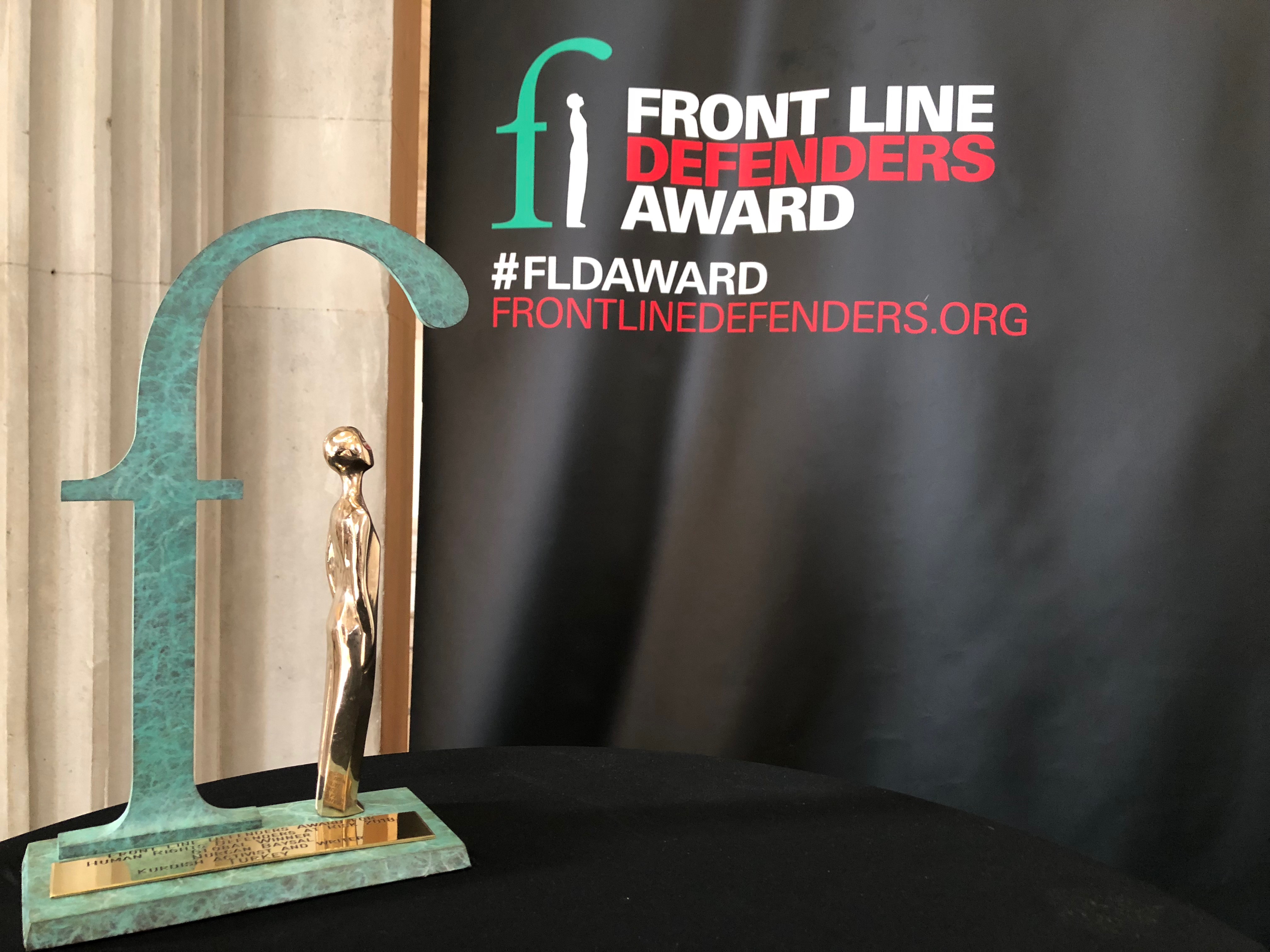
The Dutch Ministry of Foreign Affairs has opened their call for nominations for the 2022 Human Rights Tulip award.
The Human Rights Tulip comes with €100,000 in prize money, which the winner can use to further develop or expand the scale of their work for human rights. The nomination period will close on 2 August 2022.
The Human Rights Tulip is an award presented by the Dutch government for human rights defenders who promote and support human rights in innovative ways. Please see https://www.trueheroesfilms.org/thedigest/awards/D749DB0F-1B84-4BE1-938B-0230D4E22144 for further information on the award and its laureates. With the nomination form (available in 5 languages) you can nominate organisations and individuals who you consider worthy of this award.
The Martin Ennals Award for #HumanRightsDefenders honors individuals and organizations who have shown exceptional commitment to defending #humanrights, despite the risks involved.
To qualify for the Award, the nominees must: ▪️ Be currently active in the promotion and protection of human rights ▪️ Not employ or advocate violence ▪️ Not be self-nominated ▪️ Be in need of protection
Human Rights Watch on 5 June 2022 published a detailed piece showing that wide-ranging legal changes introduced by the United Arab Emirates (UAE) in late 2021 fail to address the long-standing and systematic restrictions on citizens’ and residents’ civil and political rights. The new laws maintain previous provisions and include new ones that pose grave threats to fundamental human rights.
As reported by the state news agency WAM in November, the legal changes include amendments to over 40 laws including on crime and punishment, cybercrimes, and drugs, aiming “to strengthen economic, investment and commercial opportunities, in addition to maximizing social stability, security and ensuring the rights of both individuals and institutions.” While the changes allow for a moderate broadening of personal freedoms, the new legal framework retains severe restrictions on the rights to free expression, association, and assembly.
“While the UAE government and its state-controlled media outlets trumpeted these new legislative changes as a massive step forward for economic and social freedoms, they will further entrench government-imposed repression,” said Michael Page, deputy Middle East director at Human Rights Watch. “The UAE government has chosen to squander an opportunity to improve freedoms across the board and instead has doubled down on repression.”
Human Rights Watch conducted a comprehensive legal analysis of two of the new laws, the crime and punishment law and the cybercrimes law, to identify any changes related to the rights to free expression and free assembly. Both laws went into effect in January 2022.
The laws continue to prohibit criticism of rulers and speech that is deemed to create or encourage social unrest, imposing severe penalties for vaguely defined charges. They maintain provisions that criminalize defamation and both verbal and written insults, whether published or made in private, as prosecutable offences. New provisions criminalize “false” and “misleading” information, sharing information with foreign groups or countries, and “offending foreign states.” Protests and demonstrations would still be prohibited.
The UAE authorities should take immediate steps to bring the penal code and cybercrime law into line with international and regional standards on free speech and individual freedoms, Human Rights Watch said. The UAE has not ratified the ICCPR, article 19 of which outlines the right to freedom of opinion and expression. But it is a state party to the Arab Charter on Human Rights. Article 32 of the Arab Charter ensures the right to information, freedom of opinion and freedom of expression, and article 24 guarantees the right to freedom of political activity, the right to form and join associations, and the right to freedom of assembly and association.
“The UAE cannot market itself as a reformist and tolerant state while introducing new laws that increase its already alarming levels of repression and censorship,” Page said….
The piece further provides a detailed analysis of penal and Cybercrimes Law.
Event on 1 June 2022, 12:00-14:00: “Don’t forget about us: Strategies for resisting long-term detention of Human Rights Defenders”. Location: Cassese Room, Villa Moynier, 120B Rue de Lausanne, Geneva (and online)
In 2021, the UN Special Rapporteur on Human Rights Defenders published a report on cases of long-term detention of activists, which were estimated to number hundreds or thousands worldwide. This report confirms the terrible treatment and conditions many defenders bear in prison. However, while an objective of long-term detention may be to discourage defenders, many cases result in perennial campaigns and increased publicity for the defenders themselves.
How can governments, civil society and international mechanisms work together to keep the pressure on long-term detention cases? What strategies have proven successful in improving respect for defenders’ rights and physical integrity while imprisoned?
Human Rights First announced that it will present Grupa Granica with the William D. Zabel Human Rights Award 2022 in recognition of its commitment to human rights at the Poland-Belarus border.
“Grupa Granica are front-line human rights defenders working at a flashpoint for human rights and freedom of migration,” said Michael Breen, president and CEO of Human Rights First. “We hope that Human Rights First’s presentation of the William D. Zabel Award provides additional recognition to the importance of their work and helps to stem this humanitarian and geopolitical crisis.”
Formed in 2021 in response to the humanitarian crisis at the Polish-Belarusian border, Grupa Granica is an informal network of Polish NGOs, activists, and inhabitants of the border region that provides humanitarian, medical, and legal aid to migrants stranded in the forests there. They monitor the situation on the ground, provide assistance to people searching for missing family members, document human rights violations and educate Polish society on the situation at the border.
“Our network was formed in August last year in response to the humanitarian crisis at the Polish-Belarusian border. It consists of local inhabitants, activists, NGO staff, doctors, lawyers, interpreters, psychologists, public figures and many others working hand in hand to save the lives of migrants stranded at the border,” says Marta Górczyńska of Grupa Granica. “This prestigious award sends a clear message to the public that despite the recent attempts by the Polish authorities, providing humanitarian aid and defending human rights must never be criminalized. We hope it will also make it more difficult for the international community to turn a blind eye to the violations at the border.”
The 2022 award will be officially presented to Grupa Granica on June 8.
“Mstyslav Chernov and Evgeniy Maloletka have a way of reporting that is painful to read and watch, but what really hurts is the truth that their reporting conveys: Russia brutally attacking Ukraine, and thereby Ukrainian civilians, under a fabricated pretense. While there are nuances to every story, there is no way facts can be negotiated. This is exactly what the Kremlin is doing: Distorting facts, spreading misinformation,” said DW Director General Peter Limbourg. “
The journalists, who both remain in Ukraine to continue their coverage of the war, welcomed the news about receiving the DW Freedom of Speech Award as an acknowledgment of their work. The award ceremony will be held on June 20 as part of the DW Global Media Forum.
AP journalist and novelist Mstyslav Chernov and freelance photojournalist Evgeniy Maloletka are both from eastern Ukraine. Previously, their reports and footage from the conflicts in Crimea and eastern Ukraine have been published in various international media, including BBC, Deutsche Welle, The New York Times, Washington Post, Der Spiegel and others. As a war reporter in several conflict zones such as Iraq or Syria, Chernov has been wounded multiple times. Before the war, Maloletka had also been working on a project about the Hutsul community in western Ukraine, their traditions and daily life, and on the impact of the conflict in the Donbas. Evgeniy Maloletka is a freelance photojournalist based in Kyiv.
The report “20 days in Mariupol: The team that documented city’s agony” offers a unique account of Mariupol under Russian siege, with Chernov and Maloletka being the last journalists in the city before their evacuation. They documented the city’s first deaths at the city hospital of Mariupol and the attack on the maternity ward with pregnant women and children in it, as well as numerous bombings. During this work, the journalists themselves were under constant attack and took great risks only to find a steady connection to upload their footage of the siege, bringing it to the attention of the international community. They were evacuated by Ukrainian soldiers to avoid them falling into the hands of Russians, who had been hunting them down.
AP Senior Vice President and Executive Editor Julie Pace: “Mstyslav and Evgeniy were the world’s eyes and ears in Mariupol, producing courageous and compelling reporting as the only international journalists inside the besieged city. The harrowing realities of Russia’s war would have remained unseen without their bravery. We are extremely proud of their work.“
The 2022 laureates are: professional basketball player and human rights advocate Enes Kanter Freedom, Iranian artist project PaykanArtCar, and Ukrainian-born Russian journalist Marina Ovsyannikova. This year’s laureates will receive their awards on Wednesday, May 25, during the 2022 Oslo Freedom Forum.
Enes Kanter Freedom is a professional basketball player and vocal advocate for human rights. Since the start of the 2021 NBA season, he has used his global platform to consistently raise awareness of the Chinese Communist Party (CCP)’s human rights abuses. Using his basketball shoes as the canvas for his messages, he wore multiple artistic designs highlighting issues such as the Uyghur genocide, the occupation of Tibet, slave labor at the Nike shoe factories, and the intolerance of China’s dictator. As a result of his creative dissent, he is now banned from China and was dropped by both the Boston Celtics and the Houston Rockets, despite being only 29 years old and in the prime of his career. Freedom’s perseverance has captured the attention of international media and informed millions of sports fans about the global struggle for individual rights in places like Tibet and the Uyghur region. At a time when professional athletes display incessant hypocrisy, unlimited greed, and double standards, Freedom emerges as the moral conscience of professional basketball. Freedom first came to international attention as an outspoken critic of Turkish President Recep Tayyip Erdoğan, making him a target of Turkey’s government — he was deemed a “terrorist” by the regime, stripped of his passport, and was publicly disowned by his family. In late 2021, he changed his name and added “Freedom” as his official last name. See: https://www.trueheroesfilms.org/thedigest/laureates/525e5018-7f56-4009-85b8-3f3cce9a8810
The PaykanArtCar unites the talents of contemporary Iranian artists in the diaspora with a beloved symbol of Iranian national pride — the Paykan automobile — to advocate for human rights in Iran. The car used was once gifted by Mohammad Reza Shah Pahlavi of Iran to the Romanian dictator, Nicolae Ceaușescu, and was purchased at an auction to serve as the canvas for artwork by Iranian artists in exile. Each year, PaykanArtCar commissions an exceptional Iranian artist-in-exile to use the car to capture the Iranian struggle for human dignity and basic freedoms. The inaugural PaykanArtCar was designed by Alireza Shojaian and features a historic Persian design with a provocative message about the brutality and ruthlessness faced by the marginalized and oppressed LGBTQ+ community inside Iran. The PaykanArtCar represents brave, creative dissent against the human rights abuses of Iran’s theocratic dictatorial regime. The PaykanArtCar will travel to Norway to be present at the Oslo Freedom Forum as part of Human Rights Foundation’s Art in Protest exhibit and will be parked at the event venue. The second edition of PaykanArtCar will be painted by a female Iranian artist and will advocate for women’s rights in Iran.
Marina Ovsyannikova is a Ukrainian-born Russian journalist and activist, who staged a live protest against the war in Ukraine during a news broadcast of Russian state TV. Ovsyannikova was a longtime editor at Russia’s Channel One, where her job was to assist those engaged in disinformation to be distributed to the Russian people. After thinking through ways in which she could protest, she chose to interrupt a live broadcast, holding a sign calling for “no war.” Following her demonstration on live TV and a subsequent anti-war video, Ovsyannikova was held overnight in a police station, denied access to a lawyer, and ultimately fined 30,000 roubles — she disappeared without contact for more than 12 hours. The Kremlin denounced her protest as “hooliganism,” and Ovsyannikova faces up to 15 years in prison under Russia’s disinformation laws. In a recent article, she expressed profound regret for her years as a participant in “the Russian propaganda machine” where her job was to create “aggressive Kremlin propaganda – propaganda that constantly sought to deflect attention from the truth, and to blur all moral standards,” she says: “I cannot undo what I have done. I can only do everything I possibly can to help destroy this machine and end this war.”
The Prize, with the support of the European Parliament, will be awarded annually to in-depth journalism pieces undertaken by EU-based professional journalists. The Prize is open to individual professional journalists or teams of professional journalists of any nationality. Applications may be submitted by authors themselves or by professional media organisations and associations on their behalf.
Applications must be submitted via the online platform by 31 July 2022,12 AM (CEST).
The Prize aims to recognise outstanding in-depth journalism work on topics that are relevant for the European Union (EU) as a whole or some of its Member States, and contribute to the promotion of principles and values of the EU, as enshrined in the European Charter of Human Rights
The conflict in Ukraine with all these absurd symbols (Vladimir Kazanevsky for Nebelspalter)
Ukrainian Vladimir Kazanevsky and Hungarian Gabor Papai were announced as the winners of the Kofi Annan Courage in Cartooning Award at a ceremony at the Maison de la Paix in Geneva and presented by the Freedom Cartoonists Foundation. Jury : Kenneth Roth, Human Rights Watch (president), Sami Kanaan, City of Geneva and cartoonists Ann Telnaes (USA), Kak (France) and Chappatte (Switzerland). The portraits below were done by True Heroes Films (THF)
Vladimir Kazanevsky
Vladimir Kazanevsky, Ukraine’s leading cartoonist, was working in his studio early in the morning of 24 February when he heard loud explosions near the airport in Kyiv. He and his wife fled to western Ukraine, along with a huge wave of families fleeing the bombings. From there they went to Presov, a town in Slovakia with a community of artists.
Deprived of his drawing materials, catalogues and books, which he had to leave behind in Kyiv, Kazanevsky continues to draw relentlessly: Putin in action, on a tank or on the bow of the Titanic. “Autocrats and dictators are afraid of our cartoons, and they are right, because our drawings are powerful weapons,” he says.
Fiercely determined to continue the fight against Russian aggression, the 71-year-old sees his work as an act of resistance. An act of defence of freedom of expression against war propaganda.
Gábor Pápai
For several years, Hungarian cartoonist Gàbor Pàpai and his newspaper Népszava – the only opposition daily still alive in Budapest – have been the subject of attacks and legal proceedings by the authorities – even though Hungary is part of the European Union.
This cartoon, “The Chronicle” by Gábor Pápai, published in Hungary’s daily newspaper Népszava on 28 April shows the Hungarian National Public Health Centre’s chief doctor looking at Jesus on the cross and suggesting that many people who had deceased from the coronavirus had already been likely to die because they had suffered from pre-existing conditions.
It was intended to ridicule Hungary’s chief health figure for having tried to minimise the number of deaths solely attributable to the coronavirus in Hungary and, by extension, to mock the government’s handling of the crisis.
“Its depiction and use of Jesus on a cross sparked an outcry from the representatives of the Christian Democrat Party, an ally of the ruling Fidesz, to the point that the Secretary of State for persecuted Christian communities, Tristan Azbej, accused Gábor Pápai of blasphemy and threatened to sue him or Népszava,” as Reporters Without Borders, who came to the defense of Papai, explains.
The Catholic religion, the fight against Covid or simply Hungarian history are all pretexts for prosecution in a country ranked 92nd in the world press freedom index by Reporters Without Borders (RSF). This shameful ranking has been deteriorating ever since Viktor Orbán became Prime Minister, putting all independent media in great difficulty. Some, like Népszava, are directly threatened with extinction. Gàbor Pàpai, far from being intimidated, continues to critically observe and draw all political actors in Hungary.
On 5 May 2022 Robert F. Kennedy Human Rights announced Cameroonian human rights defenders Maximilienne C. Ngo Mbe and Felix Agbor Nkongho (Balla) as the 2022 recipients of its annual Human Rights Award. A ceremony honouring the two laureates will take place Tuesday, 7 in Washington, D.C.
A Cameroonian human rights defender with over 30 years of experience, Ngo Mbe is Executive Director of the Central African Human Rights Defenders Network (REDHAC). Since 2010, she has led REDHAC in its efforts to promote civic space and protect fundamental freedoms throughout Central Africa through investigations of human rights abuses, advocacy before regional human rights bodies, monitoring of democratic processes, and demanding state accountability. She was previously named an International Woman of Courage in 2021 by the U.S. Department of State [see: https://humanrightsdefenders.blog/2021/03/09/state-department-hands-out-21-international-women-of-courage-awards-2021/] and received the Franco-German Prize for Human Rights and the Rule of Law in 2016.
“Receiving the RFK Human Rights Award 2022 still feels like a dream,” said Ngo Mbe. “I am humbled by this recognition and dedicate it to my family, my colleagues at REDHAC, the members of the REDHAC Board of Directors, in particular Me Alice Nkom, and the Human Rights Defenders who have been my source of strength over the years. I look forward to working alongside Robert F. Kennedy Human Rights as we continue our struggle for justice, human rights, and peace in Cameroon and Central Africa.“
Nkongho is a Cameroonian lawyer and human rights defender. He is the director of the Centre for Human Rights and Democracy in Africa (CHRDA) and a leading advocate for human rights of Cameroonians in the conflict-stricken Anglophone region. Nkongho’s work focuses on the promotion of democracy, good governance, access to justice, and rule of law. His reputation as a devoted human rights defender is evidenced by his tireless work for human rights in Cameroon and throughout Africa, despite state sanctioned pushback, including his arbitrary detention in 2017. In 2019 he won the African Human Rights Defenders Shield Award.
“When I got news of the award, I was staring at portraits of my late parents and crying tears of joy. This is the best gift I could ever offer them, and I am sure they will be celebrating in heaven,” said Nkongho. “I am truly honored, and I sincerely thank Robert F. Kennedy Human Rights for considering me worthy of this award. It is dedicated to all those who advocate for the promotion and protection of human rights, to all the human rights defenders who continue to put their lives and liberty on the line to fight against injustice.“